Drawstring Plastic Bags Wholesale for Streetwear Buyers
If you are sourcing packaging for a streetwear launch, the decision is not just about appearance. You need a bag that folds flat, prints cleanly, fits the garment, and stays economical enough to work across drops and reorders. That is why buyers looking for a drawstring plastic Bags Wholesale Supplier for Streetwear Brand Buyers usually focus on the same few questions: what will it cost, what will fit, how long will it take, and how will it look after packing and shipping.
For hoodies, tees, accessory kits, and event packs, the bag often serves three jobs at once. It protects the item, supports the brand presentation, and keeps warehouse handling simple. A good spec reduces freight waste, simplifies fulfillment, and gives the customer a cleaner first impression without forcing the team into rigid boxes or heavy inserts.
Custom Logo Things usually sees the best results when the buyer treats the bag as part of the product line, not a last-minute add-on. Clear specifications, a realistic quantity, and an approved proof do more for brand consistency than a long sales pitch ever will.
Why streetwear launches need flat-pack drawstring bags
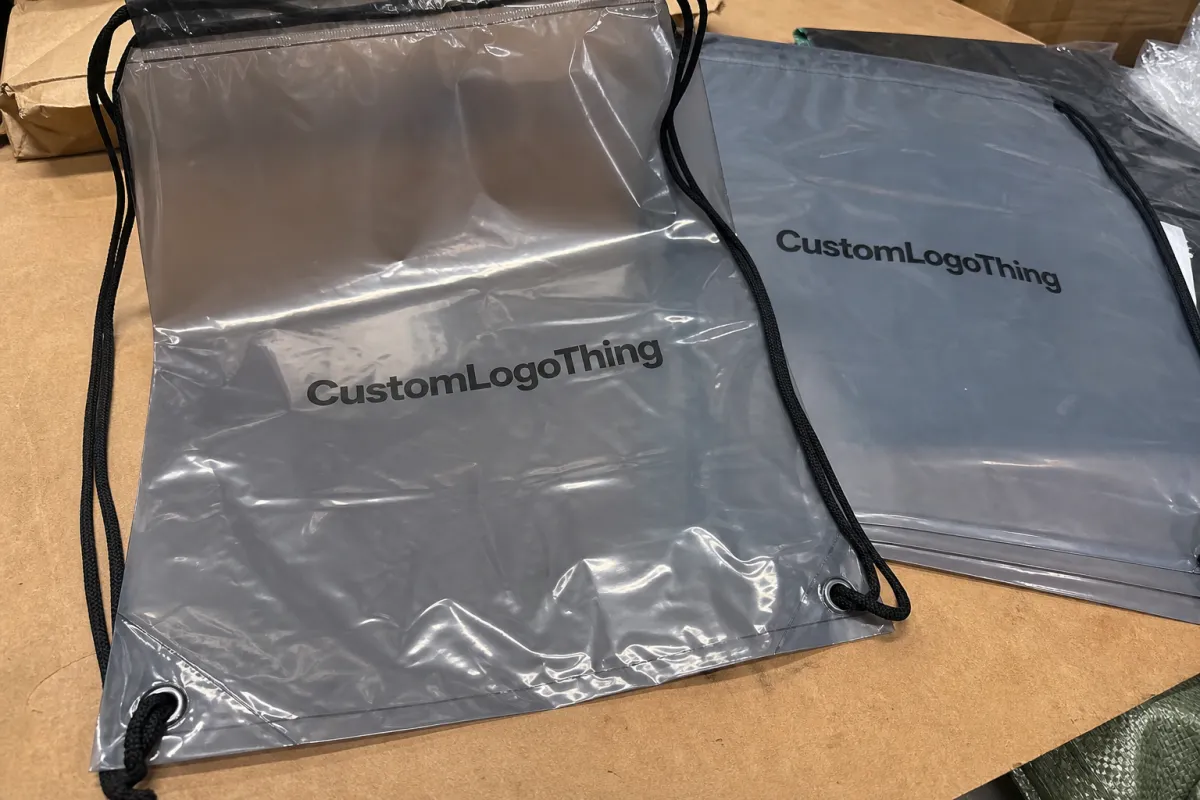
Streetwear drops move quickly, so packaging has to move quickly too. Flat-pack drawstring bags store and ship efficiently, then still deliver a finished look when the product reaches the customer. For brands that launch online, through pop-ups, or in small retail runs, this format keeps the packaging light while preserving a branded presentation.
The appeal is mostly operational. A hoodie bag may need more depth and stronger film. A tee may only need a lighter structure. An accessory bundle may need a smaller size and a tighter closure. In each case, the package remains easy to stack, count, and store, which matters when the same spec has to work for warehouse inventory, influencer kits, and direct-to-consumer fulfillment.
Flat-pack formats also help with reorders. If the size, print area, and closure style are saved correctly, the next run is faster to approve and easier to compare against the last one. That is one reason packaging buyers often choose this style over heavier or more rigid options.
“A good bag spec should support the garment, the launch calendar, and the warehouse flow at the same time.”
Material, print, and closure choices that change the look
The first decision is the material. Clear PE film gives a clean, simple look and shows the product well. Tinted film creates more visual control and can work better for darker campaigns. Matte finishes feel softer and more premium, while gloss reads sharper and more retail-forward under bright light.
Thickness affects both durability and presentation. Lightweight film is usually enough for tees and smaller accessory packs, but heavier garments need more structure so the bag does not split, wrinkle, or distort at the closure. Many buyers compare thickness in the 1.5- to 4-mil range depending on product weight, handling, and how much rigidity they want in hand.
The closure also changes the customer experience. A standard cord closure is functional and familiar. A thicker cord feels more substantial and can support a more premium look. If the bag will be reused for storage or gifting, the drawstring detail matters more. If it is mainly for shipping and packing, cost and speed usually matter more than decorative touches.
Print should be simple enough to survive folds and handling. One-color logos, strong placement, and clean spacing usually work better than crowded graphics. If the artwork sits too close to a seam or channel, readability drops once the bag is filled. For that reason, the proof stage should always confirm logo position before production starts.
If color accuracy matters, ask for a sample or digital proof before approval. Small shifts in black, gray, metallic, or tinted finishes can change the perceived quality of the package. Buyers who need broader packaging context can use the Wholesale Programs page to compare order structures across different product types.
Drawstring plastic bags wholesale specs to lock in before quoting
Before a supplier can price the order properly, the spec sheet has to be clear. Width, height, gusset depth, closure style, print area, and material thickness all affect fit and cost. A bag that is even slightly too narrow can press against the garment fold, while one that is too tall can waste material and carton space.
Streetwear packaging should also account for how the product is folded. A hoodie takes more depth than a compact T-shirt fold, and layered kits usually need extra room for both product and closure tension. The fit has to work with the actual folded item, not a guess based on size alone.
Warehouse details matter too. Film strength, drawstring length, carton pack count, and carton dimensions all affect how the goods move through receiving and fulfillment. If the cartons are packed too loosely, counts become harder to verify. If they are packed too tightly, the team spends extra time separating nested bags before use.
The safest approach is to keep a written spec sheet for every approved order and reuse it for future runs. That reduces revision cycles and protects consistency across reorders. It also helps the supplier avoid guesswork, which is usually where packaging delays start.
| Spec choice | Best use | Typical effect on cost | Buyer note |
|---|---|---|---|
| Standard clear PE film | Tees, light accessories | Lowest | Good for simple branding and quick repeat runs |
| Thicker PE film with one-color print | Hoodies, heavier packs | Moderate | Better hand feel and stronger presentation |
| Matte or tinted film | Premium drops, curated kits | Moderate to higher | Stronger visual branding, but usually needs proofing |
| Custom size with wider print area | Multi-item bundles | Higher | Best when fit and artwork both need to be exact |
For packaging and transit context, the ISTA transport testing standards and the Packaging Institute are useful references when buyers want to think about handling stress, stacking, and shipping performance in a more disciplined way.
Pricing, MOQ, and unit cost drivers buyers should compare
Pricing depends on more than one line item. Bag size, film thickness, print coverage, number of colors, carton configuration, and any special finishing all affect the final quote. Standard structures are easier to price, while unusual dimensions or heavier material usually push setup and material cost higher.
MOQ has a direct effect on unit cost. Smaller runs carry more weight from setup and proofing, so the per-unit price is higher. Larger runs spread those fixed steps over more bags, which improves the economics. For a streetwear brand, a smaller test run may make sense for launch timing, while a larger run works better once the spec is proven.
Buyers should always ask what the quote includes. A useful quote should show product cost, setup charges, sample fees if any, freight assumptions, and any packaging or labeling extras. Without that detail, one supplier can look cheaper simply because the add-ons are hidden.
There are also ways to lower cost without damaging the presentation. Use one main logo placement instead of multiple panels. Keep the artwork clean. Standardize dimensions across several styles where possible. Place larger seasonal buys instead of repeated rush orders. Those decisions preserve the look while reducing complexity.
For many buyers, the real goal is not the absolute lowest price. It is a stable spec that delivers the right appearance at a unit cost the brand can repeat. When that balance is right, the bag supports the launch instead of competing with it.
When teams want examples of how packaging decisions support real launches, the Case Studies page helps frame the discussion around fit, presentation, and reorder behavior.
Production steps, proof approval, and lead time expectations
A typical production flow moves from brief to spec confirmation, artwork review, proof approval, production, inspection, packing, and dispatch. If any step is unclear, the schedule can slip. Most delays come from incomplete artwork, missing measurements, or late design changes after proof approval.
Lead time is usually shorter for reorders because the supplier already has the spec and artwork on file. New custom jobs take more planning, especially if they use multi-color print, special finishing, or a larger format. For a straightforward wholesale run, a realistic lead time is often around 12 to 15 business days from proof approval, though quantity and freight method can change that.
A buyer should confirm the ship method, carton labels, and warehouse receiving details before the order is released. That prevents the common problem where production is finished on time but the delivery plan creates delays at the final stage.
Proofing is where most quality issues are caught. If a logo is too small, a color is unclear, or a mark sits too close to a fold, that should be corrected before production starts. A good supplier will hold the line on those details because they affect brand consistency and reorder quality later.
Fit checks that prevent size, art, and pack-count mistakes
The biggest packaging mistake is approving a bag from a photo or dimension estimate instead of the actual folded product. Streetwear items have uneven shapes. A hoodie changes profile because of the hood and cuffs. A tee may seem simple, but it can still trap air or wrinkle if the bag is too tight.
Logo placement deserves the same attention. Check where seams, folds, and closure channels land once the bag is filled. If the logo sits too low, the product may cover it. If it sits too high, the drawstring can cut through the artwork. Centered placement is usually the safest choice for readability.
Pack count also affects the buyer experience. Bags may ship loose, nested, or carton-packed, and the warehouse should know which format is arriving. That changes receiving speed, storage space, and inventory checks. The order should confirm carton count, carton dimensions, and any special labeling before full production begins.
If the order supports a major launch, use a final checklist for color, thickness, dimensions, print placement, and pack count. It is a simple step, but it avoids emergency reorders and keeps the supplier aligned with the release schedule.
External guidance from ISTA is useful here because it reminds teams that packaging has to survive stacking, movement, and transit, not just look good in a proof.
What repeat buyers get from a supplier built for reorders
Repeat buyers want less friction on the second order than the first. That starts with saved specs, approved artwork, and a clean order history. When a brand runs seasonal drops or colorway refreshes, having that information on file saves time and reduces mistakes.
Communication matters just as much as production. Clear answers on revisions, proof timing, and shipment status help keep merch calendars on track. Delays usually happen in the gaps between people, not in the material itself.
Stable planning also prevents substitutions that weaken the line. If carton counts change, if a material runs short, or if the spec is not documented well, the buyer can end up with packaging that looks inconsistent across the same launch. That hurts brand recognition and makes the program feel less intentional.
A reliable supplier should make reordering feel controlled, not like a fresh negotiation every time. That is the practical value for streetwear teams: easier forecasting, fewer revisions, and less risk when the next drop is already in motion.
What to send for a fast quote and next-step approval
To get an accurate quote quickly, send the exact bag dimensions, preferred material, closure style, print file, quantity, and target delivery date. If the bag is for a hoodie, tee, or bundle pack, include the garment type and folding method too. That lets the supplier confirm fit before pricing is locked.
It also helps to explain how the bag will be used. Some buyers need a package that slides into a mailer. Others need a format that can sit on a shelf before fulfillment. Those details affect both size and carton strategy, so they should be part of the brief.
Ask for a proof, sample, or spec confirmation before production starts, especially if the order supports a fixed sell-through date. That is the best point to confirm print, thickness, closure, and fit. It also reduces the chance of revisions after the order has already entered production.
If you are ready to move forward, send a clean spec sheet and request a formal quote. That usually gets the order from estimate to approval with fewer revision cycles and a more predictable timeline.
What is the MOQ for drawstring plastic bags wholesale orders?
MOQ usually depends on size, print complexity, and whether the bag uses standard or custom materials. Smaller runs are useful for testing a new streetwear drop, while larger runs usually lower the unit cost.
Can I custom print drawstring plastic bags wholesale for a streetwear brand?
Yes, custom print is common for logos, seasonal graphics, and retail presentation. Clean vector art, clear color definitions, and proof approval before production usually give the best result.
How long does a drawstring plastic bags wholesale order usually take?
Lead time depends on whether the order is a reorder or a new custom spec. Artwork approval, quantity, and freight method all affect the final delivery window, and simple reorders are usually faster.
What should I send for an accurate wholesale quote?
Send dimensions, material preference, print details, quantity, and delivery target. If you already know the garment size or folding method, include that so the bag fit can be confirmed before pricing.
How do I choose the right thickness for streetwear packaging?
Choose thickness based on whether the bag needs basic protection, a premium feel, or repeated handling. Heavier garments and multi-item kits usually need a sturdier film than lightweight tees or accessory packs.

