Corporate gifting Ribbed Winter Beanies bulk order planning usually looks simple until fit, decoration, lead time, and packing start competing with each other. A low unit price does not help if the beanies feel rough, the logo shrinks on the cuff, or the cartons miss the event date. Buyers get the best result when they plan the product like a small program, not a last-minute promo item.
Ribbed Winter Beanies work well for employee welcome kits, client gifts, field teams, and conference handouts because they are compact and easy to ship. The rib knit adds structure, and the cuff gives you a predictable branding zone. If you are comparing options through our Wholesale Programs, start with the wearer, then the knit, then the decoration, then the packing.
Corporate gifting ribbed winter beanies bulk order planning starts with fit
Fit drives wearability. If the beanie stretches cleanly, sits flat at the cuff, and does not pinch, people keep it. If it rides up or feels scratchy, it gets passed around once and forgotten. Decoration cannot rescue a hat that feels awkward on first wear.
A ribbed knit helps because it adapts to different head sizes without looking oversized. That matters in corporate gifting, where one order may go to office staff, warehouse teams, and clients with different preferences. Some groups are happy with a visible logo; others prefer a quieter mark that reads more like everyday winterwear.
- Employee welcome packs: choose neutral colors, soft structure, and simple branding.
- Client gifts: favor cleaner finishes, better packaging, and restrained logo placement.
- Field teams: prioritize warmth, durability, and colors that hide regular wear.
- Event giveaways: keep the SKU count tight so distribution stays manageable.
Planning also has a logistics side. The right fit still needs to pack well. If the cuff is too tall, the carton gets bulkier. If the crown is too soft, the product can arrive misshapen. If the order is being split into office packs, the packing plan matters as much as the knit.
A beanie that fits comfortably is usually worn. A beanie that feels special but awkward usually gets set aside.
Yarn weight, cuff height, and final folding all affect perceived quality. The goal is not novelty. It is a product that feels dependable, looks clean, and survives the realities of distribution.
Ribbed knit details that make the beanie feel premium
The rib structure does most of the work. A 1x1 rib usually looks tighter and more compact. A 2x2 rib can feel a little softer and more relaxed. The right choice depends on how formal the gift should feel and how much surface stability you need for decoration.
Cuff height matters more than many buyers expect. Around 2.5 to 3.5 inches usually leaves enough flat space for embroidery or a patch without swallowing the logo. Too short looks cramped. Too tall starts to read bulky in a gift box. The cuff should also lie evenly; if it curls, the product looks less controlled.
Material choice changes both cost and hand feel:
- Acrylic: usually the lowest-cost option, with wide color availability and decent warmth; it can pill faster if the yarn is loose.
- Acrylic-wool blend: warmer to the touch and often perceived as more premium; expect roughly 10% to 25% higher material cost depending on the blend ratio.
- Recycled yarn: useful for sustainability-led programs, often priced around 8% to 18% above comparable standard acrylic.
Yarn density matters too. A tighter knit keeps the crown and cuff more stable. A loose knit can look good in a sample and disappointing in bulk, especially after packing and shipping. Ask for yarn weight and stretch recovery if the beanies will be worn outdoors for long periods.
Quality shows up in even rib spacing, clean seams, and a cuff that lies flat instead of twisting. Packaging matters as well. A crushed beanie in a thin polybag looks cheap. A neatly folded beanie in protective carton packing feels planned.
If the program includes paper inserts, hang tags, or sleeves, FSC-certified board from FSC is a practical choice for keeping the printed pieces aligned with the rest of the order.
Decoration specs that keep your logo readable in winter light
Embroidery is usually the safest default for bulk beanies. It is durable, familiar to approvers, and usually quick to sign off. Bold shapes and limited text work best; thin strokes and narrow counters are the first things to disappear once the art is stitched down.
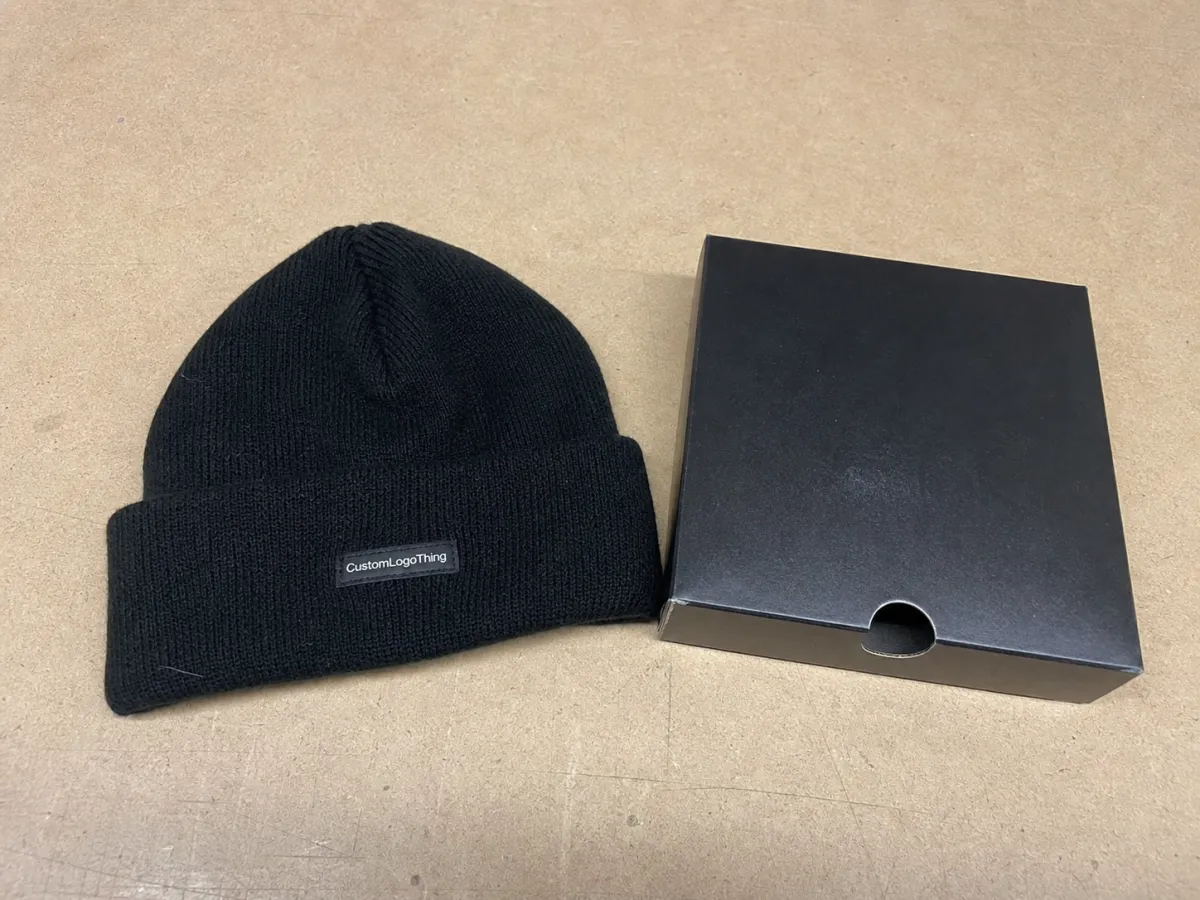
That is where patches help. A woven patch handles fine detail better than embroidery and often looks cleaner at smaller sizes. Faux leather patches work well for simple marks and darker palettes. Woven labels are subtle and affordable, but they rarely carry a program on their own if the logo needs to read from a distance.
Placement sets the tone. Front cuff placement is the standard because it gives a flat surface and keeps the logo visible when the beanie is worn. Side placement feels quieter and better for client gifts or premium internal programs.
| Decoration method | Best for | Typical cost impact | Practical note |
|---|---|---|---|
| Embroidery | Simple logos, fast approvals, durable daily wear | Usually +$0.60 to +$1.80 per unit | Keep letters large and shapes bold |
| Woven patch | Small details, cleaner edges, more polished branding | Usually +$0.80 to +$2.20 per unit | Better for line art than stitching |
| Faux leather patch | Minimal branding, darker palettes, rugged presentation | Usually +$0.90 to +$2.50 per unit | Works best with simple debossed marks |
| Woven label | Subtle branding, layered packaging, low visual impact | Usually +$0.20 to +$0.70 per unit | Useful as an add-on, not always enough alone |
Before approval, confirm the limits. Tiny text usually fails first. Very thin lines rarely hold up on knit surfaces. One to three thread colors is usually the sweet spot for clean production and manageable cost. More colors can work, but they add time and increase the chance that the mark feels crowded.
Mockup approval should happen before production begins. Ask for the logo at the actual stitch or patch size, not only as a large digital file. If the order will be shipped to multiple locations, ask how the packing method protects the crown, cuff, and decoration surface. The ISTA approach to handling and compression is a useful reference even when the order is not formally tested to it.
Pricing, MOQ, and unit-cost breakpoints
Beanie pricing drops in steps, not smoothly. The first few hundred pieces carry more of the setup cost, so unit pricing can look stubborn at lower quantities. Better breaks usually appear around 500 units and again at 1,000 or more.
The main cost drivers are predictable: yarn quality, decoration method, number of thread colors, label style, packaging, and whether the order is stock or made to order. Special packaging can cost more than the decoration if you request printed boxes, belly bands, or individual packing for every piece.
| Quantity | Stock beanie + embroidery | Stock beanie + patch | What usually changes |
|---|---|---|---|
| 250-499 | $4.50-$8.00 | $5.20-$9.25 | Setup costs weigh heavily at this tier |
| 500-999 | $3.25-$6.25 | $4.00-$7.50 | The first meaningful break in unit cost |
| 1,000-2,999 | $2.60-$4.90 | $3.35-$6.10 | Better freight efficiency and steadier decoration pricing |
| 3,000+ | $2.10-$4.10 | $2.85-$5.25 | Best value if the spec is locked and the schedule is stable |
MOQ varies by construction. Stock beanies with embroidery often start lower than custom-knit colors or specialty labels. Patches can raise the minimum because of tooling and setup. A lower MOQ only matters if the landed cost still fits the budget once setup, samples, repacking, and freight are added.
Ask for the quote line by line: sample charges, decoration setup, label changes, packaging changes, and shipping to each destination if the order is split. If the supplier will not show those layers clearly, the number is not really transparent.
For this kind of order, compare landed cost rather than catalog cost. A slightly higher beanie price can still win if it brings lower freight, fewer errors, or less repacking.
Production steps and timeline for a no-surprise rollout
The best order flow is boring in a good way. A predictable sequence usually means fewer surprises later. A standard project moves through inquiry, artwork review, proofing, production, packing, and shipping. Every handoff should have a clear owner.
- Inquiry and quote: usually same day to 2 business days if the brief is complete.
- Artwork review: usually 1 to 2 business days when vector files are provided.
- Proof or sample: digital mockups can move quickly; physical samples often take 5 to 10 business days.
- Standard production: often 10 to 15 business days for stock beanies with simple decoration.
- Custom colors or special packaging: commonly 20 to 35 business days, sometimes longer if approvals slow down.
- Shipping: allow 2 to 7 business days domestically and more for freight or split destinations.
The main delays are usually predictable: late logo approval, missing vector art, vague delivery dates, and changes after proof sign-off. For seasonal gifting, a buffer before the event is part of the plan, not extra padding.
If the order has a fixed launch date, it is often safer to approve a simpler decoration and ship early than to chase a more complex finish that arrives late. People remember a missed delivery date more than a more elaborate patch.
For recurring programs, save the approved artwork, Pantone references, cuff placement, packaging instructions, and carton labels. That turns the next run into a reorder instead of a fresh approval cycle.
Supplier checks that separate a real factory from a sample broker
Good suppliers answer practical questions without dodging them. Ask for production photos, not only polished mockups. Ask how the knit is controlled, what decoration equipment is used, and how quality is checked before packing. Ask whether the same team can repeat the same beanie on a reorder.
Strong signals include clear written specs for yarn, rib structure, cuff height, decoration placement, and packaging. Transparent lead times are another. A supplier should be able to separate proofing time from production time and production time from shipping time.
- Written specs that cover yarn, rib count, cuff height, and logo placement.
- Separate timing for proofing, production, and shipping.
- Saved artwork and color records for repeat orders.
- QC photos before carton closure, especially for multi-location shipments.
Weak signals are easier to spot than most buyers expect: vague promises, perfect mockups with no production detail, and evasive answers about minimums, packing, or repeatability. If the supplier cannot explain how the order is packed for transit or how a reorder will match the first run, that is a warning sign.
If the program includes printed mailers, inserts, or hang tags, ask for FSC-certified paper options. If goods are shipping to multiple offices, ask whether cartons are packed with freight handling in mind, using a method similar to the distribution thinking behind ISTA frameworks. These checks reduce the odds of damaged cartons on the receiving dock.
For repeat campaigns, a practical supplier should also keep records of the final stitch file, label placement, decoration size, and carton count by destination. That documentation is not flashy, but it helps prevent drift on the second or third run.
What to have ready before requesting quotes
Before you request pricing, gather the basics: total quantity, delivery date, ship-to locations, logo file, preferred decoration method, and packaging requirements. If the order needs multiple destinations, list them up front.
It also helps to know the approval path inside your team. Brand, procurement, and leadership do not always review files on the same timeline, and that gap creates delays unrelated to manufacturing.
Ask for one digital mockup, and a physical sample if the schedule allows it. Confirm the essentials in writing: yarn type, decoration method, placement, color, quantity, packaging, and ship date. If any of those pieces are missing, the risk of a correction later goes up.
For recurring programs, keep the spec simple enough to repeat without interpretation. A restrained logo, stable color choice, and standard packaging usually age better than a highly decorated one-off. That is the difference between a repeatable product line and a one-time scramble.
For buyers who want the shortest path to a reliable order, the core decision is straightforward: choose a fit people will wear, a decoration method that holds up, and a timeline with enough room for proofing and freight.
How early should corporate gifting ribbed winter beanies bulk order planning start?
Start as soon as the event date is fixed. Proofing, approval, and freight usually take longer than expected. Add extra time if you need custom colors, special packaging, or a pre-production sample.
What is the typical MOQ for ribbed winter beanies in bulk orders?
MOQ depends on whether the beanie is stock or custom, and on the decoration method. Embroidery usually allows a lower entry point than custom-knit colors or specialty labels. Compare the total landed cost at the quantity you actually need.
Is embroidery or a patch better for corporate gifting beanies?
Embroidery is usually the cleanest fit for simple logos and fast approvals. Patches work better for fine detail, smaller marks, or a more premium finish. The right answer depends on logo complexity, budget, and visibility.
What affects unit cost the most on bulk winter beanie orders?
Material quality, decoration method, and order quantity usually drive the biggest changes. Thread colors, labels, packaging, and freight also matter. A quote only makes sense once those items are compared on the same basis.
Can one bulk beanie order ship to multiple corporate gifting locations?
Yes, but split shipping needs to be planned early so cartons, labels, and addresses are correct. Multiple destinations can add handling and freight costs, so they should be priced before approval.