stationery Ribbed Winter Beanies Bulk Order planning works best when the beanie is treated as a branded product, not a filler item. A ribbed knit winter hat gets worn, folded, stored, and reused, so the buying decision should focus on fit, finish, and visibility per wear as much as unit count.
The right specs depend on how the item will be used. Employee gifts, event handouts, retail add-ons, and stationery bundles all call for different materials, logo sizes, packaging, and timelines. A clean quote starts with those choices, not with a guessed quantity.
Stationery ribbed winter beanies bulk order planning starts with demand
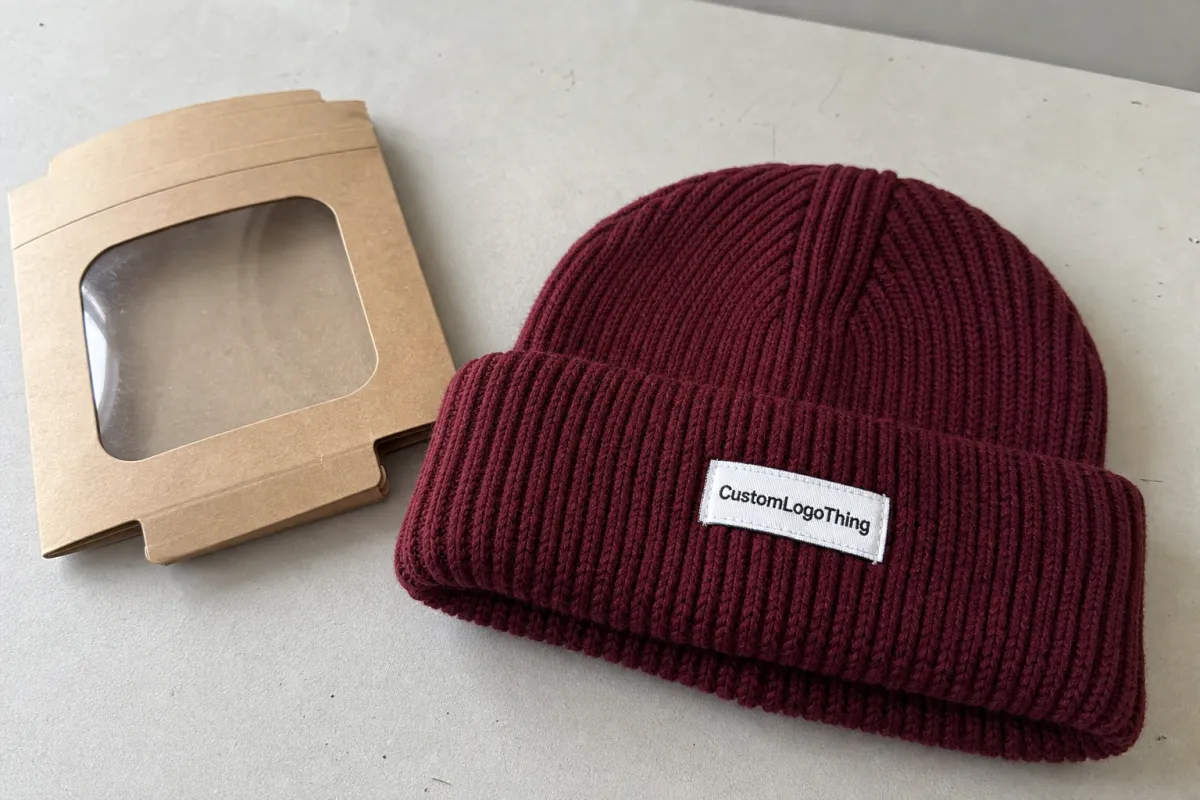
Demand planning for a ribbed winter beanie is different from paper goods because the item lives on the body. One flyer is seen once; one beanie may be seen all season if the knit holds shape and the branding stays clean.
Start with who receives the item and how it is distributed. Employee gifts usually call for neutral styling and dependable fit. Event merch needs visible branding and a faster schedule. Retail add-ons need packaging that looks deliberate. A stationery bundle adds a fourth requirement: the hat has to coordinate with notebooks, pens, and boxes without looking like an afterthought.
Season and geography matter too. A January launch in a cold market has a different urgency than a late-fall campaign in a mild region. If the beanies must arrive before the first real cold snap, build the schedule backward from the in-hand date.
The ribbed structure is useful because it stretches across a broad range of head sizes while keeping the surface organized enough for branding. Too loose and the hat loses shape; too tight and it feels stiff. The best version sits in the middle: flexible, but still polished.
- Employee gifts need consistent sizing and a restrained finish.
- Retail add-ons need packaging and color choices that look intentional on shelf.
- Event merch needs contrast and a decoration method that reads quickly.
- Stationery bundles need a hat that lifts the set without breaking the budget.
Rib knit fabric, cuff style, and decoration methods that hold up
Material choice drives warmth, handfeel, and cost. Acrylic is still the most common option because it is affordable, colorfast, and easy to produce at scale. Recycled acrylic is a useful middle ground for buyers who want a cleaner sourcing story without moving into premium pricing. Wool blends sit higher on comfort, but they also raise cost and can be more sensitive to care and storage.
Every fiber choice has a trade-off. Acrylic can feel dry if the yarn quality is weak. Wool can pill or felt if the blend is poor or the knit is too loose. Recycled content is only helpful if the yarn is consistent enough to keep the cuff and crown from distorting during production. Ask for the exact fiber breakdown in writing; "blend" is not a usable spec.
Rib construction matters just as much as the fiber. A tighter rib, such as 1x1 knit, usually recovers better after stretching and gives a cleaner surface for branding. A wider rib can feel more relaxed and fashion-forward, but it changes how the logo sits on the cuff. Knit density, yarn weight, and crown shape all affect whether the beanie looks shelf-ready or slouches more than intended.
Decoration should follow the artwork, not the other way around. Direct embroidery remains the standard for many bulk orders because it is durable and finished-looking. Woven patches are better when the logo has fine detail or small lettering. Sewn labels and appliques sit between those two options and can help when the brand wants the hat to feel closer to apparel than promo merchandise.
If the logo depends on thin lines or tiny type, do not force embroidery to carry it alone. Knit fabric stretches, and stitches have width. That combination can blur details faster than a screen mockup suggests.
| Option | Typical use | Common add-on per unit | Notes |
|---|---|---|---|
| Direct embroidery | Simple logos, staff gifts, broad promo runs | $0.60-$1.50 | Durable and polished; best with bold shapes and limited text |
| Woven patch | Fine detail, multi-color marks, premium retail look | $0.80-$1.80 | Cleaner for small lettering and sharper edges |
| Sewn label | Minimal branding, budget-conscious runs | $0.25-$0.60 | Low visual impact, but neat on cuff placements |
| Applique | Fashion-forward or higher-impact retail pieces | $0.70-$1.90 | Adds depth, but needs careful logo planning |
Cuff height deserves attention because it changes logo real estate and the overall look. A taller cuff gives more room for branding and often photographs better. A shorter cuff feels lighter, but the logo window gets smaller. Packaging matters too: paper inserts, hangtags, and carton labels can improve the receiving experience, while FSC-certified paper components and transit testing are useful references for buyers who want a cleaner packout. The guidance from FSC and ISTA is worth checking when sustainability or shipping durability matters.
Color, sizing, and logo specs to lock before quote approval
Color approval should happen early because yarn availability narrows options more than many buyers expect. Stock yarn shades are usually the fastest route. Pantone matching is possible in some programs, but exact brand color may require a custom dye lot or a different decoration strategy. If the beanie sits next to stationery goods in a boxed set, color consistency becomes visible immediately.
Before approving a quote, confirm the physical specs: flat width, crown height, cuff depth, and a plain-language fit description such as snug, relaxed, or oversized. Those measurements affect how the beanie sits on the head, how much cuff is visible, and whether the logo stays readable once the knit stretches.
Artwork needs the same discipline. Vector files are the right starting point, but they still need to be checked against knit fabric, not just against screen display. Thin strokes can disappear, small letters can close in, and multi-line logos can feel crowded once stitched. Placement also matters: front cuff, left cuff, center front, or a slightly offset patch all produce different results.
If the project has a fixed deadline, strict color target, or logo with fine detail, ask for a pre-production sample or a digital proof before production starts. That is not a delay; it is the point where a bad assumption gets caught cheaply. The proof should show logo size, location, stitch count if applicable, and any packaging notes.
"The cleanest order is the one that answers the hard questions before the first sample is made."
Buyers who send complete information usually get a cleaner quote and fewer revision rounds. Quantity by color, decoration method, target placement, logo format, in-hand date, and shipping destination should all be on the first request. For recurring programs, keep the approved spec sheet and prior sample photos in one place so reorders do not drift.
Pricing, MOQ, and unit cost factors buyers should compare
Price is more than the base hat cost. The main drivers are quantity tier, fiber blend, decoration complexity, number of thread colors, packaging, and whether the project uses a stock beanie or a custom knit. A straightforward acrylic ribbed beanie with simple embroidery may land roughly in the $3.50-$6.50 range per unit before freight at larger quantities. Premium blends, multiple decoration steps, or custom packaging can push cost higher.
MOQ changes with the build. A stock beanie with standard embroidery usually allows more flexibility than a fully custom knit pattern with special yarn colors. The more the product moves away from stock materials, the more likely the factory is to set a larger minimum. That is why two quotes for what looks like the same hat can differ sharply once the decoration method and yarn specification are written out.
Comparing landed cost gives a clearer picture than looking at unit price alone. Add sampling, setup, packaging, domestic freight, international freight, and any split-shipment charges. Buyers often underestimate those extras and then discover the order is no longer competitive once it reaches the warehouse. A quote that separates product cost, decoration cost, setup, freight, and optional packaging is easier to judge honestly.
For seasonal merchandise, ask for tiered pricing at two or three quantities. The gap between 500 and 1,000 units can be enough to change the budget decision, especially if the beanie is part of a larger stationery promotion. A slightly deeper order may reduce the per-unit cost enough to justify extra stock for replacements or future events.
Watch for hidden inconsistency. If one supplier includes a patch setup fee and another rolls it into unit cost, the cheaper quote may not be cheaper. If packaging is described as included but the cartons are generic and unbranded, that is a different result than a retail-ready pack. Clarity is the real cost control.
Process and timeline from artwork approval to delivery
The production path should be straightforward: inquiry, quote, spec confirmation, artwork review, sample or proof approval, production, quality check, packing, and shipment. That sequence is basic, but it is where most avoidable delays start. The two common failures are vague specs at the beginning and rushed approval at the end.
Lead time depends on material availability, decoration method, seasonal demand, and how much custom work the order requires. A simple stock beanie with standard embroidery might take around 12-18 business days after proof approval. A more customized run with labels, special packaging, or multi-color decoration can move into the 3-5 week range. Add more time if shipping crosses borders or the freight method is not direct.
Plan backward from the date the boxes need to be received. First subtract transit. Then subtract production. Then leave room for proofing and revision. Buyers who start from the production date often discover too late that they ignored the shipping window.
Rush jobs can happen, but only under certain conditions. The materials need to be in stock, the artwork needs to be final, and the decoration should be simple enough to avoid long setup. If a buyer wants custom knit colors, special labeling, and retail packaging all at once, the schedule gets tight quickly.
"A deadline is easiest to hit when the spec is finished before the first quote is requested."
Packaging should be checked as part of the timeline, not as an afterthought. Cartons that are packed logically, labeled clearly, and sized for the product reduce receiving problems on the far end. Soft goods can still get crushed, corners can bend, and paper inserts can arrive warped if the packout is sloppy.
What makes a ribbed winter beanie supplier dependable on repeat runs
Repeat orders reveal quality more clearly than one-off jobs. If knit tension drifts, the second batch may fit differently. If placement is not controlled, the logo can sit higher or lower than the approved sample. A dependable supplier keeps knit density, sizing, and decoration location stable so the reorder looks like the same product.
Communication is part of that reliability. Mixed colorways, split deliveries, and multiple ship-to locations can create confusion if they are not written down carefully. The supplier should confirm carton counts, label rules, destination addresses, and whether each colorway is packed together or separated by destination.
Quality control should happen in stages. Thread trimming, alignment, stitch consistency, measurement checks, and carton verification all matter before the order leaves the floor. If the job includes hangtags or paper inserts, those pieces should be counted as well. Small errors compound fast when the order is a few hundred or a few thousand units deep.
Repeat-run efficiency is another useful sign. Good suppliers retain prior specs, artwork, and placement references so the next order can move without rebuilding the entire file set. That is especially helpful for winter programs that come back each year with only minor changes to color, tag copy, or logo size.
The practical difference between a mediocre partner and a dependable one is not marketing language. It is whether the same beanie returns with the same cuff height, the same fit, and the same branding finish. That consistency protects the brand and keeps the buying team from reworking the same problem every season.
Next steps to lock in quantities, artwork, and ship dates
If the goal is a fast, accurate quote, gather the headcount, color counts, ship-to destinations, and decoration method before sending the request. Include packaging requirements too, such as polybagging, hangtags, or retail inserts. Those choices affect both cost and lead time.
Next, confirm the in-hand date and work backward from there. Leave space for proofing, revision, production, transit, and receiving. If the beanies support a launch or seasonal event, give the warehouse a cushion.
Prepare artwork as a vector file, list brand color requirements, and note the acceptable logo placements before production begins. If the logo must sit on the left cuff, say so. If the finish should be understated rather than high-contrast, say that too.
For recurring programs, stationery Ribbed Winter Beanies Bulk Order planning works best as a system. Standardize the specs, save the approved artwork, and keep a record of what shipped cleanly the first time. That is how the next order becomes easier to price, easier to approve, and less likely to drift from the original.
Frequently Asked Questions
How do I plan a stationery ribbed winter beanies bulk order for a corporate campaign?
Start with headcount plus a small buffer for replacements, VIP gifts, or staff changes, then choose a decoration method that fits the logo detail and the budget. Build the schedule backward from the event date so proofing and freight are not rushed, and confirm whether the beanie is part of a larger stationery bundle that changes packaging or shipping.
What decoration method is best for stationery ribbed winter beanies in bulk?
Embroidery is the most common choice because it wears well and looks finished on a cuff. Woven or sewn patches are better when the logo has fine detail or several colors, and they usually preserve small text better than thread alone. Tiny copy is risky on knit fabric because the stretch of the rib can blur detail.
Can I mix colors in one stationery ribbed winter beanies bulk order?
Yes, but each colorway can affect MOQ, pricing, and production setup. Ask whether the same decoration can be used across all colors without extra tooling, and confirm whether mixed colors ship together or on separate packing lists. If the order is tied to a retail rollout or event, mixed-color packing should be agreed up front.
What details do you need for an accurate bulk quote?
Quantity by color, decoration method, logo file, and preferred placement are the starting points. Add the delivery destination, in-hand date, and whether packaging needs to be retail-ready, because those factors can change both the schedule and the landed cost. If you need a sample before production or have brand color requirements, say that first.
How long does production usually take after approval?
Timing depends on the material, decoration method, and seasonal workload. Simple stock styles move faster than custom knit or multi-color projects, and shipping method plus destination can add several days to the final delivery window. A realistic plan leaves room for proofing, production, and transit.


