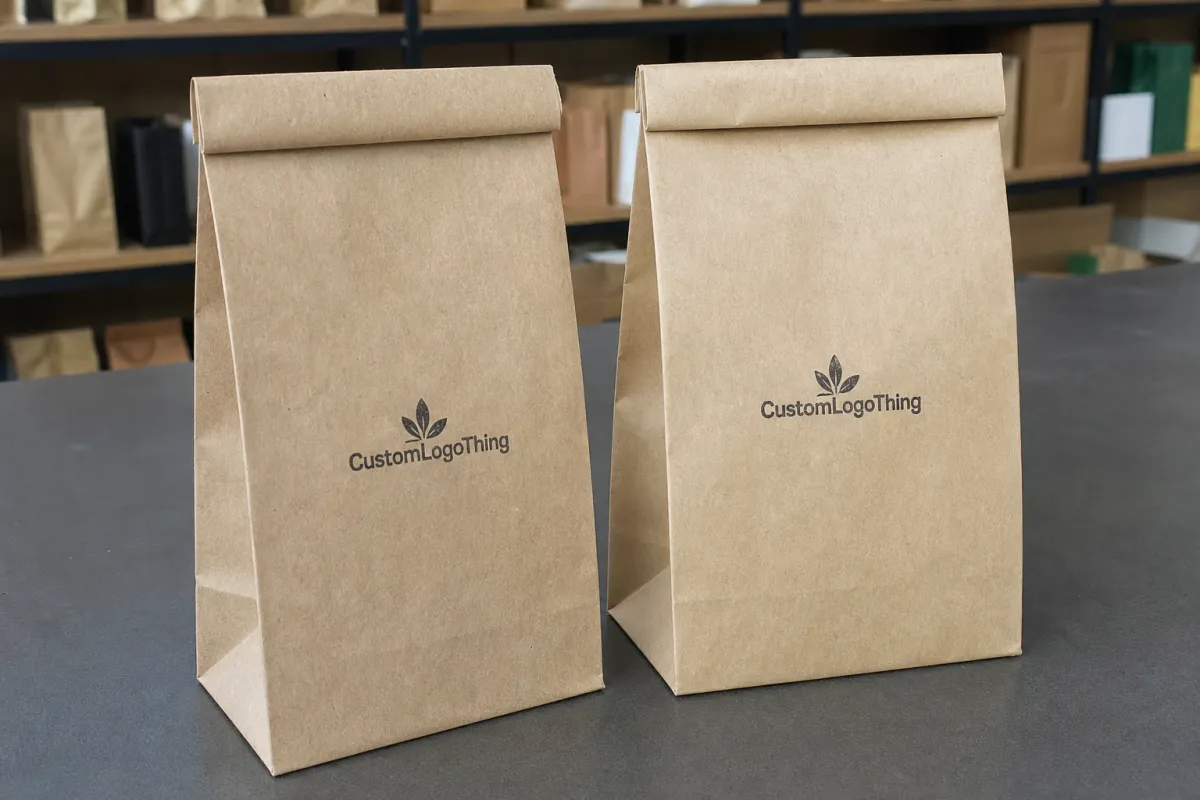
A corporate gifting Twisted Handle Paper bags material sample guide should help a buyer judge structure, cost, and finish, not just artwork. The useful sample is the one that proves the bag can hold the real gift, carry well, and stay presentable after handling.
Buyers get misled when a sample looks polished on a desk but fails once a dense box, bottle, or kit goes inside. The weak points are usually the same: board stiffness, handle anchoring, bottom support, and glue coverage. If those are wrong, the bag can look premium and still perform badly.
These bags are used for launch kits, holiday gifting, client thank-yous, event handouts, and presentation packs where the bag becomes part of the brand experience. That is why the sample has to be judged as a working product, not a decoration.
Corporate gifting twisted handle paper bags and the sample trap
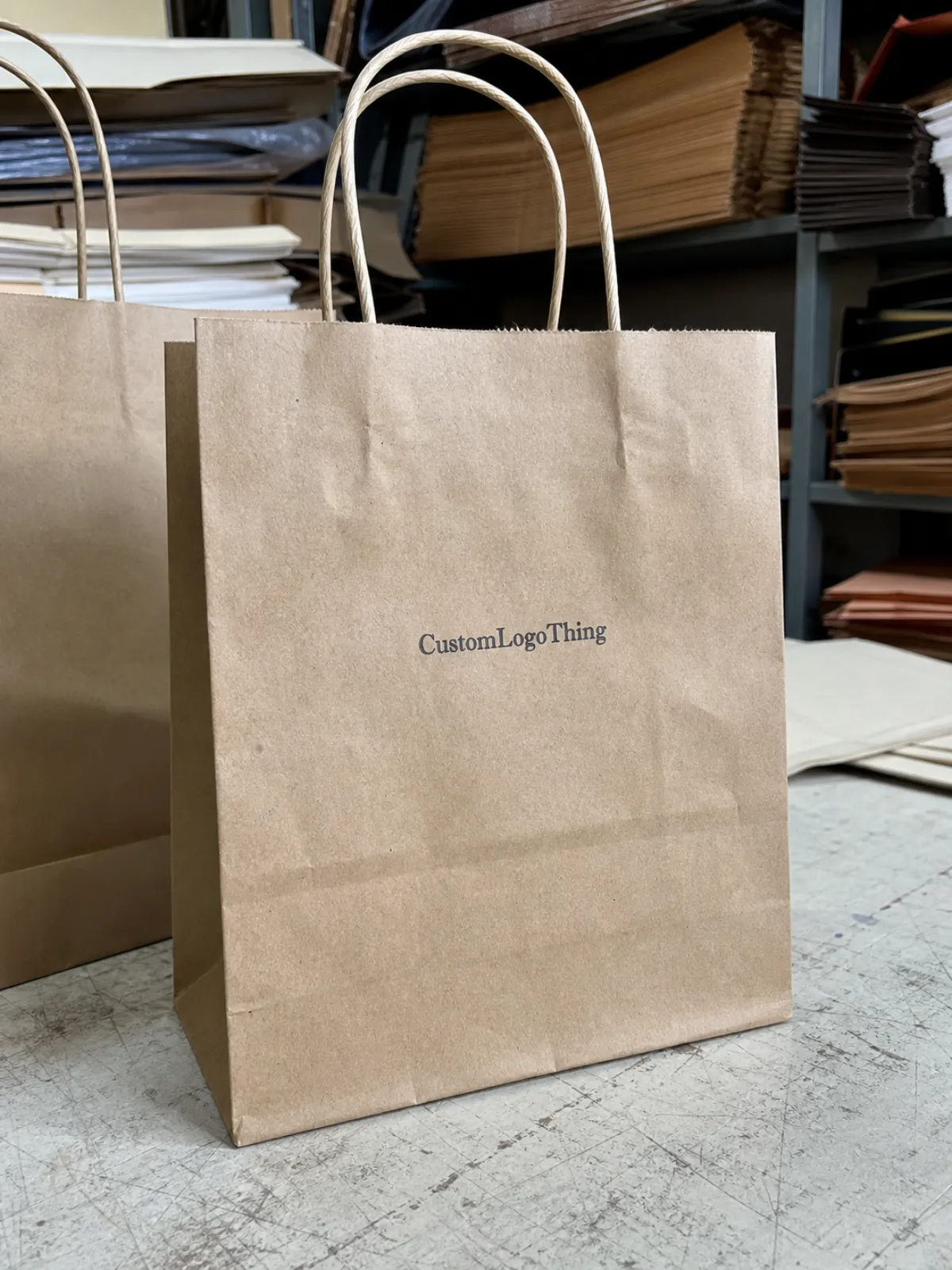
The sample trap is approving a bag because it photographs well, not because it survives real use. A clean mockup tells you very little about how the bag behaves after a 1.5 kg gift box is lifted, carried, and set down more than once.
What the sample should prove:
- Construction - do the side seams hold, do the gussets sit square, and does the top fold stay crisp?
- Load handling - does the bag stay upright with the actual gift weight?
- Print and finish - do logos land correctly, and does the surface match the intended brand feel?
- Carry comfort - do the twisted handles cut into the hand after a short carry?
Handle comfort gets overlooked, but it matters when guests carry the bag through a venue or to a car. If the handle bites into the hand, the bag feels cheaper than it looks.
Corporate gifting programs also reuse the same format for different contents. One order may hold a notebook and mug, another a bottle and charger. A sample should reflect the heaviest realistic load, not the easiest one. If the bag is meant for boxed gifts, ask for a stronger bottom board or reinforced fold so the base does not bow under pressure.
The print can be perfect and the bag can still fail. Handles and bottom support usually tell the truth first.
If a supplier treats the sample stage as a color check only, push back. A sample that cannot pass a fill test is a risk, not an approval.
How a sample is built from kraft to finish
A Twisted Handle Paper bag is a set of linked decisions: outer paper, internal reinforcement, handle attachment, base support, and adhesive coverage. Each part changes how the sample feels and how long it stays square under load.
- Outer paper - kraft paper, coated art paper, or specialty stock.
- Top fold - folded and glued with a reinforcement strip underneath.
- Handles - twisted paper cord, cotton, ribbon, or braided cord.
- Side seams - the hidden area that keeps the bag square.
- Bottom insert - paperboard, chipboard, or a stiffer insert for heavier gifts.
Twisted handles are made from paper strips spun into a cord, which spreads tension better than a flat strip. The best samples show clean anchor points inside the bag, without crooked placement, glue bleed, or puckering at the top edge.
Finish affects the brand read quickly. Matte looks calmer and more corporate. Gloss feels brighter and more promotional. Soft-touch can feel premium, but it may scuff during transit. Aqueous coating is often a practical middle ground because it protects the surface without changing the bag into a slick object.
Print method matters as well. Fine gradients and tiny type can soften on textured kraft, while coated white stock usually holds detail better. For that reason, a useful sample should match the final material family and the final structure. A proof on paper is not enough if the sample build is different.
Material choices that change strength, look, and feel
For corporate gifting, material choice has to do three jobs at once: support the gift, shape the brand impression, and control cost. The safest way to choose is to start with the load, then the presentation, then the finish.
Kraft paper is the workhorse. It looks natural, handles scuffs better than many coated stocks, and fits sustainability-led programs. If the brief mentions recycled content or certification, check the actual paper spec rather than relying on a general claim.
Coated art paper gives sharper print reproduction and a cleaner luxury feel. It is a strong choice for high-contrast logos and corporate kits where the bag needs a more polished appearance. It usually costs more than plain kraft, but it can make a modest gift feel more deliberate.
Recycled paper stocks are useful when the brand story matters, but they are less uniform than many buyers expect. A recycled bag can perform well if the base insert and handle anchoring are right. The tradeoff is surface variation, which some brands like and others do not.
If the brief says “premium,” tie that to a build choice instead of a vague preference. The table below is a practical starting point.
| Material / Build | Typical Use | Approx. Feel | Rough Unit Cost Range |
|---|---|---|---|
| 120-150gsm kraft paper + paper twisted handles | Light gifts, event kits | Natural, practical | $0.18-$0.35 at higher volume |
| 157-200gsm coated stock + aqueous coating | Client gifts, brand launches | Smoother, sharper print | $0.28-$0.60 depending on print coverage |
| 200gsm+ specialty stock + soft-touch finish | Premium gifting, executive sets | Polished, tactile | $0.60-$1.50+ with custom handles |
| Recycled kraft with reinforced base | Sustainability-led programs | Earthy, honest | $0.22-$0.48 depending on spec |
Handle choice changes the feel almost as much as the paper. Twisted paper handles are cost-effective and consistent. Cotton feels softer. Ribbon or braided cord can lift the presentation, but pricing rises quickly. If the gift is dense or boxy, add reinforcement at the handle points and base.
For sustainability claims, be precise. FSC certification, recycled content, and biodegradability are different things. If any coating or laminate is added, ask how it affects the claim before you approve the spec. For buyers who want a reference point on sourcing language, FSC is a useful starting point.
For handling and transit sanity checks, some teams also compare their samples against general packaging expectations from ISTA. The goal is not to turn a paper bag into shipping equipment. It is to avoid the obvious failure where the bag collapses before the gift leaves reception.
Cost, MOQ, and unit price: what actually moves the number
The unit price is driven by size, paper weight, print coverage, finish, handle type, reinforcement, and quantity. If several of those change at once, the quote can jump quickly. That is normal manufacturing math.
The biggest price driver is often the combination of low quantity and custom structure. A 500-piece order with special handles will cost much more per unit than a 5,000-piece order in a standard size because setup, trimming, glue work, and finishing labor have to be spread across fewer bags.
Useful budget ranges:
- Sample fees - often $40-$150 for a basic build, more for specialty coating or revision rounds.
- Short production runs - commonly $0.45-$1.80 per bag, depending on size and finish.
- Higher-volume runs - often $0.18-$0.65 per bag for simpler builds once the spec is locked.
MOQ pressure usually reflects waste, setup time, and finishing labor. If you want apples-to-apples pricing, give every supplier the same spec sheet and compare only the same build. A 170gsm coated bag with lamination is not comparable to a 170gsm kraft bag with no coating.
Include these details in every quote request:
- Exact finished dimensions
- Paper type and GSM
- Handle material and length
- Print colors and coverage
- Coating or lamination
- Reinforcement at base and handle points
- Packing method and shipping assumptions
A useful quote should separate sample cost, production cost, and freight. If they are bundled together, comparison gets messy. If artwork changes or revision charges are hidden, expect budget creep later.
Process and turnaround: from request to approved proof
The workflow is straightforward. First comes the brief. Then the supplier confirms or creates the dieline. Artwork is checked for size, bleed, and placement. Material is selected. A sample is built. You review it. If needed, one or two revision rounds follow. Then the approved version becomes the production standard.
Some steps are digital and some are physical. Artwork review can happen quickly by email or PDF, but handling feel, fold integrity, and real carry comfort only show up in a sample. That is why approving off a screen mockup usually backfires.
Typical timing looks like this:
- Sample build - often 3-7 business days for standard structures.
- Sample revisions - another 2-5 business days if only artwork or finish changes.
- Production - commonly 12-20 business days after approval, depending on quantity and finishing complexity.
Special finishes slow things down. Soft-touch lamination, spot UV, ribbon handles, and custom reinforcement all add time. So do missing artwork, vague dimensions, and late spec changes. If the sample is still changing while the event date is close, the project is unstable.
For corporate programs with fixed launch dates, lock the structure before timing becomes a problem. No volume order should move forward until the bag has passed a real fill test, not just a visual approval.
Common mistakes that waste sample approvals
The most common mistake is approving a sample because the logo looks good while ignoring the load test. That is how buyers end up with a bag that feels premium empty and awkward full. A close second is comparing samples with different paper weights as if the comparison means anything.
Another common problem is vague direction. “Make it premium” is too fuzzy to act on. Premium can mean heavier GSM, tighter print registration, better handle stock, softer coating, or cleaner board construction. If you do not define it, the supplier guesses.
Skipping a fill test is the fastest way to approve the wrong bag. Use the actual gift contents, or at least the same weight. Then check:
- Does the base stay flat?
- Do the handles stretch or bite?
- Does the top fold crease cleanly?
- Does the bag tilt when set down?
If the bag is for a boxed candle, a bottle, or an electronics kit, one empty-sample approval is not enough. The product has to work in the hand, not just on a screen.
Documentation mistakes create another layer of waste. If you change the coating, handle length, or paper grade between sample rounds and never record it, nobody remembers which change fixed the problem. That turns a simple approval into a scavenger hunt.
Expert checks before you place the final order
Before volume production, build a one-page spec sheet. Keep it simple and complete. Include dimensions, paper type, GSM, handle style, print colors, coating, reinforcement, quantity, and packing method. If the spec needs a paragraph to explain itself, it is probably too complicated for the timeline.
Then run a real-world test. Put the actual gift into the bag, lift it, carry it, set it down, and check the bottom. A bag that survives on a table can still fail once it is lifted by the handles. Also check whether it stands upright in transit or collapses inside cartons.
Ask for side-by-side photos if you are choosing between two material options. A coated stock and a kraft stock may both look good separately, but side by side the brand story becomes clearer. One reads polished and formal. The other reads natural and approachable.
Think about storage too. If the bags will sit in a humid stockroom, a heavy matte stock may behave differently than expected. If they are packed with other promotional items, specify carton quantity and stacking pressure so the finished bag does not arrive scuffed.
Final check: does the material support the message? If the brand wants an eco-friendly story, confirm the certification and any claim around recyclability or biodegradability. If the message is luxury, make sure the finish and handle feel match that promise. A shiny logo alone does not make a premium bag.
Use the sample to lock the spec, approve the right build, and avoid expensive guessing later.
What should I check first in a twisted handle paper bag sample for corporate gifting?
Check board stiffness, handle anchoring, and bottom reinforcement before you judge print or color. Then load the bag with the real gift weight and test for wobble, handle stretch, and fold stress. If it fails the carry test, it is not ready for production.
How do I compare paper weights for corporate gifting paper bag samples?
Compare GSM only after keeping bag size, coating, and reinforcement the same. Ask for the supplier's full spec sheet so you are not comparing a 170 GSM coated bag to a 170 GSM kraft bag like they are the same thing. Then run a fill test, because paper weight alone does not tell you how the bag behaves in the hand.
Which material works best for premium twisted handle gift bags?
Heavy coated paper or premium kraft usually works best, depending on whether you want a polished or natural look. Add reinforcement at the base and handle points if the gift is dense, boxed, or oddly shaped. Choose the finish based on brand feel first, not because someone told you gloss is always better.
How long do sample and production turnaround times usually take?
A physical sample often takes a few business days, while production can take longer depending on quantity and finish complexity. Special coatings, custom handles, and artwork changes can add time quickly. The fastest project is the one with a locked spec and clean artwork from the start.
How do I keep MOQ and unit cost under control on custom paper bags?
Use a standard size if you can, because custom dimensions usually push cost up. Limit special finishes and complicated handle upgrades unless they truly improve the gift experience. If you are testing the market, order a small pilot run first and scale once the spec is proven.