A bag can look premium on a screen and still collapse the second someone lifts it by the handles. That is the problem behind the chocolate Twisted Handle Paper Bags material thickness guide: buyers often judge color, print, and finish first, then discover the paper is too light, the base is weak, or the handle patch was never designed for real carry use.
That mistake gets expensive fast in chocolate packaging. These bags often carry boxed bars, seasonal gift sets, assorted chocolates, or rigid cartons. So the spec has to handle weight, shape, and carry distance, not just shelf appeal. Thickness matters, but only as part of the whole structure.
In practical terms, gsm tells you how much paper is in the sheet, caliper tells you how thick it feels, and the handle build tells you whether the bag survives everyday handling. Thicker is not automatically better. Overspec a light product and you get a stiff, noisy bag that wastes money. Underspec a gift set and the bag gives up exactly where customers can see it.
So yes, this is a chocolate twisted Handle Paper Bags material thickness guide. The real job is simpler: match the paper weight, handle reinforcement, and finish to the chocolate you are selling, then stop paying for features the bag does not need.
Chocolate twisted handle paper bags: what thickness actually means
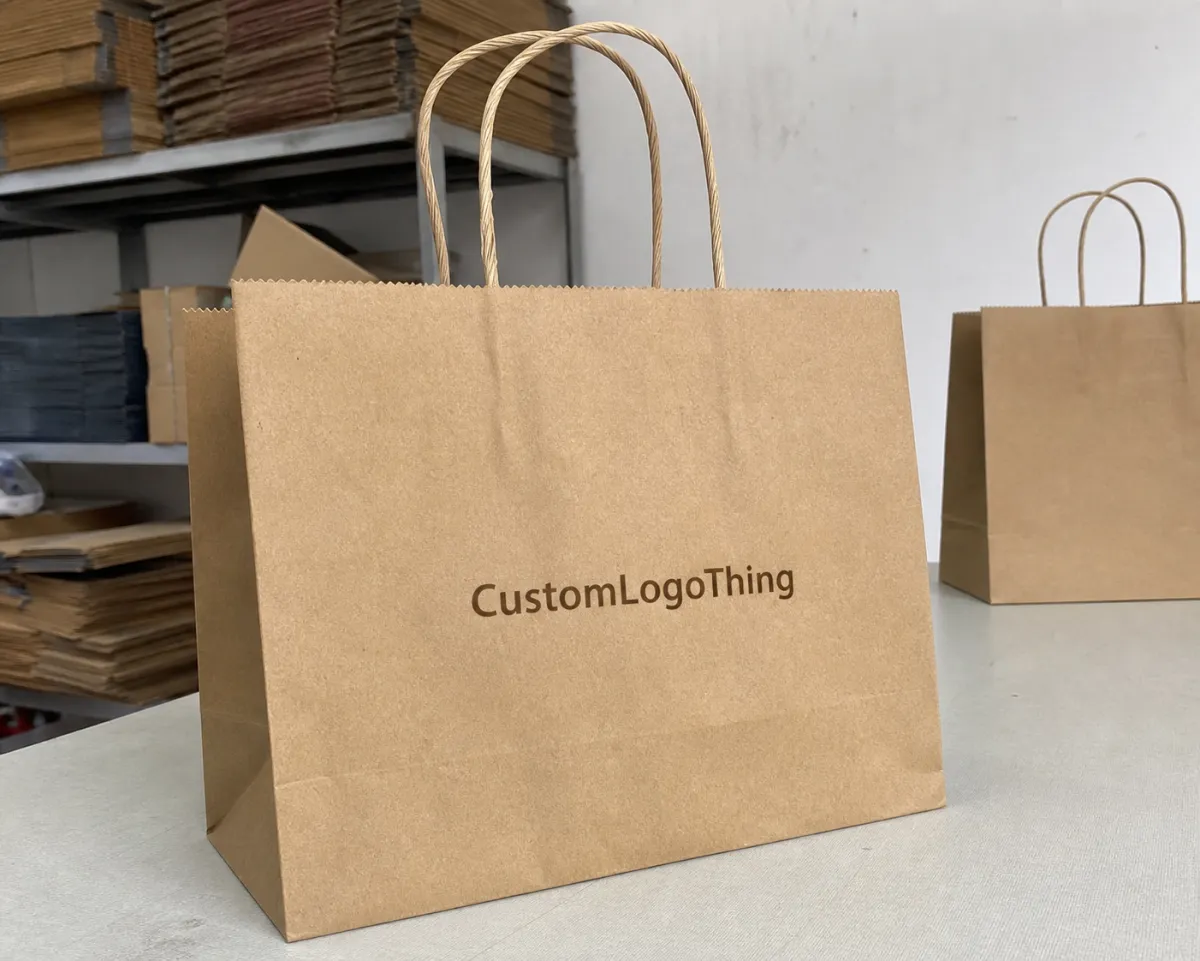
“Thickness” gets used loosely in packaging, which causes half the confusion. Factory teams may talk about gsm, caliper, kraft grade, top fold, or reinforcement patch as if everyone speaks the same shorthand. Buyers usually do not. They just want one answer: will the bag feel solid, or will it fold up like cheap giveaway stock?
Gsm is the weight of the paper per square meter. Caliper is the measured thickness, usually in millimeters or microns. They move together, but not perfectly. Two papers can show similar gsm and still feel different because fiber quality, coating, and compression during production affect stiffness and hand feel. That is why a 200 gsm kraft sheet from one mill can feel sturdier than a rougher 220 gsm sheet from another.
For chocolate bags, the structure matters as much as the sheet. A Twisted Handle Paper bag is not corrugated board. It does not rely on flutes for crush resistance. It relies on the bag body, the gussets, the bottom construction, and the way the handle is anchored into the top fold. If one part is weak, the whole bag feels weak. Packaging is rarely subtle about this.
Chocolate packaging also loads the bag in a slightly annoying way. A boxed bar is easy. A mixed gift set is not. Add a rigid tray, inserts, or a tall carton, and the force moves toward the bottom seam and the handle anchors. That is why thickness selection has to be tied to real carry conditions, not just how the bag looks on a render.
One thing buyers miss: a thicker bag can feel worse if the load is light. It may stand too rigidly, crease badly at the gusset, or sound crinkly and cheap in hand. More material does not automatically mean a better result. Convenient, maybe. True, not always.
For most chocolate brands, the goal is not the heaviest possible bag. It is the lightest spec that still survives the actual product, the actual packing line, and the actual customer carry path. That is the difference between smart packaging and expensive habit.
How paper caliper, gsm, and handle build affect performance
Start with the paper body, but do not stop there. A bag that looks fine flat on a table can fail once a customer loads it, picks it up by one handle, twists while walking, and sets it down on a car seat. That is normal use, not abuse. The spec should survive normal use.
Handle performance depends on twisted rope construction, adhesive coverage, anchor width, and how the top of the bag is folded and glued. A narrow handle patch can cut into the paper. A weak glue line can peel under repeated lift cycles. A good patch spreads the load across the top area so the paper is not taking force at one tiny point. That detail matters more than many buyers expect.
There is also a difference between a bag that stands cleanly on a retail shelf and one that survives a checkout lane. Shelf presentation is mostly about rigidity and fold quality. Checkout survival is about point loads, repeated grabbing, and whether the base stays square after the bag has been tugged and set down a few times. If you want a bag that holds shape, the top fold and bottom gusset need to be designed together, not treated as separate decorative features.
Print coverage changes the feel too. Heavy solids, full-bleed art, or a dark coating can make a bag feel smoother and slightly firmer, but it can also hide the natural texture of kraft paper. That works if the goal is a cleaner premium look. It works less well if the brand story depends on visible fiber, recycled texture, or a more natural finish. Surface treatment changes perception as much as structure does.
In practice, a well-built midweight bag often outperforms a heavier bag built poorly. A 200-230 gsm kraft body with a clean gusset, decent bottom lock, and properly glued twisted handles is usually more dependable than a thicker sheet with sloppy reinforcement. The math is annoying that way, but the bag does not care about spreadsheets.
For a quick abuse check, borrow the logic behind ISTA testing and ask a supplier to simulate carrying, set-downs, and short drops before mass production. You do not need a lab for every order. You do need a reality check before you print 5,000 pieces and hope for the best.
Key factors that decide the right bag strength
The right thickness starts with the product itself. A 120 g chocolate bar wrapped in paper is a different job from a boxed assortment with inserts, jars, or seasonal fillers. Same category. Very different stress profile. If the product has hard corners or a tall profile, the bag needs more base stability and sidewall support. If the product is compact and dense, the load is easier to manage, but the handle still has to carry it safely.
Footprint matters too. A wide but shallow box can push outward on the side panels and gussets more than a smaller, taller pack with the same weight. That is why size and thickness should be chosen together. Paper weight by itself is a weak way to spec a bag. The bag behaves as a system.
Finish choice changes stiffness and grip. Uncoated kraft paper is lighter visually and more tactile. Matte lamination looks cleaner for premium retail, but it adds cost and can complicate recycling claims. Soft-touch coating gives a luxury feel, though it also adds surface complexity and can show wear differently on corners. If the brand leans into recycled materials, a cleaner uncoated or lightly printed kraft body usually makes more sense than layering on decorative treatments that fight the material story.
Sustainability is not just a marketing line anymore. Some buyers need FSC certified paper, and some want a specific level of post-consumer waste content to support a packaging claim. That is workable, but not friction-free. Recycled fiber can reduce brightness and consistency, and not every finish plays well with recyclability. If you are aiming to position the bag as biodegradable packaging, the entire structure has to support that claim, not just the base sheet.
Then there is the route the bag travels. Counter to customer. Customer to car. Car to office. Office to gift table. That is where a bag gets judged. Not on a studio render, and definitely not on a supplier’s first glossy photo.
A render is not a load test. If the sample cannot survive the real chocolate assortment, the spec is wrong.
For practical buying, think in tiers. Light retail bars usually sit in the lower range. Boxed chocolates and mixed gift sets usually need midrange kraft. Heavier seasonal packs, luxury hampers, or bags with premium finishing need a stronger body and better handle reinforcement. There is no magic number that fits every brand, despite what some quotes try to imply.
One more caution: the product may be light, but the presentation may not be. Gift packaging often includes inserts, ribbons, rigid boxes, or layered internal trays. Those extras push the load up and sometimes change the center of gravity. A bag can be strong enough on paper and still feel wrong in hand because the load sits too high or tilts to one side.
Cost, MOQ, and quote variables that change the price
Three things move the quote fastest: paper weight, handle and reinforcement build, and print complexity. Everything else matters, but those three usually decide whether the order stays in budget or starts behaving like a science project.
At a common custom run of 3,000 to 5,000 pieces, lighter retail bags can land in a lower unit-cost band, midrange chocolate gift bags usually sit in the middle, and reinforced premium bags climb quickly once the handle patch, heavier paper, and finishing start stacking up. The exact number depends on size and artwork, but the curve is predictable. Bigger paper weight is rarely a tiny price jump once the line has to be adjusted.
| Spec tier | Typical paper range | Best for | Rough unit price at 5,000 pcs | Cost note |
|---|---|---|---|---|
| Light retail | 157-170 gsm | Single bars, light boxed items | $0.18-$0.28 | Good for simple print and low fill weight |
| Midrange | 200-230 gsm | Boxed assortments, seasonal gift bags | $0.26-$0.42 | Usually the best balance of feel and budget |
| Premium reinforced | 250-300 gsm | Heavier sets, luxury chocolate gifts | $0.38-$0.68 | Higher handle and top-fold reinforcement cost |
MOQ pressure shows up quickly once the spec gets fancy. Thicker paper, special handle colors, custom foil, inside printing, and unusual finishes often push minimums up because the factory has to buy more material and keep the machine set longer. If a supplier offers a lower MOQ, that may be real. It may also mean the cost moved somewhere else, usually into the unit price.
Hot foil, spot UV, embossing, and custom inserts can add more to the total than a one-step gsm upgrade. That surprises buyers all the time. A simple spec with sharp artwork often gives a better result than a fancy spec that eats budget before the bags even ship. A bag should carry chocolate, not carry ego.
Small runs can look cheap on paper and still cost more per bag once plate charges, setup, and packing are divided out. Large runs usually improve unit cost, but only if storage and inventory risk make sense. Ordering too much just to hit a price break is a great way to discover how much warehouse space costs.
The smartest comparison is not “cheapest versus most expensive.” It is “what costs less after failure.” If one bag collapses at checkout or tears in transit, you pay again for replacements, rush shipping, and lost goodwill. One failed carton can wipe out the savings from choosing the lighter paper.
Production steps, timeline, and lead time expectations
A clean order follows a simple sequence: spec confirmation, artwork check, dieline review, sample approval, production, packing, and shipment. Skip one step and the delay usually shows up later, with attitude.
For straightforward reorders, production often moves faster because the bag size, paper, and handle style are already proven. New artwork, custom coatings, or special handle colors add time. A reasonable expectation for custom twisted Handle Paper Bags is often 12-18 business days after proof approval for production, with samples taking another few days before that depending on complexity. Then add shipping, because the bags still have to move from the factory to your warehouse or fulfillment point.
Where do delays happen? Mostly in the usual places. Low-resolution artwork, unclear dimensions, not enough bleed, vague handle color notes, and late changes to print coverage all slow the schedule. If a buyer sends a mockup that looks fine but does not specify the actual carton size, the factory has to guess. Guessing is bad business. It also produces awkward bags.
Samples deserve their own timeline. A paper dummy or unprinted sample can help confirm size and feel quickly, while a printed pre-production sample gives a better read on color, coating, and handle placement. That extra step can save a full batch from becoming scrap. A few days spent here is cheaper than a warehouse full of almost-right bags.
If the order needs a rush, the factory may have to split cartons, interrupt a line, or use faster transport. That raises cost. Sometimes the rush fee is worth it. Sometimes it is just panic wearing a suit. Be honest about the real launch date before committing.
For brands with sustainability targets, this is also the stage to check whether the stock is FSC certified, whether recycled content changes print contrast, and whether a coated finish still fits the recycling story. The packaging claim should be defensible, not just pretty on the website.
Common mistakes buyers make when choosing thickness
The first mistake is choosing by appearance alone. A bag can look rich in a digital proof and still be too light for a boxed chocolate assortment. Print makes people feel safe. Paper has other plans.
The second mistake is ignoring the bottom. A weak base fails before the top of the bag ever looks stressed. If the bottom seam and gusset are not designed for the product shape, the bag bows, tilts, or splits under load. The handle is not the only stress point. It just gets blamed more often because it is easier to see.
The third mistake is overbuying thickness for lightweight promo items and underbuying it for gift sets. That is how buyers end up paying twice: once for unnecessary paper, then again for a second run after the first spec proves too weak. The goal is not “heaviest possible.” The goal is “strong enough, with margin.”
The fourth mistake is testing with the wrong load. A weighted box is useful, but it is not the same as the actual chocolate SKU, especially if the product has corners, inserts, glass, or uneven weight distribution. If the bag is going to be used in-store, carry it through a short walk test, set it down, pick it up again, and check the top fold and handle anchor for whitening or stretch marks. Those tiny stress clues are where the truth lives.
The fifth mistake is skipping handle testing during seasonal peaks. That is reckless, frankly. Holiday traffic means faster handling, more stacking, and longer carry distances. A bag that passes in a calm sample test can still fail when the store gets busy and people start yanking bags off a counter like they are late for a train.
And one more, because it keeps showing up: do not compare a paper bag to corrugated board and assume the same thickness logic applies. Corrugated has flutes. A twisted handle bag does not. Different structure, different behavior, different failure points.
Another quiet issue is overestimating how much print coverage can hide weakness. Dark ink and heavy graphics can make a bag look premium, but they do not repair a soft gusset or a weak handle patch. Graphics are not structural reinforcement. Nice try, though.
What to send for samples, quotes, and a clean final spec
If you want a quote that is actually useful, send dimensions, product weight, packaging shape, print area, finish preference, and expected order quantity. “Standard size” is not a spec. It is a guess with a polite tone.
Ask for two or three thickness options side by side. That makes it easier to compare hand feel, stiffness, and carry strength without trying to decode factory language. If the supplier can only quote one paper weight, the conversation is still too vague.
Then test the sample with the real chocolate product, not a random object of similar weight. Carry it by the handles, walk a short distance, set it down, and look at the side gussets, bottom seam, and handle anchors. If the bag whitens badly, leans heavily, or feels soft at the base, move up a thickness tier. If it feels like armor plating for a light product, step down. Simple rule, decent results.
For custom logo bags, build the final spec around the product load first and the finish second. Fancy coatings and foil are fine, but they should not be asked to rescue a weak structure. The structure comes first.
A useful final spec usually includes paper gsm, target caliper if the supplier provides it, handle style, handle color, top fold width, bottom reinforcement, print method, finish, and carton count. That sounds fussy. It is. Fuzzier specs are how orders drift.
That is the practical side of the chocolate twisted Handle Paper Bags material thickness guide: choose the lowest spec that still passes a real carry test, then confirm the handle, base, and finish all support the same job. Send a clean spec sheet, request one benchmark sample, and lock the final thickness before mass production starts. Fixing a bad order after the boxes are already printed is much more expensive than making the right call once.
FAQs
What thickness is best for chocolate twisted handle paper bags?
For lighter boxed chocolates, a midrange kraft spec usually gives the best mix of cost and carry strength. For premium gift sets or heavier assortments, move up the paper weight and reinforce the handle area. The right answer depends on fill weight, box shape, and how far customers will carry the bag.
Are thicker chocolate twisted handle paper bags always better?
No. Thicker paper costs more and can feel too rigid if the product is light. The better choice is the lowest spec that still passes real carry testing with your actual product. A well-built midweight bag often performs better than a heavier bag with weak handles or a poor base.
How does gsm affect the price of twisted handle paper bags?
Higher gsm usually raises material cost, but the price jump is often bigger when it also changes handle reinforcement or MOQ. Printing, coatings, and special finishes can add as much as a paper-weight upgrade. Ask for side-by-side quotes so you can see whether the upgrade is worth the extra unit cost.
What is a safe MOQ for custom chocolate paper bags?
There is no universal number because MOQ changes with paper weight, print method, and handle build. Simple specs usually allow lower MOQ than premium bags with special finishes or custom colors. If a supplier pushes a high MOQ, ask whether the cost is driven by material, machine setup, or packaging constraints.
How can I tell if a sample bag is strong enough?
Load it with the real product, not just a guessed weight, and carry it by the handles for a short test. Check the bottom seam, side panels, and handle anchors for stretching, whitening, or tearing. If the sample fails in a short test, do not assume production will fix it.

