Buyer Fit Snapshot
| Best fit | Corrugated Box Dividers Bulk projects where brand print, material claims, artwork control, MOQ, and repeat-order consistency need to be specified before quoting. |
|---|---|
| Quote inputs | Share finished size, material target, print colors, finish, packing count, annual reorder estimate, ship-to region, and any compliance wording. |
| Proofing check | Approve dieline scale, logo placement, barcode or warning zones, color tolerance, closure strength, and carton packing before bulk production. |
| Main risk | Vague material claims, crowded artwork, missing packing details, or unclear freight terms can make a low unit price expensive after revisions. |
Fast answer: Corrugated Box Dividers Bulk: Custom Shipping Solutions should be specified like a repeatable production item. The safest quote records material, print method, finish, artwork proof, packing count, and reorder notes in one written spec.
Production checks before approval
Compare the actual filled-product size with the drawing, then confirm tolerance on folds, seals, hang holes, label areas, and retail display edges. Reserve space for logos, QR codes, warning copy, and material claims before decorative graphics fill the panel.
Quote comparison points
Review material grade, print process, finish, sampling route, tooling charges, carton quantity, and freight assumptions side by side. A quote is only useful when the supplier can repeat the same color, closure quality, and packing count on the next order.
Corrugated box dividers bulk are often the quiet fix behind a lower damage rate, because the outer carton is rarely the only thing doing the work. Most product failures begin inside the box, where jars, bottles, parts, or kits shift just enough to scuff, chip, or crack before the shipment even reaches the carrier network. If the goal is fewer claims, steadier pack-out, and a shipping process that does not drift from one shift to the next, the divider design deserves real attention.
For brands that ship fragile, polished, or tightly organized products, corrugated box dividers bulk turn an empty carton into a set of controlled compartments. The result is less movement, a tidier presentation, and fewer surprises when the receiver opens the box. Warehouse teams feel the difference too, since they are not forced to improvise with loose paper, foam scraps, or oversized inserts that slow the line and create waste. I've seen plenty of operations where the divider spec was treated like a minor detail, and honestly, that is usually where the headache starts.
Why Corrugated Box Dividers Bulk Cut Damage Before It Starts
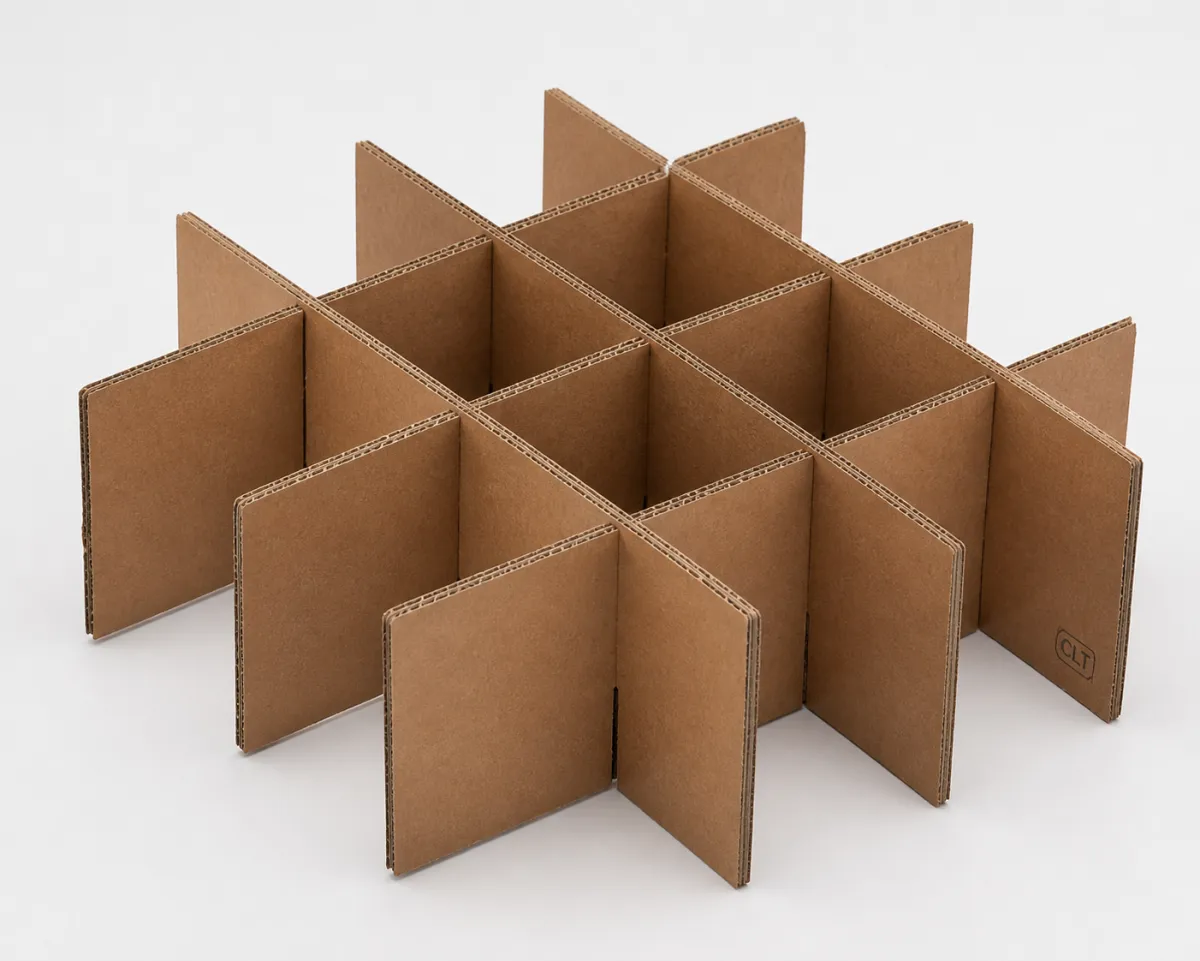
Most transit damage comes from repeated small blows, not one dramatic drop. Vibration, compression, and side-to-side motion work on the package throughout the trip, and those forces add up fast. Corrugated box dividers bulk help because they separate each unit inside the carton, giving every item its own pocket and keeping products from knocking into each other as the shipment moves.
That matters in a very direct way for packaging buyers. Glass bottles, candle jars, cosmetic containers, hardware kits, and replacement parts all benefit from internal separation because the divider is limiting movement every time the carton is lifted, stacked, or slid across a conveyor. Corrugated box dividers bulk keep the load centered and reduce the chance that the contents will shift into the kind of motion that causes real-world breakage. A little restraint inside the box can save a lot of grief later.
Labor savings show up too. A well-sized divider creates a pack-out routine that workers can repeat without thinking through each carton from scratch. Product goes into the cell, the fit is checked, the carton closes, and the packer moves on. When the divider is off by even a little, the line starts absorbing extra steps: void fill gets added, items get forced into cells that are too tight, and the carton has to be reworked. That is where production time disappears.
In practice, corrugated box dividers bulk support three things at once:
- Protection - items stay separated so they do not collide during handling.
- Presentation - products remain upright, aligned, and easier to unbox cleanly.
- Efficiency - packers repeat the same motion every time, which keeps throughput steady.
That is why experienced shipping teams often choose dividers instead of loose fill. Loose fill can occupy space, but it does not hold product position with the same consistency. Corrugated box dividers bulk fit repeat shipments better because the cells are fixed, the spacing is predictable, and the box behaves the same way from pallet to pallet.
“If the product can move, it can scuff, chip, or break. The divider's job is to stop that motion before the carrier gets a chance to punish it.”
The business case is simple. Fewer returns reduce rework costs. Less breakage means fewer replacements and less pressure on customer service. A cleaner unboxing supports the brand without adding decoration that does not carry its weight. For warehouses shipping the same SKU week after week, corrugated box dividers bulk keep the process stable enough that the team can rely on the same pack pattern instead of rebuilding it every shift.
Many companies pair divider inserts with Custom Shipping Boxes so the outer carton and internal partition are designed together. That usually produces a better result than buying a strong box and hoping the contents stay still inside it.
Corrugated Box Dividers Bulk: Materials, Flutes, and Styles
Corrugated box dividers bulk are not one-size-fits-all. Board grade, flute profile, and divider pattern all shape how well the insert performs under weight, vibration, and stacking pressure. The right choice depends on the product, the distance it travels, and the amount of handling the carton will see before it reaches the end user.
Single-wall corrugated is the usual starting point. It tends to offer a workable balance of stiffness, cost, and availability, especially for lighter products and moderate shipping distances. Heavier bottles, denser retail kits, and shipments that may be stacked high often justify double-wall construction, since the extra material improves crush resistance and lowers the risk of panel collapse. If you're unsure where to start, single-wall is often the practical baseline, not the final answer.
Flute choice matters as well. B-flute is a frequent pick for divider work because it gives a compact profile and strong puncture resistance. C-flute adds more cushioning and stacking strength. E-flute or microflute can make sense for premium presentation or thinner carton builds, though it is not always the right answer for heavier loads. Corrugated box dividers bulk should be matched to the product, not chosen out of habit.
Common styles include:
- Slotted dividers - interlocking strips that form cells and go together quickly.
- Grid partitions - cross-laced inserts that create multiple compartments in one carton.
- Die-cut configurations - shaped pieces that follow a specific product footprint or container shape.
- Partition inserts - assembled panels sized for repeat pack-out and consistent carton fit.
Slotted styles are often chosen for speed and standardization. Grid partitions work well when a pack needs multiple rows and columns inside the same shipper. Die-cut options fit better when the product has an unusual shape, a tapered profile, or a retail display requirement that demands more control. Corrugated box dividers bulk can be built around any of these formats, but the best one comes down to how tightly the product needs to be held in place.
Board direction also plays a role. When the flute direction lines up with the load path, the divider resists compression better and stays more stable under stacking pressure. That matters when cartons sit on a pallet for days before shipping or travel through a network where they are handled more than once. Recycled content can help with cost and sustainability goals, but the board still has to meet the performance target. A divider that saves a few cents and then collapses under pressure does not really save anything.
For sustainability-minded buyers, FSC-certified board can be a useful specification, and many programs also align with source reduction goals that packaging teams discuss with suppliers and auditors. The real sequence is straightforward: choose corrugated box dividers bulk that do the job first, then confirm the certification or recycled-content target. A divider that looks responsible on paper but fails in shipping is a weak trade.
Industry references such as ISTA testing standards and common packaging specifications help buyers judge whether a divider structure can survive actual transit conditions. The format should be chosen against the product risk, not just the box dimension. That sounds basic, but it is exactly where a lot of programs get sloppy.
Specifications That Matter: Size, Cell Count, and Fit
The spec work behind corrugated box dividers bulk is where a decent quote turns into a package that performs. If the carton’s inside dimensions are even a little off, the divider can end up loose, tight, or awkward to assemble. That is why the first measurement that matters is the carton interior length, width, and height, not the outside size printed on a box spec sheet.
After that comes the product footprint. Measure the actual item, not the marketing dimensions on a label. Glass bottles can vary at the shoulder. Jars often have lids that flare wider than the body. Electronics may include cords, chargers, or inserts that change the space envelope. Corrugated box dividers bulk need enough room for the product to slide into the cell without force, but not so much room that it can tip, rattle, or lean.
Cell count is the next decision. A 6-cell layout is common for taller bottles or larger jars. Twelve cells may suit smaller cosmetics or parts. In some pack-outs, the divider depth has to match product height closely so the item is supported before the carton closes. If the divider is too shallow, the product can rise above the partition and touch the lid, which defeats the purpose of the insert.
Small tolerance errors create bigger trouble than most people expect. A box that is a few millimeters too small can stress closures or crush labels. A box that is too large can let the insert shift and throw the grid out of alignment. Corrugated box dividers bulk work best when they are sized with a real sample pack, since paperboard and corrugated materials both have some give, and that movement should be planned for instead of guessed at.
A simple checklist keeps the spec on track:
- Measure the inside carton dimensions after the board is formed.
- Measure the product footprint at its widest and tallest points.
- Confirm the number of cells needed per carton.
- Check whether the product needs top clearance for closure or labels.
- Test one sample carton before approving a full run.
That mockup step pays off especially well for fragile goods and premium retail packs. Even when the numbers look perfect on paper, the real pack-out can reveal whether a divider is too stiff, too loose, or too shallow. Corrugated box dividers bulk that pass a sample fit test are much more likely to perform consistently once production starts.
Shipping conditions belong in the spec too. A local ground shipment with light stack pressure is not the same as a parcel network with long dwell times and multiple transfers. If the carton will travel far, face temperature and humidity swings, or sit under heavier pallets, the divider should reflect that stress. Packaging buyers who skip that step often end up buying the same divider twice.
For teams that need repeatable sourcing, corrugated box dividers bulk are easier to manage when the carton footprint, cell count, and product dimensions live in one document and go to the supplier before quoting. That keeps the back-and-forth short and speeds approval. It also cuts down on the awkward "almost fits" stage that nobody wants.
Cost, Pricing, MOQ, and Quote Factors for Bulk Orders
Pricing for corrugated box dividers bulk depends on more than sheet size. Board grade, cut complexity, divider depth, carton compatibility, total quantity, and whether the order uses a standard layout or custom tooling all shape the final number. A buyer who asks only for unit price usually gets a thin answer. A better quote breaks out the cost structure so the comparison is easier to read.
For planning, simple single-wall divider sets at higher quantities may land in a rough range of $0.18 to $0.45 per unit, depending on size and quantity. More complex grid layouts, heavier board, or tighter custom dimensions can move into the $0.50 to $1.25 range, especially at lower volumes. Those are not fixed prices, and they should not be treated like a promise. Freight, board markets, regional labor, and finishing requirements can push the number up or down.
Minimum order quantity usually follows the design. Standard slotted divider patterns can sometimes begin lower because the tooling is simple and the setup is familiar. Highly customized inserts, especially those requiring special die cuts or unusual panel counts, often carry a higher MOQ because the press setup and finishing steps need enough volume to justify the run.
If you are comparing suppliers, ask for pricing at several tiers. A strong quote should show unit cost at 1,000 pieces, 5,000 pieces, and 10,000 pieces, or similar breakpoints. That makes it easier to see where the savings begin. It also helps you decide whether ordering slightly more now lowers your annual packaging spend enough to matter. For recurring programs, many buyers also review Wholesale Programs so the divider buy fits the rest of the supply chain plan.
| Divider Style | Best Use | Typical Board | Approx. Unit Range | Notes |
|---|---|---|---|---|
| Slotted divider set | Bottles, jars, parts kits | Single-wall B-flute | $0.18-$0.45 | Fast to pack, good for repeat runs |
| Grid partition insert | Multi-item retail packs | Single-wall or double-wall | $0.35-$0.85 | Better cell control, more setup detail |
| Heavy-duty custom divider | Glass, liquids, premium goods | Double-wall or stronger liner | $0.65-$1.25 | Higher protection, especially for long transit |
Setup charges deserve a close look too. Some orders include a one-time tooling or die fee, while others use existing patterns and avoid that cost. Sampling may also be billed separately, though some vendors credit it back on production if the program moves ahead. Freight assumptions matter as well, because an attractive unit price can disappear if the supplier is far from the fulfillment center.
When evaluating corrugated box dividers bulk, the cheapest quote is not always the best one. If a lower-priced board collapses under load, or if the divider needs extra labor to assemble, the real cost climbs fast. The better measure is total landed cost, including labor, damage, returns, and inventory reliability. That is the number that tells the truth, even if it is less convenient than a neat unit price.
One more useful point: if the order supports a seasonal launch, promo run, or recurring replenishment cycle, it usually makes more sense to price the annual need instead of a single shipment. Corrugated box dividers bulk often become more economical when the supplier can plan material, press time, and freight in batches that match your demand curve.
Process, Timeline, and Lead Time for Production
A clean ordering process saves more time than most buyers expect. For corrugated box dividers bulk, the usual path starts with carton dimensions, product dimensions, target cell count, and quantity. From there, the supplier can review the layout, recommend a board grade, and spot fit issues before the job is approved.
Once the initial review is complete, the next step is usually a sample or dieline confirmation. If the divider is standard and the measurements are clear, a flat proof may be enough to move forward. If the product is fragile, irregular, or especially valuable, a physical sample is usually the better choice. Corrugated box dividers bulk should be tested in the actual carton whenever possible, because paperboard behaves differently once it is folded, slotted, and loaded.
Lead time depends on three main things: design complexity, material availability, and order volume. Simple repeat jobs can often move in 10 to 15 business days after approval. More customized programs, or orders that need revised sampling, can take 15 to 25 business days or longer. If board availability is tight or the job needs special handling, the schedule can stretch further. That is normal, and it is far better to know early than to rush the last mile.
Here is a practical approval flow:
- Supplier reviews carton and product measurements.
- Initial spec or dieline is shared for sign-off.
- Sample is produced if needed.
- Buyer checks fit, assembly speed, and protection.
- Production is scheduled after approval.
- Finished dividers ship to the warehouse or co-packer.
Seasonal shippers should build in a cushion. If peak season starts in late summer or before a holiday promotion, the order should not wait until it is urgent. Corrugated box dividers bulk are easier to source on a stable timeline than under emergency pressure, and that advance planning usually improves pricing and leaves fewer compromises in the spec.
For high-volume operations, it also helps to align divider replenishment with carton inventory. If the outer shipper runs out first, divider stock can sit unused. If the divider arrives too late, the line slows down. A well-timed supply plan keeps both components moving together, which is what a packaging buyer wants from a repeat program.
Standards can help here too. Packaging teams often refer to ASTM and ISTA methods when deciding how much testing to do before launch. Even if the program is not a formal certification effort, it pays to think like a test lab: vibration, drop, compression, and temperature change all affect how corrugated box dividers bulk perform in the field. If a sample survives those conditions with room to spare, the production run sits on firmer ground.
Supplier communication matters in the same way. Clear updates about sample status, board lead times, and ship dates make the whole process easier to manage. Buyers do not need theater. They need predictable information and a divider that fits the carton on the first serious try.
Why Choose Our Divider Program for Repeat Shipping Needs
Repeat shipping programs live or die on consistency. Corrugated box dividers bulk need to perform the same way in February and in August, on the first pallet and on the last. That is why dimensional accuracy, board consistency, and controlled production matter so much. If the divider shifts from run to run, the warehouse pays for it in labor, repacking, and preventable damage.
A well-run divider program also keeps buyers from overbuying protection. Shipping teams often add extra void fill or choose a heavier carton than necessary because they are trying to compensate for poor internal fit. When corrugated box dividers bulk are specified correctly, the outer carton can be sized more efficiently, and the total package may end up lighter and easier to handle.
Technical guidance is part of the value. If the carton is already chosen, the divider spec should work with that carton instead of fighting it. If the product is unusually heavy, the divider may need stronger board or a different cell layout. If the shipper is part of a retail presentation, the insert may need cleaner edges and tighter repeatability. That kind of support helps buyers make a confident choice without buying extra material they do not need.
Warehouse labor is another real factor. The best divider structures are easy to assemble, easy to load, and easy to explain to a new team member. Corrugated box dividers bulk should not force workers to puzzle through a complicated setup every time a carton is packed. If the process stays simple, throughput improves and training becomes less painful.
Presentation matters too. Customers notice when products arrive organized, upright, and unscuffed. A divider that keeps bottles from leaning or accessories from tumbling around makes the unboxing feel deliberate, which supports the brand without adding expensive decorative packaging. That is one of the quiet strengths of corrugated Box Dividers Bulk: they improve the customer experience by fixing the mechanics first.
For companies that are scaling up, the divider program should fit into the broader packaging system. Outer carton selection, insert design, and procurement cadence all need to work together. That is why many buyers treat corrugated box dividers bulk as part of a larger sourcing plan instead of a one-time purchase. It is a supply-chain decision, not a styling choice.
If the program includes multiple SKUs, it may make sense to standardize a few divider families instead of building a unique structure for every product. That can reduce ordering friction and simplify warehouse stock control. It also helps the team learn which carton goes with which insert, which sounds basic until the wrong component lands on the packing line.
One more practical advantage: a standard divider family makes audits and reorders easier. If the same dimensions keep appearing in procurement notes, warehouse staff can spot errors faster and avoid the slow drip of small mistakes that become expensive over time. That is the kind of boring efficiency that keeps a packaging program honest.
Next Steps for Ordering Corrugated Box Dividers Bulk
The best way to order corrugated box dividers bulk is to bring the real shipping problem into the conversation from the start. Measure the inside carton dimensions, measure the actual product footprint, count how many cells you need, and note the quantity you expect to use per month or quarter. That gives the supplier enough information to recommend a divider that protects the product and fits the production schedule.
It also helps to document what is currently going wrong. Are you seeing chipped corners, cracked lids, bottles rubbing against each other, or slow pack-out because workers are adding extra padding by hand? If the failure mode is clear, corrugated box dividers bulk can be designed to solve that specific issue instead of acting as a generic insert.
Before committing to a full order, ask for a sample or a quote with exact carton dimensions, product weight, and run size. If possible, include photos of the current pack-out. A good packaging partner can usually spot fit problems from a clear photo or a sample carton faster than from a vague description. That kind of preparation saves time, and it often improves the quote as well.
Here is the short version of what to gather:
- Carton inside length, width, and height
- Product dimensions at the widest points
- Product weight and fragility level
- Cell count and divider depth preference
- Monthly or quarterly quantity targets
- Any shipping standards or testing requirements
It is also smart to compare current damage rates, pack-out time, and freight constraints before you finalize the spec. Sometimes the goal is not only less breakage, but also faster assembly or lower dimensional weight. Corrugated box dividers bulk can help with all three, but only if the specification is built around the actual operating conditions.
If you are sourcing several packaging components at once, keep the conversation connected. A divider might work better with a different carton size, and the carton might pair well with a different wholesale purchasing schedule. Small adjustments can create a noticeable difference in cost and performance when the order volume is high.
For teams that want repeatable results, the rule is straightforward: get the spec right the first time. Corrugated box dividers bulk work best when size, board strength, cell layout, and production timing all line up. That is how Cost, Lead Time, and protection stay in balance instead of pulling against each other. Do that, and you are not just buying paperboard; you're buying fewer surprises on the dock and fewer problems after the box is opened.
FAQs
How do I choose the right corrugated box dividers bulk for fragile products?
Start with the inside carton dimensions and the exact product size so each cell fits snugly without crushing the item. Match board strength and flute profile to the product weight, shipping distance, and how much stacking pressure the box will see. Use a sample or mockup test before placing a full order if the products are glass, liquid-filled, or unusually shaped.
What is the MOQ for corrugated box dividers bulk orders?
MOQ depends on whether the divider is a standard slotted design or a fully custom configuration. Higher quantities usually lower the unit price, while very small runs may carry more setup cost per piece. A quote should clearly show minimum quantity, tiered pricing, and any tooling or setup charges.
Can corrugated box dividers bulk be used for bottles, jars, and electronics?
Yes, as long as the cell size, board grade, and carton strength match the product and shipping conditions. Bottles and jars benefit from separation that limits impact between items, while electronics often need a tighter fit to prevent shifting. Moisture exposure, vibration, and stacking load should be considered when choosing the final divider specification.
How long is the lead time for corrugated box dividers bulk production?
Lead time depends on design complexity, sample approval, and current material availability. Simple repeat orders can move faster than highly customized divider sets that need revisions or special die cuts. If the order supports seasonal shipping, plan early enough to allow for review, sampling, and production without rushing.
What information should I send for a quote on corrugated box dividers bulk?
Send the carton inside dimensions, product dimensions, desired cell count, and the total quantity you expect to order. Include product weight, shipping environment, preferred material if known, and whether you need a standard or custom layout. If possible, share a sample carton or current pack-out photo so the quote can match real-world use instead of guesses.
Corrugated box dividers bulk are not just filler between products. They are a controlled shipping tool that reduces internal contact, protects fragile goods, and keeps repeat pack-outs moving at a steady pace. If the carton dimensions are accurate and the divider spec matches the product, corrugated box dividers bulk can lower claims, improve presentation, and make the warehouse process cleaner from the first shipment through the last.
The most useful takeaway is simple: measure the package, test the fit, and quote the divider against the actual shipping load, not the ideal one. That one habit catches most of the problems before they turn into returns, rework, or another round of rushed purchasing.

