Buyer Fit Snapshot
| Best fit | Corrugated Box Factory Quote projects where brand print, material claims, artwork control, MOQ, and repeat-order consistency need to be specified before quoting. |
|---|---|
| Quote inputs | Share finished size, material target, print colors, finish, packing count, annual reorder estimate, ship-to region, and any compliance wording. |
| Proofing check | Approve dieline scale, logo placement, barcode or warning zones, color tolerance, closure strength, and carton packing before bulk production. |
| Main risk | Vague material claims, crowded artwork, missing packing details, or unclear freight terms can make a low unit price expensive after revisions. |
Fast answer: Corrugated Box Factory Quote: Pricing, Specs & Timing should be specified like a repeatable production item. The safest quote records material, print method, finish, artwork proof, packing count, and reorder notes in one written spec.
Production checks before approval
Compare the actual filled-product size with the drawing, then confirm tolerance on folds, seals, hang holes, label areas, and retail display edges. Reserve space for logos, QR codes, warning copy, and material claims before decorative graphics fill the panel.
Quote comparison points
Review material grade, print process, finish, sampling route, tooling charges, carton quantity, and freight assumptions side by side. A quote is only useful when the supplier can repeat the same color, closure quality, and packing count on the next order.
Corrugated Box Factory Quote: Pricing, Specs & Timing
If you need a corrugated box factory quote, the number should reflect the board construction, flute profile, print coverage, and handling conditions of the carton, not just the outside measurements on a drawing. Two boxes that look nearly identical can still land at very different prices once the liner grade, flute choice, and converting steps are fully defined.
That is why a useful quote behaves like both a specification sheet and a production plan. The best comparison starts when each corrugated box factory quote is built on the same carton style, the same print method, and the same freight assumptions. Without that common ground, the numbers can look comparable while describing very different boxes.
From a packaging buyer's point of view, the real question is not which number sits lowest. The real question is whether the carton behind that number can carry the load, survive the trip, and still pack cleanly on the line. Cheap unit pricing means little if the box crushes in stacking, tears at the fold, or forces extra labor during packing. That is the difference between a quote that looks light and a quote that actually holds value.
Corrugated Box Factory Quote: What It Really Includes
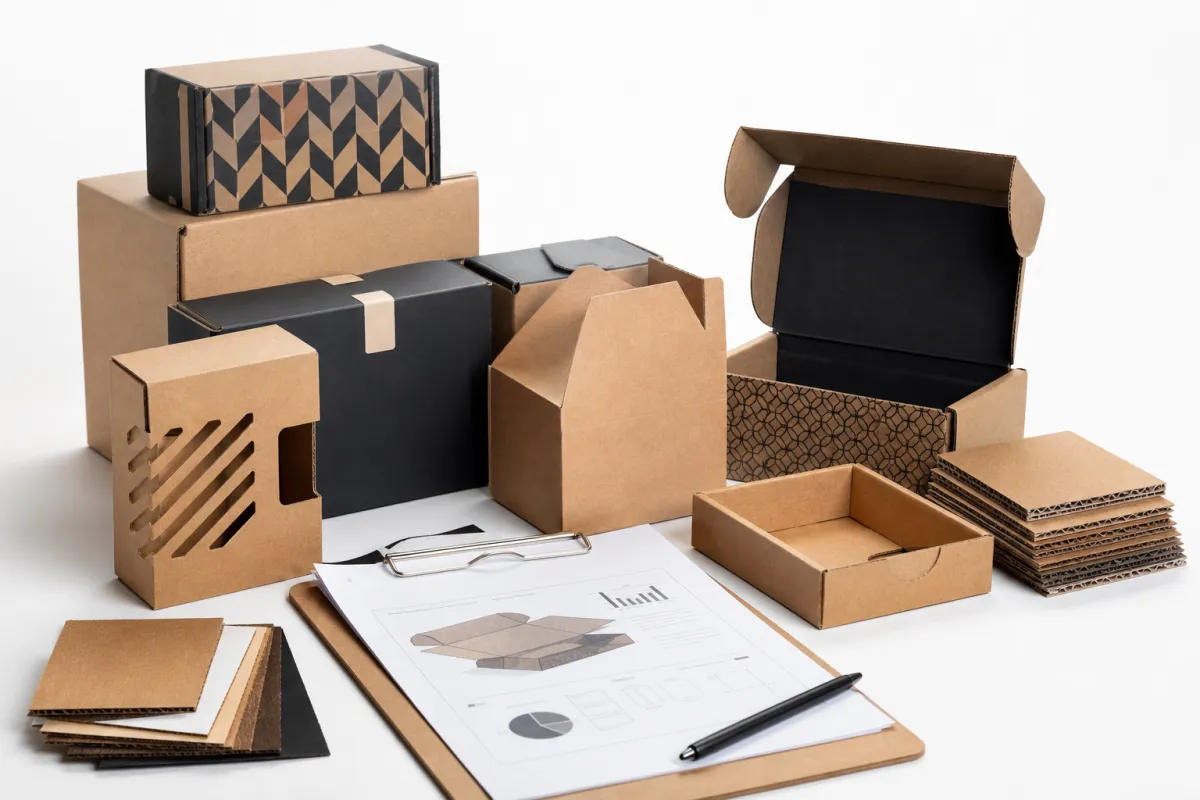
A serious corrugated box factory quote should spell out more than size and quantity. It should identify the carton style, the board construction, the flute profile, the print method, and any secondary steps such as die cutting, gluing, scoring, perforating, or special packing. If one of those details stays vague, the final price can move once the plant translates the request into a job ticket.
Many buyers are surprised by how much the same length, width, and height can hide. A light e-commerce mailer made with E-flute is a very different product from a double-wall shipping carton built for industrial parts. Both can fit the item, yet the material cost, converting time, and shipping performance underneath them are not the same. A corrugated box factory quote only makes sense when the structure, material, and process all sit in the open.
It is common to line up three quotes and assume the lowest one wins. That only works when the suppliers are pricing the same carton in the same way. If one factory is quoting a 32 ECT single-wall RSC and another is quoting a 44 ECT board with heavier liners and tighter print tolerances, the lower number may simply hide reduced performance. Shortcuts often show up later as crushed corners, weak stack strength, or higher damage claims.
A quote only helps when the carton that ships matches the carton that was priced.
That line sounds straightforward, yet it marks the point where many packaging jobs drift off course. A corrugated box factory quote is not just an approval number. It is the plant's reading of your packaging need, and the quality of that reading decides whether the carton arrives ready for the line or comes back for revision.
The scope of the quote matters just as much as the spec. Some quotes include board, print, converting, and bundle packing, while freight is handled separately. Others show delivered pricing to one dock and assume a full pallet load. If those assumptions never get written down, the same corrugated box factory quote can appear cheaper or more expensive than it really is. Comparison gets muddy fast when one supplier includes pallet charges and another leaves them out.
When the quote is clean, each line item should trace back to the carton itself. That gives buyers confidence, and it gives the packaging team a stronger base for future changes if shipping tests, line trials, or retail requirements shift. A clear quote also makes it easier to revisit the spec later without starting from zero.
Corrugated Box Factory Quote Product Details That Affect Fit
Product details drive fit, and fit drives price. A corrugated box factory quote for a 2 lb apparel shipment will not resemble a quote for a 38 lb equipment kit, even when the cartons seem close in size. Weight, fragility, center of gravity, and the way the box is handled during packing all shape the design.
The box style matters too. Regular slotted containers, die-cut mailers, partitioned packs, and Custom Shipping Cartons solve different problems. A regular slotted container, or RSC, often gives the most economical starting point because it converts efficiently and stacks well. Die-cut mailers make more sense when the product needs a tighter fit, a cleaner opening experience, or built-in locking features. Partitioned packs suit bottles, glass, small electronics, and anything that needs internal separation. Custom shipping cartons fit best when the product shape refuses to settle into a standard rectangle.
A useful corrugated box factory quote always reflects how the carton will be used, not only how it will be measured. Internal dimensions matter, but so do flap style, tuck depth, hand holes, inserts, and print placement. If artwork has to stay clear of a score line or glue zone, the dieline may need adjustment. That is not a cosmetic change. It affects cost, fold accuracy, and final performance.
Take a product with a sensitive surface. It may need a die-cut tray and lid instead of a basic slotted shipper. A carton for liquid-filled containers may call for stronger partitions and a board grade that resists compression after brief exposure to humidity. A large carton that will be carried by hand could benefit from reinforced hand holes, and those holes add tooling and converting steps. A corrugated box factory quote has to account for those realities if it is going to be trusted.
Pallet behavior deserves the same attention. A carton that packs beautifully one at a time can still be a poor choice if it creates uneven pallet layers, overhang, or wasted cube. From a shipping manager's point of view, pallet pattern is part of fit. A good corrugated box factory quote considers how many cartons fit per layer, whether they orient consistently, and whether the finished pallet stays stable enough for stretch wrap and transit.
If you already know the final use case, say so early. If the carton is retail-ready, make that clear. If it is a bulk shipper that will be reused internally, say that too. The more specifically the product environment is described, the more accurate the corrugated box factory quote becomes.
For teams comparing packaging options, our Custom Shipping Boxes page is a practical starting point for matching carton style to product type. Once the basic fit is clearer, the next corrugated box factory quote becomes much easier to read.
Specifications That Shape Your Corrugated Box Factory Quote
The quickest way to improve a corrugated box factory quote is to tighten the specification set before pricing starts. Inside dimensions, board grade, flute type, wall construction, print colors, and finish requirements all need to be clear. Without those details, the factory has to make assumptions, and assumptions tend to turn into rework. That is where small pricing differences start getting kinda expensive.
Board, Flute, and Wall Construction
Board choice is where a lot of confusion starts. A buyer may ask for "the same box" and mean only the dimensions, while the factory sees an open question about liner weight, medium quality, and edge crush. In corrugated packaging, a 32 ECT single-wall board is not the same as a 44 ECT single-wall board, and neither is the same as a double-wall structure. Those differences show up in stacking strength, puncture resistance, and shipping survival.
Flute profile changes the result too. B-flute tends to work well when you want a balance of print surface and resistance. C-flute is common for general shipping strength. E-flute gives a smoother surface for graphics and a thinner profile for retail presentation. BC double wall or EB combinations come into play when the carton needs more strength or better protection. A corrugated box factory quote that leaves out the flute is incomplete.
Basis weight, burst strength, and ECT rating can all matter, depending on the application. Buyers sometimes focus on only one metric and miss the broader picture. A 275 lb burst test board may not behave the same way as a specified ECT board in a stacked warehouse setting, because fiber structure and board geometry affect the result. The goal is not to make the conversation more complicated than it needs to be. The goal is to make sure the corrugated box factory quote rests on the right performance target.
In my experience reviewing packaging specs, the most helpful conversations are the plain ones. If the box has to survive long-term stacking, say that. If it only needs to make it through parcel transit and one unpack cycle, say that too. A factory can work with honest constraints much faster than it can work with vague optimism.
Print, Coating, and Finish
Print coverage is another major cost driver. A one-color logo in a small area is very different from full-panel graphics with tight registration and multiple spot colors. Flexographic printing is common for corrugated and usually keeps costs manageable on medium and high volumes. Litho-laminate or high-graphic wrap can create a sharper retail surface, but it also adds materials and converting steps. If a corrugated box factory quote seems high, print coverage is often part of the reason.
Finish choices affect both appearance and performance. Some cartons need no coating at all. Others need aqueous coating for rub resistance or moisture handling, especially if the box will spend time in transit or on a warehouse floor. If the carton must present clean graphics, the surface finish needs to be discussed before pricing. A packaging buyer who asks for "simple print" but later wants retail-quality presentation can end up revising the entire corrugated box factory quote.
For technical background on corrugated structures and packaging terminology, the resources at packaging.org are useful when you want to line up internal packaging language with what a plant actually produces. A shared vocabulary usually leads to a cleaner corrugated box factory quote.
Performance Standards and Sustainability Claims
There is a standards side to the conversation as well. Shipping performance may need to align with ASTM methods or ISTA test protocols depending on the product and carrier path. If a carton will move through parcel networks, vibration, drop, and compression risks belong in the design conversation. A corrugated box factory quote that ignores those realities may look cheaper on paper and cost more in transit damage.
If sustainability matters, ask for recycled-content details and sourcing documentation early. FSC-certified paperboard may fit some programs, but only if the paper trail is in place and the factory can support it. That is not a branding decision alone. It is a materials and procurement decision that belongs inside the corrugated box factory quote request from the beginning.
Here is the simplest rule I give buyers: if two quotes do not match on board basis weight, flute construction, and print method, they should not be treated as equal. A corrugated box factory quote is only comparable when the spec set is consistent.
That matters most for heavy, sharp, or moisture-sensitive products. A carton for frozen food, auto parts, glassware, or printed literature may all look like "just a box," yet each one brings a different risk profile. The more the quote reflects those real-world details, the fewer surprises show up later.
Pricing, MOQ, and Freight in a Corrugated Box Factory Quote
Pricing is where buyers often feel pressure to move quickly, but the smarter move is to slow the comparison down for one pass. A corrugated box factory quote usually includes material, converting, printing, tooling or die charges, sample work, packaging for shipment, and freight. If those items are not clearly separated, a low unit price can hide a higher total cost.
Material cost is usually the largest piece, and it tracks with board grade, flute construction, and box size. Converting cost covers the labor and machine time needed to cut, score, fold, glue, or bundle the cartons. Print cost rises with coverage, color count, and registration demands. Tooling or die charges are often one-time or low-frequency expenses, but they still belong in the total budget. A fair corrugated box factory quote should show where each cost lives.
Minimum order quantity, or MOQ, can be a decisive factor. Lower volumes tend to carry a higher per-unit price because setup time is spread across fewer cartons. On a custom printed run, a 1,000-piece order may cost 20% to 40% more per unit than a 5,000-piece order, depending on box size and print complexity. That is not a penalty. It is how corrugated converting economics work. A good corrugated box factory quote makes that visible.
Freight deserves the same attention. Ask whether the quote is plant price, delivered price, or FOB shipping point. A carton that looks inexpensive at the factory can become less attractive after pallet freight is added, especially if the boxes are bulky or the ship-to location is far from the plant. For heavy or high-volume shipments, freight can shift the final landed cost by a meaningful amount. A corrugated box factory quote is not complete until you know whether freight is included or separate.
There are also hidden variables that buyers should ask about directly:
- Palletization method and whether cartons are wrapped or banded
- Split shipments versus one full release
- Rush production charges
- Sample or prototype fees
- Whether taxes, skids, or special handling fees are excluded
Those details can change the final math faster than most people expect. I have seen a corrugated box factory quote look 8% better on unit price and still land higher in total cost once pallets, freight, and sample revisions were added. That is why the total landed number matters more than the headline number.
| Box style | Typical use | Common cost impact | Notes for buyers |
|---|---|---|---|
| Regular slotted container | General shipping, ecommerce, warehouse packing | Lowest setup cost; often about $0.35-$0.90/unit at 5,000 pcs, depending on size and print | Efficient to run and easy to compare across quotes |
| Die-cut mailer | Retail presentation, subscription kits, direct-to-consumer shipments | Moderate cost; often about $0.42-$1.05/unit at 5,000 pcs | Better presentation and fit, but tooling and finish can add cost |
| Partitioned pack | Bottles, glass, small electronics, fragile multi-unit packs | Higher converting cost; often about $0.65-$1.60/unit | Internal dividers reduce damage risk and improve presentation |
| Heavy double-wall shipper | Industrial parts, high weight loads, long distribution paths | Highest board cost; often about $1.10-$2.80+/unit | Strength matters more than trim unit price |
Those numbers are directional only, because size, print coverage, board grade, and freight can move them quickly. Even so, they help buyers understand why one corrugated box factory quote can be very different from another even when the outside dimensions look similar.
A useful habit is to ask each supplier to break the quote into the same categories. If one vendor includes die charges, freight, and packed pallets while another does not, you are not comparing like with like. The quote that appears cheapest may simply be incomplete.
Corrugated Box Factory Quote Process and Lead Time
The fastest corrugated box factory quote process starts with complete information. The buyer gathers dimensions, product weight, shipping method, print details, and target quantity. The factory reviews that information, checks whether the carton structure is practical, and then returns a price with any assumptions noted. That is the clean version. When the inputs are incomplete, the quote cycle slows down right away.
From Request to Approval
A practical workflow usually looks like this: gather the spec, confirm the dieline or sketch, review the artwork, approve the quote, and move into sampling or production. If the packaging is custom, the dieline can matter as much as the price. A well-drawn dieline keeps print, fold, and glue positions aligned, which saves time later. A sloppy one can turn a quick corrugated box factory quote into a revision cycle.
Quote turnaround and production lead time are not the same thing. A supplier may return a corrugated box factory quote in a day or two, yet still need 12 to 20 business days after approval to produce the cartons, depending on tooling, print complexity, and current plant load. If a custom die is required, the timeline can stretch further. Buyers sometimes miss that distinction and assume the quote clock and the production clock are one and the same.
Sampling is another checkpoint worth respecting. A sample may reveal that the box closes too tightly, the print area sits too close to a score, or the board needs more compression strength than expected. That is not failure. It is the process doing its job. In many cases, the revised sample is exactly what prevents a costly production mistake. A corrugated box factory quote that allows for sampling is usually the safer one.
Why Testing Matters
For parcels that will move through carriers, ask whether the design should be checked against ISTA or similar handling protocols. The guidance on ista.org is a useful reference when you want to understand drop, vibration, and compression concerns before the cartons are run. If the box needs to survive a rough distribution path, that test context belongs in the corrugated box factory quote request.
Here are the checkpoints that keep an order on schedule:
- Dieline approval
- Artwork proof review
- Sample signoff
- Final production confirmation
- Shipping and pallet release
Each checkpoint removes a layer of risk. A buyer who approves a corrugated box factory quote without reviewing the proof may still be fine if the artwork is simple, but complex graphics, barcodes, or regulatory text deserve a careful check. If the print must read cleanly at the warehouse or on the shelf, a proof is not optional.
Lead time also depends on seasonality and order size. A moderate custom run might ship in 10 to 15 business days after proof approval, while a more complex order can take longer. If rush timing matters, say so before the corrugated box factory quote is finalized. Rush orders are easier to manage before production starts than after the line is already booked.
From a buyer's perspective, the best process is the one that removes surprises before they become expensive. Clear specs, clear proofing, and clear freight terms make the final corrugated box factory quote much easier to trust.
Why Choose Custom Logo Things for Corrugated Packaging
Custom Logo Things focuses on clarity first. That matters because a corrugated box factory quote only helps if the buyer can understand what is being priced and why. The goal is to make the carton spec readable, compare it against the product need, and reduce the back-and-forth that slows packaging projects down.
For many buyers, the hard part is not asking for a quote. It is turning a rough idea into a spec that the factory can actually price. That is where practical packaging guidance has real value. We help customers sort through carton style, board grade, print coverage, and shipping conditions so the request is grounded in real use, not just a rough size estimate. A cleaner starting point usually leads to a better corrugated box factory quote the first time.
That approach matters whether the job is a simple shipping carton or a more branded package built for retail presentation. If you need a carton that performs in transit and still looks good on arrival, our Custom Shipping Boxes page is a practical place to begin. Once the box style is matched to the product and the shipping path, the next corrugated box factory quote becomes much more useful.
What buyers usually want from a packaging partner is simple:
- A quick read on whether the spec is realistic
- Clear material and converting guidance
- Quote transparency with fewer hidden assumptions
- Support that helps the carton fit the product and the shipper
That is the right standard. A corrugated box factory quote should not force the buyer to guess about board quality, freight, or tooling. It should reduce uncertainty. If the request needs a revision, the team should say so early and explain why.
We also know that packaging teams are often working inside a larger workflow with operations, procurement, and fulfillment all asking different questions at once. One person wants strength, another wants print quality, and another wants the best landed cost. A thoughtful corrugated box factory quote balances those concerns instead of promising too much on one side and ignoring the rest.
If you are ready to talk through a carton request, use our Contact Us page and share the details you already have. Even a rough sample photo, a current box spec, or a shipment note can help shape a more accurate corrugated box factory quote from the start.
Next Steps to Get the Right Corrugated Box Factory Quote
The most efficient way to request a corrugated box factory quote is to collect the basics before you send the inquiry. Inside dimensions, product weight, shipping method, print colors, target quantity, and delivery location should all be in the first message if possible. The more complete the request, the fewer assumptions the factory has to make.
A solid quote request usually includes these items:
- Inside length, width, and height
- Product weight and whether the load is fragile
- Box style preference, if you already know it
- Board or strength target, if specified
- Print colors and print coverage expectations
- Quantity, delivery location, and timing needs
Ask each supplier to quote the exact same spec set. That sounds obvious, but it is one of the most common places buyers lose time. A corrugated box factory quote that includes 44 ECT board, two-color flexo print, freight to one dock, and die charges should not be compared against a quote that omits all of those items. If the line items differ, the decision gets distorted before it starts.
If you already have a sample box, send it. If you only have photos, send those too. A used carton tells the story of how the box performs under real handling, and that can be more valuable than a clean drawing alone. Even better, if the current box has a printed spec stamp or a supplier label, share that information. It often shortens the path to a more accurate corrugated box factory quote.
One more practical point: be honest about the use case. If the carton will be stacked high in a warehouse, say so. If it needs to survive parcel carriers, say that too. If the package is going to a retail shelf and the front panel matters, make that clear. The best corrugated box factory quote comes from a request that reflects the real shipping environment, not only the ideal one.
When you are ready to move forward, a good rule is simple: compare board grade, flute, MOQ, tooling, freight, and samples on equal terms, then choose the carton that protects the product without wasting material. That is the kind of corrugated box factory quote that supports a smooth production run, a cleaner receiving process, and fewer headaches downstream.
FAQ
What should be included in a corrugated box factory quote?
A useful corrugated box factory quote should list the box dimensions, board type, flute profile, print method, quantity, and any tooling or sample charges. It should also clarify freight, palletization, and whether taxes or separate handling fees are included. If any of those items are missing, the quote is harder to compare and more likely to change later.
How do I compare two corrugated box factory quotes fairly?
Start by matching the exact spec set: dimensions, board grade, flute, print colors, and finish. Then check whether one corrugated box factory quote includes freight, tooling, or samples while the other leaves them out. Use total landed cost, not unit price alone, to compare the offers correctly.
What information do I need to request a corrugated box factory quote?
Provide inside dimensions, product weight, shipping environment, and any stacking or drop-test needs. Share artwork details, print coverage, target volume, and preferred delivery timing. If possible, include a sample, sketch, or photo of the current box so the corrugated box factory quote is closer to production reality.
Why can a corrugated box factory quote change after sampling?
Sampling often shows whether the board needs more strength, different score lines, or a revised dieline. Artwork, cut tolerances, and assembly method can all affect final production cost. A change after sampling usually means the factory is aligning the carton with real-world use, which is better than discovering the issue after full production.
How long does it take to get a corrugated box factory quote?
Quote speed depends on how complete your information is and whether the design is standard or custom. Clear dimensions, board specs, and artwork details help the factory respond faster. Production lead time is separate from quote time, so ask for both whenever timing matters. A well-prepared corrugated box factory quote request can shorten the process more than most buyers expect.
If you want the cleanest result, send one complete spec set, ask for a landed-cost breakdown, and insist that every supplier price the same board, flute, print, and freight terms. That one habit usually turns a messy corrugated box factory quote process into a decision you can actually trust.


