Ask for a retail Embroidered Beanies Factory Quote, and the first number is rarely the full story. A low unit price can leave out digitizing, labels, retail packaging, or freight, which changes the real landed cost fast.
Unit price only becomes useful once the spec is clear. A solid quote should show what is included, what is optional, and what changes the number most: yarn blend, knit structure, embroidery stitch count, thread colors, packaging format, destination, and order quantity. If those details are missing, both sides are guessing.
The best comparison is not which quote is lowest. It is which quote is closest to the real cost of a sellable beanie.
Retail embroidered beanies factory quote: what changes the price fast
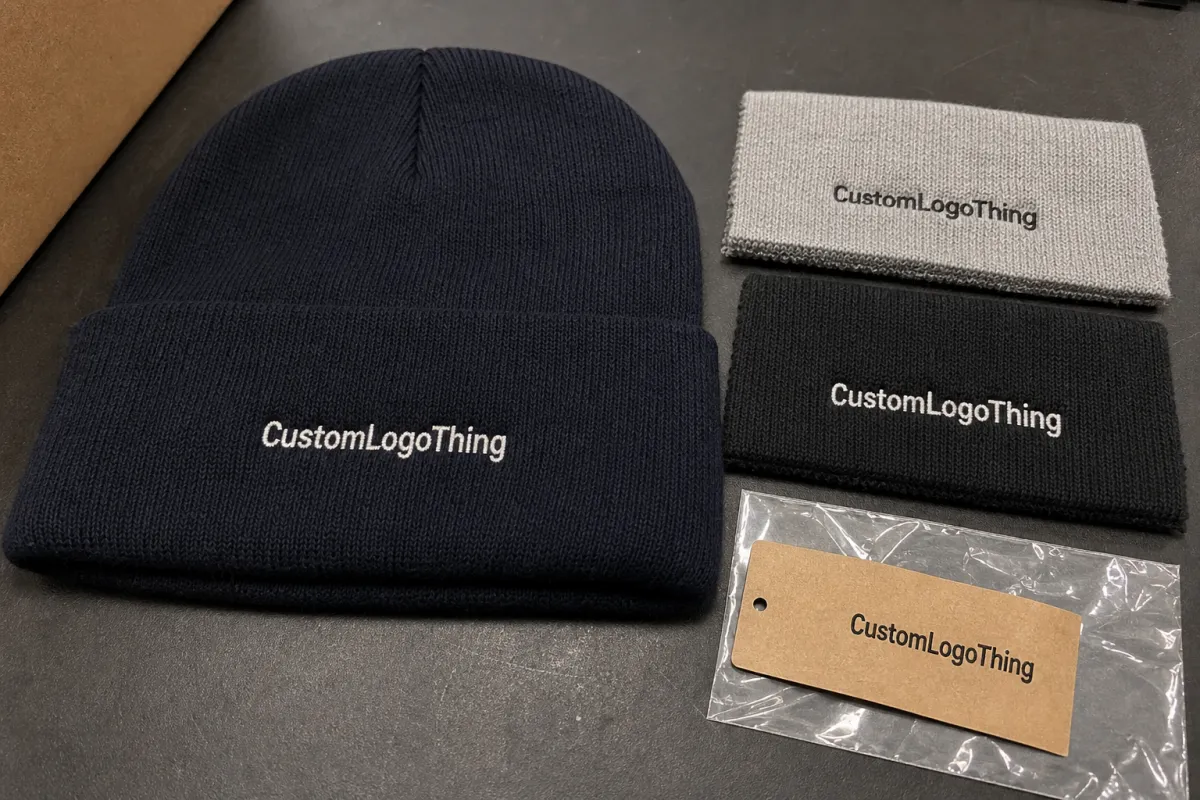
The lowest quote is often the one that leaves something out. A factory may assume one embroidery position while the buyer expects a front logo plus a side mark. Labels, retail polybags, and carton marks are also easy to omit unless they are spelled out early.
Small retail orders bring more setup work than many buyers expect. The factory has to review artwork, digitize the logo, confirm knit compatibility, source trims, and plan how the beanies will be packed. The quote is not just a hat price; it is a small production plan.
The price moves fastest on a few items:
- Decoration method: direct embroidery is efficient for simple logos, but stitch count and thread colors raise cost quickly.
- Logo complexity: fine lines, small text, and layered artwork take more setup and often more sampling.
- Knit style: a basic cuffed rib knit is easier to control than a slouchy or fisherman style.
- Yarn selection: acrylic is usually the cheapest path, wool blends cost more, and recycled yarns can vary with supply and color matching.
- Packaging: bulk packing, retail polybags, size stickers, hang tags, and barcode labels each add labor.
- Shipment terms: ex-works pricing is not the same as landed cost, and freight can change the real margin.
The cleanest quote is not always the best quote. Sometimes it is simply the least complete one.
If the logo has more than one color or a high stitch count, ask how setup is being counted. Vague answers often lead to invoice surprises later. Buyers who need predictable landed cost should ask for the same quote structure every time, with packing and destination defined from the start.
Beanie styles, yarns, and decoration options that affect retail appeal
Style usually comes first because style sells before anyone studies the construction sheet. A cuffed beanie gives the most stable branding area and the clearest shelf read. A slouchy beanie feels more casual. A fisherman style sits shorter and works well for streetwear or colder-weather assortments. Double-layer builds add warmth and often read as more premium on display.
Yarn choice changes more than hand feel. It affects price, texture, color consistency, and how the beanie wears over time. Acrylic is the default for cost control and broad retail use. Wool blends feel richer and hold warmth better, but they can show more variation in texture. Recycled yarns support a sustainability message, though color matching can be less predictable. Mixed fibers are often the middle ground when the goal is softness, stretch, and price balance.
Decoration should match the knit, not just the logo file. Front cuff embroidery is the classic retail choice because it is visible and clean. Side placement works when the front needs to stay minimal. Back wordmarks can support a quieter front without leaving the beanie blank. Tone-on-tone thread can look premium, but it can also disappear if the knit texture is busy or heathered.
Fine detail is where many graphics fail. Thin letterforms, sharp corners, and tiny taglines may look good on screen and weak on fabric. If the logo is too detailed, a woven patch, woven label, or PVC badge can read better than direct embroidery. For simple marks and short brand names, embroidery still wins.
Packaging matters too. A beanie that folds neatly in bulk may not sit well inside a retail bag, especially if the cuff is thick or the embroidery is bulky. Cartons matter for the same reason. A lightweight knit can still arrive looking cheap if bagging, labels, or cartons are handled poorly. For brands focused on transit performance, references like packaging.org help keep the conversation on shelf-ready packing, not just the garment.
Specs that keep quotes accurate: gauge, cuff size, and stitch detail
Quotes become accurate when the factory knows what to make, not just what the product should look like. The core specs are simple: knit gauge, cuff depth, crown height, yarn weight, stretch range, and embroidery size. Leave those vague and the factory fills the gaps with assumptions.
For a retail beanie, the most useful spec sheet usually includes the following:
- Knit gauge: many retail beanies sit around 7-gauge to 9-gauge, with heavier gauges giving a denser feel and tighter texture.
- Cuff depth: 6-9 cm is common for adult retail beanies, though a deeper cuff helps when the logo needs more space.
- Crown height: finished height often lands around 21-24 cm, but that shifts with style, stretch, and top construction.
- Stretch range: most standard adult beanies are built for roughly 54-62 cm head circumference.
- Embroidery width: many cuff logos sit in the 45-80 mm range, but the safe size depends on stitch density and letter detail.
- Yarn weight and fiber blend: these control warmth, drape, and how sharply the knit holds the cuff line.
Embroidery needs as much attention as the knit dimensions. Thread color count changes setup time. Backing choice affects how the logo sits on a stretch fabric. Placement tolerance matters because a sample that is slightly off-center can become obviously wrong across a full carton.
Label and barcode placement also belong in the spec sheet. A woven care label may need to sit at a seam edge. A hang tag may need room on the cuff or side. Barcode labels should be planned before approval, not added after production starts.
A practical checklist helps:
- Beanie style and intended retail position
- Fiber content and yarn color references
- Vector logo file and embroidery placement
- Embroidery size, thread count, and stitch expectations
- Label, hang tag, and barcode requirements
- Quantity, delivery destination, and target ship date
Measurements, not mood boards, are what keep the first price close to the final one.
Cost, MOQ, and unit pricing for retail beanie orders
MOQ exists for practical reasons. A basic cuffed beanie with one embroidery area and a standard yarn color is easier to run at a lower minimum than a slouchy style with custom labels, multiple thread colors, and retail bagging. Every extra variable adds setup time, handling, or waste.
Buyers often focus on the unit line and miss the real total. A useful retail quote should break out sample fees, logo setup, unit cost, packaging, and freight. Testing or compliance charges may also appear if the order needs retail labeling, fiber-content verification, or special destination paperwork.
| Option | Typical MOQ | Unit Price Range | Best For |
|---|---|---|---|
| Basic cuffed acrylic beanie, one-color logo | 300-500 pcs | $2.20-$3.60 | Promotional retail, entry price points, simple shelf programs |
| Rib knit beanie, two-color embroidery, woven label | 500-1000 pcs | $3.60-$5.80 | Core retail lines with better presentation |
| Wool blend beanie, custom hang tag, retail polybag | 1000 pcs+ | $5.80-$8.50 | Premium retail, giftable product, stronger brand positioning |
| Sample or pre-production approval piece | 1-2 pcs | $35-$80 per sample | Artwork proofing, fit checks, retail sign-off |
These numbers move with yarn availability, stitch count, finishing detail, and packaging complexity. The biggest savings usually appear when the order moves from 300 units to 500 or from 500 to 1000. That only helps if the extra volume makes sense for sell-through.
For a realistic comparison, ask for landed cost. That means product, packing, inner and master cartons, inland handling if needed, and freight to the final destination. A quote that looks $0.40 cheaper on the unit line can cost more once packing and shipping are added.
Production steps and lead time from sample approval to shipment
Most production delays are ordinary. The sequence is usually the same: inquiry, spec confirmation, artwork check, sample development, approval, bulk production, inspection, and packing. The order moves quickly only when each step has clean input.
For a typical retail embroidered beanie order, sampling often takes about 7-12 business days if the yarn is available and the artwork is ready to digitize. Bulk production usually runs 15-25 business days after approval for standard quantities. Custom-dyed yarn, special labels, or a more detailed retail pack-out can add another 7-14 days.
Embroidery approval is usually the first bottleneck. Yarn sourcing is often the second. If the buyer changes logo size after approval, the schedule resets in the least graceful way possible. Fast feedback is not a bonus; it is part of the production system.
Carton quality deserves attention too. Beanies are not fragile, but crushed cartons, loose packing, and mixed carton counts still create real problems at receiving. On sea freight, humidity and compression can affect cartons and labels. On air freight, the issue is usually cost, not damage. The packing spec should match the transport lane instead of assuming every shipment behaves the same way.
Quality references from organizations such as ista.org can help frame the discussion around shipping stress, carton strength, and test conditions. That matters because the product, carton, and freight lane all shape the final result.
If speed matters, the safest path is simple: lock the artwork, confirm the measurement sheet, approve the sample quickly, and stop changing packaging copy after the bulk order starts. Rush production is possible, but it is rarely cheap.
Fast production is discipline on both sides of the order.
What separates retail runs from loose wholesale runs
Retail buyers care about consistency more than volume bragging rights. A factory that performs well on retail programs keeps color matching stable, sizing repeatable, finishing clean, and presentation tight enough to survive store handling.
Retail production works better when the factory treats the beanie as a finished product rather than a knitted blank. That means embroidery alignment checks, seam and trim cleanup, label placement control, sample photos before bulk approval, and carton checks before shipment. It also means the packing proof is reviewed early, because a good beanie in the wrong bag still arrives looking cheap.
Useful QC checks on a beanie order are practical, not decorative:
- Knit consistency: the body should hold shape and recover after stretch without obvious twisting.
- Embroidery alignment: logos should sit straight, centered, and repeatable from piece to piece.
- Seam finish: loose ends, broken stitches, and puckering should be caught before packing.
- Trim cleanup: stray threads need to be removed; retail buyers notice them immediately.
- Pack accuracy: labels, barcode stickers, and quantities must match the order sheet exactly.
Private label details belong in the quote from the start. Woven labels, hang tags, barcode stickers, carton markings, and retail polybags affect labor and handling. Treating them like late-stage extras is the easiest way to lose time.
The difference between retail and wholesale is procedural, not dramatic. Factories that respond quickly to corrections, send clear proof photos, and keep the order sheet tight usually save the buyer more money than a small unit-price difference ever will.
Send these details next to get a fast, accurate quote
If the goal is a quote that can be compared without guesswork, the request needs the information that changes cost and lead time. Start with style, yarn choice, color count, logo file, embroidery size, quantity, destination, and packaging needs. Without that, the factory can only estimate.
It also helps to state the target retail price or margin. That gives the factory a commercial boundary instead of an open-ended wish. A lower-cost acrylic build, a mid-range wool blend, and a premium retail version may all be possible from the same logo.
A strong retail embroidered Beanies Factory Quote request usually includes the following:
- Beanie style and construction notes
- Artwork in vector format, plus clear color references
- Embroidery size, placement, and thread color count
- Quantity per color and total order volume
- Retail packaging details, hang tags, and barcode needs
- Shipping destination and any delivery deadline
That is enough to turn a rough estimate into a serious quote and reduce back-and-forth. In a category where a few details can shift the price faster than the material itself, clarity is the real shortcut.
What do I need to request a retail embroidered beanies factory quote?
Send the beanie style, logo file, quantity, color count, and embroidery size. Add packaging requirements and the shipping destination if you want a landed-cost estimate rather than a unit-only price. If you need a sample first, say that upfront.
How low can MOQ go for embroidered retail beanies?
MOQ usually depends on yarn type, decoration method, and color count. A simple cuffed style with one logo color can often run lower than a multi-color or custom-packaged version. Once the order needs special labels or more complex finishing, MOQ usually rises.
Why do two retail embroidered beanies quotes look so different?
One quote may include setup, labels, cartons, and freight while the other only lists the unit price. Stitch count, thread colors, and packaging format also move the number more than most buyers expect. Factories may also use different assumptions for sampling or inspection.
How long does production usually take after sample approval?
Simple orders can move faster if yarn and trims are already available. Most standard runs need about 15-25 business days after approval, with extra time for custom yarn, label changes, or retail pack-out. Fast feedback from the buyer is usually the difference between on-time and late.
What files help the factory quote accurately the first time?
A vector logo file is best, along with clear color references. Measurements, packaging notes, and labeling requirements help the factory price the order correctly. Product photos or a reference style are useful too, especially if the beanie has a specific retail look.


