Buyer Fit Snapshot
| Best fit | Custom Shipping Carton Inserts projects where brand print, material claims, artwork control, MOQ, and repeat-order consistency need to be specified before quoting. |
|---|---|
| Quote inputs | Share finished size, material target, print colors, finish, packing count, annual reorder estimate, ship-to region, and any compliance wording. |
| Proofing check | Approve dieline scale, logo placement, barcode or warning zones, color tolerance, closure strength, and carton packing before bulk production. |
| Main risk | Vague material claims, crowded artwork, missing packing details, or unclear freight terms can make a low unit price expensive after revisions. |
Fast answer: Custom Shipping Carton Inserts: Fit, Cost, and Setup should be specified like a repeatable production item. The safest quote records material, print method, finish, artwork proof, packing count, and reorder notes in one written spec.
Production checks before approval
Compare the actual filled-product size with the drawing, then confirm tolerance on folds, seals, hang holes, label areas, and retail display edges. Reserve space for logos, QR codes, warning copy, and material claims before decorative graphics fill the panel.
Quote comparison points
Review material grade, print process, finish, sampling route, tooling charges, carton quantity, and freight assumptions side by side. A quote is only useful when the supplier can repeat the same color, closure quality, and packing count on the next order.
Custom Shipping Carton Inserts: Fit, Cost, and Setup
Most shipping damage does not come from one dramatic carton drop. It comes from product movement. A little wiggle turns into scuffed edges, crushed corners, chipped finishes, and sometimes a full break. That is the point of custom Shipping Carton Inserts: stop the movement, absorb the hit, and make packing repeatable instead of hopeful.
From a packaging buyer's seat, custom shipping carton inserts are not just protection. They sit inside the shipping system, shape the unboxing experience, and affect fulfillment speed. If you are trying to lower damage, keep pack-out moving, and make the product look intentional on arrival, the insert is usually where the money is won or lost.
Teams comparing Custom Packaging Products, Custom Shipping Boxes, and Custom Poly Mailers usually are not asking whether protection matters. Of course it matters. The real question is which format fits the product, the route, the budget, and the warehouse process without turning every order into a tiny customs inspection for your own staff.
What Custom Shipping Carton Inserts Actually Solve
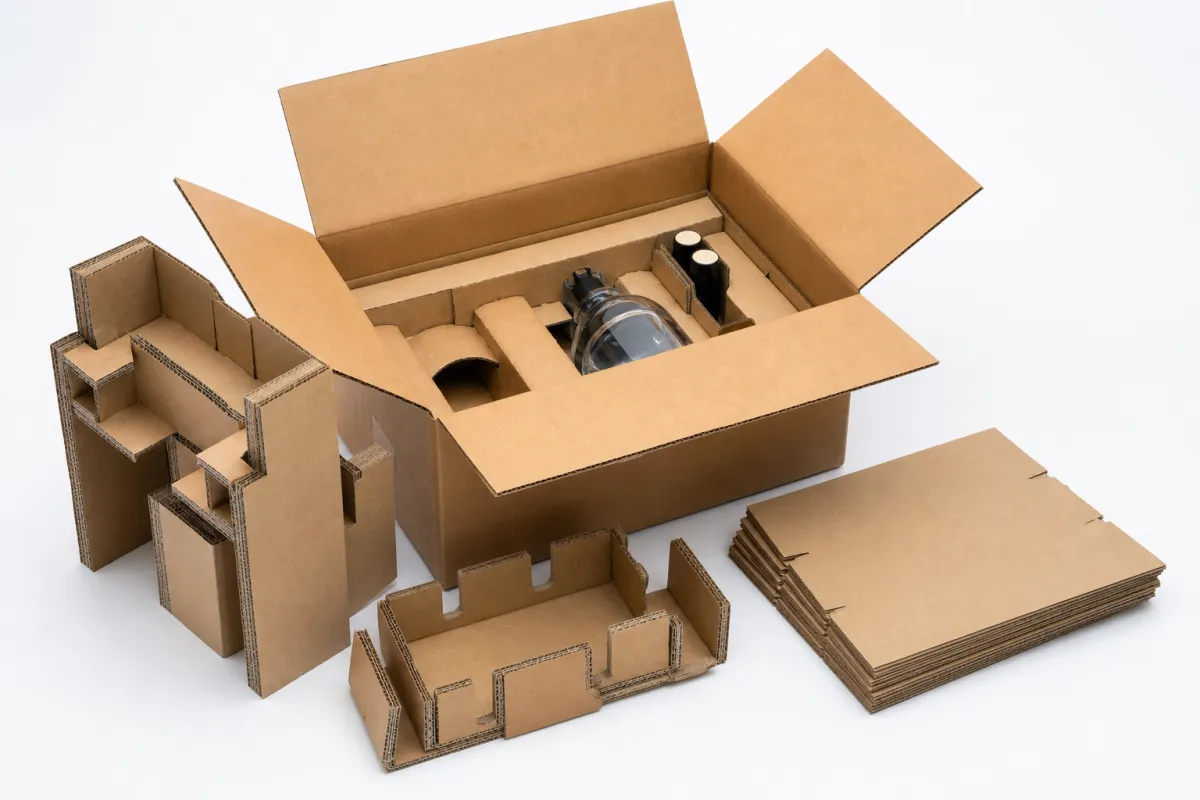
The core problem is movement. Custom shipping carton inserts solve movement. Loose void fill can cushion a bit, but it does not reliably lock a product in place. If the item can shift, it can rub. If it can rub, it can scuff. If it can hit a wall, another component, or the carton itself, it can fail. Packaging is not glamorous. Gravity is still undefeated.
A good insert has four jobs:
- Hold the product in one fixed position.
- Absorb impact before it reaches weak points.
- Prevent scuffs, corner damage, and finish wear.
- Make pack-out repeatable for the warehouse team.
Custom shipping carton inserts are especially useful for fragile products, premium kits, and odd shapes. Glassware. Cosmetics sets. Electronics accessories. Small appliances. Candle jars. Subscription boxes. Retail bundles with a lot of pieces. Anything that needs to arrive with the parts where they started, not rearranged by the carrier. They also make sense when damage claims keep creeping up and the current answer is "add more paper" or "tape it tighter." That is not a plan. That is a wish wrapped in kraft paper.
They also beat loose fill on consistency. Void fill depends on who packed the order and how tired they were. A fitted insert depends on the design. That matters at scale, because one operator can stuff tissue like a gift shop pro and the next can create a box that rattles like a loose toolbox. With custom shipping carton inserts, the product has one obvious home. That is exactly what you want in order fulfillment.
"If the product can rattle, it will eventually rattle itself into damage."
There is another job here that gets ignored until the buyer complaints land: presentation. Buyers tend to talk about protection and branding like they are separate things. They are not. A clean insert can make custom shipping carton inserts feel like part of the product, not foam someone shoved into a box five minutes before pickup. That matters in premium ecommerce shipping, where the first physical touchpoint sets the tone fast.
Used well, custom shipping carton inserts can also reduce the number of unique pack-out methods you need. Instead of inventing a fresh shipping routine for every size variation, you can build an insert family that supports several products with minor changes. That is where packaging design starts saving labor. No drama. Just fewer decisions per carton.
In my experience, that is the part people miss first. They focus on breakage, then discover the insert also cut packing errors, which cut customer service noise, which cut the number of "where did this shipment go wrong?" meetings nobody wanted anyway.
How Custom Shipping Carton Inserts Work Inside the Carton
Inside the carton, custom shipping carton inserts create a fixed cavity or support structure so the item cannot slide, tip, or lean into the walls under stack pressure. That sounds simple because it is. The hard part is geometry. A good insert controls movement on all sides, not just the base, and it keeps the product from becoming a blunt object aimed at its own weak spot during transit.
The better designs spread force across the insert instead of dumping it into one failure point. If a corner gets hit first, the insert should redirect that energy into a broader area. If a product has delicate features, the insert should cradle or suspend those features so the load moves around them, not through them. That is the line between filler and actual protective packaging.
Common build styles include die-cut corrugated, molded pulp, folded board, foam, and hybrid structures. Each one has a different sweet spot:
- Die-cut corrugated works well for broad product ranges, repeatable shapes, and cost-sensitive programs.
- Molded pulp fits well when shape support matters and you want a lower plastic footprint.
- Foam is often chosen for fragile items, tighter tolerances, or high-value products.
- Folded board can be efficient for lighter goods and smaller premium kits.
- Hybrid builds combine materials when one substrate cannot handle every load condition alone.
In practice, custom shipping carton inserts also shape pack-out speed. A well-designed insert cuts training time because the product only fits one way. That sounds minor until you run a warehouse and realize how much slower a confusing pack-out gets once temp workers rotate in and out. Good packaging design is often just good warehouse usability.
The carton and the insert need to be engineered together. A rigid insert inside a weak box still fails. A strong box with a sloppy insert still rattles. custom shipping carton inserts should match the board grade, flute type, closure style, and stacking pressure expected in transit. For reference-level testing, many teams use ISTA test standards to simulate vibration, drop, and compression instead of guessing how a carrier will treat a shipment.
Structure matters for branded packaging too. If the reveal is part of the product story, the insert should open cleanly, hold the item at the right height, and avoid the kind of mess that makes the first impression look rushed. That matters a lot for custom printed boxes and retail packaging programs where the inside of the shipment still counts as part of the brand experience.
I will be blunt here: the nicest outer carton in the world cannot save a bad insert. If the inner layout is sloppy, the product still shifts. And once shipping vibration starts doing its thing, the carton becomes a moving van for your merchandise. Not ideal.
Key Factors That Change Fit, Material, and Performance
Start with the product itself. Weight, dimensions, center of gravity, finish, and fragile details all change how custom shipping carton inserts should be built. A bottle with a narrow neck behaves differently from a flat accessory kit. A gloss-coated component scratches differently than a matte one. A heavy item with an off-center load point needs a different support pattern than a light item that only needs restraint.
"Close enough" fit is a bad idea. A few millimeters matter. If the cavity is too loose, the product moves. If it is too tight, operators force the item in, which can bend flaps, stress seams, or scratch the surface before the box even leaves the dock. With custom shipping carton inserts, tolerances should come from the actual production run, not a neat little drawing that looks good on screen.
Material choice is the next major lever. Corrugated board is usually the most flexible starting point because it is affordable, easy to die-cut, and easy to scale. Molded pulp can be a smart choice when sustainability matters and the product shape works with the mold. Foam often shows up for the highest fragility or the tightest protection tolerances. In many programs, custom shipping carton inserts end up using one material for structure and another for surface protection, especially when the product has painted, polished, or printed finishes.
Shipping conditions matter too. Long routes, temperature swings, humidity, and vibration all change how the insert behaves. A package that looks fine in a short local run may fall apart after a longer parcel network trip. If you are shipping through ecommerce channels, the carton may get stacked, dropped, inverted, and compressed more than once. Real-world testing matters more than wishful thinking. If you want a sustainability lens, the FSC certification framework is worth checking when you are sourcing fiber-based materials for custom packaging.
Carton size matters because it affects dimensional weight. A low-cost insert inside an oversized box can still drive freight cost up. That is one of the sneaky mistakes buyers make. They save two cents on the insert and lose forty cents on shipping. With custom shipping carton inserts, the best spec usually protects the product while keeping the outer carton compact enough to avoid freight penalties.
Branding and sustainability still belong in the discussion. Some buyers want a premium reveal with printed surfaces, color cues, or layered product packaging. Others want the smallest possible material footprint. Both are valid. The right answer depends on what your customer values and what your operation can support. If your branded packaging story needs to feel polished, the insert should support that story instead of fighting it.
One practical disclaimer: cost and lead times vary a lot by region, supplier capacity, and shipping lane. A quote that looks low on paper can jump once you add freight, proofing, or tooling. I always tell teams to ask for the full landed cost, not just the unit price. Saves headaches later.
| Material | Best For | Typical Unit Cost at 5,000 Units | Lead Time | Main Tradeoff |
|---|---|---|---|---|
| Die-cut corrugated | General protection, kits, moderate fragility | $0.18-$0.45 | 10-15 business days after proof approval | Less refined cushioning than foam |
| Molded pulp | Shape support, fiber-based programs, sustainability goals | $0.25-$0.65 | 4-6 weeks if tooling is needed | Tooling cost and shape limits |
| Foam | Fragile electronics, tight tolerances, high-value items | $0.35-$0.90 | 12-20 business days | Higher cost and less eco-friendly perception |
| Hybrid build | Premium presentation, mixed-fragility kits | $0.40-$1.10 | Depends on the mix of parts | More setup and more parts to manage |
Those numbers move with quantity, complexity, and material availability, so they are not fixed. They are still useful for early planning. If a quote looks absurdly cheap, ask what is missing. Samples? Tooling? Freight? Carton conversion? Assembly? The low number may only cover one line item, not the actual landed cost.
If you are considering a broader packaging refresh, compare the insert against Custom Packaging Products and the outer shipper together. That is where you catch cost leaks from overpackaging, unnecessary void fill, and oversized boxes that quietly punish ecommerce margins.
Custom Shipping Carton Inserts Cost: What Drives Price
Pricing for custom shipping carton inserts usually comes from four buckets: material, tooling or setup, labor, and order quantity. Miss one of those and the quote comparison gets muddy fast. I see this constantly. Someone compares a sample quote for 500 units to a production quote for 10,000 units and assumes the supplier is wildly inconsistent. Usually the math was never normalized in the first place.
Material is the obvious piece. Corrugated tends to be the cheapest place to start. Molded pulp often needs tooling or a mold, which raises upfront cost. Foam can be efficient for protection but it is not always the lowest line item. Labor shows up through folds, glued joints, multi-part assemblies, and any hand finishing. The more steps involved, the more custom shipping carton inserts cost to produce.
Order quantity changes the shape of the deal. Low-volume orders usually carry the highest unit price because setup gets spread across fewer pieces. At 500 units, a simple corrugated insert might land around $0.70-$1.80 each. At 5,000 units, that same insert could fall into the $0.18-$0.45 range depending on coverage, board spec, and cut complexity. Procurement teams should not panic after seeing the first quote. Volume changes everything.
Complexity matters too. More cuts, tighter tolerances, print, score lines, locking tabs, or mixed materials all add time. If the insert needs to fold in a very specific order, pack-out labor goes up as well. A cheap part that slows down fulfillment can cost more than a slightly pricier part that drops into place with no fuss. custom shipping carton inserts should be priced against the whole shipping process, not just the material on the spec sheet.
Here is the practical rule: the lowest unit price is not always the lowest landed cost. Landed cost should include:
- Insert unit price.
- Prototype and sample rounds.
- Tooling or setup charges.
- Freight to your warehouse.
- Damage reduction after launch.
- Pack-out labor savings, if any.
That last line gets ignored constantly. If custom shipping carton inserts cut pack time by even 10 to 15 seconds per carton, the labor savings can matter a lot at scale. Multiply that by thousands of orders and a smarter insert spec starts paying for itself.
Comparison shopping needs discipline. Ask suppliers to quote the same assumptions: same carton size, same product weight, same quantity, same material grade, same print or coating, same proofing expectations. Otherwise one quote may cover a bare insert while another includes packaging design support, sample approval, and production checks. That is not an apples-to-apples comparison. That is a fruit salad in a spreadsheet.
For brands managing packaging across multiple channels, custom shipping carton inserts should also be viewed alongside custom printed boxes and retail packaging. Sometimes the right move is a simpler insert with a stronger outer box, especially if the brand reveal is already handled elsewhere in the pack.
And yes, the cheapest option can look fine right up until returns start landing. Then the invoice gets expensive in a hurry. That part is not theoretical.
Step-by-Step Timeline for Custom Shipping Carton Inserts
The cleanest path to custom shipping carton inserts starts with measurement. Not eyeballing. Not "it should fit." Measure the product as it will actually ship, including labels, caps, sleeves, accessories, and any variation from the production run. Then define the protection goal. Are you trying to stop scuffing, survive parcel drops, reduce vibration, or keep a premium kit looking neat after transit? Different goals produce different insert designs.
After that, move to samples. Good suppliers usually provide CAD mockups, cut samples, or hand-built prototypes. Test those with the real product, not a dummy weight. A real product shows where the pressure points are, whether the item is hard to load, and whether the insert creates friction on surfaces that will show scratches later. With custom shipping carton inserts, this is where most surprises show up.
Then run fit tests with the actual pack-out team. Watch how long it takes to place the product, close the box, seal it, and move to the next unit. If the team has to force tabs, flip parts around, or hunt for alignment, the design is not finished. A good insert should be intuitive enough that the warehouse team can repeat the process without a pile of training.
After that, use the revision loop. That part is normal. Adjust tolerances, cavity depth, locking features, board thickness, or support points after the first sample round. Do not wait for production to reveal a mistake. A 2 mm change in cavity width is cheap in sampling and expensive in a live rollout. custom shipping carton inserts are supposed to save money later, but only if the prototype gets the chance to do its job.
Lead times vary by structure. Simple corrugated designs can often move from dimensions to production in 10-15 business days after proof approval. More complex designs may need 12-20 business days. Molded pulp can take 4-6 weeks if tooling is required. Foam can move quickly if the geometry is already approved. The point is not to promise speed. The point is to match the timeline to the actual design complexity of the custom shipping carton inserts you need.
One more thing: lock the spec only after route testing. A design that looks fine on a bench should still be tested for vibration, drops, and compression. The point is not to punish the package for entertainment. The point is to avoid expensive surprises after launch. That is why the best teams treat custom shipping carton inserts as a production process, not a one-time file attachment.
Common Mistakes That Make Inserts Fail in Transit
The most common mistake is designing to paper dimensions instead of real products. Catalog dimensions rarely include all the variation that shows up in an actual production run. Caps sit differently. Labels add thickness. Sleeves bulge a little. Accessories change the total footprint. If custom shipping carton inserts are built only from nominal dimensions, the fit can drift enough to create movement or force.
Another classic problem is too much slack. Even a few millimeters of movement can turn into damage after repeated vibration and handling. That is especially true for painted surfaces, glass, polished plastic, and products with sharp corners. If the product is allowed to move inside the carton, custom shipping carton inserts are not doing their main job, which is containment.
People also overfocus on drop protection. Drops matter, obviously. Vibration, compression, and pack-out errors happen more often. A box may survive a single drop test and still fail after two hours in a trailer with stacked weight above it. That is why standards-based testing matters. If you want the protection plan grounded in real shipping methods, look at ASTM and ISTA-style test logic instead of trusting your gut. The whole point of custom shipping carton inserts is to protect the item through the entire route, not just one dramatic moment.
Overengineering causes trouble too, and more often than people admit. An insert can get so bulky, so hard to pack, or so expensive that operations rejects it. That is a failure as well. If the warehouse team hates it, they will work around it. Then your carefully designed solution turns into a suggestion, which is not how protection systems are supposed to behave. custom shipping carton inserts have to be usable by real people at real speed.
Do not ignore the outer box. A good insert inside a weak carton is still a weak system. The box board grade, flute type, closure style, and compression strength all matter. So does the carton geometry. If you are pairing the insert with Custom Shipping Boxes, make sure both parts are engineered together. That is where packaging design becomes practical instead of decorative.
One last mistake: skipping route testing. Test with the actual carrier mix, actual warehouse staff, and actual order profile. If you only test in a quiet room with one box, you are not learning much. Real ecommerce shipping conditions are messier than that, and custom shipping carton inserts need to survive the mess.
Expert Tips and Next Steps for Better Inserts
Start with the highest-risk SKU first. Do not redesign every product in the catalog on day one. That is how projects stall. Pick the item with the worst damage rate, the highest margin risk, or the strongest brand value. Fix that one. If the custom shipping carton inserts work there, the rollout gets easier and the business case gets clearer.
Standardize wherever you can. Shared insert architecture across multiple SKUs usually reduces cost and makes inventory easier to manage. I am not saying every product should sit in the same cavity like it came off an assembly line. I am saying common widths, common board specs, common locking features, and common outer cartons can make fulfillment a lot less painful. A little standardization goes a long way in product packaging.
Document pack-out instructions with photos or a one-page SOP. Yes, it is boring. It also works. If the only person who knows how to load the box correctly goes on vacation, the system should not fall apart. custom shipping carton inserts should be designed so the correct pack-out is obvious, then documented so nobody has to guess.
Measure the results after launch. Track damage claims, returns, rework, and pack-out time before and after rollout. The savings should show up in shipment data. If they do not, adjust the spec. Packaging is not a ceremony; it is a process. When custom shipping carton inserts are working, the numbers usually show it within a few weeks of steady shipments.
Here is the practical checklist I would use before approving a production run:
- Measure the product, including accessories and any packaging variation.
- Define the protection goal clearly.
- Sample the fit with the real product.
- Test with the actual packing team.
- Run route testing on the real carrier path.
- Compare landed cost, not just unit price.
- Confirm the outer carton and insert work together.
If you are building a wider branded packaging system, keep the insert aligned with the rest of the experience. A clean insert can support package branding, protect the shipment, and keep the unboxing tidy without dumping a pile of filler into the box. That is especially useful for brands that rely on custom printed boxes and want the inside of the carton to feel just as intentional as the outside.
So yes, custom shipping carton inserts can cut damage, improve packing speed, and make the shipment look better. But only if the fit is right, the material matches the product, and the setup is tested against real shipping conditions. Get those parts right, and custom shipping carton inserts stop acting like an extra cost and start behaving like one of the cheapest forms of insurance you can put inside a box.
The practical takeaway is simple: measure the real product, test the real route, and choose the insert that protects the item without making fulfillment miserable. If you get trapped in unit-price only thinking, you will probably overspend later. If you design for fit, speed, and transit abuse together, the whole system gets cleaner. That is the part worth shipping.
How are custom shipping carton inserts different from void fill?
Custom shipping carton inserts hold the product in a fixed position. Void fill only cushions empty space. Inserts usually give more repeatable protection, better pack-out speed, and a cleaner unboxing experience. Void fill can still help, but it should not carry the whole protection plan for fragile or premium products.
What materials work best for custom shipping carton inserts?
Corrugated board is a strong starting point for many products because it is affordable and easy to customize. Molded pulp works well when sustainability and shape support matter. Foam is usually reserved for very fragile items or tighter protection tolerances. The best choice depends on the product, the route, and how much handling abuse the shipment will see.
How much do custom shipping carton inserts cost?
Price depends on material, quantity, complexity, and whether tooling or special setup is needed. Low-volume orders usually cost more per insert than larger runs. The real number should include samples, freight, and any savings from lower damage rates. That is the part people miss when they only stare at the quote line.
How long does it take to make custom shipping carton inserts?
Simple designs can move quickly once dimensions and protection goals are clear. More complex inserts need time for sample rounds, fit testing, and revisions. Lead time also depends on material availability and production quantity. For many projects, plan for 10-20 business days after proof approval, with molded options sometimes taking longer if tooling is involved.
Can custom shipping carton inserts reduce damage claims?
Yes, if the insert stops product movement and protects the weak points of the item. The design has to be tested with real shipping conditions, not just guessed from measurements. Track damage before and after rollout so the savings are visible. When the fit is correct, custom shipping carton inserts can reduce claims in a very measurable way.

