Buyer Fit Snapshot
| Best fit | Corrugated Box Inserts Manufacturer projects where brand print, material claims, artwork control, MOQ, and repeat-order consistency need to be specified before quoting. |
|---|---|
| Quote inputs | Share finished size, material target, print colors, finish, packing count, annual reorder estimate, ship-to region, and any compliance wording. |
| Proofing check | Approve dieline scale, logo placement, barcode or warning zones, color tolerance, closure strength, and carton packing before bulk production. |
| Main risk | Vague material claims, crowded artwork, missing packing details, or unclear freight terms can make a low unit price expensive after revisions. |
Fast answer: Corrugated Box Inserts Manufacturer: Board, Finish, Dieline, and Unit Cost should be specified like a repeatable production item. The safest quote records material, print method, finish, artwork proof, packing count, and reorder notes in one written spec.
Production checks before approval
Compare the actual filled-product size with the drawing, then confirm tolerance on folds, seals, hang holes, label areas, and retail display edges. Reserve space for logos, QR codes, warning copy, and material claims before decorative graphics fill the panel.
Quote comparison points
Review material grade, print process, finish, sampling route, tooling charges, carton quantity, and freight assumptions side by side. A quote is only useful when the supplier can repeat the same color, closure quality, and packing count on the next order.
Custom Logo Things
Corrugated Box Inserts Manufacturer: How to Choose One
A corrugated box inserts manufacturer can prevent damage more effectively by controlling movement than by simply adding a heavier outer carton. That sounds a little counterintuitive until you have watched a product arrive with crushed corners, rubbed surfaces, or broken components even though the shipper used a sturdy box. For a packaging buyer, choosing a corrugated box inserts manufacturer is not a small accessory decision. It is a decision about fit, motion, and how much abuse the pack can absorb before the product starts paying for the mistake.
Corrugated inserts are the internal structure inside the shipper: die-cut supports, partitions, pads, and custom-fit pieces that keep a product centered, separated, and protected. A strong corrugated box inserts manufacturer is really designing the space between the carton wall and the product, and that space is where most shipping damage starts. Too much void, and the item shifts. Too little support, and corners collapse. Too much board in the wrong place, and packing speed slows while labor costs climb.
For fragile, heavy, awkwardly shaped, or high-value items, inserts often do more than loose fill ever can. They can reduce returns, improve unpacking, and use internal space more efficiently than crumpled paper or air pillows. If you are reworking the outer shipper too, it helps to think about the inside and outside together; pairing the insert with Custom Shipping Boxes often gives a cleaner result than buying each piece separately. That is why the best corrugated box inserts manufacturer does not just sell cardboard. It sells control.
At Custom Logo Things, the practical question stays simple: will this pack survive the real lane at a cost that still makes sense on the P&L? That is the thread running through the rest of this piece, because a corrugated box inserts manufacturer has to balance engineering, speed, and unit cost every time a new SKU lands on the desk.
What a corrugated box inserts manufacturer does, and why it matters
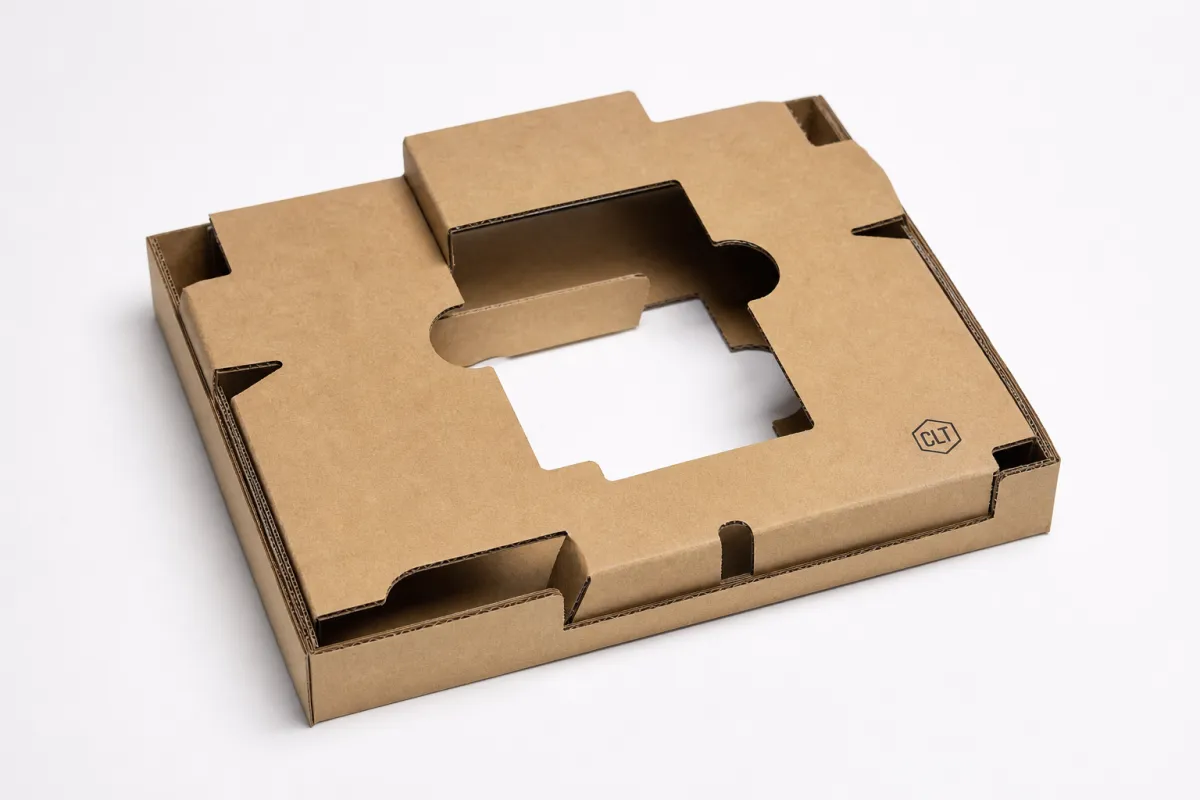
A corrugated box inserts manufacturer turns a product’s weak points into a packing strategy. That is the real work. If a bottle neck can snap, a device has a sensitive display, or a metal component shifts under vibration, the insert should protect that exact point, not just fill a box. The better the fit, the less the product moves. The less it moves, the lower the chance of abrasion, corner impact, or compression damage in transit.
In practice, a corrugated box inserts manufacturer may build a simple pad set, a folded cradle, a partition for glass, or a die-cut structure with multiple cavities. Corrugated inserts are often built from single-wall or double-wall board depending on weight and lane severity. For light retail kits, E-flute or B-flute can be enough. For heavier shipments, a 32 ECT or higher specification, or even a double-wall structure, may fit better. The point is not to use the thickest board available. The point is to use the board that manages stress where the product actually needs support.
From a business angle, the insert solves four problems at once. First, it lowers returns and replacement cost. Second, it reduces breakage and surface damage. Third, it improves unboxing, which matters more than many teams admit. Fourth, it often uses the shipper’s internal volume better than loose void fill, which can lower dimensional weight and shipping cost. That is why a corrugated box inserts manufacturer usually belongs in a broader packaging optimization conversation, not a narrow supplier search.
If the product can move, the package has already started losing the fight.
The usual scenario is easy to recognize: a fragile item, a heavy item, an awkward shape, or a premium product that has to arrive looking untouched. A corrugated box inserts manufacturer sees those as engineering problems. A packaging buyer sees them as margins, complaints, and wasted labor. Those are the same problem wearing different shoes.
Corrugated insert design usually comes down to control before cushioning. That distinction matters. Foam, paper fill, and air pillows can fill space, but they rarely lock a product in position as well as a properly designed corrugated structure. A strong corrugated box inserts manufacturer will often design for the product’s center of gravity, not just its outer dimensions. That is a small difference on paper and a large difference after a 30-inch drop or a rough parcel route.
One practical way to think about it: the outer carton handles the lane, while the insert handles the product. A thicker carton cannot make up for a poor fit. A well-designed insert can often do more with less board than people expect, which is why so many damage problems disappear only after the internal structure changes, not after the outer box gets heavier.
Process and timeline: how a corrugated box inserts manufacturer moves from brief to shipment
The first handoff to a corrugated box inserts manufacturer should be clean and specific. Give product dimensions, weight, surface finish, weak points, accessories, carton size targets, and the shipping lane you are dealing with. Parcel, palletized freight, retail fulfillment, and export all behave differently. A pack that looks fine in an office test may fail once it sees vibration, stacking, or temperature swings. The manufacturer needs that context before it can build something useful.
Here is the kind of brief that shortens the process instead of stretching it:
- Finished product dimensions, including protrusions and tolerances.
- Weight per unit and per packed carton.
- Fragile areas, pressure points, and cosmetic surfaces.
- Target carton inside dimensions and preferred board grade.
- How the pack will be handled: parcel, pallet, retail shelf, or mixed freight.
- Any accessories, manuals, cables, or inserts that must travel with the product.
Once that brief lands, a corrugated box inserts manufacturer usually turns it into a structural concept. In many programs, that means a CAD layout, a dieline, or a folded prototype that shows where the product sits and how much compression the board needs to resist. Simple projects may move to sample in a few business days. More complex designs, especially those requiring custom dies or nested components, may need a longer design loop. As a working planning rule, think of 3 to 7 business days for straightforward sample development and 10 to 15 business days when the structure needs more refinement. Production after approval often lands in the 12 to 20 business day range, though the real answer depends on tooling, board availability, and factory queue.
Prototype testing matters because a CAD drawing is not the same thing as a live pack. The manufacturer should check the fit with actual products, not just nominal dimensions. Small gaps matter. A 1/8 inch gap in the wrong place can let a product tilt, and a tilt can turn into repeated rubbing on the same edge. A good corrugated box inserts manufacturer also looks at how fast packers can assemble the insert. If it takes ten seconds too long per unit, that can erase any savings from a lower board price.
Approval usually involves the packaging team, operations, and sometimes quality or marketing. Quality cares about damage. Operations cares about speed. Marketing cares about presentation. A corrugated box inserts manufacturer that understands all three will usually close the loop faster because it is solving more than one problem at once. The fastest schedule is not always the one with the fewest revisions. It is the one where the early sample is close enough that everyone is reacting to details rather than debating the whole structure.
Production steps can change timing more than buyers expect. Tooling lead time, scoring complexity, print requirements, kitting, and freight distance all matter. If the insert ships flat and is assembled elsewhere, you also need to factor in receiving, staging, and storage. In some cases, a corrugated box inserts manufacturer can save time by simplifying the design, even if the unit cost looks a little higher at first glance. Less assembly usually means less risk, and that is the kind of tradeoff that makes sense once you have lived through a few bad launches.
Key factors when evaluating a corrugated box inserts manufacturer
The first thing to evaluate is structural capability. A corrugated box inserts manufacturer should be able to explain board grades, flute profiles, and why a design uses single-wall, double-wall, or a hybrid approach. If the answer is just “we can make it thicker,” that is not structural capability. That is guessing. Look for someone who can talk about compression, flex, edge support, stacking, and how the insert will behave when the carton is squeezed, dropped, or vibrated.
Manufacturing method matters too. Die-cutting, scoring, folding, gluing, and kitting all affect the final result. Tight tolerances are especially important when the insert must hold multiple components or protect a polished surface. If the factory cannot hold repeatable cuts, the fit drifts, and the drift shows up in pack speed or damage rates. A reliable corrugated box inserts manufacturer should also be able to explain where tolerances matter and where they do not. That kind of nuance usually beats a long capability list on a website.
Design support is another major filter. The right corrugated box inserts manufacturer should improve the pack-out, not just reproduce the brief. Can the team reduce excess board? Can they adapt one structure to multiple SKUs with minor changes? Can they make the insert faster to load? Those are the questions that affect total cost. If a supplier only talks about its machines and never about the packer’s workflow, you are probably dealing with a production vendor instead of a packaging partner.
Sustainability claims deserve a careful read. Recycled content is useful, but recycled content alone does not make a pack better. The stronger question is whether the structure is right-sized, recyclable in normal fiber streams, and light enough to cut waste without sacrificing protection. Some buyers also need evidence of responsible fiber sourcing. If that applies to you, check the standards directly instead of relying on vague language: ISTA test methods help frame durability discussions, and FSC certification gives a clearer signal on fiber sourcing than a generic green claim.
A heavier insert is not automatically a better insert. A better fit usually beats more board.
Communication quality may be the best predictor of a smooth launch. A corrugated box inserts manufacturer that answers questions quickly, sends samples on time, and flags risks early usually causes fewer surprises later. That sounds obvious, but in procurement it gets ignored more often than it should. Many teams get distracted by an impressive capability sheet and overlook the more practical sign: whether the supplier can have a clear, specific conversation about your product in the first call.
- Structural fit: Can the insert survive the real lane, not just a bench test?
- Manufacturing repeatability: Will the cuts and folds look the same on every run?
- Design support: Can the supplier improve speed, protection, and board usage?
- Sustainability proof: Can the supplier show what is actually recyclable or certified?
- Responsiveness: Do sample turns and proof feedback arrive quickly and clearly?
One more practical filter: ask how the supplier handles multi-SKU programs. A corrugated box inserts manufacturer that can manage one box well is useful. One that can manage a family of products, each with small dimensional differences, is far more valuable. That matters in real operations because the product line rarely stays still. New accessories arrive. Product geometry changes. Marketing adds a bundle. A supplier that plans for variation keeps you from redesigning from scratch every quarter.
Corrugated box inserts manufacturer pricing: cost drivers and quotes
Pricing from a corrugated box inserts manufacturer is shaped by five main drivers: board grade, structure complexity, cut count, assembly labor, and freight. Print coverage can also nudge cost upward, especially if there are branding panels, instructions, or color-matched elements. A simple insert with one or two cut lines will usually cost far less than a nested, multi-piece structure with partitions, tabs, and a premium presentation finish. That is why apples-to-apples quote comparisons matter so much.
MOQ changes the math quickly. At low volume, setup and tooling are spread across fewer units, so the per-piece price looks high. At higher volume, that same setup gets diluted, and the unit cost often drops sharply. If you are comparing suppliers, ask for tiered pricing. A corrugated box inserts manufacturer should be able to show the cost at 1,000, 5,000, and 20,000 units, because the curve tells you more than a single number ever will. It also helps you plan inventory with less guesswork.
Here is a practical comparison of common insert options. These are typical ranges, not universal prices; region, board market swings, and design details can move them up or down.
| Insert type | Typical use | Approx. unit cost at 5,000 | What drives the cost |
|---|---|---|---|
| Simple die-cut pad set | Light or medium products that only need basic positioning | $0.08-$0.22 | Few cut lines, low labor, minimal assembly |
| Partition set | Bottles, jars, glass, or parts that need separation | $0.15-$0.40 | Multiple slots, more scoring, higher assembly time |
| Double-wall protective insert | Heavier or more fragile products with stacking pressure | $0.25-$0.70 | Thicker board, more compression resistance, higher freight weight |
| Premium presentation insert | Gift sets, electronics, and higher-end consumer packs | $0.30-$0.85 | Complex cut geometry, tighter fit, potential print or kitting |
Now compare quotes the right way. One corrugated box inserts manufacturer may quote a low unit price but exclude tooling, samples, and delivery. Another may include those items, which makes the total spend lower even if the line item looks higher. Ask whether the price includes design revisions, dielines, sample runs, storage, and freight. Ask whether the quote assumes one carton size or multiple carton sizes. Ask whether the board grade is identical across suppliers. Small differences hide big cost swings.
Cheap and efficient are not the same thing. A lower sticker price can become expensive if the insert slows packing by five seconds per unit or increases damage by 2 percent. That is not a theoretical issue. A corrugated box inserts manufacturer that saves a few cents on board but costs money in labor and claims has not actually saved you anything. A buyer who tracks total landed cost usually makes a better decision than one who only compares the piece price.
A useful quote request includes three things: the exact carton size, the product spec, and the required performance target. If you want the insert to pass a drop profile, say so. If you want the pack to look premium enough for shelf display, say that too. The more precise the brief, the more accurate the quote from the corrugated box inserts manufacturer. Vague requests create vague prices, and vague prices are usually hard to trust later.
Step-by-step: ordering custom inserts without rework
Start with a requirement sheet that is better than “we need a box insert.” A corrugated box inserts manufacturer needs finished product dimensions, product weight, any fragile zones, accessory count, and the carton inside dimensions you want to preserve. Include surface finish requirements if scratches matter. If the item has a glass screen, coated surface, or painted edge, mention it explicitly. The wrong surface contact is one of the fastest ways to turn a successful prototype into a failed launch.
Next, choose the pack-out method. Some products work best in a single cavity. Others need multiple cavities, partitions, pads, or a hybrid approach. A single product in a snug cradle behaves differently from a kit with several pieces in one carton. A good corrugated box inserts manufacturer will ask how the item is loaded, not just what size it is. Loading method affects pack speed, and pack speed affects labor cost. That is why the design should match the workflow rather than fight it.
Approve a sample before volume production. Then test it with actual packers. Not a screen view. Not a drawing alone. Real people, real products, real cartons. Ask them to pack the product at normal speed and watch for friction points. Is the product hard to place? Does it require too much force? Does the insert spring open correctly, or does it collapse? A corrugated box inserts manufacturer that sees the pack in motion can usually tighten the design quickly.
Run a small pilot shipment if the product value justifies it. A few dozen or a few hundred cartons in the real lane will tell you more than a conference room discussion ever will. Check fit, speed, damage rates, and the customer-facing presentation. If you are shipping multiple SKUs, track whether the insert performs consistently across the family. That pilot often exposes a detail that the sample missed, such as a loose edge, a too-tight cavity, or a fold that slows assembly.
Keep revision control tight. Small product changes can trigger avoidable rework if nobody owns the dimensions. A corrugated box inserts manufacturer should know whether a change is a cosmetic tweak or a structural revision. As a rule of thumb, if the product geometry changes by more than a few millimeters at a critical contact point, the insert should be rechecked. The same goes for carton changes. A shift in inside dimensions can make a previously stable design behave very differently.
For packaging teams trying to avoid surprises, a simple workflow helps:
- Write the spec once and circulate it.
- Get a prototype or CAD sample.
- Test with real products and real packers.
- Run a pilot shipment before full rollout.
- Freeze the approved version and control later changes.
That sequence sounds basic, but it saves a surprising amount of time. A corrugated box inserts manufacturer that supports this process is usually easier to work with over the long term, because the supplier is helping you prevent rework instead of simply quoting the next revision.
Common mistakes when choosing a corrugated box inserts manufacturer
Mistake one: optimizing only for board thickness. A corrugated box inserts manufacturer can build a thick structure that still allows motion if the geometry is poor. Motion is the enemy. A heavier-looking insert is not always a stronger one, and a lighter insert is not automatically weak. The design has to match the product’s weak points and the handling conditions. Otherwise, you end up paying for cardboard instead of protection.
Mistake two: skipping sample testing. I see this all the time in packaging programs. The quoting stage feels productive, the artwork looks polished, and then the first live run reveals that the insert slows packers down or crushes during transit. A corrugated box inserts manufacturer can only control so much from a drawing. The rest shows up in hands-on testing, and that is where many teams discover they should have spent one more day before approving the run.
Mistake three: asking for a quote without defining quantities, carton specs, or tooling. A vague RFQ often produces a vague number. Worse, it can hide setup charges that appear later. A corrugated box inserts manufacturer should not have to guess whether you need 1,000 units or 50,000 units, or whether freight is included. The cleaner the input, the cleaner the number. It is a simple rule, but it saves a lot of frustration.
Mistake four: choosing the lowest unit price without tracking total cost. If the insert increases damage claims, eats labor time, or causes customer complaints, the savings disappear quickly. A corrugated box inserts manufacturer should be judged on total landed value: damage reduction, pack speed, material usage, freight, and consistency. Unit price matters. It just does not matter alone.
Mistake five: assuming every supplier can handle your SKU mix, print needs, and schedule. Some shops are excellent at one-off structures. Others are built for high-volume repeat runs. A capable corrugated box inserts manufacturer should be clear about what it does well and where it needs more lead time. If your line has multiple SKUs, frequent changes, or premium presentation standards, the wrong supplier fit can become a schedule problem before it becomes a quality problem.
There is also a softer mistake that does real damage: treating the insert as an afterthought. In reality, the insert often decides whether the box survives the lane. That is why a corrugated box inserts manufacturer deserves the same scrutiny you would give to any critical packaging component. A carton can be printable, recyclable, and cost-effective, but if the internal structure fails, the rest of the package is mostly decoration.
If you want a broader view of how Custom Logo Things approaches packaging work, start with About Custom Logo Things. The point is not to chase the fanciest specification. The point is to choose a corrugated box inserts manufacturer that can keep your product stable, your line moving, and your damage rate under control.
Next steps for choosing a corrugated box inserts manufacturer
Build a one-page supplier brief before you talk to anyone. A corrugated box inserts manufacturer will respond better to a document that includes product dimensions, product weight, pack-out goals, shipping environment, target price range, and whether the insert needs to look premium or simply perform. The brief does not need to be elaborate. It does need to be precise. Precision shortens the back-and-forth that usually slows packaging work down.
Request three comparable samples or concept quotes. Not one. Three gives you a useful spread. You can compare structural approach, communication quality, and total cost. A corrugated box inserts manufacturer that asks smart questions in return is usually worth more than a cheaper supplier who never challenges the brief. The best quote is not the cheapest one. It is the one that understands the product well enough to be trusted in production.
Score each option on Fit, Lead Time, design support, production capacity, and clarity of pricing. If you want to be even more disciplined, assign weights: fit at 30 percent, lead time at 20, design support at 20, capacity at 15, and pricing at 15. That mix is not universal, but it keeps teams from overreacting to the lowest quote. A corrugated box inserts manufacturer that wins on fit and clarity often saves more money over a year than the supplier with the lowest first order.
Then test the strongest option with a real shipment or pilot run. Compare damage, pack speed, and pack consistency against your current setup. You want proof in your own lane, with your own products, under your own handling conditions. That is where the truth lives. A corrugated box inserts manufacturer should earn the order by showing performance in your environment, not just on a sample table.
Here is the decision rule I would use: choose the corrugated box inserts manufacturer that proves it can control motion, protect the product, and keep operations simple enough to scale. If two suppliers look similar on paper, the one with the better sample, clearer communication, and tighter cost explanation usually wins for a reason. Packaging is full of hidden costs, and the supplier that sees them early is usually the one that helps you avoid them.
What does a corrugated box inserts manufacturer make?
A corrugated box inserts manufacturer makes custom inserts, pads, partitions, and die-cut supports that hold products in place during shipping. The goal is to reduce movement, absorb handling stress, and improve presentation when the box is opened. These structures are especially useful for fragile, heavy, or irregular products that need tighter internal control than loose fill can provide.
How do I compare corrugated box inserts manufacturer quotes?
Compare whether each corrugated box inserts manufacturer quote includes tooling, samples, freight, and design revisions. Then check that the unit price is based on the same quantity, carton size, and board grade, because those details can change the number a lot. It also helps to ask about Lead Time and MOQ so there are no surprises after approval.
What affects lead time with a corrugated box inserts manufacturer?
Lead time with a corrugated box inserts manufacturer depends on design complexity, sample approval speed, and whether new tooling or custom dies are needed. Material availability, production queue length, and shipping distance also matter. Slow proof feedback from your side can stretch the schedule just as much as factory capacity can.
Can a corrugated box inserts manufacturer help reduce shipping damage?
Yes, if the insert is built around the product’s actual weak points instead of just filling space. A strong corrugated box inserts manufacturer will reduce shifting, corner impact, surface scuffing, and compression from stacked freight. The fastest way to confirm the improvement is to test the insert with real cartons and real products.
What minimum order size should I expect from a corrugated box inserts manufacturer?
MOQ varies by board grade, die-cut complexity, and whether the run is simple or highly customized. A corrugated box inserts manufacturer may accept smaller orders, but the unit cost is usually higher because setup and tooling are spread across fewer pieces. Ask for volume tiers so you can see when the pricing improves and plan purchases around demand.
For teams trying to cut damage without adding unnecessary board, the smartest move is to choose a corrugated box inserts manufacturer that demonstrates fit, speed, and consistency in your actual shipping conditions. That is the test that matters. Not the nicest sample, not the longest capability list, and not the lowest headline quote. The right supplier proves the insert works where it counts, and that is what keeps product, margin, and customer trust intact.