Buyer Fit Snapshot
| Best fit | Custom Perfume Boxes With Inserts projects where brand print, material claims, artwork control, MOQ, and repeat-order consistency need to be specified before quoting. |
|---|---|
| Quote inputs | Share finished size, material target, print colors, finish, packing count, annual reorder estimate, ship-to region, and any compliance wording. |
| Proofing check | Approve dieline scale, logo placement, barcode or warning zones, color tolerance, closure strength, and carton packing before bulk production. |
| Main risk | Vague material claims, crowded artwork, missing packing details, or unclear freight terms can make a low unit price expensive after revisions. |
Fast answer: Custom Perfume Boxes With Inserts: Cost, Fit, Lead Time should be specified like a repeatable production item. The safest quote records material, print method, finish, artwork proof, packing count, and reorder notes in one written spec.
Production checks before approval
Compare the actual filled-product size with the drawing, then confirm tolerance on folds, seals, hang holes, label areas, and retail display edges. Reserve space for logos, QR codes, warning copy, and material claims before decorative graphics fill the panel.
Quote comparison points
Review material grade, print process, finish, sampling route, tooling charges, carton quantity, and freight assumptions side by side. A quote is only useful when the supplier can repeat the same color, closure quality, and packing count on the next order.
Custom Perfume Boxes with Inserts: Cost, Fit, Lead Time
Custom perfume boxes with inserts sound simple until the bottle starts moving. Then the package stops behaving like a polished presentation piece and starts acting like a stress test. The outer carton matters, but the insert is what decides whether the fragrance arrives intact, sits square in the box, and opens with the kind of precision buyers notice immediately.
For a packaging buyer, that is the actual job: protect a fragile glass bottle, support the shape, and keep the presentation clean enough for retail shelves or ecommerce unboxing. A good insert turns Custom Printed Boxes into branded packaging that performs under pressure. A weak one creates movement, pressure points, and cracked glass. Even 2 or 3 mm of extra space can become a failure once a carton is dropped, stacked, or pushed through courier handling.
If you are sourcing from Custom Packaging Products, treat the box and insert as one system. The carton sells the brand. The insert keeps the shipment from becoming a support ticket. That tradeoff affects cost, MOQ, and Lead time, so it pays to understand it before the first sample lands on your desk.
Packaging reality: if the bottle moves, the box failed. The print finish may still look great in photos, but the shipment did not do its job.
Custom perfume boxes with inserts: why the insert matters first
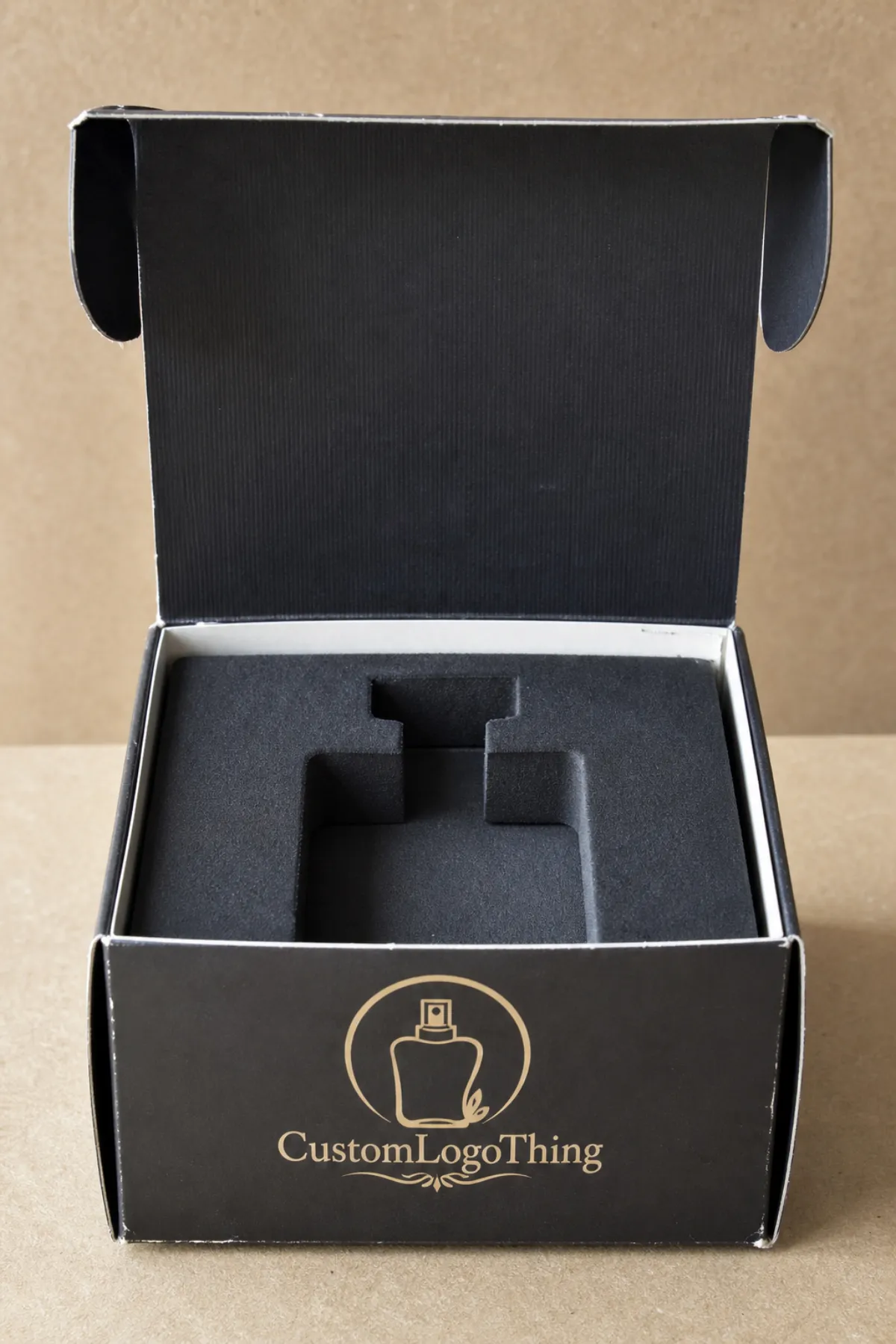
The insert is not decoration. It is the control point. Perfume bottles are usually glass, often weighted, and sometimes topped with a sprayer or cap that changes overall height more than buyers expect. If the bottle can shift inside the carton, the box fails the one job it was built to do. Nice exterior, weak structure. Packaging can be brutally honest like that.
A good insert does three things at once. It locks the bottle in place, keeps the load centered, and protects the weakest points: the base, shoulders, neck, and cap. In custom perfume boxes with inserts, the outer carton may be a folding carton, rigid box, or specialty structure, but the insert is what prevents the bottle from striking the walls during transit. That makes it the first design decision, not the last.
That extra spend starts making sense fast. Glass bottles need it. Premium fragrance sets need it. Ecommerce shipments need it even more, because parcels get handled by more people and machines than anyone likes to admit. A luxury fragrance kit also depends on the insert for presentation. Customers notice whether the bottle sits centered, whether the cavity is crisp, and whether the interior feels deliberate or improvised.
There is a hard money argument too. Inserts add material and setup cost, but they often reduce breakage, returns, replacements, and the customer message that begins with a damaged-item photo. That cost is real. It shows up in margins, service time, and trust. If one return costs more than the difference between a plain cavity and a better insert, the cheap version was never cheap.
The insert is where package branding meets shipping reality. The box can carry foil, embossing, and premium coatings, but weak interior support makes the whole experience feel less valuable the moment the customer opens it.
How custom perfume boxes with inserts work in real packaging
Most buyers see a mockup and assume the structure is already solved. It usually is not. The mockup only shows the outside. The insert is where fit succeeds or fails. The cavity needs to match the bottle body, but that is only the start. Shoulder support, neck lock, cap clearance, and base depth all need to work together. Miss one of them and the bottle either wobbles or gets pinched.
The common insert types are easy to name, and each one solves a different problem. EVA foam gives the tightest premium hold and handles fragile bottles well. Paperboard inserts are lighter, cheaper, and easier to recycle, but they need smart geometry to keep the bottle secure. Molded pulp suits sustainability goals when the bottle shape is practical. PET blisters provide a clear, display-friendly fit. Fabric-wrapped or laminated inserts add a luxury feel, though they usually cost more and take more labor.
Fit works only when the designer thinks like shipping thinks. The bottle will be tilted, bumped, shaken, and dropped because freight does not care about the presentation render. A bottle that looks perfect in a dieline but slides forward 3 mm during a tilt test is not ready. A neck that appears centered but rubs the cutout can create stress over time. The render is polite. The truck is not.
Bottle shape changes the solution. Round bottles often work with a simple circular cavity. Square or rectangular bottles need corner clearance so edges do not scuff the insert. Tall bottles need stronger neck control. Heavier bottles need more support at the base. Sets with multiple parts, such as atomizers or refills, need the insert to control each item separately so they do not collide inside the box.
Buyers often ask why two designs that look similar on screen perform very differently in production. The answer is usually tolerance. A 50 ml bottle can vary a little from batch to batch, and the cap can sit higher than expected once the sprayer is assembled. That is why sample fit matters more than a clean render. Real packaging has to accept real variation.
For buyers comparing custom printed boxes, a few quick checks reveal more than a dozen polished mockups. Use these tests before you approve a full run:
- Tilt test: hold the assembled box at several angles and confirm the bottle stays seated.
- Shake test: listen for movement. Any rattle deserves attention.
- Drop test: use a controlled drop from a realistic handling height, not a dramatic stunt from shoulder level.
- Transit simulation: pack multiple units together and check compression, scuffing, and edge wear.
If the insert survives those checks, the structure is moving toward production-ready. If it fails, the sample is telling you what the factory should change before the full run begins. That is not a setback; it is cheap insurance.
It helps to compare insert styles side by side. Different materials are not interchangeable just because they all hold a bottle. They respond differently to weight, pressure, and vibration.
| Insert type | Typical strengths | Common tradeoffs | Best fit |
|---|---|---|---|
| EVA foam | Tight retention, premium feel, strong shock absorption | Higher cost, less recyclable, can look heavy if overused | Luxury fragrance, fragile glass, premium gift sets |
| Paperboard | Lower cost, lighter weight, easier branding integration | Less cushioning, needs precise structure to avoid movement | Retail packaging, lighter bottles, cost-sensitive runs |
| Molded pulp | Eco story, decent protection, good for repeatable shapes | Surface finish is less refined, detail limits on complex forms | Sustainable product packaging with moderate protection needs |
| PET blister | Clear visibility, formed fit, useful for display | Can feel less premium, recyclability depends on local systems | Retail display, blister-style presentation, compact sets |
| Fabric-wrapped insert | Luxury appearance, tactile presentation, strong shelf impact | More labor, higher cost, longer setup | High-end branded packaging and gifting |
If you are weighing cost against sustainability, do not assume the greener option automatically performs better. FSC-certified paperboard is a solid starting point for fiber-based structures, but the geometry still has to protect the bottle. You can check certified fiber standards at FSC, and if you are validating shipping durability, the ISTA testing framework gives a better benchmark than guesswork.
One more distinction matters: display packaging and shipping packaging are not always the same brief. A box that sits beautifully on a boutique shelf may still fail a cross-country shipment if the insert has too much void space or too little compression resistance. The best custom perfume boxes with inserts account for both use cases before tooling starts.
Key factors that affect cost, fit, and quality
Quote differences usually come from a handful of variables, and none of them are mysterious. Board thickness, print coverage, coating choice, foil, embossing, and insert material all move the number. A simple white folding carton with a paperboard insert sits in one price band. A rigid box with soft-touch lamination, foil stamp, magnetic closure, and a custom EVA cavity lives somewhere else entirely. Same fragrance. Very different budget.
Structure complexity drives cost more than most people expect. A clean rectangular insert is easier to produce than a deeply contoured cavity with layered support or multi-bottle spacing. Every extra bend, cutout, and tolerance zone adds setup time. The machine does not care that the concept board looked elegant.
Quantity matters just as much. Setup costs, tooling, and sampling spread across the order, so 500 pieces can feel expensive while 3,000 pieces may land in a much more workable range. That is not a trick. It is basic manufacturing math. Smart buyers understand this early and stop comparing a small run to a mass-market carton quote.
Lead time touches quality too. When a project is rushed, factories have less room to correct the structure. That is how the cavity ends up too loose, or the coating gets chosen before the dieline is final. Slower does not automatically mean better, but unrealistic speed usually means the team is forced to guess. Guessing is not a production plan.
The useful cost lens most people skip is total landed cost. The box price is only part of the picture. Sample fees, tooling, freight, customs, QC rework, and the cost of replacing damaged units all belong in the calculation. A slightly higher unit price can still be cheaper overall if it cuts breakage by even a small percentage.
Here is a simple way to think about that. If breakage falls from 2% to 0.5% on an order of 20,000 units, that is 300 fewer damaged packs. Even before you count customer service time, the savings can outweigh a modest increase in unit cost. Packaging math is rarely glamorous, but it is often decisive.
For a packaging buyer, the right question is not “What is the cheapest box?” It is “What is the least expensive box that still protects the bottle, matches the brand, and arrives on time?” That is the actual brief, even when the spreadsheet tries to simplify it into a single line item.
If you are building a broader packaging program, compare the perfume box against your other Custom Packaging Products so the finish levels and materials stay consistent across the line. Package branding works better when one product does not look like it wandered in from another brand family.
Custom perfume boxes with inserts: cost, MOQ, and unit pricing
People often ask for a price before they know the bottle dimensions. That is backwards, but common. The Quote for Custom perfume boxes with inserts depends on the carton style, insert type, print finish, quantity, and whether the insert is stock or fully custom. If any of those are still changing, the pricing will change too.
A practical rough range for small to mid-size runs is often around $0.90 to $3.50 per unit for a complete carton-and-insert package, depending on print coverage and structure. Simple paperboard inserts and modest print can stay lower. Premium rigid boxes, EVA, specialty coatings, and complex die-cut structures can move the number up quickly. Larger runs may push the unit cost down once the setup cost gets spread across more pieces.
MOQ is where the custom insert changes the conversation. Plain folding cartons may be available at lower minimums, but custom inserts often raise the threshold because the factory needs to justify the setup, cutting, or molding effort. In practice, many suppliers are comfortable quoting custom perfume boxes with inserts at 500 to 1,000 pieces for simpler builds, while more specialized structures may want 1,000 to 3,000 pieces or more. That is not universal, so ask for tiered pricing.
Here is a practical breakdown of what usually appears in the quote:
- Outer box: board type, printing, coating, and closure style.
- Insert: material, cavity complexity, and whether it is die-cut, molded, or laminated.
- Setup/tooling: die charges, plate charges, and structure setup.
- Sampling: structural samples, printed samples, and revision rounds.
- Freight: carton weight, volume, shipping lane, and any urgent delivery premium.
- Changes: rework caused by updated artwork, bottle modifications, or tolerance edits.
The most common overspend is predictable. People choose expensive visual finishes on the outside, then underfund the insert. That is backwards for a perfume box, especially if the bottle is fragile or shipping is rough. A beautiful foil stamp does not rescue a broken bottle. If the budget is tight, protect the bottle first, then spend on the visible surfaces.
There is another trap: overbuilding the insert for a low-volume item. If the fragrance moves in limited quantities and the bottle is already fairly stable, a heavy custom cavity may be more expensive than it needs to be. In that case, a well-designed paperboard insert with a precise lock point can be the smarter buy. Good sourcing is not about maxing out every option. It is about matching protection to reality.
For brands comparing options, a line-item quote is the cleanest way to avoid confusion. Ask suppliers to separate the box, insert, sample, tooling, and freight so you can see what is actually driving the number. Otherwise every quote looks high for a different reason, which is a reliable way to waste a week.
Production steps and turnaround for custom perfume boxes with inserts
Production moves in stages, and the order matters. Skip one and the later steps usually punish you for it. The basic flow for custom perfume boxes with inserts starts with bottle measurements, then dieline development, artwork, structural sampling, proof approval, production, quality inspection, and final packing. Nothing glamorous. Just the part that gets the shipment out the door.
The first brief should include exact bottle dimensions, bottle weight, cap height, neck profile, target quantity, finish requirements, and shipping destination. Do not send a fragrance photo and hope the factory understands the vibe. That works poorly for packaging and even worse for transit. The more precise the input, the less likely the insert gets rebuilt three times.
Sampling usually takes about 1 to 2 weeks for straightforward structures, though custom inserts, special coatings, or multiple revision cycles can stretch that. Full production often takes another 2 to 4 weeks after approval, depending on capacity and finish complexity. If the box includes heavy lamination, foil, embossing, or a more complex insert, leave more breathing room. Rush orders are possible, but they usually cost more and leave less room for mistakes to surface early.
Several schedule killers show up again and again:
- Late artwork changes after dieline approval.
- Changing bottle dimensions after the insert sample is already made.
- Vague tolerance targets, especially around neck clearance and cap height.
- Waiting until freight booking day to ask for transit testing.
- Sending incomplete brand references for colors, finish, or logo placement.
Need the job to move faster? Lock the spec before sampling. Send final measurements early. Choose one finish path instead of three maybe-options. If you are comparing retail packaging versions, decide whether the box is built for shelf appeal, ecommerce protection, or both. Those are not the same brief, even if people keep pretending they are.
Good suppliers can help refine the structure, but they are not mind readers. When the brief is clear, the box sample usually lands close on the first round. When the brief is fuzzy, every adjustment costs time. That is the ordinary truth of product packaging.
There is also a quiet timing issue that many teams miss: artwork and structure often travel on different schedules. A beautiful label file can still be useless if the bottle neck is revised after the cavity has been cut. To avoid that delay, lock the physical sample first, then finalize print details against the confirmed structure.
Common mistakes when sourcing perfume boxes with inserts
The biggest mistake is designing from a bottle photo instead of actual measurements. A photo does not tell you shoulder flare, cap tolerance, sprayer height, or how much the bottle varies from one production lot to the next. Measurements do. Skip them and the insert may look right while fitting badly.
The second mistake is choosing insert material by appearance alone. Foam looks premium. Paperboard looks tidy. Molded pulp looks eco-friendly. None of that matters if the material does not match the shipping risk. A premium-looking insert that lets the bottle move is just expensive decoration. A simpler structure that actually protects the glass is better packaging design.
Fit errors also show up after a sample is approved, which irritates everyone. The cause is usually real-world variation: a cap sits taller than the sample, the bottle shoulder changes slightly, or the cavity has too much slack. A sample can pass on a desk and still fail in transit. That is why real shipping conditions matter. A carton that survives a careful hand test is not automatically courier-ready.
Another common problem is ignoring how the packaging opens. If the insert grips the bottle too tightly, the customer may struggle to lift it out without damaging the cap or smudging the glass. If the cavity is too loose, the bottle rattles and the unboxing feels cheap. The sweet spot is secure, not clingy.
Brands also get into trouble when they over-spec the outside and under-spec the inside. Gold foil, debossing, custom color, soft-touch coating, then a cheap insert that does not hold the bottle? That is backwards. Package branding should feel coherent. The inner structure needs to support the same message the outer box is trying to sell.
Finally, some buyers forget to validate how the box performs in stacked freight. A single sample may look perfect, but multiple packed units can compress differently in a master carton. If the insert depends on exterior compression to work, the design is too fragile. That is why transit testing, ideally aligned with an ISTA method or at least a controlled drop sequence, is worth doing before volume production.
One practical warning for luxury brands: a box that photographs well can still underperform in retail replenishment. Store staff may open, restack, and reseal units more than once. If the insert is hard to remove or too delicate to survive that handling, the packaging creates avoidable friction long after the first shipment leaves the factory.
What to do next before you request a quote
Before you send an RFQ, get the non-negotiables in one place. You need exact bottle dimensions, bottle weight, cap height, target order quantity, shipping destination, and the protection level you actually want. Not the fantasy version. The real one. A bottle meant for a retail display box does not need the same structure as a bottle shipped individually through ecommerce.
Then ask for at least two or three insert options. One may be more premium, one may be more cost-efficient, and one may give you a better sustainability profile. Comparing options is better than guessing from a render. A buyer who sees the unit cost, the protection level, and the finish side by side makes a better decision than one chasing the cheapest-looking mockup.
A simple spec sheet can save a lot of back-and-forth. Keep it to one page if possible, and include:
- Board type: SBS, CCNB, kraft, rigid board, or other specified material.
- Insert material: EVA foam, paperboard, molded pulp, PET, or fabric-wrapped.
- Finish: matte, gloss, soft-touch, foil, emboss, or spot treatment.
- Color references: Pantone, CMYK, or approved swatch standard.
- Tolerance limits: especially for bottle cavity, cap clearance, and neck fit.
- Branding requirements: logo size, copy placement, barcode, legal text, and region-specific copy.
If you are building a broader packaging rollout, keep the visual language consistent across your Custom Packaging Products. The fragrance box should feel like it belongs to the same brand family as the rest of the line. That is the difference between solid package branding and a random stack of decent-looking cartons.
My practical order path: sample first, test the fit, confirm turnaround, then lock the production spec before the full run starts. That sequence keeps the risk where it belongs and keeps you from paying for preventable rework. If you want custom perfume boxes with inserts that protect the bottle, support the brand, and arrive on time, the work is won long before the first carton is printed.
The clearest takeaway is also the least glamorous: start with the bottle, not the artwork. Measure the glass, confirm cap height, choose the insert material that matches the shipping route, and demand a physical sample before you approve volume. That one sequence usually prevents the most expensive mistakes in custom perfume boxes with inserts.
Frequently asked questions
What insert material is best for custom perfume boxes with inserts?
EVA foam is usually the safest pick when protection and a tight, polished fit matter most. Paperboard and molded pulp make more sense when cost, recyclability, or a lighter eco story matters more. The best choice still depends on bottle fragility, shipping method, and the look you want on the shelf.
How much do custom perfume boxes with inserts usually cost?
Pricing depends on board thickness, print finish, insert type, quantity, and whether the insert is custom or stock. Small runs cost more per unit because setup and tooling are spread over fewer boxes. Ask for a line-item quote so you can see what the box, insert, sample, and freight actually add up to.
What MOQ should I expect for perfume boxes with custom inserts?
Custom inserts usually raise MOQ compared with plain folding cartons because they need extra setup or tooling. MOQ is often lower if you can use a stock insert style or keep the cavity geometry simple. If your volume is uncertain, ask for pricing at two or three quantity tiers before you commit.
How long does production take for custom perfume boxes with inserts?
Sampling often takes about 1 to 2 weeks, though complex structures or revisions can push that longer. Full production commonly takes another 2 to 4 weeks after approval, depending on finishes and capacity. Rush shipping, holiday peaks, and artwork changes are the usual reasons timelines slip.
Can one insert fit multiple perfume bottle sizes?
Sometimes, but only if the size difference is small and the cavity can still hold the bottle securely. If the bottles vary a lot, a shared insert usually looks sloppy and protects poorly. For multiple SKUs, use a modular layout or separate insert versions instead of forcing one bad compromise.

