Buyer Fit Snapshot
| Best fit | Corrugated Boxes With Logo Bulk projects where brand print, material claims, artwork control, MOQ, and repeat-order consistency need to be specified before quoting. |
|---|---|
| Quote inputs | Share finished size, material target, print colors, finish, packing count, annual reorder estimate, ship-to region, and any compliance wording. |
| Proofing check | Approve dieline scale, logo placement, barcode or warning zones, color tolerance, closure strength, and carton packing before bulk production. |
| Main risk | Vague material claims, crowded artwork, missing packing details, or unclear freight terms can make a low unit price expensive after revisions. |
Fast answer: Corrugated Boxes With Logo Bulk: Pricing and Lead Time should be specified like a repeatable production item. The safest quote records material, print method, finish, artwork proof, packing count, and reorder notes in one written spec.
Production checks before approval
Compare the actual filled-product size with the drawing, then confirm tolerance on folds, seals, hang holes, label areas, and retail display edges. Reserve space for logos, QR codes, warning copy, and material claims before decorative graphics fill the panel.
Quote comparison points
Review material grade, print process, finish, sampling route, tooling charges, carton quantity, and freight assumptions side by side. A quote is only useful when the supplier can repeat the same color, closure quality, and packing count on the next order.
Buying corrugated Boxes with Logo bulk can look expensive at first glance, especially if the quote includes tooling, print setup, and freight all in one place. But packaging is one of those categories where the invoice only tells part of the story. If a carton crushes in transit, if the warehouse has to rework every order because the fit is off, or if the team keeps ordering small top-off runs, the real cost climbs fast. I have seen plenty of programs where the “cheap” box turned out to be the most expensive piece in the whole shipping line.
Bulk buying pays off because several cost drivers move in the same direction at once. Setup fees get spread across more units, print becomes more consistent, and the receiving team is not constantly chasing replacement cartons. For brands that ship on a steady schedule, corrugated boxes with logo bulk can lower packaging spend in ways that do not jump out from a unit price alone. The savings show up in fewer rush orders, fewer damaged goods, and less time spent fixing avoidable mistakes.
The other part of the equation is fit. A carton that is tuned to the product and the shipping route tends to age well in a warehouse. It stacks correctly, folds the same way every time, and keeps the brand presentation steady from the first pallet to the last. That is the kind of boring reliability people usually want from packaging, and honestly, boring is good here. Once the spec is right, corrugated boxes with logo bulk stop being a sourcing headache and start acting like a system.
Corrugated Boxes With Logo Bulk: Why Bulk Orders Save Money
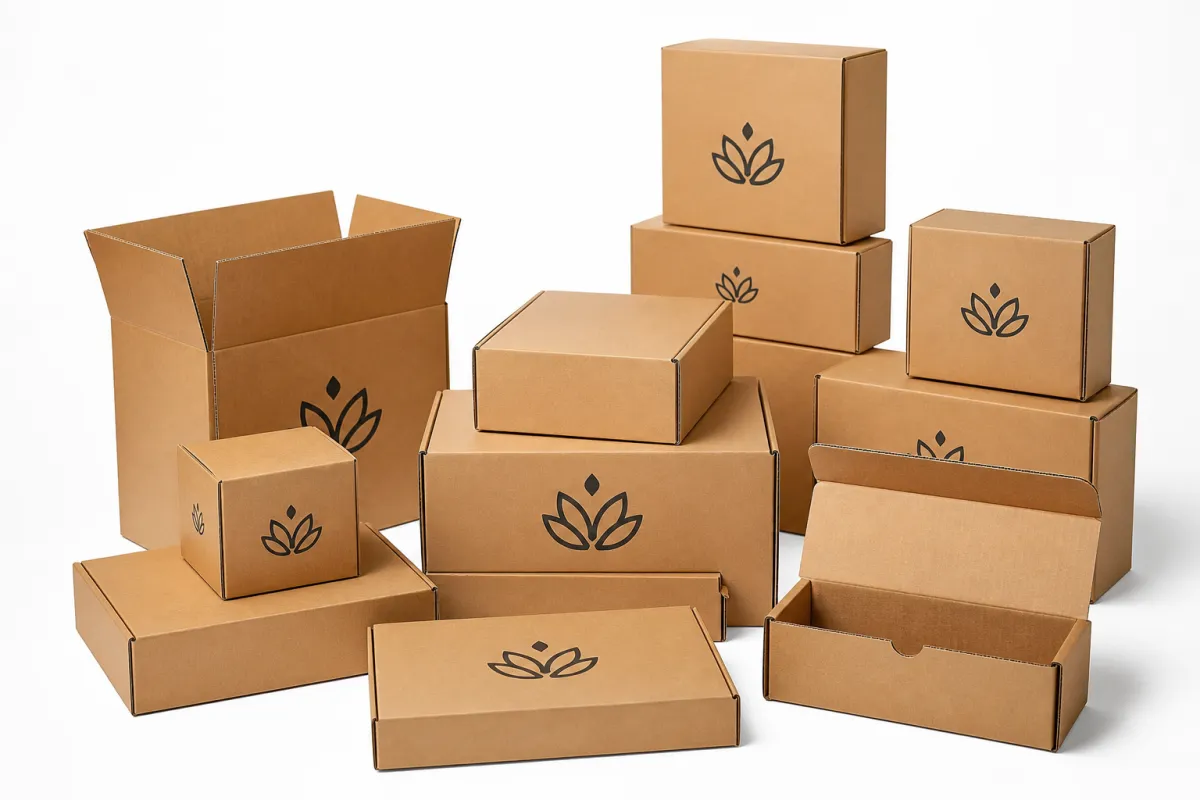
corrugated boxes with logo bulk save money because the early production costs stay almost fixed whether the run is short or long. Plate setup, artwork prep, press calibration, and sampling all take time. If those costs are absorbed by 300 cartons, the price looks high. Spread the same work across 3,000 or 10,000 cartons and the unit math changes quickly. That is not a sales trick; it is just how packaging production works.
The budget win continues after the order lands. Bulk buying reduces the number of emergency reorders, and emergency reorders tend to bring extra freight charges, short-run pricing, and admin time nobody planned for. A team that keeps just enough cartons on hand usually spends more on interruptions than a team that keeps a sensible buffer. With corrugated boxes with logo bulk, the savings are often sitting in the background, hidden in fewer interruptions and fewer “we need these by Friday” phone calls.
Consistency matters too. A carton that behaves the same way every time makes life easier for fulfillment teams. Tape application stays predictable, inserts fit the same way, and the pack line does not have to keep adjusting for slight changes from one order to the next. That steadiness is worth real money. It also keeps the customer-facing side cleaner, since the box looks and performs the same way across the whole shipment cycle.
The lowest quoted carton price is not always the lowest packaging cost. A light single-wall box can be fine for some products, but if it leads to more filler, more breakage, or more replacement shipments, the “savings” evaporate. A slightly stronger build can be the cheaper choice overall if it protects the product and speeds packing. For that reason, corrugated boxes with logo bulk should be judged on landed cost and shipment performance, not just on a printed quote.
Bulk only works when the spec matches the product. A skincare kit, a dense tool set, and a mixed retail shipper do not need the same board or the same structure. Overbuild the carton and the budget gets padded for no reason. Underbuild it and damage climbs. corrugated boxes with logo bulk make sense when the build is tied to the actual shipping environment, not to a hopeful guess scribbled on a spec sheet.
Brands that order several packaging formats often use the same sourcing logic for Custom Shipping Boxes and broader Custom Packaging Products. That keeps the packaging program aligned with the product line instead of forcing the warehouse to compensate for a bad fit.
Repeatable SKUs are the best bulk candidates. Subscription kits, standard e-commerce sizes, parts packs, and retail-ready shippers all work well because the box dimensions do not keep shifting. If the product changes size every month, fix the product or the pack-out first. Packaging cannot paper over a moving target. For corrugated boxes with logo bulk, stable dimensions are what make the savings real.
A useful rule of thumb: if the team is thinking about cartons more than once a week, bulk deserves a look. If every order needs a new size, the sizing system is probably too loose. In that case, a cleaner packaging strategy will save more than chasing discounts on corrugated boxes with logo bulk ever will.
Corrugated Boxes With Logo Bulk Product Details
corrugated boxes with logo bulk come in several common structures, and each one fits a different shipping need. Regular slotted cartons, often called RSCs, are the workhorse for warehouse shipping and general freight. Mailer boxes are better for presentation and e-commerce. Die-cut cartons fit more tightly and usually give a cleaner opening experience. Shelf-ready shippers have to survive transit and still look organized once they are on a retail shelf. A supplier who knows the category should ask how the carton ships, stacks, and opens before recommending a format.
Common box styles buyers actually use
- RSC shipping cartons - the dependable choice for warehouse shipping, storage, and freight movement.
- Mailer boxes - useful for subscription kits, light-to-medium e-commerce orders, and a stronger unboxing moment.
- Die-cut cartons - good for product-specific shapes, tighter presentation, or a closure that does not depend on standard flaps.
- Shelf-ready shipping packs - designed to survive transit and still present well on retail shelves.
Single-wall and double-wall construction cover most corrugated boxes with logo bulk programs. Single-wall usually works for lighter goods, moderate stack loads, and shorter shipping lanes. Double-wall is the safer choice for heavier items, rougher handling, export routes, or cartons that will sit on pallets for a while. It costs more, but it also adds crush resistance and compression strength, which can prevent a much more expensive damage problem later on.
Flute profile changes how the carton performs and how it prints. Smaller flutes give a smoother outer surface and a cleaner graphic result. Larger flutes add cushioning and tend to hold up better under stacking pressure. A buyer ordering corrugated boxes with logo bulk for fragile consumer goods may care more about print sharpness and a tidy fold. A warehouse buyer shipping dense hardware may care more about strength than surface finish. Both are valid; the right answer depends on the product.
Logo options are usually straightforward. One-color flexographic print is the most economical route and works well for simple branding, SKU marks, or a restrained mark on the carton. Multi-color print increases shelf impact and gives a more finished look, though it also raises setup and tooling costs. White liners can brighten color work, while kraft liners feel more natural and hide handling marks better. For corrugated boxes with logo bulk, the print choice should fit the job, not just the mood board.
Buyers should also ask about closure style, inside dimensions, and whether the box needs inserts or dividers. Those details often decide whether the carton works cleanly in the warehouse. A box can look perfect in a drawing and still fail in real packing if the product shifts, rattles, or scrapes against the panel. With corrugated boxes with logo bulk, the fit has to work once the item is inside and the tape gun comes out.
A box that is 5 mm off can be annoying. A box that is 15 mm off can become a damage problem.
Sample approval is worth the time. A pre-production sample, or even a plain white sample, can show whether the closure is too tight, whether the product sits correctly, and whether the carton folds the way the line expects. A flat drawing cannot show panel bowing or flap pressure. With corrugated boxes with logo bulk, a sample is cheap insurance against a pricey correction later.
For sustainability-minded buyers, recycled content and fiber certification are worth asking about early. FSC-certified paperboard can support chain-of-custody requirements when a retailer or partner asks for proof. Certification details can be checked through fsc.org. Not every order needs that layer, but it is easier to confirm before production than after cartons are already on the line.
Testing matters when the product is delicate, heavy, or shipping far. Packaging standards and transit tests can reveal weak points long before cartons are used at scale. Groups such as ista.org outline useful test frameworks for shipping performance. A good box for corrugated boxes with logo bulk should survive the route it is actually going to take, not just sit pretty in a mockup.
Corrugated Boxes With Logo Bulk Specs That Protect the Product
Before quoting corrugated boxes with logo bulk, the supplier needs clean spec information. Not a rough guess. Not a photo of an old carton with no measurements. Actual numbers. Inside dimensions, product weight, stacking load, print coverage, and shipping method all shape the right build. Leave one of those out and the quote may look attractive while the carton itself misses the mark.
Inside dimensions matter more than outside dimensions because the product lives inside the carton, not around it. Oversized boxes create waste, invite extra filler, and let the product move during transit. That movement slows packing and raises damage risk. Good corrugated boxes with logo bulk fit the item with enough clearance for protection, but not so much room that the contents bounce around like loose parts in a bin.
Product weight comes next. Light items can often use standard single-wall construction. Dense or fragile items usually need stronger board or a more durable flute structure. If the carton will be stacked on pallets, the stacking load matters just as much as the item weight. A box that survives one shipment may still collapse once multiple layers sit above it. That is where a lot of corrugated boxes with logo bulk programs stumble.
A simple sizing rule saves money and avoids headaches: choose the smallest carton that protects the product without crushing it, rubbing it, or leaving too much void space. Too much empty room raises filler cost and damage risk. Too little room stresses the product and slows packing. In practical terms, a good carton design for corrugated boxes with logo bulk balances fit, board strength, and line speed.
Board grade affects both performance and price. Stronger board usually means better stacking resistance, better crush performance, and more confidence for export or long-distance shipping. It also costs more. That tradeoff is normal. What is not normal is paying for heavy board when the product is light enough for a lower grade. Good corrugated boxes with logo bulk are specified to the load, not to ego.
Quality checks should include burst strength, edge crush, print registration, and sample approval. Burst strength measures how much pressure the board can take before failing. Edge crush is more useful for stacking performance. Print registration shows whether the logo lands where it should. Sample approval proves the spec works in production instead of only on screen. For corrugated boxes with logo bulk, those checks are not extras. They are the difference between a box program and a cleanup job.
Packaging pros often treat standards the way mechanics treat torque specs. The exact requirement changes by product, freight lane, and retailer, but the framework keeps decisions grounded. The Institute of Packaging Professionals is a useful reference if you want broader packaging education rather than a sales pitch. It is a reminder that corrugated boxes with logo bulk should be engineered, not guessed at.
Before asking for pricing, gather the basic details:
- Inside length, width, and height.
- Average product weight and maximum loaded weight.
- Whether the box ships individually or on pallets.
- Print coverage: one panel, full wrap, or all-over branding.
- Need for inserts, dividers, or protective fitments.
- Storage conditions: dry warehouse, humid zone, or export transit.
If those six points are ready, a quote for corrugated boxes with logo bulk becomes much more accurate. If they are missing, the quote can still move forward, but revisions become more likely. Packaging math is unforgiving when the input is vague, and that is one of the few truths in this process that never really changes.
Cost, Pricing, and MOQ for Corrugated Boxes With Logo Bulk
The price of corrugated boxes with logo bulk depends on six main variables: board grade, box size, print colors, quantity, finishing, and freight. Packaging does not price like a retail shelf tag. A smaller carton with heavier print can cost more than a larger plain one. A stronger board can move the price up quickly if the box is built heavier than the product needs.
MOQ, or minimum order quantity, is usually where the pricing conversation starts. Smaller runs almost always cost more per unit because setup and tooling are spread over fewer cartons. Larger bulk orders reduce that pressure and usually improve the per-box rate. That is the whole appeal of corrugated boxes with logo bulk. You buy enough volume to make the setup work in your favor instead of letting setup eat the margin.
Bulk still needs discipline. A weak forecast can leave dead stock sitting in a warehouse, and dead stock is just cash trapped in cardboard. A good buy covers a predictable production window and leaves room for the next cycle without overcommitting inventory. For corrugated boxes with logo bulk, the right quantity sits between cash flow pressure and unit-cost savings.
| Option | Typical MOQ | Approx. Unit Price Range | Typical Lead Time | Best For |
|---|---|---|---|---|
| Small test run, one-color print | 250-500 | $1.10-$2.40 | 10-15 business days | Trial orders, SKU validation |
| Mid-volume bulk, one- to two-color print | 1,000-3,000 | $0.55-$1.40 | 12-18 business days | Growing brands, repeat shipping programs |
| High-volume corrugated boxes with logo bulk | 5,000+ | $0.18-$0.65 | 15-25 business days | Stable SKUs, warehouse replenishment |
| Heavy-duty double-wall build | 1,000+ | $0.90-$2.10 | 15-25 business days | Dense, fragile, or export shipments |
Those ranges are directional rather than fixed. Large cartons with heavy ink coverage and special finishing can move outside them quickly. Freight also changes landed cost, especially when cartons are bulky or the destination sits far from the production point. A quote for corrugated boxes with logo bulk should always include shipping assumptions, not just the carton line.
The lowest quote is not always the best buy. Some low numbers hide weak board, loose tolerances, or freight charges that show up later. Others leave out sample costs, plate charges, or wrap fees until the final invoice. A buyer who has been hit with a surprise bill once tends to ask different questions the second time around. That is the safer move: ask for a landed estimate, not a teaser. It is the only fair way to compare corrugated boxes with logo bulk.
There are still sensible ways to save. Standard sizes can reduce tooling cost. One-color print can keep branding clean and controlled. Less print coverage lowers ink usage and press time. Choosing the Right board instead of the heaviest board can trim cost without raising damage risk. Those are healthy savings for corrugated boxes with logo bulk. Cutting strength just to chase a low number is not a savings strategy, it is a repair bill waiting to happen.
Brands comparing packaging programs across several product lines often use wholesale ordering to keep procurement simpler. That is where Wholesale Programs can help keep repeat orders organized. The goal is not only a lower carton price. The goal is a packaging system that stays predictable and does not keep asking for attention.
If a supplier cannot explain why their quote is low, stay careful. Sometimes the price is real. Sometimes something important has been left out and will show up later. For corrugated boxes with logo bulk, clear pricing matters more than a dramatic starting number.
Process and Timeline for Corrugated Boxes With Logo Bulk
The production path for corrugated boxes with logo bulk is fairly predictable once the inputs are complete. The flow usually runs through quote review, artwork check, dieline confirmation, proof approval, sampling if needed, production, packing, and shipping. Each step is simple in theory. Each step can slow down if the buyer sends incomplete details or keeps changing the carton spec at the last minute.
Repeat orders move faster than first-time custom jobs. New structures take longer because the carton has to be validated before production begins. For straightforward orders, a realistic lead time for corrugated boxes with logo bulk often lands around 12-18 business days after proof approval. More complex builds need extra time. Freight is a separate clock, so production time and delivery time should never be treated as the same thing.
Missing dimensions cause the most delays. Artwork that is not press-ready usually comes next. Slow proof feedback comes close behind. Plenty of buyers say the schedule is urgent, then leave the proof untouched for several days while everyone in the company weighs in. That is not a plant issue. That is an internal approval issue. With corrugated boxes with logo bulk, speed comes from clarity and quick decisions.
Keeping the schedule tight starts with a few practical habits:
- Send box dimensions, product weight, and target quantity up front.
- Provide logo files in vector format if possible.
- Confirm print colors and brand references before proofing.
- Approve the sample or proof quickly and with one decision-maker.
- Lock the order quantity before production starts.
Those steps sound basic because they are. The harder part is sticking to them. If the box is tied to a launch, the spec needs to be defined early instead of pushed to the last minute. For corrugated boxes with logo bulk, lead time stays under control when the packaging plan is part of the launch plan, not a side task.
Schedule slips also come from revision after approval. A width change affects board usage, tooling, packing configuration, and freight. A print change can trigger a new proof. A liner change can alter both appearance and cost. If predictable corrugated boxes with logo bulk are the goal, revisions should stay out of the final stage unless they are genuinely necessary.
Sampling helps with fragile, unusually shaped, or high-value products. It adds a little time and removes a lot of guesswork. A sample can show whether the closure is too tight, whether the product rattles, and whether the print area looks correct after folding. That is a useful delay, not wasted time. With corrugated boxes with logo bulk, one careful pause can prevent a much longer repair cycle later.
Why Choose Us for Corrugated Boxes With Logo Bulk
Good packaging suppliers do not hide behind jargon. They explain the board, the print limits, the MOQ, and the actual lead time in plain language. That should be the baseline for corrugated boxes with logo bulk. Clear communication is not a bonus feature. It is part of the job.
The value comes from practical support: consistent quality, direct quote structure, and packaging advice that fits the product instead of forcing the product to fit the box. If a carton needs stronger board, that should be said plainly. If a simpler print spec can save money without hurting the brand, that should be said too. Buyers make better decisions on corrugated boxes with logo bulk when the answer is honest and grounded in the actual build.
Support across more than one packaging format also helps. Some brands need shipping cartons, retail boxes, and promotional packaging in the same program. Others need one stable carton size with occasional custom runs. The broader the packaging mix, the more useful a supplier becomes when they can coordinate corrugated boxes with logo bulk with other products instead of treating every order like a separate problem.
Most buyers want the same few things:
- Accurate quotes with visible costs included.
- Quantity breaks that create real savings.
- Artwork help that does not create extra work.
- Stable production timing with fewer surprises.
- Packaging advice grounded in board, print, and freight realities.
That matters most for brands that are growing and do not want to keep rechecking the same details. Bulk packaging should reduce friction. If you are buying corrugated boxes with logo bulk, the supplier should narrow choices and remove confusion, not dump a pile of vague options on the table.
Some buyers care a lot about material sourcing and recycled content, and that concern is reasonable. Packaging is under more scrutiny now, and paperboard sourcing matters to retailers and consumers alike. If sustainability is part of the discussion, ask directly about recovered fiber content and certification path. Standards from groups such as FSC can matter here. That is not decoration. It is documentation and supply-chain proof.
Packaging professionals know the difference between a nice mockup and a carton that actually survives use. The mockup gets approval emails. The real carton gets packed, stacked, shipped, opened, and judged by the customer. corrugated boxes with logo bulk need to perform in the second category, not just look good in the first.
What to Send for a Fast Quote
If you want a fast quote for corrugated boxes with logo bulk, send the full package in one message. Partial details create back-and-forth, and back-and-forth eats time. The quickest requests include box size, product weight, quantity, print colors, board preference, and delivery zip code. That gives enough information to build a real estimate instead of a placeholder.
These files and references help move the process along:
- Logo artwork in vector format, if available.
- Brand colors, ideally with Pantone or CMYK references.
- Reference photos of the product packed in the box.
- Any existing sample, previous dieline, or old carton dimensions.
- Shipping destination and whether the order is domestic or export.
Then add the decision points that affect price and lead time. Do you need a launch date? Is the box for shipping only or retail display too? Are inserts required? Do you need a sample before production? Is the budget centered on the lowest landed cost or on a stronger presentation? Those answers shape the recommendation for corrugated boxes with logo bulk.
If the order is for a repeat SKU, say that plainly. If it replaces another carton, send the old spec. If the product changed, say that too. Quiet assumptions slow packaging quotes more than almost anything else. The cleanest quotes for corrugated boxes with logo bulk start with honest inputs, even when the numbers are rough.
FAQ
How many corrugated boxes with logo bulk do I need to get bulk pricing?
Most suppliers start offering better pricing once the order moves beyond tiny test quantities, but the break point depends on box size, print complexity, and board grade. For many buyers, the first meaningful price drop happens somewhere between 500 and 1,000 units, with stronger savings at 3,000 and above. Ask for 2 to 3 quantity tiers so you can compare corrugated boxes with logo bulk before committing.
What board grade is best for corrugated boxes with logo bulk shipments?
Single-wall works well for many light to medium products and keeps the price under control. Double-wall is the safer choice for heavier items, stacked storage, longer freight lanes, or rough handling. The right board grade depends on product weight, damage risk, and how the cartons will be stored. That is why corrugated boxes with logo bulk should be specified around the load instead of around a guess.
Can I order corrugated boxes with logo bulk in a standard size?
Yes. Standard sizes can lower cost and speed up production because they avoid full custom tooling. The inside fit, closure style, and print area still need to be checked before approval. Standard sizing is often the fastest route when you need branded packaging without overbuilding the carton. It is a strong option for corrugated boxes with logo bulk if your product dimensions are already stable.
What is the typical turnaround for corrugated boxes with logo bulk?
Repeat orders are usually faster than first-time custom jobs. Artwork approval, sample review, and quantity all affect the final lead time. A straightforward order can often move in about 12-18 business days after proof approval, while more complex builds take longer. Freight time is separate from production time, so confirm both before you place corrugated boxes with logo bulk.
What do I need to get an accurate quote for corrugated boxes with logo bulk?
Send box dimensions, product weight, quantity, print colors, board grade, and shipping destination. Include artwork files and sample photos if you want the quote to reflect the real build. If timing matters, add your target delivery date so production can be scheduled properly. The cleaner the input, the cleaner the quote for corrugated boxes with logo bulk.
Bottom line: corrugated boxes with logo bulk are worth buying when the spec is tight, the quantity matches your forecast, and the carton is built for the shipping environment instead of for wishful thinking. Get the dimensions right, choose the board honestly, keep the print simple if the budget is tight, and the whole packaging cycle usually costs less, not just the first invoice. That is the part people miss when they chase the lowest unit price too hard.


