Buyer Fit Snapshot
| Best fit | Corrugated Mailer Cartons Supplier projects where brand print, material claims, artwork control, MOQ, and repeat-order consistency need to be specified before quoting. |
|---|---|
| Quote inputs | Share finished size, material target, print colors, finish, packing count, annual reorder estimate, ship-to region, and any compliance wording. |
| Proofing check | Approve dieline scale, logo placement, barcode or warning zones, color tolerance, closure strength, and carton packing before bulk production. |
| Main risk | Vague material claims, crowded artwork, missing packing details, or unclear freight terms can make a low unit price expensive after revisions. |
Fast answer: Corrugated Mailer Cartons Supplier: Film, Print, MOQ, and Carton Packing should be specified like a repeatable production item. The safest quote records material, print method, finish, artwork proof, packing count, and reorder notes in one written spec.
Production checks before approval
Compare the actual filled-product size with the drawing, then confirm tolerance on folds, seals, hang holes, label areas, and retail display edges. Reserve space for logos, QR codes, warning copy, and material claims before decorative graphics fill the panel.
Quote comparison points
Review material grade, print process, finish, sampling route, tooling charges, carton quantity, and freight assumptions side by side. A quote is only useful when the supplier can repeat the same color, closure quality, and packing count on the next order.
Corrugated Mailer Cartons Supplier: What to Know First
If you are comparing branded shipping options, a Corrugated Mailer Cartons supplier can save you a lot more than the sticker price suggests. The cheapest-looking mailer often becomes the most expensive one once it crushes in transit, slows packing, or sends perfectly good orders back through the returns machine. That machine is never charming.
What a Corrugated Mailer Cartons Supplier Really Provides
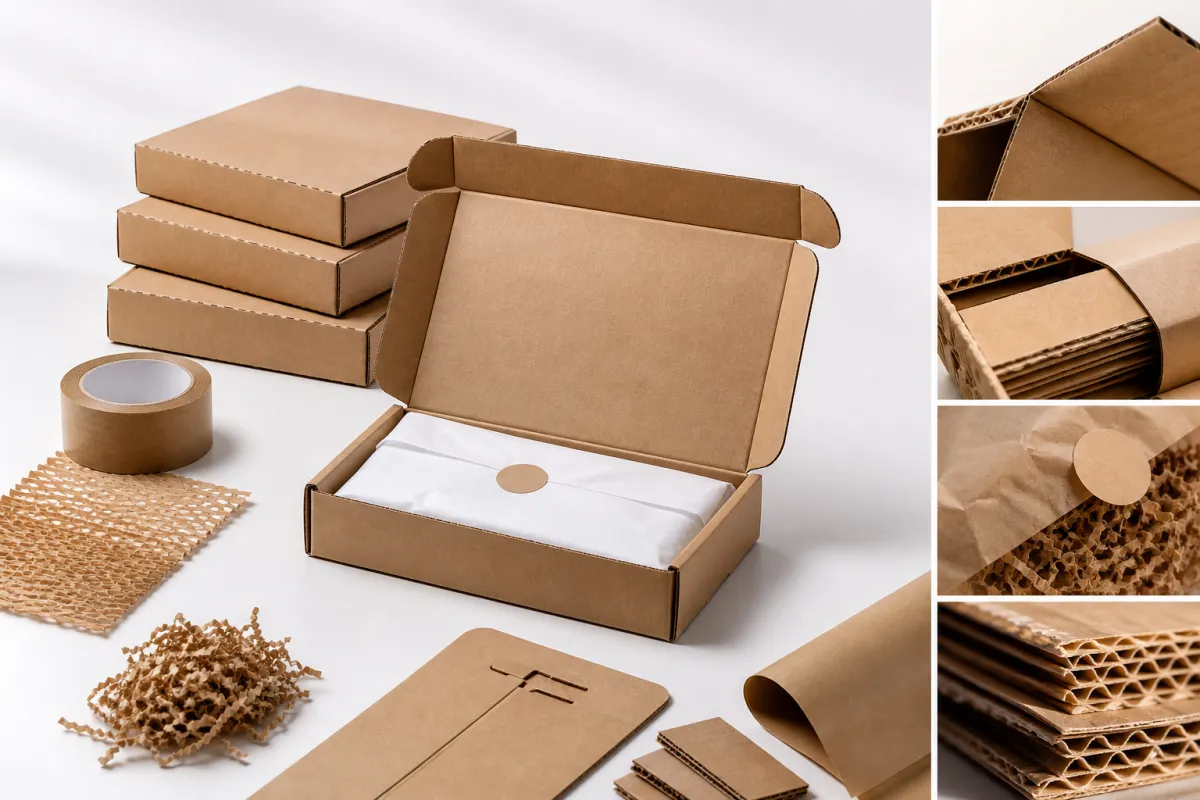
A corrugated mailer cartons supplier does more than sell boxes. The job is to match carton structure, board grade, print method, and finishing details to the product and the way your team actually packs orders. That matters because corrugated mailer cartons are not decorative filler. They are folding, self-locking fiberboard packages built from linerboard and fluted medium so they can protect the contents while still giving you a clean branded presentation at the door.
The best corrugated mailer cartons supplier looks at the whole path, not only the box itself. Is the product light and flat, like a book or a skincare set? Is it dense and fragile, like a candle or a glass bottle kit? Is the pack line hand packed, semi-automated, or fully manual? A good supplier uses those answers to recommend the right board, the right flute profile, and the right closure style so the carton opens well, folds consistently, and closes without fighting the packer.
That is why these cartons show up everywhere from e-commerce brands and subscription programs to sample kits, cosmetics, apparel, books, and lightweight consumer goods. Many of those products need better protection than a poly bag can offer, but they do not need the cost or bulk of a heavy shipping case. A seasoned corrugated mailer cartons supplier helps you land in that middle ground where presentation and protection pull in the same direction instead of arguing with each other.
If you are packaging something soft or flexible, a branded flexible mailer may still be the better fit, and our Custom Poly Mailers are often used for that lane. For rigid or heavier items, Custom Shipping Boxes may make more sense than a mailer-style format. The point is not to force every product into one structure and call it strategy. The point is to choose the package that protects the item and still fits your workflow.
Most packaging problems start long before the carton reaches a carrier. They usually start with a poor fit, a weak board choice, or a pack design that looked fine on a screen but wasted labor on the line.
From a packaging buyer's point of view, that is the real value of a corrugated mailer cartons supplier: fewer surprises. I have seen brands save a few cents per box and then spend it twice over in labor and damage claims. A carton that protects the product, supports the brand, packs quickly, and keeps freight under control is the one that actually pays off. If one of those pieces falls apart, the low initial quote stops looking low very quickly.
How a Corrugated Mailer Cartons Supplier Works With Your Order
A corrugated mailer cartons supplier typically starts with the product dimensions, weight, fragility, and any presentation requirements. That first exchange should feel technical, not vague, because the carton has to be built around the real item, not around a guess. The supplier will usually ask for internal dimensions, a rough target quantity, shipping method, print coverage, and whether the carton must survive parcel abuse, warehouse stacking, or both. If you do not know all the answers yet, a good supplier can still help shape them, but the more concrete the input, the better the result.
The structure itself is straightforward, though not exactly magical. A corrugated mailer carton is usually cut and scored from corrugated board, then formed into a folding style with closure tabs, dust flaps, and lock features. The linerboard layers give the package a printable surface and overall strength, while the fluting creates stiffness and cushioning. A corrugated mailer cartons supplier may recommend E-flute for a sharper print surface and a lower-profile finished box, or B-flute where more thickness and cushioning are useful. Neither is automatically better; the choice depends on how the product travels and how much abuse the package has to absorb.
After the specification discussion, the supplier normally moves into dieline creation or confirmation. That stage matters more than many buyers realize, because the dieline controls the score positions, glue areas, fold direction, and artwork boundaries. A corrugated mailer cartons supplier that works well with brands will check that the design leaves enough safety margin around the edges, keeps important artwork out of the folds, and avoids placing logos where the glue flap or tuck lock will distort them. If you are also sourcing a rigid presentation item for retail or gifting, the same logic applies to Custom Shipping Boxes, even though the construction is different.
Then comes sampling. Expect one or more prototypes before production, especially if the carton is new or the contents are fragile. A smart corrugated mailer cartons supplier will want you to test the sample with the actual product, not with air. Check how it closes, whether the item shifts, whether corners get bruised, and whether a packer can assemble it without forcing tabs or reworking flaps. In many plants, the real bottleneck is not the product; it is the amount of time each carton takes to fold, fill, and seal.
That order flow usually ends with production, packing, and freight shipment. On straightforward jobs, sample approval to production may take 10 to 15 business days, with transit added on top depending on origin and destination. More complex print, tighter tolerances, or new tooling can stretch that timeline. A dependable corrugated mailer cartons supplier will explain where the clock is likely to move so you can plan inventory without guessing.
Key Factors That Shape Mailer Carton Performance
Fit is the first factor, and it is the one most buyers underestimate. A corrugated mailer cartons supplier can only do so much if the product rattles around inside the carton or has to be shoved into a space that is too tight. The box should hold the item snugly, but not so tightly that the packer bends corners or scratches printed surfaces. Internal dimensions matter more than outer dimensions, and a few millimeters can decide whether the pack feels clean or awkward.
Board grade and flute choice come next. A thinner structure may print beautifully and keep the profile compact, yet still perform well for light products and low-drop-distance shipping. A thicker or stronger structure may add crush resistance and stack performance, but it can also change how the carton folds and how much shelf space it consumes. A practical corrugated mailer cartons supplier will talk about the whole tradeoff, including whether the carton needs to survive parcel drops, warehouse compression, humidity changes, or repeated handling before it even gets to the carrier.
Branding also matters, but it should never weaken the package. You can print full coverage graphics, spot color, product information, or a restrained logo treatment on a mailer carton, and each choice affects cost and production complexity. Water-based inks, aqueous coatings, and specialty finishes can improve the feel of the package, but they should be chosen with shipping performance in mind. A thoughtful corrugated mailer cartons supplier knows that a beautiful box that splits at the score line is not premium. It is just a mistake with nice artwork on it.
Sustainability and compliance enter the picture too. Most brands want recyclable fiber packaging, and many buyers now ask about recycled content, FSC chain of custody, and how much material can be removed without harming performance. If certified fiber is part of your sourcing criteria, the FSC certification guidance is a good place to understand how sourcing claims work. A strong corrugated mailer cartons supplier should be able to explain whether the board can be supplied under certified programs and what that means for your documentation. I would still ask for written proof, because vague sustainability talk is cheap and paperwork is not.
There is also the testing side. For parcels moving through distribution networks, suppliers should be familiar with methods aligned to ISTA procedures and common compression tests such as ASTM-based evaluations. You do not need to become a lab technician, but it helps to know that real-world package performance is often judged by drop, vibration, and stacking behavior, not by appearance alone. A supplier that understands the logic behind ISTA transport testing standards can help you choose a carton that behaves better in transit, not just on a sample table.
Corrugated Mailer Cartons Supplier Pricing: What Affects Cost
Pricing is where a lot of buyer confusion starts, because two cartons can look almost identical and still carry very different costs. A corrugated mailer cartons supplier will usually price based on size, board grade, flute structure, print complexity, finishing, tooling, and quantity. Larger cartons need more material. Heavier board grades cost more. Rich print coverage may require more setup and more care during press runs. A simple one-color logo on kraft stock is one world; a fully printed, coated, branded carton with precise fold registration is another.
Setup costs and unit costs deserve separate attention. A low-volume order may feel expensive per piece because the die, prepress, and sample work get spread across fewer cartons. A higher-volume order often lowers the unit cost, but only if the specification is already locked and the supplier can run efficiently. A smart corrugated mailer cartons supplier will make it clear which part of the quote is tied to tooling, which part is tied to board, and which part is tied to print and finishing. If those pieces are bundled too loosely, you may never see what is actually driving the price.
Here is a practical way to think about it. These example ranges are illustrative only, because final pricing depends on carton size, print, board, and freight, but they show why volume matters so much.
| Order Size | Typical Unit Price Range | Main Cost Pressure | Best Fit |
|---|---|---|---|
| 1,000 to 2,500 units | $0.95 to $1.60 | Setup, sampling, tooling | Pilot launches, seasonal tests |
| 5,000 to 10,000 units | $0.42 to $0.85 | Board grade, print coverage | Steady ecommerce fulfillment |
| 20,000 units and above | $0.24 to $0.55 | Freight, throughput, storage | Ongoing national programs |
Those numbers are only useful if the quote is built on the same specification from one supplier to the next. A lower quote can hide a lighter board, a looser tolerance, a cheaper finish, or a different print assumption. That is why a careful corrugated mailer cartons supplier should quote the same internal dimensions, the same flute, the same print coverage, and the same closure style. Compare landed cost, not just unit cost. Freight, warehouse handling, repacking labor, and damaged goods can erase a small saving fast.
One more point that buyers sometimes miss: if the carton fit is poor, the cost of the box is rarely the real cost. You can spend a few cents less per unit and then lose margin to extra void fill, slower packing, heavier shipping weights, and returns. The better question is not "What is the cheapest carton?" It is "Which corrugated mailer cartons supplier can deliver the lowest total cost for the full shipping process?"
Step-by-Step Sourcing Process and Timeline
A corrugated mailer cartons supplier will move faster when you bring the right inputs early. Start with the product dimensions, weight, finish sensitivity, and the kind of shipping path the package will face. A lip balm sampler does not need the same box as a ceramic candle set. If the item is boxed already, note the outside dimensions of the retail package. If the item is loose, measure the actual product, then think through what kind of insert or restraint it will need. Those details shape the internal geometry and the board choice.
After that, ask for samples or structural references. This is where a lot of sourcing teams save themselves from avoidable headaches. A physical sample tells you whether the carton feels too flimsy, whether the closure is satisfying, whether the printed panels line up the way you expected, and whether the material feels right in the hand. A capable corrugated mailer cartons supplier should encourage that step rather than rush past it. If the design is new, budget time for one revision cycle. If the product is fragile, budget for a pilot run and some basic abuse testing before full production starts.
Then review the dieline and artwork together. That means checking print margins, fold lines, glue areas, product placement, and barcode or legal copy positions at the same time. Do not approve graphics in isolation and then discover that the logo lands across a score line or a warning statement gets swallowed by the tuck. A disciplined corrugated mailer cartons supplier will often mark up the file, point out safe zones, and ask for signoff before the run begins. That kind of detail work feels slow right up until it prevents a costly reprint.
Lead time should be broken into parts: design approval, sample approval, production, and freight transit. People often blame manufacturing for delays that really happened during approval. A simple order may move from proof to production in about 12 to 15 business days, then need another few days for shipping. New structures, special coatings, or a high-volume print run can take longer. The more transparent the corrugated mailer cartons supplier is about each phase, the easier it is to manage launch dates, inventory planning, and reorder points.
For brands with mixed packaging needs, this is also a good time to decide where mailer cartons fit in the broader line. Some products travel best in a folding mailer, while others are better served by a rigid retail box or by flexible packaging. A supplier who understands the full packaging mix will help you avoid forcing one format to do a job it was never meant to handle. In many cases, the smarter plan is a mix of formats rather than a single box for everything.
Common Mistakes When Choosing a Supplier
The first mistake is buying by outer dimension alone. A carton can measure the same on paper and still behave very differently once board thickness, scoring, inserts, and closure design are taken into account. A corrugated mailer cartons supplier should be talking in terms of internal fit, product movement, and usable space, not just the label on the spec sheet. If the item touches the panels too tightly, you risk abrasion or deformation. If it floats around, you risk impact damage and a poor unboxing experience.
The second mistake is comparing quotes that are not actually comparable. One supplier may quote E-flute while another quotes B-flute. One may use a lighter liner. Another may include print setup and finishing while the first leaves those costs buried elsewhere. A trusted corrugated mailer cartons supplier will tell you exactly what is included, because hidden assumptions make cheap pricing look attractive until the order arrives and the box does not perform the way you expected.
Another common problem is approving artwork before the dieline is fully settled. That sounds minor until the folds shift and the graphics no longer align. Once that happens, the project can slide into rework, new plates or new tooling, and missed launch dates. An experienced corrugated mailer cartons supplier will keep structure and artwork tied together so you are reviewing the package as one object rather than two separate files.
Under-testing is another one. A carton that looks fine on a bench can still fail once it is stacked in a hot warehouse, dropped by a parcel carrier, or compressed under another case. Fragile, heavy, and higher-value products need real testing, even if it is simple and practical rather than lab-heavy. A supplier should be able to talk through the likely damage points and suggest whether the carton needs more stiffness, more cushion, or a different closure style. For many buyers, that testing step is the difference between a launch That Holds Up and one that creates avoidable claims.
The final mistake is choosing the lowest price without judging communication and consistency. You need a supplier who answers technical questions clearly, sends samples on time, and keeps tolerances tight from run to run. A corrugated mailer cartons supplier that saves you a few cents but creates delays, rework, or uneven quality is not saving you money. It is just moving cost into a different part of the budget where it is harder to see.
Expert Tips and Next Steps for Better Results
If you want better results, ask for technical details up front. A reliable corrugated mailer cartons supplier should be able to tell you the board grade, flute profile, print method, minimum order quantity, lead time, and any quality-control standards that matter to your account. That information gives you a real basis for comparison and helps you avoid vague quotes that sound competitive but hide weak specs. I also like to ask whether the supplier can show a recent sample of similar construction, because it is much easier to judge a carton by handling it than by reading a sales sheet.
Match the carton to the fulfillment process, not only to the product. A box that is beautiful but slow to fold can cost more in labor than a slightly pricier structure that packs in seconds. A carton that stacks well in storage may be worth a higher unit cost if it reduces warehouse damage. A practical corrugated mailer cartons supplier will talk about line speed, insertion style, labeling space, and how the package sits in the tote or on the pallet. That is the kind of operational detail that actually changes margin.
Use samples the way a packhouse would use them. Open the carton. Close it. Stack it. Label it. Ship it. Put the real product inside and see how it behaves after the box has been handled twice, not once. If the sample needs two hands and a lot of fuss, your fulfillment team will feel that pain every day. If the structure is easy to assemble and easy to seal, you will see the difference in labor right away. This is where a corrugated mailer cartons supplier earns trust: by helping you judge performance, not by pretending every carton works for every use.
Plan reorder points before inventory gets thin. Once stock runs low, buyers often pay rush fees, take whatever spec is available, or accept a carton that is close enough. That is rarely the best move. Better to set a reorder trigger based on lead time, monthly usage, and safety stock. A strong corrugated mailer cartons supplier will help you map that out so you are not forced into last-minute decisions when demand spikes.
My practical advice is simple: gather your product specs, request two or three quotes on the same carton spec, ask for samples, compare total landed cost, and place a pilot order with the corrugated mailer cartons supplier that best fits your workflow. If the packaging partner is right, the carton disappears into the process in the best possible way, which is to say it does its job quietly, consistently, and without creating extra work. That is the finish line, not a shiny box that looks good for one photo and falls apart on Tuesday.
What information should I give a corrugated mailer cartons supplier for an accurate quote?
Share exact product dimensions, weight, and whether the item has sharp edges, fragile surfaces, or inserts. Also specify the shipping method, monthly or annual quantity, print needs, and any finish or sustainability requirements. If you need a sample or prototype, say that early, because the sample step can change both timeline and tooling decisions. The more complete the brief, the more useful the quote will be.
How do I know if a corrugated mailer carton is strong enough for shipping?
Check the board grade and flute profile first, since those drive stiffness and crush resistance. Then test the packed carton through drops, stacking, and vibration that mirror your actual shipping path. A supplier can give you a starting point, but the real answer comes from testing the carton with your product inside it, not by judging an empty sample on a desk.
Are custom corrugated mailer cartons more expensive than stock options?
Usually, yes at the start, because custom work carries tooling, dieline, and sampling costs. Over time, the right custom fit can lower labor, reduce damage, and improve presentation, which changes the full cost picture. The cleanest comparison is total landed cost, not just the box price, because the wrong carton can create hidden expense everywhere else in the process.
How long does it usually take to source custom mailer cartons?
Timing depends on how quickly the dieline, artwork, and sample are approved. Simple projects can move fairly quickly, while new structures or complex print jobs need more review time. It is smart to separate approval time from production time and then add freight transit on top, especially if the cartons are tied to a launch date or seasonal campaign.
What should I compare between corrugated mailer cartons suppliers?
Compare board specification, structural support, print capability, minimum order quantity, lead time, and sample quality. Also look at communication speed and whether the supplier helps with testing and dielines. Make sure every quote uses the same carton spec, because only then does the pricing become truly comparable across suppliers.
What is the most practical next step if I am narrowing down suppliers now?
Lock the carton spec, request matched quotes, and get one physical sample from each serious option. Then run the sample through your actual packing flow with the real product, not a substitute. Pick the one that protects the item, fits the labor model, and gives you consistent build quality over time.