Buyer Fit Snapshot
| Best fit | Corrugated Pallet Boxes Manufacturer projects where brand print, material claims, artwork control, MOQ, and repeat-order consistency need to be specified before quoting. |
|---|---|
| Quote inputs | Share finished size, material target, print colors, finish, packing count, annual reorder estimate, ship-to region, and any compliance wording. |
| Proofing check | Approve dieline scale, logo placement, barcode or warning zones, color tolerance, closure strength, and carton packing before bulk production. |
| Main risk | Vague material claims, crowded artwork, missing packing details, or unclear freight terms can make a low unit price expensive after revisions. |
Fast answer: Corrugated Pallet Boxes Manufacturer: Board, Finish, Dieline, and Unit Cost should be specified like a repeatable production item. The safest quote records material, print method, finish, artwork proof, packing count, and reorder notes in one written spec.
Production checks before approval
Compare the actual filled-product size with the drawing, then confirm tolerance on folds, seals, hang holes, label areas, and retail display edges. Reserve space for logos, QR codes, warning copy, and material claims before decorative graphics fill the panel.
Quote comparison points
Review material grade, print process, finish, sampling route, tooling charges, carton quantity, and freight assumptions side by side. A quote is only useful when the supplier can repeat the same color, closure quality, and packing count on the next order.
Corrugated Pallet Boxes Manufacturer: What Buyers Need A corrugated Pallet Boxes Manufacturer can save a shipment or turn it into a very expensive lesson. There is not much middle ground. I have seen loads look perfect on paper, then fall apart at the dock because the pallet footprint was off by an inch, the board grade was too light for the stack height, and the freight got handled like it was filled with cereal instead of dense industrial parts. That is the gap a corrugated pallet boxes manufacturer is supposed to close.
From a buyer's point of view, pallet boxes are not just oversized cartons with delusions of grandeur. They are heavy-duty corrugated containers built for bulk goods, awkward shapes, dense components, and high-value products that need more structure than a standard shipper can provide. A Corrugated Pallet Boxes manufacturer chooses the board grade, flute type, pallet footprint, closure style, and compression target so the package can survive stacking, forklift handling, and transit shock without becoming a claims file.
The business case matters just as much as the engineering. A better design can reduce damage claims, improve cube utilization, and lower total landed cost even if the unit price looks a little higher at first glance. That is why buyers who compare only carton cost usually miss the real bill. The right corrugated pallet boxes manufacturer sells protection, load stability, and shipping efficiency, not just paperboard.
What a Corrugated Pallet Boxes Manufacturer Actually Does
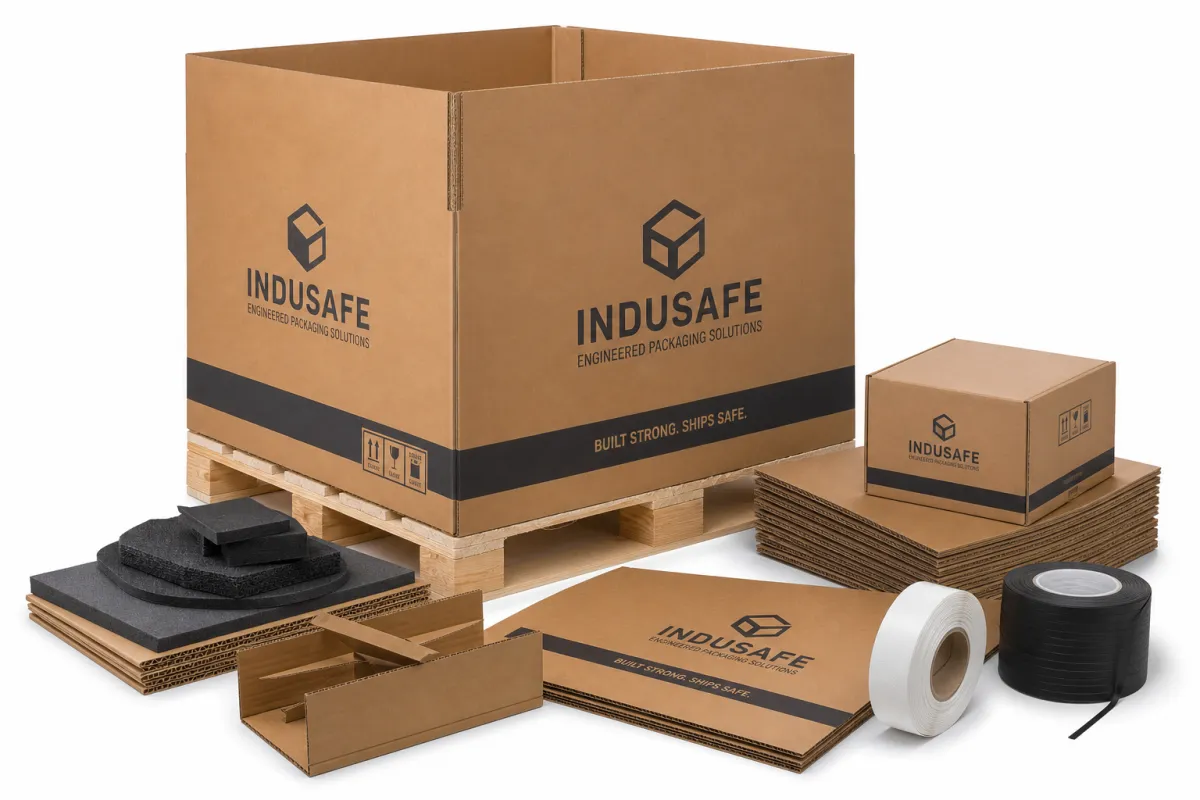
A corrugated pallet boxes manufacturer does more than cut board and glue seams. The job is to match the package to the product, the pallet, and the route it will travel. That means understanding load weight, whether the shipment is single-use or returnable, how long it may sit in a warehouse, and whether the box needs to survive export lanes, humid climates, or rough cross-dock handling. A good corrugated pallet boxes manufacturer asks about those details before quoting, because a pallet box built for light domestic freight can fail fast on a long, wet, or stacked route.
In practical terms, the product is a corrugated container sized for palletized freight. It may be a large regular slotted container, a die-cut pallet pack, a high-strength tray, or a full pallet box with a fitted lid. Some programs need internal dividers for mixed-SKU loads. Others need die-cut corners, hand holes, or reinforced bases so workers can move the load without tearing the structure apart. The corrugated pallet boxes manufacturer turns those variables into an actual build spec, not a guess.
That spec usually covers board caliper, burst or edge crush target, flute combination, and whether the build should use single-wall or double-wall construction. A corrugated pallet boxes manufacturer also decides how the box will close. Tape works for some loads. Stitching, tabs, glue, or a wrap-around design makes more sense for others. The point is not to make the biggest box possible. The point is to make the box that survives the route with the least waste.
If you buy packaging often, you already know this pattern: the cheapest-looking box on the quote sheet is often the most expensive one in use. It may crush under stack pressure, shift on the pallet, or create so much empty space that freight charges climb. A corrugated pallet boxes manufacturer that designs around the actual load can help cut those hidden costs. That is the difference between a simple container and a real shipping system.
- Board grade: Chosen for compression and puncture resistance.
- Flute type: Selected for cushioning, printability, or stacking strength.
- Pallet footprint: Aligned to the product and the warehouse flow.
- Closures and inserts: Set to prevent movement, collapse, or contamination.
For readers comparing broader packaging options, the Custom Packaging Products page is a useful place to see how pallet programs fit alongside other formats. If the product still ships in smaller cases, the line of Custom Shipping Boxes may be the better starting point. Either way, a corrugated pallet boxes manufacturer should be solving for the route, not just the drawing.
How a Corrugated Pallet Boxes Manufacturer Designs for Shipping Abuse
Shipping abuse is a blunt phrase, but it fits. A corrugated pallet boxes manufacturer has to design for the stuff that never makes it into the sales meeting: cross-dock drops, fork tine contact, vertical compression from stacked freight, humidity swings, vibration on the road, and long dwell times in warehouses. Those conditions are ordinary, not exceptional. If the load will move by truck, rail, or export pallet, the package needs to handle that abuse as part of the core spec.
Compare that with the common alternatives. Wood crates can be excellent for extreme weight or repeated reuse, but they are heavier, can raise disposal concerns, and are often more expensive to move. Rigid plastic totes are durable, yet they usually cost more up front and do not always fit one-way logistics or retail recycling rules. Oversized cartons are simple, but they often lack the compression strength needed for tall or dense loads. A corrugated pallet boxes manufacturer can usually find a better balance of weight, printability, recyclability, and cost than those alternatives, especially for one-way freight and mixed-product programs.
The performance levers are straightforward, even if the design work is not. Single-wall corrugated may be enough for light or moderate loads. Double-wall board brings more rigidity and better stacking performance. Reinforced corners, bottom pads, and liners can keep the structure from bowing under pressure. Die-cuts can make assembly faster and improve fit. A corrugated pallet boxes manufacturer may also tie the box directly into the pallet footprint so the load stays stable during forklift handling and stretch wrap application.
Product traits change the build. Fragile parts need shock control and separation. Dense parts need compression support and a stronger base. Mixed-SKU shipments often need internal dividers, foam, or corrugated inserts so items do not grind against each other. If a product has sharp edges, the design has to account for puncture risk. If it holds moisture-sensitive goods, the manufacturer may recommend a liner or coated sheet. A corrugated pallet boxes manufacturer that ignores the product profile is designing blind.
Packaging should fail in the lab, not in transit. That is why many buyers ask for transit testing tied to ISTA methods and compression checks based on ASTM practices. For more on transit test thinking, the International Safe Transit Association provides useful references at ISTA. For broader material and recycling context, the U.S. Environmental Protection Agency has public guidance at EPA recycling guidance. A corrugated pallet boxes manufacturer that speaks those standards fluently is usually much easier to trust.
A pallet box should protect the product, not just enclose it. If the design saves 8 percent on board but adds one damaged shipment in fifty, the math is already wrong.
Corrugated Pallet Boxes Manufacturer Pricing and Cost Drivers
Pricing from a corrugated pallet boxes manufacturer usually looks simple on the surface and messy underneath. The main drivers are board grade, wall construction, finished size, print coverage, order quantity, and whether the build is stock, semi-custom, or fully custom. That is the short version. The longer version is that each one of those choices affects material yield, machine setup time, and freight efficiency. A big box that uses an extra square foot of board in every unit can quietly add real money across a full production run.
For a buyer, the first trap is believing the lowest unit price is automatically the lowest total cost. It is not. A cheaper pallet box might require more labor to assemble, more dunnage to stabilize the load, or more freight space because the footprint was not optimized. A stronger design from a corrugated pallet boxes manufacturer may cost more per unit but cut damage, speed packing, and reduce the number of pallets shipped. The real question is cost per protected unit, not cost per sheet of board.
Typical pricing ranges vary widely, but a rough framework helps. Simple stock or near-stock pallet boxes may sit in the lower single digits per unit at higher quantities. Semi-custom builds with heavier board, larger footprints, or modest print work often move into the mid-range. Fully custom reinforced builds, especially with double-wall board, die-cuts, or special coatings, can land higher still. For buyers, the useful comparison is not just quote price. It is cost per shipped unit, cost per protected part, and cost per pallet position. A corrugated pallet boxes manufacturer should be willing to quote in those terms.
| Option | Typical Use | Common Price Pressure | Best Fit |
|---|---|---|---|
| Stock pallet box | Repeat sizes, quick replenishment | Low setup cost, less design flexibility | Standardized loads with stable dimensions |
| Semi-custom build | Modified footprint or strength level | Board grade and die-cut changes | Buyers balancing speed and fit |
| Fully custom reinforced box | Heavy, fragile, or export freight | Tooling, samples, special inserts, print coverage | High-value loads and demanding transit routes |
Hidden costs deserve a separate line in the discussion. Tooling or setup charges can appear on first runs. Samples or prototypes may carry a fee, especially if the design takes several revisions. Freight to the plant, special moisture-resistant materials, and export-grade specs also matter. If a corrugated pallet boxes manufacturer is quoting a coated sheet, FSC-certified fiber, or a high-performance liner, those choices can change the price materially. Buyers who ask about all-in landed cost usually make cleaner decisions than buyers who focus only on unit price.
One useful habit is to ask for three numbers in every quote. First, the unit cost. Second, the expected damage reduction or performance gain. Third, the lead time. A corrugated pallet boxes manufacturer that cannot give you a realistic answer on those three points probably is not ready for a serious purchase order.
Corrugated Pallet Boxes Manufacturer Process and Timeline
The process with a corrugated pallet boxes manufacturer usually starts with a discovery call or spec request, but the quality of that first exchange determines everything that follows. The manufacturer should collect product dimensions, weight, pallet footprint, stack limits, warehouse conditions, handling method, and shipping lane. If the product is fragile, irregular, or temperature-sensitive, the sample needs to reflect that reality. A corrugated pallet boxes manufacturer that skips the basics is likely to miss something expensive later.
After discovery comes structural design. That stage may include board selection, flute selection, load orientation, corner reinforcement, and closure planning. Then comes a prototype or sample. Good buyers do not treat the sample as a formality. They fit the product, measure assembly time, check how the load stacks, and look for crush points. If necessary, they test compression or run a quick transit trial. A corrugated pallet boxes manufacturer should welcome that step, because the sample is cheaper than a failure in production.
Timelines depend on complexity. Repeat orders from a known spec can move quickly. Simple custom sizes may need a short sampling cycle and then production after approval. New builds, print changes, or performance testing can stretch the schedule. As a practical rule, a straightforward repeat run might move in about one to two weeks after approval, while a fresh custom program can take longer if testing and proofing are involved. The biggest delays usually come from unclear load data, late artwork changes, or a sample that fails because the product weight was underestimated.
Here is the buyer-friendly sequence that works best in practice:
- Collect product dimensions, weight, and pallet footprint first.
- Share warehouse handling details, stack height, and shipping route.
- Request a prototype before finalizing the full order.
- Test fit, compression, and pack-out labor time.
- Lock the final spec before inventory runs low.
A corrugated pallet boxes manufacturer that helps you sequence those steps is reducing risk, not adding bureaucracy. If a supplier pushes straight from quote to production without a sample, that is a warning sign. It usually means the design is either already proven and standard, or the risk is being handed back to the buyer. Neither option is great if your product is expensive or your freight is unforgiving.
Key Factors to Compare Before You Choose a Supplier
Buyers often compare suppliers by responsiveness, but engineering capability matters more. A corrugated pallet boxes manufacturer should be able to size the box to the product, the pallet, and the actual route it will travel. If the supplier only talks about lead time and price, without asking about compression, moisture, or pallet pattern, that is not enough. The best partner is the one that can explain why a board grade or wall structure is right for your load, not the one that simply says yes to every request.
Evidence matters more than claims. Ask for compression data, transit test results, and sample quality that matches the real shipment. If the load resembles automotive components, appliance parts, industrial hardware, or high-value replacement kits, a corrugated pallet boxes manufacturer should be able to point to similar builds or at least similar performance requirements. The key is not a flashy portfolio. It is proof that the supplier understands the stresses your product will face.
Service is part of capability. A good corrugated pallet boxes manufacturer should help refine the spec, point out overbuilt areas, and answer questions quickly when production schedules shift. If a buyer needs a faster replenishment run or a smaller pilot batch, the supplier should know how that affects pricing and line time. Responsiveness is not just speed; it is the ability to make a correct recommendation without dragging the customer through guesswork.
Sustainability and compliance also belong on the scorecard. Buyers should ask about recyclability, recycled content, export requirements, and any retailer or customer packaging rules that affect acceptance. Some programs require FSC-certified fiber. Others need packaging that is easy to recycle in standard municipal streams. A corrugated pallet boxes manufacturer that understands those constraints can prevent rejection later. That is especially true for brands with strict procurement reviews or packaging scorecards.
- Engineering support: Can the supplier size the build to the load?
- Testing discipline: Are compression and transit tests available?
- Operational fit: Will the design work on your line and in your warehouse?
- Compliance fit: Does the material align with recycling and customer rules?
For buyers who want a broader view of the team and its process, About Custom Logo Things gives useful context on how the company approaches packaging programs. That matters because a corrugated pallet boxes manufacturer is not just shipping paperboard; it is helping shape how the freight performs once it leaves the dock.
Common Mistakes Buyers Make With Pallet Boxes
The biggest mistake is ordering from a drawing without validating the real load, stack height, and shipping path. That single shortcut often creates damage or unnecessary overpacking. A corrugated pallet boxes manufacturer can build to a spec, but if the spec is wrong, the finished box will be wrong with perfect consistency. Buyers sometimes assume the product dimensions tell the whole story. They do not. Compression, pallet overhang, handling method, and warehouse dwell time all matter.
Price-only buying is the second mistake. Cheap material can buckle under pressure, while overbuilt packaging can inflate freight and material cost without adding useful protection. A corrugated pallet boxes manufacturer should be able to show where the strength is needed and where it is not. If every answer sounds like "make it stronger," the design is probably not being optimized. Stronger is not always better. Fit is better. Right-sized strength is better.
The sizing trap is another common issue. Boxes that fit too tightly are harder to load, more likely to crush corners during assembly, and less efficient for palletizing at scale. Boxes that are too loose waste cube and invite movement. The right corrugated pallet boxes manufacturer will ask how fast the box needs to be packed, whether operators use gloves, and whether the load is hand-staged or automated. Those details influence the final dimensions as much as the product itself.
Communication gaps cause a surprising number of problems. Buyers often skip details like humidity, return handling, cold storage, or automation. A load that will sit in a damp warehouse for 10 days needs a different spec than one that goes straight to retail. If the boxes will be handled by lift trucks in a tight aisle, corner crush risk goes up. If the package must be opened and reclosed, the closure design changes. A corrugated pallet boxes manufacturer can work with those realities only if they are named early.
The cheapest quote is not the cheapest result if it creates one more damaged pallet, one more repack, or one more hour of labor on every replenishment cycle.
There is also a psychological mistake buyers make. They treat pallet packaging as a commodity because the material looks familiar. A corrugated pallet boxes manufacturer is really engineering a load-bearing system. That system has a floor, walls, lid, closure, and shipping route. Ignore one piece, and the whole structure gets less reliable. Paperboard can do a lot, but it is not magic. Shocking, I know.
Expert Tips and Next Steps for Packaging Buyers
If you are preparing to request quotes, start with the numbers that matter. Gather product dimensions, weight, quantity, pallet footprint, stack limits, and shipping conditions before you talk to any corrugated pallet boxes manufacturer. Add photos or a rough sketch if the load is irregular. If there are fragile surfaces, sharp corners, or components that cannot touch, say that plainly. The cleaner the brief, the better the recommendation.
A low-risk validation path usually works best. Ask for a sample or prototype first. Run a basic fit check, a compression check, and one real shipment if possible. That does not need to be fancy. Even a short pilot can reveal assembly time, corner crush issues, or freight inefficiencies that a spreadsheet will never show. A corrugated pallet boxes manufacturer that resists a pilot is asking you to absorb the risk alone.
Compare three numbers, not one: unit price, expected damage reduction, and lead time. The cheapest quote rarely wins on total value. The best quote is the one that protects the product, fits the schedule, and keeps the line moving. If you are comparing broader packaging formats as well as pallet programs, the teams behind Custom Packaging Products and Custom Shipping Boxes can help you see where pallet boxes sit in the larger packaging mix.
Here is the short version I would give any buyer under pressure: shortlist two or three suppliers, request samples, ask for test data, and schedule a pilot before the next replenishment order. Do that, and the final decision gets much clearer. Do it with a corrugated pallet boxes manufacturer that can explain the design, not just the price, and you are far less likely to get surprised at the dock. The right corrugated pallet boxes manufacturer turns shipping risk into a controlled spec, shipment after shipment.
How do I choose a corrugated pallet boxes manufacturer for heavy loads?
Ask for compression and stacking data that matches your real product weight, not a generic brochure rating. Share pallet size, load height, and transit conditions so the corrugated pallet boxes manufacturer can recommend the right board grade and wall structure. Choose a supplier that can provide a sample or prototype before full production.
What drives corrugated pallet boxes manufacturer pricing the most?
Material grade, wall construction, and finished size usually have the biggest impact on price. Custom printing, tooling, and low order quantities can raise unit cost quickly. Freight, setup time, and special performance requirements should also be included in the quote review.
How long does a corrugated pallet boxes manufacturer usually need?
Stock or repeat sizes can move fast, while custom designs need time for sampling and approval. Testing, artwork revisions, and board availability are the most common schedule variables. Ask for a written timeline that separates sample lead time from production lead time.
Are corrugated pallet boxes better than wood crates for shipping?
Corrugated pallet boxes are usually lighter, easier to recycle, and often cheaper to move. Wood may still be better for extreme moisture, repeated reuse, or very heavy industrial freight. The right choice depends on product fragility, shipping distance, and disposal requirements.
What information should I send to a corrugated pallet boxes manufacturer?
Send product dimensions, weight, quantity, and pallet footprint first. Add stack height, warehouse handling details, and any humidity or export concerns. Include photos or drawings if the load is irregular, fragile, or has special inserts.
If you want the safest path, start with the load data, not the price sheet. Give the corrugated pallet boxes manufacturer the product, the pallet, and the shipping conditions, then let the design follow the real route. That is the practical move, and it usually pays off the first time a pallet survives transit without drama.