Cosmetics Brands OPP Header Bags Sample Order Guide: What You’re Actually Testing
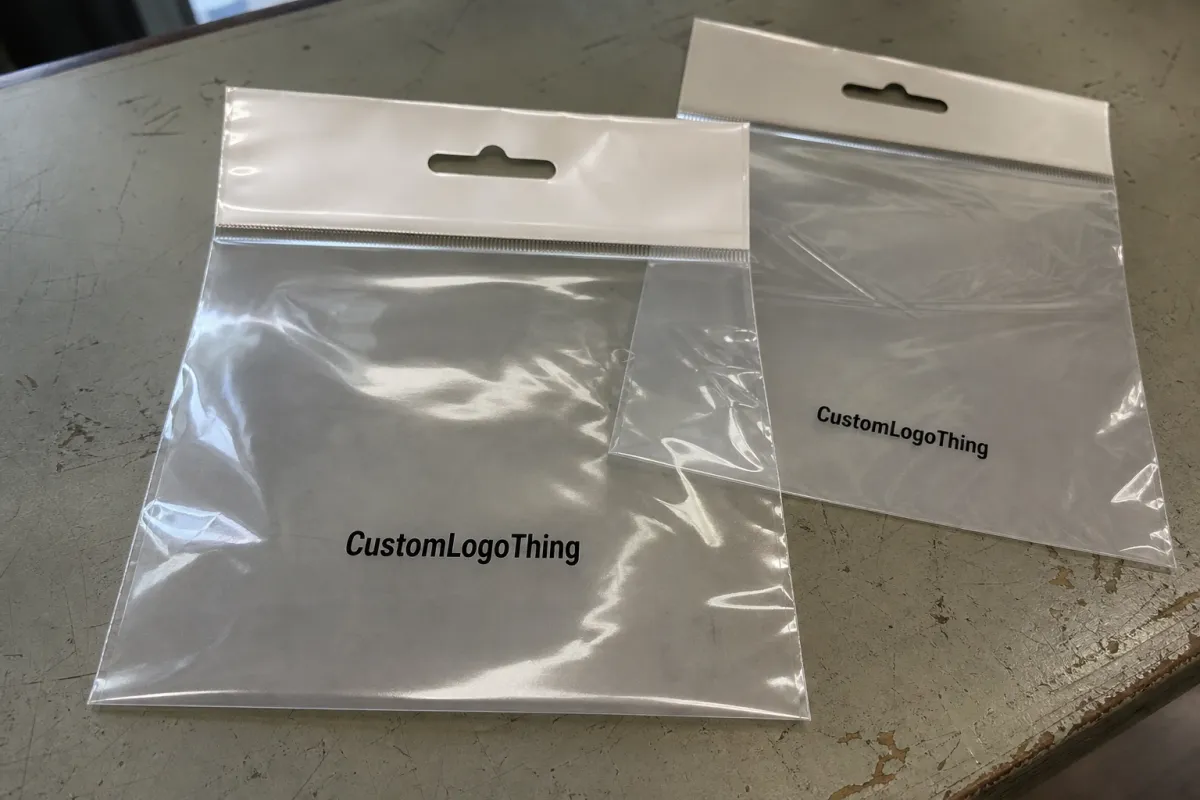
A sample order is not just a quick check to see whether the bag is clear enough. A useful cosmetics Brands OPP Header Bags sample order guide should help you test retail presentation, hang-hole strength, product fit, shelf glare, seal behavior, barcode readability, and whether your $12 beauty accessory suddenly looks like a $3 clearance-bin item.
Harsh? Maybe. Accurate? Usually.
OPP Header Bags are practical for false lashes, applicators, nail tools, skincare sachet sets, brow tools, cosmetic sponges, masks, and small beauty kits because they combine clear product visibility with a printable branded header. Shoppers can see texture, color, shape, and kit contents, while the brand still gets a defined retail face. That balance is the reason this packaging style keeps showing up in beauty programs.
A good sample order should prove the basics before bulk production starts: bag size, header depth, adhesive flap position, hang hole placement, film stiffness, print color, logo scale, and whether the product slides in without wrestling. Packaging should not require a tutorial. If fulfillment needs a trick to load every bag, the bag is wrong.
This guide is for buyers ready to order samples, not teams collecting packaging ideas for a mood board. You need to know what to check, what it costs, how long it takes, and where brands usually waste money. Most waste happens because someone approves a bag from flat dimensions and forgets product thickness.
Custom Logo Things can provide plain samples, size samples, and printed pre-production samples, depending on how much certainty you need before a bulk run. If the product is simple and low-risk, a plain fit sample may be enough. If retailer approval, buyer presentation, barcode scanning, or a launch date depends on the package, pay for the printed sample. Cheap guessing is still guessing.
Practical rule: if the sample does not answer a production question, it is just a pretty piece of plastic on your desk.
Best Cosmetic Products for OPP Header Bags
OPP Header Bags work best for dry, contained, lightweight beauty products and cosmetic accessories. They are especially useful for items that need visibility at retail or in a kit: clean display, low weight, easy packing, and enough branding space to avoid looking generic.
- False lashes and lash clusters
- Lash applicators and spoolies
- Cosmetic brushes and mini brush sets
- Sponge blenders and puffs
- Nail stickers, decals, wraps, and press-on nails
- Brow razors, tweezers, and grooming tools
- Facial mask packs and sachet bundles
- Sample-size skincare sets with inner containment
- Small cosmetic pouches
- Promotional beauty kits and gift-with-purchase sets
OPP has a glossy finish, high clarity, and a crisp feel compared with softer LDPE bags. It ships light, resists normal retail moisture exposure, and looks polished on a peg display or inside a subscription box. That does not mean it protects everything. OPP is good packaging for the right product, not magic armor.
Do not use standard OPP header bags as the only packaging for leaking liquids, oily products without inner containment, sharp metal tools without tip protection, heavy jars, fragile glass bottles, or formulas that require strong oxygen or moisture barrier performance. If you sell a serum bottle, the OPP bag may work as secondary presentation packaging. It should not be your primary protection plan.
Common uses include peg displays, influencer mailers, subscription boxes, trade show packs, boutique counter displays, wholesale samples, and promotional kits. The header changes value perception quickly. A printed header gives the package a branded retail face while the clear body keeps the product visible, which matters in beauty because people want to see lashes, brush shape, nail art, sponge texture, and color variation before buying.
Use this cosmetics Brands OPP Header Bags sample order guide with the actual product, not a random item that is “about the same size.” Similar size is how brands discover too late that the flap covers the barcode, the hang hole sits too low, or the product makes the bag bow like a cheap sandwich bag.
Material, Print, Closure, and Header Specifications
Standard OPP, or oriented polypropylene, is glossy, transparent, lightweight, and stiffer than many soft poly bags. That stiffness is why it presents well at retail. The bag holds shape better, the product reads clearly through the film, and the header gives you a clean branding panel.
For cosmetic OPP header bags, typical film thickness runs from 30 to 50 microns. A slim lash tray, nail sticker sheet, or sachet set may work at 30 to 35 microns. A brush set, sponge, brow razor, or irregular kit may need 40 to 50 microns for better handling resistance. Heavier is not automatically better; too much stiffness can make packing annoying or create sharp-looking corners that fight the product shape.
Header formats
The header can be simple or more structured depending on retail use. Common choices include a top printed header, folded header, reinforced header, euro slot, round hang hole, or no hang hole for mailer inserts and flat-lay kits. A euro slot usually works better for peg displays because it gives more hanging tolerance. A round hole is cheaper and fine for light items.
Header depth needs enough room for the logo, product name, barcode or QR code, hang hole, and required copy. For many small beauty accessories, headers often fall around 40 to 70 mm deep, though the right size depends on the bag and artwork. Too shallow and your copy looks cramped. Too deep and the package turns top-heavy, which rarely reads as premium.
Closure options
Closure choice affects both packing speed and presentation. A self-adhesive flap is common for manual packing. A resealable tape strip helps if the customer may open and inspect contents. Heat sealing works for tamper resistance or a cleaner permanent closure, but it requires equipment and more process control. Open-end bags suit filling lines or projects where the brand applies a separate label, card, or closure.
Print and artwork requirements
Printing can be simple or retail-grade. One-color logo printing keeps cost down. Full-color header printing gives stronger shelf impact. Custom artwork can include product claims, usage icons, barcodes, QR codes, batch info areas, compliance marks, and care instructions. Keep it readable. Beauty packaging can be elegant without shouting in twelve fonts.
Artwork should be supplied as vector files when possible, usually AI, EPS, or editable PDF. CMYK color setup is standard for print, and Pantone references help when brand color matching matters. Build in bleed, keep safe zones around hang holes and seals, avoid placing critical copy near folds, and protect barcode quiet zones. Minimum line thickness depends on the print method, but tiny hairline text is a bad idea on flexible packaging.
If you use FSC-certified backing cards inside the bag, mention that during quoting. FSC chain-of-custody rules apply to certified paper claims, and you can review certification basics through the Forest Stewardship Council. For transport testing of retail packs, especially wholesale cartons, standards from ISTA are also useful. A pretty bag still needs to survive shipping.
Size Sampling: How to Measure Before You Order
Most bad sample orders start with bad measurements. Buyers measure the front face of the product and forget thickness, backing cards, inserts, closures, and the extra room needed to load items efficiently. Then everyone acts surprised when bulk packing slows down. Cute.
Measure the product width, height, and depth at the thickest point. Then measure any backing card, insert, retail card, folded instruction sheet, or inner tray. Account for the usable product space separately from the header. The header is branding and hanging area; it is not free storage space unless you enjoy crushed products and crooked seals.
- Slim flat items: add roughly 5 to 10 mm to the product width.
- Moderately thick items: add roughly 10 to 20 mm to the width.
- Irregular or flexible kits: add more clearance and test by hand.
- Manual packing at speed: choose easy insertion over a painfully tight boutique fit.
For height, include the product area plus enough room for the closure, flap, or seal. If the bag has a header, treat header depth as its own dimension. A 160 mm tall bag with a 50 mm header does not give you 160 mm of usable product space. It gives you roughly 110 mm before closure and construction details. That difference matters.
Orientation choices
Portrait orientation works well for lashes, cosmetic brushes, applicators, razors, tweezers, and slim tools. Landscape orientation suits mask sets, nail sticker sheets, press-on nail cards, and wider cosmetic accessories. If the package will hang on a peg, test how it hangs with the real item inside. Some products shift weight to one side and make the header tilt. Retailers hate that, and they should.
Backing cards and inserts change everything. They affect stiffness, fit, barcode placement, and how the bag hangs. If your cosmetic item uses a backing card, include it in the sample test. Do not approve the bag around the loose product and add the card later; that is how a decent sample turns into a bulk production complaint.
Run one blunt test before approving size: if the product barely fits the sample, it does not fit. Bulk packing will be slower, rejects will rise, seals will look stressed, and someone in fulfillment will quietly hate the packaging team. Give the product breathing room without making it swim.
Cost, Pricing, MOQ, and Sample Order Tradeoffs
Pricing depends on bag size, film thickness, print colors, header structure, adhesive type, hang hole punching, artwork complexity, sample type, and quantity. A tiny one-color stock-style header bag is not priced like a full-color custom retail bag with a reinforced euro slot. Obvious, but apparently still worth saying.
Sample pricing also feels expensive compared with bulk unit pricing because short runs are inefficient. Setup, proofing, printing, cutting, sealing, and handling still happen whether you order 20 samples or 20,000 bags. Tiny runs always look expensive per piece. That is not a conspiracy. It is math.
| Sample Type | Best For | Typical Cost Behavior | Common Timeline |
|---|---|---|---|
| Plain stock sample | Checking material feel and rough product fit | Low cost, sometimes credited toward bulk order | Often 2 to 5 business days to dispatch if available |
| Custom size sample | Confirming dimensions, header depth, and closure position | Moderate cost due to short-run setup | Often 7 to 12 business days after spec confirmation |
| Digital printed sample | Reviewing logo scale, color layout, and barcode position | Higher per piece than bulk due to setup and proofing | Often 10 to 18 business days after proof approval |
| Pre-production sample | Retail buyer approval or launch-critical packaging | Highest sample cost, closest to bulk production match | Often 15 to 25 business days depending on structure |
MOQ realities vary. Simple stock structures may start lower, especially if the size and closure already exist. Custom printed header bags usually need higher minimums because printing and setup need enough quantity to make sense. For many custom printed cosmetic OPP header bags, practical MOQ ranges often sit around 1,000 to 5,000 pieces, with better unit pricing at 10,000 pieces and up. The exact number depends on specs.
As a rough buying expectation, small printed runs may land around $0.18 to $0.45 per bag depending on size, print coverage, and structure. Larger runs can drop lower, sometimes into the $0.06 to $0.18 range for simpler formats. Specialty details, thicker film, heavier print coverage, reinforced headers, or unusual punching push cost up. Shipping can also distort the real cost, especially for bulky cartons of lightweight packaging.
Use a quote checklist. Send bag width, usable product height, header depth, film thickness target, quantity, print colors, artwork file, closure type, hang hole type, shipping destination, and whether you want plain or printed samples first. If you already have a sample bag you like, send photos and measurements. For larger volume planning, Custom Logo Things can help through Wholesale Programs.
Compare total landed cost, not just unit price. A cheaper bag that tears, misfits, hides the barcode, delays launch approval, or makes packing twice as slow is not cheaper. It only looks better on the first quote.
Sample Process, Timeline, and Production Steps
A clean sample process saves time because everyone is approving the same thing. The buyer, artwork team, packaging supplier, and fulfillment team all need one version of reality. Vague approvals create expensive corrections.
- Submit product dimensions and photos. Include width, height, depth, backing cards, inserts, and any sharp or bulky areas.
- Choose the sample type. Plain sample, custom size sample, printed sample, or pre-production sample.
- Confirm material and header structure. Decide thickness, header depth, closure, and hang hole type.
- Provide artwork. Send vector logo files, CMYK artwork, barcode files, and any required copy.
- Review the digital proof. Check layout, scale, safe zones, hole clearance, and seal position.
- Approve sample production. Written approval should be specific.
- Test physical samples. Load the actual product, hang it, scan it, pack it, and inspect it under retail lighting.
- Revise if needed. Minor artwork changes are usually easier than structural changes.
- Approve bulk production. Files are locked and production begins.
Plain stock sample dispatch can be quick if the size is available. Custom printed samples take longer because artwork setup, proofing, printing, ink curing, cutting, sealing, hole punching, and QC all add time. For custom work, a realistic sample timeline is often 10 to 18 business days after proof approval. Pre-production samples can take longer because they are meant to match bulk production more closely.
Proofing is not decoration. It confirms the size template, logo placement, color setup, barcode positioning, hang hole clearance, fold position, seal placement, and production notes. Check the proof at actual size if possible. A barcode that looks fine at 200% zoom may scan badly once printed small on a glossy header.
Physical review should include product fit, insertion speed, seal strength, header alignment, print sharpness, color accuracy, scuffing, hang performance, and retail appearance. Test it under bright light and normal shelf lighting. OPP is glossy, so glare can affect readability if the header is overloaded with small copy or low-contrast colors.
Sample approval should be written and specific. “Looks good” is weak. Better: “Approved at 80 mm width, 160 mm total height, 50 mm header, 40 micron OPP, self-adhesive flap, euro slot, full-color header print, barcode position approved.” That gives production something useful to follow.
Minor artwork changes may be quick. Structural changes such as bag width, header depth, hole placement, or closure location may require a new sample. Once the approved sample moves to bulk, production files are locked, raw materials are scheduled, printing begins, and QC checkpoints are set for size tolerance, print registration, sealing, punching, and packing.
If you want examples of how packaging choices affect finished presentation, review the Case Studies. Different products need different tolerance decisions. Anyone selling one “perfect” header bag size for every cosmetic product is selling convenience, not accuracy.
Next Steps Before You Request a Quote
Before contacting Custom Logo Things, prepare five things. Not twenty. Five. The quote will be faster and more accurate.
- Product dimensions: width, height, depth, plus backing cards or inserts.
- Product photos: front, side, back, and any bulky or sharp areas.
- Desired quantity: sample quantity and estimated bulk order quantity.
- Branding artwork: vector logo, color references, barcode, QR code, and copy.
- Retail use case: peg display, subscription box, wholesale sample, influencer mailer, counter display, or promotional kit.
If the shape is unusual, sharp, bulky, or flexible, send the actual product or a detailed drawing. Cosmetic accessories are rarely perfect rectangles, no matter how badly spreadsheets want them to be. A sponge compresses. A brow razor has a handle. A tweezer tip needs protection. A lash tray may have a curved blister. These details affect the bag.
Choose the sample path based on risk. Use a plain sample if you only need to check general fit and material feel. Use a printed sample if color, logo placement, barcode readability, or retail presentation matters. Use a pre-production sample if a retail launch, distributor approval, or buyer presentation depends on the final package.
Custom Logo Things can help refine bag dimensions, header layout, material thickness, print approach, MOQ planning, and cost control without stripping the package down until it looks bargain-bin. There is a difference between efficient and cheap-looking. Good packaging knows the difference.
If you still have practical questions about files, proofs, or order handling, the FAQ is a useful place to check before sending specs. Then send the details that actually affect the quote: size, quantity, artwork, structure, and sample preference.
Use this guide as a working checklist, not a decoration. The right sample should confirm fit, print, closure, scan performance, packing speed, and shelf presentation before bulk money is committed. That is the difference between a sample that moves production forward and a sample that simply looks nice in a meeting.
FAQ
What should cosmetics brands include in an OPP header bags sample order?
Include product dimensions, product photos, target quantity, artwork, preferred closure, header size, hang hole requirement, and how the bag will be used in retail or fulfillment. If possible, test with the actual cosmetic item, backing card, insert, or kit contents instead of estimating from a similar product.
What is the usual MOQ for custom OPP header bags for beauty products?
MOQ depends on size, print method, print colors, and whether the structure is stock or fully custom. Simple stock-style bags can usually start lower, while custom printed header bags need a higher MOQ to cover setup and production efficiency. Many custom printed projects fall around 1,000 to 5,000 pieces, with stronger pricing at higher volumes.
Can I order printed samples before bulk cosmetic header bag production?
Yes. Printed samples are useful when logo placement, color, barcode position, or retail presentation needs approval before mass production. They cost more per piece than bulk bags because short-run printing, setup, proofing, and handling are inefficient.
How long does an OPP header bag sample order usually take?
Plain stock samples are typically faster because no custom printing or tooling is needed. Custom printed samples take longer due to artwork proofing, material setup, printing, cutting, sealing, and QC review. Many custom printed samples fall around 10 to 18 business days after proof approval, depending on specs.
Are OPP header bags safe for all cosmetic products?
No. They work well for dry, contained, lightweight cosmetic items and accessories such as lashes, tools, applicators, nail products, and sample kits. They are not ideal as the only packaging for leaking liquids, oily formulas, heavy jars, sharp unprotected tools, fragile glass bottles, or products needing high-barrier protection.


