Wedding Paper Bags Sample Order: What You Prove Before Buying
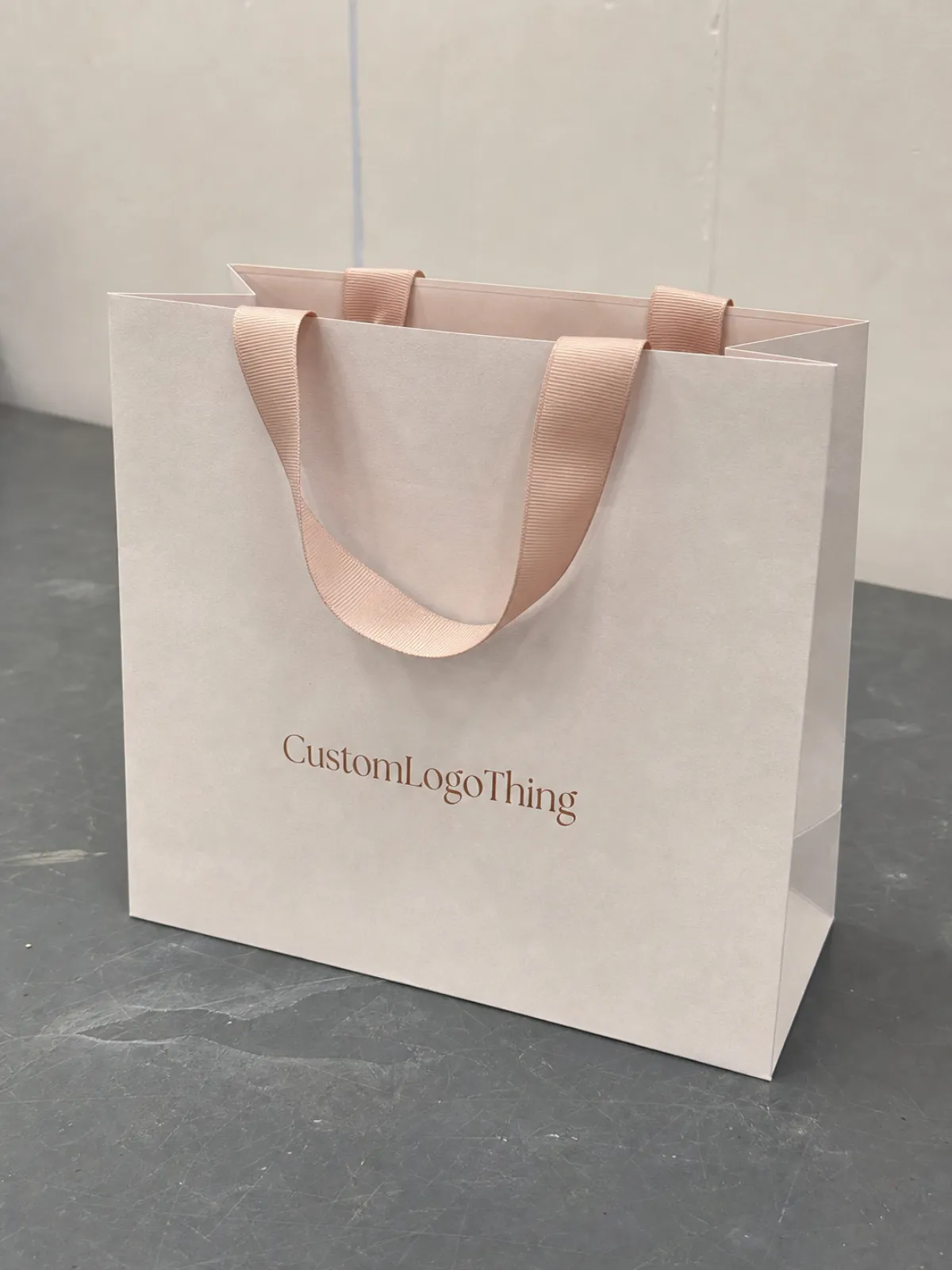
A guest may forget the exact linen shade by the time they reach the elevator. The favor bag, though, travels with them. It sits in a car, lands on a kitchen counter, and keeps the wedding branding visible after the last song has ended. A wedding Paper Bags Sample order is not a small souvenir purchase; it is a practical check before committing to hundreds or thousands of custom bags.
Digital mockups are useful for layout, but they cannot tell you whether 180gsm kraft feels too light for a candle and mini bottle, whether a cotton rope handle is comfortable when the bag is filled, or whether champagne foil looks refined under warm ballroom lighting instead of flat and yellow. Physical samples answer physical questions.
For planners, venues, favor suppliers, boutiques, and couples, the sample verifies the details most likely to cause expensive disappointment: size, paper thickness, handle strength, ink coverage, foil accuracy, ribbon compatibility, and how the finished piece photographs on a welcome table. If the bag needs to carry hotel guest gifts, dessert boxes, robes, skincare kits, drink bottles, or retail-style wedding merchandise, it should be tested with those items before bulk approval.
A sample is the packaging version of a catering tasting. The upfront cost is small compared with correcting the wrong choice after the full order arrives.
The strongest sample request begins with the use case. Welcome gifts have different requirements from favor bags. Bridesmaid proposal kits place different stress on the base than a bag holding macarons or printed cards. Dessert packaging may need width and grease resistance more than heavy paper stock. The goal is not to choose the fanciest bag; the goal is to confirm the bag that will actually work on event day.
Best Wedding Bag Styles to Sample Before Full Production
Wedding Paper Bags fall into several useful formats, and each behaves differently in hand. Kraft paper bags suit rustic, vineyard, barn, and garden events because the natural fiber tone feels warm rather than polished. White art paper bags work well for minimalist receptions and clean monogram branding. Matte Laminated Bags feel more formal. Gloss laminated bags create a brighter retail effect. Foil-stamped gift bags and boutique rope-handle bags fit black-tie events, luxury welcome gifts, and higher-value favor sets. Flat merchandise bags are better for lightweight printed pieces, scarves, slim apparel, or stationery.
Paper is not neutral. Kraft stock can range from sandy beige to deeper brown, and that fiber tone changes how white ink, black ink, and metallic foil read. White paper can expose weak contrast if the logo uses pale blush, ivory, sage, or dusty blue. Lamination often deepens color. Foil stamping cannot be judged accurately on a screen because reflection depends on angle, light temperature, and paper texture.
| Bag Style | Best Wedding Use | Sampling Priority | Typical Buyer Concern |
|---|---|---|---|
| Kraft paper bag | Rustic favors, vineyard welcome gifts, casual dessert bags | Paper tone and ink contrast | Natural fibers may shift logo color |
| White art paper bag | Minimalist receptions, monogrammed favors, boutique displays | Color accuracy and paper stiffness | Light palettes can look too faint |
| Matte laminated bag | Luxury welcome kits, hotel guest bags, formal gift sets | Finish feel and scuff resistance | Dark colors may show handling marks |
| Foil-stamped bag | Black-tie favors, premium retail-style wedding packaging | Foil shine, edge detail, logo scale | Fine script may lose sharpness |
Size matters as much as finish. Small bags usually fit candles, soaps, jewelry boxes, tea tins, macarons, or compact edible favors. Medium bags work for welcome kits, folded T-shirts, slippers, brochures, and small bottles. Large bags are better for robes, boxed gifts, hospitality packages, or multi-item bridal party sets.
Handles deserve more scrutiny than they often get. Twisted paper handles feel economical and may support recyclable packaging goals. Cotton rope handles feel more premium and distribute weight well. Ribbon handles create a formal gift look, but color matching needs care because satin, grosgrain, and printed ribbon reflect light differently. Die-cut handles are clean and compact, yet they belong on lightweight bags. A sample lets buyers compare these details before the production specification is locked.
Test the bag filled, not empty. Weight distribution changes the base shape, handle strain, and sidewall bulge. A bag that looks crisp on a conference table can lean forward once it holds a water bottle, folded itinerary, snacks, and a small favor box. The best sample is the one closest to final event use, not automatically the most ornate option.
Specifications Buyers Should Confirm in a Paper Bag Sample
The sample review should be measurable. Confirm width, height, gusset depth, paper GSM, handle type, handle attachment method, print area, finish, lamination, coating, and bottom reinforcement. A bag that looks large from the front may still be too narrow for boxed favors, folded apparel, welcome brochures, or water bottles.
GSM is paper weight. A 120gsm bag can be fine for lightweight favors. A 180gsm to 210gsm bag usually feels more substantial for welcome gifts. Premium art paper bags may move into the 250gsm range or higher, especially with lamination and a reinforced base. Heavier paper feels sturdier, but it can also raise cost, shipping weight, carton size, and sometimes minimum order requirements.
Gusset depth is the quiet culprit. A 9-inch-wide bag with a 3-inch gusset behaves very differently from a 9-inch-wide bag with a 5-inch gusset. If the contents include boxed cookies, candles, drink bottles, folded garments, or amenity kits, measure the item depth first. Then allow clearance for tissue paper, padding, or a brochure that should not bend.
Print specifications need the same physical check. One-color logos, full-color artwork, metallic foil, embossing, debossing, spot UV, edge-to-edge graphics, and repeat patterns all have different tolerances. Vector files are strongly preferred for clean lines. Fine monograms, thin strokes, and script fonts should be tested at actual print size, not judged from a zoomed-in PDF.
Color should be inspected in natural light and in indoor event-style lighting. Wedding palettes often rely on subtle shades: ivory, champagne, sage, blush, dusty blue, terracotta. Those tones shift with stock, coating, ink absorption, and lamination. Sometimes the change is slight. Sometimes it is enough to bother a planner who has matched every menu card, ribbon, and floral note.
- Construction: Check crease lines, glue seams, bottom reinforcement, and whether the bag stands upright when filled.
- Handles: Lift the packed bag repeatedly and inspect pull strength, attachment points, and hand comfort.
- Printing: Review ink registration, foil edges, scuff resistance, and any lamination bubbles or dust marks.
- Fit: Place the actual contents inside, including tissue, cards, tags, ribbons, and protective inserts.
- Sustainability: Ask about recycled paper content, unlaminated kraft options, water-based inks, and recyclable handles.
Environmental claims should be specific. FSC certification, for example, relates to responsible forest management and chain-of-custody controls; buyers can read more at FSC. Coatings, plastic lamination, foil, and mixed-material handles may affect recyclability, so an unlaminated kraft bag may be a better match for some events than a high-gloss luxury structure.
Send reference files and exact requirements early. A useful wedding Paper Bags Sample order is evaluated against intended artwork, item weight, and presentation standard, not against a vague request for “nice wedding packaging.”
Pricing, MOQ, and Unit Cost Factors for Wedding Paper Bags
Custom wedding paper bag pricing depends on material, size, print method, finish, handle type, order quantity, sample requirements, and delivery destination. There is no honest single price without specifications. A small kraft bag with one-color printing sits in a different cost bracket from a laminated art paper bag with foil stamping, embossing, ribbon handles, and a reinforced base.
A sample may cost more per piece than mass production. That surprises some buyers, but the math is plain. Setup, material handling, print preparation, finishing, quality checks, and shipping are spread across a tiny quantity. Bulk production spreads those costs across hundreds or thousands of units, so the unit cost usually falls as quantity increases.
MOQ follows the same logic. Higher customization usually requires higher minimums, while standard sizes and simpler printing can often keep the order more efficient. A standard kraft bag with a one-color logo may be easier to quote at a lower quantity than a fully custom-size laminated bag with foil and embossing. Exact thresholds depend on the specification and production route.
| Specification Choice | Cost Direction | Why It Changes Price |
|---|---|---|
| Standard size instead of custom size | Usually lower | Less tooling, faster sourcing, easier carton planning |
| One-color logo instead of full-color artwork | Usually lower | Reduced print setup and simpler quality control |
| Foil stamping or embossing | Higher | Requires dies, pressure control, and added finishing steps |
| Cotton rope or ribbon handles | Higher | Premium materials and more assembly time |
| Rush shipping | Higher | Air freight and priority handling can outweigh bag savings |
Quotes should be compared on real production variables, not only the lowest number. A cheaper bag may use thinner paper, weaker handles, smaller dimensions, limited print area, or slower shipping. Those tradeoffs become visible once the bag is packed, lifted, staged, and photographed.
To request a useful quote from Custom Logo Things, send the bag size, quantity, paper type, logo colors, finish, handle preference, delivery address, target date, and whether a physical sample is required. Buyers planning multiple events, venue programs, or favor resale can also review Wholesale Programs for larger-volume options.
The best pricing conversations start with constraints: budget ceiling, delivery date, guest count, and contents. From there, the supplier can show where money is being spent and where a simpler choice may protect the schedule. A sample helps confirm whether the quoted specification is worth the spend before the bulk order begins.
Sample Process, Timeline, and Production Steps
The process is straightforward when the buyer brings clear information: inquiry, specification review, artwork check, quotation, sample payment, sample production or sourcing, sample shipment, buyer review, revision if needed, and bulk production approval.
Timing depends on sample type. A blank stock sample verifies size, paper feel, handle comfort, and construction quickly. A printed sample verifies branding, logo scale, and color behavior. A pre-production sample is the closest version of the final bag and is most useful for premium finishing, exact palettes, or orders with higher financial risk.
Several factors influence lead time: artwork complexity, foil or embossing setup, stock availability, production workload, quality checks, shipping method, customs clearance, and buyer response time. Industry transport testing is not always necessary for simple favor bags, but buyers shipping heavier packed sets may want to understand distribution risk. The International Safe Transit Association publishes packaging test procedures that explain how vibration, compression, and handling affect packed goods.
Build in decision time after the sample arrives. Committees, planners, venue teams, or couples may need to compare color swatches, test contents, photograph the bag, and confirm final counts. A two-day internal review can easily become a week if five people need to approve ivory versus warm white.
Revisions can reset part of the clock. Changing the size, paper weight, finish, handle, or artwork after sampling may require a new quote. Significant changes may require a second sample. That is not supplier friction; it is production reality. The fastest timeline usually comes from clear specifications, production-ready artwork, and quick approvals.
- Work backward from the wedding date.
- Reserve time for sampling, production, shipping, inspection, and bag assembly.
- Add contingency for revisions, delayed approvals, freight disruption, and holiday schedules.
- Confirm who has final authority to approve the sample.
- Keep a written record of size, material, print method, finish, and handle selection.
For fixed event dates, shipping arrival is not the finish line. Bags still need to be counted, inspected, filled, staged, and transported to the venue or hotel. A wedding Paper Bags Sample Order reduces uncertainty early enough to protect the full schedule.
Artwork, Branding, and Finish Decisions That Affect the Final Bag
A wedding bag is photographed, stacked on welcome tables, handled by guests, and carried through hotel lobbies. Branding has to perform in those settings, not only on a laptop. Centered front print is the classic choice. A lower-corner monogram feels quieter. A full-surface pattern can look custom and editorial. Inside-panel messages add surprise. Tag-and-ribbon presentations create a layered gift effect. Two-sided printing improves visibility when bags face different directions on a table.
File quality controls print quality. Vector logo files are preferred for clean edges, especially for foil stamping, embossing, debossing, and crisp one-color printing. Raster images pulled from websites often fail because the resolution is too low or the edges are soft. If a monogram has thin hairlines, the production method and paper texture must support that level of detail.
Finishes change perception. Matte lamination feels understated and modern. Gloss looks brighter and more retail-like. Foil adds formal shine, but it needs enough stroke width to stamp cleanly. Embossing creates tactile depth and works best with simple marks. Spot UV needs contrast; on the wrong background, it can disappear.
Fine script fonts are a known risk. They look elegant on invitations because the print method and paper are usually selected for detail. A bag is different. It folds, flexes, scuffs, and may use textured or coated stock. If the logo line weight is too thin, the finished result may look weak from three feet away, even if the artwork file is technically correct.
Send wedding palette references, but expect production color tolerances. Paper stock, coating, and ink absorption change the final appearance. Blush on uncoated kraft is not the same as blush on white laminated art paper. Sage can shift gray. Champagne foil can look warm or pale depending on lighting. If exact color is critical, sampling becomes less optional and more like insurance.
Use the sample with accessories. Add tissue paper, ribbons, stickers, wax seals, tags, hang cards, and inserts. The bag may look balanced alone but crowded once a large tag and satin bow are attached. Custom Logo Things can help translate a visual concept into production-ready packaging, including print direction, finish hierarchy, and practical assembly details.
Common Ordering Mistakes That Samples Help Catch
Most packaging mistakes are not dramatic failures. They are small mismatches multiplied across the full order: a bag half an inch too narrow, handles that feel strained, a logo printed too low, or a blush tone that turns beige under hotel lighting. Evidence beats assumptions.
The common errors are predictable. Buyers choose a bag too small for the gift set. They select paper too thin for the contents. They underestimate handle strength. They approve colors from a phone screen. They ignore gusset depth. Each mistake may seem minor on one bag. Across 300 or 1,500 units, it becomes budget waste.
Wedding orders are especially sensitive because the guest count is fixed, event palettes are precise, deadlines are unforgiving, and presentation standards are high. A retail brand can correct packaging in the next replenishment cycle. A wedding buyer usually has one delivery window and one event day.
Logistics create hidden problems too. Cartons need storage space. Filled bags require assembly labor. Heavy contents may need reinforced bases. Venue delivery may require labeling by room block, table, guest group, or event space. If 200 welcome bags take three minutes each to fill, that is 10 labor hours before transport and staging.
Over-customization is another trap. Foil, embossing, lamination, ribbon handles, and complex artwork can look impressive, but every layer adds cost, production time, and possible approval steps. The practical question is not “Can we add more?” It is “Does this detail improve the guest experience enough to justify the extra risk?”
- Fill one sample with the actual items.
- Lift it by the handle at least 10 times.
- Photograph it under natural and indoor lighting.
- Place it beside invitations, menus, ribbons, or venue materials.
- Check whether it stands upright after packing.
- Measure the packed bag again if the contents push against the sides or base.
A digital mockup is useful for layout. A packed sample is evidence. That is why sampling should be treated as part of procurement, not decoration.
Action Steps Before You Approve a Custom Bag Quote
Before approving a custom bag quote, gather the facts that determine fit, cost, and timing. Confirm the bag contents. Estimate filled weight. Select a target size. Choose the paper style. Decide on handle type. Prepare artwork. Set the target delivery date. Name the approval contact.
Event-specific details prevent vague pricing. Send the wedding date, delivery location, guest count, extra quantity buffer, packaging assembly plan, and any requirement to match invitations, menus, venue decor, or retail display fixtures. If the bags are for a planner, venue, boutique, or favor supplier, clarify whether the order is one-time or part of a repeat program.
Order extra units. A small buffer is usually cheaper than a rush reorder. Damaged items, late guest additions, vendor gifts, planner samples, photography styling, and packing mistakes can consume extras quickly. For many wedding packaging orders, a 5% to 10% buffer is practical, though the right number depends on quantity and event complexity.
Send Custom Logo Things the intended product dimensions and photos, not just the logo. Packaging fit depends on real contents. A candle box, folded robe, mini bottle, and welcome brochure all create different pressure points inside the same bag. If the bag must meet a sustainability preference, specify recycled content, unlaminated paper, recyclable handles, or water-based ink goals early.
A strong quote request includes size, quantity, material preference, color count, finish, handle, artwork file, delivery ZIP or country, sample requirement, and deadline. If questions remain, the FAQ can help buyers prepare the basics before requesting pricing.
Ask for material recommendations if formats are still being compared, or request a sample and quote when specifications are ready. Custom Logo Things can help convert the review into a production-ready order with documented specs, realistic pricing, and a workable delivery plan. Before approving bulk production, use a physical sample to verify the details that determine whether the finished packaging looks intentional, carries safely, and arrives on schedule.
FAQ
How do I place a wedding paper bags sample order before buying in bulk?
Send the required bag size, estimated quantity, artwork, paper preference, handle style, finish, delivery location, and event deadline. Specify whether you need a blank stock sample, printed sample, or full pre-production sample. Then use the sample to test contents, color, finish, handle strength, and overall presentation before approving bulk production.
Can I get a custom printed wedding paper bag sample with my logo?
Yes. Custom printed samples are possible, but they usually cost more than blank samples because printing setup and finishing are required. Vector artwork is recommended for clean logo reproduction, especially for foil stamping, embossing, debossing, or fine monograms. A printed sample is the best option when color accuracy, logo placement, or premium finishing must be checked physically.
What affects the cost of wedding paper bag samples and bulk orders?
Main cost factors include size, paper GSM, order quantity, print colors, foil or embossing, lamination, handle type, sample type, and shipping method. The sample unit cost is normally higher than the bulk unit cost because setup is spread across fewer pieces. A detailed quote request helps avoid misleading comparisons between bags with different materials, sizes, and finishing levels.
What MOQ should I expect for custom wedding paper bags?
MOQ depends on the bag style, print method, material, finish, and whether the order uses standard or custom dimensions. Simpler kraft or white paper bags with basic printing may be more flexible than luxury laminated, foil-stamped, or fully custom structures. Ask for MOQ options at different specification levels if you are balancing budget, quantity, and presentation quality.
How long does a wedding paper bag sample and production order take?
Lead time varies by sample type, artwork readiness, material availability, finishing method, production workload, and shipping destination. Blank samples are generally faster than printed or fully customized pre-production samples. For fixed wedding dates, allow time for sample review, revisions, production, shipping, inspection, and bag assembly.

