Cosmetics ribbed winter beanies bulk order planning tips matter most when the product is treated like a launch item, not a casual add-on. The beanie has to survive sampling, pricing, packaging, and shipping without becoming a last-minute problem. Buyers usually need clear answers on spec, cost, MOQ, Lead Time, decoration, and inspection before the order is ready.
Ribbed knit is a practical choice because it holds shape, supports decoration, and looks controlled in both retail and kit packaging. A simple design with one yarn, one logo location, and one packaging format is usually the safest route for a cosmetics program. Cosmetics ribbed winter beanies bulk order planning tips should focus on reducing variables early, because every extra color, trim, or insert creates another approval point.
For 2026 programs, buyers are also asking more often about recycled yarn blends, retail-ready belly bands, low-plastic packing, and gift-with-purchase quantities that can be replenished quickly. Those updates make the beanie more useful across influencer mailers, holiday sets, store teams, and limited seasonal bundles.
Why cosmetics ribbed winter beanies bulk order planning works on shelf and off it
A beanie can serve several jobs at once: retail merchandising, staff wear, influencer mailers, holiday bundles, and VIP gifting. That versatility matters because one inventory pool can support more than one campaign without changing the product.
Ribbed construction helps the beanie recover after wear, which keeps the cuff and crown from looking collapsed. That is useful for cosmetic packaging, where the item may be judged in a box before it is ever worn. The texture also gives embroidery a cleaner base than a loose flat knit.
The commercial advantage is straightforward. Bulk planning lowers unit cost, but it also reduces the chance of late-stage changes. If the artwork, packaging, and timeline are set before sampling, the order is less likely to stall during approval or freight booking.
A beanie that looks fine in a mockup but uneven in natural light will expose weak planning faster than most promotional items.
In recent sourcing reviews for beauty and wellness merchandise, the strongest orders were not the most complicated ones. They were the projects with a locked Pantone direction, one approved decoration method, clear carton labeling, and a realistic buffer before the campaign date. That experience is a useful reminder: cosmetics ribbed winter beanies bulk order planning tips work best when they protect both the creative idea and the delivery calendar.
Fabric, rib depth, cuff style, and logo placement choices
Fabric sets the baseline. Acrylic remains the most practical budget option for larger runs because it is stable, easy to source, and predictable in production. Acrylic-wool blends usually feel softer and can read as more premium, which may suit gift sets or staff packages. Recycled acrylic and recycled polyester blends are more common in 2026 quotes, especially for brands that want a sustainability story without moving into a much higher price tier.
Rib depth matters more than many buyers expect. A denser rib, such as a 2x2 style or similar, tends to rebound well and keep the beanie looking crisp. A looser rib can feel more casual, but it may relax too much after wear. For cosmetics programs, the visual finish often matters as much as function.
Cuff style changes branding space and balance. A folded cuff creates a clear area for decoration and makes the logo easier to read. A taller fold gives more room, but too much fold can make the crown feel short. A shallow cuff can look modern, yet may not leave enough room for a clean mark.
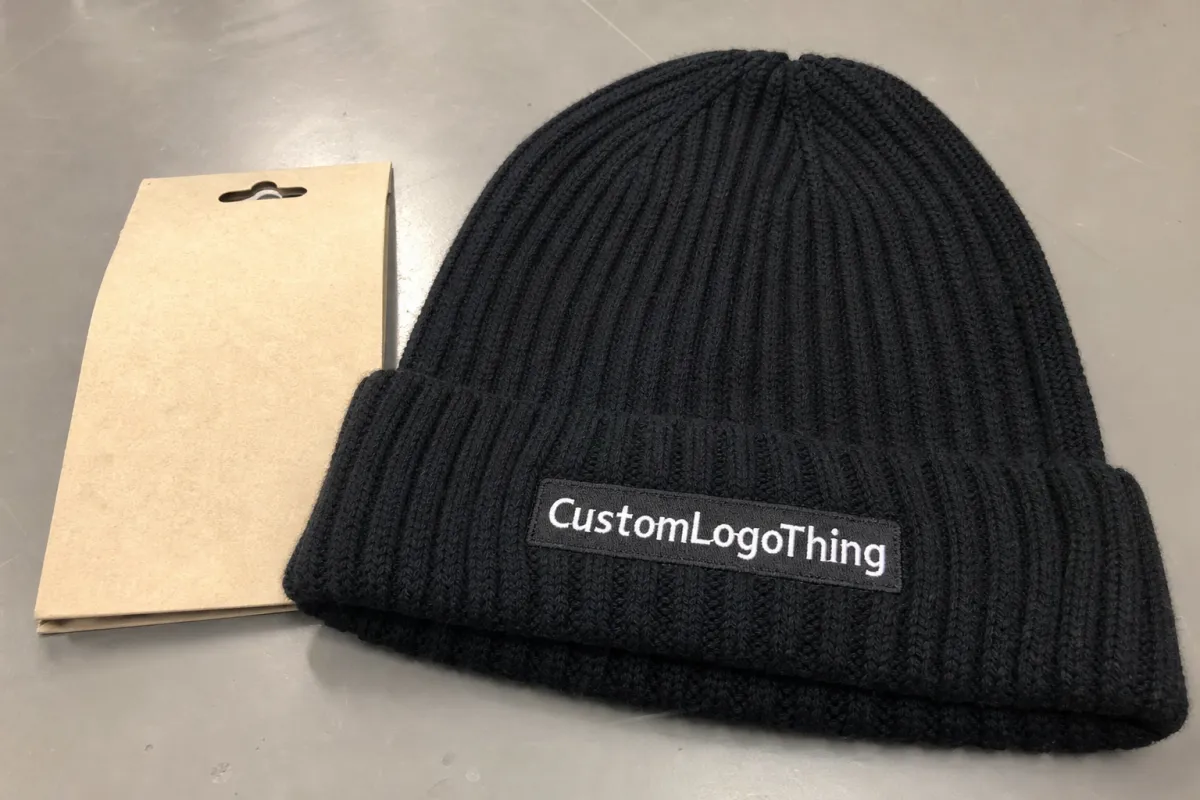
Logo placement should follow the artwork. Front cuff embroidery works best for compact logos and wordmarks. Patches are more forgiving for small type or complex marks. Side labels and interior labels are useful when the brand wants a quieter finish. For more style comparisons, see the custom beanies options page before finalizing cosmetics ribbed winter beanies bulk order planning tips for your brief.
- Embroidery: durable branding for simple shapes and limited detail.
- Patch: better for small text, tonal branding, or a more fashion-led finish.
- Woven label: clean for small logos, side tabs, and understated retail kits.
- Recycled yarn blend: useful when sustainability messaging is part of the campaign.
- Cuff height: controls how much space the logo gets before it feels crowded.
Size, packaging, and decoration specifications to lock before sampling
If the sample is supposed to answer real questions, the spec sheet has to be complete. Include head circumference range, body height, cuff width, yarn weight, rib structure, decoration method, and acceptable color tolerance. A one-size-fits-most label only works when the fit window matches the audience.
Fit changes faster than many buyers expect. A beanie that sits well on a warehouse team may look too shallow in a retail box, especially if the crown is tall or the cuff is oversized. Ask for a measurement sheet before approval so the product can be checked as a unit, not just as a visual.
Packaging should be locked early because it affects both cost and presentation. Polybags protect the knit, hang tags support retail display, belly bands work well in kits, and branded sleeves give the strongest shelf presence. For a cosmetics bundle, the packaging format should be decided before bulk production starts so the finished pack does not feel assembled from mismatched parts.
Decoration files need the same discipline. Send vector artwork, Pantone references if color matching matters, and a clear note on minimum line thickness. Fine detail that looks clean on screen can fail in embroidery. The supplier should confirm stitch count, placement, and the production sequence before knitting begins.
For 2026, QR inserts and care-card sleeves are becoming more useful for beauty launches because they can connect the beanie to a product landing page, shade finder, loyalty offer, or campaign story without adding another printed booklet. If the code is included, test it on the final printed stock and make sure it still scans after the beanie is packed tightly in the box.
For paper packaging, FSC-certified stock is a useful quality signal if the sleeve or insert needs to support a sustainability claim. For shipping readiness, ISTA-style carton testing is worth using as a reference point, especially if the order will move through multiple freight stages. Transit damage is usually more expensive than the knit itself.
Useful references include ISTA for transit testing guidance and FSC for certified paper sourcing.
Cost, pricing, MOQ, and quote drivers for bulk beanie orders
Price is shaped by setup, not mystery. Yarn type, stitch density, decoration method, color count, packaging, and label construction are the main levers. The most economical orders usually keep the structure simple and put the branding in one location rather than splitting it across multiple surfaces.
MOQ tends to rise as the order becomes more custom. A stock color with standard embroidery can often be produced at a lower minimum because the setup is straightforward. Once the project moves into custom-dyed yarn, special packaging, recycled-content claims, or multiple branded components, the minimum usually climbs.
| Beanie option | 2026 planning unit price range | Common MOQ | Best use case |
|---|---|---|---|
| Standard acrylic ribbed beanie with embroidery | $2.25-$3.75 | 300-1,000 pcs | Promo kits, event giveaways, broad seasonal campaigns |
| Acrylic-wool or recycled blend with patch or embroidery | $3.10-$5.25 | 500-1,500 pcs | Retail gift sets, client mailers, staff gifts |
| Heavyweight custom knit with branded packaging | $3.75-$6.60 | 800-2,000 pcs | Premium launches, fashion-led promotions, higher-margin bundles |
The ranges above are planning numbers, not final quotes. The easiest way to control cost is to reduce variation. One core color is cheaper than three. One logo placement is easier to approve than two. One packaging format is simpler than a mix of sleeves, tags, and inserts. Cosmetics ribbed winter beanies bulk order planning tips should always include a good-better-best quote so the team can compare unit price, packaging value, and lead time before committing.
Send target quantity, artwork file, preferred knit style, decoration method, packaging requirement, shipping destination, and delivery window. That is enough information for a supplier to estimate whether the order fits their line and where the price will move. Vague requests produce vague numbers.
For teams comparing quantities or packaging options, a wholesale overview can help frame the differences before the brief goes out. See Wholesale Programs for a simple way to compare order sizes without rebuilding the same spec each time.
Production steps, lead time, and shipping timeline from approval to delivery
A usable production calendar starts before the sample is knitted. The usual sequence is brief review, artwork confirmation, yarn and trim sourcing, sample knitting, sample approval, bulk production, inspection, packing, and dispatch. The longest delays usually happen while people wait to approve a color, adjust a logo placement, or change packaging after the sample has already been made.
For straightforward projects, sample development often takes about 5-10 business days. More custom jobs can take longer if the yarn needs matching or the decoration method has many variables. Bulk production generally runs 12-22 business days after approval for standard orders, though heavier customization can push that out. Freight is separate again, and air and sea should be treated as different calendar risks.
Seasonality makes timing less forgiving. Winter campaigns, holiday sets, and retail resets all compete for the same production window. A one-week delay on sample approval can become a missed shelf date if the launch is tied to a fixed event. The safest approach is to build revision time into the plan before the first sample is requested.
Shipping documents deserve the same attention as the product. Carton counts, labels, packing lists, and any branded inserts should be ready before dispatch. If customs clearance is involved, incomplete paperwork can create a problem that has nothing to do with product quality and everything to do with the handoff between factory, freight forwarder, and receiving team.
- Approve the artwork and spec sheet before sample knitting begins.
- Lock the packaging format before bulk production starts.
- Confirm the inspection method before the shipment leaves the factory.
- Build transit buffer into the launch calendar, not after it.
Quality control signals that separate a dependable beanie supplier
Quality control starts with consistency. Stitch tension should stay even across the batch, not just on the first sample. Embroidery backs should be tidy and secure, because loose thread ends snag during folding and packing. The rib should recover after stretching, and the shade should stay within the approved tolerance across cartons.
Reliable suppliers document those checks before the shipment leaves the floor. Less reliable ones wait for a complaint. For cosmetics programs, that difference matters because the product is tied to presentation as much as function. If a reorder does not match the original, the mismatch can make the campaign feel fragmented.
A practical QC request is simple: ask for measurements on cuff width, body height, and logo placement, plus photos of random pieces pulled from different cartons. If the beanie uses a patch or label, check the alignment and attachment strength. If the order includes sleeves or hang tags, review print registration and fold accuracy.
Ask for an AQL-style inspection summary when the order is large enough to justify it. Even a basic report should show sample size, measurement tolerance, defect categories, carton condition, and photo evidence. Those details make cosmetics ribbed winter beanies bulk order planning tips easier to apply on repeat orders because the team can compare results against the approved standard, not memory.
Communication is part of quality control too. A supplier that replies quickly, confirms specs in writing, and explains stitch count or yarn matching clearly usually produces fewer surprises. A dependable vendor also keeps the original spec accessible for reorders, which matters for seasonal resets and repeat campaigns.
Next steps: what to prepare before you request samples or place the order
The cleanest orders arrive with a complete brief. Include the logo file, target quantity, preferred beanie color, decoration method, packaging choice, and delivery window. If the beanie is going into a bundle, say so early. A standalone merch piece and a boxed set do not need the same packing logic.
It helps to make decisions in order. Choose the base product first. Approve the mockup second. Request the sample third. Confirm bulk quantity only after fit, color, and branding all look right. That keeps the project from drifting into rework, where both cost and time tend to expand.
Be honest about the use case. A retail add-on needs stronger shelf appeal. A staff beanie needs fit range and comfort. A VIP kit needs packaging that feels considered. A giveaway order needs tighter price control and less decorative complexity. The wrong spec for the wrong use case is how budget gets wasted.
For general sourcing questions, the FAQ page is useful for checking minimums, artwork files, and shipping basics before the brief is sent. For a related seasonal headwear planning example, review Bulk Order Planning for Home Fragrance Cuffed Knit Beanies and adapt the checklist to cosmetics ribbed winter beanies bulk order planning tips.
Frequently Asked Questions
What is the usual MOQ for cosmetics ribbed winter beanies bulk order planning tips?
MOQ depends on how customized the order is. A stock color with standard embroidery usually starts lower than a fully custom knit, special label set, or branded packaging run. It is smart to ask for quotes at two or three volume levels so the price break is visible before a decision is made.
How long does custom beanie production usually take in 2026?
Plan for two stages: sample development and bulk production. Simple projects can move quickly, but revisions to artwork, yarn matching, or packaging can add days or weeks. Freight time is separate from factory time, so air and sea should be treated as different calendar risks.
Which decoration method works best for a cosmetic brand beanie?
Embroidery is the most common choice when the logo needs to feel durable and premium on a ribbed cuff. A patch works well for fine detail or a more fashion-led finish. If the brand wants a quieter look, a woven label or interior tag can carry the message without taking over the beanie.
Can the beanie color match my brand palette closely?
Yes, but the result depends on yarn availability, knit structure, and whether the project uses stock shades or custom-dyed material. Color approval should happen before bulk production, ideally with a physical sample or lab dip when the shade matters a lot. Small tone shifts are normal in knitted goods, so the aim is a controlled match rather than an exact printed-color copy.
What should I send first to get an accurate quote?
Send the logo file, target quantity, preferred beanie style, decoration method, packaging needs, and delivery destination. If there is a deadline, include it early because timing can change both production and freight choices. A clear brief helps the supplier confirm MOQ, unit cost, and realistic lead time much faster.