Home fragrance cuffed knit beanies Bulk Order Planning works best when the delivery date, decoration method, and packaging format are settled early. That is what keeps a seasonal run from slipping past budget or missing the launch window. For candle brands, room spray launches, holiday gift sets, and employee kits, the real cost usually shows up in the details: cuff depth, logo size, yarn choice, and how the piece is packed for retail or kitting.
“A beanie order is easy to quote and hard to recover once the specs are loose. The cleanest runs are the ones where the buyer knows the fit, the finish, and the carton count before anyone starts knitting.”
Why Early Planning Protects Seasonal Merch Budgets
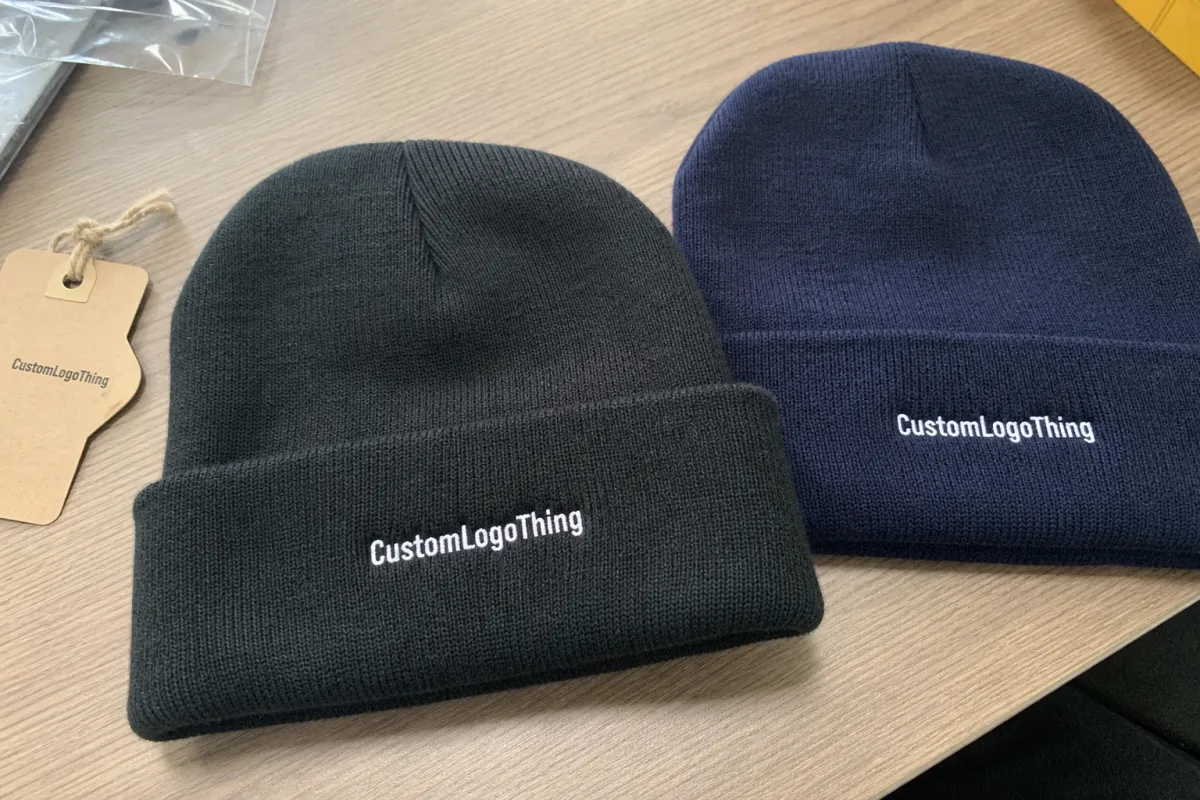
Most delays do not start in the knitting room. They start in approvals. A logo that needs one more revision, a cuff that was not measured the same way by every stakeholder, or a packaging note that arrives after the sample is approved can push a schedule back several days. In peak season, that is enough to matter. The safest approach is to treat the delivery date as fixed and work backward from it so there is room for art sign-off, sample review, production, packing, and freight.
Fit changes can also affect budget. A cuff that is 1 cm deeper can shift embroidery placement. A slightly longer body can change how the hat sits on a retail form. Even carton counts can change if the beanie is folded differently for shelf presentation or inserted into a gift kit. Those are not cosmetic details; they affect labor, packing, and sometimes the number of units that fit in a shipper.
For seasonal programs, it helps to split the buy into launch quantity and replenishment quantity. The first run covers the campaign or gift send-out. The second run stays available if the product sells through, but it does not have to sit on the books before the first unit ships. That is especially useful for home fragrance brands running holiday bundles, where inventory pressure matters as much as the unit price.
If the program is important, budget around timing first and price second. A quote that looks attractive on paper can still be expensive if it misses the selling window. Buyers usually compare the whole program, not just the unit cost. They want the right beanie, on the right week, in the right packout.
Cuffed Knit Construction Choices That Change the Order
cuffed knit beanies are not all built the same. A standard cuffed style gives a familiar retail look and a dependable logo zone, while an oversized fit has more slouch and a different visual weight on the head. Shallow-cuff styles can feel lighter and more casual, but they leave less surface area for embroidery. If the logo is small or detailed, the silhouette matters as much as the art file.
Yarn choice and stitch density change the hand feel immediately. Acrylic can keep cost controlled and hold color well. Acrylic-wool blends usually feel warmer and more premium, though they can raise the price. A tighter knit with better stitch recovery looks cleaner on a shelf and tends to hold shape after repeated wear, while a looser knit can feel softer but may not support a crisp logo as well.
Decoration should be matched to the graphic, not the other way around. Embroidery is durable and straightforward for simpler marks. Woven patches are useful when the logo has finer detail or more small type. Woven labels can work well as a subtle brand cue, especially on fashion-driven assortments. If the beanie is part of a home fragrance gift bundle, the finished piece should complement the packaging rather than fight it.
Packaging is part of the product experience. A folded insert keeps the shape tidy. A polybag protects the piece during transit. A hang tag can carry brand messaging, care instructions, or a UPC. A retail belly band gives the buyer a controlled shelf look without overcomplicating the package. For some programs, the pack method matters almost as much as the knit itself because the beanie is being sold as a branded add-on, not a standalone fashion item.
| Option | Typical MOQ | Typical Unit Cost | Best Use |
|---|---|---|---|
| Stock cuffed beanie + embroidery | 100-250 units | $5.40-$9.50 | Fast launches, internal gifts, simple branded bundles |
| Stock cuffed beanie + woven patch | 250-500 units | $6.20-$10.80 | Logos with finer detail, premium retail presentation |
| Custom knit body + embroidery or patch | 500-1,000 units | $8.50-$15.00 | Stronger brand control, unique colorwork, larger seasonal programs |
Spec Sheet Items to Lock Before You Request a Quote
The cleanest quote comes from the cleanest spec sheet. Start with fiber content, because that changes both cost and performance. Then add gauge, cuff height, crown shape, finished dimensions, and target fit. A supplier can work from a basic idea, but a precise brief reduces back-and-forth and keeps the sample closer to the final production run.
Logo placement deserves its own line. A cuff gives you a practical decoration zone, but the usable area is not unlimited. Small logos look strongest when they are centered and sized to the knit structure, not simply scaled to fill space. If the artwork is too large, embroidery can distort the cuff or pull the knit. If the artwork is too small, the detail may disappear once the yarn texture shows through.
Color target needs care as well. PMS references are useful, but yarn is not paper. Stitch texture, lighting, and dye lot variation can shift the final look. That does not mean color control is weak; it means the buyer should define whether the target is exact match or close match. If the beanies sit beside scented candles, room sprays, or other home fragrance items, consistency across the set often matters more than chasing a perfect print-like match on every fiber.
Do not leave packaging and labeling for later. If the product needs barcode labels, country-of-origin text, care instructions, or retail hangtags, those details should be on the spec sheet before the quote lands. For programs with FSC-certified paper inserts or carton artwork, note that too. Standards bodies and packaging guidelines exist for a reason, and the supplier can only plan around them if they are written down. For reference on broader package sustainability and material choices, the FSC site is a useful place to start.
Pricing, MOQ, and Unit Cost Drivers
Good pricing breaks the order into parts. The body cost, decoration cost, packaging cost, and freight all move independently, and buyers who separate them can see where savings are real versus cosmetic. MOQ is usually driven by both decoration method and body availability. A stock body with simple embroidery can often support lower quantities. A fully custom knit program usually needs a higher commitment because yarn procurement, knitting time, and setup are heavier.
Tiered pricing is worth asking for every time. A quote at 250 pieces might be useful for testing the market, but the 500, 1,000, and 2,500 piece breaks often reveal the real program economics. The jump from one tier to the next may be large enough to justify a slightly higher buy, or it may not. What matters is seeing the structure before you place the purchase order.
Setup fees and sample charges should always be separated from unit price. If embroidery digitizing, patch tooling, or packaging mockups are required, those items can look small on paper but still change the landed cost. Rush charges deserve the same treatment. A fast-moving holiday project can carry extra cost if it asks a supplier to reorder yarn, pull a team onto overtime, or switch freight mode.
For a practical benchmark, stock-beanie embroidery programs often land in the $5.40-$9.50 range at moderate quantities, while custom knit programs can move into the $8.50-$15.00 range depending on yarn, stitch complexity, and packaging. That spread is normal. The key is not chasing the lowest number; it is matching the product to the job. A promotional insert has a different cost target than a premium holiday retail bundle.
Freight should also be treated as part of the product decision. A unit that seems competitive ex-factory can lose its edge once cartons are shipped by air rather than sea, or once the delivery must arrive on a narrow window. If the order needs carton testing or transit validation, ask whether the packout aligns with ISTA practices for the route you are using. That matters more than most buyers expect, especially if the beanies are traveling with fragile fragrance items.
Production Steps, Proofs, and Lead Time Expectations
A reliable production flow is predictable from quote approval to shipment: quote, artwork proof, sample or mockup review, bulk knitting, decoration, quality check, packing, and final shipment. Each gate protects the schedule. If one gate is skipped, the next stage has to guess, and guessing is expensive. For branded headwear, the most common schedule slip happens when a buyer approves art before seeing how the logo sits on the cuff in the actual size.
Lead time depends on whether the order is stock-body or custom-knit. A stock-body order with embroidery can often move in roughly 12 to 15 business days after proof approval, though peak season or special packaging can stretch that. A custom-knit order commonly needs 4 to 8 weeks, and more if yarn sourcing or special labeling is involved. Those are practical ranges, not promises. The right supplier will tell you where your project sits based on current load, not a generic calendar estimate.
Approvals matter because they freeze the details that control production. Artwork proof acceptance confirms size and placement. Sample approval confirms fit and visual balance. Packaging mockup approval confirms how the unit will arrive on shelf or in the kit. If carton markings or retailer labels are involved, those need one more review before mass production starts.
Transit time should always be added on top of factory time. Air freight can shrink the calendar but raise the landed cost. Ocean freight can keep the budget under control but requires a wider planning window. Customs clearance, domestic receiving schedules, and holiday warehouse cutoffs can all add friction. The suppliers who manage repeat orders well talk about all of that early. They do not wait until packing day to mention a freight constraint.
Good quality control is physical: stitch consistency, measurement verification, logo placement check, fold count, carton count, and label confirmation. That is where a brand earns trust with its customer. A beanie is a small item, but small items can still create large problems if the finish is sloppy or the count is off by a few pieces per carton.
Home Fragrance Cuffed Knit Beanies Bulk Order Planning: Next Steps
The easiest way to keep a seasonal project under control is to make the buyer brief specific before anything is quoted. Start with quantity, target delivery date, decoration method, and packaging format. Gather the logo file, color references, retail label needs, and any kitting notes in one place. If the beanie is being used as a branded premium with candles or room fragrance, the cartoning and presentation should be mapped at the same time.
Request a tiered quote, a sample or digital mockup, and written confirmation of MOQ, lead time, and shipping method. That one step prevents most surprises. It also makes internal approvals easier because the numbers are visible in one place instead of scattered across messages. For larger procurement teams, keep the approved spec sheet with the PO so the production team and the buyer are working from the same record. If you need a broader starting point for branded programs, our Wholesale Programs page is a good reference.
Before releasing the final PO, review the proof line by line against the spec sheet. Check cuff height, logo size, fold style, carton count, labeling, and ship method. If the order needs repeat potential, store the final approval set so the next run can move faster. That is where the planning process becomes useful beyond the first shipment: it gives you a repeatable path for seasonal replenishment instead of starting over every time.
For buyers who want fewer delays, the smartest move is to decide what cannot change. Delivery window, decoration method, and packout are the three anchors. Once those are fixed, the rest of the order becomes much easier to price and produce. If you want to compare process notes or common order questions, our FAQ page can help, but the main decision still comes back to the same rule: lock the details early, and the run tends to hold together.
How far ahead should home fragrance cuffed knit beanies bulk ordering begin?
Plan at least 8 to 12 weeks ahead for stock-body orders, and allow more time if the beanies need custom knitting, specialty labeling, or packaging approval. If the project is tied to a holiday fragrance launch, give freight extra room so the goods clear receiving before the sell window opens.
What MOQ is typical for cuffed knit beanies with logo decoration?
Stock beanies with embroidery usually allow lower minimums than fully custom knit programs, since the body is already available and the decoration step is simpler. Ask for tiered pricing at 250, 500, 1,000, and 2,500 units so you can compare the savings against the inventory you would be carrying.
Which decoration method gives the cleanest result on bulk knit beanies?
Embroidery is a strong choice for clean, durable branding, while woven patches can hold finer detail when the logo has more small type or a more intricate shape. The right answer depends on logo size, texture preference, and how premium the finished piece should feel inside the bundle.
Can I mix colors or pack styles in one bulk order?
Often yes, but the supplier may set a minimum per color or per style, so the split has to be confirmed before the quote is finalized. Mixed packs work best when the color plan, carton counts, and labeling are defined early in the specification stage.
What should I approve before releasing the final PO?
Approve the artwork placement, color sample, fit, packaging mockup, target ship date, freight method, and any retailer labeling needs before the order goes live. That is the point where home fragrance cuffed knit Beanies Bulk Order Planning turns from a loose idea into a workable production plan that can actually ship on time.

