Cuffed Beanies for Retail merch have one advantage that is easy to overlook: the cuff gives the product a built-in brand zone that reads clearly on a shelf and holds decoration more cleanly than a thin crown alone. That matters because knit headwear is usually judged fast. Shoppers glance, touch, and move on. If the logo is weak, the beanie has already lost some of its value before anyone tries it on.
The best programs are not built around decoration first. They are built around how the beanie will sit in a store, how the logo will read at arm’s length, how the fabric will recover after shipping, and how many times the item can be handled before it starts to look tired. Cuffed styles keep showing up in retail assortments because they solve those problems without making the product look overworked.
Why cuffed beanies stand out on retail shelves
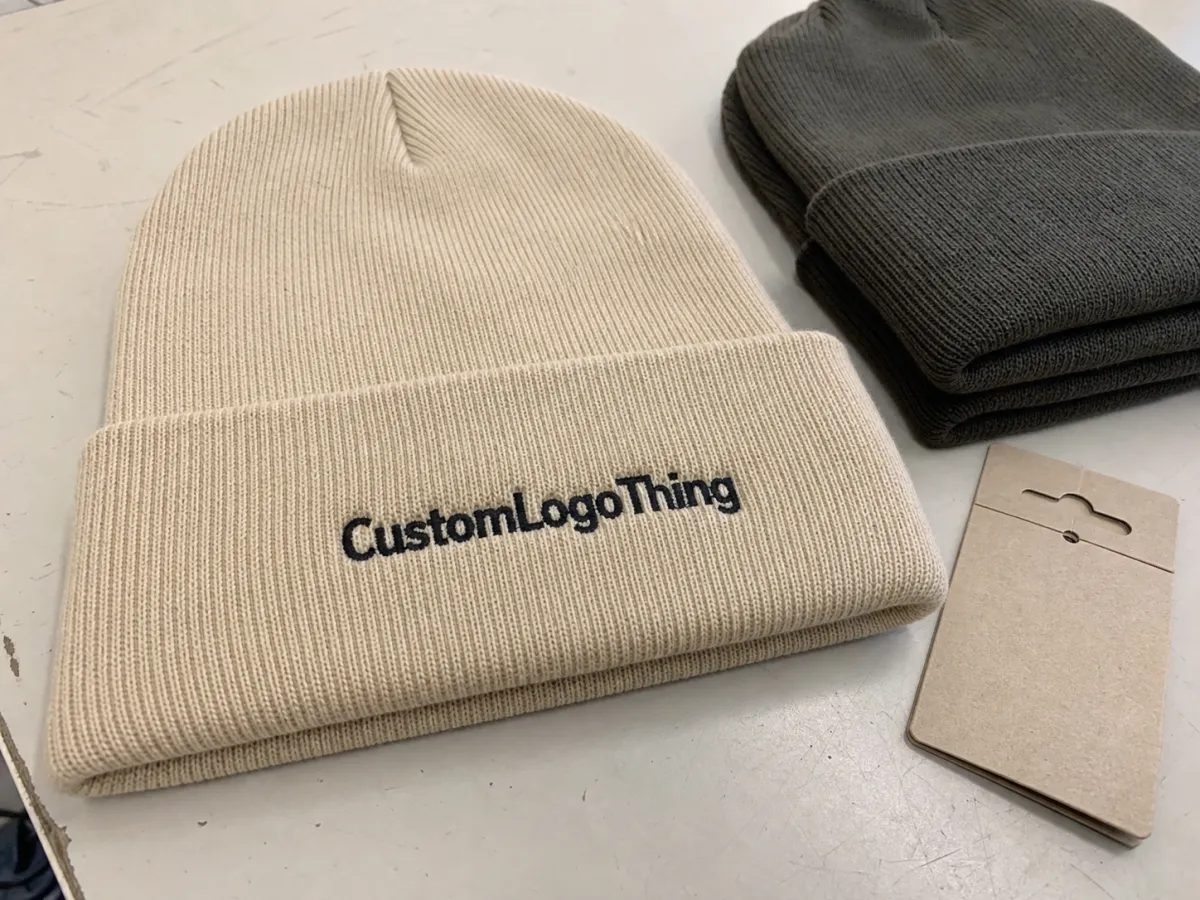
A cuffed beanie is simple: the body is knit like a standard cap, then the lower edge is folded to create a visible band around the forehead. That folded band does more than add structure. It gives the buyer a front-facing surface that acts like a small billboard, and in retail, small billboards matter. Most knit headwear is sold in seconds, not minutes.
Compared with slouch styles, cuffed beanies are easier to merchandise in a clean way. Slouch silhouettes can hide a logo in the crown or let the mark drift lower than the eye line. A cuff keeps the placement more controlled. It also helps the hat stack better, which is a practical benefit that shows up in cartons, on shelves, and at the fixture level. A tighter stack means less wrinkling, fewer crushed tags, and less time spent fixing presentation before doors open.
Retail buyers also tend to value repeatability. A cuff gives them that. If a program needs six colors, the same logo size can be used across the line with fewer surprises. If the store later reorders, the fold height and placement can be matched more consistently than on a relaxed style. That kind of consistency is not glamorous, but it is what makes a product line look planned instead of improvised.
There is also a pricing perception effect. A cuffed beanie often looks more deliberate, even when the base material is modest. That does not mean the hat should pretend to be something it is not. It means the structure helps the item feel closer to a retail accessory and farther from a giveaway. For buyers balancing margin against presentation, that difference is often enough to justify the style.
How the cuff creates a better decoration zone
The folded cuff solves a real production problem: it gives the decorator thickness and stability exactly where the logo needs to sit. Flat embroidery, woven patches, faux leather patches, and label applications all benefit from a surface that resists distortion. On a thin single-layer knit, stitches can pull, ripple, or telegraph through the fabric. The cuff reduces that risk because the fold adds structure.
That stability also improves how the decoration reads. A logo on the cuff is closer to eye level and less interrupted by the soft folds that usually happen in the crown. In a retail environment, that means the mark can be understood faster from a rack or table display. A buyer often wants the branding to feel intentional, not loud. The cuff gives enough space for clarity without forcing the decoration to dominate the whole product.
There is a practical limit, though. Too much art on a cuff can make the beanie look bulky or stiff. Oversized patches, dense stitch counts, and hard-backed applications need to match the cuff height and knit gauge. On many retail beanies, a usable logo zone sits around 2.5 to 3.5 inches high, but that depends on the fold depth and the overall size of the hat. If the cuff is short, crowding the edge usually creates more problems than it solves.
The safest decoration decisions start with the knit, not the artwork. If the cuff is soft and stretchy, lighter embroidery or a flexible woven label may be the better choice. If the beanie has a tighter rib and a firmer handfeel, a patch can sit more cleanly. The goal is not to make the decoration as large as possible. The goal is to make it sit flat, stay legible, and survive handling.
One useful rule: the more detailed the logo, the more the cuff needs to do the structural work. A simple wordmark may tolerate moderate stretch and a narrow fold. Fine type, small lines, and layered graphics need a more stable build. That is where sample review becomes more than a formality. It is the only reliable way to see whether the decoration and the knit are actually cooperating.
Fit, yarn, and decoration choices that change the final spec
Once the cuff is set, the spec still has a lot of moving parts. Yarn content changes the handfeel, the warmth, the stretch recovery, and the way color lands on the fabric. Knit density changes how much the beanie gives when worn. Crown shape affects whether it sits neat and structured or soft and relaxed. For retail merch, those details are not minor. They decide whether the product belongs in a premium assortment or looks like a fill-in item.
Most buyers end up choosing from three material groups. Acrylic is the common starting point because it is affordable, stable in production, and available in many colors. A midweight acrylic beanie usually lands in a useful range for retail because it is warm enough for everyday wear without feeling overly heavy. Wool blends bring a richer hand and a more natural look, but they usually raise cost and can require more care in sourcing and washing guidance. Recycled yarns can support a sustainability message, although the feel and stitch clarity can vary more than buyers expect. That is especially true if the blend includes lower-grade recovered fiber or if the yarn is spun more loosely than the base spec suggests.
The decoration method should follow the knit, not the other way around. Flat embroidery is usually the most direct option when the logo is simple and the budget needs to stay controlled. Woven patches help when the artwork has small type, sharp lines, or a few more color breaks than embroidery can handle cleanly. Faux leather patches create a more fashion-forward look, especially on darker colorways, but they can overpower a soft knit if the patch is too large or too stiff. Woven labels and side tabs are better for subtle branding, and they keep the cuff surface cleaner when the buyer wants the beanie itself to do more of the visual work.
- Embroidery: best for simple logos, lower decoration cost, and a classic retail look.
- Woven patch: useful for small text, tighter detail, and sharper edges.
- Faux leather patch: works for premium positioning, but needs strong contrast and careful size control.
- Woven label or side tab: a good fit for minimal branding and a cleaner cuff face.
| Decoration method | Best use | Typical added cost per piece | Main watch-out |
|---|---|---|---|
| Flat embroidery | Simple logos, retail basics | $0.30-$0.85 | Too much stitch density can pull the knit |
| Woven patch | Small text, detailed marks | $0.45-$1.10 | Border and backing must suit the cuff |
| Faux leather patch | Premium fashion look | $0.55-$1.25 | Can feel heavy on soft knits |
| Woven label | Minimal branding | $0.20-$0.60 | Needs strong contrast to read at retail distance |
Color consistency deserves more attention than it usually gets. A black beanie with a white logo is simple. A line with six colorways, two thread colors, and a branded hang tag is not. Yarn lots can shift slightly. Patch borders can differ from sample to bulk. Even the same Pantone reference can look different once it is translated into thread, woven yarn, or heat-applied material. That is why a physical sample is so much more useful than a screen proof. Retail lighting makes every variation more obvious.
Fit also changes the commercial outcome. A shallow cuff with a snug crown can look refined and modern. A taller cuff gives more decoration space and can read a little more traditional. Neither is automatically better. The right choice depends on the shelf story. If the beanie is meant to feel elevated, the profile should stay cleaner. If the buyer wants a more streetwear-leaning item, a deeper cuff and a slightly roomier crown may make more sense.
Pricing, MOQ, and unit cost for retail merch orders
Pricing for cuffed Beanies for Retail merch follows a familiar pattern: higher quantities reduce the unit cost, while premium yarn, custom knit structures, extra decoration, and special packaging push the price upward. For a basic stock acrylic beanie with one decoration location, a realistic factory range is often about $2.50-$4.50 per unit at moderate volume. A wool blend, a more complex patch application, or a retail-ready packaging plan can move the total closer to $4.50-$7.50 or beyond. Freight, duties, inserts, and carton labeling sit outside that base figure, and they can change the landed cost enough to affect margin.
MOQ should be treated as a merchandising decision, not just a manufacturing rule. If a retailer wants four colors and two logo versions, a low MOQ can look attractive on paper while leaving each SKU too shallow to support real sell-through. A slightly higher minimum can be the better choice if it gives each color enough depth to sit on shelf without looking understocked. Thin inventory makes a line feel incomplete, and incomplete lines usually underperform.
When comparing quotes, the base price is only the starting point. Ask what the quote includes, then compare the landed picture. Sampling, special thread colors, multiple placement locations, paper hang tags, woven labels, polybag inserts, carton marks, and freight all affect the final number. A quote that is lower by a few tenths at the factory can become more expensive once rework or rush shipping enters the picture. For that reason, the cleanest quotes show the decoration method, packaging method, quantity break, and timing in the same view.
For store-bound or warehouse-bound goods, packaging is part of the spec, not an afterthought. If the beanies need to survive distribution handling, carton strength and pack-out matter. Many teams use ISTA as a reference point for transit durability. If the retail story includes paper inserts or hang tags, FSC paper can support sourcing goals without changing the hat itself. These choices do not sell the beanie by themselves, but they do make the final program feel finished.
Production steps, sampling, and turnaround planning
A clean order follows a steady sequence. Start with the spec review: size, knit type, cuff depth, decoration method, colorways, and pack-out. Move to artwork proofing and lock the logo dimensions before sampling begins. Then review the physical sample, approve bulk, knit or decorate the run, inspect the goods, and finish with packing and shipment. If one of those steps is rushed, the problem usually shows up later as a complaint about fit, color, or placement.
- Spec review: confirm size, knit type, cuff depth, and decoration method.
- Artwork proof: lock logo dimensions and placement before sampling.
- Sample stage: review fit, fold, color, stitch clarity, and handfeel.
- Bulk approval: sign off only after the sample matches the retail brief.
- Production and packing: verify cartons, labels, and any store-ready packaging.
Sampling is where the budget gets protected. A mockup can hide problems. A physical sample cannot. It reveals whether the cuff folds cleanly, whether the logo sits too high or too low, whether the beanie slouches more than expected, and whether the decoration changes the drape of the knit. It also shows color in a real material under real light, which is worth far more than a digital file when the final product will be judged in a store.
Turnaround depends on how custom the order is. A stock shape with standard yarn and one decoration location can move quickly once the sample is approved. A custom knit, a special color match, or extra packaging usually extends the schedule. For straightforward decorated runs, a common production window is 12 to 20 business days after approval. More complex programs can take longer, and freight time should always be added on top of that. Seasonal launches are especially unforgiving; the calendar does not care that the beanies are ready if the truck is not.
Buffer time is not wasted time. Approval delays happen. Thread colors get revised. Hang tag copy changes. A buyer decides the cuff should be slightly taller. None of that is unusual, but every small adjustment can push the final ship date. The strongest programs are the ones that assume changes will happen and still leave enough room to absorb them without cutting corners in the last week.
One more practical point: bulk production should be checked against the approved sample, not against a memory of the sample. That sounds obvious, but it is where a lot of retail programs slip. The sample set becomes the standard. If the factory changes the yarn lot, the logo backing, or the stitch tension, the change should be caught before the full run is packed. By the time cartons are labeled, it is too late to wish the sample had been reviewed more carefully.
Common mistakes, expert tips, and next steps for a clean order
The most common mistake is approving decoration that is too large for the cuff. A logo may look balanced on a flat art file and still feel oversized once it is stitched onto a folded knit band. The second mistake is choosing a knit that works against the art. Loose ribbing, weak recovery, or an overly soft crown can make even a good logo look uneven. The third is sending artwork without clear dimensions, placement notes, or color references. That leaves too much room for guesswork during proofing.
There is also a quieter mistake: focusing only on how the beanie looks in a sample photo. Photos are useful, but they flatten texture. They hide how much stretch the knit has, how the cuff sits when folded, and whether the patch edges want to lift after handling. A sample should be checked in hand, under retail lighting, and after a few folds. If it still looks tidy after that, it is doing its job.
- Check real size: ask for mockups at actual dimensions, not just a generic placement sketch.
- Match colors early: confirm thread, patch, or label colors against Pantone references where possible.
- Review under retail light: a sample can look different under bright store fixtures than it does in a studio.
- Ask about reorders: keep the same artwork file and placement notes so restocks stay consistent.
A few technical habits make the order cleaner. Ask how the cuff is measured, because some factories measure the fold at rest while others measure it under tension. Confirm whether the decoration is sewn before or after the cuff is set, since that can affect placement. If the beanie uses a patch, ask what backing is used and whether it will hold up to folding and repeat handling. These are not cosmetic details. They shape the final feel of the product.
For buyers building retail assortments, the best path is usually the most disciplined one. Define the audience first. Choose the yarn and cuff profile second. Sample before bulk. Confirm pricing, MOQ, packaging, and freight together. Then lock the schedule and let production follow the plan. That sequence keeps the order grounded and reduces the odds of making a product that looks good in theory but awkward in the hand.
Strong cuffed beanies are rarely dramatic. They feel straightforward because the spec was controlled, not because the project was underthought. A neat cuff, a readable logo, a fabric with enough recovery, and a production plan that respects lead time will usually outperform a flashier concept that is hard to repeat. For retail merch, that repeatability is what keeps the line looking premium from the first sample through the final carton.
FAQ
What makes cuffed beanies easier to sell than slouch styles?
The cuff gives the product a clearer branding zone, so the hat reads faster on a shelf or display wall. It also creates a more structured silhouette, which tends to look more intentional in retail settings.
Which decoration methods work best on cuffed beanies for retail merch?
Embroidery is a strong choice for simple logos and tighter budgets. Woven patches and label applications work well when the artwork is more detailed or when the buyer wants a cleaner, more elevated finish.
How much do cuffed beanies for retail merch usually cost?
Basic decorated runs can sit in the low single digits per unit at moderate volume, while wool blends, patch-heavy builds, and premium packaging push the cost higher. Freight, labeling, and sampling can change the landed total more than many buyers expect.
What is the usual turnaround for a custom cuffed beanie order?
Straightforward programs can often move in 12 to 20 business days after approval, but custom materials, multiple colorways, and special packaging usually extend that timeline. Freight should always be added separately.
How do I choose the right MOQ for a retail beanie program?
Start with the number of SKUs, the forecast per color, and how much inventory risk the buyer can carry. If the line needs variety, a slightly higher MOQ can be better than spreading inventory too thin across too many options.
Cuffed beanies for retail merch work best when the cuff, the logo, and the production plan are treated as one system. Get those pieces aligned, and the hat is far more likely to arrive shelf-ready, price-ready, and easy to reorder without friction.


