A folded cuff does more work than many buyers expect. For cuffed Beanies for Retail programs, that strip of knit is not just a style detail; it is the most reliable place to put a logo, a price story, or a school mark that needs to read quickly on a crowded fixture. In a store, customers rarely study knitwear the way a merchandiser studies it. They glance, compare, and decide. A cuffed beanie gives them something obvious to recognize in a small amount of time.
That matters in ski shops, campus stores, resort gift counters, museums, and sports retail walls, where shelf space is tight and the item has to earn its position. The best-performing winter accessories usually share the same traits: easy branding, predictable sizing, a shape that stacks well, and a landed cost that still leaves room for margin after freight, labeling, and packaging. Cuffed beanies check those boxes more often than slouch styles because the cuff simplifies both decoration and merchandising.
The challenge is that a beanie that looks fine in a mockup can disappoint once the knit is real. Texture changes how color reads. Stitch density changes how clean a logo looks. A cuff that seems generous on paper can feel awkward in hand. Buyers who understand those variables tend to build cleaner programs and avoid the kind of inventory that looks promising in a line sheet but slow on the wall.
Why cuffed beanies sell in retail assortments
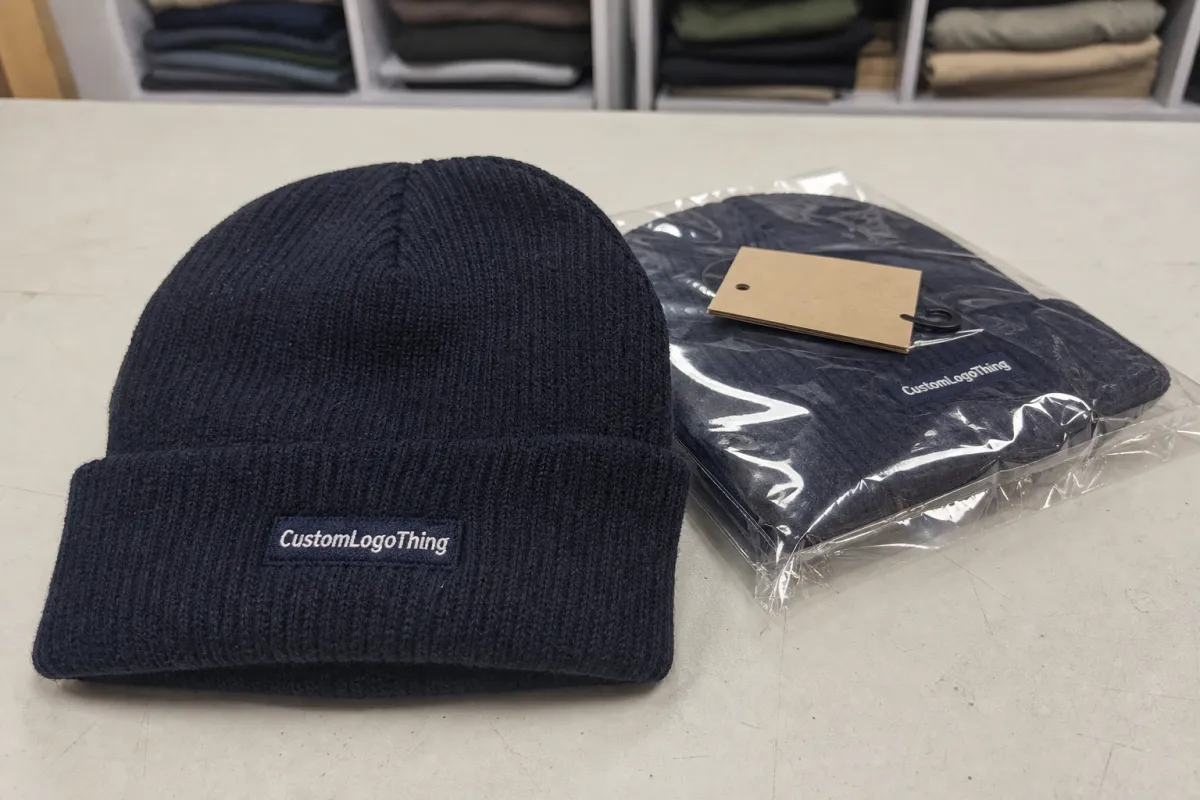
The folded cuff acts like a built-in signboard. On a ribbed knit body, decoration can sink into the texture or shift visually as the fabric stretches. The cuff creates a flatter, more controlled zone, which is why cuffed Beanies for Retail programs usually present branding more cleanly than styles that depend on decoration sitting on the crown.
Retail buyers like that predictability. A cuffed beanie holds its silhouette better on a hook, in a cube, or stacked in a color run. It looks finished, not improvised. That small distinction matters in stores where accessories are competing with tees, drinkware, keychains, and every other impulse item near checkout. If the logo can be read from six to eight feet away, the product earns attention fast.
There is also a practical advantage in replenishment. Cuffed styles are easier to keep consistent across repeated production runs because the brand placement has a fixed visual anchor. That helps a buyer reorder the same item without re-solving the whole spec. In seasonal retail, consistency is not boring; it is a profit tool.
The most common mistake is treating the beanie like a blank canvas. It is closer to a compact billboard with a lot of texture. If the logo is too low, too small, or too busy, the item loses the very thing that makes the cuff valuable.
One reason the style continues to move is that it balances utility and identity. The customer gets warmth. The retailer gets visible branding. The buyer gets a product that can be priced from value to premium depending on yarn, decoration, and packaging. That range is unusually useful in retail programs, where the same shape may need to sit beside a $12 impulse item and a $28 branded accessory.
Cuffed Beanies for Retail Programs: build and branding basics
Construction changes the final impression more than many teams expect. Cuff height, crown depth, stitch density, and yarn blend all affect comfort, fit, and perceived quality. A taller cuff gives more room for branding, but if the crown is shallow, the hat can sit oddly. A loose knit can feel soft and casual, yet it may distort under decoration. A denser knit usually holds shape better and reads more premium, though it can add cost and reduce stretch tolerance.
Decoration choice matters just as much. Embroidery is durable and usually the simplest option for repeat orders. Woven patches handle fine detail better and keep the logo face flatter. Woven labels are quiet and work well for value programs or understated branding. Felt or rubber patches create more contrast, which can help on dark yarns or in assortments that need stronger shelf visibility.
For retail, the best decoration is usually the one that survives real handling. A product can look sharp in a staged photo and still fail after a few days on the floor if the patch edge curls, the thread is too dense for the knit, or the logo stretches at the cuff seam. The physical sample is where these problems show up. That is why sample approval should include a close look at stitch crispness, edge bonding, logo alignment, and how the cuff behaves after it is folded and unfolded.
| Decoration option | Typical add-on cost | Best use | Retail note |
|---|---|---|---|
| Embroidery | $0.35-$0.85 per unit | Durable team or logo programs | Best for simple marks and quick reorders |
| Woven patch | $0.45-$1.10 per unit | Clean, detailed branding | Reads well on textured knit and keeps edges tidy |
| Felt or rubber patch | $0.55-$1.25 per unit | Bolder retail presentation | Good contrast on dark yarns; a little heavier in hand |
| Woven label | $0.15-$0.40 per unit | Subtle branding and value programs | Quiet look, useful when the retail story is understated |
Finishing details can make or break the shelf presentation. Hangtags, care labels, barcode placement, fold style, and carton pack all affect how quickly the product moves from receiving to display. A label that covers the logo zone is a small error with an outsized effect. Retail staff do not have time to rework every unit, and the product often gets judged by the first carton that opens badly.
Material choice is worth a disciplined conversation. Acrylic remains popular because it is affordable, stable, and easy to color match. Wool blends usually feel warmer and more natural, but they bring higher cost and more sensitivity to care expectations. Recycled yarns can support sustainability claims, yet they should be sampled carefully because the handfeel and saturation can differ from standard acrylic. Anti-pilling finishes are also worth asking about if the beanies are likely to spend time in high-touch retail environments.
Process and timeline: artwork, sampling, and ship dates
The cleanest workflow is usually the least dramatic one: brief, quote, artwork setup, sample approval, production, inspection, packing, and shipment. If one of those steps gets skipped or compressed too aggressively, the cost usually returns later as rework, schedule pressure, or a shipment that misses the selling window. For Cuffed Beanies for Retail programs, the sample is not ceremonial. It is where the buyer learns whether the logo size, knit gauge, and cuff depth actually work together.
The schedule tends to slow down in a few predictable places. Yarn color matching takes time. Decoration approvals take time. Packaging changes after sampling take time. The most expensive assumption is that a rendering tells the whole story. Knit goods rarely behave like flat art files. A logo can look proportional on screen and still sit too close to the edge once it is stitched into textured yarn.
Lead time depends on whether the program uses stock bodies or a fully custom build. Stock-based projects can often move in 10 to 15 business days after sample approval if the decoration is straightforward and the trim package is simple. Custom knits usually need 4 to 7 weeks for production, and freight can add another 2 to 5 weeks depending on the lane and shipping method. Seasonal programs should be planned backward from the sell date, not forward from the purchase order date. That sounds obvious until a delivery hits a warehouse two weeks after the seasonal wall is already full.
Quality control should not be vague. At minimum, buyers should ask how the factory checks stitch count consistency, cuff symmetry, yarn lot matching, and logo placement. A good pre-shipment inspection will also catch loose threads, patch edge lift, color variation within a carton, and any label issues that would trigger a retailer complaint later. If the program will be distributed across multiple stores or routed through a third-party warehouse, carton strength and stacking performance matter more than many teams realize. Packaging standards resources like ISTA and broader packaging references such as packaging.org are worth checking when the carton spec is part of the risk profile.
Cost, pricing, and MOQ: what drives the unit number
Unit price is usually a stack of small choices. Yarn type, knit complexity, decoration method, labeling, packaging, and order volume all move the number. A simple acrylic cuffed style with embroidery might land around $3.25-$4.75 per unit at 3,000 to 5,000 pieces. Add a woven patch, custom hangtags, recycled yarn, or more detailed packaging and the range can move toward $4.50-$7.50, depending on the mill, trim package, and setup burden.
MOQ matters because sampling, setup, and finishing labor get spread across the run. A 300-piece pilot is useful if the buyer needs to test demand or validate a new account, but the unit cost will almost always be higher than a larger run. That is not a markup problem. It is the arithmetic of production. The same screen, patch die, or yarn dye lot has to be paid for whether the run is 300 pieces or 3,000.
Buyers should separate sample cost, production cost, and landed cost. A sample may cost $30-$120 depending on how custom the knit is and whether special labeling or patching is required. Production cost is the factory number. Landed cost adds freight, duties, carton materials, and any domestic handling. If only the middle number is quoted, the margin can look safer than it really is. That is a common mistake in retail programs, especially when the product is priced tightly for seasonal movement.
It helps to ask for tiered pricing before anything is approved. What does 500 pieces cost? What about 1,500? What about 5,000? Then ask for the replenishment price using the exact same spec. That shows the real break point and reveals whether the program is built for test-and-repeat or for a broader seasonal push. If pricing barely improves with scale, there may be hidden setup or trim costs that need to be exposed early.
A practical buyer note: one backup path is usually worth planning for. That might be an alternate yarn color, a simpler patch, or a different carton pack. Those options are useful when a first choice becomes too expensive, too slow, or too close to a retailer's cutoff date. Flexibility in the spec often preserves margin better than trying to force a perfect but late version into the program.
Key spec factors buyers should lock before quoting
Fit comes first. Adult versus youth sizing, cuff depth, crown shape, and stretch recovery all change how the beanie sits on the head and how it reads on a shelf. A shallow cuff can make a logo feel cramped. A crown that is too tall can make the silhouette look loose in a way that does not suit a polished retail display. The sample should be checked on a person, not just in hand, because knit accessories often look more balanced once they are worn.
Visual balance is another quiet risk. A logo that looks strong in a digital mockup can shrink once it is stitched into textured knit. The cuff width, logo size, and stitch count need to be matched to the yarn gauge. Thin strokes that survive on paper may blur in embroidery. In those cases, a woven patch often performs better because it preserves detail without fighting the texture of the knit.
Care, compliance, and labeling should be settled early. Fiber content, country of origin, care instructions, and barcode placement all affect how easily the product passes through retail systems. If the program uses paper hangtags, FSC-certified stock is often a straightforward choice; FSC is a useful reference point for that spec. The point is not to add paperwork for its own sake. It is to avoid a finished product that has to be relabeled after production because the documentation was approved too late.
Color strategy deserves restraint. Three to five core colors usually cover the first order without overcomplicating the assortment. A single accent color can make sense if the retailer wants a seasonal story, but too many near-identical shades create inventory friction and make replenishment slower. If the plan is to maintain stock across several accounts, keep the palette simple and let the decoration carry the differentiation.
The strongest spec sheets are not the prettiest ones. They are the ones that answer the boring questions before the first sample is cut: what the cuff measures, what the logo sits on, how the beanie is packed, and what happens if the first color misses by a shade.
Step-by-step: building a retail-ready beanie program
- Define the channel. A campus store, ski shop, resort gift counter, or sports retail wall will tolerate different price points and different branding intensity.
- Set the assortment width early. Three to five core colors is usually enough for launch; more than that can slow the buying decision and complicate replenishment.
- Choose the decoration method before sampling. Request the actual logo format, not a placeholder, so stitch density, placement, and contrast can be judged honestly.
- Review the physical sample under real conditions. Check it in daylight and under store lighting, then inspect cuff depth, recovery, and logo visibility after folding and unfolding.
- Lock packaging details. Carton counts, fold style, barcode placement, care label text, and any retail ticketing need to be fixed before production starts.
- Write a replenishment path. Good cuffed beanies for retail programs should be easy to reorder without revisiting the entire spec every time demand picks up.
The best launch plan is rarely complicated. One hero style, one alternate color, and one seasonal variation is enough for most retail programs. That structure gives the buyer a way to test demand, the merchandiser a simple wall story, and the operations team a cleaner repeat order later. It also reduces the chance that the assortment gets diluted by too many near-duplicates.
One more practical point: ask how the vendor handles shade consistency across dye lots. Retail buyers notice when the black from the second run looks warmer than the first, or when a heather gray shifts enough to look like a different program. That kind of drift is common in knitwear and needs to be managed with tolerance, not ignored until receipt.
Common mistakes that cause chargebacks or slow sell-through
The first mistake is buying from the screen. Knit texture changes color depth, logo contrast, and perceived quality. A dark heather yarn can look rich online and muddy in person. A bright logo can look crisp in art and too loud once it sits on a ribbed cuff. A physical sample is the only reliable answer.
The second mistake is crowding the cuff. Some programs try to do too much at once: oversized logo, extra text, a secondary icon, a woven label, and a hangtag all competing for attention. The result is busy, not premium. Customers tend to read simple accessories faster, which matters at checkout and on impulse walls. A cleaner mark often sells better because it is easier to parse quickly.
Missing the selling window is another expensive error. A warm accessory delivered after the seasonal peak may still be technically correct, but it is functionally late. That is how good inventory turns into clearance. Timing is part of quality.
Operational misses create their own damage. Missing labels, unclear barcode specs, carton instructions that arrive after production starts, and color approvals made before the sample is checked in daylight all lead to friction. Those issues are not glamorous, yet they are the ones that trigger chargebacks, delays, or avoidable rework. For retailers, the whole program is often judged by the worst carton, not the best mockup.
Expert next steps for a cleaner launch and replenishment
Start with one hero style and one backup path. Then build a spec sheet that records yarn, gauge, cuff depth, decoration method, labels, packaging, target price, and approved colors. That sheet should act as the single source of truth for quoting, sampling, and reorder work. It saves time, and it also protects the margin story when the program scales or shifts into replenishment.
Ask for three items before the order is released: a written production calendar, a quantity-based pricing ladder, and a fallback shipping option. Those three details tell you whether the supplier can support a retail schedule or only a one-time run. If the answers are vague, the risk usually shows up later in freight, timing, or quality control.
The last check is visual but not superficial. The beanie should still look like itself when it is folded, tagged, packed, and hung on the wall. That is the point of the style. Cuffed beanies for retail programs work because they combine brand visibility, cost control, and repeatable production. The cleanest launches are usually the ones that respect the sample, lock the spec, and leave enough time for the product to arrive before the cold weather does.
What should buyers look for in cuffed beanies for retail programs?
Focus on cuff depth, fit consistency, and a decoration zone that keeps the logo visible from normal shelf distance. Check yarn quality, color accuracy, and label placement so the product looks polished in store and holds up after wear. Always ask for a physical sample before approval, because knit texture can change the final look in a way a rendering will not show.
How do cuffed beanie MOQ and pricing usually work?
Smaller quantities usually cost more per unit because setup, sampling, and finishing labor are spread across fewer pieces. Custom yarns, special patches, and custom packaging can raise both MOQ and unit cost. Request tiered pricing so you can compare a pilot run against a larger replenishment order.
What is a realistic lead time for retail cuffed beanies?
Simple stock-body programs can move faster than fully custom builds because sourcing and approval steps are shorter. Artwork revisions, color matching, and sample approval are the most common schedule risks. Plan extra time before seasonal launches so freight delays do not erase the selling window.
Which decoration method lasts longest on retail beanies?
Embroidery and woven patches usually hold up well because they are durable and easy to read on textured knit. The best method depends on knit density, logo detail, and how bold the retail presentation needs to be. Avoid decoration that stretches poorly or competes with the rib texture on the cuff.
How many colors should a retail beanie assortment start with?
Start with three to five core colors so the assortment stays easy to merchandise and replenish. Add one seasonal accent only if it supports the store's price point or theme. Use neutral backups for restocks, because they are easier to reorder when demand is still unclear.