Knit Beanies for Retail Collections are small products with outsized consequences. A sample can look fine on a desk and still fail in a store because the cuff sits wrong, the knit reads too open, or the trim feels overworked. Buyers notice those issues fast, which is why the spec sheet matters more than the mood board.
The best programs are built around a few controlled decisions: yarn, gauge, fit, decoration, packaging, and timing. If those stay aligned, the beanie can support core replenishment, a seasonal drop, or a gift set without forcing a new development cycle. If they drift, cost and lead time usually move with them.
Knit Beanies for Retail Collections: What Actually Sells
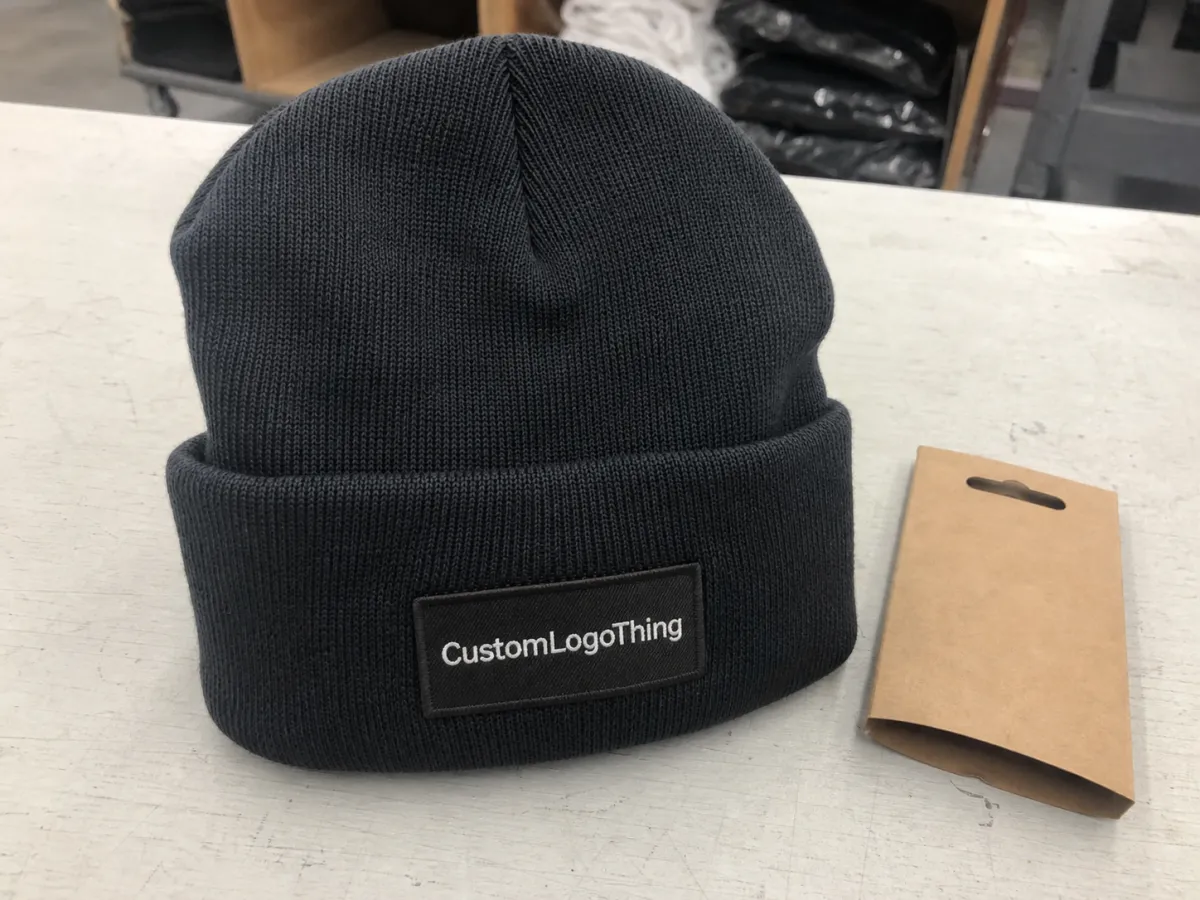
The styles that sell are usually the ones that look clean from a distance and still feel substantial in hand. Dense knit, enough cuff depth, and trim that feels integrated tend to perform better than novelty shapes or heavy branding. In retail, the product needs to work on a hanger, in a stack, and in a folded presentation.
Buyers also want flexibility. A single beanie body may need to live on a wall fixture, sit in a gift bundle, or move through a compact tabletop display. If the style only looks good in one merchandising setup, it is too fragile for retail use.
Most assortments are easier to manage when they are split into three jobs:
- Core replenishment - black, charcoal, navy, heather gray, oatmeal, and one neutral accent.
- Seasonal colorways - one or two sharper shades that refresh the line without changing the base spec.
- Gift-ready pieces - cleaner finish, better packaging, and a higher perceived value.
"A beanie that looks good folded, on a hanger, and in a stack is usually the right kind of simple."
That is the main buying test: does it read as intentional at retail distance and still hold up after handling? If yes, it is probably a usable style. If not, the design is carrying too much risk for the shelf.
Production Process and Timeline: From Swatch to Shipment
The process is simple in theory and dependent on approvals in practice. Typical steps are yarn selection, sample knitting, trim review, pre-production approval, bulk knitting, finishing, and final packing. A delay in any one of those steps can push the whole schedule.
- Yarn selection - confirm fiber content, weight, color target, and whether the yarn is stock or custom dyed.
- Sample knitting - check gauge, stretch, cuff height, crown shape, and recovery after handling.
- Trim review - inspect labels, embroidery, patches, or faux-leather details in real light.
- Pre-production approval - lock the spec sheet before bulk starts.
- Bulk knitting - verify color consistency and stitch uniformity.
- Finishing - steam, trim threads, attach labels, fold, bag, and prep cartons.
- Final packing - confirm case pack, barcode placement, carton marks, and freight handoff.
Lead time depends on how many custom elements are added. A stock-yarn beanie with a woven label can often move in roughly 15-25 business days after approval. Custom dyeing, embroidery revisions, specialty folding, or retail-ready packaging can extend the timeline into the 4-8 week range before freight. If approvals move slowly, production usually waits rather than guessing.
The longest delays are often not in knitting itself. Color matching, label changes, packaging proofs, and freight booking can take more calendar time than expected. For seasonal programs, the approval schedule is part of the product plan.
For transit-sensitive pack-outs, ask for a distribution test language aligned with the standards covered by ISTA. It is a small step that can prevent damaged cartons, crushed presentation, or warehouse rework later.
Cost, MOQ, and Unit Pricing: What Moves the Quote
Unit price is a combination of decisions, not a single figure. Yarn fiber, gauge, quantity, decoration, packaging, and carton setup all affect the quote. If one number looks unusually low, check what was left out. Retail-specific packing or barcode work is often excluded in early pricing.
For Knit Beanies for Retail collections, the main cost pattern is predictable: smaller runs cost more per unit, extra colors increase cost, custom decoration adds cost, and packaging raises the landed figure. The most efficient quote usually comes from a simple build using stock yarn, a standard fit, and one clean finish.
| Order size | Typical unit price | What usually changes |
|---|---|---|
| 300-499 pcs | $4.75-$7.50 | Higher setup share, fewer color options, basic trim |
| 500-1,499 pcs | $3.20-$5.60 | Better balance of cost and flexibility |
| 1,500-4,999 pcs | $2.10-$4.10 | More room for custom labels and packaging |
| 5,000+ pcs | $1.75-$3.40 | Best pricing, but changes are less forgiving |
Those ranges are working numbers, not guarantees. Acrylic styles are often lower than wool blends. Embroidery usually costs more than a woven label. Individual polybags, barcode stickers, fold cards, and inserts should be priced separately so they do not get absorbed into the margin later.
- Individual polybag - often $0.06-$0.15 each.
- Barcode sticker - often $0.03-$0.08 each.
- Fold card or insert - often $0.10-$0.25 each.
- Custom carton marks - usually low cost, but they still need proofing.
Compare quotes only when the spec is identical: same yarn, same gauge, same decoration, same packing format. Otherwise the cheapest quote may simply be missing the pieces that make the product usable in retail.
Choosing Yarn, Gauge, Fit, and Decoration That Hold Up
Yarn choice sets the feel and the price tier. Acrylic is the workhorse because it is consistent, color-friendly, and cost-efficient. Wool brings warmth and a more premium handfeel, but it also raises cost and care concerns. Blends often sit in the middle and can work well when the collection needs better texture without moving into luxury pricing.
| Yarn type | Feel and performance | Retail use case |
|---|---|---|
| Acrylic | Soft, consistent, lower cost, decent color range | Core price points, promotional programs, broad assortment |
| Wool | Warm, premium, natural handfeel, higher cost | Gift items and colder-climate positioning |
| Wool-acrylic blend | Middle ground on warmth, structure, and price | Balanced retail programs |
Gauge matters just as much as fiber. A tighter knit, often around 9-gauge to 12-gauge, usually reads more substantial on shelf and handles decoration better. A looser knit may feel cozy, but open stitches can look flimsy, especially in darker colors where gaps are easier to see.
Fit should be set before bulk begins. Cuff height, crown shape, and stretch recovery all affect how the beanie sits in real use. A cuff that is too short makes the style look underbuilt. A crown that does not settle cleanly can make the hat feel off even when the measurements are technically within spec. For unisex programs, a medium stretch profile is usually safer than chasing a universal fit that does not suit anyone well.
Decoration should match the price point and the shelf story. Woven labels usually look clean and controlled. Embroidery can feel more premium, but dense stitching can crowd a small beanie. Patches add texture and can support heritage or outdoor positioning. Faux-leather or rubber details work best when used sparingly. Too much trim turns the product into noise.
If hangtags or inserts are part of the presentation, asking for FSC-certified paper is a practical choice. It does not change the knit quality, but it helps keep the paper side of the package clean and consistent.
Assortment Planning for Retail Collections That Move
The strongest assortment is usually smaller than the first instinct suggests. A focused color line tends to sell better than a crowded one made of near-duplicate shades. Start with neutrals, then add one or two seasonal colors that create contrast and give the buyer a clear reason to place the line.
It helps to think in roles rather than just in color names:
- Reliable restock pieces - black, charcoal, navy, oatmeal.
- Limited drops - a sharper brand color or a seasonal tone.
- Higher-margin gift items - cleaner finish, better packaging, and a more deliberate presentation.
Merchandising matters because the beanie rarely sells alone. It usually sits beside scarves, gloves, and outerwear, or it appears as part of a bundle. If the product is shown on a wall fixture, the color contrast needs to stay clear from six to eight feet away. If the assortment gets muddy, even a solid knit can disappear.
A practical filter: if a color does not make sense on a five-piece display card or a compact tabletop stack, it probably does not belong in the first order. A tighter lineup often produces better sell-through than a broad group of almost-right shades.
Step-by-Step Buying Guide for a Retail Order
Start with a brief that answers six things: audience, target retail price, fabric feel, decoration style, quantity, and launch date. Clear inputs keep the quote from being built around assumptions.
- Define the shelf role - core item, seasonal item, or bundle piece.
- Set the target retail price - not just cost, but the price the shopper will accept.
- Choose the material - acrylic, wool, or blend, then confirm the gauge.
- Request mockups early - fit, logo placement, and color contrast need a real review.
- Approve specs in writing - yarn, trim, packaging, labels, and carton logic.
- Map the calendar - sample, bulk start, packing, freight, and receipt.
The sample is the approval point, not a formality. Check stretch after repeated pulls, inspect the cuff after folding, and confirm the logo still reads from a distance. Judge color under daylight and indoor lighting because shoppers will see both.
"Approve every detail once, in writing, and the next three rounds of cleanup usually disappear."
Packaging should be decided before production, not after the bulk run. Case pack size, barcode placement, and whether each unit is polybagged can affect warehouse handling, retail prep, and landed cost. These are small decisions individually, but together they define how smoothly the product moves once it leaves the factory.
Common Mistakes When Ordering Knit Retail Beanies
The most common mistake is choosing the cheapest yarn and assuming the rest of the product will compensate. It will not. Low-grade yarn can pill early, recover poorly, or feel rough enough to make a shopper put it back.
Other mistakes show up season after season:
- Overbranding the front - too much logo weight makes the beanie feel busy instead of polished.
- Ignoring MOQ reality - too many colors across too few units inflates cost.
- Leaving packaging to the end - this is how launch dates get missed.
- Skipping a pack-out check - cartons can look fine until the warehouse opens them.
- Comparing quotes badly - the lowest price often hides missing details.
If carton performance matters, ask for testing language instead of a general promise. If inserts or hangtags are part of the presentation, ask for certified paper options instead of assuming the standard stock is enough. Standards such as ISTA and FSC exist because shipping and sourcing have a habit of exposing weak assumptions.
Another error is treating every retail beanie the same way. A high-volume core style should not be spec’d like a premium gift style, and a promotional run should not carry the same decoration cost as a higher-margin seasonal piece. Different jobs need different builds.
Expert Tips and Next Steps for a Cleaner Launch
Ask for landed cost before choosing the style. Factory price is only one part of the number. Freight, labels, bags, inserts, and carton setup can change the margin faster than expected. If the landed cost breaks the target, the product is not affordable just because the factory quote looked good.
A tiered buying plan usually works better than a single all-in purchase:
- Tier 1 - core colors, highest confidence, easiest to replenish.
- Tier 2 - seasonal colors with moderate risk and decent margin.
- Tier 3 - special trims or limited runs only if the timeline and price still work.
Request one production reference sample and one packaging proof if shelf presentation matters. That extra check often protects more value than debating minor changes to the embroidery width.
Before releasing payment, make sure these items are closed out:
- Final spec sheet signed off.
- Color references approved against a real sample.
- Packaging and barcode placement confirmed.
- Calendar dates mapped to sample, bulk, and freight milestones.
- Reorder trigger set for the best-selling colors.
That is the cleanest way to keep knit Beanies for Retail collections from turning into avoidable rework. Tight specs, a focused assortment, and early packaging decisions usually matter more than any single feature on the hat.
How many knit beanies should I order for a retail collection?
Start with a compact color matrix. A few core colors plus one seasonal option is usually enough for a first run. Match quantity to shelf space and sales confidence, not optimism. If the style is untested, keep the order smaller and leave room for a reorder on the best sellers.
What is a realistic lead time for custom retail knit beanies?
Sample approval usually comes first, and color or trim changes can add days or weeks before bulk starts. Bulk knitting, finishing, and packing are separate steps, so each one needs time in the schedule. Custom yarns, embroidery, and retail packaging are the most common causes of delay.
How do I compare quotes for knit beanies for retail collections?
Use the same spec sheet for every quote, because yarn, gauge, decoration, and packaging can make pricing look artificially different. Compare landed cost, not only unit price, so freight and packing do not distort the margin. Check the MOQ and the approval steps too.
Which decoration looks best on retail knit beanies?
Woven labels, embroidery, and patches are the most retail-friendly choices because they read clearly and photograph well. The best option depends on your price point and how much visual weight you want on the front of the hat. Contrast should always be checked carefully so the logo does not disappear in photos or in store.
How do I avoid overordering seasonal knit beanies?
Keep seasonal colors limited and build them around a clear retail story instead of guessing at every possible shade. Order in tiers so your core colors can replenish while the trend-driven pieces stay controlled. Early sales data should shape the next run; that is usually smarter than betting on volume from the start.
If you want knit Beanies for Retail collections to behave like a real retail line instead of a hopeful pile of inventory, keep the specs tight, the assortment focused, and the packaging decisions early. That approach is unglamorous, but it is the one that protects margin and keeps the line moving.


