If you are comparing an apparel Premium Cuffed Beanies quote, the number means very little until the spec behind it is clear. Cuffed beanies look straightforward on a product page, yet the price changes quickly once you define yarn blend, knit gauge, cuff depth, decoration method, and packaging. A quote that hides those details is not really a quote; it is a rough guess with a dollar sign attached.
The most useful estimates read like production notes. They show what the beanie is made from, how it will be branded, how many pieces you need, and where the price shifts by quantity. That is the fastest way to avoid the usual back-and-forth over artwork, placement, sample revisions, and add-on finishing. The buyer sees the tradeoffs early, and the supplier is not left rebuilding the job from scratch after the first number is already discussed.
Premium Cuffed Beanies are popular for a reason. The folded cuff gives you a stable branding zone, the silhouette is easy to wear, and the product feels more substantial than a thin fashion knit. But that same cuff can also hide problems. If the knit is too loose, the logo distorts. If the cuff is too shallow, the decoration area becomes cramped. If the yarn choice is wrong, the beanie pills early or loses shape faster than expected. Good pricing only makes sense once those risks are visible.
What an Apparel Premium Cuffed Beanies Quote Should Reveal Up Front
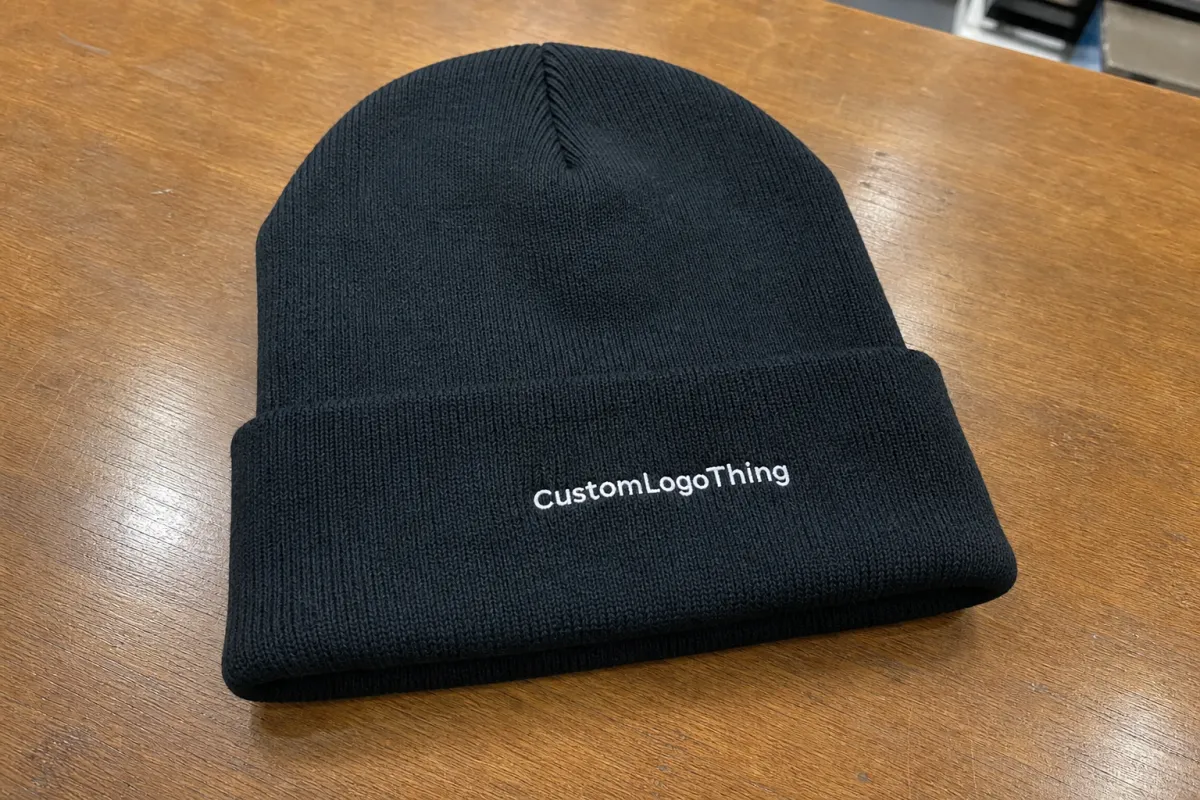
A serious apparel Premium Cuffed Beanies quote should start with product details, not price. Buyers need the material blend, knit construction, cuff depth, decoration method, quantity tiers, and delivery assumptions before they compare numbers. Without those pieces, the quote is only useful as a placeholder. Two beanies can look almost identical in a catalog and still land in different cost bands because one uses a tighter knit, a denser yarn, or a more expensive finish.
The cuff matters more than many first-time buyers expect. It creates the flat area where embroidery, woven labels, leather patches, PU patches, or side-seam tags can sit cleanly. That is a practical advantage over loose knit styles, where the surface moves enough to blur small details. For logos with sharp edges or small type, the cuff is not decorative; it is structural support for the branding.
Quotes should also break out the items that often get hidden in a single line total. Setup fees, digitizing, sample charges, patch tooling, custom packaging, and private-label trim all need to be visible. If the beanie uses stock yarn, say so. If the shade is custom dyed, say that too. If the body is a simple single-layer knit rather than a double-layer construction, that should be explicit, because the hand feel, warmth, and stitch behavior are not the same.
The most useful pricing is the kind that reveals the constraints before the order is approved. Vague pricing does the opposite and usually costs more time later.
There is also a subtle but important difference between a quote and a product spec sheet. A quote should help the buyer understand what will be delivered, what is optional, and what changes the price. A spec sheet should help production understand how to build it. The best apparel premium cuffed beanies quote does both jobs at once, which is why it saves time after approval instead of only sounding competitive at the start.
Premium Cuffed Beanie Construction, Fit, and Finish Options
Material choice shapes almost everything that follows. Acrylic remains common because it is soft, stable in color, and accessible for bulk orders. Recycled polyester is useful for buyers who need a lower-impact material story without giving up consistency. Wool blends add warmth and a richer hand feel, though they can cost more and may demand tighter care instructions. Mixed yarns can improve softness, stretch recovery, or drape, depending on the target use. None of these are automatically better. The right choice depends on whether the program is for winter retail, a company gift, outdoor staff wear, or a short-run promotional drop.
Construction changes the silhouette. A single-layer knit feels lighter and more flexible, while a double-layer knit usually looks fuller and holds heat better. Gauge matters too. A finer gauge produces a smoother surface and gives embroidery a cleaner base. A looser gauge feels more relaxed, but it can make small details less predictable. Rib structure, crown shaping, and seam placement all affect how the beanie sits once it is on a head rather than folded on a table.
Fit is another point that deserves real attention. A cuff that is too deep can overwhelm smaller faces or sit heavy on the brow. A cuff that is too shallow leaves too little room for branding and can make the decoration feel squeezed. Crown height matters in the same way. A slightly taller crown can create a fuller retail look, while a compact crown works better for minimalist branding. There is no universal ideal shape. The right one depends on who will wear it and how the logo needs to read.
Finish details separate a premium product from a plain stock cap with a logo thrown on later. Flat embroidery is still the cleanest option for most logos because it balances clarity and cost. Three-dimensional embroidery can look strong, but it works best on large, bold marks with enough stitch volume to hold shape. Woven patches preserve finer detail better than dense embroidery, while leather and PU patches lean more fashion-forward and tend to carry a higher perceived value. A small hem label or side-seam tag can finish the piece without competing with the main logo.
Color handling can be deceptively tricky. Stock shades are faster and often cheaper, but they are limited to what the supplier already has in the pipeline. Custom-dyed yarn gives more control, yet it can extend the timeline and raise the order minimum. Buyers who need repeatable brand colors should ask how shades are matched, whether the yarn is piece-dyed or yarn-dyed, and what tolerance is accepted from one run to the next. A beanie color that looks close on screen can drift once the knit is textured and viewed under indoor light.
Knit Specs, Yarn Choices, and Decoration Limits That Matter
If the apparel premium cuffed beanies quote is meant to be accurate, the technical specs have to be detailed enough to support production. Stitch gauge is one of the first things to confirm. A tighter gauge supports cleaner edges and smaller type, while a looser gauge gives the beanie a more casual look but makes precise decoration harder. Yarn weight influences warmth, body, and cost. Heavier yarn typically gives a denser feel. Lighter yarn can work for fashion programs or milder climates where bulk is less important than comfort.
Decoration limits are where many buyers misread what the factory can actually reproduce. On stretched knit fabric, small text can blur faster than expected. As a practical guideline, letters below about 4 to 5 mm in height often become difficult to keep crisp, especially if the font is thin or condensed. Fine lines and tiny interior counters can also close up once thread tension and fabric movement are introduced. That is not a failure in execution; it is a limitation of stitch density and knit behavior.
Patch size has the same problem in reverse. A patch that looks modest in artwork may feel oversized once it sits on a cuff, especially if the cuff itself is short. If the decoration is placed too close to the edge of the fold, it can end up crooked once the beanie is worn and the cuff stretches. The safest placements leave enough margin so the logo stays centered under normal wear, not just while the sample is lying flat.
Artwork preparation makes the entire process easier. Vector files in AI, EPS, or clean PDF format give the cleanest starting point. Color references should be clear, and thread colors may need to be simplified to match what embroidery can hold. Delicate gradients, thin outlines, and tiny text often need revision before they are production-ready. That step is not a nuisance; it is the difference between a logo that reads cleanly and one that turns muddy in thread.
Compliance and labeling details should be locked early as well. Bulk beanie programs sometimes require fiber content, care instructions, origin marking, private-label labels, or carton-level identifiers. If recycled content is part of the claim, the material source and documentation should match the actual construction, not just the marketing language. Packaging standards matter too. For shipment handling, ISTA guidance is useful for understanding how cartons are tested, and FSC remains relevant if the packaging includes paper-based components or fiber claims.
Pricing, MOQ, and What Shapes Your Quote
Pricing for premium cuffed beanies usually turns on a handful of variables: quantity, yarn type, knit complexity, decoration method, and whether the order uses stock or custom material. The basic rule is straightforward. More setup, more labor, or more custom input increases unit cost. That is why two products that appear similar can sit in very different price brackets once the spec is written out.
MOQ deserves careful reading. For stock-style cuffed beanies with standard decoration, minimums often start around 100 to 300 pieces. Custom knit builds, custom yarn colors, or highly specific finishing steps can push the minimum higher, sometimes to 500 pieces or more, because the setup has to be spread across enough units to stay practical. Smaller runs can still happen, but the per-piece price often rises sharply because artwork, setup, and handling are not reduced just because the order is smaller.
Several charges affect the final number more than buyers expect: digitizing, embroidery setup, patch tooling, sample development, label application, individual polybagging, insert cards, and freight. Each one is reasonable on its own, but together they can change the shape of the quote. That is why comparison shopping only works if the same assumptions are used across suppliers. If one estimate includes packaging and another does not, the lower number is not really lower.
The table below is a practical snapshot, not a promise. Actual pricing shifts by material availability, decoration size, season, and destination.
| Option | Typical Quantity Range | Typical Unit Price | Best For | Notes |
|---|---|---|---|---|
| Stock cuffed beanie, blank | 100-1,000+ | $2.10-$3.80 | Fast promotional use | Lowest setup, limited branding value |
| Flat embroidery on cuff | 100-5,000+ | $3.25-$6.50 | Team wear, company gifts | Clean logo placement, strong value balance |
| Woven or leather patch | 250-5,000+ | $3.75-$7.20 | Retail-style branding | Better for detail, adds setup and patch cost |
| Private-label package with custom trim | 500-10,000+ | $4.50-$8.50 | Brand programs and resale | More finishing steps, more consistency required |
A quote becomes useful once it shows what is driving the price rather than just the final figure. If a supplier cannot separate decoration, packaging, and freight, the buyer is left guessing where the money goes. That usually slows down approval, especially once multiple stakeholders start comparing versions of the same number.
Production Steps and Turnaround Expectations
The path from pricing to shipment is usually predictable, though the speed depends on how complete the order information is at the beginning. It starts with spec confirmation, then artwork review, then sample approval if the job needs it, followed by knitting or blank sourcing, decoration, inspection, pack-out, and dispatch. Every one of those steps can move fast. Every one can also stall if the logo file is incomplete, the color target is unclear, or the packaging instructions arrive late.
Lead times are often misunderstood because buyers lump sample timing, bulk timing, and freight timing into one number. A sample can take 5 to 10 business days if the decoration is straightforward, but a patch sample or custom knit sample can take longer. Bulk production often lands in the 12 to 20 business day range after approval, although busy periods can add a week or two. Shipping is separate. Air freight, ocean freight, and domestic ground move on different clocks, so the final delivery date should never be estimated from production alone.
The longest delays usually happen before the first stitch is made. Artwork revisions, missing Pantone references, unresolved cuff placement, and late packaging decisions consume more calendar time than the decoration itself. A good supplier will say that plainly. If a date only works under ideal conditions, it is not a reliable date. Buyers who want control over the schedule usually get better results by approving the sample quickly, locking the destination early, and deciding on the decoration method before the order is released.
The cleanest production runs are rarely the most complicated ones. They are the ones with the fewest open questions before the job enters the factory.
There is one more factor that often goes unmentioned: seasonality. Winter accessories are naturally more sensitive to timing than a year-round tee or tote. If the order is placed late in the season, yarn availability, embroidery queues, and freight space all tighten at once. The same spec that looks easy in July may move more slowly in October. Buyers who plan around that bottleneck usually avoid a lot of avoidable pressure.
How We Keep Reorders Consistent and Decoration Clean
Reorders are where process discipline becomes visible. If the cuff depth shifts, the yarn lot changes tone, or the decoration lands a few millimeters off, the second run can feel like a different product even when the spec sheet looks identical. That is a real risk in branded apparel. A premium cuffed beanie should look the same across runs, especially if the program is used for retail, employee uniforms, or a seasonal brand release that may need replenishment later.
Quality control has to check more than appearance. Cuff depth should be measured because the fold directly affects logo position. Stitch registration should be inspected so outlines do not drift. Labels need to sit square. Color should be compared against a physical reference, not only a monitor, because knit texture changes the way a shade reads under different lighting. A dark navy on flat stock can look lighter once it is knitted and stretched, while heather tones can shift even more visibly.
Decoration consistency is a separate issue from the beanie body itself. Embroidery thread tension, patch placement, and seam alignment all need their own checks. A patch that is centered on the blank body can still appear slightly off once the cuff is folded and worn. That is why measurement points matter. The process should define where the logo starts relative to the fold, how high it sits, and what tolerance is acceptable before the piece is rejected.
Suppliers that handle branded programs well tend to understand organization as much as production. They know how to keep mixed colorways separated, how to label cartons clearly, and how to manage insert cards or private-label packaging without mixing up SKUs. That matters when an order includes multiple beanie colors, several decoration versions, or retail-ready packaging. A box count alone is not enough; the product has to be packaged so the right style reaches the right customer.
Clear communication helps quality control as much as the inspection itself. If a logo is too small for the knit, that should be said before sampling. If a yarn shade will not match a screen reference exactly, that should be said before the order is released. Honest limits are better than optimistic promises. They reduce rework and keep the finished piece closer to the original intent.
What to Send for an Accurate Quote and Fast Approval
If you want an apparel premium cuffed beanies quote that can actually support a buying decision, send the job details that define production. Quantity comes first. Delivery date comes next. Then add the logo file, decoration method, number of colors, cuff placement preference, material preference, and any packaging requirements. If you already know you want embroidery, a woven patch, or a leather patch, state that up front. Those choices influence both cost and lead time.
A tiered quote is usually more useful than one flat number. It shows where the price improves, where setup costs sit, and which options change the schedule. That makes it easier for a buying team to compare value rather than chase the cheapest line item. If the artwork is detailed, ask for a mockup or stitch recommendation before approval. Tiny serif type, thin outlines, and low-contrast thread combinations may need simplification before production can hold them cleanly.
It also helps to confirm the minimum acceptable delivery date before the order is released. If the target is tied to a launch or event, the schedule needs to include sample time, approval time, and freight time, not just the bulk production window. A product can be inexpensive and still be the wrong choice if it cannot arrive on time. That tradeoff is easier to see once the quote shows all the moving parts instead of only the unit cost.
For teams comparing options, the key is consistency. Use the same quantity, the same decoration method, the same packaging, and the same shipping destination across all quotes. Otherwise the comparison becomes noisy very quickly. Once the assumptions match, the difference between suppliers becomes easier to judge on the things that matter: quality control, communication, and how well the final piece holds up in real wear.
In the end, a well-built quote does more than price a beanie. It shows whether the order is technically sound, whether the decoration is realistic, and whether the timeline can survive the inevitable small surprises. That is what makes a premium cuffed beanie program workable instead of merely attractive on paper.
What do I need ready to request a premium cuffed beanie quote?
Have your quantity, delivery date, logo file, preferred decoration method, and color count ready before you request pricing. If the order needs retail packaging, private-label trim, or a specific cuff placement, include that too so the quote reflects the actual job.
What usually affects cuffed beanie pricing the most?
Quantity, decoration method, and whether the beanie uses stock yarn or custom-dyed materials are usually the biggest price drivers. Setup, digitizing, patch tooling, and added packaging can also move the unit cost more than buyers expect.
What is a normal MOQ for apparel premium cuffed beanies?
MOQ varies by construction and decoration, but stock-style programs often start around 100 to 300 pieces. Custom knit or custom color runs usually need higher quantities because the setup has to be spread across enough units to stay practical.
How long does production usually take after approval?
Sample timing, bulk timing, and freight timing should be treated separately. A simple sample may take 5 to 10 business days, while bulk production often runs 12 to 20 business days after approval, with seasonal demand sometimes adding more time.
Can I use the same design across multiple cuffed beanie colors?
Yes, but each color can affect thread visibility, patch contrast, and the way the logo reads on the cuff. Detailed artwork may need small adjustments so the decoration stays clean and legible across every shade in the order.


