Restaurant Woven Label Beanies bulk order planning sounds like a narrow purchasing task until the hats start moving through the real world. Staff wear them on delivery runs. Customers buy them after brunch. Catering crews take them off-site. A winter beanie can leave the dining room and keep advertising the restaurant at farmers markets, school drop-offs, train platforms, and late-night grocery runs.
That reach is why the planning deserves more care than a last-minute merch add-on. A beanie is not a menu, but it can get more public exposure than one. The logo has to read at a glance, the knit has to feel wearable, and the finished order has to be repeatable if the restaurant grows, reorders for new hires, or turns a small staff piece into a sellable item.
I think of these beanies as wearable packaging. They wrap the brand around a person instead of a takeout box, but the job is similar: make the mark recognizable, keep presentation consistent, and avoid quality surprises after production has started. A woven label on a cuffed knit beanie handles that job well, especially for restaurants with compact logos, crests, mascots, location names, or small typography that may not stitch cleanly as direct embroidery on ribbed fabric.
Restaurant Woven Label Beanies Bulk Order Planning Basics
Good planning starts with a plain question: who receives the beanies? A 48-piece staff uniform order has different priorities than a 500-piece winter merch drop. A hat for kitchen porters working early receiving shifts may need more warmth and durability than a beanie sold at the host stand for $24.
Restaurants usually balance four pressures at once: brand appearance, staff comfort, reorder consistency, and unit cost. If the first order does not document the knit color, label size, thread colors, placement, and packing method, the second order can drift. One batch comes in with a darker charcoal cuff. Another has the label sewn 3/8 inch higher. A uniform program that should look intentional starts to look patched together.
Consistency affects more than aesthetics. It changes how managers issue stock, how staff photos look, how merchandise is displayed, and how easy it is to reorder without reopening every decision. Front-of-house staff, kitchen crews, delivery teams, catering staff, seasonal event workers, and loyalty gift recipients may all use the same basic branded beanie, but the packing and quantity logic can be different.
One carton may be bulk packed for managers to hand out during onboarding. Another run may need individual polybags, retail folding, hangtags, or sorted cartons by location. Those details do not feel glamorous. They become very visible when the order arrives two days before a launch.
Practical rule: decide the role of the beanie before choosing the cheapest knit body. Uniform pieces should survive daily handling; merchandise pieces should feel good enough that a guest is comfortable paying retail for them.
A woven label gives the program structure. It lets the restaurant keep the same logo treatment across multiple beanie colors, and it often preserves finer artwork than a printed patch on textured knit. Still, the label cannot rescue every logo without adjustment. Small taglines, distressed textures, thin outlines, and low-contrast colors need a careful proof review before production.
Choosing the Right Beanie Body and Label Construction
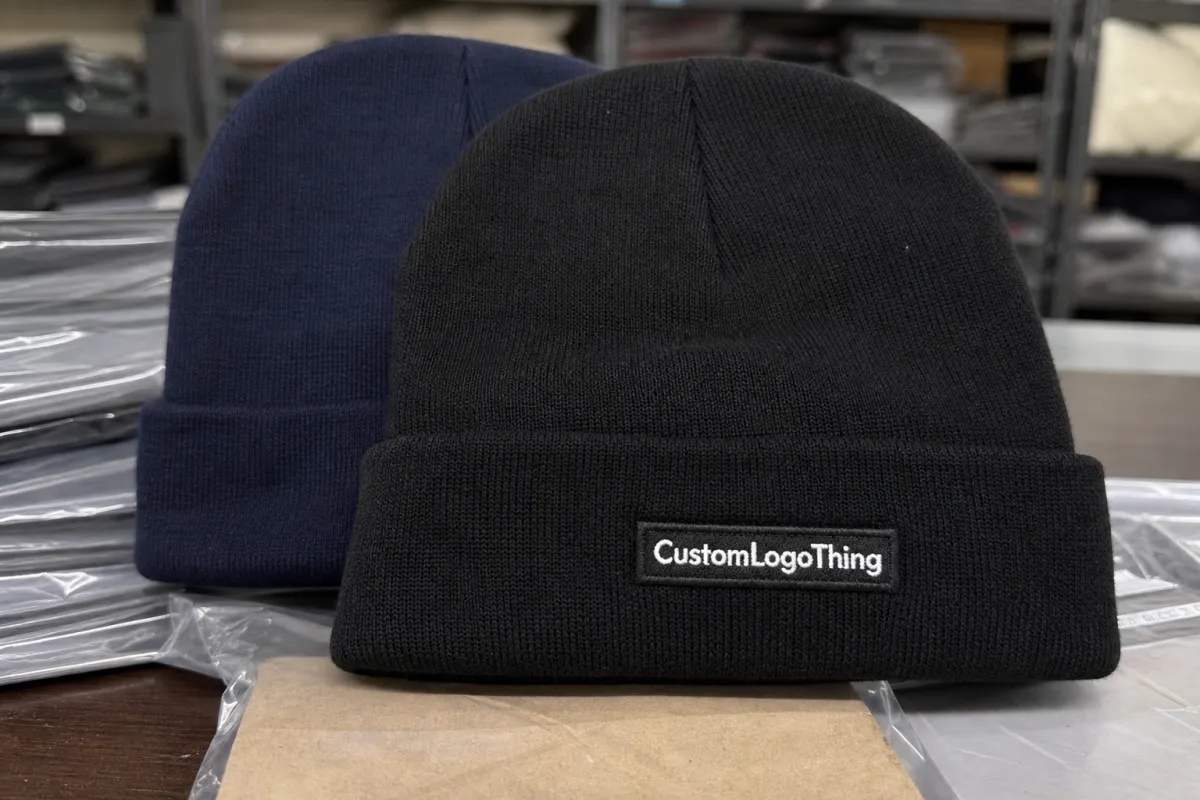
The beanie body sets the tone before the label is sewn on. A cuffed acrylic beanie is the common bulk choice because it is warm, color-stable, widely available, and cost-effective. It also gives the label a stable cuff area, which matters because rib knit stretches every time someone pulls the hat on or off. For many restaurant programs, the standard cuffed beanie is the safest first specification.
Rib knit beanies have a familiar texture and hold their shape well. Fisherman-style short cuff beanies give a tighter, more retail-forward look, but the cuff height can limit label size. Slouch beanies feel softer and less uniform, which can work for coffee shops, bakeries, breweries, and casual concepts. Their shifting shape makes placement more important. Heavier cold-weather styles make sense for outdoor patios, food trucks, delivery crews, or staff who work near loading doors and walk-in areas.
Acrylic remains popular because it handles bulk restaurant use well. It is not the most luxurious fiber, but it is predictable and practical. Cotton blends can feel softer against the skin, though they may cost more and sometimes recover stretch differently after wear. Recycled polyester or blended yarn options may be available depending on supplier inventory and color. If sustainability claims matter to the restaurant, ask how fiber content, labeling, and packaging claims are supported rather than relying on a vague product description.
For paper hangtags, sleeves, or retail cards, certifications such as FSC can matter if the restaurant wants responsible paper sourcing tied to the merchandise presentation. Keep the claim specific. A responsibly sourced paper tag does not make the entire beanie sustainable.
Label construction deserves the same attention as the knit. Damask woven labels are usually the strongest choice for crisp restaurant logos because the weave can hold clean edges, small text, and controlled color separation. Satin woven labels offer a smoother sheen and can feel slightly more refined, although the effect depends heavily on the artwork. Merrowed-edge labels create a thicker patch look that can push the beanie closer to retail merchandise than basic staff gear.
| Beanie or Label Option | Best Use | Typical Buyer Consideration |
|---|---|---|
| Cuffed acrylic beanie | Staff uniforms, giveaways, cold-weather promos | Often the best balance of warmth, availability, and unit cost |
| Fisherman-style beanie | Retail merch, cafes, bars, modern restaurant brands | Shorter fit; confirm label visibility on the cuff |
| Damask woven label | Detailed logos, small type, crests, mascot marks | Strong option for clean detail and repeatable branding |
| Merrowed-edge label | Patch-style merchandise programs | More dimension; may raise cost versus a flat woven label |
Placement changes how the brand reads. A center-front cuff label is the most visible and works well for staff photos, delivery handoffs, and guests seeing the logo from a few feet away. A side cuff label feels quieter and more apparel-driven. A fold-over hem label or small tab label can look refined, but it reduces artwork space and sacrifices visibility.
Restaurant branding usually benefits from restraint. Food businesses should be careful with muddy colors, tiny type, or artwork that becomes cluttered on a small label. A two- or three-color woven mark with strong contrast often looks better than a five-color version trying to carry every brand element at once.
Artwork Specs, Label Size, and Color Decisions That Prevent Delays
Artwork is where many delays begin. Vector files such as AI, EPS, or editable PDF are preferred because woven label production depends on clean shapes and controlled thread areas. A high-resolution PNG can help as a reference, but it is not the same as production-ready vector art. If the only logo file comes from a website header, build in cleanup time.
Thread does not behave like ink. Very fine outlines, tiny taglines, gradients, distressed textures, drop shadows, and watercolor effects usually need simplification. This is the part many restaurant buyers underestimate. The label can still look excellent, but the design has to respect thread width, weave density, and readable contrast.
Common woven label sizes for beanies range from about 1.25 x 1.75 inches for understated staff wear to roughly 2 x 2.5 inches for a stronger patch-style merchandise look. A narrow rectangular label can look sharp on a cuffed beanie. A square, shield, or badge shape may suit a crest, mascot, or heritage-style mark.
Larger is not always better. If the cuff height is only 2.75 to 3 inches, an oversized label can crowd the fold and make the hat feel stiff. On a fisherman beanie, an aggressive patch may take over the entire front. On a slouch beanie, it may tilt or wrinkle when worn. The label has to suit the body, not just the logo file.
Color planning should happen before proof approval. Brand colors can often be matched closely using available thread colors, but thread has texture and light reflection, so it will not always match coated ink, vinyl, or screen color exactly. High contrast matters most. Cream thread on a black cuff reads well. Dark green thread on black may disappear. Red thread on burgundy can look flat unless the tones are separated carefully.
- Best artwork files: AI, EPS, or editable PDF with outlined fonts and clean vector shapes.
- Risky details: hairline strokes, tiny location text, gradients, distressed texture, and low-contrast color pairs.
- Useful label sizes: about 1.25 x 1.75 inches for subtle staff wear, up to about 2 x 2.5 inches for retail-style patches.
- Proof checks: spelling, location names, social handles, registered marks, thread colors, and sew placement.
Finishing affects feel and durability. Labels may be sewn flat onto the cuff, folded as a tab, or produced with an edge finish that changes the look and hand feel. A flat woven label usually sits cleanly and keeps cost controlled. A folded tab can look refined, but the visible area is small. A thicker edge can make the label feel more substantial for merchandise.
Before sampling or production, confirm every character. Restaurant names often include punctuation, accents, neighborhood references, founding dates, or location abbreviations. Corrections after label approval can add cost, delay the sewing schedule, or force a rework decision under a deadline that was already tight.
Pricing, MOQ, and Unit Cost Factors for Restaurant Beanie Orders
Pricing for custom logo beanies is built from several pieces: the blank beanie body, woven label type, label size, number of thread colors, sewing labor, order quantity, packing method, and shipping destination. A simple rectangular damask label on a standard acrylic cuffed beanie will price differently than a premium knit body with a larger merrowed patch, individual folding, and sorted cartons.
MOQ, or minimum order quantity, depends on the beanie style and label setup. Bulk orders usually become more cost-effective as quantity rises because setup time, label weaving, sewing preparation, and packing labor spread across more units. That does not mean every restaurant should jump to the largest number. Cash flow, storage space, staff turnover, and realistic merchandise demand all matter.
As a broad planning range, many custom beanie programs land from the mid-single digits per unit into higher retail-oriented costs, depending on quantity, knit selection, label complexity, and packing. A larger run of standard acrylic cuffed beanies with a modest woven label may sit in a budget-friendly range. A smaller batch using premium knit bodies, merrowed patches, and individual retail packaging can move much higher. Freight can also shift the final delivered cost because beanies are bulky compared with flat printed goods.
Staff uniform orders and merchandise orders should be priced with different expectations. Staff programs usually prioritize durability, consistent appearance, and controlled replacement cost. Merch programs can justify a better hand feel, upgraded label finish, or retail-ready packaging because the beanie is expected to generate revenue or strengthen loyalty. For sellable merch, perceived value at $18, $22, or $28 matters as much as the raw unit price.
| Order Scenario | Typical Quantity Range | Cost Drivers | Planning Advice |
|---|---|---|---|
| Starter staff order | 48-144 pieces | Setup spread over fewer units, basic packing, standard label | Keep the label simple and document specs for reorders |
| Seasonal staff plus giveaway run | 250-500 pieces | Beanie color, label size, sewing labor, freight | Ask for tiered pricing and order buffer stock for new hires |
| Retail merch program | 500-1,000+ pieces | Premium knit, upgraded label, individual packing, carton sorting | Compare margin at expected retail price before finalizing specs |
Complex labels raise costs. Multiple thread colors, dense woven detail, metallic thread effects, unusual shapes, and thick edge finishes can all add time or material expense compared with a straightforward rectangle. None of those upgrades are wrong. They just need to earn their place in the budget.
For stronger restaurant woven label Beanies Bulk Order Planning, ask for tiered pricing at several quantities. A quote at 96, 250, and 500 pieces may show that the useful cost break starts earlier than expected. It may also confirm that a smaller staff run is the smarter first order.
A solid quote request should include the logo file, beanie color, label size, order quantity, delivery ZIP code, in-hands date, and packing preference. Custom Logo Things can help compare options through Wholesale Programs if the order is part of a larger uniform, merch, or recurring brand program.
Process and Lead Time From Artwork Review to Finished Beanies
The cleanest ordering process is sequential. Request a Quote, confirm the beanie style and quantity, submit artwork, review the label proof, approve a sample or production proof if required, move into bulk production, inspect the finished beanies, pack, and ship. Skip one step and the risk moves downstream, where changes cost more.
- Choose the beanie body, knit color, label type, and target quantity.
- Send vector artwork or the best available logo file for review.
- Confirm label dimensions, thread colors, edge finish, and placement.
- Review the proof carefully before approval.
- Approve sample or production proof requirements if the project calls for them.
- Complete bulk label production, sewing, inspection, packing, and shipping.
The artwork proof is the control point. It should show label size, thread colors, placement, and sew location in a way the buyer can evaluate. If the proof shows a 2-inch label centered on a cuff, do not assume it will become a smaller side tab later. Change it during proofing.
Lead time is better understood as a chain of tasks, not a vague promise. Artwork review takes time. Woven labels must be produced. Labels are sewn to the beanies. Finished goods are checked, counted, packed, and shipped. Depending on quantity, complexity, sampling, and season, a restaurant should often plan in weeks rather than days.
Rush options may be possible for some projects, but they work best when the specs are simple and approvals are quick. A black cuffed acrylic beanie with a two-color rectangular label is easier to move quickly than a multi-color custom-shaped patch on a specialty knit with individual retail packaging.
Seasonal demand can change the schedule. Cold-weather promos, grand openings, patio launches, holiday gift programs, campus events, and local market weekends often create pressure at the same time. Shipping method also matters. A ground shipment may be sensible for a relaxed reorder, while a fixed event date may require faster freight. For transit and package-performance thinking, buyers can review general testing concepts from ISTA, especially if the beanies are part of a larger kitted program or retail shipment.
Build in buffer. A restaurant opening on a Friday should not plan for beanies to arrive Thursday afternoon unless everyone accepts the risk. Proof questions, delayed approvals, weather, freight exceptions, and inventory substitutions do happen. Not constantly. Often enough that experienced buyers leave breathing room.
Quality Checks That Matter for Restaurant Staff and Merch
Quality checks for restaurant beanies are practical. Is the label straight? Is the stitching secure? Does the cuff height look consistent across the order? Are thread edges clean? Is the logo facing the right direction? Do the beanie colors match closely enough from carton to carton? These are basic points, but they are the points people notice in staff photos and at a merch table.
Comfort matters because restaurant staff may wear beanies through long shifts, early deliveries, outdoor service, cold storage work, or late-night cleanup. An itchy knit or tight cuff becomes annoying fast. A beanie that feels fine for a 10-minute photo may not feel fine after four hours on a windy patio. If staff wear is the main goal, ask about hand feel, cuff pressure, warmth, and breathability before chasing a small unit-cost reduction.
Durability depends on the knit body, label attachment, and real use. Beanies get tossed into lockers, stuffed into tote bags, dropped in delivery vehicles, and handled by people with damp or cold hands. A woven label should stay flat, the stitching should hold, and the cuff should recover after repeated wear. For merchandise, the beanie also needs to feel worth the purchase price. Guests are more forgiving of a free promo item than a paid retail piece.
Legibility is one of the most overlooked quality checks. A technically accurate woven label can still fail if the restaurant name is too small or the color contrast is weak. Hold the proof at normal viewing distance. Then imagine someone seeing it across a sidewalk or from the other side of a pickup counter. If the name disappears, simplify the artwork or increase contrast.
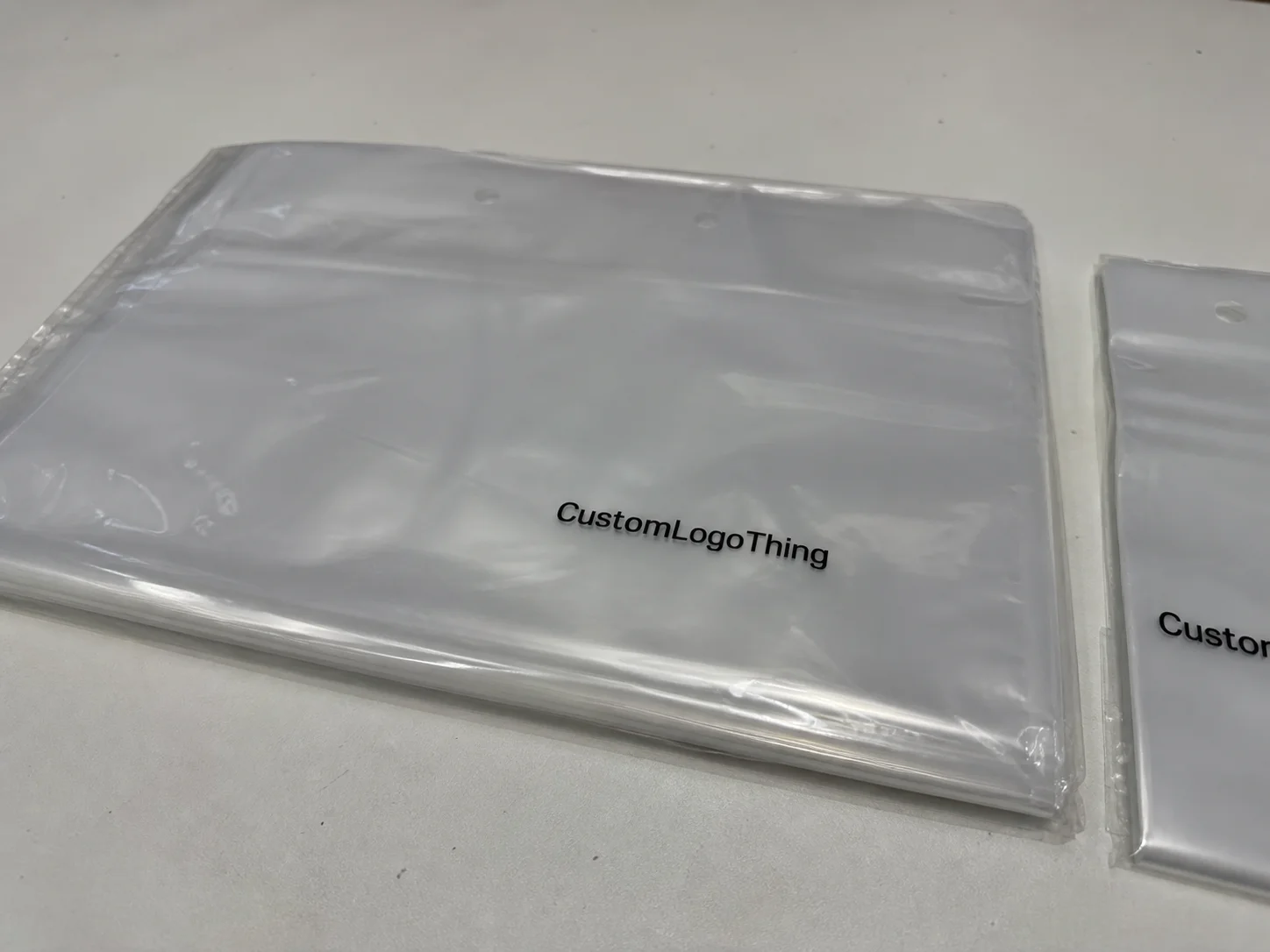
Packing affects the final experience. Bulk packing is efficient for staff issue because managers can count pieces quickly and store cartons without extra waste. Individual polybags help protect retail pieces, separate merchandise from staff stock, and make distribution cleaner, though they add material and handling cost. Printed sleeves, hangtags, or custom stickers can help if the beanie is sold as merch rather than issued as uniform stock. Custom Labels & Tags can keep those supporting pieces aligned with the woven label.
This is also where a supplier’s planning discipline matters. The work is not only decoration. It is specification review, material guidance, proof control, and order documentation. A well-planned woven label beanie order should look consistent, arrive with the agreed details, and be easy to reorder when the restaurant adds staff or repeats a successful merch run.
Next Steps Before You Request a Quote or Place the Order
Before requesting a quote, make a count plan. Decide who receives the beanies first: current staff, new hires, managers, delivery teams, catering crews, event giveaways, VIP guests, or paying customers. Then add a buffer. For staff programs, 10% extra inventory can prevent small reorders every time two people join the team. For merchandise, use past sales of shirts, caps, mugs, or gift cards to estimate demand instead of guessing from enthusiasm alone.
Choose the beanie style and knit colors before debating tiny label details. A black cuffed acrylic beanie with a cream woven label will feel very different from a heather gray fisherman beanie with a navy tab label. Both can be right. The choice depends on the restaurant’s brand, season, staff dress code, and whether the piece is meant to stand out or simply be worn.
Pick one primary logo treatment. Trying to fit the full logo, tagline, city name, founding date, mascot, social handle, and slogan onto a small woven label usually makes the piece weaker. A clean mark reads better and looks more professional. If secondary details are needed, use a hangtag, belly band, sticker, or retail card rather than crowding the woven label.
- Quantity: separate counts for staff, managers, delivery teams, giveaways, and sellable merch.
- Artwork: send AI, EPS, editable PDF, or the highest-quality logo file available.
- Specs: identify beanie color, label dimensions, thread colors, placement, and edge finish.
- Schedule: share the in-hands date, event deadline, and any sample approval needs upfront.
- Packing: choose bulk pack for staff issue or individual packing for retail presentation.
A strong quote request gives the production team enough information to respond with facts: target quantity, beanie color, label dimensions, artwork file, delivery location, packing preference, and whether a sample or proof approval is needed before production. If questions remain, review the Custom Logo Things FAQ before locking the order.
The best restaurant woven label Beanies Bulk Order planning is not complicated. It depends on clear decisions made early: logo, quantity, deadline, beanie style, label construction, and packing method. Get those details right, and the order is easier to price, easier to produce, and much easier to repeat.
FAQ
What should I prepare for a restaurant woven label beanies bulk order quote?
Prepare your logo file, target quantity, beanie color, preferred label size, delivery ZIP code, in-hands date, and intended use: staff uniforms, merchandise, giveaways, or a mix. Vector artwork is preferred because it helps translate the woven label design into clean thread shapes with fewer production issues.
What MOQ should restaurants expect for custom woven label beanies?
MOQ depends on the beanie style, label type, and production setup. Bulk orders generally become more cost-effective as quantity increases because setup and production labor are spread across more pieces. Ask for tiered pricing so you can compare a smaller staff order against a larger merch or seasonal run.
How long does a bulk order of restaurant beanies with woven labels take?
Lead time depends on artwork approval, label production, sewing, inspection, packing, and shipping. Restaurants ordering for openings, winter patio service, holiday promotions, or merch drops should build in extra buffer time for proofing and transit instead of planning around the last possible ship date.
Are woven labels better than embroidery for restaurant logo beanies?
Woven labels are often better for small text, detailed logos, and consistent patch-style branding on ribbed knit beanies. Embroidery can work well for simpler marks, but dense stitches may distort on some knits or feel heavier on the cuff.
Can I reorder restaurant woven label beanies after the first bulk order?
Yes. Reorders are usually simpler when the original specifications are documented, including beanie style, knit color, label size, thread colors, placement, and packing method. Keeping the approved artwork and production details consistent helps preserve brand appearance across staff additions and future merch runs.