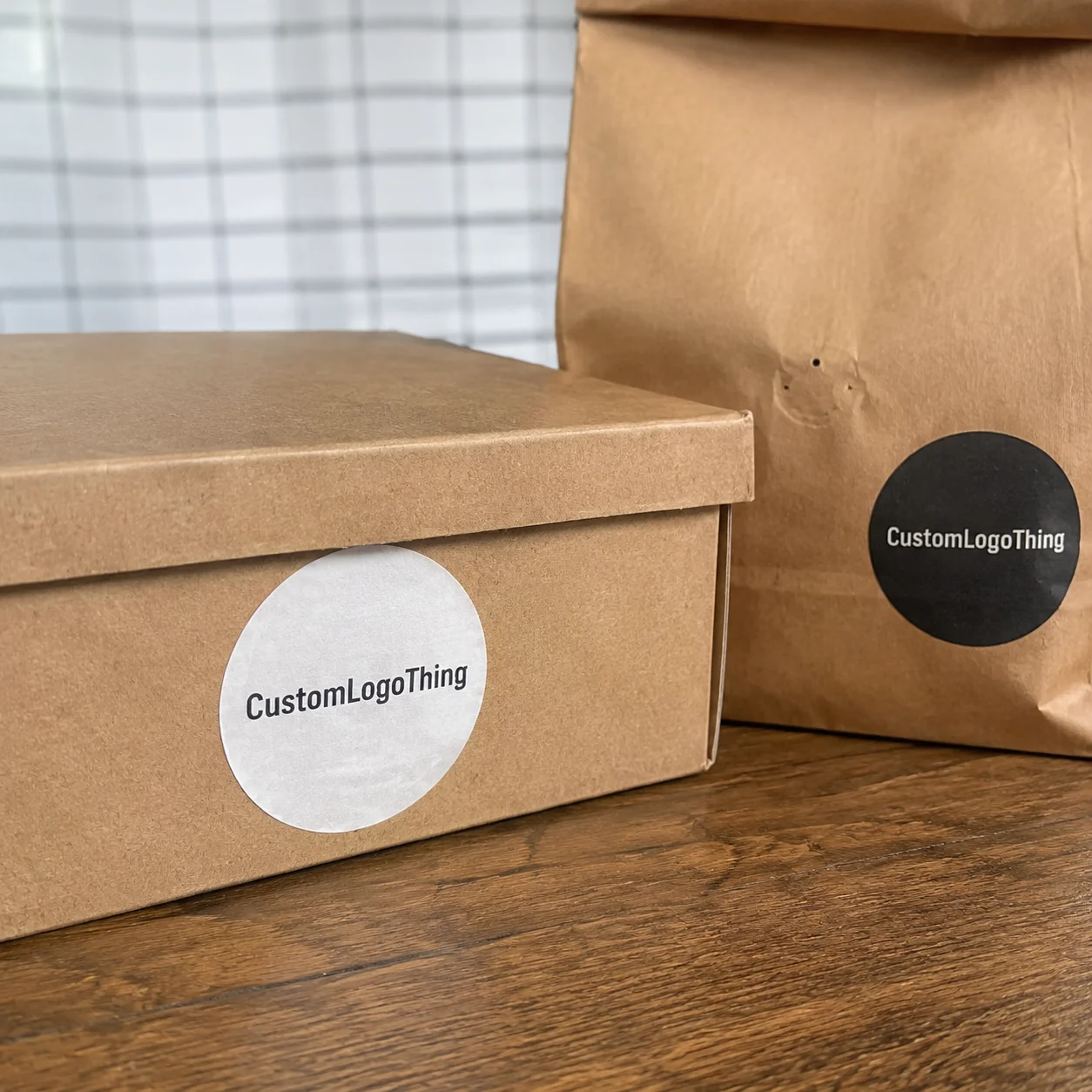
Put two identical kraft mailers on a shelf. One has a crisp paper sticker seal, clean edges, and a logo that feels deliberate. The other has a dull label curling at the corner after three touches. The cheap sticker is often the expensive mistake.
This custom paper Stickers Product Info and Reviews guide focuses on the details buyers actually need before ordering: material behavior, adhesive fit, print clarity, production limits, price drivers, and sample checks. Not vague praise. Not “great quality” with no context. That tells you almost nothing.
Fast verdict: paper stickers are strong choices for dry goods, retail boxes, stationery, candles, bakery packaging, subscription mailers, product seals, gift packaging, and short-to-medium lifecycle branding. They are not the best default for freezer condensation, oily containers, wet bathroom products, outdoor tools, or packs that get handled dozens of times unless the paper is coated, laminated, or replaced with a synthetic label material.
Custom Paper Stickers Product Info and Reviews: Quick Answer

Paper stickers sit in a useful middle ground. They cost less than many film labels, feel warmer than plastic, and can make basic packaging look finished. They also expose lazy material choices very quickly. A 2-inch paper seal on a candle box may perform beautifully. The same sticker on a chilled curved jar can lift overnight. Same artwork. Different surface. Different result.
The main options are simple enough. Uncoated paper gives a natural, writable surface. Gloss paper increases color saturation and contrast. Matte paper feels more refined and photographs with less glare. Kraft paper supports natural branding, though ink prints darker on brown stock. Textured paper adds boutique tactility but costs more and may soften fine detail.
Reviewer take: most disappointing sticker orders are not caused by ugly artwork. They are caused by mismatched adhesive, finish, surface, and quantity. A good logo cannot rescue edge lift.
For Custom Logo Things buyers comparing Custom Labels & Tags or broader Custom Packaging Products, the first question is not “Which sticker looks best?” Ask what the sticker will touch, how long it must stay there, and what happens to the package before the customer sees it.
Dry paper bag? Easy. Smooth candle box? Usually straightforward. Recycled corrugated shipper with dust, rough fibers, and variable board texture? Test first. Chilled glass jar? Be cautious. Paper can work, but it needs the right construction.
Top Paper Sticker Options Compared for Packaging Buyers
I compare paper stickers across five practical factors: appearance, durability, writeability, sustainability perception, and unit economics. None wins every category. That matters. A textured paper label may make a small-batch jam jar feel premium, while a gloss paper sticker may sell a bright seasonal promotion better from six feet away.
| Paper Sticker Type | Typical Finish | Adhesive Fit | Best Packaging Use | Print Sharpness | Water Resistance | Relative Cost |
|---|---|---|---|---|---|---|
| Uncoated white paper | Natural, writable, low glare | Standard permanent or removable | Ingredient labels, thank-you seals, inserts, batch coding | Good for text; softer for dense color | Low unless coated | Low |
| Gloss paper | Shiny, bright, high contrast | Permanent for retail labels | Promotions, colorful logos, photography-led designs | High, especially for saturated artwork | Moderate with coating | Low to medium |
| Matte white paper | Smooth, refined, reduced glare | Permanent for boxes, bags, mailers | Skincare, tea, coffee, apparel, wellness packaging | High for logos, QR codes, and small copy | Moderate with coating | Medium |
| Kraft paper | Brown, natural, fibrous | Permanent; stronger tack for rough board | Natural soaps, bakery boxes, coffee bags, rustic branding | Medium; colors print darker | Low to moderate | Medium |
| Textured paper | Laid, linen, felt, or specialty texture | Permanent on smooth dry surfaces | Candles, wedding goods, boutique foods, limited editions | Medium; fine detail can break up | Low unless protected | Medium to high |
Uncoated white paper is the baseline for buyers who need clean, functional product packaging at a sensible cost. It is also the most forgiving if staff need to write lot codes, short dates, batch numbers, or personalization by hand. The tradeoff is scuffing. Uncoated paper can mark after repeated thumb contact, especially with black ink or large color blocks.
Gloss paper performs well when visual impact matters more than handmade texture. Reds look redder. Blues hold more punch. Photo-style artwork usually appears cleaner. The downside is obvious: gloss can feel less craft-led, and glare can be irritating in shelf photography or ecommerce product shots.
Matte white paper is the safest premium middle ground. It reduces glare, handles minimalist packaging well, and keeps fine text more readable than kraft or textured stock. For many product labels, matte paper with permanent adhesive is the practical “don’t make this harder than it needs to be” option.
Kraft and textured papers are more emotional choices. They say natural, handmade, rustic, or premium before anyone reads the label. Nice effect. Less predictable production. Pale green ink on kraft can disappear. A 7-point serif line on laid paper can look broken because the texture interrupts the ink.
Detailed Reviews: Finish, Adhesive, Print Quality, and Handling
A useful review does not judge stickers in a hand. It judges them on the surfaces buyers actually use: kraft boxes, coated mailers, glass jars, paper bags, folding cartons, and corrugated shippers. Apply the sticker, press it down the way packing staff will, then check it after handling, stacking, rubbing, and a 24-hour rest. Failures usually show at the corners first.
Print quality changes by stock. Fine serif text, QR codes, barcodes, and small ingredient lines need contrast and sharp ink holdout. Gloss and matte coated papers usually keep QR squares cleaner than uncoated or textured papers. Kraft paper looks good, but it lowers contrast because the base is already brown. If a barcode must scan at checkout, charm is not a substitute for readability.
Adhesive deserves the same attention as the face paper. Permanent adhesive suits product labels, tamper seals, bakery box closures, and shipping presentation. Removable adhesive fits temporary promotions, event labels, or stickers customers may peel away. High-tack adhesive is worth testing on recycled board, rough corrugated, textured bags, and surfaces with fiber dust.
The most common mistake is predictable: buyers review the front finish and ignore the back adhesive. Then the label lifts. A beautiful sticker with one curled corner makes the whole package look tired.
Curved jars, small-diameter tubes, and folded mailer flaps are especially tricky because the sticker is under constant tension. Larger adhesive contact area helps, but adhesive grade still matters. So does label stiffness. A thick textured stock may look expensive flat on a table and still fight the curve of a small jar.
Tactile feel is where paper stickers can beat vinyl or BOPP. Paper feels warmer. Less plastic. More human. That supports candles, tea, natural soap, stationery, wellness products, and boutique food packaging where the brand wants softness rather than industrial shine.
Durability is the catch. Unlaminated paper can scuff under abrasion and absorb moisture. Coated paper improves resistance, but it still will not match synthetic label durability under wet, oily, frozen, or outdoor conditions. If the product will face real distribution stress, review transit testing concepts from groups such as ISTA. Vibration, compression, and rubbing can expose weaknesses a desk review misses.
- Rub test: rub the printed area 20 to 30 times with a dry thumb or cloth.
- Smudge test: press a slightly damp thumb over dark ink after 24 hours.
- Corner-peel test: lift one corner after application, then check whether the label tears or releases cleanly.
- Refrigerator test: place labeled chilled goods in refrigeration for 24 to 48 hours.
- Adhesion check: apply to the final box, jar, mailer, or bag and inspect edge lift the next day.
- Scan check: test QR codes and barcodes on the printed sample, not only on the proof.
Strong custom paper stickers product info and reviews include surface notes, not just “great quality” comments. A review from someone labeling smooth candle boxes tells you almost nothing about performance on recycled corrugated shippers.
Pricing, MOQ, and Unit Cost: What Changes the Quote
Sticker pricing is a stack of variables. Size, shape, paper stock, finish, adhesive type, print coverage, number of SKUs, sheet versus roll format, die-cut complexity, proofing, and order quantity all move the quote. A simple 2-inch round paper sticker on rolls will usually price lower than a large custom die-cut textured sticker with specialty finishing and several artwork versions. Shocking, I know.
As a rough buying model, small short-run orders land in the convenient-but-costly zone. Larger runs spread setup, die-cutting, calibration, and press time across more units. A basic 2-inch paper sticker might be quoted around $0.12 to $0.35 per unit at lower commercial volumes, then drop at larger quantities. That range is not a guarantee; size, finish, supplier workflow, and order structure matter. It does explain why three quantity quotes are more useful than one.
| Quote Factor | Lower-Cost Direction | Higher-Cost Direction | Buyer Risk |
|---|---|---|---|
| Size | Small standard circles or rectangles | Large labels or full-panel seals | Undersizing can make text unreadable |
| Shape | Standard round, square, rectangle | Custom die-cut silhouette | Complex edges can lift or tear |
| Finish | Uncoated or standard gloss | Textured, specialty matte, protective coating | Wrong finish can hurt brand feel |
| Format | Sheets for small hand application | Rolls with exact unwind direction | Wrong roll direction slows packing lines |
| Quantity | Bulk runs after proof approval | Very small test batches | Too much inventory locks in old artwork |
Minimum order quantity matters for startups and new product lines. A 250-piece test run reduces inventory risk, especially if the brand is still adjusting package copy, SKU names, ingredients, or compliance language. The penalty is higher unit cost and fewer specialty choices. A 5,000-piece run may look efficient on paper. Less efficient when the ingredient panel changes two weeks later.
Sheets suit hand application, small batches, event kits, retail inserts, and thank-you stickers. Rolls suit fulfillment stations, semi-automatic dispensers, labeling machines, and repeat production. If stickers will be machine-applied, confirm core size, outside roll diameter, gap, liner release, and unwind direction before approval. Not after the roll arrives and someone discovers it feeds backward.
Hidden costs are less glamorous but real: artwork cleanup, barcode testing, extra proof rounds, rush production, split shipments, and reorders with small design changes. Ask for pilot, growth, and bulk pricing. Three quotes reveal the price break more honestly than a single “best price” number.
Process, Timeline, and Production Steps Before Delivery
A good order flow starts with the use case, not the artwork upload. Define the surface, expected handling, storage environment, and application method. Then choose size and material, submit artwork, receive a digital proof, approve a proof or sample, print, cut, inspect, pack, and ship. Each step removes a specific risk.
Timeline delays usually come from boring details: missing dielines, low-resolution logos, incorrect bleed, unclear safe zones, Pantone matching, specialty papers, custom shapes, multiple SKUs, and slow proof approval. A digital proof checks layout, spelling, cut lines, and color expectations. A physical sample tells you what the screen cannot: texture, adhesive behavior, stiffness, liner release, and finish under real lighting.
Build in sampling time if stickers touch food packaging, chilled products, luxury goods, unusual coatings, or curved surfaces. A typical custom label order may move in roughly 7 to 15 business days after proof approval for standard materials. Specialty stocks, complex die-cuts, large runs, or multi-SKU jobs can need longer. Shipping method adds its own little surprise party.
Production checks should include color consistency, registration, cut accuracy, edge cleanliness, liner release, roll direction, and packaging protection during transit. If stickers arrive dented, curled, or crushed, the label may be technically fine, but the application process becomes messy and slow.
Approve artwork only after testing sticker size on the real package. Not on a monitor. Not on a PDF floating over a mockup. A 1.5-inch seal may look balanced on screen and then feel tiny on a 9-inch mailer. A 3-inch front label may cover a score line or curve awkwardly around a jar shoulder.
How to Choose the Right Paper Sticker for Your Product
Selection starts with the packaging environment: dry shelf, shipping friction, refrigeration, oil exposure, hand handling, retail lighting, and expected product lifespan. A subscription box sticker might only need to look perfect through packing and unboxing. A jar label may need weeks of handling, condensation, and shelf rotation.
For natural soaps and coffee bags, kraft stickers can support earthy branding if the artwork uses strong contrast. For skincare boxes, matte white paper gives a clean premium look and holds fine copy well. For bright promotional labels, gloss paper gives stronger color pop. For boutique gifts and candles, textured paper creates touch value. For batch-coded goods, writable uncoated paper may beat every prettier option.
Size strategy is more technical than many buyers expect. A seal sticker needs enough adhesive surface to hold the closure, especially across a flap or fold. A front product label needs enough space for the logo, product name, variant, compliance copy, barcode, QR code, and any required warnings. Force all of that into a small circle and readability loses. Every time.
Shape affects brand memory and cost. Circles feel friendly and promotional. Rectangles maximize information and reduce waste. Ovals suggest classic retail and food packaging. Custom die-cuts create stronger recall, but they can cost more and produce fragile points that catch during application.
Do not overload paper stickers with tiny text. As a practical rule, keep critical copy comfortably readable at arm’s length and test barcode or QR scanning on the printed sample. Low contrast on kraft, textured fibers, and heavy ink coverage can turn a technically correct file into a poor retail label.
Sustainability perception needs honesty. Paper feels eco-conscious, and FSC-certified material can support responsible sourcing claims; buyers can review certification basics at FSC. Still, adhesive, liner waste, coatings, inks, and local recycling systems all affect what can be claimed. Paper is not automatically recyclable in every packaging stream. Marketing teams love simple claims. Packaging does not always cooperate.
Use a simple matrix before choosing: surface, handling, design complexity, brand feel, application method, and reorder frequency. That framework prevents a common mistake in custom paper sticker reviews: choosing the sticker that photographs best before checking whether it survives the pack-out table.
Our Recommendation After Comparing the Main Options
Best all-around option: matte white paper stickers with permanent adhesive. They balance print clarity, premium appearance, shelf photography, and broad packaging compatibility. For cosmetics, wellness goods, tea, coffee, apparel, stationery, and boxed retail products, matte white is the option I would test first.
Gloss paper stickers are the right call for brands that need color intensity, seasonal promotions, event packaging, and visual impact from a distance. They are less subtle. That is the point. If the sticker uses bright artwork, strong contrast, or photography, gloss often makes it work harder.
Kraft paper stickers are best when the brand depends on natural, handmade, rustic, organic, or low-intervention cues. The warning is color loss. Subtle logo colors, pale type, and delicate line art can become muddy on brown stock. Ask for a proof and keep the design bolder than you think.
Textured paper stickers suit premium gifting, candles, stationery, boutique food, wedding goods, and limited-edition packaging where touch matters as much as price. I would not choose them for dense ingredient copy or tiny QR codes unless the sample proves legibility.
The option to avoid for serious product packaging is the cheapest uncoated paper sticker with an unknown adhesive, especially for curved jars, recycled cardboard, folded mailer flaps, or shipping packs handled by several people before delivery. Cheap is fine for inserts. Unknown adhesive is not fine for customer-facing closures.
Honest bottom line: paper stickers win when the packaging story is tactile, warm, and short-to-medium lifecycle. Synthetic stickers win when moisture, abrasion, oil, refrigeration, or outdoor exposure dominates.
Start with two samples: one practical finish and one brand-forward finish. Test matte white against kraft, or gloss against textured. Apply both to the actual package, run the same handling checks, then compare not only the look but also the edge behavior after 24 to 48 hours.
Next Steps: Order Samples, Check Specs, and Avoid Reprints
Before requesting a quote, measure the application area with a ruler, photograph the packaging surface, list handling conditions, choose two paper stocks, and ask for pricing at three quantities. A buyer comparing 500, 2,500, and 10,000 pieces will usually learn more than a buyer asking only for the smallest run.
Prepare files properly. Send a vector logo where possible, CMYK artwork, bleed, safe zone, cut line, barcode or QR test file, and any required regulatory copy. If the packaging design includes custom printed boxes, mailers, sleeves, or bags, share photos or dielines so the sticker is judged as part of the full system rather than as a floating graphic.
Ask direct questions before approval:
- What is the paper stock thickness or weight?
- Which adhesive type is being quoted?
- Will the stickers be supplied on sheets or rolls?
- If rolls are used, what is the unwind direction and core size?
- Does the finish include coating or scuff protection?
- What is the expected turnaround after proof approval?
- Are QR codes or barcodes checked on the final printed sample?
- Can the same construction be reordered consistently later?
Test samples for 24 to 48 hours on the final surface before approving bulk production, especially on recycled, textured, waxed, coated, or curved packaging. Press the sticker down as staff would during real application. Stack it, rub it, chill it if relevant, and check the corners.
Use this custom paper stickers product info and reviews checklist as a buying filter before approving artwork, pricing, and production. Compare matte versus kraft on the real package, confirm unit cost at multiple MOQs, verify adhesive and format, then approve only the version that survives handling. The prettiest sticker in the sample book is not always the right sticker for the job.
FAQ
What should I look for in custom paper sticker product reviews before buying?
Look for comments on adhesive performance, edge lifting, print sharpness, color accuracy, finish quality, and the packaging surface used. Reviews that mention boxes, jars, bags, mailers, or retail labels are more useful than generic praise. The strongest reviews cover both front-side print quality and back-side adhesive behavior.
Are custom paper stickers durable enough for product packaging?
Yes, for dry indoor packaging, retail boxes, paper bags, mailers, candles, stationery, and short-lifecycle product labels. For moisture, refrigeration, oil, abrasion, or outdoor use, coated paper or synthetic materials usually perform better. If durability is uncertain, test one sample on the exact packaging surface for at least 24 hours.
How much do custom paper stickers usually cost per unit?
Unit cost depends on size, quantity, paper stock, finish, adhesive, shape, and whether stickers are supplied on rolls or sheets. A simple small paper sticker usually costs less than a large textured die-cut label. Request quotes at multiple quantities because the price break can be significant once setup costs are spread across a larger run.
What is the best finish for paper stickers on retail packaging?
Matte paper is usually the safest premium option because it reduces glare, photographs well, and gives packaging a refined feel. Gloss is better for bright colors and promotional designs. Kraft or textured paper suits handmade, natural, or boutique branding. The best finish is the one that matches both the brand message and the handling environment.
How long does the custom paper sticker production process take?
The timeline depends on artwork readiness, proof approval, material availability, order quantity, finishing, and shipping method. Standard custom paper sticker orders often move faster when files include proper bleed, cut lines, CMYK colors, and approved copy. To avoid delays, prepare print-ready artwork, confirm size on the real package, approve proofs quickly, and test Samples Before Bulk production.