Buyer Fit Snapshot
| Best fit | custom accessory boxes with logo branding for packaging buyers comparing material specs, print proof, MOQ, unit cost, freight, and repeat-order risk where brand print, material, artwork control, and repeat-order consistency matter. |
|---|---|
| Quote inputs | Share finished size, material target, print colors, finish, packing count, annual reorder estimate, and delivery region. |
| Proofing check | Approve dieline scale, logo placement, barcode or warning zones, color tolerance, and any recyclable or compostable wording before bulk production. |
| Main risk | Vague material claims, crowded artwork, or missing packing details can create delays even when the unit price looks attractive. |
Fast answer: Custom Accessory Boxes with Logo Branding: Dieline, Finish, Proof, and Buyer Review should be specified like a repeatable production item. The safest quote includes material, print method, finish, artwork proof, carton packing, and reorder notes in one written spec.
What to confirm before approving the packaging proof
Check the product dimensions against the actual filled item, not only the sales mockup. Ask for tolerance on folds, seals, hang holes, label areas, and retail display edges. If the package carries a logo, QR code, warning copy, or legal claim, reserve that space before decorative graphics fill the panel.
How to compare quotes without losing quality
Compare board or film grade, print process, finish, sampling route, tooling charges, carton quantity, and freight assumptions side by side. A lower quote is only useful if the supplier can repeat the same color, closure quality, and packing count on the next order.
The first touch matters. Before a customer lifts the lid, slides out the tray, or opens a mailer, the box has already shaped the sale. With custom accessory Boxes With Logo, a small product can feel considered, gift-ready, and worth keeping. That matters for jewelry, watch straps, belts, cosmetics, tech add-ons, and the many compact items that rely on presentation as much as they rely on function.
Custom accessory Boxes with Logo are branded cartons, rigid boxes, sleeves, mailers, or foldable packs built around smaller retail products. The package has to do three jobs at once: protect the item, fit it correctly, and present the brand with enough clarity to feel intentional. Miss one of those pieces and the box starts to look generic, even if the product inside is well made.
The logo is not just decoration. On custom accessory boxes with logo, the mark shapes first impression, helps the package photograph better, and supports recognition across retail shelves, shipping cartons, and repeat orders. For a buyer comparing packaging options, that is not cosmetic fluff; it is branding doing practical work.
Why Custom Accessory Boxes With Logo Stand Out
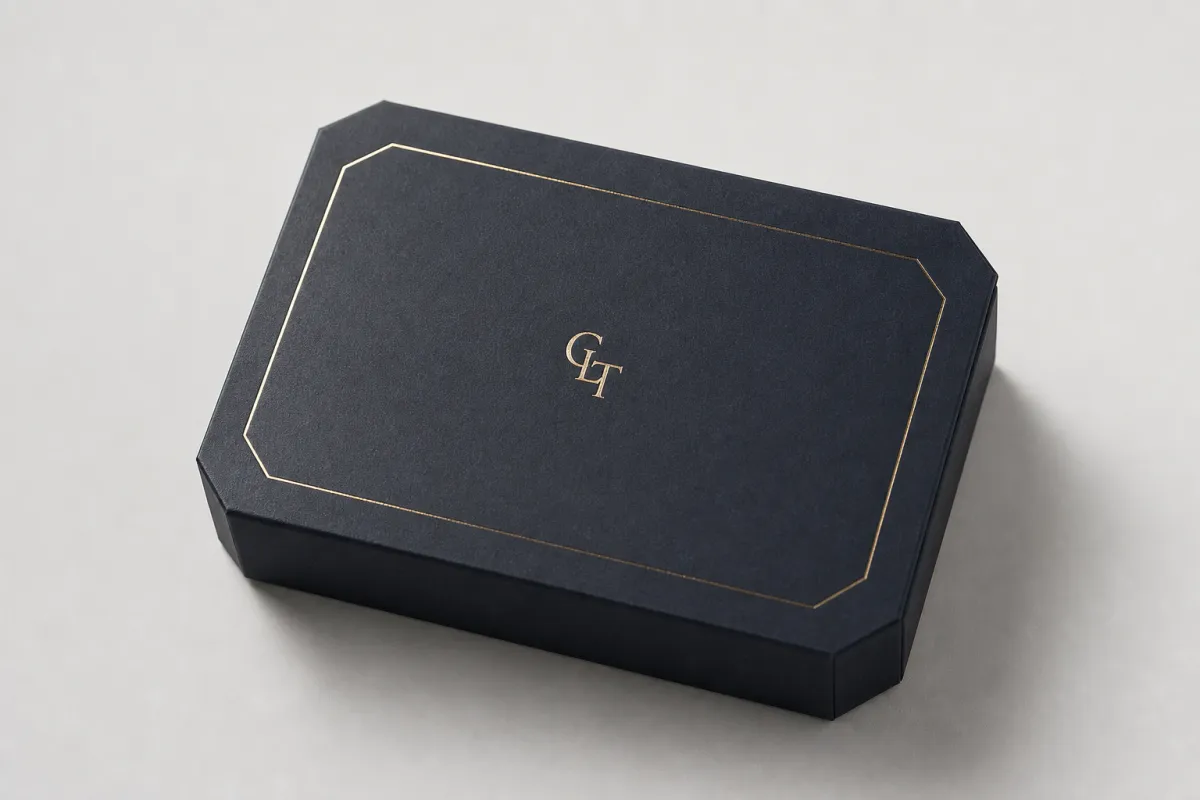
Accessory packaging has a particular challenge: the product is often small, yet customer expectations are not. A bracelet, belt buckle, compact mirror, or cable organizer may take up very little space, but the buyer still wants a neat reveal and a package that feels appropriate for the price. Custom accessory boxes with logo help close that gap by giving the item a proper stage.
For many brands, the box is the first physical brand touchpoint. Custom accessory boxes with logo make that moment count by setting expectations before the product is visible. A logo on the lid, flap, or sleeve can make an item look more polished in a display, more trustworthy in shipping photos, and more memorable after unboxing. That matters even more for giftable accessories, where perceived value carries real weight.
I often describe this kind of packaging as branded packaging with a job description. It should identify the item, protect it during transport, and give the buyer a clear sense that the brand cares about details. If the outer box looks too plain, the product can feel like a commodity. If the box feels tailored, the same product can read as more premium without changing the product itself.
Consistency is another reason custom accessory boxes with logo hold value. When a logo appears in the same place, with the same color treatment, across retail packaging and shipping packaging, customers begin to recognize the brand almost immediately. That recognition works on a crowded shelf, in a social feed, in marketplace photos, and on a repeat order that shows up weeks later. Good packaging design keeps working long after the box is opened.
The strongest accessory box usually looks simple on the outside and carefully planned underneath. It should not rattle, crush, or overfill. It should not force the product to fight the dimensions. It should never feel like the brand picked a box first and hoped the item would fit later. Custom accessory boxes with logo perform best when structure and identity are planned together.
I have seen beautiful products lose half their perceived value because the packaging looked like an afterthought. A clean logo, placed with restraint, usually does more than a box full of decoration. That balance is kinda the whole point.
A buyer may never say, “That carton improved the product,” but they will feel it. The right box makes a modest accessory look intentional, and that feeling is often what turns a one-time purchase into a repeat one.
How Custom Accessory Boxes With Logo Are Built
Box style sets the tone fast, and each structure serves a different price point and presentation goal. Tuck-end folding cartons are common for lighter accessories because they store efficiently, ship flat, and print cleanly at scale. Rigid setup boxes feel heavier and more premium in the hand. Sleeve boxes, drawer-style boxes, and magnetic closure boxes all earn their place too, especially when the opening sequence matters. Custom accessory boxes with logo should match the product first, not just the mood board.
The structure starts with the dieline, and the dieline starts with accurate measurements. A box that fits a watch strap or necklace insert by guesswork usually ends up too loose or too tight in production. Good packaging design accounts for product length, width, height, closure depth, material thickness, and any insert or tray that keeps the accessory in place. If the item shifts during shipping, the presentation suffers and the chance of scuffing goes up.
Logo treatment can be direct or quiet. Offset printing and digital printing are the most common methods for full-color graphics on custom accessory boxes with logo, while foil stamping works well for metallic accents. Embossing and debossing add tactile depth, and spot UV can highlight selected areas without turning the whole surface glossy. No single finish is always better. The right choice depends on the brand voice, the budget, and the way the box will be handled.
Strong results usually come from balancing the outer look with the internal fit and the opening sequence. If the lid feels premium but the insert is sloppy, the package falls apart visually the moment the customer opens it. If the print is sharp but the closure feels awkward, the experience still lands poorly. The best custom accessory boxes with logo are the ones where structure, graphics, and finish all support the same message.
For brands comparing formats, it helps to look at use cases instead of focusing only on appearance. If you want to compare standard structures before deciding, the Custom Packaging Products page is a useful starting point. It gives context for how different carton and rigid options behave in real retail packaging settings, which is more useful than judging by photos alone.
- Tuck-end cartons work well for lighter items and efficient production.
- Sleeves and trays add a layered feel without going fully rigid.
- Magnetic rigid boxes suit premium presentation and gift sets.
- Drawer boxes create a controlled reveal that works nicely for jewelry and small tech accessories.
If the accessory ships through parcels, I like to think about transport testing early. For higher-risk programs, checking distribution expectations against ISTA test guidance can prevent expensive surprises later. A box that looks beautiful but fails under vibration or compression is not doing its job, no matter how good the logo looks.
Materials, Finishes, and Branding Choices
Material choice changes everything. SBS paperboard is a common choice for custom accessory boxes with logo because it prints cleanly, handles sharp graphics well, and works for lightweight retail cartons. Kraft board brings a more natural look and suits brands that want a restrained, earthy feel. Corrugated board adds strength for shipping-heavy programs, while wrapped rigid board gives a dense, premium hand feel that quickly signals a higher tier of retail packaging.
If the brand is leaning toward sustainability claims, the paper source and finish stack matter as much as the printing method. FSC-certified paperboard is a sensible option for many programs, and it is worth checking certification details directly through the Forest Stewardship Council. A recycled board with responsible sourcing can support the story, but only if the printed finish and adhesive choices still fit the look you are trying to achieve.
Finishes shape perception quickly. Matte lamination usually feels quieter and more modern. Gloss can make color pop and gives a brighter retail look. Soft-touch coating adds a velvety surface that feels refined in the hand. Aqueous coating is a practical, lighter-weight option for many custom accessory boxes with logo because it protects the print without adding as much film as lamination. Foil accents, embossing, and debossing are best used with restraint so the box does not start looking crowded.
Color accuracy deserves more attention than many buyers give it. A logo that prints slightly too warm, too dull, or too dark can make even a well-built box feel off. Black is especially sensitive, because a rich black, a cool black, and a soft black all communicate differently. White on kraft is another place where expectation and reality can diverge. For custom accessory boxes with logo, the proof is not just paperwork; it is a visual contract.
Material also needs to fit the accessory itself. A delicate necklace may do fine in a slim paperboard carton with a foam or paper insert. A leather belt often benefits from a sturdier tray or sleeve so the edges stay neat. A tech accessory may need better crush resistance, especially if the item includes hard edges, batteries, cables, or small parts that can shift in transit. Good custom accessory boxes with logo are built around how the product behaves, not just how it looks in a photo.
Here is the part many buyers miss: finish complexity affects more than aesthetics. A box with multiple coatings, foil, and textured effects can increase setup time, production risk, and unit price. That does not mean premium finishes are a mistake. It means the finish stack should earn its place. If the logo is already strong, a clean substrate and a precise print job can do more for package branding than a crowded finish plan ever will.
One more thing from the production side: samples often reveal tiny issues that artwork files never show. A box might look perfect on screen and still feel fussy in the hand because the coating is too slick or the insert sits a hair too high. That tiny gap can bother customers more than you’d expect.
Process and Timeline for Custom Accessory Boxes With Logo
The production path is straightforward once the steps are clear. It usually begins with discovery and sizing, then moves to dieline development, artwork setup, proofing, sample approval, printing, finishing, cutting, gluing, packing, and final quality control. For custom accessory boxes with logo, that sequence matters because early mistakes tend to multiply later.
- Discovery and sizing - confirm product dimensions, weight, and insert needs.
- Dieline development - map the box structure and folding panels.
- Artwork setup - place logo, text, barcodes, and safety margins.
- Proof review - check folds, bleed, color, and panel placement.
- Sample approval - verify fit and finishing on an actual mockup.
- Production - print, finish, cut, score, glue, and inspect.
- Packing and dispatch - pack the cartons flat or assembled, depending on structure.
The proof stage deserves patience. I have seen more delays caused by rushed approvals than by the press itself. During proofing, the team should confirm logo placement, safe areas, bleed, fold lines, insert fit, barcode placement, and any special finish callouts. If the product is fragile or unusual, a structural sample is often worth the extra step because it shows how custom accessory boxes with logo behave in the hand rather than on screen.
Timeline depends on the box style and the finish stack. A straightforward folding carton with standard print can often move through production faster than a rigid box with foil, custom inserts, and a specialty coating. As a practical range, many simple projects land around 12-15 business days after proof approval, while more complex packaging can take longer, especially if a sample revision is needed. Custom accessory boxes with logo are not slow by nature, but they do reward clear decisions.
Planning beats rushing. A compressed schedule usually creates back-and-forth on file prep, sample revision, or shipping details. A clear schedule gives room for real review and usually produces better packaging design. If the box has to support launch timing, retail resets, or seasonal promotion, build the calendar backward from the in-hand date rather than from the first quote request. That habit saves a lot of scrambling.
I usually tell teams to leave room for one honest review cycle. Not because people are careless, but because packaging has a way of exposing little mistakes once the flat file becomes a physical object. If the schedule is too tight, those corrections get expensive fast.
Cost and Pricing for Custom Accessory Boxes With Logo
Price is usually where the conversation gets real. The main cost drivers for custom accessory boxes with logo are box size, substrate, print method, finish complexity, insert design, quantity, and whether the box is folding-carton based or built as a rigid structure. Shipping and assembly matter too, especially if the order needs to arrive pre-assembled or packed in a specific way.
Minimum order quantity, or MOQ, is not just a number to get past. It reflects setup costs, tooling, and press prep that get spread across the run. Once quantity rises, the unit cost usually falls because those fixed expenses are shared by more boxes. That is why a 500-piece order and a 5,000-piece order can look very different on paper even if the artwork is identical. Custom accessory boxes with logo are often most economical in the mid-volume range, where the setup work is diluted but the run is still manageable.
| Box Style | Best For | Typical Material | Ballpark Unit Cost |
|---|---|---|---|
| Folding tuck-end carton | Light accessories, retail shelves, efficient shipping | 12 pt to 24 pt SBS paperboard | $0.18-$0.45 at mid-volume |
| Sleeve with tray | Better presentation without a full rigid build | Paperboard or light rigid tray | $0.40-$0.95 at mid-volume |
| Rigid setup box | Premium accessories, gifting, stronger hand feel | Wrapped rigid board | $1.10-$2.75 at mid-volume |
| Magnetic rigid box with insert | High-end sets, jewelry, special launches | Thicker rigid board with custom insert | $1.80-$4.50 at mid-volume |
Those numbers only help if they are tied to real specifications. A simple one-color carton will cost less than a foil-stamped rigid box with a foam insert and spot UV. A kraft mailer may be less expensive than a wrapped rigid box, but it may not deliver the same shelf impact. That is why asking for a price without product dimensions, quantity, and finish details often creates a quote that is technically correct but not especially useful. Custom accessory boxes with logo need clear inputs before the pricing conversation can mean much.
For a quote that is actually comparable, share the exact product measurements, desired quantity, artwork status, preferred finish, insert needs, and whether the order needs flat-pack delivery or assembled boxes. If the package will be part of a broader launch, mention that too. The best quotes are not just cheap; they are easy to understand and easy to repeat. If you are still comparing package formats, our Custom Packaging Products page is a practical place to review related structures before you ask for numbers.
Freight can quietly change the math. Rigid boxes take more space than folding cartons. Heavier paperboard increases shipping weight. Custom inserts can add labor. None of that is a problem if the budget reflects it from the start. The biggest pricing mistakes usually happen when a buyer prices the print but forgets the structure, or prices the structure but forgets the shipping and assembly work that comes with it.
There is also the question of hidden waste. If a box is oversized by a few millimeters, the extra paperboard, filler, and return risk can eat into savings faster than most people expect. Tight sizing, done carefully, usually pays for itself.
Common Mistakes When Ordering Custom Accessory Boxes With Logo
The most common sizing mistake is measuring the product and stopping there. A box needs clearance, closure depth, and room for the insert or tray. If the accessory sits too snugly, the box can scuff the product or make closing difficult. If it sits too loosely, it shifts during transit and the unboxing experience drops fast. Custom accessory boxes with logo are only as good as the fit inside them.
Another issue shows up when the surface gets overworked. Too many finishes, tiny copy, heavy shadows, and crowded graphics can make the box feel busy. That usually costs more and communicates less. Strong packaging design is usually more disciplined than decorative. A clear logo, a balanced color field, and one or two controlled finish touches often do more for custom accessory boxes with logo than a long list of effects ever will.
Shipping and storage are easy to forget until the boxes are already in the building. Larger rigid boxes take more warehouse space. Assembled packaging can add freight weight. Sleeves and trays may require more hand packing than the team expected. I have seen buyers focus on the appearance of custom accessory boxes with logo and only later realize that the cartons need different storage racks, assembly labor, or pallet planning.
The cheapest quote is not always the lowest-risk choice. If the box size is wrong, the insert is loose, or the finish stack creates delays, the packaging ends up costing more in corrections than it saved in printing.
Approval mistakes are another big one. Skipping sample review, not checking print color in the right lighting, or missing a logo on one panel can create avoidable waste. I also recommend checking barcodes and legal text in the actual folded format, not just in the flat file. The difference between a good proof and a useful proof is whether it shows how the carton will behave once folded, glued, and handled. That is especially true for custom accessory boxes with logo that will move across retail packaging, shipping, and store display.
There is a final mistake that seems small but creates real problems: not deciding what matters most. If premium presentation is the priority, say so. If unit cost is the priority, say that too. If the item must survive parcel shipping, the structure has to reflect it. Clear priorities help the packaging team make the right tradeoffs instead of guessing which one you value most.
And if a vendor cannot explain the tradeoffs in plain language, that is a signal in itself. Packaging should feel technical, yes, but never foggy. If the explanation is fuzzy, the box probably will be too.
Expert Tips and Next Steps Before You Order
Before you request a quote, put together a short packaging brief. Include product dimensions, weight, quantity, target audience, brand colors, artwork files, finish preferences, and the type of opening experience you want. That simple step makes custom accessory boxes with logo much easier to spec because it gives the supplier a real picture of how the box will be used.
Decide what matters most before you choose the board or finish. If premium presentation is the priority, a rigid or magnetic structure may be the right answer. If cost and speed matter most, a folding carton can be better. If the packaging will be stored, shipped, and opened many times, durability starts to matter more than a flashier finish. Good custom accessory boxes with logo usually come from those tradeoffs being made on purpose.
I also recommend asking for a sample or structure mockup if the product is unusual. A long, narrow accessory, a fragile item, or a kit with several small pieces can behave differently than expected once the carton is built. A physical sample can reveal whether the insert is too tight, whether the lid springs back, or whether the branding feels balanced on the surface. That kind of check is worth the time because it protects both product packaging and budget.
- Confirm dimensions before artwork is finalized.
- Choose the box style based on use, not habit.
- Request a proof that shows every printed panel.
- Review finish samples under consistent lighting.
- Check shipping needs for weight, stackability, and storage.
- Compare options against your launch date and budget.
If you want a cleaner path from concept to quote, compare a few structures first, then refine the finish and insert details after you know the box format is right. That process keeps the order focused and reduces rework. If you need a starting point for related packaging formats, our Custom Packaging Products page can help you narrow the direction before the artwork is locked.
My practical advice is simple: do not let the logo do all the work. The best custom accessory boxes with logo pair the right structure, the right surface, and the right fit so the product feels complete the moment it is opened. If you align the packaging with the item, the launch plan, and the brand voice, the box stops being a cost center and starts acting like part of the sale.
For the cleanest result, start with the product itself, then build the box around how it travels, opens, and sits on a shelf. If that order feels boring, it is usually the right order. Fancy can come later; fit has to come first.
How do custom accessory boxes with logo improve product presentation?
They make a small item feel deliberate and more premium the moment the customer sees the package. A strong logo placement also helps the box look polished in-store, in shipping photos, and in social media content, which supports perceived value for giftable accessories.
What materials are best for custom accessory boxes with logo?
SBS paperboard works well for crisp print and lightweight retail cartons. Rigid board is better for a premium feel and stronger structure. Kraft or corrugated can be a smart choice when durability, shipping strength, or a natural look matters more than a luxury finish.
How much do custom accessory boxes with logo usually cost?
Pricing depends on size, material, print method, finish, quantity, and whether inserts are included. Unit cost usually drops as the order gets larger because setup and production costs are spread across more boxes, and a simple printed carton is generally less expensive than a rigid box with foil or custom inserts.
What is the typical turnaround for custom accessory boxes with logo?
Turnaround depends on how ready the artwork is, whether a sample is needed, and how complex the finish stack becomes. Straightforward carton projects usually move faster than rigid box orders, and quick proof approval helps keep the schedule moving without avoidable delays.
What should I prepare before requesting custom accessory boxes with logo?
Have exact product dimensions, quantity, and weight ready so the structure can be sized properly. Share logo files, brand colors, finish preferences, and any insert or shipping requirements, and mention the retail or e-commerce setting so the packaging matches how the box will actually be used.
If you want to compare structures before requesting a quote, our Custom Packaging Products page is a useful place to start, and it helps make custom accessory boxes with logo fit the product instead of forcing the product to adapt to a box that is only close enough.

