Buyer Fit Snapshot
| Best fit | Custom Address Labels With Logo projects where brand print, material claims, artwork control, MOQ, and repeat-order consistency need to be specified before quoting. |
|---|---|
| Quote inputs | Share finished size, material target, print colors, finish, packing count, annual reorder estimate, ship-to region, and any compliance wording. |
| Proofing check | Approve dieline scale, logo placement, barcode or warning zones, color tolerance, closure strength, and carton packing before bulk production. |
| Main risk | Vague material claims, crowded artwork, missing packing details, or unclear freight terms can make a low unit price expensive after revisions. |
Fast answer: Custom Address Labels With Logo: Design, Cost & Use should be specified like a repeatable production item. The safest quote records material, print method, finish, artwork proof, packing count, and reorder notes in one written spec.
Production checks before approval
Compare the actual filled-product size with the drawing, then confirm tolerance on folds, seals, hang holes, label areas, and retail display edges. Reserve space for logos, QR codes, warning copy, and material claims before decorative graphics fill the panel.
Quote comparison points
Review material grade, print process, finish, sampling route, tooling charges, carton quantity, and freight assumptions side by side. A quote is only useful when the supplier can repeat the same color, closure quality, and packing count on the next order.
Custom Address Labels with Logo: Design, Cost & Use
Custom address labels with logo do more work than their size suggests. A parcel moves through a warehouse, into a carrier network, across a loading dock, and finally into a customer’s hands. At each handoff, the label is often the first item anyone sees. In a space that small, utility and branding have to share room without fighting for attention. Most buyers look first at the address. They should. Yet the logo matters too, because it turns a generic mailing step into a repeated brand moment.
A strong label stays readable under poor lighting, keeps its adhesive through transit, and still looks intentional when the box arrives. That matters for subscription boxes, wholesale cartons, mailers, return mail, samples, office correspondence, and the unglamorous work of internal routing. A label that performs well can make an entire shipment feel more orderly. A label that fails can make premium packaging look rushed.
What follows is a practical look at how these labels are built, which materials fit different environments, how pricing usually breaks down, and where first-time buyers tend to lose time or money. The details matter here, because a label that looks fine on screen can behave very differently once it meets corrugate, moisture, abrasion, or a long delivery route.
Why custom address labels with logo matter more than most brands expect
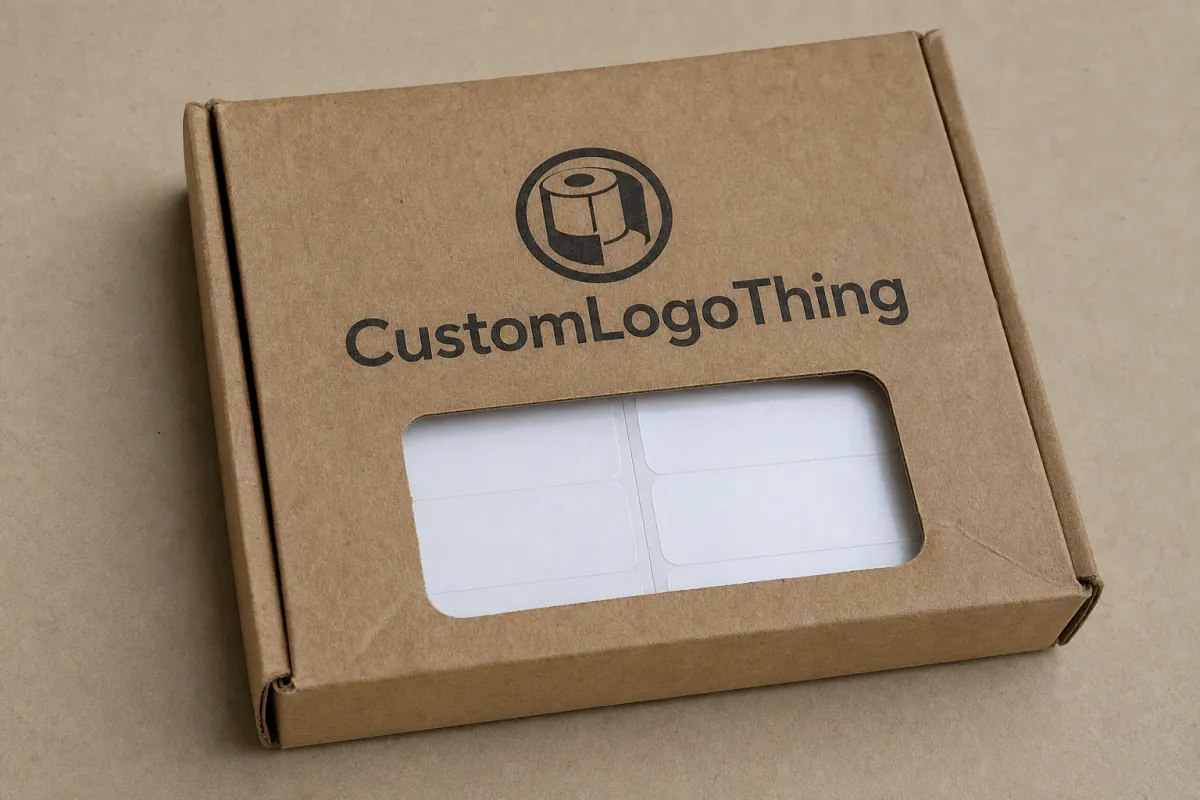
The address label is often the first brand touchpoint in the shipping chain. Sometimes it is also the only one a receiving dock, fulfillment center, or apartment mailroom worker notices before the package moves on. The carton might be plain. The filler might be hidden. The tape might be generic. The label is still there, front and center, doing quiet brand work whether anyone planned for it or not.
That is why custom address labels with logo carry more influence than their footprint suggests. They make a shipment look deliberate. A plain mailing label says the order is functional. A branded label says the order was prepared with a system behind it. The difference may sound cosmetic, but in practice it changes how organized a brand appears and how confidently a package fits into a larger operation.
For growing brands, the effect can be easy to underestimate. A return address with a logo is easier to spot in a stack of mail. A branded envelope seal can make customer correspondence feel finished rather than improvised. A small shipping label on a padded mailer can echo the same visual code used on Custom Packaging Products, which helps the outer shipper, insert card, and product wrap read as parts of one family instead of disconnected pieces.
The operational side matters just as much as the visual one. A label system should not slow pack-out. Operators need something they can apply quickly, repeatedly, and without special handling. Pressure-sensitive labels exist for exactly that reason. The branding sits in the artwork, not in an extra step that clogs the line.
The best branded label is the one a warehouse worker can apply in seconds and a customer can read in a glance. If either side has to think twice, the format needs another round of editing.
Seen from a procurement angle, that is the real value. Buyers are not paying for decoration. They are buying a compact packaging component that supports recognition, reduces visual noise, and keeps the shipping process moving. Small decisions in this category can have outsized effects because labels sit at the intersection of branding, logistics, and customer experience.
What custom address labels with logo are and how they work
Custom address labels with logo are pressure-sensitive labels that combine an address block with a logo, wordmark, or small graphic element. They can be produced on rolls, sheets, or fanfold stacks. The format is chosen around the application method, the volume, and the way the team stores or dispenses labels.
That choice is not trivial. Rolls fit higher-volume application well, especially when labels are fed by hand or with a tabletop dispenser. Sheets are common in offices, mailrooms, and lower-volume runs. Fanfold formats are useful when people want tidy stacks that store easily and move cleanly from one station to another.
They show up in more places than many buyers expect:
- Outbound cartons that need a return address and a visible brand mark
- Padded mailers that deserve more than a plain shipping sticker
- Envelopes, invoices, and direct mail pieces with a branded return address
- Internal routing labels for samples, kits, and warehouse transfers
- Retail packaging and fulfillment inserts that need a consistent identity
The production path is straightforward, but the details decide whether the finished piece works. Artwork is prepared, proofed, printed, finished, slit or sheeted, and packed for shipment. The address remains the main event. Postal sorting, warehouse scanning, and human handling all depend on fast readability. The logo supports that job; it should never overpower it.
That design rule is easy to miss, especially when a brand team is trying to fit too much into a small footprint. A branded address label should act like a shipping tool first and a design object second. The best versions improve the look of the package while preserving the same quick-read function a plain label would provide.
Use cases also deserve separation. Direct mail usually benefits from tighter hierarchy and a cleaner visual field. Shipping labels prioritize durability and legibility. Retail packaging may call for a more polished finish that matches the rest of the product packaging. Office correspondence can stay stripped back, with a logo and return address that fit neatly into the stationery system.
There is one more practical distinction. Some labels are meant to be seen by customers; others are meant to survive handling by carriers, dock staff, and internal teams. That difference should shape the layout. A label designed for visible brand polish can tolerate a touch more personality. A label used for logistics should be built around clarity first, then branding second.
Materials, finishes, and design choices that affect performance
Material selection is where label projects usually succeed or stumble. A design can look excellent on a screen and still fail on a carton if the stock, adhesive, or finish does not match the surface. What works in a mockup may fail in a truck bay, a cold room, or a warehouse aisle. The label has to survive the environment it enters, not the one it was approved in.
Paper labels are the default for standard indoor mailing and cost-conscious runs. They print crisply, keep pricing lower, and work well when moisture, abrasion, and temperature swings are limited. For office mailings and short-life applications, paper often makes the most sense. A small batch of branded return labels for customer invoices is a good example: there is usually no reason to pay for more durability than the use case requires.
BOPP and other film stocks are stronger choices when the label needs more resistance to scuffing, moisture, or heavy handling. If a package might sit in a damp truck, move through refrigerated storage, or rub against rough corrugate, film tends to hold up better than paper. Color also tends to stay cleaner in harsher conditions, although print method and adhesive still shape the result.
Thermal-compatible stocks work well when variable data needs to be printed on demand, especially in logistics and warehouse settings. That shifts the design conversation. Branding has to fit around thermal output limits, which usually means tighter control over color, spacing, and the printable area. If a team needs serial numbers, lot codes, or ship-to data that changes on every label, this format can save time as long as the artwork is planned with the printer in mind.
Adhesive choice deserves the same attention as face stock. A label that looks right can still fail if the adhesive does not suit the surface. Corrugated boxes, coated cartons, recycled kraft, plastic mailers, and cold-chain packaging each behave differently. Dust, texture, humidity, and low temperatures can all weaken tack or trigger edge lift. A label that peels in transit costs more than a better one would have cost in the first place.
| Material | Best Use | Typical Cost Impact | Performance Notes |
|---|---|---|---|
| Paper | Standard mail, office correspondence, short-run branding | Lowest | Strong print clarity; less resistant to moisture and abrasion |
| BOPP / film | Shipping labels, product packaging, higher handling exposure | Moderate to higher | Better moisture resistance and scuff resistance; more durable finish |
| Thermal-compatible stock | Warehouse, logistics, variable data, recurring operations | Moderate | Works well with thermal printers; design must account for printer limits |
| Specialty adhesive stock | Cold-chain, recycled kraft, textured, or difficult surfaces | Higher | Chosen for surface compatibility and environmental conditions |
Finish changes both appearance and readability. Matte stock cuts glare, which helps people and scanners read the address block under warehouse lighting. Gloss can deepen colors and make a logo feel richer, yet it can also reflect light and make small type harder to catch from an angle. Uncoated stocks can feel more tactile and less commercial, though they usually give up some color intensity.
Logo sizing is another place where buyers overestimate the space they have. On a small address label, the logo needs to be simple enough to read without taking over the address. Fine lines, intricate seals, and tiny taglines often vanish when the layout shrinks to production size. A clear wordmark or pared-down lockup usually works better than a crowded badge that asks for more room than the label can spare.
Typography carries the same risk. The address block should use a clean, legible typeface with enough spacing to survive quick glances. Decorative fonts belong elsewhere. Street address, zip code, and return line need to read in a fraction of a second. The logo can bring personality. The address should remain the easiest element on the label.
Color choice should support contrast rather than fight it. Dark text on a light field is still the safest approach. Brand color can live in the logo, border, or accent line without flooding the whole label. Once the background gets saturated, the layout has to work harder to keep the address visible from arm’s length.
Brands that care about the broader visual system should treat the label as part of the same family as cartons, inserts, tape, and stickers. The label does not need to match everything exactly, but it should feel like it belongs in the same room. That is what gives branding packaging real coherence instead of a pile of individually decent parts.
For broader packaging design, a useful rule holds up again and again: keep the logo bold, keep the address plain. That split gives the label a sense of order and makes it easier to scale across shipping cartons, envelope seals, and internal logistics stickers.
Teams that care about sourcing or sustainability claims should ask whether paper stocks include certified fiber options, or whether the project can align with standards such as FSC. Labels are small, but they sit inside a much larger packaging stream. A better material choice in one part of that stream can reduce waste across retail packaging and mailing operations. If a brand is already tracking packaging reduction goals, the label spec should be part of that conversation rather than an afterthought.
Process, turnaround, and proofing timeline for custom address labels with logo
The production path for custom address labels with logo is usually simple. The timeline is not always simple, because the clock depends on how complete the order is when it arrives. Clean projects move faster. The artwork is ready. The dimensions are known. The application surface has been considered. The proof only has to confirm details instead of solving them.
A typical workflow looks like this:
- Request specs and quantity
- Share artwork, logo files, and address layout details
- Review the digital proof
- Approve layout, size, and copy
- Print, finish, and convert the order
- Pack and ship the finished labels
File quality causes the most delays. Vector artwork is the cleanest path because it scales without edge damage and keeps the logo crisp. Low-resolution raster files can work in some situations, but they often need cleanup before proofing is worth much. Small text, thin strokes, and fine icons raise the stakes. So does messy address data. Incomplete or inconsistent mailing information turns proofing into repair work.
Proof review should cover more than spelling. It should confirm the actual size, logo placement, margins, bleed, type scale, barcode or routing marks if needed, and the way the address sits inside the safe area. The relationship between the logo and the address matters too. If the logo is too large, the label feels cramped. If it is too small, the branding disappears and the whole exercise loses purpose.
Small labels are unforgiving. A few millimeters can change the whole reading experience. Proofs exist to catch that before a production run locks in a mistake.
A label proof is the last inexpensive chance to fix spacing, sizing, and readability before inventory is printed and packed.
Turnaround usually breaks into two pieces: proof approval time and manufacturing time. A clean reorder with no layout changes can move faster because the production team is not rebuilding the file. First-time custom work takes longer, especially when the buyer needs help matching brand standards, selecting stock, or testing a surface that behaves badly under pressure.
Many standard runs land in the 5 to 10 business day range after proof approval, depending on quantity, stock, and finishing. Specialty adhesives, complex formatting, and larger volumes can move that window into the 12 to 15 business day range or longer. Freight time still has to be added, and that is easy to underestimate when the labels are tied to a launch date or seasonal shipping window. A buyer planning a product drop or holiday rush should treat shipping transit as part of the schedule, not a separate problem.
When a label sits alongside Custom Printed Boxes or a coordinated kit, the artwork should be planned together. That keeps logo size, color treatment, and tone consistent across the package experience. It also prevents the awkward result of a polished outer box paired with a label that looks like it came from another program entirely.
For brands building a larger system, a label project often works well as the first test before expanding into Custom Labels & Tags or a broader packaging lineup. Address labels are small, visible, and fast to evaluate. If they work, they become a template for the next set of branded applications.
Cost, pricing, MOQ, and quote factors for custom address labels with logo
Pricing for custom address labels with logo usually comes down to a short list of inputs: quantity, size, stock, finish, color count, and whether the order is a simple repeat or a new setup. Specialized materials and adhesives push unit cost upward. Higher volume pushes unit cost down. That pattern is old and predictable, but buyers still get caught off guard when they order a small run and the per-label price looks steep.
The surprise comes from fixed work. Setup, proofing, and conversion do not shrink much when the run is short. A project that needs only a few hundred labels for a launch, a seasonal promotion, or a test run carries a heavier share of those fixed costs. Once the order moves into the low thousands, the math usually starts behaving more politely.
As a planning range, a simple paper label run might sit around $0.03 to $0.08 per label at moderate quantities. A more durable BOPP or specialty adhesive version may land closer to $0.05 to $0.14 per label, depending on size and print coverage. Those figures are directional, not promises. Coverage, finishing, and quantity can push the number in either direction. A narrow return label with minimal ink coverage will sit at the lower end more often than a larger label with a full-color logo and a heavier finish.
Setup and proofing may appear as separate line items or get folded into print cost. A first-time design may carry a modest art charge, especially if the buyer wants help cleaning up logo files, building a reusable address layout, or adapting the label for machine application. Repeat orders usually move faster because the layout is already on file.
Minimum order quantity shapes the starting point for pricing. Some buyers want a branded label but only need a test batch. Others want enough inventory to last months without placing another order every few weeks. Suppliers often set MOQs by material, print method, or label size. That is tied less to sales preference and more to press efficiency and waste control.
Quotes get sharper when the input is sharp. Include:
- Exact label size, including shape if it is not rectangular
- Quantity needed now and expected reorder volume
- Where the label will be applied
- Surface type, such as corrugated, coated paper, plastic mailer, or glassine envelope
- Artwork file format and whether the logo is vector or raster
- Any temperature, moisture, or abrasion concerns
- Whether the label will be hand-applied or machine-applied
Hidden costs usually appear at the edges. Rush production raises price. Expedited freight can erase savings from a lower print quote. Design revisions slow approval. Excess inventory sits idle if the brand changes its logo or return address format after the order is placed. Each of those risks is manageable, but none of them should be discovered after the quote is approved.
There is also a strategic cost angle. If the label will be used across several packaging touchpoints, a slightly stronger specification can save money later by reducing relabeling, waste, and transit failure. A label that stays put on the first application is usually cheaper in the long run than a bargain label that peels off and forces rework.
For brands building a broader packaging program, it can help to compare label spend against other custom printed boxes or mailer upgrades. Sometimes the best return is not the cheapest item on the list, but the one that changes how polished the final shipment looks for the least money. A small upgrade in label stock or adhesive may do more for perceived quality than a larger spend elsewhere.
Common mistakes when ordering custom address labels with logo
The most common mistake is trying to force too much into too little space. An address label is not a brochure panel. Oversized logos, long taglines, crowded return lines, and tiny address text turn a simple tool into a readability problem. The receiver should not need to search for the important information.
File quality trips up a lot of projects too. A logo that looks fine online may fall apart in print if it is low resolution, badly vectorized, or built with line work too thin for the final size. The first proof usually exposes the issue. Waiting until after production does not make the correction any cheaper.
Color expectations can cause friction. Screen color and printed color are not the same thing, especially when stock and finish change the surface. Gloss can deepen a color. Matte can mute it. Uncoated stock can soften contrast. Buyers who expect exact monitor matching without a proofing conversation usually end up disappointed. Print is a physical process, not a screenshot.
Surface compatibility is another weak spot. Labels can curl, lift, or fail when applied to dusty cartons, recycled textured kraft, chilled packaging, or glossy surfaces with poor bonding conditions. A single universal adhesive rarely solves every surface problem. The right adhesive depends on the package, the environment, and the length of time the label has to stay in place.
Skipping proof review is one of the costliest shortcuts. A slightly off-center logo, uneven spacing, or an address line that sits too close to the edge can turn into a warehouse headache across a large run. Proofs are where the expensive mistakes are still cheap.
Ordering the wrong quantity creates its own problems. Too few labels force an urgent reorder before the first batch is even used up. Too many lock money into inventory that can become obsolete if the brand changes its logo, returns address, or packaging style. The best quantity is the one that gives a sane unit price without betting too much on a design that may change soon.
Some buyers also forget that the label belongs to a larger package system. If the label clashes with the carton, tape, or insert card, the shipment can feel fragmented even when each part is technically well made. A label should reinforce the package, not sit off to the side like an afterthought.
Another mistake is approving a design based on how it looks at full size on a monitor rather than how it reads at actual production size. A logo that feels balanced in a PDF preview may become crowded once the address block, margins, and any routing information are placed on the final stock. A proof at actual size is the better reference every time.
Expert tips and next steps for a smoother first order
If you want custom address labels with logo to work well on the first run, start by simplifying the design. Keep the logo strong. Use dark text on a light background. Leave enough quiet space around the address block. White space is not wasted here. It is what keeps the label readable when the package moves quickly through a mail stream or warehouse line.
Unusual surfaces deserve a sample or test print. Recycled kraft, glossy cartons, refrigerated shipments, and slick mailers can behave very differently in real use than they do in a sample room. Heat, cold, dust, and pressure all affect adhesion. A quick test is cheaper than a stack of rejected labels. If the application surface is changing across orders, the safest assumption is that the adhesive needs rechecking too.
A repeatable spec sheet helps as well. List the label size, material, adhesive type, finish, artwork format, quantity, and reorder cadence. Once that document exists, future orders move faster, proofing becomes easier, and fewer details get lost between teams. It also gives procurement, operations, and design one shared reference instead of three competing versions of the same job.
Here is a practical sequence that keeps most projects moving:
- Confirm the application surface and shipping environment
- Collect the best logo file available, preferably vector
- Choose a size that fits the address comfortably
- Select the stock and adhesive based on real use conditions
- Request a quote with quantity and timing goals
- Review the proof line by line
- Approve production only after the label reads cleanly at size
If the project belongs to a broader package refresh, compare the label with the other branded touchpoints. A coordinated label can sit naturally beside carton graphics, inserts, and an outer shipper using the same tone. That is how package branding starts to feel deliberate instead of assembled piece by piece. When the visual logic holds together, the shipment looks more confident without needing more ink or more complexity.
For brands building a wider toolkit, a label order can sit inside a larger sourcing plan that includes cartons, inserts, mailers, and specialty packaging items through Custom Packaging Products. The benefit is not only consistency. It also makes inventory planning easier when related items live within the same packaging family.
A final checklist can save a lot of back-and-forth:
- Is the address the most legible element on the label?
- Does the logo still read cleanly at production size?
- Will the adhesive hold on the real package surface?
- Has the proof been checked for size, spacing, and copy accuracy?
- Does the stock match the handling environment?
Answer those questions well, and the order usually behaves the way it should. That is the advantage of a label system designed around the package, the people handling it, and the customer seeing it. A small amount of planning upfront can remove a surprising amount of friction later.
FAQ
What is the best material for custom address labels with logo?
Paper works well for standard indoor mailing and budget-friendly runs. BOPP or other film stocks are better when moisture, scuffing, or temperature swings are a concern. The right answer depends on the surface, the shipping environment, and how long the label needs to stay intact. A carton that stays in a climate-controlled office needs less protection than a parcel that will move through a cold dock or a damp delivery route.
How long does production take for custom address labels with logo?
Timeline usually depends on artwork approval, quantity, and whether the order needs a special stock or finish. A clean file and fast proof approval are the quickest ways to reduce turnaround. Many standard runs ship a few business days after approval, while more complex orders can take longer. Freight time should be built into the schedule from the start, especially for launch dates or seasonal shipping windows.
Can custom address labels with logo be used on shipping boxes and mailers?
Yes, as long as the adhesive is matched to the package surface and the shipping conditions. They are commonly used on corrugated cartons, mailers, envelopes, and return-address applications. Surface texture, dust, and temperature can all affect performance, so testing helps. A label that holds on smooth office mail may need a different adhesive to stay secure on recycled kraft or plastic mailers.
How do I keep the logo readable on a small address label?
Use a simplified logo lockup, strong contrast, and enough white space around the address. Avoid thin type and tiny details that can disappear at production size. If the logo has a tagline or fine linework, it may need to be removed or enlarged for the label format. The safest labels make the address the easiest thing to read from arm’s length.
What should I include in a quote request for custom address labels with logo?
Provide size, quantity, stock preference, finish, artwork file type, and where the label will be applied. Include any needs for moisture resistance, cold storage, rush timing, or special adhesive performance. The more exact the application details, the more accurate the quote will be. If the label will be hand-applied in an office, that is useful to say. If it will run through a warehouse workflow, that changes the spec.
A practical closing thought
Custom address labels with logo are small, but they sit at the junction of almost everything that matters in shipping: the first visual impression, the handling environment, the warehouse workflow, and the way a brand shows up in somebody else’s hands. Treat them as a packaging component instead of a sticker and they can support recognition, trust, and day-to-day efficiency at the same time. Clean artwork, the right stock, and careful proofing usually make the difference between a label that merely exists and one that quietly improves the whole operation. With the right setup, custom address labels with logo become one of the simplest ways to make routine shipments feel more deliberate without slowing the operation down. The next time a label is specified, the most useful question is not whether it looks branded, but whether it will still read clearly, stay put, and fit the package system after the shipment has traveled farther than the proof ever will.

