Buyer Fit Snapshot
| Best fit | Custom Apparel Boxes Wholesale for Stronger Branding projects where brand print, material claims, artwork control, MOQ, and repeat-order consistency need to be specified before quoting. |
|---|---|
| Quote inputs | Share finished size, material target, print colors, finish, packing count, annual reorder estimate, ship-to region, and any compliance wording. |
| Proofing check | Approve dieline scale, logo placement, barcode or warning zones, color tolerance, closure strength, and carton packing before bulk production. |
| Main risk | Vague material claims, crowded artwork, missing packing details, or unclear freight terms can make a low unit price expensive after revisions. |
Fast answer: Custom Apparel Boxes Wholesale for Stronger Branding should be specified like a repeatable production item. The safest quote records material, print method, finish, artwork proof, packing count, and reorder notes in one written spec.
Production checks before approval
Compare the actual filled-product size with the drawing, then confirm tolerance on folds, seals, hang holes, label areas, and retail display edges. Reserve space for logos, QR codes, warning copy, and material claims before decorative graphics fill the panel.
Quote comparison points
Review material grade, print process, finish, sampling route, tooling charges, carton quantity, and freight assumptions side by side. A quote is only useful when the supplier can repeat the same color, closure quality, and packing count on the next order.
Custom Apparel Boxes wholesale can change how a garment is perceived before the customer ever unfolds the tissue or lifts the lid. A folded shirt in a plain mailer gets the job done, sure, but the same shirt in a well-built presentation box feels more deliberate, more giftable, and more valuable at first glance. That shift matters in retail apparel, e-commerce unboxing, subscription sets, and seasonal launches because branding starts the moment the box is picked up, not after the item is removed.
For Custom Logo Things, the real value in custom apparel boxes wholesale is not only the lower unit cost. It is consistency across the run, the right material for the garment, and a finished result that supports branded packaging without creating headaches in production or fulfillment. If the box is too loose, too flimsy, or too glossy for the product, the presentation falls apart pretty fast. When the structure is right, the same box can protect the fold, tighten shelf appeal, and make product packaging feel intentional instead of improvised.
In my experience, apparel buyers usually start by asking about artwork, then circle back to structure after they have already committed to a look they can’t quite support. That is usually backwards. The best wholesale packaging decisions begin with the garment, the folded size, and the handling method, then move into print and finish once the box has a job to do.
Why Custom Apparel Boxes Wholesale Changes Perceived Value Fast
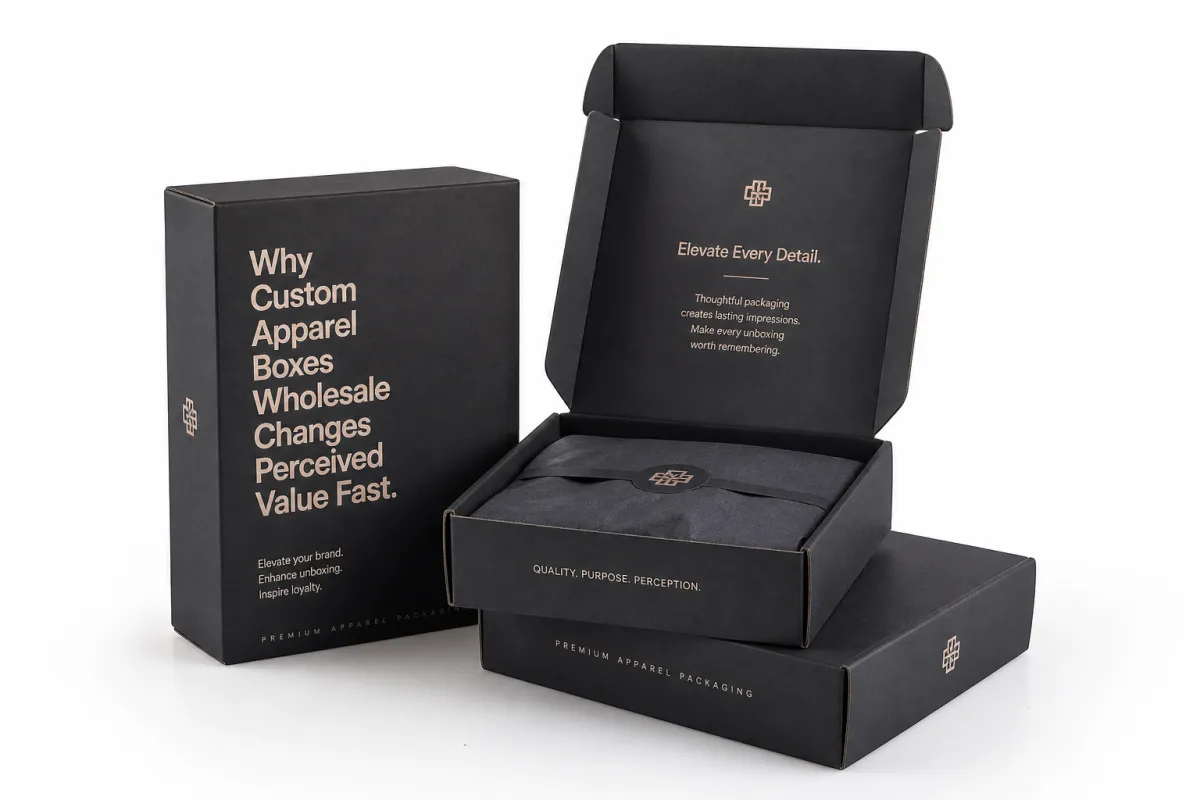
A buyer can tell within seconds whether a garment feels like a commodity or a brand experience. Custom apparel boxes wholesale changes that perception because it shapes the first physical touchpoint: the outer form, the fold, the print, and the way the lid opens or closes. A plain poly mailer says “shipped.” A rigid box with clean edges and brand color on the outside says “selected.” That difference is not cosmetic. It affects how the customer judges the item inside before they ever see the stitching or fabric weight.
In practice, custom apparel boxes wholesale makes the most sense for brands that care about repeatable presentation. Retail apparel lines use it to keep shelves cleaner and more consistent. E-commerce brands rely on it to reduce wrinkling and keep unboxing neat. Subscription programs use it because each monthly or seasonal set has to feel intentional even when the contents change. Seasonal launches benefit too, since limited runs often carry a higher expectation of presentation and a tighter deadline for shelf readiness.
The business case is simple. Better presentation can support a higher average order value because the packaging helps justify premium pricing. It can also improve repeat purchase behavior, especially when the unboxing feels organized and on-brand rather than generic. A stronger box can reduce complaints about damaged corners, crushed collars, or garments arriving out of shape. That is a practical win, not a marketing slogan.
Custom apparel boxes wholesale also gives the brand more control over the relationship between product and packaging. A shirt wrapped in tissue inside a tight carton looks careful. A hoodie in a box sized with room for a crisp fold looks premium. A bundled scarf and beanie set inside a Tray and Sleeve reads as a considered gift set. The goal is not to spend money everywhere. The goal is to spend it where the customer can see and feel the difference.
From a packaging buyer's point of view, the best box is not the fanciest one. It is the one that fits the garment, protects the fold, and can be repeated without drift from run to run.
That is why custom printed boxes for apparel should be planned with the same discipline as any other serious product packaging decision. The board caliper, print coverage, closure style, and finish all influence how the box performs in retail packaging and in transit. When those choices are aligned, custom apparel boxes wholesale becomes a branding asset instead of a line item.
One detail many buyers overlook is repeatability. The first 5,000 boxes can look excellent, then the next 5,000 drift in color, score depth, or closure fit and the brand experience starts to wobble. A good wholesale program keeps the look steady across the run, which is exactly where custom apparel boxes wholesale earns its keep. Nobody wants to discover that the first cartons were perfect and the second batch is kinda off by just enough to bother the whole team.
Custom Apparel Boxes Wholesale Product Details Buyers Should Compare
There are several box styles used in apparel, and the right choice depends on how the garment will be handled, shipped, displayed, and stored. Custom apparel boxes wholesale often starts with a style decision before anyone talks about foil or embossing. If the structure is wrong, the decoration will not save it. A simple folding carton can be perfect for a lightweight shirt. A rigid gift box is better for premium apparel sets. A mailer-style box may be the right answer if the item has to move through fulfillment and still look polished at arrival.
Here are the most common formats buyers compare:
- Rigid gift boxes for premium apparel, gifting, and luxury retail packaging.
- Folding cartons for lighter garments, folded tees, and cost-conscious runs.
- Mailer-style boxes for e-commerce programs that need structure and presentation in one piece.
- Sleeves and trays for seasonal sets, bundles, and layered package branding.
- Custom set packaging for coordinated apparel kits, such as shirt-plus-accessory assortments.
Material choice matters just as much. Paperboard is common for lighter presentation packaging and can be printed cleanly with CMYK or spot color. Rigid chipboard creates a more substantial feel and supports a premium unboxing moment. Corrugated board is the better pick when shipping protection is part of the brief, especially if the apparel is moving through carrier networks and needs to hold shape under pressure. For a buyer comparing custom apparel boxes wholesale, the material is not a side note; it is the structural backbone of the order.
Printing and finishing choices shape the final tone. CMYK works well for photography, gradients, and full-color artwork. Spot color is useful when the brand has strict color matching requirements. Foil stamping can add a metallic accent without covering the entire design. Embossing and debossing create tactile detail that fits premium branded packaging. Soft-touch coating gives a velvety feel, matte lamination softens glare, and spot UV can highlight a logo or graphic in a controlled way. None of those options is automatically better. They are tools, and the best one depends on the garment line and the price point.
Functional details deserve equal attention. Tuck closures work well for folding cartons. Magnetic lids are popular in gift-style boxes because they feel refined without requiring extra ribbons or inserts. Ribbon pulls can improve the opening experience. Dust flaps help protect the contents. Inner wraps, tissue-friendly sizing, and inserts keep folded items centered, especially when the apparel must stay crisp through storage and transport. For custom apparel boxes wholesale, these details often decide whether the box feels thoughtful or just decorated.
Fit is another place where buyers save or lose money. Folded tees, hoodies, scarves, hats, luxury lounge sets, and mixed bundles all place different demands on the structure. A box that looks generous for a single shirt may be too shallow for a hoodie. A tray that is perfect for a scarf may allow a folded tee to slide around. Solid packaging design starts with the item itself, not the artwork.
For brands comparing retail packaging options, the question is simple: what does the box need to do besides look good? If it has to protect the garment, hold a neat fold, and support package branding at scale, then custom apparel boxes wholesale should be built around those requirements from the start.
Specifications for Apparel Boxes: Size, Material, and Finish
Good sizing saves money and improves presentation. If a box is too large, the garment can shift, the fold can open up, and the inside space starts to feel wasted. If the box is too tight, the product can wrinkle, bow the lid, or wear on the corners during packing. That is why custom apparel boxes wholesale should begin with internal dimensions, not outside measurements or a rough guess. The usable space inside the box is what keeps the garment secure and cleanly arranged.
The most useful specs to request are straightforward: internal dimensions, board caliper, print coverage, coating type, finish sheen, closure style, and any insert or divider requirements. For many apparel projects, 14pt to 18pt paperboard works well for folding cartons, while rigid boxes commonly use chipboard in the 1200gsm to 2000gsm range depending on the size and desired stiffness. Corrugated options are often specified by E-flute or a comparable lightweight board when a ship-ready format is needed. These numbers matter because they affect the feel in hand, the stackability in storage, and the way the box survives handling.
Tolerance ranges should be discussed openly. A small variance is normal in printed packaging, especially once board thickness, scoring, and hand-folding are part of the process. Exact folded size, tissue wrapping, and inserts all influence final fit, so the most reliable specs come from the actual packed garment rather than a retail SKU description alone. Buyers ordering custom apparel boxes wholesale do themselves a favor when they share a folded sample dimension instead of a loose product size.
Sustainability is part of the spec conversation too. Recyclable paperboard choices, FSC-certified stock, reduced-plastic finishing options, and designs that avoid unnecessary laminates can all support a cleaner disposal path. The FSC standard is useful here because it helps buyers identify responsibly sourced paper materials. For shipping-heavy programs, packaging teams may also consider test methods and transit expectations alongside material selection. The ISTA testing framework is a practical reference when the box has to perform through real distribution conditions.
Another useful rule is to build around the product line, not one item. A packaging buyer may be tempted to size a box around the best-selling shirt and call it done. That usually creates trouble later, because the next size-up garment arrives and the fit breaks. A better plan is to define the box against the full assortment, then decide whether a common structure can serve multiple SKUs with only minor insert adjustments. That keeps custom apparel boxes wholesale flexible enough to support growth without redoing the whole package architecture.
Finish selection should follow the brand tier and the use case. Soft-touch lamination suits premium retail packaging, but it can show handling marks if the box is exposed to heavy circulation. Matte lamination is safer for many apparel lines because it keeps the look refined while reducing glare under bright retail lights. Spot UV can add contrast to a logo, but it should be used carefully so it does not overpower the garment itself. Foil looks elegant on limited accent areas and can raise the perceived value of custom printed boxes without pushing the layout into excess.
For buyers comparing custom apparel boxes wholesale options, the smartest spec sheet reads like a production brief rather than a wish list. It names the garment type, folded dimensions, target finish, closure style, and any handling needs in plain language. That clarity shortens the quoting cycle and reduces revision rounds, which is usually where timing and cost drift begin.
Custom Apparel Boxes Wholesale Pricing, MOQ, and Quote Factors
Pricing for custom apparel boxes wholesale is driven by a handful of concrete factors: box style, material grade, print complexity, finish selection, insert requirements, quantity, and destination. If one of those variables changes, the price can move quickly. A rigid box with foil and a magnetic closure is not in the same cost family as a simple folding carton with one-color print. Buyers get better results when they compare like with like and separate the real cost drivers from the decoration choices.
MOQ exists because setup takes time and resources. Plates or digital setup, die creation, proofing, press adjustment, and finishing all require labor before the first sellable unit comes off the line. Once that setup is spread over a larger wholesale run, the unit cost usually drops. That is why custom apparel boxes wholesale often becomes more efficient at 3,000, 5,000, or 10,000 units than at a very small quantity. The exact threshold depends on the structure and print method, but the logic is the same across most packaging runs.
Here is a practical way to compare common apparel box options:
| Box Style | Typical MOQ | Indicative Unit Range | Best Fit |
|---|---|---|---|
| Folding carton | 3,000-10,000 | $0.25-$0.60 | Light shirts, simple retail packaging, budget-sensitive programs |
| Mailer-style box | 1,000-5,000 | $0.80-$2.00 | E-commerce shipments, branded packaging, protective presentation |
| Rigid gift box | 500-3,000 | $1.20-$3.50 | Premium apparel, gift sets, elevated package branding |
| Sleeve and tray | 2,000-8,000 | $0.55-$1.40 | Bundles, seasonal launches, retail sets with a refined look |
Those ranges are directional, not fixed. A heavy ink coverage job with foil and embossing can land above the range shown. A simpler print build with standard board can come in below it. Shipping also matters, and freight should be treated separately from the box price itself whenever possible. Buyers comparing custom apparel boxes wholesale quotes should ask for tooling, sampling, freight, and finishing to be listed clearly so the numbers are truly comparable.
One of the most common pricing mistakes is comparing boxes that are not structurally equivalent. A rigid box quote cannot be judged against a folding carton quote unless the buyer understands the different material build, assembly steps, and customer experience. Another mistake is underestimating how specialty finishes affect cost. Soft-touch, foil, embossing, and spot UV all add process steps and can extend production. That does not make them bad choices; it just means they should be chosen on purpose.
A simple budgeting approach works best. Decide on a target unit price band first, then match the structure and decoration to that number. If the brand needs a premium result but the budget is tight, maybe the answer is a cleaner print layout with strong board and one accent finish rather than multiple decorative effects. That is the kind of practical packaging design decision that keeps custom apparel boxes wholesale profitable instead of pretty but expensive.
Here is the cleanest way to think about a quote:
- Confirm the box style and internal dimensions.
- Choose the material and finish level that match the garment and brand tier.
- Review quantity break points and the MOQ impact on unit price.
- Separate freight, samples, and tooling from the printed box cost.
- Compare the final quote against the product value the box is meant to support.
That process keeps the conversation grounded in real numbers. It also makes it easier for a buyer to defend the packaging budget internally, because the cost can be tied to presentation, durability, and the customer experience rather than a vague premium look.
Production Steps, Timeline, and Lead Time for Wholesale Orders
Production for custom apparel boxes wholesale follows a familiar path, but the time spent at each step can vary more than buyers expect. It begins with artwork review and dieline setup, then moves into proof approval, material selection, printing, finishing, cutting, folding, and final packing. The process sounds simple on paper. In real production, the details around approval, color matching, and finishing are where schedules usually expand or compress.
The longest delays often come from design corrections and proof rounds. If the artwork file is not print-ready, the team may need to clean up bleed, convert fonts, adjust line weights, or align the logo to the dieline. If the buyer wants to see a physical sample, that adds another step before full run approval. For custom apparel boxes wholesale, every extra round of revisions can push the launch schedule back, which is why final artwork and final dimensions are so valuable before quoting begins.
Lead time also changes with order size and box complexity. A simple folding carton with straightforward print can move faster than a rigid box with a multi-step finish. A mailer box may sit somewhere in the middle, depending on whether it is printed inside, outside, or both. Transit time should always be treated separately from manufacturing time, especially for product launches, retail resets, or holiday drops that have a fixed arrival window. A box that leaves the plant on schedule is only useful if it arrives before the event it was meant to support.
A practical timing framework usually looks like this:
- Day 1-2: Artwork review, dimensions check, and quote confirmation.
- Day 3-5: Dieline setup and digital proofing.
- Day 5-10: Sample approval or proof sign-off, depending on the order.
- Day 10-20: Printing, coating, finishing, and die cutting.
- Final stage: Folding, packing, inspection, and shipment booking.
That is only a framework, not a guarantee. A plain uncoated carton can move faster. A rigid set with foil and embossing can take longer because those finishing steps require extra handling and drying time. Custom apparel boxes wholesale works best when the buyer plans around the slowest part of the chain rather than the fastest.
Clear communication keeps the run on track. If the box is meant for a folded tee, say so. If it must fit with tissue, a hang tag, or a small insert card, include that early. If the apparel is being packed by a third-party warehouse, mention that too, because folding method and pack-out style affect the final box dimensions. Packaging teams can usually move faster when the order is complete from the start instead of being built in fragments.
For buyers who want to compare options or order structure, review our Custom Packaging Products to see the range of formats available. If wholesale volume is part of the plan, our Wholesale Programs page is a good starting point for larger runs and repeat orders. Both routes help keep custom apparel boxes wholesale aligned with the actual production path instead of forcing a last-minute compromise.
One more note from the production side: if a launch date is fixed, work backward from arrival, not from press start. That simple habit avoids a lot of stress. It also gives the team enough room to handle proof corrections without rushing the box through finishing. For apparel brands, that kind of planning is often the difference between retail packaging that feels polished and packaging that feels hurried.
Why Choose Us for Custom Apparel Boxes Wholesale
Custom Logo Things is built for buyers who want the box to support the product, not distract from it. Custom apparel boxes wholesale is a packaging category where material feel, fold accuracy, and print control all matter at once, and our approach stays focused on those fundamentals. We pay attention to the prepress details first, because a clean file and the right dieline save time for everyone. After that, we help narrow the structure and finish choices so the box fits the garment, the budget, and the brand tier without unnecessary complexity.
That kind of guidance matters in wholesale packaging because production consistency is not automatic. Color drift, poor scores, and inconsistent closures are the kinds of problems that show up fast in a larger run. A strong program keeps those variables in check through clear specs and practical packaging design choices. In other words, custom apparel boxes wholesale should feel dependable from the first sample to the final pallet, not improvised from one approval round to the next.
We also keep the conversation honest about materials. If paperboard is enough, there is no reason to push rigid construction. If a garment needs more protection in shipping, corrugated may be the smarter route. If a premium presentation box is the right answer, then we help make sure the finish and structure support that decision in a way that feels natural rather than overdone. That is how branded packaging earns trust: it fits the use case and respects the product.
Here is what buyers usually appreciate in a practical supplier relationship:
- Clear specs that match the folded garment and the final presentation goal.
- Steady communication around proofs, materials, and lead time.
- Reasoned recommendations that avoid unnecessary upgrades.
- Run consistency across color, score quality, and box closure.
- Wholesale discipline that keeps unit cost and quality in the same conversation.
We also understand how apparel programs change over time. A brand may start with a clean folding carton, then move into a mailer format for e-commerce, then develop a premium set box for a holiday bundle or limited release. A packaging partner should be able to support that evolution without forcing a redesign from scratch every time. That is why custom apparel boxes wholesale is best handled by a team that can translate a brand idea into a buildable structure.
If you are comparing suppliers, ask how they handle print review, material recommendations, and fit checks. Ask whether they can help you think through retail packaging and shipping needs together. Ask how they manage repeat orders so the next run matches the first one. Those answers tell you a lot more than a glossy sales pitch ever will.
Most buyers do not need more drama in packaging. They need the right box, the right finish, and a straight answer about what the run will take. That is the standard we try to hold for custom apparel boxes wholesale.
Next Steps to Order Custom Apparel Boxes Wholesale
The fastest way to get a useful quote is to send complete information. Start with box dimensions, garment type, target quantity, print colors, finish preferences, and any shipping deadline. If the apparel is already folded and packed in a working sample, even better. A reference sample or photos of the garment help the packaging team confirm the fit, fold style, and presentation goals before any dieline is finalized. That keeps custom apparel boxes wholesale moving in the right direction from the start.
It also helps to define the box use case clearly. Is it for retail display, direct-to-consumer shipping, gift packaging, or a bundled set? Those are not the same brief, and they should not use the same structure by default. A retail box may need shelf appeal. A shipping box may need stronger board. A gift box may need a more refined opening feel. Once that is decided, the rest of the packaging design becomes much easier to solve.
If your internal review process is slow, simplify it before you request the quote. The best wholesale orders usually move through a short approval chain with one person collecting the specs, one person reviewing the artwork, and one person signing off on the final proof. Too many decision layers can stretch a straightforward project into a long one. For custom apparel boxes wholesale, speed often comes from clarity, not urgency.
To make the quoting process smoother, prepare this list before you reach out:
- Exact internal dimensions for the folded garment and any inserts.
- Quantity target and any expected reorder volume.
- Artwork files, ideally vector, with brand colors noted.
- Material preference, such as paperboard, rigid chipboard, or corrugated.
- Finish preference, including matte lamination, soft-touch, foil, embossing, or spot UV.
- Delivery timing so the production schedule can be checked against the launch plan.
Final thought: the best wholesale apparel packaging is the one that protects the fold, supports the brand, and shows up on time without surprises. If you send the garment specs, quantity target, and finish preferences together, custom apparel boxes wholesale becomes a practical buying decision instead of a guessing game, and the quote you receive is far more likely to be accurate, usable, and ready for production. The cleanest next move is simple: lock the folded sample size, choose the box style that matches how the item will actually be handled, and confirm the finish only after the structure makes sense.
What is the typical MOQ for custom apparel boxes wholesale?
MOQ depends on the box style, print method, and material. Simple folding cartons often start lower than rigid boxes, while premium builds with heavy finishing usually need a higher run to make production efficient. Larger quantities generally reduce the unit cost because setup, tooling, and proofing are spread across more boxes, so a clear MOQ line in the quote helps buyers compare options fairly.
How do I choose the right material for wholesale custom apparel boxes?
Use paperboard for lighter presentation packaging, rigid chipboard for a premium gift-style look, and corrugated board when shipping protection is part of the job. The best material depends on garment weight, brand position, and whether the box is meant for shelf display, direct shipping, or both. A good supplier should recommend the board based on the packed product, not just the artwork.
Can custom apparel boxes wholesale be made in exact sizes for folded garments?
Yes, custom sizing is one of the main advantages of wholesale packaging. Accurate internal dimensions keep the garment secure, reduce movement, and improve the finished presentation. The best fit comes from sharing the folded product size, tissue needs, and any insert requirements so the box is built around the real packed item rather than a loose estimate.
How long does production usually take for custom apparel boxes wholesale?
Lead time depends on artwork readiness, material availability, box complexity, and the finishes selected. Proof approval and sample sign-off are often the biggest timing variables, so final files and clear dimensions help move things faster. Transit time should be planned separately from production time, especially for launch-driven orders with a fixed in-store or delivery date.
What files do you need to quote custom apparel boxes wholesale?
The most useful files are final logo artwork, box dimensions, quantity, finish preferences, and any brand color references. Vector artwork is preferred for print quality, and a dieline or layout direction helps reduce setup delays. If you do not have a dieline, the packaging team can usually build one from the product measurements and the presentation goal.

