Buyer Fit Snapshot
| Best fit | Custom Apparel Shipping Cartons projects where brand print, material claims, artwork control, MOQ, and repeat-order consistency need to be specified before quoting. |
|---|---|
| Quote inputs | Share finished size, material target, print colors, finish, packing count, annual reorder estimate, ship-to region, and any compliance wording. |
| Proofing check | Approve dieline scale, logo placement, barcode or warning zones, color tolerance, closure strength, and carton packing before bulk production. |
| Main risk | Vague material claims, crowded artwork, missing packing details, or unclear freight terms can make a low unit price expensive after revisions. |
Fast answer: Custom Apparel Shipping Cartons: Sustainable Packaging should be specified like a repeatable production item. The safest quote records material, print method, finish, artwork proof, packing count, and reorder notes in one written spec.
Production checks before approval
Compare the actual filled-product size with the drawing, then confirm tolerance on folds, seals, hang holes, label areas, and retail display edges. Reserve space for logos, QR codes, warning copy, and material claims before decorative graphics fill the panel.
Quote comparison points
Review material grade, print process, finish, sampling route, tooling charges, carton quantity, and freight assumptions side by side. A quote is only useful when the supplier can repeat the same color, closure quality, and packing count on the next order.
Custom Apparel Shipping Cartons: Sustainable Packaging That Actually Works
Most apparel damage does not start with a spectacular forklift accident. It starts with a box that is a little too large, a little too soft, and a little too generous with empty space. Custom apparel shipping cartons solve that problem by matching folded garments, multi-item orders, and branded presentation to one precise spec instead of a pile of filler and hope.
That matters because custom apparel shipping cartons do more than keep tees and hoodies from getting crushed. They influence shipping cost, warehouse speed, carton storage, customer perception, and the amount of material wasted just to make a parcel look protected. If you sell apparel online, or you ship wholesale replenishment and subscription-style bundles, the carton is not background noise. It is part of the packaging experience, whether the buyer notices it or not.
For brands trying to cut waste without turning boxes flimsy, custom apparel shipping cartons are one of the few packaging decisions that can improve operations and sustainability at the same time. Right-sized corrugated cartons usually need less void fill, create less dimensional weight, and move through fulfillment with fewer headaches. That is not branding language. That is arithmetic.
Custom Apparel Shipping Cartons: Why They Matter More Than You Think
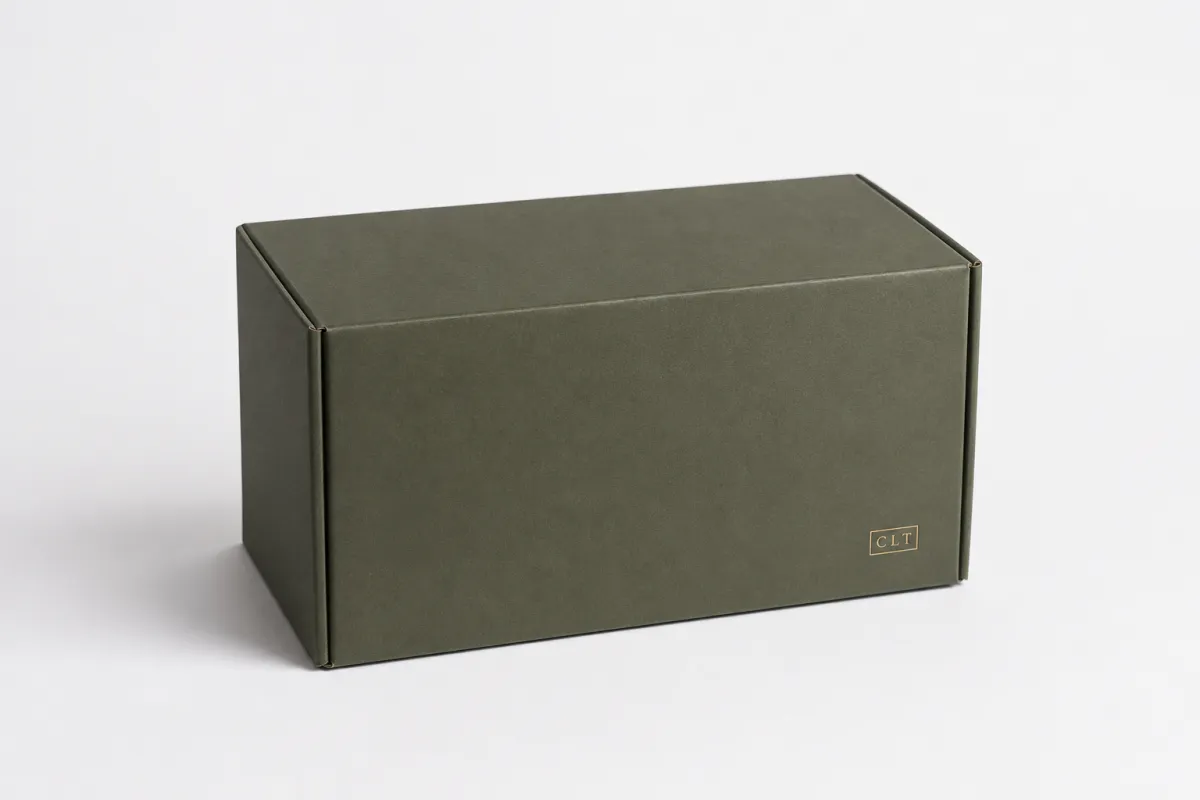
Custom apparel shipping cartons look simple from the outside. They are not. The real job is to keep a folded garment from sliding, scuffing, creasing, and arriving with that tired, half-open look that makes a premium brand feel cheap before the customer even touches the product. Oversized cartons cause most of the trouble. The shirt moves. The hoodie slumps. The inside turns into a minor disaster with a shipping label attached.
From a packaging buyer's point of view, the carton has to do four jobs at once: protect the apparel, fit the line, support branding, and not waste money. That sounds basic until you try to ship three different hoodie sizes, a men's tee bundle, and a women's set in one generic box. Suddenly, custom apparel shipping cartons stop looking optional and start looking like the sensible route.
Sustainability also gets real here. Right-sized custom apparel shipping cartons reduce void fill, lower freight waste, and usually use less corrugated material per shipment than a box sized "just in case." If you are serious about eco-friendly packaging, the first move is not printing a leaf on the side panel. It is eliminating dead air. Less filler, fewer wasted board inches, cleaner packing. That is where the gains live.
There is a brand reason to care, too. Apparel is emotional. People judge it fast. A tidy carton that opens cleanly, stacks well in storage, and arrives without crushed corners supports repeat purchase behavior. A sloppy carton does the opposite. Most buyers will forgive a modest, well-made box. They will not forgive a box that looks like it had a rough commute.
I have watched brands spend more on photo shoots than on their shipping format, then wonder why the post-purchase experience feels off. The irony is almost funny. A carton is not glamorous, but it is the first physical proof that the brand can keep a promise. That is why custom apparel shipping cartons deserve the same attention you would give to product packaging, retail packaging, or printed labels.
How Custom Apparel Shipping Cartons Work in Real Fulfillment
In a typical order fulfillment flow, the garment gets folded, protected, boxed, labeled, and handed to the carrier. Simple. The package is only simple if the carton spec matches the product and the packing method. Custom apparel shipping cartons work best when the carton dimensions are based on the folded item, the number of SKUs in the order, and the level of protection needed during ecommerce shipping.
The main carton styles are straightforward. Regular slotted cartons are the workhorse. Mailer-style cartons are popular when the brand wants a cleaner opening experience and a flatter profile. Specialty cartons make sense for higher-touch branded packaging, premium gift sets, or flat apparel presentations. If you need a broader mix of formats, it helps to compare them against other Custom Packaging Products, especially if your catalog also includes Custom Shipping Boxes or Custom Poly Mailers.
What keeps garments stable
Custom apparel shipping cartons often rely on a few quiet helpers: tissue, polybags, belly bands, chipboard inserts, and internal dividers for multi-item sets. None of those parts are glamorous. All of them matter. A single folded T-shirt needs very little beyond a snug carton and maybe tissue. A mixed order with hoodies, joggers, and socks may need a divider or insert to keep pieces from shifting and wrinkling against each other.
That stability is not just about presentation. It speeds packing. When the operator knows the garment sits cleanly in the carton, there is less fiddling, less re-folding, and fewer returns caused by a box that arrived visibly rumpled. That is one of the underrated benefits of custom apparel shipping cartons: they reduce the amount of human improvisation at the pack station. Fewer improvised pack jobs usually means fewer mistakes, and fewer mistakes mean fewer angry emails. Nice little chain reaction.
Why print and labeling matter
Branding does not need to turn every carton into a billboard. Sometimes the smartest package branding is a restrained logo, a one-color panel, or a crisp inside-print message that makes the opening feel intentional. Custom apparel shipping cartons can incorporate barcodes, order labels, tamper evidence, sizing cues, and seasonal graphics without making the carton harder to use. The trick is to design for the line first and the camera second.
For brands with layered product packaging, the carton can also support different fulfillment paths. A direct-to-consumer order might use a mailer-style format. A wholesale replenishment order might use a stronger shipping box with heavier board. A seasonal gift bundle might need a custom printed box that doubles as presentation packaging. Same product family. Different demands. That is normal.
"A carton should fit the garment, not the other way around."
That line sounds obvious, but it explains a lot of damaged apparel shipments. When custom apparel shipping cartons fit the pack-out instead of forcing the pack-out to fit the box, the whole operation gets calmer. Less filler. Less tape. Less wasted motion. Less chance that the box arrives sounding like a maraca.
Key Factors That Shape Custom Apparel Shipping Cartons
The right carton spec starts with the product, not the printer. A single folded T-shirt has very different needs than a heavy fleece hoodie, a jacket, or a mixed-size bundle. Custom apparel shipping cartons should be sized to the actual packed state, which means the folded garment plus tissue, polybag, inserts, and any room needed for safe handling. Guessing the size usually means paying for empty space later.
Board strength is the next question. Most apparel shipments do not need monster-grade corrugated, but they do need enough structure to survive stacking, conveyor handling, and carrier sorting. Common choices include single-wall corrugated with B-flute or E-flute for lighter items, and stronger combinations for heavier or larger cartons. A carton that is too weak creates damage. A carton that is too strong can add cost and unnecessary weight. The sweet spot is the one that survives your actual shipping environment, not the one that sounds impressive in a sales call.
Size efficiency matters because every extra millimeter affects freight, storage, and appearance. Custom apparel shipping cartons that are even a little oversized often trigger higher dimensional weight charges, more void fill, and a less polished first impression. A snug carton feels organized. A loose carton feels like someone ran out of thought halfway through the order.
Sustainability choices should be measured, not performative. Recycled content, recyclability, and water-based inks all matter, but only if the carton still performs well. A box that claims green credentials yet crushes in transit is not a win. If you need a reference point for environmental packaging language, the EPA has solid guidance on source reduction and materials efficiency at epa.gov. It is a decent reminder that material reduction beats decorative virtue signaling.
Standards matter too. If you are qualifying cartons for distribution, look at stacking, compression, and transit testing. Many teams use ISTA procedures for shipping validation and compare performance with corrugated specs tied to ASTM methods. The International Safe Transit Association outlines testing logic at ista.org. That is the boring part. It is also the part that saves money when a launch starts breaking in transit.
Brand experience still sits in the mix. Custom apparel shipping cartons can make a budget shipment feel considered, and that matters in branded packaging. A neat opening, clean logo placement, and a well-proportioned carton can make the buyer feel like the brand knows what it is doing. That is especially useful for subscription apparel, influencer drops, and premium basics where the unboxing itself is part of the sale.
- Single-item tees: usually need compact mailer-style cartons or slim shipping boxes.
- Hoodies and fleece: need more depth and stronger board to prevent bulging.
- Mixed bundles: often need dividers or a larger custom dieline.
- Premium sets: benefit from custom printed boxes with stronger visual presentation.
One practical note: if your apparel line includes both carton and bag fulfillment, compare carton specs against packaging methods like custom printed boxes and Branded Poly Mailers before locking the program. The cheapest format on paper is not always the cheapest format in operations.
Custom Apparel Shipping Cartons: Cost, Pricing, and MOQ Basics
Pricing for custom apparel shipping cartons depends on a handful of variables that are easy to understand and annoyingly hard to ignore: carton size, board grade, print coverage, insert complexity, order quantity, and whether the carton uses a stock dieline or a fully custom structure. The minute you add special finishing, heavy ink coverage, or multi-component inserts, the quote moves. That is not a scam. It is packaging.
MOQ, or minimum order quantity, is where smaller brands usually feel the pain. Low-volume custom apparel shipping cartons cost more per unit because setup costs get spread across fewer pieces. Larger runs lower the unit price, but they also eat storage space and cash flow. If you are a growing ecommerce brand, the right question is not "What is the absolute cheapest box?" It is "What run size lets us ship profitably without clogging the warehouse?"
Here is a practical way to read a carton quote. Look at the unit price, plate or setup fees, prototype fees, freight, and any extras tied to coating or finishing. Then ask whether the quoted carton size actually matches your folded apparel dimensions. A quote can look good until you notice the box is three sizes too large and you will pay for that space every single time.
| Run Size | Typical Carton Style | Approx. Unit Price | Best Fit | Main Tradeoff |
|---|---|---|---|---|
| 500-1,000 units | Simple mailer or RSC | $0.85-$1.45 | New launches, small test runs | Higher unit cost, lower storage risk |
| 2,500-5,000 units | Custom printed single-wall carton | $0.38-$0.78 | Core DTC apparel orders | Better unit economics, moderate inventory needs |
| 10,000+ units | Custom dieline with print and insert options | $0.18-$0.42 | Established programs, repeated seasonal demand | Lowest unit cost, highest upfront commitment |
Those ranges are not fantasy pricing. They are the kind of numbers brands actually see when they quote custom apparel shipping cartons with standard corrugated construction and common print setups. A luxury mailer with inside print, soft-touch coating, and a complex insert can jump higher. A plain kraft version may fall lower. That is why comparing apples to apples matters more than chasing the cheapest line item.
There are also hidden costs. Oversized custom apparel shipping cartons increase freight. Weak cartons increase returns. Bad sizing increases void fill and labor. If your team spends thirty extra seconds per pack because the carton is awkward, that labor adds up very fast. A few cents saved on the box can disappear behind packing delays and damaged shipments. The cheapest carton is often the most expensive shipment. Clean logic, ugly outcome.
If your brand sells across multiple product categories, it can help to standardize carton families. For example, one carton for folded tees, one for heavier layers, and one for mixed bundles. That keeps order fulfillment faster and simplifies procurement. It also gives you a more controlled branded packaging system instead of a stack of one-off exceptions. Nobody wants a warehouse that needs a spreadsheet just to find the right box, trust me.
Process and Timeline: From Spec Sheet to Shipment
The cleanest way to start custom apparel shipping cartons is with a simple intake sheet: garment type, folded dimensions, target ship method, branding needs, sustainability goals, and annual volume. If a supplier asks for all of that up front, they are not being fussy. They are trying to avoid the classic mistake where everyone approves a pretty sample that does not actually fit the product.
The production flow usually follows a familiar path: concept, dieline creation, material selection, prototype, approval, prepress, printing, cutting, folding, and final assembly. Depending on the structure, custom apparel shipping cartons may need a structural sample first, then a printed proof, then a production run. That means the schedule is partly technical and partly administrative. Both parts matter, which is inconvenient but true.
Lead time depends on artwork revisions, proof approvals, supplier capacity, and freight timing. For straightforward jobs, many brands see custom apparel shipping cartons move in roughly 12-15 business days after proof approval. More customized work can stretch to 18-25 business days or longer, especially if you need special coatings, internal printing, or a complex insert. Sampling adds time. Shipping adds time. Human indecision adds the most time of all.
Seasonal drops and rebrands deserve more buffer. If you are launching a capsule collection, a wholesale restock, or a holiday package, do not wait until the merch is already moving to approve the carton. That is how a "small delay" becomes a warehouse workaround. Workarounds are expensive. They also look suspiciously like chaos.
One useful habit is to set a decision deadline for artwork and dieline edits. Review the structure, sign off on board choice, and then lock it. Custom apparel shipping cartons are not the place to spend two weeks debating whether the logo should be 4 mm taller. The pack-out line does not care about your brand mood board. It cares about a carton that arrives on time and stacks properly.
For brands with mixed product packaging needs, build the carton workflow alongside your broader packaging design plan. That way, the same launch can cover labels, wraps, and shipping formats without producing three separate approval disasters.
Common Mistakes with Custom Apparel Shipping Cartons
The first mistake is sizing by guesswork. Custom apparel shipping cartons should be based on measured folded dimensions, not on the memory of the last carton that "seemed about right." Apparel compresses differently by fabric, size, and folding method. A box that works for slim tees may fail completely on fleece or layered orders.
The second mistake is overbranding the carton. Yes, package branding matters. No, every panel does not need to shout. If the carton is used in a busy shipping environment, excessive print can make it harder to read labels, scan barcodes, or spot damage. A good branded packaging system knows when to speak and when to get out of the way. You do not need a billboard to ship a sweatshirt.
Weak board and bad closures are another predictable problem. Custom apparel shipping cartons that are under-specified can pop open, crush at the corners, or sag under stack load, especially when shipping heavier bundles. This is where plain material discipline matters. Good tape, correct board grade, proper flap design, and sensible stacking strength save more money than fancy artwork ever will.
Then there is the sustainability bluff. Adding recycled content is fine. Printing a green badge on a box is fine. But if the carton is oversized and packed with void fill, the waste problem barely changes. Sustainability should mean material reduction, right-sized design, and fewer transport inefficiencies. Anything else is decoration with a conscience sticker on top.
The last mistake is skipping a pilot run. Brands love skipping pilots because they are impatient. I get it. But custom apparel shipping cartons reveal their real problems in the first live orders: awkward folds, label placement issues, pack-time slowdowns, or a lid that looks sharp in a sample and clumsy in volume. A pilot is cheaper than a warehouse correction after launch. Much cheaper.
- Do not approve carton dimensions without checking the packed product.
- Do not assume every eco claim improves the real shipment.
- Do not choose the thinnest board just to hit a lower quote.
- Do not launch without a small production test.
Expert Tips and Next Steps for Custom Apparel Shipping Cartons
If you are starting from scratch, begin with one hero carton size for your highest-volume apparel order. That is the easiest way to learn what the carton actually does in the real world. Once the numbers are clear, add a second or third size only if the order mix justifies it. Too many custom apparel shipping cartons early on can create more inventory complexity than value.
Test the things that actually affect the business: damage rate, pack time, freight cost, and customer feedback. A carton that looks beautiful but slows the line is a liability. A carton that saves one cent but raises returns is also a liability. Measure the full path. Custom apparel shipping cartons should improve the operation, not just decorate it.
Request samples and compare the sample against the shipping environment, not just the desk. Stack it. Drop-test it. Pack a real folded garment into it with tissue, inserts, or polybagging if your process uses those. Compare the result against your current carton and against other formats like Custom Shipping Boxes if you ship heavier bundles or mixed kits. If a supplier cannot explain board specs, closure style, print method, and MOQ in plain language, that is a clue. Not a good one.
Before you sign off, ask for the sustainability documentation too. Recycled content percentages, recyclable material claims, and FSC chain-of-custody information should be easy to verify. If the carton uses certified fiber, make sure the language is accurate and supportable. Fancy claims are not worth much if they cannot survive a basic audit. Neither is a box that only looks sustainable because someone chose a kraft color and called it a day.
For many brands, the smartest path is to start small, prove the carton in live order fulfillment, then roll it out more broadly. That usually beats a giant rollout based on hope and one too-polished sample. If your catalog also includes non-apparel items, align the carton strategy with the rest of your packaging design so the whole system feels coherent instead of pieced together by three different teams and a deadline.
Here is a practical buying sequence that keeps mistakes down:
- Measure the folded apparel and the packed order.
- Choose the carton style that matches the ship method.
- Request two quotes for custom apparel shipping cartons with similar specs.
- Compare unit price, setup fees, freight, and storage impact.
- Run a small pilot before locking the full order.
If you are still deciding between cartons and softer formats, compare the economics against Custom Poly Mailers. For lightweight apparel, poly can win on freight. For better presentation and stack strength, cartons usually win. It is not a moral choice. It is a cost-and-performance choice.
My blunt take: custom apparel shipping cartons are worth it when they reduce movement, reduce waste, and make the product feel organized. They are not worth it when they are oversized, overprinted, and treated like a branding trophy. The best cartons are the quiet ones that do their job, keep the apparel clean, and disappear into a smooth customer experience. That is the point. If you get that part right, custom apparel shipping cartons become one of the few packaging decisions that improves branding, shipping efficiency, and sustainability at the same time. And honestly, that is a pretty rare combination.
Frequently Asked Questions
What are custom apparel shipping cartons used for?
They protect folded garments during storage, fulfillment, and transit while keeping the package sized to the product instead of wasting empty space. They also support branding, cleaner pack-out, and better presentation for one-item or multi-item apparel orders.
How do I choose the right size for custom apparel shipping cartons?
Measure the folded product and the full packed order, not just the garment itself, because tissue, inserts, and polybags change the final size. Leave only the clearance needed for protection and handling so the carton stays efficient and does not add unnecessary shipping cost.
Are custom apparel shipping cartons sustainable?
They can be, especially when they are right-sized, made with recycled or recyclable corrugated board, and printed with low-impact inks. The real sustainability win comes from reducing material waste, filler, and transport inefficiency rather than just adding a green label.
How much do custom apparel shipping cartons cost?
Pricing depends on carton size, board strength, print coverage, insert needs, and order volume, so unit cost can vary a lot. Small runs usually cost more per box, while larger orders lower the unit price but may require more storage and cash upfront.
What is the typical lead time for custom apparel shipping cartons?
Lead time depends on whether the design is simple or highly customized, how fast proofs are approved, and whether the supplier has capacity. Sampling, revisions, and freight planning can add days or weeks, so build in buffer if the cartons are tied to a launch or seasonal drop.

