Buyer Fit Snapshot
| Best fit | Reusable Packaging Inserts Work projects where brand print, material claims, artwork control, MOQ, and repeat-order consistency need to be specified before quoting. |
|---|---|
| Quote inputs | Share finished size, material target, print colors, finish, packing count, annual reorder estimate, ship-to region, and any compliance wording. |
| Proofing check | Approve dieline scale, logo placement, barcode or warning zones, color tolerance, closure strength, and carton packing before bulk production. |
| Main risk | Vague material claims, crowded artwork, missing packing details, or unclear freight terms can make a low unit price expensive after revisions. |
Fast answer: Reusable Packaging Inserts Work: Material, Print, Proofing, and Reorder Risk should be specified like a repeatable production item. The safest quote records material, print method, finish, artwork proof, packing count, and reorder notes in one written spec.
Production checks before approval
Compare the actual filled-product size with the drawing, then confirm tolerance on folds, seals, hang holes, label areas, and retail display edges. Reserve space for logos, QR codes, warning copy, and material claims before decorative graphics fill the panel.
Quote comparison points
Review material grade, print process, finish, sampling route, tooling charges, carton quantity, and freight assumptions side by side. A quote is only useful when the supplier can repeat the same color, closure quality, and packing count on the next order.
Tips for reusable packaging inserts only matter if the insert protects the product after the first trip, the second repack, and the awkward return journey nobody celebrates in the sales deck. A lot of brands want the sustainability story, the branded unboxing moment, and the lower-waste headline, but the box still has to survive vibration, drops, compression, and rushed warehouse handling. If the product rattles, that is not responsible packaging. That is a broken item with prettier copy.
Reusable packaging inserts are protective components built to survive multiple shipping cycles, returns, or internal reuse loops. They show up in subscription boxes, refill programs, rental kits, and B2B replenishment shipments, along with in-house transfer packs where the same packaging gets used across several locations. The promise is straightforward: fewer replacements, less waste, and better protection over time. The catch is just as straightforward. Tips for reusable packaging inserts only pay off when the insert is designed for repeat handling, not just for one polished unboxing.
I have seen plenty of packaging programs look great in mockups and then wobble the moment they hit a real pack line. That is usually where the gap shows up: the concept is sound, but the details were sized for a presentation, not for shipping. The rest of this piece stays on the practical side and focuses on the parts that actually hold up.
Tips for reusable packaging inserts: why most sustainable inserts still fail
Tips for reusable packaging inserts usually begin with the wrong question. People ask, "What material looks the most sustainable?" The better question is, "What insert keeps the product safe after five openings, three repacks, and one careless warehouse move?" A reusable insert that looks responsible but lets the item bounce around is a poor trade, not a smart one.
Reusable packaging inserts are protective components designed for repeat use. That can mean one customer keeps the insert at home and reuses it later, or a fulfillment team cycles the same tray through multiple shipments. Either way, the insert needs enough structural memory, fit accuracy, and handling tolerance to survive more than one trip.
The common use cases are easy to spot. Subscription boxes need inserts that can be opened and closed without tearing. Rental kits need inserts that can be inspected and repacked quickly. B2B shipments may use the same insert or a closely related one across repeated replenishment orders. Tips for reusable packaging inserts matter most in those systems because the savings come from the second use, not the first.
The core promise is attractive for a reason. A durable insert can reduce replacement frequency, cut waste, and improve product protection. It can also make package branding feel more intentional because the fit looks engineered rather than improvised. The insert only works if the design respects the actual shipping cycle. If the box gets flattened, stacked, or returned, the insert needs to handle all of that without losing shape.
Reusable does not automatically mean better. Sometimes a lighter single-use insert with a high recovery rate is the cheaper and cleaner choice. Other times a more durable insert saves money after three or four cycles. Tips for reusable packaging inserts should help you tell the difference instead of pushing every brand into the same material story.
"A reusable insert that saves one gram of material but adds one broken unit is not sustainable. It is just expensive."
If you are building a system around Custom Printed Boxes or branded packaging, the insert has to fit the whole process, not just the artwork. The outer carton, the fill method, the product shape, and the return path all matter. Good packaging design starts with use behavior, not a catalog of materials.
Industry testing bodies like ISTA and standards such as ASTM D4169 are useful when you want to simulate handling instead of guessing. If your structure uses paper-based board, FSC-certified fiber can support the sourcing story without pretending the material choice alone solves everything. Real packaging decisions are usually a mix of protection, cost, and operational discipline.
How reusable packaging inserts work in real shipping
Tips for reusable packaging inserts make more sense once you look at the mechanics. A good insert does four jobs at once: it holds the product in place, cushions movement, allows easy removal, and still feels acceptable after repeated use. Miss one of those jobs and the whole system gets noisy, messy, or damaged.
The first job is fit. The insert needs the product to sit in a controlled position with minimal play. Too tight, and the edges scuff or the insert tears during removal. Too loose, and the item starts shifting after a few shipments. A reusable insert has to keep the same geometry longer than a single-use part, which means the tolerances matter more than people expect.
The second job is retention. That is the part that stops the product from bouncing out of the cavity during vibration or shock. In real transit, boxes are not gentle. They ride conveyor belts, get dropped from short heights, and get stacked under heavier parcels. Tips for reusable packaging inserts work best when the product is locked in without needing excessive force to remove it.
The third job is cushioning. Some products need a compressive cradle; others need edge support or corner stabilization. A candle is not the same problem as a glass bottle, and a charger is not the same problem as a ceramic jar. The insert design should reflect the actual failure mode. If the product breaks from corner impact, do not overfocus on top-and-bottom padding and ignore the sides.
The fourth job is reusability itself. After opening, the insert may need to be wiped, inspected, flattened, stored, or reloaded. If that process is annoying, the reuse loop dies fast. A beautiful insert that takes two minutes to repack may fail in a warehouse where twenty seconds matters. Tips for reusable packaging inserts should always include this human factor because the best design still needs to be used by tired people on a busy shift.
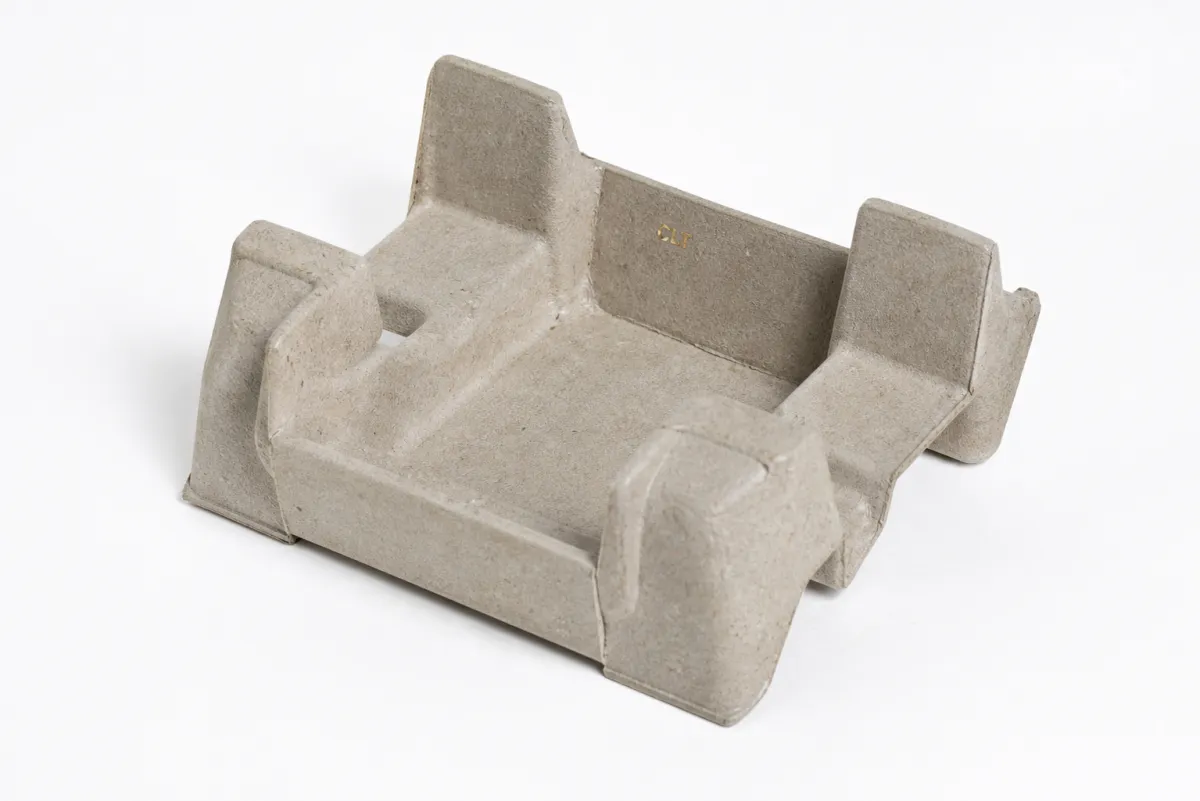
Common reusable formats include molded pulp, corrugated die-cuts, EVA or foam alternatives, and hybrid systems with replaceable pieces. Each one behaves differently. Corrugated inserts are easy to customize and easy to recycle, but they can lose strength if the board gets crushed. Molded pulp can give strong retention and a cleaner sustainability story, but it needs careful tooling and moisture awareness. Foam alternatives offer better shock performance in some cases, yet they can look wrong for certain retail packaging programs. Hybrid systems can work well if the wear parts are replaceable instead of forcing a full insert swap every time.
In shipping terms, the outer box is half the system. A reusable insert inside a weak carton still fails when the box collapses, flexes, or absorbs moisture. Product packaging needs to be treated as one stack, not a checklist of separate parts. The insert, box, sealing method, and fill level all influence how the load moves in transit.
The more the insert depends on cleaning or inspection, the more disciplined the reuse loop needs to be. If a program cannot support that discipline, the system drifts. Good tips for reusable packaging inserts can get undone by a simple lack of storage space. The insert was fine. The process was not.
Key factors that decide whether reusable packaging inserts hold up
Tips for reusable packaging inserts need to start with the product itself. Weight, fragility, and shape decide more than trend language ever will. A reusable insert for a lightweight candle can be simple. A reusable insert for glassware, skincare pumps, or small electronics needs more precision, more structure, and usually a stricter tolerance window.
Fit is the first technical issue. A cavity that is 1-2 mm too wide can be enough to let a product wobble after a few cycles. A cavity that is too tight can cause scuffing, bending, or tearing at the edges. In real packaging design, that difference is the line between a reusable insert and a disposable annoyance. It is also why sample testing matters more than brochure claims.
Material resilience comes next. Reusable packaging inserts need compression recovery, edge strength, and decent fatigue resistance. If the insert gets flattened, folded, or stored under pressure, it should spring back enough to keep doing its job. That is where material choice becomes practical instead of ideological. A board-based insert may be fine for one product line and terrible for another. A foam alternative may last longer but may not fit the brand image or recycling plan.
Moisture resistance matters more than many buyers admit. Warehouses get humid. Delivery trucks get damp. Returned parcels may sit in less-than-ideal conditions before re-entry. Tips for reusable packaging inserts should include a realistic look at moisture exposure because some materials hold their shape beautifully in a dry sample room and then fail after two weeks in a distribution environment.
Another factor is the number of cycles you actually expect. Do you need three reuse cycles, five, or ten? That answer changes the economics immediately. A structure that survives three cycles but costs 30 percent more may be acceptable if the product is high value and the return loop is controlled. If the insert only needs to survive two gentle cycles, overbuilding it is wasted money. Honest cycle targets keep the spec from drifting into fantasy.
Branding matters too. A reusable insert can be functional, but if it looks flimsy or takes too much effort to repack, users will not keep using it. That applies in direct-to-consumer programs and in B2B operations. The look and feel should support the promise of quality. Good package branding is not just print coverage; it is the sense that the structure was planned rather than patched together.
The better the handling, the more repeatable the reuse. If the insert is handled by end customers, the design needs to be obvious and forgiving. If it is handled by trained warehouse staff, it can be more specialized but should still be fast. Tips for reusable packaging inserts should reflect the actual user, not the ideal user.
For brands aiming at FSC-certified or paper-forward product packaging, there is a practical balance to strike. You want the material to support the sustainability story, but you also need enough durability to make the reuse loop worth the trouble. Sometimes a slightly heavier board or a hybrid structure is the smarter choice because it avoids replacements. Sustainability gets real when the damage rate drops.
Cost and pricing tips for reusable packaging inserts
Tips for reusable packaging inserts get a lot clearer once you stop looking at the first invoice and start looking at cost per use. A reusable insert can cost more upfront and still be the cheaper option after a few cycles. That is the whole point. If you only compare initial unit price, you are missing the math that makes reuse valuable.
What drives pricing? Material choice, tooling, custom sizing, finish, print complexity, and order quantity. A simple corrugated die-cut may run around $0.18-$0.35 per unit at 5,000 pieces, depending on board grade and cut complexity. A molded pulp tray might land around $0.22-$0.45. A more resilient foam alternative or hybrid structure can sit higher, often $0.40-$0.90 or more, especially if the shape is unusual or the volume is low. Those are rough ranges, not promises, but they are realistic enough to plan around.
MOQ strategy matters too. Ask for pricing at several volume breaks, not just the nicest number the vendor gives you first. A quote at 2,000 units can look ugly, then fall sharply at 5,000 or 10,000 if tooling is already absorbed. Tips for reusable packaging inserts should push vendors to show the full ladder: prototype, pilot, mid-volume, and scale pricing. One best-case number tells you almost nothing.
Replacement rate changes the real unit cost. A cheaper insert that fails early is usually the expensive option in disguise. If you buy a $0.24 insert and replace 40 percent of it after two cycles, you are paying far more than the headline suggests. The better number is total cost across the expected reuse life. That means material cost, replacement cost, handling time, and any damage savings.
| Insert Type | Typical Use | Approx. Unit Cost at Moderate Volume | Strengths | Tradeoffs |
|---|---|---|---|---|
| Corrugated die-cut | Light to medium products, retail packaging, simple SKU sets | $0.18-$0.35 | Fast to prototype, easy to customize, strong brand compatibility | Can crush over repeated cycles if the load is high or the environment is damp |
| Molded pulp | Bottles, jars, cosmetics, controlled reuse loops | $0.22-$0.45 | Good retention, paper-forward look, solid for product packaging programs | Tooling lead time, moisture sensitivity, less forgiving on tight tolerances |
| EVA or foam alternative | Electronics, fragile parts, high-shock shipments | $0.40-$0.90+ | Strong cushioning, better repeat performance in some use cases | Higher cost, recycling questions, brand fit can be awkward |
| Hybrid system | Reusable programs with replaceable wear parts | $0.50-$1.20+ | Longer service life, replace only the damaged section | More planning, more parts, more coordination during assembly |
If you are buying for a custom logo packaging program, ask for the economics over the reuse life, not just the first shipment. A structure that lasts five cycles at $0.42 can beat one that lasts two cycles at $0.25. That is a basic buying rule, but people still ignore it because the lower line item looks prettier on the purchase order.
Another smart move is to compare cost with damage rate. If the insert cuts breakage from 4 percent to 1 percent on a product with a $12 replacement cost, the savings can justify a higher insert price very quickly. That is especially true for branded packaging where the replacement cost includes customer service time, reshipment labor, and lost goodwill. The box is not the only thing you are paying for.
If the program is still small, do not overcomplicate the math. Start with a simple expected-loss model: unit price, estimated cycles, damage rate, and replacement labor. That gives you a practical range instead of a fantasy spreadsheet. Once the pilot proves the concept, refine the model with real data.
Process and timeline for reusable packaging inserts
Tips for reusable packaging inserts are easier to apply when you understand the production flow. The process usually starts with a brief: product dimensions, weight, fragility points, shipping method, return behavior, and target cycle count. If that brief is weak, every later step becomes guesswork dressed up as planning.
Next comes the dieline or sample development stage. That might mean a CAD file, a mock-up, or a physical sample that helps check fit and removal force. For custom printed boxes, this is where packaging design should be tested against the actual product, not a sanitized drawing. A millimeter off in the insert can change the whole packout.
Then comes prototyping and revision. This is where you test whether the product moves, whether the insert scuffs the surface, and whether the structure still works after opening and repacking. Good tips for reusable packaging inserts always include a pilot round because paper specs alone cannot tell you how the insert behaves under real handling.
Timeline variables are predictable. Off-the-shelf formats move faster, often within 7-12 business days after approval if stock and tooling are simple. Fully custom reusable systems usually need more time, often 15-25 business days or more depending on tooling, print setup, and assembly. If the insert needs a special finish, structural lock, or hybrid build, add more time. Rush jobs are possible, but they are rarely the best place to save money.
You should also plan around logistics and fulfillment. The insert has to fit the packout line, not just the product. If the warehouse team needs to fold or assemble the insert differently every time, the process slows down. If it stores flat, ships flat, and pops into place with a consistent motion, adoption gets much easier. That is one reason tips for reusable packaging inserts should include operations as well as engineering.
A practical pilot plan looks like this: test one SKU, use one location, and track the damage rate, repack time, and replacement frequency for at least one full cycle group. Do not scale until you know whether the reuse promise is real. A small pilot can save a painful rollout.
If you need the insert to support multiple presentation layers, such as a luxury retail packaging look with a practical shipping structure, keep the workflow simple. Pretty inserts that slow fulfillment are a headache. The best reusable structure usually feels boring to the warehouse and good to the customer. That is not a bad thing.
For brands exploring Custom Packaging Products, the smartest move is to request a prototype plan, a volume quote, and a replacement policy in the same conversation. That keeps the supply chain, the branding goals, and the handling needs in the same room instead of letting each team invent its own version of reality.
Step-by-step guide to choosing reusable packaging inserts
Tips for reusable packaging inserts work best as a process, not a guess. Start with an SKU audit. List product size, weight, breakability, surface sensitivity, return flow, and how often the packout will be reused. If you cannot describe the product behavior in plain terms, you are not ready to spec the insert.
Choose the material family based on abuse, moisture, and handling, not just the sustainability claim. Paper-based options can be excellent for many jobs, especially when the outer carton is strong and the cycle count is moderate. Foam alternatives or hybrid systems make more sense for high-shock products or reuse loops with rougher treatment. The right answer depends on the shipping environment, not the trend sheet.
Then specify the packout clearly. Define product clearance, lock points, stackability, and what happens during repacking. Does the product snap in? Slide in? Sit on tabs? If the user has to force it into place, wear shows up fast. Tips for reusable packaging inserts should always be written with the repack step in mind because that is often where systems break down quietly.
Run a small test batch and inspect it after real shipping. Look for compression set, edge wear, tear points, bowed corners, and fit loss after opening and closing. Test with actual warehouse staff if possible, because human behavior changes the result. I have seen inserts pass bench tests and fail the moment they hit a fast pack line. Not glamorous, but useful.
Compare vendors on more than price. Evaluate sample quality, quote clarity, lead time, replacement policy, and whether the supplier can explain the tradeoffs without hiding behind vague language. For reusable packaging inserts, the lowest headline price is often a trap. A clear vendor with a slightly higher price can save money by avoiding redesigns and bad surprises.
For branded packaging, also consider how the insert interacts with the outside of the box. Does it align with custom printed boxes? Does it improve the first impression without creating extra waste? Does it support the brand story without getting in the way of protection? The insert should feel like part of the system, not a separate craft project.
Standardize as much as possible across similar SKUs. If three products can share one insert size with minor adjustments, that usually reduces cost and simplifies inventory. It also makes replacement easier. Tips for reusable packaging inserts often become more useful once the business stops treating every SKU like a one-off art piece.
If you have a return-based program, label the reuse path. Tell people where the insert goes, how it should be stored, and when it should be replaced. That kind of simple instruction makes a bigger difference than many brands expect. Reuse systems fail when nobody owns the next step.
A good shortcut is to ask one blunt question before you approve anything: if the box gets opened, repacked, and shipped again next week, will this insert still make sense? If the answer is shaky, you are not done yet.
Common mistakes and expert tips for reusable packaging inserts
Tips for reusable packaging inserts often sound obvious until you watch a brand make the same mistake three times. The classic one is overengineering. A heavier, more complicated insert can cost more, weigh more, and still fail to improve reuse because it is awkward to handle. More material is not the same as better performance. Packaging buyers learn that the expensive way.
Another mistake is designing for the first shipment only. Reusable systems need to survive opening, reloading, storage, and the next trip. If the locking tabs wear out after one cycle, the concept is already broken. The first box may look beautiful, but the second and third matter more. That is why the test plan has to match the real reuse path, not the mockup.
The cleanup problem is another quiet killer. If the insert is hard to wipe, inspect, or store, the reuse loop dies fast. Dust, residue, and bent corners slow down the process until someone decides the insert is "too much work." That is not a design failure in the aesthetic sense. It is a process failure, which is usually worse.
Standardize sizes across product lines whenever possible. Shared dimensions make inventory simpler and reduce the number of replacement SKUs. Another good move is to document a replacement threshold. If an insert shows compression loss, tear points, or loose fit after a set number of cycles, replace it. Guessing is how reuse programs drift into inefficiency.
Label the return path if the insert is meant to come back. People are more cooperative than brands give them credit for, but they need clear instructions. Put the return logic on the box, in the packing slip, or in the fulfillment SOP. Tips for reusable packaging inserts are far more effective when the operational path is visible.
Do not ignore the match between insert and outer box. A weak carton, sloppy sealing, or poor internal fit can ruin a good insert. Product packaging works as a system. If the system is sloppy, the insert ends up carrying too much of the burden. That is rarely the cheapest place to solve the problem.
If you are building a line that includes retail packaging and ship-ready product packaging, keep your materials honest. Use paper-forward components where they make sense, but do not force a material choice that hurts protection just because the sustainability pitch sounds cleaner. Real tips for reusable packaging inserts should protect both the product and the economics.
Review the pilot before you scale. Measure damage rate, return rate, repack time, and replacement rate. If the numbers are good, expand carefully. If they are bad, change the structure before buying a large run. That is the boring advice, which is usually the useful advice.
For a lot of brands, the best next move is simple: pick one SKU, request two or three material quotes, test a pilot, measure the damage rate, and compare the total cost across the reuse life. That is how tips for reusable packaging inserts turn into an actual purchasing decision instead of a sustainability slogan.
FAQ
What are the best tips for reusable packaging inserts when I am just starting?
Start with one product that ships often enough to prove reuse value. Choose a simple, standardized shape before chasing custom features. Test protection first, then refine the material and branding. That sequence keeps the project grounded instead of decorative.
How many times can reusable packaging inserts be used?
It depends on material, product weight, and handling conditions. A good insert should have a defined cycle target Before You Buy it. Track wear, compression, and fit loss instead of guessing. Once fit starts drifting, the reuse value drops fast.
Are reusable packaging inserts worth the cost for small brands?
They can be, if the same insert gets used multiple times or returned in a loop. The math improves when damage rates are high or replacement costs are painful. Compare total cost across the reuse life, not just the first purchase. Small brands often win on fewer replacements, not on a lower unit price.
What materials work best for reusable packaging inserts?
Use the material that matches the abuse: compression, moisture, and repeated handling matter more than trendiness. Rigid corrugated, molded pulp, foam alternatives, and hybrids each solve different problems. Ask vendors for sample performance data, not just a sustainability claim. A nice story does not survive a rough parcel route.
How do I test reusable packaging inserts before a full rollout?
Run drop, vibration, and repack testing with the actual product inside the actual box. Inspect the insert after each cycle for wear, tearing, and fit changes. Pilot one SKU first so you can measure damage, returns, and replacement rate accurately. That gives you real data instead of hope dressed up as planning.
Tips for reusable packaging inserts work best when they stay tied to the real shipping cycle, the real handling team, and the real cost of replacement. If the insert protects the product, survives repeat use, and fits the process without turning every packout into a chore, it earns its place. If not, it is just an expensive way to feel sustainable.
The practical takeaway is simple: define the cycle count, test the fit, measure the damage rate, and price the insert by cost per use instead of sticker price. That one habit clears away a lot of noise and makes the choice much easier to defend.


