Buyer Fit Snapshot
| Best fit | Custom Barcode Labels for Cartons projects where brand print, material claims, artwork control, MOQ, and repeat-order consistency need to be specified before quoting. |
|---|---|
| Quote inputs | Share finished size, material target, print colors, finish, packing count, annual reorder estimate, ship-to region, and any compliance wording. |
| Proofing check | Approve dieline scale, logo placement, barcode or warning zones, color tolerance, closure strength, and carton packing before bulk production. |
| Main risk | Vague material claims, crowded artwork, missing packing details, or unclear freight terms can make a low unit price expensive after revisions. |
Fast answer: Custom Barcode Labels for Cartons: Material, Adhesive, Artwork, and MOQ should be specified like a repeatable production item. The safest quote records material, print method, finish, artwork proof, packing count, and reorder notes in one written spec.
Production checks before approval
Compare the actual filled-product size with the drawing, then confirm tolerance on folds, seals, hang holes, label areas, and retail display edges. Reserve space for logos, QR codes, warning copy, and material claims before decorative graphics fill the panel.
Quote comparison points
Review material grade, print process, finish, sampling route, tooling charges, carton quantity, and freight assumptions side by side. A quote is only useful when the supplier can repeat the same color, closure quality, and packing count on the next order.
Custom Barcode Labels for cartons are the sort of detail that looks small in a sample folder and suddenly looks huge on a dock when the first pallet gets rejected. The artwork approved fine. The printer behaved. Then the cartons entered the real world, where dust, condensation, rough handling, and bad placement all take turns causing trouble. That gap between proof and performance is where most label programs either prove themselves or fall apart.
In a few plants I have reviewed, the failure never started with the scanner. It started with a corrugated surface that shed dust, an adhesive that never fully wet out, or a layout that was tidy on screen and awkward on the carton. Custom barcode labels for cartons are packaging components, not office consumables. They should be judged the same way you would judge a carton, a liner, or a tape spec: by how they hold up in the actual operating environment.
For a packaging buyer, the brief is pretty simple, even if the execution is not: choose custom barcode labels for cartons that scan quickly, survive handling, and stay readable long enough to matter. The right label can also support branded packaging, retail packaging, and product packaging without making the carton look like it was patched together in a hurry. That balance matters more than most teams admit.
Most barcode problems are not caused by the scanner. They are caused by the carton, the adhesive, or a label spec that never matched the route the carton actually travels.
Custom Barcode Labels for Cartons: Why They Fail Fast
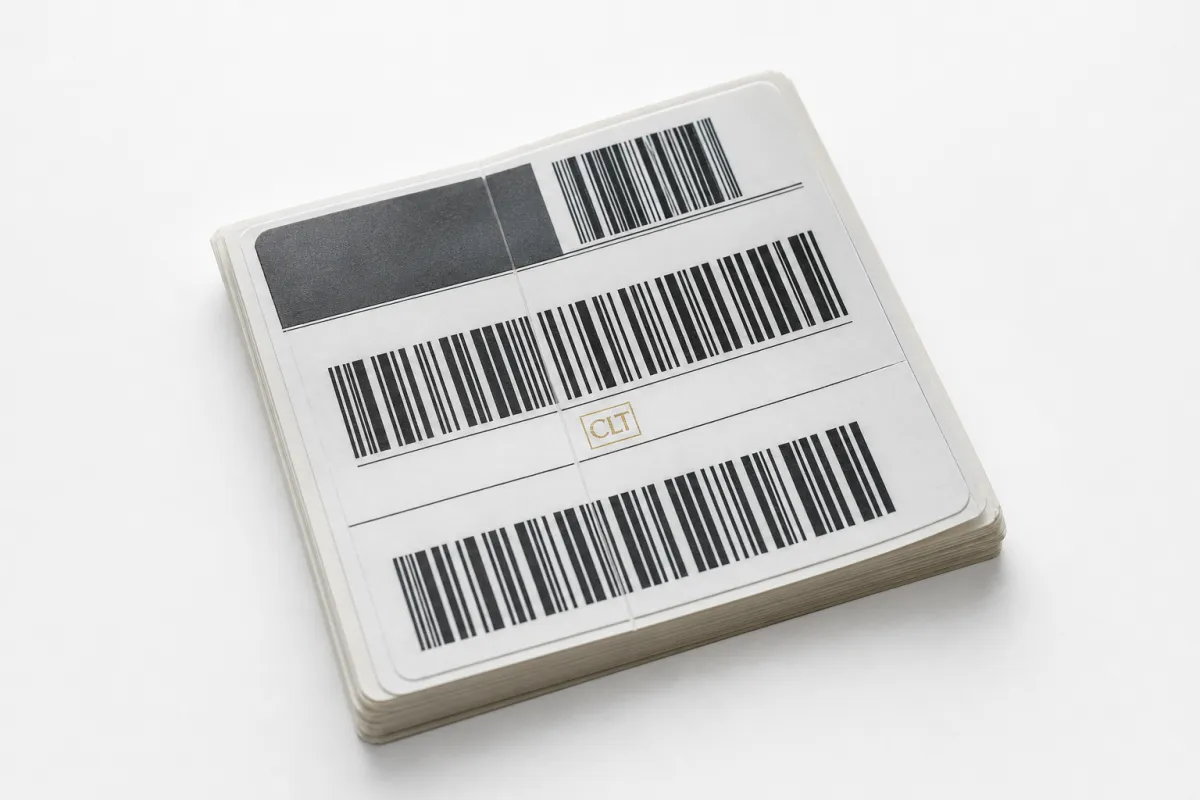
A carton label can look flawless on a monitor and still fail on the floor. I have watched that sequence enough times to trust the pattern more than the presentation: the code prints cleanly, the proof gets approved, and then the first live run hits dust, stretch wrap, a cold room, or a rough handoff at the dock. A receiving clerk starts typing numbers by hand. The blame goes to equipment because equipment is visible. The real issue is usually hiding in the carton spec.
Custom barcode labels for cartons serve carton-level identification, not decoration. They travel through pack-out, shipping, cross-docking, and receiving without opening the box. That makes them fundamentally different from retail stickers or shelf labels. A carton code has to withstand stacking pressure, friction, and all the practical damage that never shows up in a mockup. If the label only works on a desk, it is not a carton label. It is a sketch.
The cost of a weak label is rarely limited to one box. Misroutes appear. Receiving slows down. Staff members start making manual overrides. Chargebacks follow. A few extra seconds per carton can become a real labor bill when the line is busy. Multiply a one-second delay across 1,000 cartons and the day quietly loses more than 16 minutes. Multiply that across a month and the number stops looking minor. Custom barcode labels for cartons are inexpensive only when they work the first time.
Here is the pattern the floor keeps teaching: barcode trouble often starts as a surface issue, a placement issue, or a construction issue long before it becomes a data issue. Match the label to the carton and the problem often disappears. Ignore the warehouse environment and the same failure returns wearing a different explanation.
One plant manager once told me, with a shrug that said he had already learned the hard way, that a label spec can “look perfect and still go kind of sideways in ten minutes.” He was right. Carton labels are not fragile because of the barcode itself; they are fragile because they sit at the intersection of materials, motion, and human speed.
How Custom Barcode Labels for Cartons Work on the Warehouse Floor
Picture the carton from print to apply to receive. The label is generated, printed, placed on a flat panel, and scanned again later by a handheld device, a tunnel, or a receiving station. Along the way it may rub against other cartons, sit under stretch wrap, or absorb humidity in a dock area that swings from warm to cold. Custom barcode labels for cartons only earn their place if they survive the whole trip, not just the first read.
The barcode itself matters, yet the surrounding design can decide whether the code scans cleanly or turns into a nuisance. Quiet zones, human-readable text, and consistent sizing all affect scan performance. A technically correct code can still read badly if the margins are tight or the text line is cramped. For many carton programs, a clean 4 x 2 inch or 4 x 6 inch layout works better than a small label trying to carry too much information.
Direct thermal labels work for short-life cartons in dry indoor spaces. Thermal transfer makes more sense when abrasion resistance or a longer shelf life matters. If your custom barcode labels for cartons need to survive freight handling, thermal transfer usually justifies the extra setup. It does not perform miracles. It simply gives the print a tougher layer, which is often the difference between a clean read and a reprint request.
Placement matters more than many teams expect. Put the label on a flat panel, away from seams, corners, tape lines, and straps. Wrapping a barcode over a crease and then wondering why scans are unreliable is an expensive way to learn geometry. Corners invite lifting. Edges invite damage. A smooth side panel with enough empty space around the code usually performs better than a clever-looking placement that saves no time at all.
Warehouse conditions change behavior in ways that seem small in a spec sheet and annoying in live operations. Moisture can soften paper face stocks. Dust can weaken adhesion. Low temperatures can slow adhesive wet-out. Vibration can fray edges. If custom barcode labels for cartons are being used in a cross-dock, cold room, or fast-moving distribution center, the construction should reflect those conditions instead of assuming the carton lives in a clean office. That assumption is where many label programs go wrong.
Scan reliability also depends on the people using the labels. A handheld scanner can cope with a lot, but it cannot rescue a code that is too dense, too small, or placed where the operator has to twist unnaturally to reach it. Carton labeling is a human workflow as much as a technical one. The best labels respect both. A label that forces a worker to crouch, rotate, or guess is a label that is asking for trouble later.
Key Factors That Affect Scan Rate and Durability
Face stock is the first major decision. Paper works for short-life, dry indoor cartons. Semi-gloss paper adds a little more tolerance for handling. Synthetic stocks such as polypropylene or polyester are better when cartons face moisture, abrasion, or temperature swings. If the shipment sees rough freight handling or chill conditions, custom barcode labels for cartons usually need more than standard paper if the goal is steady scan performance.
Adhesive choice matters just as much. Clean corrugated board is one thing. Recycled board can be dustier and less predictable. Freezer-grade cartons need adhesives made for low temperatures and condensation. Rough, porous surfaces can chew through cheap adhesive fast. A label may look perfectly applied and still start peeling a few hours later. One sample on the real carton is worth more than five polished sales slides.
Print quality is another place where tiny savings become larger costs. Ribbon type, darkness settings, and barcode density all influence contrast. Too little darkness and the bars look washed out. Too much and the edges fill in. If the human-readable text is tiny, the floor team will not trust it as a fallback when a scan misses. For custom barcode labels for cartons, the text below the code is not ornament. It is insurance.
Barcode size and data length are tied together. A longer payload needs more width or a denser symbology, and density reduces scan margin. Code 128 is common for carton work because it handles alphanumeric data well. GS1-128 is often chosen when structured supply chain data is required. Pack too much data into too little space and the code turns temperamental. The result is predictable: operators work around the system, and the system gets blamed for the workaround.
Environmental stress is the last piece. Cartons are stacked, slid, compressed, vibrated, and sometimes chilled or warmed during the same trip. For programs that care about transit abuse, the test methods from ISTA are a useful reference point. If the carton design includes paper-based materials, FSC-certified sourcing at FSC may matter to procurement teams that want stronger paper traceability. A label spec should fit the carton, but it also has to fit the way the carton moves through the chain. That is where custom barcode labels for cartons either prove their value or become another reprint order.
There is a quick field test worth running before anything goes live. Ask whether the label still reads after stacking, after handling, and after temperature change. If the answer is no on any of those points, the spec needs work. Packaging teams often blame software because software feels easier to diagnose. The carton, though, never cared about convenience.
Another useful comparison: a label that lasts 30 days in a dry warehouse and a label that lasts 30 days through a cold chain are not the same product, even if they share the same artwork. One survives a mild environment. The other survives a distribution network. The difference shows up at the exact moment a scanner tries to read through a scuffed, curled, half-dislodged corner.
That is why durability and scan rate should be reviewed together. A label can be readable for a while and still be a bad operational choice if it curls, fades, or peels before the carton finishes its trip. The floor does not separate those failures. It just sees a box that needs help.
Process and Timeline for Ordering Custom Barcode Labels for Cartons
The cleanest ordering process is unglamorous, which is exactly why it works. Define the use case, confirm the barcode data, choose the label size and construction, request a proof, test a sample, and move to production only after the test passes. That sequence reduces reprints. It also keeps custom barcode labels for cartons aligned with real operations instead of with a polished mockup.
Before asking for a quote, send the supplier a compact spec sheet. Include carton dimensions, carton surface type, application method, printer model if labels are printed in-house, scanner type, storage conditions, and any compliance requirements such as GS1 formatting or internal warehouse rules. If cartons sit in a cold room or travel through a dusty line, say so plainly. Vague requests create vague labels. Vague labels create expensive do-overs.
Timelines vary, though the usual path is a few days for artwork and proofing, then a sample or pilot batch, then production once the test is approved. The most common delays are missing data, slow proof review, or a sample that fails because nobody tested it on the actual carton. If you are ordering custom barcode labels for cartons with variable data, allow extra time for file setup and verification. That is not a complication. It is the price of avoiding duplicate carton IDs and a room full of people pretending they noticed the mistake earlier.
A small pilot is the smartest move before a full run. Test the labels on real cartons, in the actual packing area, using the real scanner setup. Check edge cases: cold cartons, dusty cartons, fast conveyor reads, and handheld scans at awkward angles. It takes far less time to test 200 labels than to reprint 20,000 after the warehouse starts complaining. Process control may not be dramatic, but it is far cheaper than heroics.
Once the test passes, freeze the spec and keep it stable. The best carton label programs are repeatable. The size does not change every order. The placement does not drift because one shift prefers the side panel and another likes the top. Custom barcode labels for cartons work best when the process is documented, boring, and hard to improvise. That boredom is a feature.
Even a small change deserves discipline. Switching from a paper stock to a synthetic stock, for example, can alter print settings, adhesive behavior, and application speed at once. A change that looks cosmetic can ripple through the floor like a quiet shock wave. The carton line notices. The invoices notice later. That is why change control belongs in the label conversation from the beginning, not after the first complaint.
Custom Barcode Labels for Cartons: Cost, MOQ, and Quote Basics
Price is driven by a small set of inputs: label size, face stock, adhesive, print colors, variable data, finish, and order quantity. Bigger labels use more material. Specialty adhesives cost more. Synthetic stocks cost more than paper. Variable data adds setup time. None of that is mysterious, yet people still act surprised when custom barcode labels for cartons with freezer adhesive and serialized data cost more than simple paper labels.
MOQ matters because short runs carry higher setup overhead. A small run of custom sizes or specialty stocks usually has a higher unit cost than a larger repeat order. That is not the supplier being difficult. It is math. If you are buying custom barcode labels for cartons for a pilot or a limited carton program, expect the per-label price to be less friendly than it is under a stable annual contract.
| Construction | Best Use | Typical Cost per 1,000 | Main Tradeoff |
|---|---|---|---|
| Direct thermal paper | Dry indoor cartons with short storage windows | $25-$55 | Lowest cost, but heat and abrasion shorten life |
| Semi-gloss thermal transfer | General warehouse shipping and receiving | $40-$85 | Better durability, slightly higher print setup needs |
| Polypropylene or polyester | Moisture, scuffing, and higher-handling cartons | $75-$150 | More durable, but the price rises fast on short runs |
| Freezer-grade synthetic | Cold chain and condensation-heavy cartons | $90-$170 | Best resistance, but adhesive testing is non-negotiable |
When you compare quotes, do not stop at the total. Ask for per-label cost at multiple quantities, setup charges, proof fees, shipping, and any tooling or plate costs. That is how the price curve becomes visible. It also helps you compare a basic carton label against a more durable one without getting fooled by a quote that hides setup cost in an odd place.
If you need a broader packaging program, it helps to view labels alongside Custom Labels & Tags and Custom Packaging Products. A carton label is one piece of the package branding system, not the whole system. The right label should fit the carton, the print method, and the rest of the product packaging without creating extra work for operations. That is a better buy than chasing the lowest number on the page. The cheapest option is not cheap if it triggers rework on every pallet.
Practical advice: ask for a quote in three quantity tiers, then compare unit Cost, Lead Time, and expected scan performance. If the unit cost drops sharply at a higher tier, that may be the real sweet spot. If not, stay smaller until the carton program proves itself. Custom barcode labels for cartons should be bought on reality, not optimism.
There is also a hidden cost that never appears in the quote: the cost of uncertainty. A label that fails once in ten cartons looks manageable on paper. In a live operation, that means every tenth carton becomes a pause, a re-scan, or a manual check. The invoice never mentions the interruption, but the warehouse feels it anyway.
Procurement teams sometimes focus on unit price because it is easy to compare. Operations cares about exceptions, and exceptions are expensive. A label program that saves a cent but adds a stack of rechecks is not really saving anything.
Common Mistakes With Custom Barcode Labels for Cartons
The first classic mistake is choosing the label for the printer instead of for the carton environment. A label can run beautifully in the office and fail in the warehouse. That is not the printer's fault. It is the result of forgetting where custom barcode labels for cartons actually live.
The second mistake is poor placement. Labels across seams, over rough texture, or near straps and tape lines create unreliable scans and early peel-up. Flat panel placement matters more than many teams expect. So does leaving enough quiet space around the code. A label tucked into a corner because it looks tidy can cost far more than the tidy appearance ever saved.
Data errors are the third problem. Duplicate carton IDs, wrong customer formats, inconsistent numbering, or unreadable human text can create noise very fast. A scanner reads only what it can read. A receiving team trusts only what it can verify. If the data set is sloppy, custom barcode labels for cartons turn into a paperwork problem instead of a workflow tool.
Proofing only on screen is another trap. A digital proof tells you the layout exists. It does not tell you whether the adhesive grabs the carton, whether the code scans at arm's length, or whether the print survives a week in transit. Test the label on the actual box with the actual scanner. If that feels inconvenient, good. Inconvenient testing is still cheaper than a reprint.
Last, there is over-specifying. Some teams spend too much on a label because they are afraid of failure, then learn a simpler construction would have worked. Others under-specify and spend twice as much later fixing the problem. The right point sits somewhere between panic and penny-pinching. That is the whole exercise with custom barcode labels for cartons: enough durability to keep reading, not so much overbuild that you pay for features you never needed.
A subtle mistake deserves mention too: changing specs without changing the process. A better adhesive is useful only if the application method still gives it time to bond. A larger label helps only if the scanner settings and carton placement are updated with it. Packaging failures often come from the gap between a material change and an operational change. That gap is easy to miss until the first pallet comes back with a problem.
Expert Tips and Next Steps for Custom Barcode Labels for Cartons
Build a short spec sheet and keep it visible. List the carton type, barcode symbology, label size, adhesive, print method, storage conditions, and application method. One page can prevent a lot of guessing later. It also gives suppliers something concrete to work from, which is more useful than most people expect. The tighter the spec, the less room there is for “I thought you meant...” conversations about custom barcode labels for cartons.
Ask for a scan test from the supplier, then make the test deliberately ugly. Try cold cartons, dusty cartons, handheld scans at odd angles, and a fast read on a moving line if the operation uses one. If the sample passes those conditions, risk drops sharply. If it fails, you have not wasted a full production run. That is why a pilot exists. The warehouse is a harsh editor.
Standardize label placement across carton sizes as much as you can. A team that has to guess where each label goes will improvise, and improvisation is where scan consistency breaks. Pick a position, train the packers, and document the rule. If the label needs to shift by carton size, write that into the SOP. The best custom barcode labels for cartons are the ones that fit a repeatable process, not the ones that depend on memory.
Ownership matters too. Who approves artwork? Who approves the sample? Who signs off on a new barcode format? Who handles a scan failure report? If nobody owns those steps, one problem turns into six smaller ones. That is a familiar packaging mistake. Good package branding is not only about appearance. It is about whether the carton still moves cleanly through the system after production ends.
If you are moving from research to ordering, keep the sequence plain: define the use case, Choose the Right material, test on the real carton, and lock the spec before volume. Pair the label program with the rest of your packaging design so the carton, the code, and the shipping flow all support the same result. That is how custom barcode labels for cartons stay useful instead of becoming another line item that needs rescue later.
One more practical habit helps more than most teams realize: keep an archive of approved art files, material specs, and scan-test results. Six months later, when someone asks why a particular stock was chosen, the answer is rarely in memory. It is in the paperwork. That archive turns the next order from guesswork into repeatable execution.
My strongest recommendation is simple: test one real carton, in the real packing area, with the real scanner, before you approve volume. If the label survives that test, the odds improve dramatically. If it does not, the fix is usually cheaper on a sample bench than in a live warehouse.
What is the best material for custom barcode labels for cartons?
Paper works for short-life indoor cartons, especially when the boxes stay dry and do not see much handling. Synthetic stocks make more sense when abrasion, moisture, or temperature swings are part of the job. If the cartons move through cold storage or rough freight handling, ask for a durable face stock and matching adhesive instead of choosing the lowest-cost option.
How do I choose the right adhesive for custom barcode labels for cartons?
Match the adhesive to the carton surface. Clean corrugate, recycled board, freezer cartons, and dusty surfaces all behave differently, so one adhesive does not fit every use case. Test the label on the actual carton after compression and temperature changes, because warehouse reality is far less forgiving than a lab bench.
How big should custom barcode labels for cartons be?
Size depends on how much data the barcode carries, how far away the scanner reads, and how much flat panel space the carton gives you. Keep enough white space around the code and make the human-readable text large enough for people who are not standing three inches away from the box.
How long does it take to produce custom barcode labels for cartons?
Timeline usually depends on artwork approval, proofing, material availability, and whether the labels use variable data or special construction. A small pilot batch is often the fastest way to catch problems before full production, which saves more time than rushing the whole order and fixing it later.
What information should I send for a quote on custom barcode labels for cartons?
Include label size, quantity, material, adhesive, print method, barcode type, application conditions, and whether the labels need variable data. If you want a useful price, ask for multiple quantities so you can compare unit cost instead of staring at one number and pretending it tells you everything.

