Custom Baseball Caps Wholesale Pricing for Retail Brands
For retail buyers, custom Baseball Caps Wholesale Pricing for retail apparel brands is not just a unit-cost question. A cap that looks inexpensive on a quote can become costly if the stitching is weak, the shape collapses, or the logo placement misses the approved sample. The better test is whether the style, decoration, and order size protect margin without driving markdowns or rework.
Pricing also depends on packaging, freight, and shelf readiness. A sample may look right, but retail programs usually need consistent carton counts, barcode labels, and enough protection to keep brims and crowns from deforming in transit. When those details are included up front, the wholesale price is easier to evaluate because the product arrives ready to sell.
Why retail buyers compare wholesale cap pricing against sell-through, not just unit cost
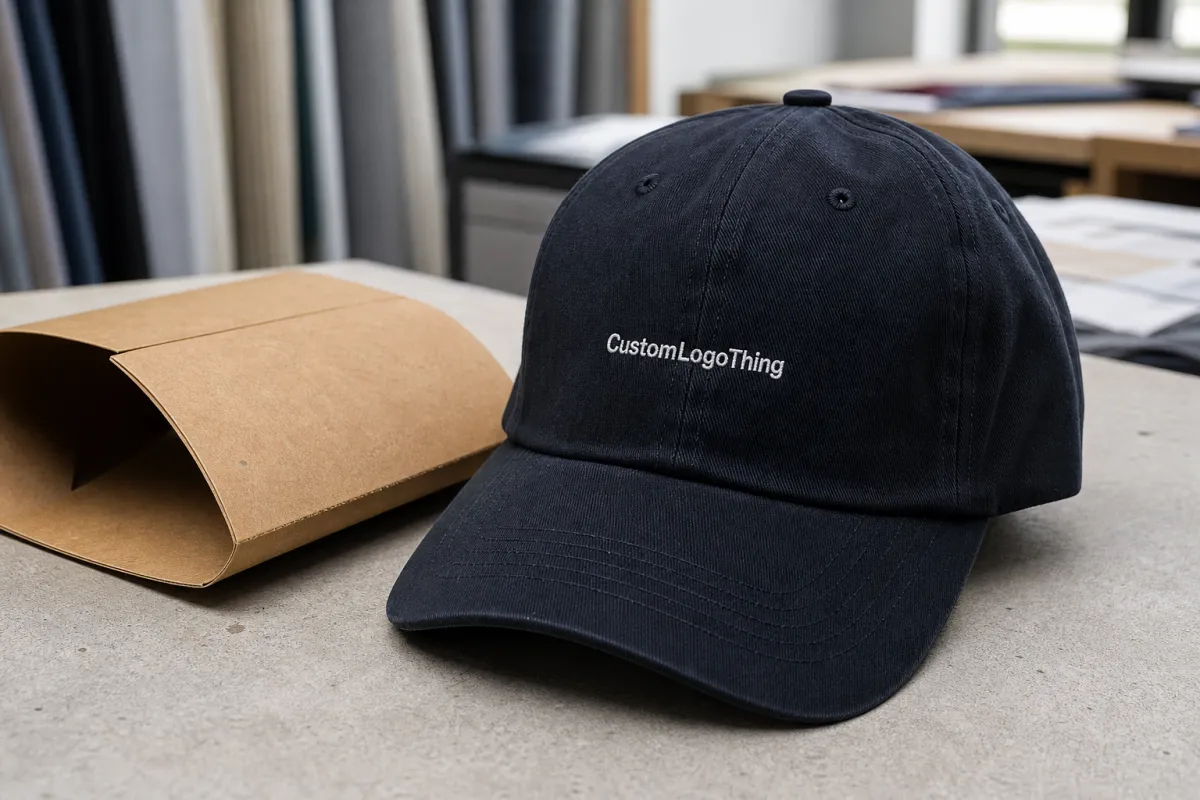
A cap can be cheap on paper and still underperform in store. That usually happens when the fit feels wrong, the silhouette misses the customer, or the branding is too loud for the channel. Once the product starts discounting, the front-end savings can disappear quickly.
That is why buyers should judge cap pricing against sell-through, not just the invoice. A slightly higher unit cost can be the better buy if the style reorders well, photographs cleanly, and holds price through the season. A lower-cost cap that depends on heavy promotion is not actually cheaper.
Channel fit matters too. A gift shop, campus bookstore, sports merch wall, and private-label apparel store do not respond to the same cap design. Buyers who separate core styles, seasonal colors, and limited graphics usually get better inventory control and fewer dead styles.
Lead time also affects margin. If replenishment takes five weeks instead of two, a shelf gap can cost more than the difference between suppliers. In retail, repeatability is part of the pricing equation.
Product styles and decoration options that actually sell on shelf
Silhouette drives first impression. Structured caps hold shape and often read as more premium. Unstructured caps feel softer and more casual, which suits lifestyle and washed collections. Flat bills skew more fashion-led, while curved bills usually serve a broader retail audience.
Closure choice affects merchandising and inventory planning. Snapbacks are easy to size and easy to explain. Strapbacks create a cleaner finish. Fitted caps remove adjustability, but they require tighter forecasting and are usually better for specialty retail than for broad multi-store rollouts.
Decoration is where pricing starts to separate. Embroidery remains the most reliable option because it wears well and photographs well. Patches can push the cap into a more premium lane, especially woven patches, felt appliques, and rubber patches. Tonal branding works for understated assortments, while a larger front logo fits a promo program or sports wall.
| Style | Typical wholesale range | Best retail use | Common MOQ |
|---|---|---|---|
| Structured snapback with flat embroidery | $2.10-$3.40 | Core branded wall, sports, campus | 200-500 units |
| Washed dad cap with woven patch | $3.40-$5.20 | Lifestyle, streetwear, seasonal capsule | 300-800 units |
| Performance cap with tonal logo | $3.00-$4.80 | Active, outdoor, travel assortments | 300-1,000 units |
| Premium fitted cap with raised embroidery | $4.80-$7.50 | Fan gear, premium retail, specialty drops | 500-1,200 units |
Those ranges are directional, not fixed. Fabric availability, labor complexity, decoration size, and specialty trims all move the number. A cap with simple flat stitch logo work will usually cost less than one with a multi-layer patch, contrast underbill, custom seam taping, and branded hangtag set. Buyers should compare the same specification across suppliers, not just similar photos.
Retail brands also need to think about where the cap sits in the assortment. If it competes with tees, socks, tote bags, or seasonal outerwear, the design often needs to feel cleaner and more wearable. A slightly elevated cap can support a higher retail price even when the landed cost is only modestly above a basic promo cap.
Build specs that affect comfort, durability, and resale value
Fabric is one of the biggest drivers of perceived value. Cotton twill is common because it balances cost and familiarity. Washed cotton or garment-washed twill creates a softer hand and a more relaxed look. Polyester and performance blends are often used for moisture management, shape retention, and color consistency. Wool blends can work in premium or heritage programs, but they usually raise cost.
Panel count changes the cap profile and decoration placement. Five-panel caps offer a cleaner front for large graphics and usually feel more contemporary. Six-panel caps are more traditional and familiar. Crown height matters too: low-profile caps feel understated, while high-profile caps support a bolder brand identity.
Stitching density and seam finishing matter more than many buyers expect. If the front panel buckles around the logo, the cap can look wrong even when the decoration itself is correct. Reinforcement at stress points, consistent topstitching, and properly set eyelets all help the product survive retail handling.
- Brim insert: A stronger visor insert helps the cap hold shape in shipping and on display.
- Sweatband: Cotton or poly-cotton sweatbands are common; moisture-wicking versions cost more.
- Closure hardware: Metal buckles, branded sliders, or custom tabs usually cost more than basic snaps.
- Thread count: Higher stitch density can improve perceived quality, but overbuilt embroidery can reduce flexibility.
- Inside finishing: Taping, labeling, and seam clean-up affect how premium the cap feels in-store.
Clear specs help keep quotes comparable and reduce surprises. A supplier may be able to make a good cap, but if the tech pack does not specify panel count, thread color, patch dimensions, placement tolerance, and finishing expectations, the quote can miss the buyer’s actual intent. Good documentation is one of the fastest ways to protect margin.
How custom baseball caps wholesale pricing is built
Most wholesale cap pricing comes from five inputs: materials, labor, decoration, packaging, and freight. Materials cover the fabric, liner, closure, thread, labels, and trims. Labor changes with construction difficulty and decoration type. Packaging ranges from bulk packing to individual polybags, inserts, hangtags, and barcode labels. Freight depends on volume, carton count, destination, and whether the shipment is consolidated.
Order size has a strong effect on unit price. A run of 200 units carries more setup cost per cap than a run of 1,000 units because sampling, digitizing, patterning, and machine setup are spread over fewer pieces. That is why quotes often improve in tiers.
| Cost element | Typical impact | Notes |
|---|---|---|
| Base cap construction | $1.60-$4.80 | Depends on fabric, crown style, and closure |
| Decoration setup | $25-$120 one-time | Digitizing, patch tooling, or screen setup may apply |
| Per-unit decoration | $0.35-$2.50 | Varies by stitch count, patch type, and placement |
| Retail packaging | $0.10-$0.90 | Polybag, insert card, hangtag, barcode, or sticker |
| Carton handling and freight prep | $0.05-$0.35 | Master carton packing, labeling, and consolidation |
These are typical ranges only. A premium patch program or specialty fabric can push cost higher, while a simple logo on a standard snapback can stay near the lower end. Buyers should be cautious about quotes that look too low, because they sometimes exclude packaging, labeling, test samples, or shipping to the distribution center. Landed cost matters more than the first unit price.
Colorway count also changes pricing. If one color is in stock and another needs a custom dye lot, the costs will not be the same. Trim changes, underbill print, and patch backing can also shift the final quote. Ask suppliers to price each colorway clearly so you can compare real margin, not blended averages.
Packaging and presentation details that protect margin
Packaging is often treated as an afterthought, but it can protect margin by reducing damage, improving shelf readiness, and making inventory easier to count. For retail apparel brands, the cap is also a display item, a photo item, and often a shipping item that must survive repeated handling.
At the simplest level, caps may ship in bulk cartons with separators or nested packing. For retail programs, that is often not enough. Individual polybags can help with dust control and receiving. Insert cards help the cap keep shape. Hangtags and barcode stickers help store teams move faster at checkout and replenishment. These additions raise cost, but they can save labor later.
- Bulk packed: Lowest packaging cost, suitable for some warehouse-only programs.
- Individually polybagged: Useful when dust control, labeling, or e-commerce fulfillment matters.
- Polybag plus insert card: Helps the cap keep shape and improves in-box presentation.
- Hangtag and barcode label: Common for stores that need scanning and display-ready merchandise.
- Custom printed carton marks: Helps with replenishment and multi-store allocation.
Packaging also shapes perceived quality. A cap that arrives neatly packed, with uniform labels and minimal creasing, feels more reliable and easier to merchandise. That consistency can matter as much as the stitching itself. In many retail environments, the buyer is also selling the program internally to store teams, visual merchandisers, and ecommerce operators.
For broader packaging strategy ideas, see Custom Packaging Products.
MOQ, sample costs, and order thresholds that protect margin
Minimum order quantity is one of the biggest pricing levers in wholesale cap buying. Smaller orders usually cost more per unit because setup costs are spread over fewer caps. Larger orders usually improve unit economics, but they also increase inventory risk. The right threshold depends on sell-through, reorder timing, and whether the brand expects repeat orders.
Sampling is part of the budget too. Suppliers may charge for proto samples, size sets, strike-offs, or pre-production samples, especially when the decoration requires digitizing or tooling. Some of those costs may be credited back on the final order, but buyers should not assume samples are free.
| Order scenario | Typical outcome | Best fit |
|---|---|---|
| 200-300 units | Higher unit price, lower inventory risk | Test launch, niche collection, limited color run |
| 500-800 units | Balanced pricing and flexibility | Most seasonal retail programs |
| 1,000+ units | Better scale pricing, higher commitment | Core replenishment, multi-store rollout |
Retail buyers often underestimate the effect of order splits. If a style is ordered in many colorways or decorated versions, each variation may carry its own setup and packaging charge. That can make a small mixed order less efficient than a larger focused order. In some cases, it is better to commit to fewer versions and repeat the winners later.
If the cap line will be reordered through the season, it may be worth investing in better packaging, better trims, or a more stable fabric. If it is a one-off capsule, the buyer may prioritize a lower launch cost and faster turnaround. For broader ordering support, review Wholesale Programs.
Process, timeline, and production steps from brief to delivery
A good cap order starts with a clear brief. The buyer should share the target audience, preferred silhouette, decoration method, color palette, expected price tier, packaging needs, and sales channel. The more specific the brief, the easier it is for the supplier to quote accurately and flag risk early.
- Spec review: Confirm style, fabric, closure, logo placement, and packaging requirements.
- Quotation: Compare unit price, setup costs, sample costs, and freight assumptions.
- Sampling: Review a proto or pre-production sample for fit, shape, and logo quality.
- Revisions: Adjust placement, stitch density, trim colors, or packaging details if needed.
- Production: Cut, sew, decorate, inspect, and pack the order.
- Final inspection and shipment: Verify quantities, labels, carton counts, and transit readiness.
Lead times vary with order complexity, supplier workload, and material availability. A simple stock-style cap with standard embroidery may move faster than a fully custom program with new fabric, a specialty patch, and retail packaging. A practical lead time from approved sample to shipment often falls in the 20 to 45 day range, but buyers should still build in time for artwork changes and approvals.
Inspection is where retail brands protect margin. Random sampling, size checks, stitch checks, and carton checks can catch issues before the goods ship. Even a small problem, like a color mismatch or misaligned logo, can create large costs if the product reaches stores. It is also worth confirming carton labeling, packing counts, and barcode placement before release.
For cap programs that ship alongside other apparel categories, the logistics plan matters as much as the decoration. Carton size, receiving workflow, and storage all affect the final economics. For examples of how different programs are structured, see Case Studies.
Next steps to compare quotes and place a retail-ready order
The fastest way to improve pricing is to make quotes comparable. Ask each supplier for the same cap body, the same decoration size, the same packaging tier, and the same freight assumption. If one quote includes polybags and barcode stickers while another does not, the lower unit cost may be misleading.
Before approving a run, buyers should ask:
- Does the price include logo setup, sampling, and packaging, or are those extra?
- What is the usual lead time, and what changes it?
- How many colorways can be supported without driving price up sharply?
- What is the acceptable tolerance for decoration placement and color matching?
- Can the supplier pack the goods in a way that helps store teams receive and sell them quickly?
When the answers are clear, the buyer can judge the real value of the program. A cap that costs a little more but arrives cleaner, supports better photography, and holds up through repeat handling often creates stronger sell-through than a lower-cost cap that needs rework. That is especially true for brands that care about consistency across stores, ecommerce, and seasonal releases.
FAQ
What is a typical wholesale price for custom baseball caps?
Typical wholesale pricing often falls between about $2.10 and $7.50 per unit, depending on construction, fabric, decoration, and packaging. Basic promo-style caps usually sit near the lower end, while premium fitted or highly finished retail caps often cost more.
Does embroidery cost less than patches?
Often, yes. Simple embroidery can be less expensive than woven, felt, or rubber patch applications, especially when the patch needs tooling or extra labor. That said, a small patch can sometimes be competitive if embroidery would require a very high stitch count.
How much does packaging add to the cap price?
Packaging can add a small amount for bulk packing or more if the cap needs an individual polybag, insert card, hangtag, barcode label, or custom carton mark system. Typical retail-ready packaging often adds roughly $0.10 to $0.90 per unit, depending on the materials and complexity.
What MOQ is most common for retail brands?
Common MOQs often range from 200 to 1,000 units, depending on style and decoration. Lower minimums are possible in some cases, but the unit price is usually higher when the run is small.
Why do two quotes for the same cap look so different?
They may not be quoting the same spec. Differences often come from fabric grade, decoration method, packaging, setup fees, freight assumptions, or the amount of finishing included in the quote.
What should retail buyers prioritize when comparing suppliers?
Buyers should prioritize clarity, repeatability, and shelf readiness. The best supplier is often the one that can quote the same spec consistently, keep quality stable, and deliver caps that look good in-store and online.

