Custom Beanies for Subscription boxes work because they solve a packaging puzzle that most apparel cannot. They feel giftable, they fold flat, and they do not collapse the economics of a tight carton. A beanie can add perceived value without demanding size runs, hanger space, or complicated fit logic. That combination is rare.
From a buyer's standpoint, the real decision is not whether a beanie looks good in a mockup. It is whether the item can support package branding, fit the internal dimensions of the box, and still leave room for the other components that make the shipment feel deliberate. The fold matters. The yarn matters. The decoration method matters even more than most first-time launch teams expect. One sloppy detail, and the whole insert reads as a cheap filler item instead of a considered part of the box.
That is why the most useful questions are practical ones: How much does the beanie weigh? How does it fold? What happens if the logo uses too many stitches? Does the box still close cleanly after bagging and insert cards are added? Those are not aesthetic questions. They are production questions, and they decide whether the program lands on schedule and on budget.
Custom Beanies for Subscription Boxes: What Makes Them Work
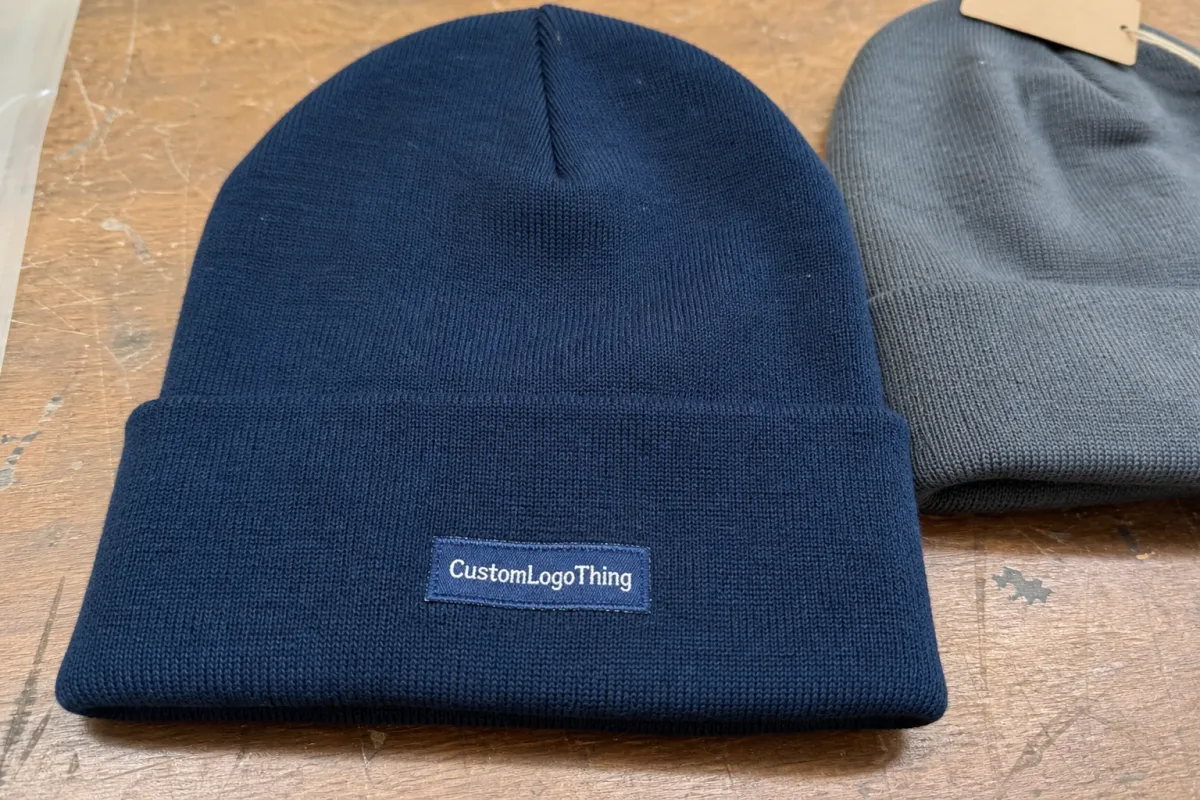
A beanie is one of the few apparel items that can land in a subscription box and still feel premium. It ships compactly, it does not create sizing headaches, and it can survive a dense packout without looking ruined. For seasonal drops, loyalty boxes, welcome kits, or retention gifts, that matters. The item has to feel useful without taking over the entire shipment.
There are three basic sourcing lanes. Stock blanks are the fastest and cheapest route: choose an existing cuffed or slouch style, then add embroidery, a woven patch, a leather patch, or a label. Private-label decorated beanies use standard bodies with more tailored branding and a cleaner retail presentation. Fully custom knit styles give the most control over gauge, color placement, and patterning, but they also bring longer lead times, more approvals, and higher minimums.
For a first run, most teams do not need a fully custom knit. A good stock beanie with the right decoration can carry the same perceived value at a fraction of the risk. That is especially true if the audience will only see the piece once, inside the box, rather than compare it side by side with a retail wall display. The difference is often subtle to the buyer and obvious to the factory.
Basic specs usually tell the story. A standard cuffed acrylic beanie often weighs about 3 to 4.5 oz finished, folds into a small footprint, and holds a logo cleanly on the cuff. Wool-blend options feel warmer and more substantial, but they can be scratchier and cost more. Anti-pilling acrylic sits in a useful middle ground for many subscription programs because it balances cost, softness, and consistency.
A beanie only feels premium if the knit, the fold, and the logo agree with each other. If one of those three is off, the piece reads as budget no matter what the mockup promised.
Set expectations early on minimums, sampling, and finish quality. A realistic first order often starts around 150 to 300 pieces for simple stock styles, while custom-knit programs usually need larger commitments, often 500 pieces or more depending on the factory. Sample lead time is commonly one to two weeks for decorated stock items and longer for custom knit. That is not delay for the sake of delay; it is the part that prevents a box launch from shipping a product that looks off in hand.
How Decoration, Folding, and Fulfillment Usually Work
The usual flow is straightforward on paper. You send art files, the supplier confirms the blank or knit spec, the decoration method is approved, production starts, and the finished goods move into folding, bagging, carton packout, and shipment to the kitting partner or fulfillment house. The complication is that each step changes presentation. A strong logo can still look wrong if the fold is sloppy or if the packaging instructions are vague.
The decoration method should match the brand position. Embroidery feels classic and durable, but dense stitching can stiffen the cuff or distort a fine-gauge knit. Woven patches are a good choice for small details and crisp color separation. Leather patches create a stronger retail cue, though they can feel rugged or seasonal depending on the artwork. Woven labels and printed labels are more restrained and work best when the beanie itself should carry the design rather than the branding shouting from across the box.
- Embroidery - best for simple logos and classic retail looks.
- Woven patch - good for fine detail and clean color separation.
- Leather patch - strong visual contrast, but not right for every brand.
- Woven label - understated and tidy for premium minimal branding.
Folding spec matters more than many teams realize. If the cuff lands on the wrong side, the logo is hidden. If the fold is loose, the beanie consumes more carton space and looks careless. If it is over-compressed, the knit creases and the insert feels less premium the second the lid opens. A simple fold-direction note, a packout photo, and a dimension check can prevent that problem early.
Quality control should include more than a glance at the front view. Ask for a sample photo that shows the actual logo placement, stitch density, cuff width, and inside seam alignment. If a patch is involved, inspect the edge finish and the attachment points. Loose corners and uneven placement are easy to miss in a mockup and hard to explain once the run is complete. For a subscription box, those small defects become recurring defects, because the same piece goes to every customer.
For polished branded packaging, add the practical extras that help fulfillment teams move faster: individual polybags if the beanie will pass through multiple hands, size stickers if cross-packing is possible, and an insert card if the box needs a retail-ready finish. That matters even more when the beanie sits beside Custom Packaging Products like mailers, tissue, or printed inserts that need to feel like one coordinated kit rather than separate purchases stitched together at the last minute.
Pricing, MOQ, and Unit Cost: What You Actually Pay
The quote is never just the quote. Real landed cost includes the blank garment, decoration setup, sampling, packaging, freight, duties, and any kitting labor charged by the fulfillment team. For small runs, freight can quietly become one of the bigger line items. A decent unit price can look unhelpful the moment the carton enters the shipping and handling column.
MOQ changes the math quickly. Lower minimums usually mean a higher unit cost because setup is spread across fewer pieces. Higher volumes improve pricing, but they also lock up cash and storage space. For a subscription launch, that tradeoff matters. A 250-piece test order can keep risk manageable, but the per-unit cost will look worse than a 2,500-piece run by a noticeable margin. The right number depends on demand confidence, not just price pressure.
| Option | Typical Unit Cost | Lead Time | Best For |
|---|---|---|---|
| Stock acrylic beanie with woven label | $3.25-$5.50 at 2,500 pieces; $4.75-$7.25 at 500 pieces | 10-20 business days | First launch, seasonal insert, tight budget |
| Stock beanie with embroidery or patch | $4.50-$8.25 at 2,500 pieces; $6.25-$10.50 at 500 pieces | 12-25 business days | Cleaner retail look, stronger branding |
| Custom knit beanie | $6.75-$12.50 at 2,500 pieces; $9.50-$16.00 at 500 pieces | 30-60 business days | Longer-term program, distinct identity |
Several variables push price up fast: heavier yarn, more stitches, multiple decoration locations, custom labels, special packaging, and rushed freight. Even the smallest detail can alter the quote. A one-time embroidery digitizing fee may sit in the $35-$125 range depending on complexity. Woven patch tooling, label setup, and custom packaging inserts can add more. None of those charges are unusual; they are simply easy to miss if the team only compares unit price.
The same logic applies to carton design. A custom printed boxes program around the beanie can raise the total spend through insert cards, tighter fit tolerances, and additional handling. That is fine if the packaging supports the brand story. It just needs to be accounted for from the start, not discovered after the order is already moving.
For broader packaging context and sustainability claims, it helps to ground the spec in recognized standards. ISTA provides useful transit-testing language, and FSC matters if your inserts or cartons need paper sourcing verification. Those references do not pick the beanie for you, but they keep the rest of the packaging conversation from drifting into vague promises.
Process and Turnaround Timeline from Proof to Delivery
A workable timeline starts with the brief, then a quote, then artwork proofing, then sample approval, then production, then quality control, and finally freight booking. The order seems obvious until someone tries to skip the sample because the ship date feels close. It may feel close. Production still needs the sample.
For decorated stock beanies, a realistic turnaround is often 2 to 4 weeks after proof approval, assuming the blank is in stock and the decoration is simple. Fully custom knit styles usually need 5 to 8 weeks, sometimes longer if the yarn requires matching or the pattern uses several colors. Add freight on top of that. Domestic shipping can be quick; ocean freight does not care about enthusiasm or launch calendars.
The delays that hurt the most are usually boring. Artwork revisions burn days. Color approval takes longer than expected. Sample feedback arrives late because five people need to sign off on a cuff nobody inspected until Thursday afternoon. Then the box schedule slips, and a single apparel item becomes the reason the entire shipment is behind. A good buyer plans around that risk instead of pretending it will not happen.
Color matching deserves its own line item in the process. If the brand needs a specific tone, ask whether the yarn is stock-dyed or custom-dyed, and whether a lab dip or physical color swatch is available before production runs. Pantone-style expectations are useful, but textile color has a wider tolerance than print. Yarn, stitch density, and lighting all influence the final result. A color that looks right on screen can read differently once the beanie is folded and bagged.
If the box is shipped direct-to-consumer, ask how cartons are packed, whether the fold orientation is documented, and whether transit assumptions are based on actual drop or compression criteria rather than guesswork. A soft goods insert does not need specialized shipping theater, but it does need a carton that protects the cuff, avoids scuffing the decoration, and survives basic handling without crushing the presentation.
Material, Fit, and Branding Choices That Change Perceived Value
Material is the first cue customers feel. Acrylic is the workhorse because it is consistent, affordable, and usually soft enough for a wide audience. Anti-pilling acrylic helps, especially for programs that expect the beanie to be worn often. It will not mimic cashmere, and it should not pretend to. What it can do is hold shape, keep cost sensible, and remain predictable from one run to the next.
Wool blends add warmth and a more premium hand-feel, but they can itch depending on the blend ratio and finishing. That matters if the audience is broad or if the item is intended for everyday winter wear. Recycled yarn can support a sustainability story, but only if the rest of the sourcing, labeling, and packaging claims are accurate enough to survive scrutiny. A weak environmental claim is worse than none.
Fit matters just as much as fiber. Cuffed beanies are the safest route because they hold a logo, fold predictably, and give the brand a clear place to land. Slouch styles can feel more fashion-forward, but they are less predictable in a tight subscription box and may hide the mark. One-size-fits-most is acceptable as a label; it is not a design strategy. Ask for relaxed width, cuff height, crown depth, and folded dimensions before approval.
Branding placement changes perceived value quickly. A front-center logo is direct and easy to read. A side patch or clean cuff label feels more retail and less promotional. That matters in a premium box, where the beanie is supposed to support the brand rather than compete with it. Small, well-placed branding usually holds up better than oversized decoration that dominates the knit. A loud logo can work, but only if the rest of the packaging is equally confident.
Color choice interacts with the box interior. Black, heather gray, navy, and oatmeal remain popular because they photograph well and sit comfortably beside most packaging systems. If the outer box uses bold color, a neutral beanie keeps the kit balanced. If the packaging is minimal, the beanie can carry the visual punch. That is a packaging decision, not just a color decision. The difference shows up the moment the lid opens.
Pay attention to texture as well. A tight, uniform knit tends to read cleaner and more expensive than a loose open weave, even when both use similar yarn. Stitch gauge influences how crisp a logo appears, how much the fabric stretches, and whether the final item feels dense or floppy in the hand. Those details do not photograph perfectly. They show up when the customer touches the product.
Step-by-Step Sourcing Plan for a Box Launch
Start with the math, not the mood board. What is the target landed cost per box? How much of that can the beanie consume without wrecking margin? Is the item meant to drive retention, increase first-box excitement, or support an upsell? Those answers determine whether the program needs a stock decorated style, a premium patch, or a fully custom knit piece.
Next, build a spec sheet that includes size, material, color, decoration method, packaging needs, ship window, and carton constraints. Add the details that usually get forgotten: relaxed width, cuff depth, final folded dimensions, logo size, and where the logo sits relative to the center seam. Keep the sheet simple enough to compare quotes without confusion. If one supplier quotes a 100% acrylic cuffed beanie and another quietly swaps in a wool blend with different finishing, the comparison is not meaningful.
Ask every supplier for the same inputs and request the same output format: unit price, setup fee, sample cost, freight estimate, production lead time, and packaging assumptions. If the box includes mailers, inserts, or other components, line them up so the whole kit follows one sizing logic. A beanie does not live alone. It lives with the rest of the box, whether the spreadsheet admits that or not.
Once the sample arrives, inspect it like a production piece, not a showroom sample. Check the hand-feel, stitch consistency, logo alignment, fold behavior, and whether the decoration creates a hard ridge or weak point. If the beanie has a patch, tug lightly at the edges. If it is embroidered, check for puckering. If it is knitted, look for yarn slubs, misshapen ribs, and shade variation between panels. Approve only after the fulfillment team signs off on packout, because a product that looks right on a desk can still behave badly inside a carton.
For the launch schedule, protect the handoff between supplier and fulfillment with a buffer. Five to ten business days of cushion can absorb small revisions, freight noise, and labeling issues. That is usually cheaper than expediting a recovery shipment after the fact. The cleanest orders are the ones that account for the last mile before anyone starts celebrating the quote.
Common Mistakes That Blow Margin or Delay Shipping
The first mistake is simple: ordering too late and hoping production will catch up. It will not. A subscription box has a fixed ship date, and the apparel item does not get a say in the schedule. Build the calendar backward from the fulfillment window, then add a buffer for sampling, approval, and freight. That buffer is not wasted time. It is the difference between a controlled launch and a rescue operation.
The second mistake is picking the lowest quote without checking setup fees, freight, labeling, or packout costs. A cheap unit price can turn into an expensive landed cost once the invoices are complete. The third mistake is ignoring the fold spec. If the logo ends up hidden, or the beanie is packed too tightly, the item loses the value it was supposed to add.
- Late ordering - leaves no room for sampling or freight hiccups.
- Quote shopping by unit only - hides setup, handling, and shipping costs.
- Skipping fold specs - ruins presentation and wastes box space.
- Ignoring sample approval - invites color or stitch problems you could have caught early.
The fourth mistake is assuming color will match the mockup perfectly. Sometimes it does. Sometimes the yarn tone, stitch density, or patch size shifts just enough to look wrong in the box. If the campaign is premium, ask for a pre-production sample or detailed photo proof rather than relying on a flat digital file. That extra step usually saves more money than it costs.
Another common miss is choosing a decoration that looks good on paper but behaves badly in volume. Dense embroidery can warp soft knit. Oversized patches can curl at the corners. Low-contrast labels can disappear on dark yarn. The problem is not the idea itself. The problem is ignoring how the material and the decoration interact under real production conditions.
Paper components deserve the same scrutiny. If the outer cartons or insert cards use paperboard, keep the sourcing claim honest and document it clearly. FSC-certified board is worth specifying if the brand needs that signal. A packaging story falls apart quickly when the materials are vague, or worse, inconsistent across vendors.
Expert Checks and Next Steps Before You Place the Order
Before the PO goes out, ask for a sample or detailed photo proof and verify three things: color, placement, and hand-feel. Those are the details customers notice first. Then confirm carton dimensions, case pack, labeling method, and whether the supplier or the fulfillment partner is handling kitting. If those responsibilities are unclear, the handoff is already messy.
A simple approval pack should include the front and back views, folded dimensions, yarn content, decoration method, packaging spec, and freight assumption. If anything is missing, the order will probably require a follow-up later. That is how minor omissions turn into schedule pressure. The best programs are not glamorous. They are documented.
Think through the relationship between the beanie and the rest of the shipment. If the box uses a mailer, insert card, tissue, or sleeve, the whole system should be designed together. A beanie that fits perfectly on its own can still create issues once the final packaging layout is locked. For the same reason, if the box is part of a premium branded program, the item should feel like it belongs there instead of arriving as a loose add-on.
For custom Beanies for Subscription Boxes, the cleanest outcome usually comes from a narrow, disciplined spec rather than a broad wish list. Choose the simplest version that still feels premium, lock the fold, confirm the dimensions, and leave enough time for sample approval. That approach protects margin and keeps the box on schedule. The beanie should strengthen the shipment, not become the reason it slips.
FAQ
What type of beanie works best for subscription box inserts?
A cuffed acrylic or acrylic-blend beanie is usually the safest choice because it balances cost, softness, and easy sizing. Choose a style that folds flat, keeps the logo visible, and feels substantial enough to justify its spot in the box. For higher-end programs, anti-pilling acrylic or a light wool blend can improve the hand-feel without making the item difficult to pack.
How much do custom beanies for subscription boxes usually cost?
Price depends on material, decoration, MOQ, packaging, and freight, so the useful number is landed cost, not just a unit quote. Simple stock styles with basic decoration can fall in the lower single digits at volume, while custom knit or premium patch programs move higher quickly. Add setup, samples, and shipping before you compare suppliers.
What is the normal turnaround time for custom subscription box beanies?
Stock decorated beanies usually move faster than fully custom knit styles, which need more time for production and approval. A realistic window is often 2 to 4 weeks after proof approval for stocked blanks and 5 to 8 weeks for custom knit, with freight added on top. Build extra time for artwork revisions and sample sign-off so the ship date is not held hostage by one accessory.
Can I order small quantities for a new box launch?
Yes, but small runs usually carry a higher unit cost and fewer decoration options than larger orders. If the launch is uncertain, ask for the simplest spec that still feels premium. That gives you room to test demand without paying for unnecessary complexity or inventory you do not need yet.
How do I make beanies feel premium inside a subscription box?
Use a cleaner knit, better yarn, and a decoration method that looks retail-ready instead of promo-giveaway cheap. Control the fold, add a simple insert card if the program needs one, and make sure the logo is visible the second the customer opens the box. Material consistency, crisp presentation, and careful packout usually do more than expensive embellishment.

