Order Woven Label Beanies for Subscription Box Brands
Woven Label Beanies for subscription boxes work because they keep doing the job long after the box is gone. A paper insert gets read, maybe photographed, then thrown out. A beanie gets worn. The label stays visible in the real world, which is where brand memory actually happens.
That makes this item more than a seasonal filler. It is a small piece with long shelf life, a decent margin story, and enough surface discipline to look premium without needing expensive decoration. The catch is that the product only works if the spec is tight. Weak artwork, bad fold planning, or sloppy label placement can make even a good beanie look generic.
Why woven label beanies can outperform larger inserts
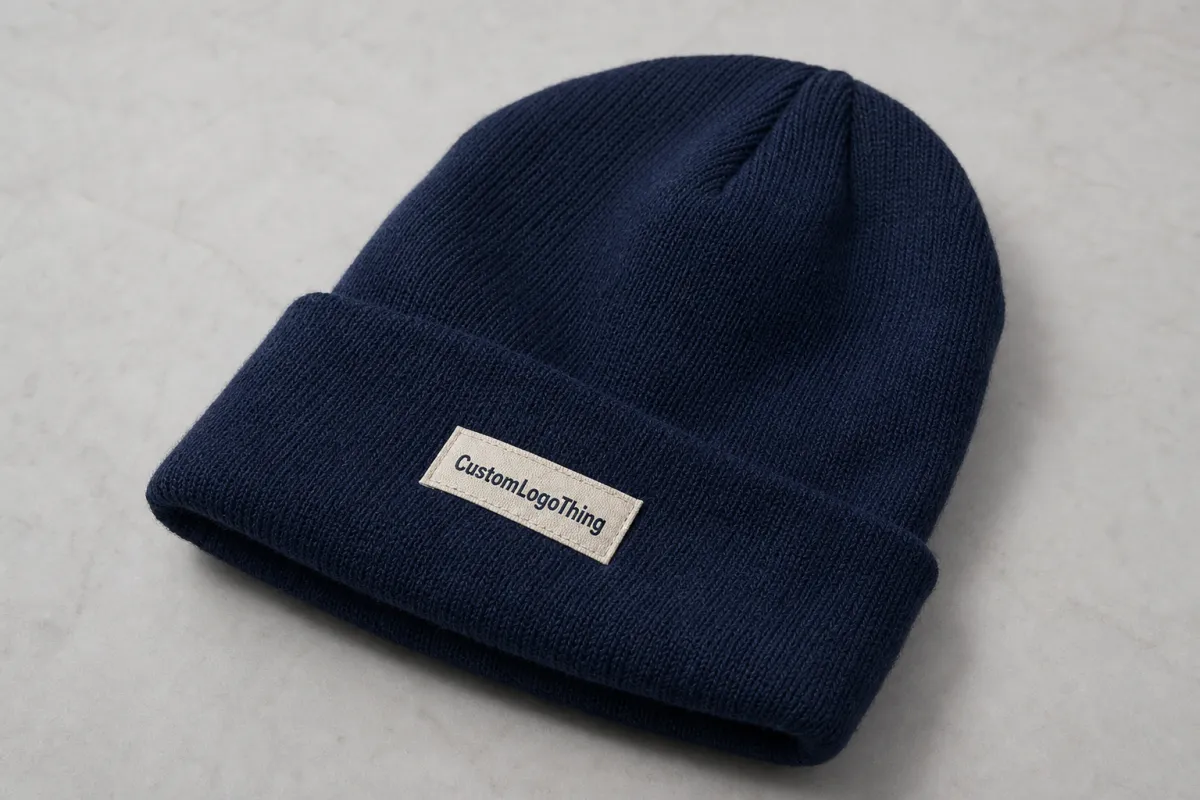
Most subscription boxes are judged in motion. The lid opens, tissue shifts, and the first item either feels considered or it does not. A woven label on a beanie usually reads as construction, not decoration. That is the difference. Construction feels like product value. Decoration feels temporary.
There is also a practical angle. A sewn label holds up through compression in packing, transit, and repeated wear. Printed cards bend. Foil inserts scuff. Even a nice paper piece is usually gone in minutes. A beanie stays in the rotation all winter, which gives the brand many more chances to be seen.
The limited label area is not a weakness. It forces the artwork to simplify. That is usually healthy. Clean logos, stronger contrast, and fewer thread colors tend to survive small-scale production better than busy art with gradients and fine detail. If a design only works when it is oversized, the design needs editing, not bigger packaging.
“If the label disappears in the fold, the spec is wrong.”
How they fit into subscription box packs
The basic build is simple: a knit beanie blank plus a woven label sewn into the cuff, side panel, or seam. The placement decision changes everything. A cuff label is easy to see when the beanie is folded flat. A side-seam label can look cleaner on the body of the hat. A back-seam placement may hide neatly in the carton, but it can disappear in product photos if the fold is not planned.
That is why mockups matter. A beanie does not live alone inside the box. It sits beside a card, perhaps a sample or pouch, maybe tissue, and often a second item that changes the stack height. A shallow carton may require a tighter roll. A deeper box can allow a looser fold. Packing shape is part of the product spec, not a warehouse afterthought.
Artwork conversion is another place where expectations get tested. Woven labels translate logos into thread counts, so fine gradients, tiny type, and hairline rules often disappear. A reliable file usually keeps to 2 to 5 thread colors, strong outlines, and enough negative space to preserve legibility at small size. That constraint is annoying for design teams. It is also why the final piece looks cleaner than a rushed print.
Cost, pricing, and MOQ realities
On a quote sheet, Woven Label Beanies for subscription boxes usually break into five parts: the blank beanie, the woven label, sewing or application labor, packaging, and freight. Buyers often focus on the hat price alone, then wonder why the sample quote feels high. The label and labor are where small runs get expensive. Setup work does not shrink just because the order is modest.
Typical landed costs vary by yarn, knit density, label complexity, and shipping lane, but these ranges are a useful starting point:
| Option | Typical landed cost per unit | Common MOQ | Best fit | Main trade-off |
|---|---|---|---|---|
| Blank beanie + sewn woven label | $2.00-$3.75 | 300-1,000 | Recurring subscription drops | Limited room for decoration |
| Blank beanie + woven label + hang tag | $2.20-$4.25 | 500+ | Gift-tier boxes and premium kits | More pack-out labor |
| Fully custom knit beanie | $3.00-$6.50 | 500-2,000 | Seasonal launches with strong brand art | Longer approvals and fewer reorder shortcuts |
The useful rule is simple: lower quantities push up unit price, and more customization pushes up both cost and lead time. A 5,000-piece run can absorb a small woven-label setup charge easily. A 300-piece test order cannot. That is not a problem. It is just the reality of thread setup, sewing time, and handling.
Ask for freight and packaging to be quoted separately if possible. Split shipments, individual polybags, and multiple fulfillment destinations can change the landed cost faster than the product spec itself. If your box uses paper collateral, compare finishes with Custom Labels & Tags and the broader Custom Packaging Products lineup before you lock the kit. Rework is always more expensive than a careful first pass.
Production steps, timeline, and quality checks
The workflow is straightforward, but the schedule can move if approvals drag. First comes artwork review. Then a weave proof. Then sample approval. After that, bulk production, inspection, packing, and shipment to the fulfillment site or box assembler. For a standard run, a realistic planning window is often 3 to 5 weeks from approved artwork to warehouse receipt, then freight on top. If you need holiday timing or split delivery, build in more buffer than feels comfortable.
The most common delay is the file. Missing vectors, late thread-color approvals, or a change to the label width after sampling can add days fast. A small adjustment to the label can also change how it sits on the cuff. That sounds minor until the sewn sample lands and the fold no longer matches the carton layout. A fixed spec sheet prevents that drift.
Quality control should be boring. That is the point. Before bulk approval, check for:
- Label centering and stitch security
- Thread tension and fraying at the edges
- Color drift between proof and sample
- Fold shape inside the intended box size
- Readable contrast under daylight and warehouse lighting
If the beanie ships with fragile or heavy items, ask whether the shipper carton should be checked against an ISTA test method or a similar transit standard. A beanie can survive rough handling. The rest of the box may not. Packaging should be designed around transport, not just storage.
Spec choices that affect fit and brand impact
Fit starts with the knit. A ribbed cuff gives more stretch and usually feels more universal across head sizes. A looser gauge looks softer, but it can lose shape faster. Most subscription programs land on acrylic or an acrylic-wool blend because acrylic keeps color stable and helps control cost, while wool content adds warmth and a more premium hand feel. The right choice depends on the climate, the target price point, and whether the box is supposed to feel practical or gift-like.
Label size should follow the silhouette. A shallow cuff cannot carry a big patch without looking crowded. A taller cuff can take a slightly wider label and still read cleanly. In practice, about 1 to 1.5 inches of visible label width is often enough for a readable logo, provided the contrast is strong. Dark-on-dark looks sharp in a studio. Under warehouse lights, it can vanish.
Wash resistance and stitch durability matter more here than they do on many other branded items. A subscription box item is usually handled by a fulfillment team before a customer ever sees it, then worn, folded, stuffed in bags, and washed. Ask how the label is attached, how the seam is finished, and whether the sample has been checked after a wash cycle. A pretty sample that fails after two wears is not premium. It is expensive clutter.
If the box includes printed collateral, this is also the stage to decide whether sustainability claims need support. FSC-certified paper stock helps if recycled or responsibly sourced paper is part of the message. The material story should match the product story. Otherwise the packaging starts making promises the rest of the kit cannot keep.
Ordering workflow for subscription box teams
Ordering goes better when the box strategy comes first. Start with theme, audience, target retail value, and the role the beanie is supposed to play. A winter wellness box wants a calmer, more utility-driven feel. A creator collab can take more personality. The item should fit the story instead of sitting beside it like a random add-on.
- Set the spec. Choose beanie color, label size, placement, stitch type, and packaging requirements before requesting pricing.
- Build the box mockup. Show the beanie with the other contents, because color balance and scale change once the carton is full.
- Approve the sample in real light. Check fold shape, touch feel, and contrast in daylight and warehouse lighting, not just on screen.
- Lock the receiving window. Share the fulfillment schedule early so the order arrives before staging begins.
If your program needs a fuller finishing stack, compare options in Custom Labels & Tags or build out the rest of the kit with Custom Packaging Products. The goal is not to pile on extras. The goal is to make every component reinforce the same cue.
Common mistakes that make custom beanies look generic
The fastest way to cheapen the look is to make the label too small for the logo. Once that happens, the branding turns into visual noise. The beanie may still be wearable, but it will not photograph well. Subscription products live and die on how they look in photos, so that matters.
Label placement causes trouble too. A great woven label in the wrong spot gets crushed by the fold and disappears in the carton. Another common miss is approving thread colors from a screen only to find the sewn sample has less contrast than expected. Thread does not behave like ink. A digital proof is a reference, not a promise.
Box dimensions are part of the product decision. A carton that is a little too shallow can flatten the cuff and crease the label. A box that is too deep can let the beanie shift around and look unfinished. Packaging is geometry. Miss the geometry, and even a good item looks average.
There is also a production mistake that keeps showing up: teams change the spec after sampling. That usually means the quote changes, the schedule slips, and the final piece no longer matches the box plan. If the beanie is meant to be a repeatable component, the spec needs to behave like one.
Generic usually starts with one small compromise: the wrong label size, the wrong fold, or the wrong color contrast.
What to lock before the first run
Before you place the order, put everything on one page: beanie color, label dimensions, placement, stitch style, quantity, packaging, thread references, and the approved artwork file. That sheet saves time on every reorder. It also gives fulfillment a stable reference, which cuts down on packing errors and avoids the slow death of repeated clarifications.
Ask for a physical sample or at least a pre-production photo before bulk release. If the beanie is a hero item in the box, the sample is cheap insurance. Set reorder triggers based on subscriber growth, replacement stock, and seasonal demand so you are not buying under pressure. The smoother the reorder process, the easier it is to keep the box looking intentional from one drop to the next.
woven label Beanies for Subscription boxes make the most sense when the brand wants a small item with a long memory: readable after packing, wearable after unboxing, and easy to repeat once the spec is locked. That is the real value. Not a loud insert that disappears on day one.
Are woven label beanies better than printed beanies for subscription boxes?
Usually, yes. Woven labels feel more constructed and tend to hold up better through folding, shipping compression, and repeated wear. Printed decoration can work for some looks, but a sewn label often reads as more durable and more deliberate when the box is opened.
What MOQ should I expect for woven label beanies for subscription box programs?
MOQ depends on the blank style, label complexity, and packaging needs. Smaller runs are possible, but the unit price usually rises as order size drops or as customization increases. If you need multiple colorways or split shipments, ask for those costs separately.
How long do woven label beanies usually take to produce?
Most runs need time for artwork review, weave proofing, sample approval, bulk production, and freight. A standard timeline often lands around 3 to 5 weeks before warehouse receipt, but rush options can change that. The earlier the artwork is approved, the less risk there is.
What should I include in a quote request for custom woven label beanies?
Share the cap style, quantity, beanie color, label artwork, placement preference, packaging requirements, and target delivery date. If you want a clean comparison, ask for separate pricing on product, labeling, packing, and shipping so the real cost drivers are visible.
How do I keep woven label beanies consistent across recurring box drops?
Use one approved spec sheet and keep the same artwork files, thread references, and placement notes for every reorder. Before a new run, compare the sample against the archived reference so color drift, stitch changes, or label shifts do not slip in unnoticed.
For most subscription box teams, the smartest move is straightforward: pick a clean knit, keep the label readable, lock the spec early, and treat the beanie like a repeatable packaging component rather than a one-off giveaway. That is how the item keeps its value after the unboxing moment is over.

