For ecommerce brands, a beanie looks simple until the sample arrives. Then the details show up: the knit feels too thin, the cuff sits awkwardly, the logo lands off-center, and the product suddenly reads cheaper than the price suggests.
That is why the best custom Beanies Wholesale for Ecommerce programs are built around more than unit cost. Buyers need retail-ready decoration, enough inventory depth for demand spikes, and a landed price that still works after freight, fulfillment, packaging, and reorders. A beanie can be a seasonal add-on, a bundle piece, a gift-with-purchase, or a standalone SKU. It can also hurt margin fast if the spec is vague.
The useful part is that beanies are simple in structure but sensitive in execution. One size can simplify inventory. Small flaws in knit quality or logo placement are obvious in product photos and even more obvious when a customer puts the item on.
Custom beanies wholesale for ecommerce: where margin shows up
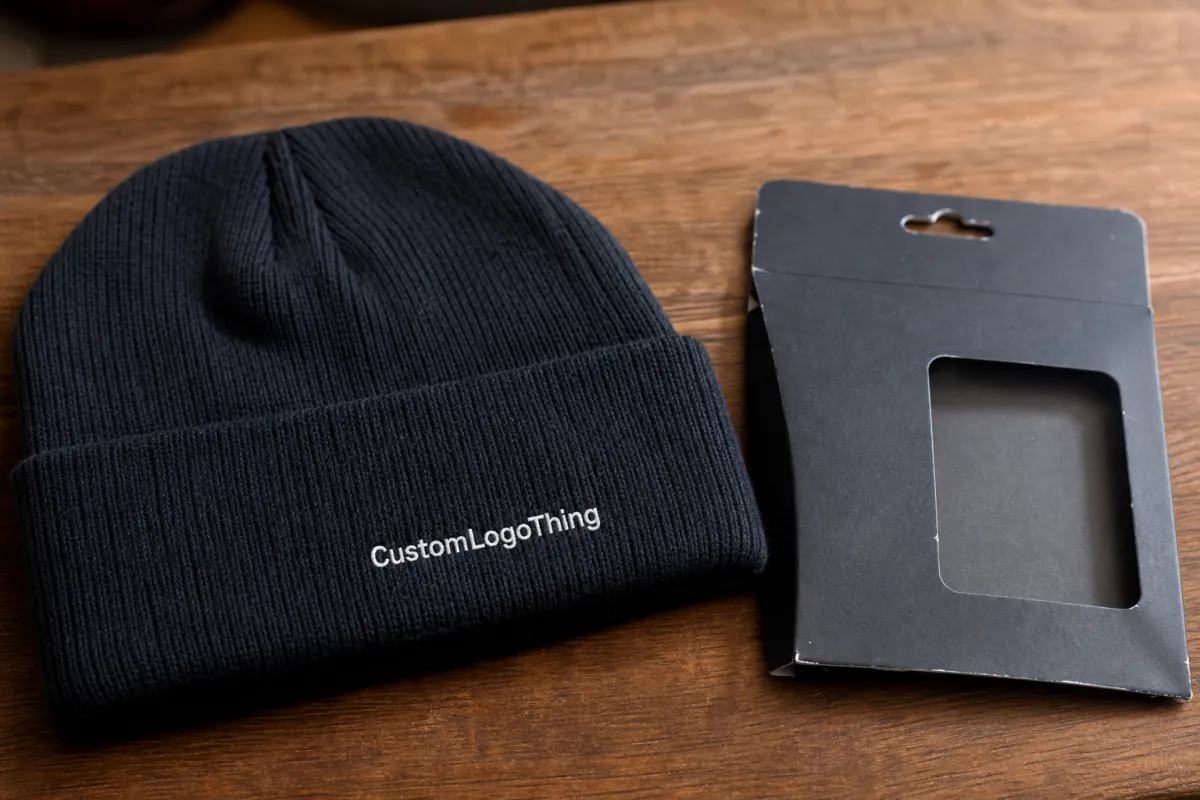
Beanies earn their keep in the operational details. They do not require a size run like tees or pants, and they usually create less return risk than fitted apparel. They also ship compactly, which helps if your storage, receiving, or fulfillment costs are tied to volume.
The margin story depends on the spec. A standard acrylic cuffed beanie at moderate volume may land around $3.25-$5.25 per unit before freight. Heavier knits, recycled yarns, wool blends, or more labor-intensive decoration can push that into the $5.50-$9.00 range. That difference matters because a beanie that works as a gift-with-purchase may not work as a standalone item once packaging and shipping are included.
Beanies also work well in bundles. They pair naturally with outerwear, scarves, mugs, and seasonal campaigns without creating a complicated SKU structure. That makes them useful for brands that want a low-risk accessory with a clear presentation.
The best beanie program is not just a merch decision. It is a margin decision, a presentation decision, and a logistics decision.
Choosing the right beanie style for your store and audience
Style changes perception quickly. A cuffed beanie feels classic and gives you a clean decoration zone on the fold. A slouchy beanie reads more relaxed and works well for streetwear, creator brands, and lifestyle drops. A fisherman beanie sits shorter and closer to the head, which suits minimal branding and compact silhouettes. A double-layer rib-knit usually feels warmer and more substantial, which helps in cold-weather collections.
The right choice should follow audience behavior, not just a mood board. Outdoor brands usually need warmth, structure, and stretch recovery. Lifestyle labels often want a softer hand-feel and a shape that photographs cleanly in flat lays. Gift buyers usually respond to a cuffed beanie with a small embroidered mark or woven patch because it is easy to understand. Fashion-led stores can use a more unusual shape because the silhouette does some of the selling.
Decoration should match the silhouette. Oversized logos often fight the product. A restrained embroidery, woven patch, or woven label usually looks more expensive than a large stitched graphic that bends with the knit. If the brand sells minimal basics, loud branding on a beanie can feel out of character.
| Beanie style | Best fit | Decoration options | Typical unit range |
|---|---|---|---|
| Cuffed | Classic ecommerce drops, gifts, and bundle offers | Embroidery, woven patch, woven label | $3.25-$6.50 |
| Slouchy | Lifestyle, streetwear, creator brands | Woven label, low-profile patch, light embroidery | $3.75-$7.25 |
| Fisherman | Minimal branding, compact fashion looks | Small patch, label, tight embroidery | $3.50-$6.75 |
| Double-layer rib-knit | Cold-weather collections and outdoor use | Embroidery, patch, interior label | $4.50-$9.00 |
Materials, knit construction, and decoration options that hold up
Material choice drives warmth, feel, and cost. Acrylic is the workhorse because it is affordable, warm enough for most buyers, and easy to source in stock colors. Acrylic-wool blends feel richer and usually perform better in cold weather, but they add cost and can be more care-sensitive. Recycled yarns make sense when the brand has a real sustainability story and the supplier can document content consistently. Cotton blends feel softer and lighter, but they are usually better for mild climates than deep winter.
Knit construction affects both wear and branding. A tighter gauge gives the surface a cleaner finish and helps the beanie hold its shape. A looser knit can feel softer, but it may distort logos or stretch out faster. That matters more than buyers expect because a beanie that bags out after a few wears makes the product and the brand look cheap.
Decoration should be judged on appearance and durability together. Embroidery is still the default because it looks retail-ready and survives transit well. Woven patches and woven labels work when the logo is fine-line or when the brand wants a softer hand-feel. Direct-applied branding can work, but it needs testing for stretch recovery and wash resistance.
Practical buyers ask for knit gauge, yarn content, stitch density, decoration size, and seam finish before sampling starts. That gives you something real to compare instead of two quotes that look similar until the boxes arrive.
Embroidery density matters too. A heavy fill stitch can make the front stiff and pucker the knit. Smaller marks and cleaner outlines usually age better than ambitious logo art that tries to do too much on a stretchy surface.
Size, color, labeling, and packaging specifications to lock in
Most beanies are sold as one size fits most, which is convenient until the fit is actually wrong. Ask for measured circumference range, crown height, and cuff depth. Those three details tell you more than the phrase "one size" ever will.
Color approval deserves the same discipline. Stock yarn colors are the safest route for a first run. Custom-dyed yarn is worth it only when brand color is central to the product story, because it adds time, cost, and another point of failure. Heather yarn can soften a dark shade and photograph well, but it also shifts under different lighting. If color matters, get a lab dip, a yarn card, or a physical strike-off before production.
Branding and packing details should be fixed early because they affect fulfillment. That includes care labels, woven labels, hang tags, polybags, barcode stickers, and carton counts. If the item is going into a 3PL or warehouse, those choices affect intake speed and error rate.
For paper components, FSC-certified stock is worth considering; see FSC for the certification framework. If the beanie is part of a premium drop or bundled presentation, reviewing custom packaging through Custom Packaging Products helps keep the item and its box aligned. For transit, the ISTA test standards are a useful reference if you want fewer carton failures in move-through and last-mile handling.
Pricing, MOQ, and unit cost drivers for wholesale orders
Beanie pricing usually follows the same pattern. Yarn choice sets the base. Decoration method adds labor. Knit complexity changes machine time. Packaging adds handling cost. Freight and receiving decide whether the first quote was actually useful.
MOQ changes the math. A low-MOQ run is useful for testing demand, but the unit price is usually higher because setup costs are spread across fewer pieces. Larger orders often reduce per-unit cost enough to make the item stronger for ecommerce margin. That said, more units only help if the style is broad enough to move.
On every quote, check a few repeat drivers. Is the beanie stock knit or custom? Is decoration embroidered, patched, or sewn on? Is packaging retail-ready or bulk packed in polybags? Are samples included, charged separately, or credited later? Does the price include carton labeling and packing counts? If freight or labels are missing, the quote is not a fair comparison.
Reorder pricing matters as much as the first run. A program that can be repeated with the same fit, color, and decoration at a stable cost is much easier to manage than one that forces a new negotiation every season.
For many ecommerce teams, the hidden cost is not the beanie itself. It is the small work around it: inbound receiving, insert assembly, fulfillment prep, and any extra handling caused by unclear packing specs. Buyers who price the landed unit instead of the factory unit usually make better decisions.
Process, timeline, and lead time from quote to delivery
A clean order usually moves through the same sequence: inquiry, artwork review, mockup or sample approval, yarn and decoration confirmation, bulk production, quality check, packing, and shipment. The faster each step gets approved, the less the schedule drifts. Delayed artwork, color changes, and packaging edits after sampling do most of the damage.
For stock-based ecommerce beanies, a realistic planning window is often 12-18 business days after approval. Custom yarn, special trims, or more complex decoration can extend that. Add more time if the order includes branded packaging, multiple color splits, or special carton instructions.
Freight and receiving need their own buffer. A production complete date is not the same as an available-to-sell date. If the order is going to a fulfillment center, confirm carton counts, pallet method, and barcode placement before bulk production starts.
The best buyers treat the beanie as both a product and a supply-chain line item. That mindset keeps the order cleaner, the launch date more believable, and the first customer experience closer to the mockup.
How to compare suppliers on quality, communication, and consistency
The lowest quote is not automatically the best one. A decent supplier gives you a clear spec sheet, responsive proofing, stable samples, and a realistic production timeline. That sounds basic because it is basic, and it is also where a lot of orders go wrong.
Quality control should cover more than the logo. Check stitch density, patch placement, embroidery tension, yarn consistency, seam finish, and color match across units. Look at the cuff. Look at the crown. Turn the piece inside out if needed. A bulky seam or uneven top can turn into a customer complaint even if the decoration itself is fine.
Consistency matters more in ecommerce than in one-off retail because reorder history becomes part of the product. If the first run sells through, the second run should match the same fit, the same yarn feel, and the same logo placement. Suppliers who keep a documented approval trail are easier to work with because there is less argument about what was agreed to the first time.
Two filters separate dependable partners from weak ones: do they answer with actual specs, and do they explain tradeoffs honestly? If the answer is yes, you are probably dealing with someone who can support a real program instead of a one-time promo.
Ask about defect handling before the order ships. A supplier that can describe inspection standards, tolerance levels, and remake procedures in plain language is usually more useful than one that only talks about speed.
What to send for a fast quote and clean first order
If you want an accurate quote, send the details that affect the build: quantity, style, logo file, color references, packaging needs, shipping destination, and required delivery date. If you already know whether you want embroidery, a woven patch, or a woven label, say so. If not, ask for the best option by budget and brand look.
It also helps to answer a few planning questions upfront. Do the beanies need individual polybags or retail-ready packaging? Will they ship to a warehouse, a 3PL, or Direct To Consumer? Do you need barcodes applied at the factory? Those details change the packed carton spec, which affects freight and receiving.
For a first order, keep the spec as tight as you can. Narrow the color family first. Confirm decoration size second. Lock packaging third. Fewer moving parts usually means fewer revisions and a better production outcome.
For brands building a repeatable accessory line, custom beanies Wholesale for Ecommerce works best when the quote, sample, and packing plan all agree before bulk starts. That is the unglamorous part, and it is also the part that keeps margins intact.
What is the usual MOQ for custom beanies wholesale for ecommerce?
MOQ depends on the knit style, decoration method, and whether the beanie uses stock materials or custom-dyed yarn. Lower-MOQ programs are useful for testing a new collection, while larger runs usually improve the unit cost.
How long does production usually take after artwork approval?
Lead time varies by specification, sample requirements, and order size. For simpler stock-based runs, 12-18 business days after approval is a common planning window, but custom yarn or complex packaging can take longer.
Which decoration method is best for ecommerce beanies?
Embroidery is a strong choice for durability and retail presentation, while woven patches and labels work well for a cleaner, softer hand-feel. The best option depends on logo detail, budget, and the visual style of the store.
Can I order mixed colors in one wholesale beanie run?
Mixed-color runs may be possible, but they usually depend on the base yarn plan and the minimum quantity for each colorway. Ask for the color split early so the supplier can confirm pricing and production feasibility.
What should I check before approving a sample?
Review fit, hand-feel, logo placement, stitch quality, color accuracy, seam finish, and packaging details against the approved spec sheet. A clean sample approval helps prevent avoidable issues once bulk production starts.

