Buyer Fit Snapshot
| Best fit | Custom Beverage Labels Price projects where brand print, material claims, artwork control, MOQ, and repeat-order consistency need to be specified before quoting. |
|---|---|
| Quote inputs | Share finished size, material target, print colors, finish, packing count, annual reorder estimate, ship-to region, and any compliance wording. |
| Proofing check | Approve dieline scale, logo placement, barcode or warning zones, color tolerance, closure strength, and carton packing before bulk production. |
| Main risk | Vague material claims, crowded artwork, missing packing details, or unclear freight terms can make a low unit price expensive after revisions. |
Fast answer: Custom Beverage Labels Price: What Really Drives It should be specified like a repeatable production item. The safest quote records material, print method, finish, artwork proof, packing count, and reorder notes in one written spec.
Production checks before approval
Compare the actual filled-product size with the drawing, then confirm tolerance on folds, seals, hang holes, label areas, and retail display edges. Reserve space for logos, QR codes, warning copy, and material claims before decorative graphics fill the panel.
Quote comparison points
Review material grade, print process, finish, sampling route, tooling charges, carton quantity, and freight assumptions side by side. A quote is only useful when the supplier can repeat the same color, closure quality, and packing count on the next order.
The lowest Custom Beverage Labels price often turns into the most expensive mistake once a few cases hit ice, condensation, and constant handling in a tasting room or retail cooler. I have seen labels curl at the edge after a single afternoon in a chilled display, and once that happens the product starts looking tired before it ever gets a fair shot on the shelf. Packaging should be doing the selling, not quietly fighting the product.
From a packaging buyer's point of view, the cost is never just paper and ink. Adhesion, print clarity, moisture resistance, and how the label behaves on glass, plastic, aluminum, or coated surfaces all affect the final result. That is why custom beverage labels price needs to be judged as a performance cost, not a sticker cost.
That matters for a brewery can line, a chilled juice bottle, a bottled cocktail, or any drink that moves through a busy shipping and retail path. The right spec reinforces branded packaging, strengthens package branding, and keeps the full product packaging system looking deliberate. The wrong spec can turn a promising launch into a reprint order, and nobody really wants that kind of surprise.
Buyers comparing stock labels with custom-printed options usually need one clear answer: what problem is the label solving? A short-run seasonal release does not need the same construction as a permanent SKU. A shelf-stable drink does not face the same wear as a product that lives in cold storage. The smarter spend is the one that protects the product without padding the bill with features that do not help. That is the practical side of custom beverage labels price.
Custom Beverage Labels Price: Why Cheap Labels Fail Fast
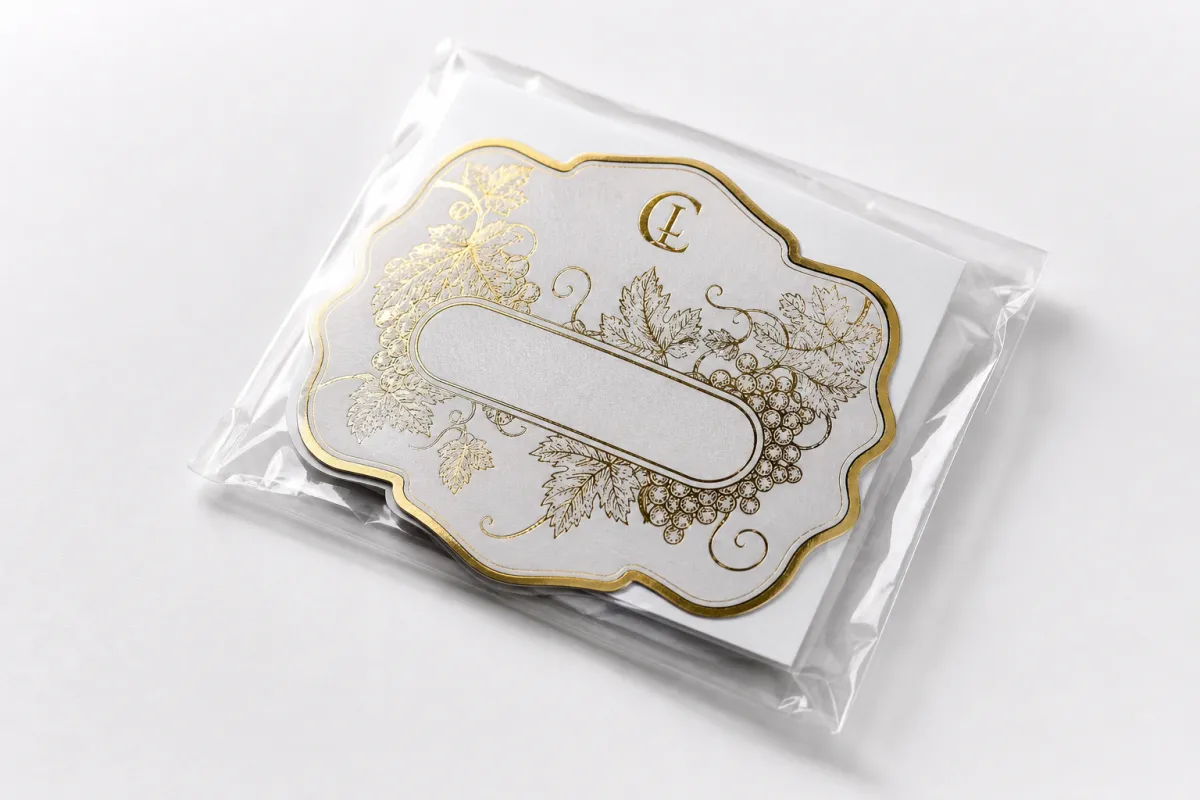
The cheapest label tends to fail in the most visible place. It starts at the cooler door, where moisture works its way under the edge. It continues in an ice bucket, where a weak adhesive softens under constant wet contact. Then it shows up on the shelf as a wrinkled front panel that makes the bottle look like it belongs in the wrong aisle. That is how custom beverage labels price gets misunderstood: the opening number looks attractive, while the real cost arrives later as brand damage, wasted inventory, and another round of production.
Buyers often focus only on the label stock when they ask for a lower quote. That misses too much. A beverage label has to survive the actual use environment, not just the print room. If the container will be cold, wet, oily, or handled over and over, the adhesive and topcoat matter as much as the face stock. A label that looks fine on a flat proof can fail on a curved bottle or a chilled can. In real production, the custom beverage labels price reflects the entire build: substrate, adhesive, print method, and finish.
A familiar trap shows up when a brewery or juice brand wants a clean launch and assumes a simple paper label will do the job. Then the first run lands in refrigeration or on ice, and the labels begin to lift at the edges, bleed color, or show abrasion. At that point the lower custom beverage labels price no longer looks like a bargain. It becomes a redesign, a reprint, and sometimes a delayed release. That is why application should come first and material second.
For launch planning, the label should be considered as part of the full retail packaging presentation. A beverage label is not a standalone graphic. It sits inside a larger shelf story that may also include cartons, carriers, or Custom Packaging Products. Weak label quality pulls down the package branding even when the drink itself is excellent. That is not marketing theater. It is just how retail shelves work.
The goal is not to buy the most expensive label spec. It is to avoid under-specifying the one surface customers see and touch first. A label that stays flat, stays legible, and keeps the container looking clean usually pays for itself fast. That is the honest answer behind custom beverage labels price.
Product Details That Shape Custom Beverage Labels Price
The easiest way to understand custom beverage labels price is to break it into the details that move the number. Size, shape, material, adhesive, finish, and print method all push the quote in different directions. A small rectangle on paper stock usually sits at the lower end. A die-cut label with tight curves, specialty ink, and moisture resistance costs more because the equipment has to do more work and the material has to carry more of the burden.
Label shape matters more than many buyers expect. Standard rectangles and ovals are easier to cut and place, which helps keep custom beverage labels price controlled. Complex outlines, decorative corners, and irregular silhouettes add tooling attention and waste. If the packaging design is chasing a hand-applied craft look, that may be worth the extra effort. If the shape only exists because it looked premium on a mood board, the cost may not earn its keep.
Container surface matters too. Glass bottles behave differently than PET plastic, and aluminum cans bring their own requirements. Curved bottles need a label that lays down cleanly without tunneling or edge lift. Textured containers can expose weak adhesive sooner. Chilled products create condensation. Oily products, including some cocktails and flavored drink concentrates, can fight the adhesive layer. Each of those details changes custom beverage labels price because each one changes the construction.
Placement affects cost as well. Front labels are usually simpler. Wraparound labels take more material and tighter registration. Neck labels, multi-panel labels, and promotional seal labels add handling steps. If the design includes a front label, a back panel, and a neck band, the final custom beverage labels price will reflect the extra print area and the finishing work. Every added panel brings another measurement, another proof point, and another chance for alignment issues.
Design complexity can push the price on its own. Metallic effects, white ink on clear stock, spot gloss, heavy coverage, and layered color builds all require more attention. Sometimes those choices create a stronger shelf read. Other times the artwork could be simplified without losing impact. That is where packaging discipline matters. Good design should improve the product, not just decorate it.
A useful comparison is to think about labels the same way buyers think about custom printed boxes: not by color alone, but by how well the structure fits the product and the environment. The same logic applies here. The right spec keeps the brand clean and the packaging consistent across the line.
Material, Finish, and Durability Specifications
Material is one of the biggest reasons custom beverage labels price moves up or down. Paper usually sits at the lower end, but it is not a universal answer. It can work for dry, shelf-stable products that do not face heavy condensation or cooler storage. BOPP film is a common step up because it resists water better and holds up well in beverage settings. Vinyl and specialty films can handle tougher conditions, though they usually raise the custom beverage labels price more than buyers expect.
Finish changes both the look and the economics. Matte finishes create a restrained, refined appearance. Gloss finishes brighten color and often stand out under retail lighting. Soft-touch finishes feel elevated, but they can add cost quickly. Specialty coatings, including scratch resistance or targeted shine, also affect the total. That is why the custom beverage labels price is rarely about the base material alone. The finishing layer matters because it affects shelf presence and how long the label stays attractive.
Durability requirements should be stated clearly at the start. Waterproof, moisture-resistant, oil-resistant, freezer-safe, and refrigerator-safe are not interchangeable terms. A label for a cold brew can needs a different build than a label for a shelf-stable juice bottle. If the product will move through a wet bucket, a refrigerated display, or delivery routes with temperature swings, the spec needs to match the real environment. That is how custom beverage labels price stays aligned with the actual job the label has to do.
Adhesive selection deserves more attention than it usually gets. Permanent adhesives are common for beverages because the label is expected to stay on for the life of the product. Removable adhesives can help with certain promotional or reusable container applications. Freezer-grade adhesives are a different category altogether. They are built for colder surfaces and tougher conditions. If someone lowers the custom beverage labels price by swapping in a basic adhesive, ask what happens when the bottle sweats.
For brands that care about paper sourcing, FSC-certified options can be a strong fit. That does not make the label better by itself, but it does support a more responsible material story. If sustainability is part of the brand promise, it is worth checking options through an authority like the Forest Stewardship Council. That choice can carry weight in package branding, especially for products sold beside natural or premium food lines.
The material decision should always match the use case. A label for a premium spring water bottle does not need the same construction as a label for an iced cocktail sitting in a cooler all day. Matching the spec to the environment keeps the custom beverage labels price sensible and prevents the false economy of buying cheap labels twice.
| Material | Typical Use | Relative Price | What to Expect |
|---|---|---|---|
| Paper label stock | Dry products, shelf-stable drinks, low-moisture use | Lowest | Good print clarity, but weak in wet or chilled conditions |
| BOPP film | Most beverage bottles and cans | Moderate | Water-resistant, durable, strong all-around value |
| Vinyl or specialty film | Premium, outdoor, or demanding handling environments | Higher | Better toughness, more cost, often not needed for simple runs |
| Clear film with white ink | Modern transparent-packaging looks | Higher | Clean visual effect, more print complexity, stronger shelf pop when executed well |
For brands comparing options inside broader product packaging planning, a useful test is whether the material choice improves sell-through. If it does not improve visibility, durability, or brand fit, it is probably only adding to custom beverage labels price for the sake of decoration. Packaging should earn its place.
Custom Beverage Labels Price, MOQ, and Unit Cost
Quantity is one of the strongest levers in custom beverage labels price. Setup costs do not disappear just because the order is small. They get spread across fewer pieces. That is why a 1,000-piece run can look expensive next to a 10,000-piece run, even when the material stays the same. As volume rises, the unit cost falls, and that holds true in both digital and conventional production.
MOQ, or minimum order quantity, depends on the print method and the label construction. Digital production often supports lower quantities and faster turnaround. Conventional production usually favors larger runs because setup and press efficiency improve with volume. Neither option is automatically better. The right choice depends on your launch plan, storage space, and sell-through rate. If you are testing a seasonal flavor, a lower MOQ can protect you from dead inventory. If the SKU already has demand, a larger order can improve custom beverage labels price in a meaningful way.
Here is the basic cost framework I like to use: material + print + finishing + die cutting + packaging + shipping. That is the real math behind custom beverage labels price. Sometimes the material is only a small slice of the total. Sometimes the die cut or the specialty finish becomes the real cost driver. Buyers who ask for an itemized quote usually make better decisions because they can see where the money is going.
For a useful comparison, ask for tiered pricing at several quantities. A good supplier should show where the break-even point sits. A 1,000-label run might be enough for a test. A 5,000-label run might lower the unit price enough to justify the order. A 10,000-label run might offer the best per-unit value, but only if you can store and use the labels before the artwork changes. Overbuying is not a savings if the label spec changes later.
Typical ballpark pricing helps frame a budget, even though each job still depends on the exact specs. At a 5,000-piece level, a simple paper beverage label might land around $0.08-$0.14 per unit. A BOPP film label may sit closer to $0.11-$0.18. Specialty film, white ink, or heavy finishing can push the range higher, often into the $0.14-$0.24 area or beyond. Those numbers are not a promise. They are a practical way to sanity-check custom beverage labels price before artwork is approved.
“The quote looked good until we asked what happened with condensation. That was the real problem, not the sticker price.”
If you are comparing labeling to other packaging choices, the logic is the same as ordering Custom Labels & Tags for a broader packaging line or pairing labels with custom printed boxes. Unit price matters, but only after the piece does its job. The cheapest number is not always the smartest purchase.
Storage also belongs in the cost conversation. If a lower custom beverage labels price depends on a huge order you cannot use for six months, you are tying up cash and warehouse space. Smart buyers compare unit cost against forecast, not against ego. A label order should help the business, not impress the procurement spreadsheet.
Process and Timeline: From Proof to Delivery
A clean process saves money. That sounds obvious, yet it is still where many label orders drift off course. The standard workflow is simple: request specs, confirm artwork, issue a proof, approve a sample if needed, print, finish, inspect, and ship. When each step is clear, the custom beverage labels price stays predictable. When steps are rushed or undocumented, reprints tend to appear right when the launch needs to be moving forward.
Most delays start with missing information. Bad dielines. Low-resolution artwork. Missing bottle measurements. Unclear panel sizes. Late proof approval. A good supplier can catch some of that, but nobody can invent accurate dimensions out of nowhere. If the label has to wrap a curved bottle, the measurements matter. If the adhesive has to perform on a cold surface, that matters too. The more complete the brief, the more accurate the custom beverage labels price and timeline will be.
Typical timing is usually measured in business days, not vague promises. Proofing may take 1-2 business days if the files are ready. Production often runs around 5-10 business days for standard jobs, while specialty materials or larger quantities can take longer. Shipping time adds more days. Rush service may be available, but it usually costs more and does not fit every build. If the order needs complex finishing, a rush schedule can raise risk beyond what the budget should carry. That belongs in the real custom beverage labels price conversation.
For beverage products that will be tested in transit, it helps to think about shipping durability before release. Industry organizations such as ISTA publish packaging test methods that help brands understand how items behave under handling, vibration, and distribution stress. That perspective matters when labels are part of a larger shipping story, especially if the product sits inside outer packaging or travels with temperature-sensitive goods.
If you are building a launch plan, discipline pays off. Approve the spec before you approve the print. Confirm the container before the label quantity. Lock the artwork before the order begins. Those steps may not feel glamorous, but they do keep custom beverage labels price from being inflated by avoidable mistakes.
Good proofing also protects the rest of the packaging system. If the label geometry is off, the bottle can look unbalanced beside cartons, carriers, or other retail packaging components. That creates a mismatch across the line, which is exactly what package branding should avoid. A careful approval process reduces that risk.
Why Choose Us for Custom Beverage Labels
At Custom Logo Things, the value is practical, not theatrical. We help buyers understand custom beverage labels price before they order, so the quote lines up with the actual use case. That means clear guidance on material, finish, adhesive, and quantity instead of a one-size-fits-all answer. If the spec does not fit the container or the environment, we would rather say so than push a pretty but weak solution.
We also look at the job in the context of the full packaging mix. Beverage labels have to work with the bottle or can, but they also have to support the larger identity of the brand. That includes branding packaging, shelf presentation, and the way the product sits next to other SKUs. If a label choice helps the line read better and cuts down on rework, the custom beverage labels price begins to make sense in a real business way.
Consistency matters just as much as the first order. Many buyers are not placing one-off jobs. They are trying to keep a label consistent across replenishment cycles, seasonal releases, or regional rollouts. That is where responsive quoting and steady production matter. Nobody wants a surprise shift in color, adhesive, or finish on the second run. You want the same result each time without having to revisit the spec. That stability keeps custom beverage labels price from turning into a moving target.
If you are still building out your packaging lineup, it helps to view labels alongside other assets rather than in isolation. You may need Custom Packaging Products for shipping and presentation, or a label program that works with your bottle format, case pack, or promotional bundle. Good packaging decisions stay connected. One weak link can drag down the whole presentation.
What matters most is fit. A label should survive handling, match the container, and support the sale. If it does those three things, it is doing its job. That is the standard we use when evaluating custom beverage labels price. Fancy extras can be useful, but only when they serve the product.
And if a spec choice seems minor on paper, it usually is not minor once the product hits a wet cooler or a fast-moving checkout line. That is the part buyers sometimes underestimate, and it is kinda the whole story with beverage labels.
Next Steps to Get the Right Custom Beverage Labels Price
If you want a useful quote, send the details that actually change production. Label width and height. Container type. Quantity. Surface conditions. Finish preference. Target delivery date. Those five or six inputs do more for custom beverage labels price than vague requests for “something premium.” Premium to one buyer means a soft-touch finish. To another, it means a durable film that survives a cold display. Specifics win.
Photos help a lot. So do dielines. So do photos of the filled bottle or can in the environment it will actually live in. If the label has to wrap a curved vessel, sit in a damp cooler, or survive repeated handling at a tasting room, the quote should reflect that. A good estimate is not just a number. It is a match between product and reality. That is how you keep custom beverage labels price honest.
Ask for at least two or three quantity breaks. A 1,000-piece option, a 5,000-piece option, and a 10,000-piece option will usually show the economics clearly. Then compare unit cost against storage risk and sell-through speed. That is the sensible way to buy labels. Not by chasing the lowest line item, but by balancing cost with performance and timing.
Decide early on waterproofing, finish, and adhesive type. Those choices affect the entire order. If you wait until after the proof to ask whether the label needs to survive condensation, the custom beverage labels price may shift, and not in your favor. The cleaner the brief, the fewer surprises later.
My practical advice is simple: define the use case, compare two or three spec levels, and lock the version that gives you the best mix of durability, shelf impact, and budget control. That is how serious buyers handle custom beverage labels price. Not with guesswork. With a spec sheet.
And if you are building a full package line, keep the label decision tied to the larger brand system. Good labels support product packaging, strengthen retail packaging, and make the rest of the launch look intentional. That is the difference between a label that merely exists and one that sells. For the right order, the right custom beverage labels price is the one that buys you consistency, not headaches.
The cleanest takeaway is simple: match the label to the real storage and handling conditions first, then compare quantity breaks, then choose the finish that supports the shelf story without overbuilding the job. If those three pieces line up, the custom beverage labels price is usually sensible, and the label does what it was supposed to do from day one.
What affects custom beverage labels price the most?
Material, finish, adhesive, and label size usually drive the biggest swings in custom beverage labels price. Quantity matters a lot too, because setup costs spread across larger runs. Special features like waterproof stock, metallic effects, or Custom Die Cuts raise the total.
What is the MOQ for custom beverage labels?
MOQ depends on the print method and label construction. Digital production often supports lower quantities, while larger runs usually lower unit cost. The best MOQ is the one that balances budget, storage, and expected sell-through, which is why custom beverage labels price should always be quoted at multiple quantities.
Do waterproof custom beverage labels cost more?
Yes, waterproof or moisture-resistant labels usually cost more than basic paper labels. The extra cost comes from film stock, stronger adhesives, and protective finishing. That cost is usually worth it for refrigerated, iced, or condensation-heavy products, because a failed label costs more than the upgrade.
How long does a custom beverage label order take?
Proofing is often the fastest step if artwork and specs are ready. Production time depends on quantity, material, and finishing complexity. Shipping time adds more days, so schedule earlier if the launch date is fixed. Faster is possible, but rush work can change custom beverage labels price.
Can I get an exact quote before ordering?
Yes, if you provide size, quantity, material preference, finish, and container type. Photos of the bottle or can help confirm fit and application requirements. A good quote should show where the custom beverage labels price comes from, not hide it behind a flat number.

