Buyer Fit Snapshot
| Best fit | Custom Beverage Labels Supplier projects where brand print, material claims, artwork control, MOQ, and repeat-order consistency need to be specified before quoting. |
|---|---|
| Quote inputs | Share finished size, material target, print colors, finish, packing count, annual reorder estimate, ship-to region, and any compliance wording. |
| Proofing check | Approve dieline scale, logo placement, barcode or warning zones, color tolerance, closure strength, and carton packing before bulk production. |
| Main risk | Vague material claims, crowded artwork, missing packing details, or unclear freight terms can make a low unit price expensive after revisions. |
Fast answer: Custom Beverage Labels Supplier: Material, Adhesive, Artwork, and MOQ should be specified like a repeatable production item. The safest quote records material, print method, finish, artwork proof, packing count, and reorder notes in one written spec.
Production checks before approval
Compare the actual filled-product size with the drawing, then confirm tolerance on folds, seals, hang holes, label areas, and retail display edges. Reserve space for logos, QR codes, warning copy, and material claims before decorative graphics fill the panel.
Quote comparison points
Review material grade, print process, finish, sampling route, tooling charges, carton quantity, and freight assumptions side by side. A quote is only useful when the supplier can repeat the same color, closure quality, and packing count on the next order.
Custom Beverage Labels Supplier: How to Choose the Right One
A label can look spotless on a screen and still fail the moment a cold case starts breathing moisture onto it. I have seen that happen more than once: beautiful artwork, clean approval, and then a few hours in refrigeration are enough to expose weak adhesive, poor film choice, or color that was never really matched for the bottle in the first place.
Choosing a Custom Beverage Labels supplier is really about controlling how the label behaves in the real world, where condensation, friction, curved containers, and refrigeration all have a say in whether the package still looks right by the time it reaches the shelf. The job is not just to print something attractive. It is to make sure the label keeps its shape, stays legible, and still feels like part of the brand after the product has been handled, chilled, shipped, and stocked more than once.
For Custom Logo Things, the practical goal is helping buyers avoid expensive surprises: peeling corners, cloudy film, drifting color, and labels that hold up in mockups but give out after the first trip through a cooler. A good custom beverage labels supplier should make the bottle, the print, and the production schedule work together, not fight each other once the order is already in motion. That kind of coordination sounds basic, but it is honestly where a lot of label problems start.
What a custom beverage labels supplier actually does
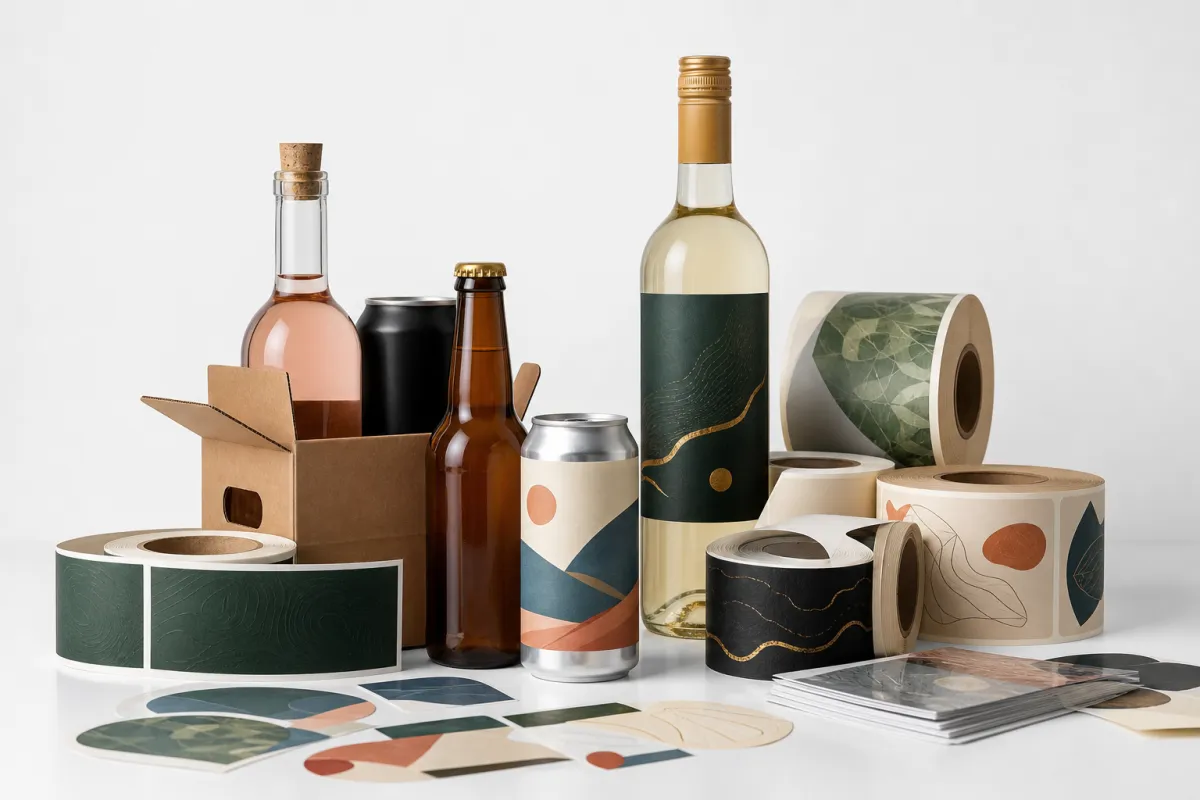
A custom beverage labels supplier does far more than print artwork on adhesive stock. The stronger suppliers are solving several problems at once: how the label will read under retail lighting, how it will endure refrigeration, how it will sit on a curved bottle, and whether your application method can actually place it without wrinkles or misalignment. That is a very different role from a general print shop that mostly worries about making paper look good on a flat surface.
In practice, a custom beverage labels supplier usually handles material selection, adhesive choice, finishing, proofing, print production, and shipping coordination. If your labels are going on water, soda, juice, energy drinks, beer, cider, kombucha, or cold-pressed products, those decisions carry real weight. Cold-chain handling, wet bottles, and long dwell times in a refrigerator are exactly where labels prove their value. Weak material choices usually show up there first, and they do not stay hidden for long.
The difference between a broker, a general printer, and a specialist supplier is easy to miss until something goes wrong. A broker may pass along your order and hope the spec works somewhere else. A general printer may return a nice-looking label that is wrong for the environment. A true custom beverage labels supplier asks the practical questions early: Is the bottle glass or PET? Is it chilled before labeling? Does the product sit in ice? Is the label applied by hand or by machine? Those questions are the work, not side notes.
From a packaging buyer's point of view, the supplier is part technical advisor and part production manager. You are not paying for a sticker. You are paying for a label that survives use, supports branded packaging, and does not turn your product packaging budget into a cycle of reprints and rush orders. If your label work needs to stay aligned with Custom Labels & Tags, keeping that system together can make the line much easier to manage.
Labels fail in actual conditions, not in mockups. A polished proof does not matter if the adhesive cannot handle condensation or the finish turns cloudy in a cooler after a few hours.
- Water and soda usually need strong moisture resistance and clean application on wet or cold bottles.
- Juice and cold-pressed drinks often need stronger barrier performance because refrigeration and handling put more stress on the label face.
- Beer and cider may need premium shelf presence, tighter color control, and better durability through distribution.
- Kombucha and energy drinks can need a label that stays crisp while moving through fast retail packaging environments.
A label is only as good as the harshest condition it has to survive. If your supplier never talks about condensation, temperature, and container shape, keep looking.
A custom beverage labels supplier should also understand how labels fit into the full package presentation. A bottle label that clashes with your cartons, shippers, or custom printed boxes creates a messy shelf story no matter how attractive the artwork looks by itself. The better suppliers think beyond the roll of labels in front of them. They look at the whole package as one branded object.
That broader view matters because beverage packaging does not live in isolation. A matte label on a clear bottle may look refined in a design deck, but if the carton uses a high-gloss finish and the shipper is printed in a completely different tone, the brand can feel stitched together instead of planned. A supplier with actual category experience will catch that before the order lands on your dock.
How the custom beverage labels supplier process works
The process usually starts with a quote request, but the better custom beverage labels supplier does not jump straight to pricing without context. They want product specs, label size, bottle shape, expected storage conditions, and how the labels will be applied. That is how they avoid suggesting a construction that sounds right in an email and fails the first time it meets a cooler.
After that first round, a custom beverage labels supplier should recommend a construction that fits the job: paper, BOPP, clear film, textured stock, or something more specialized. They will also ask whether the product is refrigerated, frozen, or handled often, because those variables change the adhesive and finish choice. A label that lives on a dry shelf has a very different job from one that gets wet every day.
Proofing is where sloppy jobs are either corrected or quietly set up to fail. A digital proof should be checked for size, copy, barcode placement, color expectations, and finish notes. If the bottle is unusual, or if the label is going onto a tight curve, a physical proof often earns its keep. Catching a wrong dieline after production starts is the sort of mistake that makes people learn new words.
Typical timelines are not mysterious. Simple stock label quotes can happen the same day or the next business day. Proofing may take a few days, depending on revisions. Production for standard beverage labels often lands around 7-12 business days after approval, while specialty materials, custom shapes, or premium finishes can stretch that to 12-18 business days. A good custom beverage labels supplier says that up front instead of pretending the calendar will cooperate.
Delays usually come from the buyer side, not the press room. Missing dielines, low-resolution artwork, unclear quantities, late changes to finish, or vague storage conditions all slow things down. The faster you share the right details, the faster your supplier can give you a real answer instead of a guess dressed up as one.
For teams building retail packaging across several products, consistency matters. A custom beverage labels supplier should be able to keep the visual system steady while still adjusting construction for each SKU. That is especially useful if your line also includes bottle neck tags, cartons, or even Custom Packaging Products that need to speak the same brand language.
The cleanest process looks like this:
- Share bottle dimensions, quantity, and application method.
- Explain the storage environment and whether the product is chilled.
- Review the material recommendation and proof carefully.
- Approve only after the label fits the real container, not just the artwork file.
- Confirm schedule, shipment, and reorder expectations before production starts.
If a custom beverage labels supplier keeps the job moving without cutting corners, that is a good sign. The goal is not speed for its own sake. The goal is labels that arrive on time and work on the bottle the first time they are applied. And if the team is trying to save a few bucks by skipping the proof, that is usually gonna cost more later.
Material, adhesive, and finish factors that matter
The biggest mistake buyers make is treating all labels like the same product. They are not. A custom beverage labels supplier should be able to explain how paper, BOPP, clear film, and specialty stocks behave differently around moisture, abrasion, and refrigeration. Paper can work for dry, short-use situations, but it is usually not the first pick for cold drinks that sweat. BOPP is common because it resists moisture better and holds up well during handling. Clear film can create a clean, modern look, but only if the adhesive and print design are handled with care.
Adhesive choice matters just as much as the stock. Permanent adhesive is the default for most beverage work, but removable adhesive may make sense for temporary promotions or test products. Freezer-safe adhesive is a different category entirely. So is wet-strength adhesive, which is built for damp conditions. A custom beverage labels supplier should not toss those terms around like decoration. They should explain which one fits your bottle, your storage, and your application line.
Finish changes both appearance and durability. Matte looks soft and restrained. Gloss gives stronger color and more shine. Soft-touch can feel upscale, but it also wears differently. Lamination adds protection. Varnish can be a lighter option. Spot effects, metallic accents, and clear film constructions can improve shelf appeal, but they also raise the stakes on alignment and color control. A label that looks expensive but cannot survive handling is not premium. It is just expensive.
Container type changes everything. Glass bottles, PET bottles, aluminum cans, and curved or tapered containers all stress labels in different ways. A label that wraps neatly on a straight cylinder may wrinkle on a shoulder or lift on a tighter curve. The custom beverage labels supplier needs to know whether the label will sit on a smooth glass surface, a textured bottle, or a smaller diameter can where application consistency matters more than people like to admit.
Performance is not only about appearance. Condensation resistance, cold-chain storage, oil resistance, and handling durability all matter. If the product is boxed or shipped alongside other packaging, the label may also need to resist scuffing from inserts, dividers, or movement in transit. That is where testing standards help. Many packaging teams use ISTA methods as a sanity check for shipping and distribution, because the world is rarely kind to pretty labels.
For paper-based materials, source claims matter too. If your brand cares about the chain of custody, look for paper stocks with FSC certification where appropriate. That does not solve every sustainability question, but it is better than vague green language attached to a sales pitch. Honest sourcing beats fake virtue every time.
One thing buyers sometimes miss is that print method can affect how a label behaves, not just how it looks. Ink laydown, cure, and surface tension all matter on beverage work. If a supplier cannot explain why a certain film, adhesive, or finish works together as a system, they are probably only seeing part of the job.
The cheapest material is rarely the cheapest option once you count reprints, label waste, and damaged presentation. A custom beverage labels supplier who pushes a few cents of savings without discussing failure risk is not really saving you money. They are borrowing it from a later order that will cost more.
| Label option | Best for | Typical unit range at 5,000 pcs | Durability |
|---|---|---|---|
| Paper stock | Dry shelf products, short display runs | $0.05-$0.11 | Low to moderate |
| BOPP | Chilled drinks, general beverage use | $0.08-$0.16 | Moderate to high |
| Clear film | Minimalist branding, modern bottle looks | $0.10-$0.20 | High |
| Textured or specialty stock | Craft beverages, premium branding | $0.14-$0.28 | Varies by construction |
Those ranges are not a promise. They are a practical starting point. A custom beverage labels supplier still needs to account for shape, finish, quantity, and die usage before giving a final number. Still, if a quote lands far outside those bands, it is worth asking why before you chase the lowest number in the room.
Custom beverage labels supplier pricing explained
Pricing is where a lot of buyers get trapped. They ask for “a label quote” without giving the details that drive cost, then act surprised when one supplier is much cheaper than another. A custom beverage labels supplier prices jobs based on quantity, stock, adhesive, finish, shape complexity, print method, and turnaround. That is not fluff. That is the math behind the roll.
Short runs cost more per label because the setup work gets spread across fewer pieces. Larger runs usually lower the unit price, even if the total invoice looks bigger at first glance. That is why a 1,000-piece order can feel expensive while a 10,000-piece order looks more efficient per unit. If your product is seasonal or still in pilot mode, that tradeoff matters a lot.
Digital printing and flexographic printing do not cost the same. Digital is often the better fit for smaller quantities, faster proofs, and multiple SKUs with different artwork. Flexo can be more efficient at scale, especially when the design stays stable across a larger run. A good custom beverage labels supplier should explain which method suits the order instead of hiding behind generic “best price” language.
There are also cost items buyers forget until they are reading the invoice. Setup fees, custom dies, color matching, premium laminates, specialty adhesives, and rush freight all add up. If you need foil accents or a complex cut, expect the price to move. If you need a turnaround that cuts through normal production windows, expect the price to move faster. That is not the supplier being dramatic. That is production being production.
For a basic beverage label in a standard size, many brands will see a total order in the low hundreds for small runs and a more favorable unit cost at larger volumes. Once you move into premium beverage packaging labels, the numbers climb quickly. A custom beverage labels supplier should help you decide whether the extra look is worth the added cost or whether the same brand impact can be built with cleaner design and smarter material choice. Good package branding is not always the most decorated option.
A pricing rule that saves people headaches: compare quotes on the same spec sheet. Same size. Same quantity. Same material. Same adhesive. Same finish. Same artwork assumptions. If one supplier is quoting a different construction, you are not comparing prices. You are comparing assumptions, which is how bad buying decisions get dressed up as smart sourcing.
A useful way to think about budget bands looks like this:
- Entry-level beverage labels usually favor standard stocks, simple shapes, and one print pass.
- Mid-range labels often include moisture-resistant material, better finish, or a custom shape.
- Premium labels may add clear film, lamination, foil accents, or higher-end tactile effects.
If the quote seems too low, ask what is missing. If the quote seems too high, ask what is being added. A custom beverage labels supplier should be able to name the drivers clearly. If they cannot, that is a sign the number is doing more work than the expertise.
One honest caveat: pricing can shift by region, press capacity, and the supplier's equipment mix. A plant running mostly digital jobs may quote differently from one built around long flexo runs. That does not make either answer wrong. It just means the number needs context before anyone treats it like a benchmark.
Step-by-step guide to choosing the right supplier
Start with the actual product need, not with the wish list. A custom beverage labels supplier can only recommend the right construction if you share bottle type, fill temperature, shelf life, storage conditions, application method, and target look. A label for a room-temperature craft soda is not the same as a label for a chilled kombucha in a wet cooler. Pretending otherwise is how teams end up paying twice.
The next step is sending a useful quote request. Give the supplier your dieline, quantity, artwork files, bottle dimensions, and any special concerns like condensation, freezer storage, or hand application speed. If your label needs barcode placement, note it. If the container is oddly shaped, send photos. A custom beverage labels supplier can work much faster when they are not guessing what the container looks like.
Comparing suppliers takes more than scanning the cheapest line item. Look at the quality of their material guidance, the clarity of their proof, the speed of their replies, and whether they explain tradeoffs without hiding behind jargon. The best custom beverage labels supplier does not just say yes. They tell you what could go wrong and how they would prevent it. That kind of honesty is worth paying for.
Ask for samples or references from similar beverage products, not random label sheets. A flat swatch is useful for color and finish, but it does not tell you how the label behaves on a bottle, in a cooler, or on a production line. If the sample is for a still-water bottle and your product is a sweat-heavy cold brew or a citrus drink with aggressive handling, the sample only tells part of the story. Smart buyers test on the actual container.
Use a short decision sequence so you do not chase every shiny option:
- Shortlist two or three suppliers with beverage experience.
- Send the same spec package to each one.
- Review the recommended materials and adhesives.
- Check proof accuracy and finish details.
- Confirm timeline, freight, and reorder conditions.
That sequence sounds simple because it is. The harder part is resisting the urge to make the decision on price alone. A custom beverage labels supplier that understands your line, your environment, and your brand is usually the safer long-term buy. If the labels are part of a wider launch, keep the look aligned with your product packaging and retail packaging so the shelf presence feels deliberate rather than assembled in pieces.
By the time you reach this step, you should know exactly what to send, what to ask, and what to verify before you approve production. If any part of that still feels fuzzy, stop and gather it. A few extra hours on the front end can save days of delay later.
In my experience, the suppliers that save the most time are not the ones who promise everything. They are the ones who ask one or two uncomfortable questions about refrigeration, application, or container shape and then explain why those details matter. That is the sort of sign you want.
Common mistakes buyers make with beverage labels
The classic mistake is choosing a label based on looks alone. The mockup looks good. The team approves it. Then the product lands in a cooler, condensation shows up, and the labels start lifting at the corners. A custom beverage labels supplier should be warning you about that before the order is placed, not after the first case is already ruined.
Skipping testing on the actual bottle is another easy way to waste money. Curved glass, textured surfaces, and chilled PET bottles all behave differently. A material that performs well on a flat sample may fail on a shoulder curve or around a bottle neck. A custom beverage labels supplier who does not push for a real-world test is making your problem smaller only on paper.
Artwork errors create slow, expensive pain. Low-resolution logos, missing bleed, incorrect barcode size, vague color expectations, and last-minute design changes all add time and cost. Packaging design is not only about making the label attractive. It is about making the file usable in production. That is why a clean art package matters just as much as the stock choice.
Application speed gets ignored more than it should. If your team is hand-applying labels, a construction that looks elegant but wrinkles easily is a bad fit. If the line is automated, the label needs to feed and place consistently. A custom beverage labels supplier should ask about that front-end process because machine speed and label behavior are tied together. Ignore that, and your nice-looking label becomes a bottleneck.
Lead time is another trap. Custom shapes, premium finishes, specialty adhesives, and peak-season reorders all take longer than people expect. If you are launching into a retailer, a festival, or a seasonal window, build in room for proof changes and shipping. A late label order can stall the entire product launch, which is a very efficient way to burn marketing money without getting the shelf presence to show for it.
Low quotes can be expensive if the supplier cannot prevent waste, reprints, or production hold-ups. A custom beverage labels supplier with real technical knowledge often saves more money than the one with the flashiest sales pitch. The cheapest sticker is not the cheapest outcome.
If a supplier cannot explain why a label works in your exact environment, they are selling hope. Hope is not a production spec.
Another common miss is ignoring the second order. Buyers focus so hard on launch that they forget to ask how artwork will be archived, whether the material will stay available, or how reorder specs will be stored. Then six months later, someone is trying to rebuild a label from a screenshot. That is the kind of mess that makes teams wish they had spent ten extra minutes on the paperwork.
Expert tips and next steps with a custom beverage labels supplier
Send real information first. Product photos, bottle or can dimensions, application temperature, and storage conditions all help a custom beverage labels supplier make a better recommendation. The more physical detail you provide, the fewer guesses they need to make. Guessing is expensive. It also wastes time, which most teams do not have in abundance.
One smarter comparison method is to test two or three label constructions instead of asking for one vague quote. Try a standard stock, a moisture-resistant film, and a premium finish if the budget allows. That gives you a real comparison between appearance, durability, and cost. A custom beverage labels supplier that supports that kind of side-by-side review is usually more useful than one that only pushes a single option.
Not every beverage needs the premium treatment. Sometimes a clean matte label with a strong adhesive and accurate color control does more for the brand than a stack of expensive effects. Other times a clear film or textured finish is exactly what the product needs to stand out on shelf. The right answer depends on the shelf environment, the bottle shape, and what your brand is trying to say. Package branding should support the product, not drown it out.
Before production, run a final checklist and assign ownership. Confirm proof approval, quantity, Pantone targets, finish choice, delivery date, and application plan. If your reorder cycle is short, ask about archive storage for artwork and material notes. A custom beverage labels supplier that keeps those records clean can make the second order easier than the first. That kind of boring efficiency quietly saves money.
If your project also touches other packaging layers, keep the whole stack aligned. Labels, cartons, inserts, and mailers should not argue with each other. That matters even more if the brand also uses custom printed boxes or broader product packaging systems. A tight visual system is harder to build than a random one, but it looks far better on a shelf.
My practical advice stays simple: gather the specs, shortlist suppliers, ask for material recommendations, and compare timing, pricing, and technical fit before you commit. A custom beverage labels supplier should make the decision clearer, not foggier. If they leave you more uncertain after the call than before it, that is a warning sign worth respecting.
For Custom Logo Things, the best outcome is a label that looks right, survives the fridge, and keeps your launch on schedule. A custom beverage labels supplier should help you get there without drama, without waste, and without pretending a low quote solves a durability problem. If the labels matter to your bottle, they matter to your brand.
The practical takeaway is straightforward: before you approve production, test one label on the actual bottle after it has spent time in the cooler, compare at least one backup material, and lock the spec sheet in writing so nothing drifts later. That single pass can prevent a lot of rework, and it gives you a much clearer read on whether the supplier is the right fit for the job.
How do I choose a custom beverage labels supplier for cold drinks?
Look for a custom beverage labels supplier that asks about condensation, refrigeration, and bottle surface before quoting. Request moisture-resistant stock, the right adhesive, and a finish that will not haze or peel in cooler conditions. Ask for samples on your actual bottle, not just a flat swatch, because the bottle tells the truth faster than the proof sheet.
What affects the price from a custom beverage labels supplier the most?
Quantity, material, adhesive, finish, and whether you need a custom shape or special die drive most of the cost. Rush turnaround and complex artwork usually raise the price quickly. Larger runs often reduce unit cost even if the upfront total is higher, which is why low-volume orders can feel disproportionately expensive.
How long does the custom beverage labels supplier process usually take?
Simple quotes can happen fast, but proofing and approval usually add several days. Specialty materials, custom shapes, and premium finishes extend the schedule. The safest plan is to build in extra time for revisions and shipping, because last-minute art fixes and freight delays are the kind of nonsense nobody wants near a launch.
What should I send a beverage label supplier to get an accurate quote?
Send bottle or can dimensions, label size, quantity, artwork files, and storage conditions. Include whether the product will be refrigerated, frozen, or handled frequently. The more specific the brief, the fewer expensive surprises later, and the easier it is for a custom beverage labels supplier to recommend the right construction the first time.
Can a custom beverage labels supplier help with compliance or barcode placement?
Yes, many suppliers can advise on layout basics, barcode sizing, and safe placement areas. They should still work from your legal copy and regulatory requirements. Treat them as a production partner, not a replacement for compliance review, because a label can be well made and still carry bad information if the upstream file is sloppy.

