Buyer Fit Snapshot
| Best fit | Mailing Bags for Ecommerce projects where brand print, material claims, artwork control, MOQ, and repeat-order consistency need to be specified before quoting. |
|---|---|
| Quote inputs | Share finished size, material target, print colors, finish, packing count, annual reorder estimate, ship-to region, and any compliance wording. |
| Proofing check | Approve dieline scale, logo placement, barcode or warning zones, color tolerance, closure strength, and carton packing before bulk production. |
| Main risk | Vague material claims, crowded artwork, missing packing details, or unclear freight terms can make a low unit price expensive after revisions. |
Fast answer: Mailing Bags for Ecommerce: Quote Scope, Sample Proof, MOQ, and Lead Time should be specified like a repeatable production item. The safest quote records material, print method, finish, artwork proof, packing count, and reorder notes in one written spec.
Production checks before approval
Compare the actual filled-product size with the drawing, then confirm tolerance on folds, seals, hang holes, label areas, and retail display edges. Reserve space for logos, QR codes, warning copy, and material claims before decorative graphics fill the panel.
Quote comparison points
Review material grade, print process, finish, sampling route, tooling charges, carton quantity, and freight assumptions side by side. A quote is only useful when the supplier can repeat the same color, closure quality, and packing count on the next order.
Mailing Bags for Ecommerce: How to Choose the Right Fit
Mailing Bags for Ecommerce can seem like the easiest decision in a packaging program, right up until the packing table starts telling the truth. A bag that looks cheap on a quote can turn into a headache once tears, slow sealing, wasted motion, and the steady drip of returns begin showing up in the numbers. For apparel, flat goods, and other low-crush products, mailing bags for ecommerce often beat cartons on weight, storage, and speed, but only if the bag matches the product and the route it has to survive.
From a packaging buyer's seat, the useful question is not "Which mailer is cheapest?" It is "Which mailing bags for ecommerce protect the order, keep labor moving, and still leave room for margin after freight and waste are counted?" That is the real test, not the fantasy version where every parcel is handled gently and every customer opens the package like it was prepared for a display shelf. Real fulfillment is a little messier than that, and honestly, that is where the better decisions get made.
If a mailer saves two cents but creates a one-percent damage problem, it is not cheap. It is just moving the bill to another line item.
Mailing bags for ecommerce: what they are and why they matter
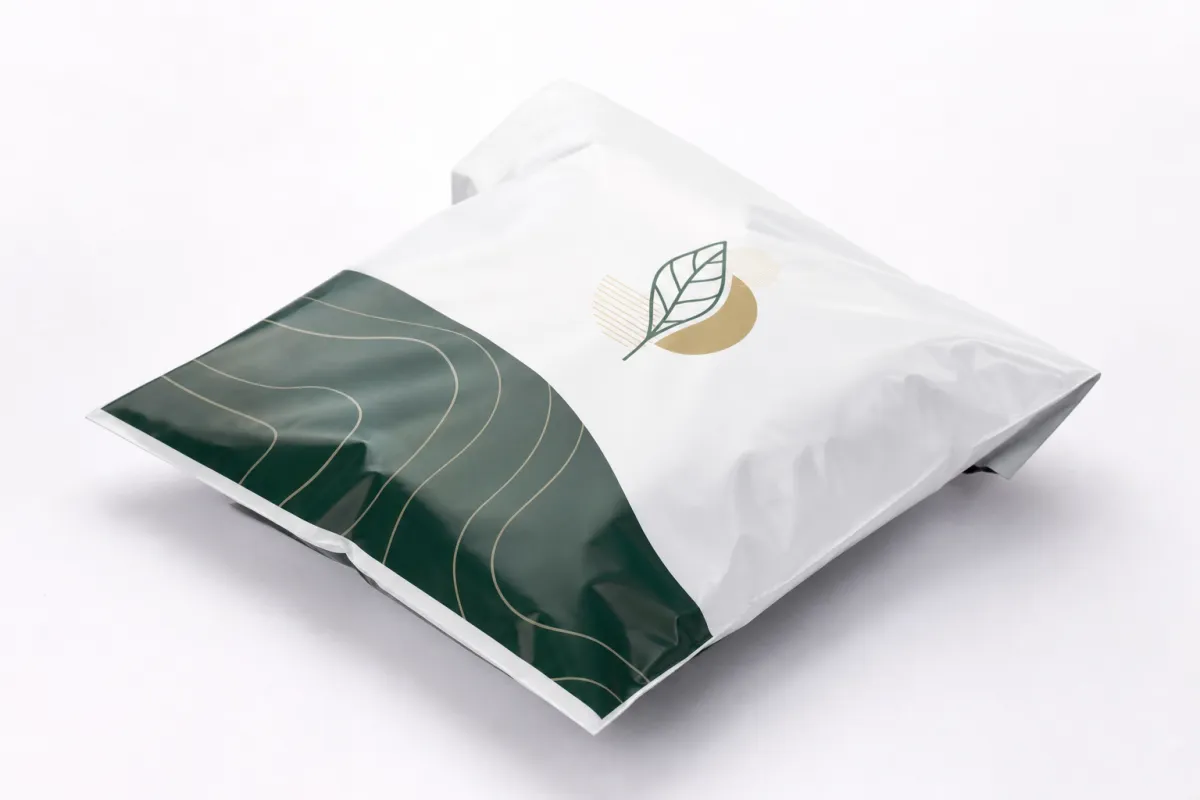
Mailing bags for ecommerce are lightweight shipping bags designed for products that do not need the rigid structure of a carton. In practical terms, they are the shipping format that gets apparel, books, flat accessories, beauty products, soft goods, and similar items through fulfillment with less weight and less bulk. Most are made from polyethylene film, though paper-based versions, padded mailers, and tamper-evident formats also have a place depending on the item and the customer experience you want to deliver.
Part of the appeal is simple warehouse math. A stack of mailers takes up less space than a stack of boxes. The weight is lower, which helps shipping cost. Packing moves faster because there are fewer folds, flaps, inserts, and void fill decisions to make on each order. When the print is handled well, the final parcel looks neat and intentional instead of like a carton that was chosen only because it happened to be nearby.
There is an operational advantage that shows up quickly once volumes rise. Teams can often process more orders per hour with mailing bags for ecommerce than with boxes, especially when the product is soft or flat. That matters during launches, promotions, seasonal spikes, or any stretch when labor is tight and the line cannot afford extra steps. Speed is easy to ignore on paper. In a live warehouse, it is usually where margin either stays intact or slips away.
The bag still needs to be matched carefully to the product. Thickness, seal strength, opacity, print coverage, and the way the film flexes around the contents all change the result. A thin bag that works for a folded T-shirt may be a poor choice for a bulky hoodie or a carton of cosmetics. Mailing bags for ecommerce should protect the item without creating a fight at the packing station. If the crew has to wrestle the bag into submission every time, it is probably the wrong spec.
For neutral packaging context and materials background, packaging.org is a solid reference point. It helps separate practical packaging decisions from sales language, which is useful because those two things are rarely the same.
When mailing bags for ecommerce are selected well, they protect the product, reduce shipping weight, move faster on the line, and present the brand cleanly. When the choice is off, they slow the team down, raise return rates, and make the business look careless. That is why the real conversation is not about color first. It starts with how the bag behaves in the packing line.
How mailing bags for ecommerce work in the packing line
Mailing bags for ecommerce work best when the packing process stays simple enough for staff to repeat without hesitation. The basic flow is familiar: pick the product, add any protection needed, place it in the bag, seal it, label it, and send it to shipping. The sequence sounds obvious because it is. The complication appears in the extra seconds added by every awkward fold, every difficult seal, and every bag that needs to be fought into shape.
Protection comes from the film, the closure, and the way the bag flexes around the item. A carton protects by holding a fixed shape. Mailing bags for ecommerce protect by reducing empty space and absorbing movement. That is an excellent fit for soft goods and flat items, because there is less room for the product to rattle around. It is a weaker fit for sharp edges, delicate surfaces, or anything that needs firm crush resistance.
Plain poly mailers remain the most common choice because they are light, affordable, and quick to use. Padded mailers bring a cushion layer for items that need extra impact protection without stepping all the way up to a box. Tamper-evident mailing bags for ecommerce make sense when visible seal security matters, especially for returns, sensitive goods, and products where the buyer should be able to tell if the parcel was opened. Custom-printed bags sit at the branding end of the spectrum, where presentation matters and volume is high enough to justify artwork and setup.
Resealable closures deserve more attention than they usually get. A dual-adhesive strip can simplify returns and exchanges, and it can save time in warehouses that handle reverse logistics in-house. That second strip also cuts down on tape use when bags are reused in a multi-step workflow. The savings look modest until they are multiplied across hundreds or thousands of orders. Then they start to feel a lot less modest.
Mailing bags for ecommerce are easier to store too. Flat stacks are simple to stage near pack stations and take less room than cartons. That helps in the real world, where many teams do not have endless pallet space or giant receiving areas. Most teams have a printer, a table, and someone trying to keep the line moving before the next break.
The practical test is straightforward. If the product can move inside the bag without damage, the bag is doing part of the job. If the seal fails, the bag is failing. If the packer has to wrestle the fit, the bag is slowing the operation. Mailing bags for ecommerce should be tested on actual orders, not admired only on a spec sheet.
For shipping performance and test methods, ISTA testing standards are a useful benchmark. They are not the only framework worth considering, but they are a clear reminder that vibration, drop, and handling are not theoretical concerns. They are part of the work.
The best mailing bags for ecommerce make the packing step almost uneventful. That sounds plain, yet boring packaging is often the sign of a system that is working exactly as it should.
Mailing bags for ecommerce: cost, pricing, and what changes the price
Pricing for mailing bags for ecommerce is not mysterious, though buyers and suppliers sometimes talk about it as if it were. The main drivers are size, thickness, material mix, color, print coverage, adhesive quality, and order quantity. Shift any one of those variables and the quote changes with it. That is normal. The trouble starts when a buyer focuses only on the unit price and ignores the rest of the costs that show up later in fulfillment, freight, and returns.
For stock poly mailers, a typical volume range might land around $0.04 to $0.12 per unit, depending on size and thickness. Custom-Printed Mailing Bags for ecommerce often move into the $0.14 to $0.35 range, sometimes higher if print coverage is heavy, the film is thicker, or the run is modest. Padded mailers and tamper-evident options tend to sit above that because the materials and construction are doing more work. As a rule, the more the mailer does, the more it costs. The market tends to reward that logic, whether anyone likes the bill or not.
Unit price still tells only part of the story. Landed cost includes freight, duties if they apply, storage, damage, and waste. A mailer that looks cheap per unit but ships in a larger carton, tears more often, or slows the pack line can end up costing more than a better-spec alternative. A lighter item packed in a heavier bag is not free just because the bag itself looks thin. The weight has to go somewhere on the invoice.
Shipping cost and packaging cost deserve to be separated. Mailing bags for ecommerce often lower parcel weight enough to reduce postage, especially on apparel and small accessory shipments. At higher volumes, a few ounces saved per parcel can become meaningful within a month. That is a big part of why many brands stay with mailers after they have the option to use boxes. For soft goods, the math is usually cleaner.
There are cases where a thicker bag earns its keep. Corners, rough routes, and customer groups that are unforgiving about damage all push the decision toward stronger film. There are also cases where buyers overspec the mailer because "premium" sounds safer. That is how margin gets drained quietly. A 6 mil bag may look reassuring until it turns out a 3 mil bag would have handled the shipment without issue. I have seen teams spend more than they needed to because the packaging felt safer in the meeting than it did in the warehouse, which is kind of backwards if you think about it.
| Mailer Type | Typical Use | Approx. Unit Cost at Volume | Strengths | Tradeoffs |
|---|---|---|---|---|
| Stock poly mailer | Apparel, soft goods, flat items | $0.04-$0.12 | Lowest cost, fast availability, easy storage | Limited branding, less protection for sharper items |
| Custom printed poly mailer | Branded ecommerce shipments | $0.14-$0.35 | Strong brand presence, better customer experience | Higher setup cost, longer lead time |
| Padded mailer | Accessories, books, small fragile items | $0.20-$0.60 | More cushioning, less need for extra inserts | Higher material cost, bulkier storage |
| Tamper-evident mailer | Returns, sensitive goods, controlled fulfillment | $0.18-$0.45 | Visible seal security, clear handling cues | Usually not the cheapest option |
If monthly order volume is still modest, stock mailers often make the most sense while the team validates sizing and demand. Once the pack line settles and the brand starts caring more about presentation, custom poly mailers can justify the added cost. That is exactly why we built Custom Poly Mailers as a practical option for brands that need control over print, size, and appearance without guessing through a production run.
Recycling claims deserve careful handling too. Materials and local rules vary, and assumptions can mislead both the business and the customer. For a neutral government reference on recycling guidance, the EPA's resources at epa.gov are worth checking before packaging copy is finalized.
The cheapest mailing bags for ecommerce are not always the least expensive to run. The better comparison is total cost: unit price, freight, damage risk, and labor. That is the number that actually drives the decision.
Step-by-step guide to choosing the right mailer
Choosing mailing bags for ecommerce becomes much easier once the decision moves away from general impressions and toward the actual product. Measure the item after any inner wrap, insert, or box has been added. Do not size the bag to the bare product if the final pack-out includes tissue, a return card, or a protective sleeve. That is how people end up with mailers that look right in theory and miss the mark in the warehouse.
Start with product type. Soft apparel usually works well in a thinner poly mailer. Books, cosmetics, and accessories may need more stiffness or padding. Items with sharp corners or rigid edges deserve more caution because they can punch through thin film. Mailing bags for ecommerce are flexible by design, yet flexibility is not the same as durability.
Risk comes next. Consider the route the parcel will travel: local delivery or long-haul, gentle handling or rough sorting, low-value item or something expensive to replace. The more difficult the route, the more attention the mailer needs on thickness, seal quality, and tamper evidence. A bag that behaves well in a short city route can respond very differently after two carriers, three sorting points, and a few careless throws.
Closure matters more than many buyers expect. Self-seal adhesive is standard because it works, but adhesive width and tack still need attention. A weak seal on a heavy bag is a problem waiting to happen. Dual-adhesive strips save time in categories with frequent returns. Tamper-evident closures make sense for higher-value items because the opened package is obvious. That can matter more than the print pattern, no matter how polished the artwork looks.
Opacity and finish shape the customer experience too. Some brands want glossy, high-impact packaging. Others want a matte look that feels more restrained and hides contents more effectively. Mailing bags for ecommerce should keep the product discreet when that matters, especially with apparel and gifts. Thin transparent bags may work for internal handling, but they usually look too exposed for customer-facing shipments.
Testing should always happen on real product, not just on a spec sheet. Fill the bag, seal it, label it, and run it through the shipping scenario your orders will actually face. Then check opening, resealing if relevant, and a few drop or compression tests. You do not need a lab coat for that. You need a scale, a ruler, and a few honest people who will say the bag is wrong if it is wrong.
A simple scorecard keeps the conversation grounded. Rate each option from 1 to 5 on fit, seal strength, appearance, packing speed, and cost. Then apply the business priorities that matter most. A low-cost mailer that only scores well on price usually falls behind once the other criteria are weighted properly. That is the scorecard working as intended.
- Fit: product inserts cleanly with no fighting and no excess slack.
- Seal: closure holds after pressure, shake, and short transit testing.
- Protection: film or padding matches the product's fragility.
- Brand: the package looks deliberate, not generic.
- Efficiency: the packing team can move fast without errors.
That is the core logic behind mailing bags for ecommerce. Fit the product first, then choose the bag that protects it at the lowest true cost. Anything else is shopping by guesswork.
Mailing bags for ecommerce: process and timeline from sample to delivery
The ordering process for mailing bags for ecommerce is usually more predictable than buyers expect, provided the specs are written clearly. It begins with a quote, then a spec review, then artwork, sampling, approval, production, and shipment. If any one of those steps is vague, the schedule stretches. That is not drama from the factory side. It is what happens when people say "close enough" to a file that will be printed by the thousands.
Stock mailers can move quickly. If the size and color are already in inventory, shipping may happen in just a few business days once payment clears. Custom printed mailing bags for ecommerce take longer because artwork needs review, colors need confirmation, proofs need approval, and production has to run. A realistic range for a custom order is often 12 to 20 business days from proof approval, depending on queue length and order size. Special film thickness, unusual dimensions, and heavy print coverage usually add time.
Sampling is the part that saves buyers from avoidable mistakes. A sample lets the team check dimensions, seal behavior, print legibility, and the feel of the bag before a full run is approved. For a simple stock sample, that step can take 5 to 10 business days. Custom prototypes may take longer. Skipping the sample to trust the PDF is a quick way to discover a problem after the order has already been paid for.
Freight deserves just as much attention. Air freight is faster and usually more expensive. Sea freight is cheaper but needs a longer runway. If the launch date is fixed, mailing bags for ecommerce should be ordered before inventory begins moving, not after the first pallets are already at receiving. Waiting until then turns packaging into an emergency expense, and emergency expenses rarely feel elegant in the budget.
Artwork and color matching also shape timing. Simple one-color print on standard film usually approves faster than full-coverage graphics or custom gradients. If the brand wants an exact shade, it should ask for a proof and expect slight variation across film, ink, and light. Packaging is not a screen. Ink on film has its own way of behaving, and trying to pretend otherwise only creates disappointment later.
Repeat orders move faster once the specs are locked and documented. A clean reorder file with size, thickness, adhesive type, artwork version, and preferred carton pack keeps questions to a minimum. The fewer questions at reorder time, the faster mailing bags for ecommerce can be replenished. It sounds administrative because it is. Administration is what keeps fulfillment from turning into improvisation.
Here is a practical planning range:
- Stock mailers: often 3 to 7 business days if inventory is ready.
- Custom printed mailers: often 12 to 20 business days after proof approval.
- Sampling: usually 5 to 10 business days for simple requests.
- Freight buffer: add extra time for port delays, carrier booking, or peak-season congestion.
If your product launch depends on mailing bags for ecommerce arriving on time, give yourself breathing room. A packaging delay is irritating. A packaging delay that blocks a launch is expensive.
Common mistakes with mailing bags for ecommerce
The first mistake is buying by unit price alone. That is the oldest trap in the category. A bag that costs less may create more damage, more returns, and more time spent repairing the consequences. Once labor and waste are counted, the "cheap" option can become the expensive one. Mailing bags for ecommerce should be judged as part of the whole system, not as a line item floating by itself.
The second mistake is picking the wrong size. Too small, and the bag is awkward to fill, hard to seal, and frustrating to stack. Too large, and the parcel looks sloppy, shifts during transit, and wastes material. Fit matters more than most buyers want to admit because fit affects almost everything else: packing speed, presentation, and seal reliability. Mailing bags for ecommerce work best when the product fits with just enough room for a clean closure.
The third mistake is underestimating thickness. Thin film is fine until the route gets rough or the item has corners. Then the weak point shows up in customer service tickets. A better rule is to test the lightest thickness that survives your real shipping conditions, not the lightest thickness that sounds good in a purchasing meeting.
The fourth mistake is skipping samples. A spec sheet cannot tell you how the adhesive feels with gloves on, how easy the bag is to load, or whether the print hides scuffs. Teams that skip testing often discover the problem after the full run is already paid for. That is a rough time to learn that the seal is weak or the film is too slick to stack.
The fifth mistake is over-specing the packaging. Not every brand needs premium print coverage, tamper-evident construction, and thick film all at once. Sometimes a clean stock mailer does the job better because it is faster, lighter, and cheaper. There is no prize for paying extra to solve a problem that did not exist.
The simplest way to avoid these mistakes is to compare a few mailing bags for ecommerce side by side with real products and real staff. Warehouse teams usually know the answer within minutes. They are just not always asked before the purchase order is signed.
Expert tips and next steps for mailing bags for ecommerce
If you want a cleaner buying decision, run a three-option test. Choose one budget mailer, one balanced option, and one premium option. There is no need to compare eight random samples and call confusion a strategy. Three choices are enough to reveal the real tradeoffs. More than that, and the conversation turns into packaging soup.
Have the packing team use the samples on real orders. Not mock orders. Real orders. The difference matters. A mailer that feels fine on a clean table can feel completely different after someone has packed 120 orders and wants the adhesive to release properly on the first pull. Mailing bags for ecommerce should earn approval in the same environment where they will actually be used, not in a quiet conference room where everything tends to look nicer than it really is.
Build a reorder checklist before you need one. Keep size, film thickness, print specifications, closure type, MOQ, lead time, and storage notes in one place. Add the intended use too, whether that is returns, gifts, soft goods, or fragile flat items. One page like that can save a lot of back-and-forth later, especially when purchasing changes hands.
Think about the customer experience as part of the specification. If the package is difficult to open, the customer notices. If the adhesive leaves residue, they notice. If the print rubs off, they definitely notice. Mailing bags for ecommerce are transport, yes, but they are also the first physical touchpoint after checkout, which is why finish and opening feel matter more than some procurement teams want to admit.
For brands ready to move beyond plain stock packaging, Custom Poly Mailers make a strong middle ground. They improve branding without forcing a huge jump in complexity. If you are exploring that route, start with a narrow spec and a manageable quantity, then scale once the team confirms the fit. That is how you avoid paying for more run size than you need. You can review options on Custom Poly Mailers and compare them directly with your current mailers.
Before the final order goes out, compare total landed cost rather than quoted unit price alone. Include freight. Include waste. Include replacement shipments from damage. Include the extra seconds the packing team spends wrestling with a poor fit. Mailing bags for ecommerce are one of those packaging categories where the difference between "good enough" and "right" shows up in the month-end numbers very quickly.
Practical next step: request samples, measure the packed product, and place a small pilot run before scaling up. That gives you evidence instead of assumptions, which is a far better way to buy packaging.
FAQ
What size mailing bags for ecommerce should I choose?
Measure the product after any inner wrap or box is added, then leave just enough room for a clean seal. If the bag is too tight, packing slows down and seams fail faster; if it is too loose, the package looks sloppy and can shift in transit. For most apparel, start with a few sample sizes rather than guessing from a catalog photo.
Are mailing bags for ecommerce cheaper than boxes?
Usually yes for soft goods and low-crush items because they use less material, weigh less, and take up less storage space. Boxes can still win for fragile or high-value products, so compare total shipping cost and damage risk instead of chasing the lowest unit price.
What thickness do ecommerce mailing bags need?
Use the lightest thickness that still survives your product weight, handling, and shipping route without tearing. If you are unsure, test two thicknesses side by side with real orders and pick the one that protects the product without overpaying for plastic.
Can mailing bags for ecommerce be recycled?
It depends on the material and local recycling rules, so do not assume every poly mailer goes into curbside recycling. Mono-material bags are easier to handle than mixed-material designs, and clear disposal instructions help customers do the right thing.
How long does it take to order custom mailing bags for ecommerce?
Stock mailers move fast, while custom printed orders need time for artwork, sampling, approval, production, and freight. Plan ahead if you want custom branding, because the delay usually comes from proofing and logistics, not the bag itself. For most brands, mailing bags for ecommerce should be ordered before the launch calendar starts to feel tight.

