Buyer Fit Snapshot
| Best fit | Custom Biodegradable Paper Pouches projects where brand print, material claims, artwork control, MOQ, and repeat-order consistency need to be specified before quoting. |
|---|---|
| Quote inputs | Share finished size, material target, print colors, finish, packing count, annual reorder estimate, ship-to region, and any compliance wording. |
| Proofing check | Approve dieline scale, logo placement, barcode or warning zones, color tolerance, closure strength, and carton packing before bulk production. |
| Main risk | Vague material claims, crowded artwork, missing packing details, or unclear freight terms can make a low unit price expensive after revisions. |
Fast answer: Custom Biodegradable Paper Pouches: Film, Print, MOQ, and Carton Packing should be specified like a repeatable production item. The safest quote records material, print method, finish, artwork proof, packing count, and reorder notes in one written spec.
Production checks before approval
Compare the actual filled-product size with the drawing, then confirm tolerance on folds, seals, hang holes, label areas, and retail display edges. Reserve space for logos, QR codes, warning copy, and material claims before decorative graphics fill the panel.
Quote comparison points
Review material grade, print process, finish, sampling route, tooling charges, carton quantity, and freight assumptions side by side. A quote is only useful when the supplier can repeat the same color, closure quality, and packing count on the next order.
Two pouches can sit shoulder to shoulder on a shelf, look almost identical, and behave like completely different products once moisture, pressure, and transport enter the picture. That is the part buyers miss most often with custom biodegradable paper pouches: the paper face stock may feel natural and familiar, but the coating, barrier layer, zipper, ink system, and sealant decide whether the package actually performs the way the claim suggests. I have seen a package team spend weeks perfecting artwork, only to discover that a zipper choice or a weak seal was doing more damage than the design ever could. For brands trying to balance product protection, shelf appeal, and a cleaner material story, those hidden layers matter more than the front-panel finish.
Custom biodegradable paper pouches are not a single material. They are a structure, and the structure is where the real decision lives. If one layer is chosen badly, the pouch can lose shelf life, lose seal strength, or become harder to dispose of in the way the buyer expected. Source conversations should start with the product, not the artwork. A pouch for dry tea has a different technical job than a pouch for nut powder, and a wellness blend with natural oils creates a different set of problems again. The packaging might look similar in a deck, but in the wild it is a different animal.
From a packaging buyer's point of view, the smartest move is to treat custom biodegradable paper pouches as a functional system, not a marketing surface. The best ones protect the product, run cleanly on the line, and support the brand without overbuilding the pack. If you are comparing them to other Custom Packaging Products, that systems view keeps the discussion grounded in performance, not just appearance.
A paper face is only one chapter. The full pouch construction decides whether the pack holds up through filling, shipping, retail handling, and disposal conditions.
Custom Biodegradable Paper Pouches: What They Really Are
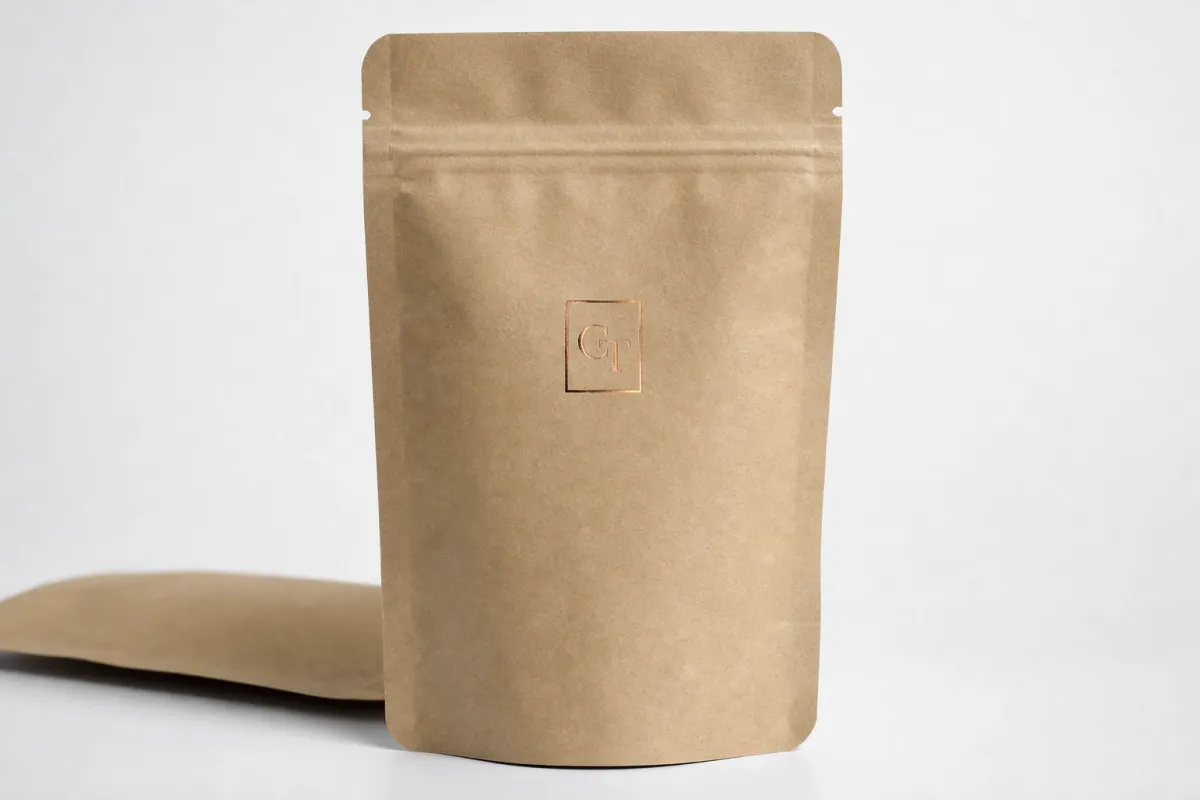
Most buyers start with the outer look, which makes sense because shelf presentation does sell product. Custom biodegradable paper pouches, though, deserve to be judged from the inside out. The paper face may be FSC-sourced or made with recycled content, yet the pouch still needs a functional layer underneath to manage moisture, oxygen, grease, or aroma. That inner layer may be compostable, biodegradable, or simply a protective film that does not match the disposal claim the brand wants to make. A clean-looking paper exterior can hide a fairly conventional structure, so the spec sheet matters more than the photo.
The simplest way to separate the terminology is to keep the words honest. Paper-based means paper is the visible or dominant face material. Biodegradable means a material can break down under specific environmental conditions, but the speed and completeness of that breakdown depend on the material and the environment. Compostable is a tighter claim, and it usually requires verified conditions, such as industrial composting, plus testing to recognized standards. Recyclable means the material can enter a recycling stream, but that depends on local collection rules and whether the structure is accepted by the facility. Buyers often use those words interchangeably, and that is where confusion begins. I would go one step further and say the market has trained people to expect the label to do the job of the lab, which is not how this works.
For custom biodegradable paper pouches, the safer approach is to ask for the full structure, not just the paper face description. The face stock, barrier layer, adhesive, sealant, zipper, tear notch, and any window all matter. A pouch with a paper exterior and a conventional plastic zipper may still look sustainable, but it is not the same as a fully compatible structure built around compostability or biodegradation goals. Think of it like a jacket made from recycled wool with synthetic cuffs: the headline material tells part of the story, not all of it. That distinction matters when a sales team is writing claims and a compliance team is trying not to get cornered later.
Where these pouches fit well
Custom biodegradable paper pouches fit best where the product is dry or low-moisture and the shelf-life target is realistic for the barrier level being used. That often includes snacks, tea, coffee alternatives, protein powders, supplement sticks, bath salts, herbal blends, dried fruit, and lightweight wellness products. In retail packaging, they also work well for smaller formats where a natural look helps the brand story without demanding a heavy multi-layer laminate.
They are less forgiving for oils, active fragrances, or products that breathe heavily and push moisture into the pack. That does not make the format off-limits, but it does mean the structure has to be chosen with care. A pouch that looks compostable and fails early on shelf is not a sustainability win. It is a packaging failure with a polished finish.
That is the part many teams underestimate. Good custom biodegradable paper pouches should support both product packaging performance and brand perception, because one without the other usually creates a problem later. If the pouch looks premium but leaks aroma or loses seal integrity, the shelf appeal becomes a short-lived benefit, like a storefront window dressed beautifully for a storm it cannot withstand. I have watched that exact scenario play out during sample approvals, and it is never the design team's favorite meeting.
Another useful distinction is that the outer paper layer does not automatically make the entire pouch biodegradable. Printing inks, varnishes, coatings, and adhesives can all influence the result. Even a small detail like a reseal zipper can change the end-of-life story. When a supplier says the pouch is biodegradable, the buyer should ask, "Which components, under what condition, and to what standard?" That single question filters out a lot of vague sourcing language.
How Custom Biodegradable Paper Pouches Work in Real Use
At the production level, custom biodegradable paper pouches are a combination of paper facestock, barrier film or coating, seal layer, and any optional features the brand needs. The paper gives the pouch its visual texture and print character. The barrier layer protects against outside air and humidity. The seal layer allows the pouch to close under heat and pressure. Add-ons such as tear notches, hang holes, zippers, windows, and degassing valves can be included, but each one shifts the material balance a little. That is why a seemingly small feature request can change a whole quote.
The important thing is how those layers behave during the full life cycle of the pouch. In filling, the material has to tolerate line heat and pressure without scorching, curling, or sealing weakly. During shipping, it has to resist abrasion and compression inside cartons or display cases. During retail handling, the panels need to stay flat and legible instead of wrinkling around the edges. In disposal, the structure has to match the claim the brand is making, which is why custom biodegradable paper pouches should be specified with the end-of-life path in mind from the start. If the pack is gonna carry a sustainability claim, the materials have to back that up all the way through.
Barrier properties are the technical core of the conversation. Moisture barrier matters for products that clump or soften. Oxygen barrier matters for ingredients that oxidize or lose flavor. Aroma barrier matters for products with strong scent or volatile oils. Grease resistance matters for foods and bath items that can migrate through weaker surfaces. A pouch that has the right paper face but poor barrier performance may photograph beautifully and still miss the shelf-life target by a wide margin. Packaging can look healthy and behave badly, which is one of the stranger disconnects in the category.
For that reason, buyers should ask for measurable performance indicators, not just sales language. A supplier may talk about a "protective" or "eco-friendly" structure, but the practical question is how the pouch behaves under the product's real stress points. If the product needs low oxygen transmission or a certain moisture resistance level, the pouch should be selected accordingly. That is how custom biodegradable paper pouches become reliable product packaging instead of a guess.
The disposal side also deserves a plain explanation. Biodegradable materials do not disappear instantly. They break down under specific conditions, and those conditions are not the same everywhere. Temperature, oxygen, moisture, and microbial activity all matter. A structure that performs as intended in an industrial composting environment may not break down the same way in a backyard pile or a landfill. That is why local collection systems matter so much, and why marketing language should never outrun the infrastructure that receives the pack. Honest packaging claims are a trust issue, not just a technical issue.
If sustainability claims are central to the launch, buyers should also look at the paper source and the testing trail. Responsible fiber sourcing can be checked through organizations like the Forest Stewardship Council, while shipping durability can be checked through ISTA methods that are widely used for transit testing. Those references do not answer every question, but they separate real validation from loose language.
Printing is another area that can quietly affect the result. Heavy ink coverage, certain varnishes, and incompatible laminations can make a pouch look premium while weakening the sustainability claim. Package branding and material selection should be handled together. A beautiful pouch that cannot support the disposal story is not a strong packaging decision, even if the artwork is excellent.
For brands also using product packaging across cartons, labels, and shipping formats, it helps to keep the pouch strategy aligned with the rest of the line. The same visual rules, color discipline, and claim language should carry through the broader system, including any Custom Printed Boxes used for secondary packaging. Consistency builds trust faster than loud graphics do, and in crowded categories that trust can become the difference between a purchase and a pass.
Cost, Pricing, and MOQ for Custom Biodegradable Paper Pouches
Price is usually the first number buyers ask for, but with custom biodegradable paper pouches, the price makes sense only after the structure is clear. The biggest drivers are pouch size, paper grade, barrier level, print coverage, finish, reseal features, special die cuts, and order quantity. A simple matte pouch with a standard zipper will price very differently from a larger pouch with a high-barrier coating, window, spot finish, and custom tear profile. I have seen two quotes that looked close on paper but were actually nowhere near each other once the specs were lined up.
MOQ matters because pouch manufacturing has setup costs tied to print preparation, material conversion, and quality checks. A lower MOQ gives a buyer more flexibility to test the market, but it often raises the unit cost. A larger MOQ lowers the per-unit number, yet increases inventory risk if the SKU does not move as planned. For custom biodegradable paper pouches, many teams find the middle ground most practical: enough quantity to keep setup efficient, but not so much that they overcommit before the product proves itself.
It is better to compare total landed cost than to focus only on unit price. Freight, sampling, plates or cylinders where relevant, proof charges, packaging for shipment, and any test reports all belong in the real cost picture. If the buyer needs documentation for food-contact, compostability, or fiber sourcing, that paperwork also adds value and sometimes cost. A lower unit quote can become the expensive option if the rest of the package is vague. Cheap packaging is rarely cheap once reorders, delays, and damaged goods enter the ledger.
| Order Level | Typical Unit Range | Best Fit | Notes |
|---|---|---|---|
| 5,000 pieces | $0.28-$0.48 | Market tests, seasonal launches, first runs | Higher setup impact, useful for proving demand |
| 10,000 pieces | $0.22-$0.38 | Growing SKUs with stable demand | Often a better balance of cost and inventory risk |
| 25,000 pieces | $0.16-$0.30 | Core programs, repeat orders, retail programs | Lower unit cost, but storage planning matters more |
Those ranges are directional, not universal. A pouch with light print coverage and a standard closure will sit lower than one with multiple special features. If the product needs higher barrier performance, the price moves accordingly. That is normal. What matters is making sure each quote is built from the same specifications, so the numbers are actually comparable. Compare the same dimensions, the same thickness, the same closure, the same print count, and the same testing requirements before judging value.
There are also places where a buyer can save without harming performance. Standard sizes often cost less than fully custom dimensions because they reduce tooling complexity. Simplifying the art to fewer colors can help. Limiting special finishes like soft-touch or metallic effects can keep the budget tighter. In some cases, reducing the number of SKUs and grouping designs under one structure can lower production friction. Those decisions matter more than many brand teams realize.
For buyers building broader branded packaging programs, it can help to think in systems rather than isolated orders. If the pouch is paired with shipping cartons, inserts, or display trays, the overall budget may improve when the whole system is planned together. That is one reason some brands coordinate pouch work with other Custom Packaging Products instead of buying each piece on a separate timeline. Less fragmentation usually means fewer surprises, and fewer surprises usually means fewer emergency costs.
Bottom line: the cheapest quote is not always the best quote for custom biodegradable paper pouches. A realistic quote that includes structure, testing, and documentation often ends up saving money after the launch, because it avoids reorder delays, damaged product, and rework.
Production Steps, Timeline, and Lead Time
A smooth order for custom biodegradable paper pouches usually follows a fairly predictable path, and the fastest projects are the ones where the buyer stays organized from the start. The process normally begins with a product brief: fill weight, product type, shelf-life target, disposal goal, artwork needs, and filling method. After that comes structure selection, then artwork prep, proofing, sampling, production, quality checks, packing, and shipment. Each step sounds simple until a revision appears halfway through and changes the sequence. The calendar does not care how urgent the launch feels.
Lead time expands most often during the points where decisions are not yet locked. Artwork revisions can add days. Material sourcing can add more if the barrier film or paper grade is special. Sampling can stretch the schedule if the team needs multiple iterations to confirm seal strength or shelf appearance. Certification questions can slow things down too, especially if the buyer needs compostability or fiber documentation before release. With custom biodegradable paper pouches, clarity saves more time than pressure does.
For many projects, a realistic timeline from proof approval to shipment is often 12-15 business days for a simple run, though more complex builds can take longer. If the pouch uses special finishes, a custom zipper, or a unique die cut, the schedule can move into the 3-5 week range or beyond depending on material availability and testing needs. That is not a problem if the buyer plans for it early. The problem is assuming a custom build will move like stock packaging.
The quickest path is usually the one with the fewest unknowns. Finished art files, exact dimensions, a known fill volume, a chosen closure style, and an approved structure reduce back-and-forth. If the team is still choosing between a flat pouch, a stand-up format, or a gusseted shape, that decision should happen before the clock starts on production. Once the approval cycle begins, every extra option becomes another possible delay.
Features need to be decided early as well. A hang-hole, zipper style, and tear notch can all affect the tooling and final appearance. If the pouch must run on a specific filling machine, the supplier needs to know the seal width, the jaw temperature range, and any line speed constraints. If a valve is needed, that needs to be in the brief from the beginning. These details are not decoration; they are what keeps custom biodegradable paper pouches running correctly on the floor.
One of the best habits a buyer can build is asking for a production calendar with approval checkpoints. That calendar should show when the art proof is due, when samples will be reviewed, when production starts, and when freight leaves the facility. If any stage depends on the buyer's response, that should be stated clearly. It is a simple step, but it prevents the classic surprise of finding out the pouch cannot ship because one last approval sat in somebody's inbox.
For shipping validation, many teams also reference ISTA-style transit checks to see how a package holds up under vibration, drop, and compression. That matters for custom biodegradable paper pouches because the package may look fine on the bench and still fail after a few weeks in a distribution lane. If a brand is selling through retail packaging channels, shipping stress should be part of the brief, not an afterthought.
Key Factors That Decide Performance
The product itself should always lead the conversation. A pouch for a dry herb blend faces a different risk profile than a pouch for a powdered supplement or a snack with natural oils. Moisture sensitivity, fat content, odor transfer, dusting, and fragility all shape the structure choice more than the sustainability label does. That is why custom biodegradable paper pouches need to be matched to the product chemistry first and the brand story second.
Shelf-life targets also drive barrier choice. A product meant to move quickly through a local market may not need the same protection as a supplement that will sit in multiple warehouses and retail channels before it reaches the consumer. A short-shelf snack can often tolerate a lighter structure, while a longer-distribution item may need stronger moisture and oxygen protection. If the product is sensitive, under-specifying the barrier is a direct path to complaints and returns. A few days of margin can turn into a few months of confidence, and packaging often lives or dies in that gap.
Compatibility with filling equipment can make or break the project. Some lines seal at specific temperatures, and some machine jaws are more forgiving than others. If the pouch material is too stiff, it may not fold cleanly. If it is too soft, it may wrinkle or seal inconsistently. Seal widths matter too; a narrow seal can save space, but a wider seal may be needed for confidence on a higher-risk product. Custom biodegradable paper pouches should be tested on the real line whenever possible, not just judged by hand. A few minutes on the actual machine usually teaches more than an hour of speculation.
Storage and transport conditions deserve more attention than they usually get. Heat can soften adhesives. Humidity can affect paper stability. Compression in packed cartons can flatten panels or stress seals. Retail handling can scuff print or wear down corners. None of that sounds dramatic, but in the field these small stresses add up. The pouch has to survive the path, not just the sample review.
Compliance sits underneath all of this. If the brand is making compostability, biodegradability, or food-contact claims, the structure has to support them. Buyers should ask whether the materials align with relevant testing expectations such as ASTM compostability standards where applicable, and they should verify what local rules allow. A good supplier will speak plainly about what the pouch can claim and what it cannot. That kind of honesty matters more than any glossy sales sheet.
One more point that often gets missed: printing can affect performance too. Dense ink coverage, heavy coatings, and certain varnishes can change how a pouch behaves in sealing and disposal. The artwork team may see only a visual decision, but the manufacturing team sees a material decision. Good package branding should support the construction, not fight it.
Common Mistakes When Ordering Custom Biodegradable Paper Pouches
The first mistake is assuming every paper pouch is fully biodegradable. It is not. The paper face can be biodegradable in one sense, while the coating, zipper, sealant, or window is not. For custom biodegradable paper pouches, that distinction is the difference between a clear sustainability story and a claim that falls apart under basic scrutiny. Buyers should always ask for the full material build.
The second mistake is choosing on appearance alone. A pouch can look clean and premium, then fail after a few days with the actual product inside. Powders can migrate into seals. Oils can affect barrier performance. Strong aromas can leak faster than expected. A design that looks perfect in packaging design software may not survive a real fill trial. Sampling with the real product is not optional if the product is sensitive. I have sat through more than one review where a beautiful mockup turned into a very expensive yes-no-maybe conversation once the product went in.
The third mistake is getting dimensions wrong. If the fill volume is not mapped correctly, the pouch may be too tight at the top seal or too loose on the shelf. A bag that looks fine empty may bulge once the product settles, and that changes both shelf appearance and line performance. This is especially common with custom biodegradable paper pouches used for loose dry goods, where settling can eat up more headspace than expected.
The fourth mistake is skipping real-condition testing. A hand inspection is not enough. Buyers should look at seal checks, drop tests, storage exposure, and transit stress before committing to a large order. If the pouch is destined for a retail chain or a distributor network, the risk rises. A nice prototype does not prove distribution durability.
The fifth mistake is comparing suppliers on price alone. That is a shallow comparison. One quote may include better documentation, tighter quality control, and more realistic lead times. Another may be cheaper because it quietly assumes a weaker structure or leaves out testing. For custom biodegradable paper pouches, the more useful comparison is structure, lead time, quality plan, and claim support. Price still matters, of course, but it should sit inside the bigger picture.
Here is a practical checklist that keeps the project grounded:
- Confirm the product type and whether it contains moisture, oil, aroma, or fine powder.
- Set the shelf-life target before choosing barrier level.
- Lock the dimensions using the real fill weight, not a guess.
- Request full structure details for the face stock, coating, zipper, and adhesive.
- Test samples in real conditions before placing the final order.
That list sounds basic, but it solves a large share of the problems people run into with custom biodegradable paper pouches. Most sourcing errors are not mysterious. They usually come from one missing detail early in the process, and one missed detail in packaging can ripple through a whole launch calendar.
Expert Tips and Next Steps for a Better Buy
If I were narrowing a pouch program for a brand, I would start by asking for a small sample set with different barrier levels, closure styles, and finish options. It is easier to compare feel, stiffness, print sharpness, and seal performance in your hand than it is to argue from a spec sheet alone. Custom biodegradable paper pouches can look similar on paper and behave very differently in production.
I would also build a one-page decision sheet before requesting quotes. That sheet should include product type, fill weight, shelf-life goal, display channel, disposal goal, artwork complexity, and expected order volume. Once those details are set, the supplier can point to the right structure faster, and the quote becomes more useful. That is a simple move, but it improves sourcing accuracy a lot.
Ask direct questions. Not vague ones. Ask whether the pouch can run on your sealing equipment. Ask what happens to the claim if a window is added. Ask whether the inks and adhesives support the disposal story. Ask for clarity on what is biodegradable, what is compostable, and what is only paper-faced. With custom biodegradable paper pouches, plain language is a sign of a serious supplier, and hesitation usually means the answer is more complicated than the brochure suggests. A supplier that can explain the trade-offs cleanly is usually the one worth keeping in the conversation.
It also helps to plan the launch backward from the in-stock date. Start with the date the product needs to be on shelf, then work in freight time, proof approval, sampling, production, and any contingency for corrections. That backward schedule is much more reliable than hoping the timeline will compress later. In packaging, compressed timelines usually get expensive, and they rarely get prettier.
For brands that are building broader branded packaging systems, the pouch should fit the visual family rather than float alone. Color, typography, and material texture should feel intentional beside labels, cartons, and display materials. If the line also uses Custom Printed Boxes, keep the graphic hierarchy aligned so the whole family feels like one product story. That consistency is often what buyers remember most in retail packaging, long after the press release has been forgotten.
Finally, compare two or three custom biodegradable paper pouches specs side by side. Test them with the real product. Check the fill behavior, the seal, the shelf look, and the disposal claim. Choose the version that protects the product, presents it clearly, and still matches the end-of-life goal. That is the kind of decision that holds up after launch, not just on the approval screen. If the pouch clears that bar, you are probably in good shape.
Choosing the Right Structure with Confidence
By the time a buyer reaches the final decision, the real question is not whether custom biodegradable paper pouches look good. It is whether the structure fits the product, the machine, the shelf, and the claim all at once. That is the standard worth using. If the pack protects the contents, supports the brand, and gives a truthful material story, then it is doing its job.
The strongest choices usually come from a calm, specific brief rather than a rushed one. Start with the product's physical needs, verify the barrier, confirm the closure, and then shape the print to the structure. If you do that, custom biodegradable paper pouches become a practical packaging solution instead of a risky branding experiment. For buyers who care about both performance and perception, that balance is the one that survives the first return rate report.
Are custom biodegradable paper pouches really compostable, or just paper-based?
Paper-based does not automatically mean compostable, because coatings, inks, seals, and closures can change the end-of-life outcome. Ask for the full material structure and the exact disposal claim so you know whether the pouch is biodegradable, compostable, recyclable, or simply paper-faced. If compostability matters, verify whether the entire pouch or only part of the structure meets that standard. That is especially important with custom biodegradable paper pouches, since the exterior and the functional layers do not always share the same claim. The honest answer may be "some components yes, the full pack not yet," and that is better than a claim that cannot hold up.
What products work best in custom biodegradable paper pouches?
Dry or low-moisture products usually fit best, such as snacks, supplements, powders, teas, and lightweight wellness items. Products with oils, strong aromas, or longer shelf-life demands may need a stronger barrier structure and more testing. The right choice depends on product chemistry, not just the sustainability goal, and that is why custom biodegradable paper pouches should always be matched to the actual fill. A product that is kind of inert gives the structure an easier job; a reactive product does not.
How long does production usually take for custom biodegradable paper pouches?
Timing depends on artwork readiness, sampling needs, material availability, and the complexity of the structure. Simple projects with approved specs move faster than fully custom builds with special finishes or closures. A clear brief and quick proof approval usually shorten lead time the most, which is why the best custom biodegradable paper pouches orders tend to be the ones with fewer last-minute changes. If every decision is made late, the calendar gets weird fast.
What affects the price of custom biodegradable paper pouches the most?
Size, material grade, barrier level, print coverage, closure type, and order quantity have the biggest impact on cost. Setup charges, sampling, freight, and testing can change the total landed cost significantly. The best comparison is a quote built from identical specifications, because custom biodegradable paper pouches can vary a lot when even one detail changes. A zipper upgrade or a heavier barrier can move the number more than many buyers expect.
Can custom biodegradable paper pouches include zippers, windows, or hang holes?
Yes, but each added feature changes the structure, performance, and sometimes the sustainability profile. A zipper or window may require different material choices, so it should be reviewed before artwork is finalized. Ask the supplier how each feature affects barrier, disposal claims, and unit cost before you lock the design. That is the cleanest way to keep custom biodegradable paper pouches aligned with both the product and the brand promise. One feature at a time sounds boring, but it saves a lot of headaches later.

