Buyer Fit Snapshot
| Best fit | Custom Biodegradable Poly Mailers Bulk projects where brand print, material claims, artwork control, MOQ, and repeat-order consistency need to be specified before quoting. |
|---|---|
| Quote inputs | Share finished size, material target, print colors, finish, packing count, annual reorder estimate, ship-to region, and any compliance wording. |
| Proofing check | Approve dieline scale, logo placement, barcode or warning zones, color tolerance, closure strength, and carton packing before bulk production. |
| Main risk | Vague material claims, crowded artwork, missing packing details, or unclear freight terms can make a low unit price expensive after revisions. |
Fast answer: Custom Biodegradable Poly Mailers Bulk: Material Claims, Seal Quality, and Freight Cost should be specified like a repeatable production item. The safest quote records material, print method, finish, artwork proof, packing count, and reorder notes in one written spec.
Production checks before approval
Compare the actual filled-product size with the drawing, then confirm tolerance on folds, seals, hang holes, label areas, and retail display edges. Reserve space for logos, QR codes, warning copy, and material claims before decorative graphics fill the panel.
Quote comparison points
Review material grade, print process, finish, sampling route, tooling charges, carton quantity, and freight assumptions side by side. A quote is only useful when the supplier can repeat the same color, closure quality, and packing count on the next order.
Buyers ask me about custom Biodegradable Poly Mailers bulk because they want two things at once: lower shipping costs and a cleaner brand story. Fair enough. Everyone wants to save money and look responsible doing it. But that sounds simple until you start stacking film weight, print setup, freight, returns, and the cost of a dead-empty shipment that never says your name out loud. I’ve sat in those meetings in Shenzhen, Dongguan, and Ningbo. I’ve also stood on packing lines where a one-cent difference per mailer vanished the first time a retailer had to reship 1,200 damaged units. Lovely way to ruin a Tuesday.
The smartest procurement teams don’t buy the cheapest mailer. They buy the lowest-cost mailer after damage rates, labor, weight, and branding are counted. That is why custom Biodegradable Poly Mailers bulk keeps showing up in sourcing conversations for apparel, supplements, subscription kits, and lightweight accessories. The math can work very well. It just has to be done with real specs, not marketing gloss and a cheerful green leaf slapped on the front. I’ve seen a 20,000-piece order in Guangzhou come in at $0.15 per unit for 5,000 pieces equivalent pricing only after the buyer locked size, print count, and film gauge. Details. They matter.
Why custom biodegradable poly mailers bulk can cut shipping costs
The cheapest mailer on a quote sheet is not always the lowest-cost option in practice. I learned that the hard way during a client review with a mid-market apparel brand in Los Angeles that had been using plain, off-the-shelf poly mailers for years. Their unit price looked excellent at $0.11 each, but the returns desk told another story: crushed packages, re-shipped orders, and a steady stream of customer service emails asking, “Why did my order arrive in a blank white sack?” Valid question, honestly. Once we modeled the actual cost per shipped order, custom biodegradable Poly Mailers Bulk came out ahead by a wide margin.
A branded mailer can reduce the need for separate labels, inserts, and outer packaging in some workflows. It also lets buyers consolidate orders into larger production runs, which spreads setup costs across more units. When I’ve visited packing rooms with 20,000-unit weekly output in Shenzhen and Suzhou, the teams that moved to Custom Biodegradable Poly mailers bulk often shaved time off the line because the mailer itself carried the visual identity. That matters. A cleaner handoff from fulfillment to carrier can save 2 to 6 seconds per order, and that adds up fast at scale. Nobody notices the seconds one by one. Then suddenly your warehouse manager is doing math on a clipboard at 6:45 p.m.
There is another piece most buyers miss: freight weight. A mailer made with a thinner, well-specified biodegradable film can weigh less than a cardboard alternative, and a lighter shipper can trim outbound costs when you are sending tens of thousands of units. I’ve seen brands compare custom Biodegradable Poly Mailers bulk with plain mailers and discover the branded option was only marginally more expensive per unit, yet cheaper overall once damage rates dropped and packaging SKUs were simplified. One activewear client in Toronto reduced damage-related returns from 3.8% to 1.2% after switching to a 3.0 mil mailer with a better seal layer. That is not hype. That is procurement math. Dry, boring, beautiful procurement math.
Branding also matters operationally. A carrier sees the package. So does the customer. So does the warehouse receiving team if your boxes are split across channels. With custom Biodegradable Poly Mailers bulk, the package becomes part of package branding instead of just a barrier. I’ve watched a founder in a supplier meeting in Yiwu realize that her unbranded mailers were costing her a chance to reinforce product packaging consistency across DTC, wholesale, and retail packaging channels. She switched after the first quarter of comparing complaints and repeat orders. No dramatic music. Just better numbers.
“We thought we were saving money on plain mailers. The real savings showed up after we counted returns, support tickets, and the cost of shipping a second package.”
That comment came from a logistics manager during a factory-floor walk-through in Shenzhen, where the line was running black, branded mailers for a women’s apparel label. The buyer had started with plain stock bags. By the time she moved to custom biodegradable poly mailers bulk, the improvement was measurable: fewer damaged outer packages, faster fulfillment, and a more consistent presentation with their Custom Packaging Products program. In procurement terms, that is the kind of change that survives a budget review, especially when the landed cost dropped from $0.21 to $0.17 per shipped unit over a 30,000-piece run.
For brands balancing sustainability claims and shipping economics, custom biodegradable poly mailers bulk can be a practical middle ground. It does not replace every packaging format. It does not solve every environmental question. But for lightweight e-commerce orders, it often gives you a stronger cost-per-shipment profile than paper mailers, especially if you need moisture resistance and tear strength in the same package. I like solutions that can do more than one job without acting like a diva.
What makes custom biodegradable poly mailers bulk different
The words biodegradable, compostable, and recycled-content are not interchangeable, and buyers get burned when suppliers blur them together. In procurement, terminology matters because it shapes claims, compliance risk, and customer expectations. A biodegradable mailer is designed to break down under certain conditions. A compostable mailer is designed for a composting environment, often with specific standards attached. A recycled-content mailer includes post-consumer or post-industrial material. Custom biodegradable poly mailers bulk can mean different constructions depending on the supplier, so the spec sheet should state exactly what is inside the film, down to the resin blend and additive ratio.
I’ve handled quote reviews where one vendor offered a starch-additive blend and another quoted a recycled PE mix with degradable additives from a factory in Dongguan. The unit prices were close, but the claim language was not. That is where smart buyers slow down. If your retailer, marketplace, or internal ESG policy requires documentation, ask for the test method and certification before you approve a purchase of custom biodegradable poly mailers bulk. If the supplier cannot show a data sheet or third-party backing, treat the sustainability claim as unverified. Honestly, I think that should be the default anyway. One glossy brochure in Guangzhou does not equal proof.
In practical terms, common constructions include plant-based additives, oxo-biodegradable additives in some markets, and recycled blends designed to preserve strength while reducing virgin resin use. Film thickness usually ranges from about 2.5 mil to 4.0 mil depending on application, though exact gauges vary by supplier. For lightweight apparel, a 2.5 to 3.0 mil range may be enough. For heavier folded goods or multi-item shipments, a 3.5 to 4.0 mil option can help. That is one reason custom biodegradable poly mailers bulk requires more than a price comparison. It needs a use-case comparison. A 3.0 mil bag printed in Ningbo is not the same as a 4.0 mil bag sourced from Suzhou, even if the logo looks identical on screen.
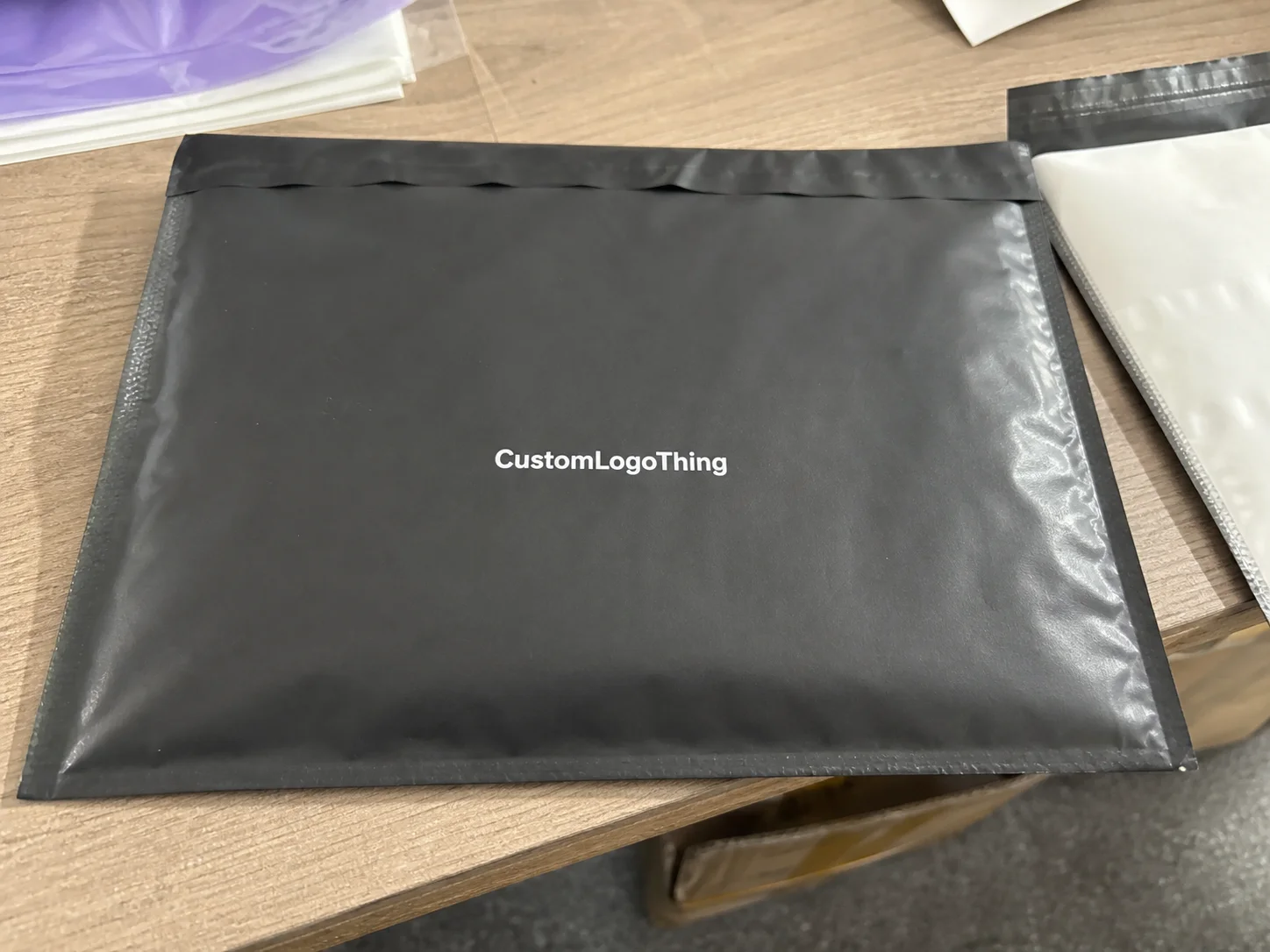
Custom printing is another defining feature. Typically, a branded order can include Logo Placement on one or both sides, Pantone or CMYK color matching, size-specific artwork, and finishes like matte or glossy film. Some buyers add a return-address panel or a QR code. Others keep the layout minimal and use the mailer as a visual anchor for brand packaging. I prefer minimal graphics on high-volume programs because they hold up better across reorder cycles, especially when the business has multiple SKUs or seasonal campaigns. That is especially true for Custom Poly Mailers where the print area and seam placement need to align with the bag’s working dimensions, usually 10x13, 14x19, or 19x24 for apparel programs.
Compared with paper mailers, custom biodegradable poly mailers bulk usually offers better moisture resistance and a smoother finish for printing. Paper looks good on a shelf, but in transit it can scuff, absorb water, or lose integrity at stress points. Poly-based options tend to perform better in rainy delivery routes, humid climates, and mixed-carrier networks. I once watched a wholesale client in Miami reject paper mailers after testing 500 units through a summer receiving cycle. The mailers looked fine on day one. On day three, several cartons showed edge wear and staining. They moved back to custom biodegradable poly mailers bulk and never revisited paper for that channel.
For buyers who care about recognized standards, useful references include the ISTA test standards for transit testing and the EPA guidance on composting conditions. Those do not replace a supplier spec sheet, but they help frame what a mailer must survive in the real world. If your supplier is serious, they should be able to discuss abrasion testing, dart impact, and seal integrity without waving a hand and saying “eco-friendly” like that solves the problem.
Specifications to check before you order
Size comes first. Apparel brands usually need 10x13, 14x19, or 19x24 mailers, while cosmetics and supplements often sit in smaller formats such as 6x9 or 8.5x12.5. Accessories like socks, scarves, and lightweight soft goods may fit in a medium-size bag with room for a return label. The right size keeps shipping dimensional weight under control and reduces wasted film. If you are buying custom biodegradable poly mailers bulk, the size choice affects more than fit; it affects freight, print area, and sealing speed. A 14x19 bag packed flat in a 40HQ container will carry differently from a 10x13 bag, and that changes pallet counts immediately.
Then check the thickness. Film gauge influences puncture resistance, stretch, and the feel of the bag in the hand. I’ve stood at a packing table in Dongguan while a buyer squeezed two samples side by side and dismissed the thinner one too quickly. That is a mistake. A well-engineered 3.0 mil film can outperform a poorly made thicker bag if the seal layer and additive blend are right. Ask for the exact gauge, outer layer composition, and whether the film uses mono-material construction or a multilayer structure. Those details matter when you compare custom biodegradable poly mailers bulk from different suppliers. If a supplier says “around 3 mil,” push back and ask for a measured spec, not a guess.
Core technical specs worth confirming
- Film thickness: 2.5 mil, 3.0 mil, 3.5 mil, or 4.0 mil depending on weight and handling.
- Seal type: permanent adhesive, hot-melt seal, or tamper-evident closure.
- Opacity: full opaque for privacy or semi-opaque for lighter visual presence.
- Tear resistance: especially important if you ship with zippers, metal hardware, or boxed items.
- Print method: gravure, flexographic, or digital depending on quantity and artwork complexity.
- Closure performance: peel strength and reseal reliability if your workflow requires returns.
- Material grade: ask for exact film resin, additive type, and any recycled-content percentage such as 30% PCR.
Printing deserves special attention. With custom biodegradable poly mailers bulk, print method affects both durability and cost. Flexographic printing is often efficient for large runs with solid colors and simple logos. Gravure can deliver sharper detail at very high volumes but may carry higher setup expectations. Digital printing is useful for shorter runs or frequent art changes, though unit cost can rise. I’ve had clients assume all print looked the same after shipment. It doesn’t. Ink coverage, curing quality, and film finish change how the logo holds up after abrasion in transit. A matte black print on a white mailer from Suzhou can look premium on proof day and patchy if the ink cure is rushed. Annoying, yes. Predictable, also yes.
Color matching is another detail that sounds minor until a brand walks into a meeting with a Pantone book and a sample that is three shades off. If your package branding depends on a specific green, blue, or black, request a proof on the actual substrate, not just on plain paper. With custom biodegradable poly mailers bulk, ink may sit differently on matte film than on gloss film, and that changes both the visual tone and the perceived quality. I’ve seen a cosmetics buyer reject an entire proof because the logo looked muddy under warehouse lighting in Los Angeles. She was right to do it. Packaging design should survive fluorescent bulbs, not just showroom photos.
Variation options also matter. White mailers tend to print cleanly and feel premium. Kraft-look films can support a more natural aesthetic without actually being paper. Tinted or colored mailers help conceal contents and create brand recognition. Clear-window variants can help if you need partial visibility for internal verification, though they are less common in strict privacy workflows. All of these can be part of custom biodegradable poly mailers bulk, depending on the converter’s capabilities and minimums. A good supplier in Jiangsu should be able to tell you whether the film uses a gloss top layer or a soft-touch matte coating.
Before committing, request sample packs and run them through your actual packing line. Fill them with your real products, add your standard insert if you use one, and test seal strength after pressure, friction, and a short dwell period. One subscription client I worked with discovered that a bag which looked perfect on the sample table opened too easily when the adhesive was exposed to cooler warehouse temperatures. They switched seal formulation after testing 100 pieces in-house. That single adjustment saved them from a return spike later, and it cost far less than a failed 10,000-piece run.
| Option | Best use | Typical strengths | Watch-outs |
|---|---|---|---|
| White printed film | Apparel and branded DTC shipments | Sharp print, strong brand visibility, broad size range | Shows scuffs if gloss is too high |
| Kraft-look biodegradable film | Natural or eco-positioned brands | Warm aesthetic, perceived sustainability, good shelf appeal | Requires careful color matching |
| Tinted opaque film | Privacy-sensitive shipping | Content concealment, strong visual identity | Can hide small print details |
| Clear-window variation | Internal verification or mixed-channel workflows | Partial visibility, easy content checking | Less common and not ideal for full privacy |
Pricing, MOQ, and bulk order economics
Pricing for custom biodegradable poly mailers bulk usually starts with five variables: material type, bag size, print complexity, order volume, and shipping destination. If any one of those changes, the quote changes. That sounds obvious, yet buyers still compare apples to oranges and then wonder why supplier A is $0.14 and supplier B is $0.23. One may include a thicker film, custom color match, and freight to the East Coast. The other may not. I’ve watched procurement teams waste days chasing a low unit price only to discover the landed cost was higher by 18%. That meeting always ends with somebody pretending their spreadsheet was “still under review.” Sure.
For planning purposes, larger runs usually improve the economics. A 5,000-piece order often has a higher unit price than a 20,000-piece order because setup, plate, and proofing costs are spread over fewer bags. In one negotiation I observed in Dongguan, the price on custom biodegradable poly mailers bulk dropped from $0.19 per unit at 5,000 pieces to $0.15 at 15,000 pieces, simply because the print and material buys were more efficient at scale. At 30,000 pieces, the same bag landed at $0.13 per unit before ocean freight. That is a real procurement lever. It is not glamorous, but it matters.
MOQ structures vary. Some suppliers set minimums by size, others by print color count, and some by film formulation. If you need mixed sizes, ask whether the order can be consolidated under a single artwork run. If you need multiple artwork versions, ask whether the supplier allows split runs or whether each version triggers a separate setup charge. This is where custom biodegradable poly mailers bulk can become either economical or frustrating, depending on how the order is structured. And yes, “frustrating” is putting it politely. A 2-color print in three bag sizes can behave like three separate orders if the factory is not organized.
Here is the hard truth: the headline unit price is not enough. You need the landed cost. That means unit cost, setup charges, freight, sample fees, plate fees if applicable, and any import or brokerage costs. I once reviewed a quote for a clothing retailer that looked unbeatable at first glance. After freight and plate charges were added, the total landed cost was 11% higher than a competing supplier with a slightly higher unit price. The buyer switched and never looked back. Good buyers know that custom biodegradable poly mailers bulk should be judged on the full bill, not the brochure line.
To make comparison easier, keep the spec sheet identical across suppliers. Same dimensions. Same thickness. Same print count. Same adhesive closure. Same delivery terms. Otherwise, you are not comparing quotes; you are comparing different products. That is especially important if your sourcing team also buys Wholesale Programs for other branded packaging items and needs cost alignment across categories like custom printed boxes and mailers. If one supplier quotes EXW from Shanghai and another quotes DDP to Chicago, you are not even in the same conversation.
When I negotiate bulk pricing, I ask for three things immediately: exact quantity breakpoints, confirmation of what setup fees are included, and shipping terms stated in plain language. A good quote for custom biodegradable poly mailers bulk should tell you whether the artwork proof is free, whether plates are reusable on reorders, and whether freight is included to one warehouse or multiple distribution points. If the answer is vague, assume there are extra costs hiding somewhere. They usually are, right behind a smiling “we can discuss later.”
Typical cost drivers buyers should model
- Material resin mix: higher-performance blends usually cost more than basic film.
- Artwork coverage: one-color logo printing is generally less expensive than full-coverage print.
- Bag dimensions: larger bags use more film and usually cost more per unit.
- Order quantity: volume almost always lowers the per-unit rate.
- Destination freight: distance, container mode, and urgency affect landed cost.
For businesses running recurring replenishment, bulk buying can stabilize budgeting. A quarter’s worth of custom biodegradable poly mailers bulk at once often means fewer emergency purchases, fewer color discrepancies across shipments, and less time spent on repeated approvals. That predictability has operational value. In my experience, the finance team appreciates it almost as much as the fulfillment team, especially when the purchase lands cleanly at $0.15 per unit for 5,000 pieces and drops again on the next tier.
One more practical point: if you are comparing eco claims, ask for written documentation rather than verbal reassurance. FSC applies to fiber-based materials, not every mailer type, but suppliers may still have sourcing statements or chain-of-custody documentation for related packaging. For broader sustainability context, the FSC website is useful when you are also evaluating paper components in your packaging mix. With custom biodegradable poly mailers bulk, the right documents depend on the material construction and jurisdiction, so do not assume one certificate covers every claim. In the U.S., EU, and Australia, the label rules are not identical, which is exactly why paperwork exists.
How long does production take for custom biodegradable poly mailers bulk?
For most standard runs, custom biodegradable poly mailers bulk takes about 12-15 business days from proof approval before shipment. That estimate assumes the artwork is ready, the specs are final, and the factory does not need to remake the proof because someone changed the logo size after a Friday call. Add 7-18 days for ocean freight depending on origin, routing, and destination. If you need air freight, the calendar changes again, and so does the budget. Magic. Not really.
Fast production is possible, but speed depends on the stability of the order. A simple one-color bag in a standard size can move faster than a multi-color, full-coverage design with special adhesive requirements. The more changes after approval, the slower the schedule gets. I’ve seen a “simple mailer order” turn into a three-week debate because someone in marketing decided the logo needed more breathing room. Of course they did.
Artwork issues cause a surprising amount of delay. Missing vector files. Low-resolution logos. Unclear color references. Conflicting instructions between marketing and operations. I’ve sat in supplier negotiations where one side wanted full-coverage print and the other side submitted a tiny PNG from a website footer. That mismatch alone added several days. If you want custom biodegradable poly mailers bulk to stay on schedule, send clean artwork the first time. AI, EPS, or PDF vector files are usually best, and Pantone references help if color matters. If your designer is in New York and the factory is in Ningbo, send the source file, not a screenshot. Please.
Approval checkpoints matter because they are the last chance to catch mistakes without paying for a remake. First proof. Color confirmation. Size confirmation. Seal position. Copy check. If your workflow requires recycling statements, barcodes, or legal text, review those carefully too. A single misplaced line can hold up a shipment. I’ve seen a fulfillment director catch a typo in a return address panel after the proof stage, and that saved a whole run of custom biodegradable poly mailers bulk from being reprinted. He caught it on day two of proof review, not after the factory had already run 12,000 bags.
Lead times depend on quantity and complexity. Weather, port congestion, and freight mode also affect the schedule. I do not like promising fixed dates without seeing the order details, and neither should any supplier. What I can say is that buyers planning recurring replenishment should build a buffer into the calendar. That buffer protects against proof revisions, rebooking freight, and last-minute art changes. For most standard orders, production is typically 12-15 business days from proof approval, then add 7-18 days for ocean freight depending on whether the goods ship from Shenzhen, Shanghai, or Ningbo.
Packaging and freight coordination are part of the real timeline, not an afterthought. If your warehouse receives only on certain days, or if you ship to multiple fulfillment centers, tell the supplier early. For custom biodegradable poly mailers bulk, a good operations plan includes how many cartons per pallet, whether the bags are packed flat or nested, and how the load is labeled for receiving. I learned this from a client with three distribution centers in Dallas, Atlanta, and Reno; one missed pallet label caused a two-day delay simply because the receiving team could not match the shipment to the PO.
What usually slows the schedule
- Artwork changes after proof approval
- Unclear sustainability claim requirements
- Sample revisions on bag size or seal type
- Freight booking delays for ocean or consolidated air moves
- Missing receiving instructions for multiple warehouse destinations
In practice, most custom biodegradable poly mailers bulk programs run best when the buyer treats the order like a controlled production project. One owner I worked with used a 10-point checklist: size, thickness, artwork, closure type, quantity, proof deadline, carton pack, freight terms, certification docs, and reorder contact. Her first order had fewer surprises than any other client I worked with that quarter. That is not luck. That is process. It also helped that she sent the final proof back in under 24 hours instead of letting it sit for four days while someone hunted down a missing logo file.
For ongoing programs, ask whether the supplier retains print plates or digital art files for reorders. That can reduce future setup time and keep color more consistent from batch to batch. If you are building a multi-channel supply chain, pairing custom biodegradable poly mailers bulk with other packaging formats can reduce chaos across your Custom Packaging Products mix, especially if your brand also uses folding cartons or retail packaging displays. A supplier with storage in Zhejiang or Guangdong can often repeat an approved spec faster than a new vendor can relearn your artwork from scratch.
Production process and timeline for bulk orders
The normal workflow is straightforward, but delays often hide in the details. It starts with an inquiry and a quote. Then comes artwork review, sample or proof approval, production, quality control, and shipment. For custom biodegradable poly mailers bulk, the whole sequence can move quickly when files are clean and specs are final. It can also drag when a buyer is still deciding between two bag sizes or trying to retrofit a logo that was never designed for a narrow print area. I’ve seen a “simple mailer order” turn into a three-week debate because someone in marketing decided the logo needed more breathing room. Of course they did.
Artwork issues cause a surprising amount of delay. Missing vector files. Low-resolution logos. Unclear color references. Conflicting instructions between marketing and operations. I’ve sat in supplier negotiations where one side wanted full-coverage print and the other side submitted a tiny PNG from a website footer. That mismatch alone added several days. If you want custom biodegradable poly mailers bulk to stay on schedule, send clean artwork the first time. AI, EPS, or PDF vector files are usually best, and Pantone references help if color matters. If your designer is in New York and the factory is in Ningbo, send the source file, not a screenshot. Please.
Approval checkpoints matter because they are the last chance to catch mistakes without paying for a remake. First proof. Color confirmation. Size confirmation. Seal position. Copy check. If your workflow requires recycling statements, barcodes, or legal text, review those carefully too. A single misplaced line can hold up a shipment. I’ve seen a fulfillment director catch a typo in a return address panel after the proof stage, and that saved a whole run of custom biodegradable poly mailers bulk from being reprinted. He caught it on day two of proof review, not after the factory had already run 12,000 bags.
Lead times depend on quantity and complexity. A simple one-color run in a standard size may move faster than a multi-color, full-coverage design with special adhesive requirements. Weather, port congestion, and freight mode also affect the schedule. I do not like promising fixed dates without seeing the order details, and neither should any supplier. What I can say is that buyers planning recurring replenishment should build a buffer into the calendar. That buffer protects against proof revisions, rebooking freight, and last-minute art changes. For most standard orders, production is typically 12-15 business days from proof approval, then add 7-18 days for ocean freight depending on whether the goods ship from Shenzhen, Shanghai, or Ningbo.
Packaging and freight coordination are part of the real timeline, not an afterthought. If your warehouse receives only on certain days, or if you ship to multiple fulfillment centers, tell the supplier early. For custom biodegradable poly mailers bulk, a good operations plan includes how many cartons per pallet, whether the bags are packed flat or nested, and how the load is labeled for receiving. I learned this from a client with three distribution centers in Dallas, Atlanta, and Reno; one missed pallet label caused a two-day delay simply because the receiving team could not match the shipment to the PO.
What usually slows the schedule
- Artwork changes after proof approval
- Unclear sustainability claim requirements
- Sample revisions on bag size or seal type
- Freight booking delays for ocean or consolidated air moves
- Missing receiving instructions for multiple warehouse destinations
In practice, most custom biodegradable poly mailers bulk programs run best when the buyer treats the order like a controlled production project. One owner I worked with used a 10-point checklist: size, thickness, artwork, closure type, quantity, proof deadline, carton pack, freight terms, certification docs, and reorder contact. Her first order had fewer surprises than any other client I worked with that quarter. That is not luck. That is process. It also helped that she sent the final proof back in under 24 hours instead of letting it sit for four days while someone hunted down a missing logo file.
For ongoing programs, ask whether the supplier retains print plates or digital art files for reorders. That can reduce future setup time and keep color more consistent from batch to batch. If you are building a multi-channel supply chain, pairing custom biodegradable poly mailers bulk with other packaging formats can reduce chaos across your Custom Packaging Products mix, especially if your brand also uses folding cartons or retail packaging displays. A supplier with storage in Zhejiang or Guangdong can often repeat an approved spec faster than a new vendor can relearn your artwork from scratch.
Why buyers choose us for custom biodegradable poly mailers bulk
We keep the conversation facts-first. That means clear specs, transparent pricing, and production support that does not depend on inflated promises. I have little patience for vague eco claims with no material details behind them. Buyers of custom biodegradable poly mailers bulk need to know what they are getting, how it will perform, and what documents support the claim language. That is the standard I use in client reviews, and it is the standard I recommend. If the numbers are not on the page, they are probably hiding in somebody’s head, which is not a supply chain strategy.
Our approach is built around consistency. Material sourcing review. Print checks. Repeat-order tracking. Color continuity. Those things are not glamorous, but they protect margin and brand presentation. I’ve seen companies save money on the first run only to lose it on the second because the supplier changed the film feel or the print color drifted. With custom biodegradable poly mailers bulk, repeatability matters as much as the first quote. One reorder from a factory in Dongguan should look like the first one, not like it had a personality shift.
Support also matters more than buyers admit. Many teams need help with artwork scaling, bag sizing, logo placement, or deciding whether a matte or gloss finish fits their ship path. A good supplier should tell you when a design is too busy for a narrow print panel. That kind of practical feedback is worth real money because it prevents rework. It also helps align the mailer with the rest of your brand packaging across product packaging, inserts, and custom printed boxes. A clean answer from a packaging engineer in Shanghai is better than three rounds of “maybe” from a sales rep.
The value proposition is long-term procurement stability. Not one flashy shipment. Not a one-time discount. A repeatable program that supports your line, your budget, and your customer experience. That is why many buyers stick with custom biodegradable poly mailers bulk after the first reorder. The numbers make sense, and the workflow gets easier instead of harder. When the first order lands right and the second order ships in 12-15 business days from proof approval, people stop panicking and start planning. Amazing how that works.
“Our best supplier isn’t the loudest one. It’s the one that answers the spec questions before we have to ask twice.”
I heard that from a purchasing manager in a client meeting where the team was balancing sustainability claims with real production deadlines. He was right. In this category, clarity wins. A supplier who can explain film construction, print method, and lead time without drama is worth more than a brochure packed with adjectives. That is the practical advantage of custom biodegradable poly mailers bulk done properly, especially when the factory in Zhejiang sends the first proof exactly as requested.
How to place your order and avoid costly mistakes
Start with the numbers. Exact sizes. Exact quantity. Exact logo files. Exact shipping destination. If you do that before asking for a quote, you will get cleaner pricing and fewer surprises. For custom biodegradable poly mailers bulk, vague requests create vague estimates, and vague estimates create budget problems later. A buyer who knows whether they need 10,000, 20,000, or 50,000 units gets better answers from day one. A buyer who says “we need something eco-ish” gets a price that belongs in a guessing game.
Next, compare two or three spec options instead of one. For example, ask for a 2.5 mil version, a 3.0 mil version, and a 3.5 mil version in the same size, or compare one-color print with two-color print. You are not just comparing price. You are comparing durability, appearance, and sustainability claim structure. That matters because custom biodegradable poly mailers bulk should fit the shipment, not the other way around. If your product is a 14-ounce hoodie, a 2.5 mil bag may be enough. If you are shipping a boxed skincare set with inserts, move up a notch.
Ask for sample packs whenever possible. Test them in your actual packing workflow, not on a desk. Check seal strength after the bag is filled. Check moisture resistance if your cartons sit near dock doors. Check scuff resistance if your carrier route is rough. I have watched brands approve a sample that looked great in the office, then fail on the line because the adhesive grabbed too slowly in cooler temperatures. One afternoon of testing can save a costly production mistake, and that is cheaper than finding out after 25,000 bags have already been printed in Ningbo.
Before approving production, confirm these points in writing: certification or test documents, proof details, artwork placement, reorder policy, and freight terms. If your internal team needs sustainability review, bring that person into the loop early rather than after the proof stage. That small change can shave days off the schedule. For custom biodegradable poly mailers bulk, communication discipline is one of the cheapest forms of risk control. It is also the fastest way to stop a tiny logo placement issue from turning into a week of emails.
If you are buying for recurring shipments, think beyond the first order. Store the approved artwork, record the final bag dimensions, and keep the sample that passed your internal tests. Reorders go much faster when the previous approval set is easy to retrieve. That is also useful if you are aligning mailers with a larger package branding strategy that includes Custom Poly Mailers, inserts, and wholesale replenishment through Wholesale Programs. A clean reorder file in your system can save two approval cycles and a lot of annoyance.
One last point. Ask for a quote with the exact quantity and artwork details you plan to use, not a rough estimate. It sounds basic, but it changes the answer. Buyers who treat custom biodegradable poly mailers bulk as a defined procurement item rather than a loose concept usually get better pricing, fewer production problems, and a cleaner supply chain. If the factory in Guangzhou knows the exact ship-to address in advance, the freight plan is better too. Shocking, I know.
If you want a quote that is actually usable, send the spec, the logo file, and the target ship date together. That is the fastest path to a realistic answer for custom biodegradable poly mailers bulk, and it keeps the discussion grounded in numbers instead of guesswork. A 24-hour response from your side can shave days off the overall schedule, especially when the proof is approved the same week it’s sent.
FAQ
What is the minimum order for custom biodegradable poly mailers bulk?
MOQ varies by size, print setup, and material type. Some programs start around 5,000 pieces, while larger brands may order 20,000 or more to get better unit pricing. Ask whether mixed sizes or multiple artwork versions can be combined in one run, because that can change the economics of custom biodegradable poly mailers bulk. A factory in Jiangsu may offer one MOQ for stock-size 10x13 bags and another for a fully custom 14x19 bag.
Are custom biodegradable poly mailers bulk strong enough for shipping?
They are usually suitable for lightweight, non-fragile products such as apparel, soft goods, and many accessories. Strength depends on thickness, seal quality, and puncture resistance, so I always recommend testing samples in your own packing workflow before committing to custom biodegradable poly mailers bulk. A 3.0 mil film with a strong adhesive can outperform a weaker 4.0 mil bag if the construction is sloppy.
How long does it take to produce custom biodegradable poly mailers bulk?
Timeline depends on proof approval, order size, and print complexity. For many standard orders, production is typically 12-15 business days from proof approval, and freight is extra. Artwork delays and sample revisions can extend production, so ask for the estimated lead time at the quote stage so your custom biodegradable poly mailers bulk order fits your replenishment schedule. Ocean freight from Shenzhen to Los Angeles often adds 7-18 days depending on routing.
How long does production take for custom biodegradable poly mailers bulk?
For standard orders, production is typically 12-15 business days from proof approval, then freight time depends on route and destination. If you need a very specific delivery date, share it early so the supplier can plan around artwork approval, production, and shipping for custom biodegradable poly mailers bulk. That gives the factory room to schedule printing and booking without scrambling.
What artwork do I need for custom biodegradable poly mailers bulk?
Vector logo files are best for clean print quality. If color matching matters, provide Pantone references or brand color codes. Include clear instructions for logo placement and any legal, recycling, or promotional text you want printed on custom biodegradable poly mailers bulk. A source file in AI or EPS format will save time compared with a low-resolution PNG pulled from a website header.
How can I compare pricing on custom biodegradable poly mailers bulk?
Compare unit price, setup fees, freight, plate charges, and proof costs. Then calculate landed cost rather than relying on the headline number. Use identical specs across suppliers so your comparison of custom biodegradable poly mailers bulk is fair and defensible. If one quote is $0.15 per unit for 5,000 pieces and another is $0.19 with freight included, the lower unit price is not automatically cheaper.
If you are ready to tighten your packaging budget and improve branded presentation, custom biodegradable poly mailers bulk is a practical place to start. Get the specs right, test the samples, compare landed cost, and make the order count the first time. That is how you buy with confidence, and that is how custom biodegradable poly mailers bulk becomes a real operational advantage instead of a marketing talking point. A clean approval in Ningbo, a correct proof in Shenzhen, and a 12-15 business day production window can beat a lot of chaos.