Custom Black Tote Bags: How to Buy the Right Spec Without Paying for Mistakes
Custom Black Tote bags are practical because black makes logos read clearly, hides scuffs, and usually looks more finished than a budget bag should. That makes them useful for retail packaging, event handouts, staff kits, and branded inserts that need to hold up in real use, not just in a mockup.
The main risk is choosing the wrong fabric, print method, or artwork for the bag's actual job. A tote can look premium in a proof and still fail in production if the contrast is weak, the handles are underbuilt, or the seam layout conflicts with the artwork. Buyers get better results when they focus on spec, cost, MOQ, lead time, and inspection rather than on the lowest quoted price alone.
Why black tote bags outperform louder promo bags
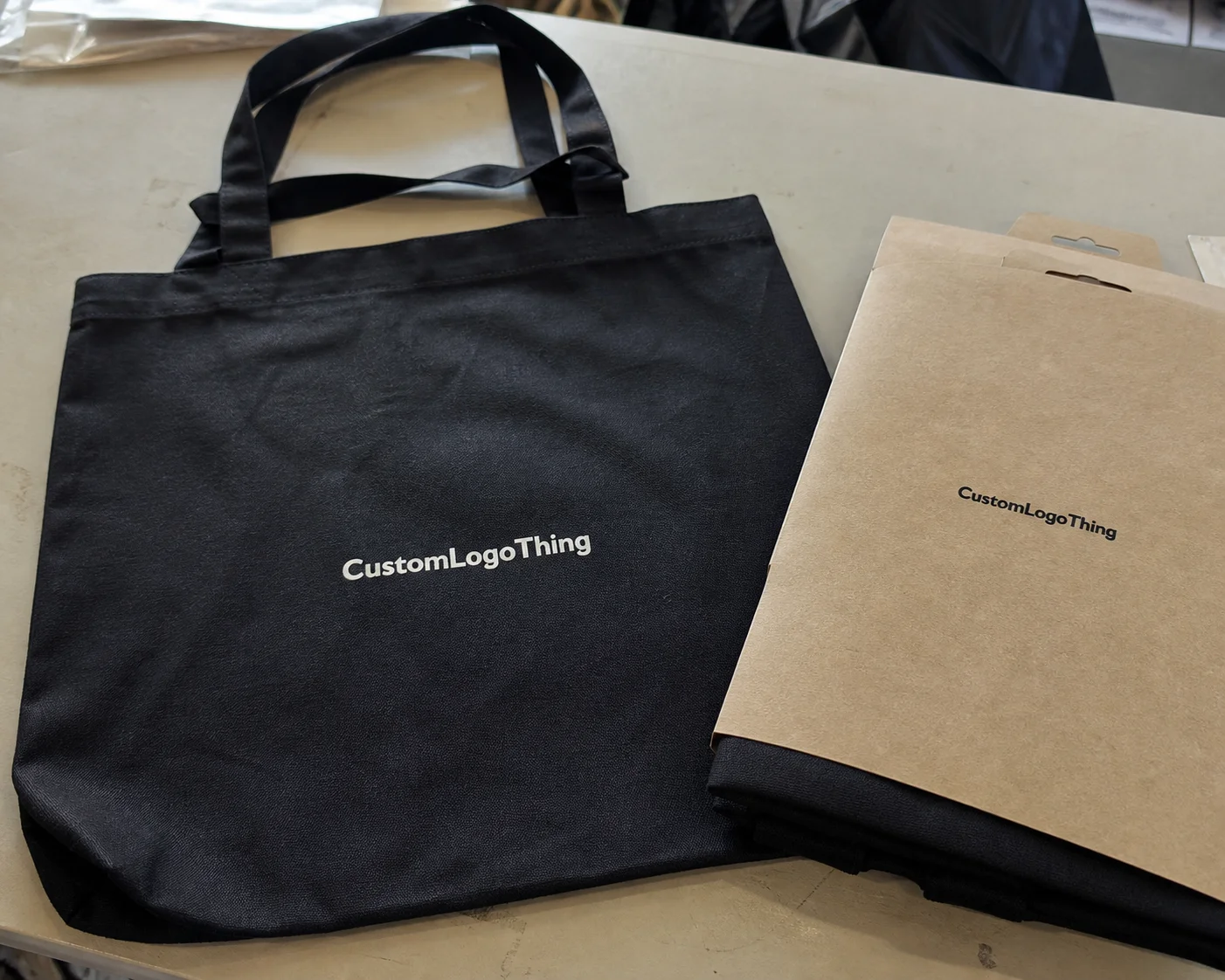
Black works because it frames the brand instead of competing with it. White, silver, or strong brand colors usually read faster on black fabric than on pale or patterned backgrounds, especially when the bag is moving or viewed from a distance.
Black also hides minor wear. Folds, handling marks, and light scuffs are less visible, so the tote stays usable and presentable longer. That matters when the bag is expected to live past the first handoff.
For retail packaging and onboarding kits, black can signal a more premium impression without requiring expensive construction. A standard non-woven tote in black often feels more considered than the same bag in a bright promo color. If the tote sits with tissue, inserts, or product boxes, black also works as a neutral frame that keeps the rest of the kit visually organized.
How custom black tote bags are made and printed
Material choice drives most of the result. Non-woven polypropylene is usually the lowest-cost option for events and large giveaways. Cotton feels softer and more natural. Canvas adds structure and weight, which makes it more common for retail packaging and repeat-use merch. Laminated bags have a cleaner surface and are easier to wipe down, but the finish changes how the print sits and how the seams behave.
Typical weight ranges are straightforward. Non-woven bags often sit around 80 to 120 gsm. Cotton totes are commonly 5 to 8 oz. Canvas moves heavier, often 10 oz and up. Heavier fabric does not automatically mean better. It usually means more shape, more durability, and more shipping cost.
Print method matters just as much as the base material. On black fabric, opacity is the deciding factor. Screen printing is usually the cleanest choice for simple logos and text because it lays down dense color and holds up well. Heat transfer can handle more detail and gradients, but it needs careful artwork and controlled application to avoid cracking or lifting. Embroidery and stitched patches can look strong on heavier canvas, but they add cost and are usually excessive for low-cost giveaways.
If the artwork is thin, dark, or overly detailed, black fabric will expose it immediately. Dark navy on black disappears. Soft gray on black also disappears, just more quietly. Solid white, metallics, and strong brand colors generally hold up better.
The production flow is simple, but quality can slip at each step:
- Artwork is cleaned, scaled, and prepared for the print area.
- A proof is built so placement and color can be reviewed.
- The fabric is cut and printed.
- The bag is sewn or finished, including handles, seams, and reinforcements.
- Final inspection checks alignment, print clarity, and defects.
That last step is what protects the order from expensive surprises. A good mockup does not fix a crooked seam or a print that lands too close to the edge.
Cost, pricing, and MOQ factors that change the quote
The quote usually comes down to five variables: material, size, handle style, print colors, and print locations. After that come the less obvious charges: artwork cleanup, sample revisions, rush production, special folding, and packing. The unit price can look simple until those items appear.
MOQ affects pricing because setup costs have to be absorbed somewhere. Screens, plates, proofing, labor, and machine time do not scale down just because the order is small. At 5,000 units, a one-color print can look efficient. At 250 pieces, the same spec can jump sharply because the setup cost is spread across fewer bags.
As a rough reference, simple non-woven totes with one-color printing sit in the lowest price band. Cotton usually moves higher. Canvas climbs again. Laminated bags can be economical in some runs, but finish and print requirements can offset the base savings. In practice, the price is always material cost plus labor plus setup.
The fastest way to compare quotes is to ask for three quantity tiers so you can see where the price curve changes:
- 500 units
- 1,000 units
- 5,000 units
| Material | Typical feel | Print behavior on black | Rough unit cost at moderate quantity | Best use |
|---|---|---|---|---|
| Non-woven polypropylene | Light, structured enough for giveaways | Strong for simple one-color prints | $0.45-$1.10 | Events, promo handouts, internal kits |
| Cotton | Softer hand, more natural look | Good contrast with bold artwork | $1.20-$2.75 | Retail packaging, merch, reusable bags |
| Canvas | Heavier, more substantial | Clean print area, good premium feel | $1.75-$4.50 | Higher-end retail, recurring brand use |
| Laminated polypropylene | Glossy or matte surface, wipe-clean | Strong graphics, less forgiving on seams | $0.65-$1.40 | Trade shows, packaged retail sets |
If the tote is part of a larger packaging program, it makes sense to price it with inserts, tissue, and other Custom Packaging Products. That gives a clearer view of the full packaging cost instead of designing one piece in isolation.
Two other numbers matter. First, handle reinforcement. A few cents can buy better stitching or a reinforcement patch, which matters if the tote will carry more than brochures. Second, carton packing. A bag that arrives wrinkled or crushed is still a presentation failure.
Artwork, sizing, and spec choices before you request samples
Artwork has to be built for contrast, not just copied from a brand file. A logo that looks fine on white paper can vanish on black fabric if the stroke is too thin or the color is too close to the background. Fine lines, tiny type, and delicate gradients are usually the first things to fail.
Placement matters too. A centered logo with breathing room usually reads cleaner than a crowded layout trying to explain too much in one print area. For most buyers, the goal is not a complicated design. It is a bag that looks deliberate.
Bag dimensions should match the load. A tote for brochures is not the same as a tote for boxed product or a heavier event kit. Width, gusset, and handle drop all affect usability. A short handle is fine for hand carry. A longer drop is better if the bag needs to ride on a shoulder.
Weight and structure should match the use case. A lightweight giveaway bag is fine for paper goods. A retail tote that needs to hold shape benefits from heavier fabric and stronger seams. If the bag collapses when set down, it may still function, but it will not look considered.
The best tote is the one that still looks intentional after a week of use, not the one that only looked good in the proof.
Samples are most useful after the basics are settled: artwork scale, fabric, print method, and bag size. Otherwise the sample just confirms that the spec was not finished.
Useful checks before approval:
- Logo size and legibility at normal viewing distance
- Ink opacity on black fabric
- Handle length and reinforcement
- Seam placement relative to the print area
- Bag depth and gusset size for the intended contents
Process, timeline, and lead time from quote to delivery
The normal sequence is simple: Request a Quote, review the proof, approve a sample if the project needs one, move into production, inspect quality, then ship. Delays usually happen in the gaps between those steps.
Low-resolution artwork slows the job. So does changing the bag size after proof approval. So does discovering too late that the print area crosses a seam or lands too close to a gusset. Most schedule problems are not surprises. They come from deciding things in the wrong order.
Stock-style bags with straightforward printing usually move faster than fully custom builds. If the artwork is ready and the proof is approved quickly, a simple run can often land in about 10 to 15 business days after approval. Custom sizing, specialty finishes, multiple print locations, or a sample loop can push that into the three-to-five-week range. International freight and customs can add more time even if production stays on schedule.
That is the part buyers underestimate. Manufacturing lead time is one thing. Logistics is another. The bags can be finished and still miss the event because nobody budgeted enough time for freight, customs clearance, or a second inspection cycle.
If the order has to survive parcel handling, ask whether the cartons were packed with an ISTA-aligned test profile. The tote may be fine while the carton is not. A crushed outer shipper can ruin the presentation before the box is opened.
Other details that affect delivery:
- Carton count and pallet build
- Folding method and insertion order
- Whether samples need approval before bulk production
- Whether Pantone matching requires an extra proof round
Common mistakes that make black totes look cheap
The fastest way to weaken a black tote is low-contrast artwork. If the logo cannot be read from a few feet away, the bag feels accidental. That usually happens with thin fonts, weak color choices, or layouts that assume the fabric will do the visual work.
Cheap materials can be fine if the use case is honest. The problem starts when the rest of the build does not match the price point. Loose stitching, flimsy handles, weak reinforcement, or ink that flakes after a few uses all tell the same story: the headline number mattered more than the spec.
Overdesign causes its own damage. Too many colors, too much copy, too many small icons. The bag turns into a crowded sales sheet with handles. In most cases, one strong mark and enough breathing room look better than a layout trying to say everything at once.
Size mistakes are common too. A tote that is too shallow for packaged goods looks awkward. A tote that is too small for event materials gets overstuffed, which stretches seams and makes the whole thing look temporary. If the bag needs to carry weight or volume, the gusset and handle placement need to be chosen for that reality.
Rushed approvals create the most avoidable failures. Off-center printing, wrong color assumptions, and seam conflicts usually happen because someone signs off before the proof has actually been reviewed.
Expert tips for a cleaner, more premium finish
Start with high-contrast artwork. White on black is the most reliable option because it reads clearly and consistently. Silver, metallics, and strong brand colors can also work, but only if the ink or print method stays opaque enough to hold against the fabric.
Request real spec information, not just a polished mockup. Ask for fabric weight, handle length, reinforcement details, print method, and seam construction. If the supplier cannot explain how the print behaves on black fabric, that is a problem worth solving before payment.
Ask for close-up photos of stitch lines and print edges, especially on heavier canvas or laminated bags. Clean edges and even stitching usually mean the factory controls the basics. Ragged edges and crooked seams usually mean the opposite.
For recurring programs, test one or two bag styles before locking a full run. A sample order of 100 to 250 pieces can catch a fabric that feels too flimsy or a handle length that looks right on screen and wrong in hand. That mistake is annoying, but it is cheaper than a warehouse full of mediocre bags.
A slightly heavier material often feels more premium because it holds shape better. That does not mean heavier is always better. It means the bag should match the use case. A 12 oz canvas tote makes sense for retail. A lighter non-woven tote makes more sense for event volume, where unit cost and speed matter more than structure.
Keep the packaging system consistent if the tote sits with inserts, boxes, or tissue. The bag does not need to be the star. It just needs to keep the rest of the set from looking disconnected.
Next steps for ordering the right tote
Start with the use case: giveaway, retail, internal packaging, or event kit. That one decision drives the material, print method, and budget range more than anything else.
Then gather the basics that make a quote real: bag size, quantity, artwork file quality, and print location. If those pieces are vague, the price will be vague too. Vague quotes tend to become expensive once the order is in motion.
Ask for pricing at multiple quantities so you can see where the break point is. A smaller run may be fine if speed matters. A larger run may be better if the tote will be reused across several campaigns or shipped with other Custom Packaging Products as part of a broader packaging plan.
Before approving anything, check contrast, placement, and legibility on black fabric. Not just color accuracy. Not just the mockup. The actual read of the bag from normal viewing distance is what the customer will see.
The best custom black tote bags are the ones that match the contents, the print method, and the delivery window. That is the job.
What material works best for custom black tote bags?
Non-woven polypropylene is usually the most budget-friendly option for giveaways and event handouts. Cotton and canvas feel more premium and hold up better for repeat use, while laminated styles add durability and a cleaner surface. The best material depends on how much structure, print sharpness, and wear resistance you need.
How much do custom black tote bags usually cost?
Price depends on material, size, print colors, print locations, and order quantity. A simple one-color bag at higher volume usually lands at the lowest unit cost. Smaller runs, rush orders, and extra finishing steps cost more because setup gets spread across fewer pieces.
What print method looks best on black tote bags?
Bold screen printing usually gives the cleanest contrast for simple logos and text. White ink, metallics, and strong solid colors tend to stand out better than thin gradients or tiny details. The right method depends on the fabric and how detailed the artwork is.
How long is the turnaround for custom black tote bags?
Stock-style bags with a simple print can move faster than fully custom builds. Proofing, sample approval, production, and freight all affect the final lead time, so build in extra time if the bags are tied to an event or launch date.
What should I check before approving a sample or proof?
Confirm artwork size, placement, and contrast on black fabric. Check the bag dimensions, handle length, and material feel against the intended use, then review stitch quality, print clarity, and any details that affect durability or presentation.