Buyer Fit Snapshot
| Best fit | packaging buyers who need clearer specs, stronger internal paths, and repeatable quote decisions where brand print, material, artwork control, and repeat-order consistency matter. |
|---|---|
| Quote inputs | Share finished size, material target, print colors, finish, packing count, annual reorder estimate, and delivery region. |
| Proofing check | Approve dieline scale, logo placement, barcode or warning zones, color tolerance, and any recyclable or compostable wording before bulk production. |
| Main risk | Vague material claims, crowded artwork, or missing packing details can create delays even when the unit price looks attractive. |
Fast answer: Custom Blister Card Inserts Price: What Drives It should be specified like a repeatable production item. The safest quote includes material, print method, finish, artwork proof, carton packing, and reorder notes in one written spec.
What to confirm before approving the packaging proof
Check the product dimensions against the actual filled item, not only the sales mockup. Ask for tolerance on folds, seals, hang holes, label areas, and retail display edges. If the package carries a logo, QR code, warning copy, or legal claim, reserve that space before decorative graphics fill the panel.
How to compare quotes without losing quality
Compare board or film grade, print process, finish, sampling route, tooling charges, carton quantity, and freight assumptions side by side. A lower quote is only useful if the supplier can repeat the same color, closure quality, and packing count on the next order.
Custom Blister Card Inserts Price: What Drives It
Custom blister card inserts price is not a throwaway number on a quote. It tells you how much of the package is doing real work and how much is just eating margin. A card that looks cheap but lets the product rattle around inside the blister is not a bargain. It is a future problem with ink on it.
Packaging buyers usually get burned by the same mistake: they compare print-only pricing instead of total program cost. That misses freight, spoilage, reprints, assembly time, and the cost of a package that performs badly on the shelf. The landed number matters. So does the damage rate after the product leaves the dock.
Custom blister card inserts do more than sit behind clear plastic. They center the item, hold it steady, support retail display, and make the package easier to read from a distance. That matters for hardware kits, cosmetics, batteries, small electronics, seasonal items, and any product that needs to survive handling without looking beaten up. If the product is oddly shaped, fragile, or sold as a kit, the insert becomes part of the protection strategy, not just the graphics layer.
There is also a practical branding angle. A tight, well-fitted insert makes a package look intentional. A loose one looks like someone guessed and hoped for the best. Retail buyers notice the difference. Customers do too, even if they never say it out loud.
Why custom blister card inserts price matters at shelf level
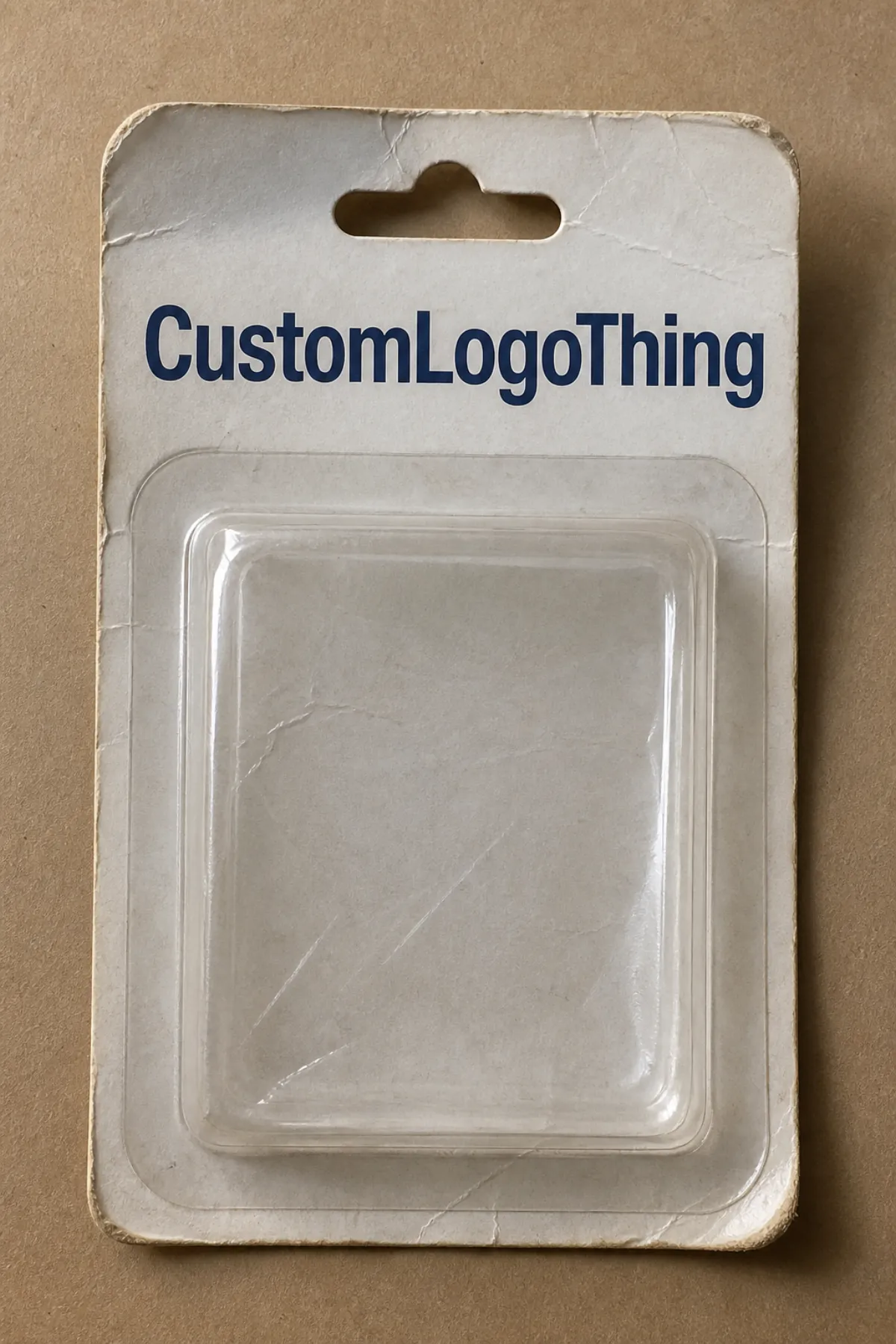
Retail packaging lives under pressure from three directions at once: it has to sell, survive, and fit the retailer's requirements. That combination is why a low quote can be misleading. A card that is too thin may warp. A card that is too large may force a different carton or create excess air in shipping. A card that looks fine on a screen may fail as soon as the item goes through distribution.
The most expensive insert is rarely the one with the highest unit price. It is the one that creates hidden losses. A loose blister insert can let a battery pack move and scuff the printed surface. A heavy tool can tear through a weak backing card. A cosmetic kit can shift off-center and make the whole package look off, even if the print quality is excellent. The printed-sheet price does not capture those failures. The replacement costs usually do.
Presentation matters because retail is visual and unforgiving. If a product sits flat, centered, and readable, the package feels controlled. If the item drifts inside the cavity or tilts on the peg, the package reads as cheap before anyone touches it. That is why the custom blister card inserts price should be judged against shelf performance, not paper cost alone.
Stock packaging can work for simple items with common dimensions and low differentiation needs. It still forces compromise. The board may not match the footprint, the product may move more than it should, or the opening and hanging features may be awkward. Custom die-cut inserts remove some of that compromise because they fit the product instead of forcing the product to fit the package. The tradeoff is familiar: more control, better consistency, and a higher setup burden.
For buyers managing a larger product packaging system, inserts can also reduce the number of separate components. One well-designed insert can replace extra dividers, loose fold-ins, or additional protective wrap. That cuts material use and assembly time. It also makes the package easier to repeat across SKUs without creating a pile of handwork.
"A low quote only matters if the package behaves the same way at the press, in transit, and on the shelf. If one of those stages fails, the quote was not low enough."
That is the part many buyers learn the hard way. A clean-looking insert can still be the wrong insert if it needs too much handling, requires rework, or arrives with fit issues. Real value shows up after the order is shipped, not when the spreadsheet is first opened.
What custom blister card inserts actually include
People use the term "insert" loosely, so it helps to separate the parts before pricing starts. A blister package usually includes the thermoformed blister, the printed backing card, and sometimes an additional paperboard insert or structural support piece. In many buying conversations, the printed backing card and the insert are treated as the same item. In others, they are separate components. That distinction matters because the quote changes with the structure.
The backing card is often the visible face behind the blister. It carries the branding, legal text, barcode, product claims, and hanging details. If the project needs a folded support, a locking tab, or an internal spacer, that adds structure and cost. A flat printed card is not priced the same way as a die-cut insert that has to hold a product in a precise position.
Common uses include hardware kits, personal care products, beauty accessories, promotional sets, replacement parts, craft components, batteries, and small electronics. The same package format can handle all of those, but the engineering changes with weight, sharp edges, and handling behavior. A mascara set is not a screwdriver kit. Treating them as interchangeable is how people end up with damage claims.
Blister card inserts can also support anti-tamper presentation. A product sealed to a card and enclosed in a blister is harder to open without visible damage. That is not the same thing as formal security packaging, but it does create a visible deterrent and gives retailers a package that looks untouched. On peg displays, the insert can also include a hang hole or euro slot so the item sits correctly in the planogram instead of leaning like it gave up halfway through the job.
That flexibility is one reason buyers move from stock formats into Custom Packaging Products. Once the product needs a specific fit, shelf-ready graphics, or a better opening experience, the packaging stops being a generic container. It becomes part of the product itself.
There is also a line between "good enough" and "overbuilt." A lightweight accessory may only need a 16 pt board with a standard die-cut. A heavier device, a multi-piece kit, or a package that gets bounced through distribution may need a thicker board, a reinforced fold, or a different locking method. If the item rattles, bends, or escapes during normal handling, the insert design needs to change before production starts. Fixing that later is how budgets get torched.
Specifications that change performance and cost
Most of the price movement comes from a short list of decisions. Board grade is usually first. Thickness is next. Then print coverage, sheet size, die complexity, and finish. Once those are defined, a quote becomes much easier to interpret. If they are not defined, every supplier is pricing a slightly different product.
Board grade and thickness drive stiffness, tear resistance, and the feel of the package. Common blister card stock may range from 14 pt to 24 pt depending on the load and desired rigidity. A 16 pt SBS board is often enough for many retail kits. Heavier items may need 18 pt or 24 pt to stay flat and resist bending. Thicker board costs more, but it can reduce failure. That is usually the smarter trade.
Material choice changes both appearance and sourcing. SBS is popular because it prints cleanly and holds a consistent finish. Coated and uncoated paperboard can create different visual effects. Recycled content board can support sustainability goals, although the surface and brightness may differ a bit from virgin-fiber options. If the buyer needs FSC-style sourcing or chain-of-custody documentation, that can affect vendor selection and paperwork. For buyers who want a broader reference point, FSC certification guidance is useful.
Print coverage affects press time, ink usage, and color control. A simple one-color insert is usually easier to run than a full-bleed CMYK design with heavy solids, metallic accents, and multiple SKUs. Large ink coverage can require more drying time. Fine type, small barcodes, and detailed line art also increase the need for accurate registration. None of that is mysterious. It just takes more setup discipline, which shows up in the quote.
Die-cut complexity is another common cost driver. A clean rectangle with a hang hole is straightforward. Add windows, locking tabs, rounded corners, fold lines, or nested cutouts, and the tooling gets more exacting. Tight tolerance jobs need more inspection and more attention during setup. If the insert has to fit inside a blister with only a few millimeters of clearance, the dieline should be checked before pricing is finalized. Guessing here is a bad hobby.
Finish choices change appearance and price. Gloss coating gives stronger color and some surface protection. Matte finish creates a softer retail look and reduces glare under harsh store lighting. Soft-touch adds a premium feel, but it is rarely the lowest-cost option. Spot UV can make logos and claims pop, though it adds another production step. Buyers who care about branded packaging usually choose finishes for a reason, not because they felt decorative that day.
Layout efficiency matters too. Product dimensions determine how many impressions fit on a sheet and how much waste is left between cuts. A design that nests well may produce better unit economics than a slightly smaller design that wastes more board. That is one reason packaging design and costing should be reviewed together. A beautiful layout that ignores sheet utilization can be more expensive than a simpler one that runs cleanly.
There are also structural details that people forget to price until they create a problem. Scoring, fold lines, registration marks, corner radii, and hang-hole placement all affect production time. If the package needs to hang on a peg, the hole location has to be consistent or the product will tilt. If the insert needs to open and close, the fold behavior matters. These are small details on the spec sheet. They are not small in the plant.
Custom blister card inserts pricing, MOQ, and unit cost
The custom blister card inserts price usually breaks into a few line items: raw material, print setup, die tooling, finishing, quality checks, packaging, and freight. Some vendors present those separately. Others hide them in one number. Separate line items are easier to compare and easier to manage if the job changes later. A quote that looks simple is not always the most useful quote.
MOQ, or minimum order quantity, exists because every run has a setup burden. The press must be prepared, the die must be installed, the color has to be balanced, and the sheets need to be brought into register. If a run is too small, that setup cost gets spread over too few pieces and the unit price rises. Larger runs dilute the setup burden, which is why the per-piece number usually drops as quantity increases.
Typical buyers see a clear curve: the first thousand pieces carry a heavier setup burden, the next few thousand become more efficient, and the price levels out once the run is large enough to absorb tooling and prep time. The exact breakpoints depend on sheet size, waste, and whether the design can be gang-run with another SKU. That is why two quotes with the same quantity can still differ by a wide margin.
For planning purposes, the following ranges are common in the market for straightforward paperboard insert jobs. They are illustrative, not promises. Exact pricing depends on artwork, structure, region, freight, and production timing.
| Run size | Typical spec | Illustrative unit price | What usually drives the cost |
|---|---|---|---|
| 1,000 pieces | 16 pt SBS, standard die, 1-4 color print, basic coating | $0.40-$0.90 each | Setup spread over a small run, higher waste risk, less press efficiency |
| 5,000 pieces | 16-18 pt board, standard die, CMYK or spot colors, aqueous finish | $0.16-$0.35 each | Better sheet utilization, lower setup burden per unit, steadier press output |
| 10,000 pieces | 18-24 pt board, tighter tolerances, premium finish, hang hole | $0.11-$0.26 each | Scale efficiency helps, but premium specs keep the price from falling as far |
Those numbers are a starting point for sanity-checking a quote. If a price sits far outside them, the reason is usually one of four things: expensive board, complicated die work, heavy finishing, or low sheet utilization. Freight can also distort the final number, especially if the order has to move quickly or ship to several locations.
Here is the comparison rule that saves the most money: do not compare one supplier's plain board quote to another supplier's fully finished quote. Match the specs first. Same material, same print method, same finish, same die, same delivery terms. Only then is the price meaningful. Otherwise, the cheapest number may just be missing half the job.
Unit cost also changes with standardization. A square or rectangular insert with a common hang hole usually prices better than a custom silhouette with internal cutouts. A repeat order on the same die may reduce tooling expense the second time around. A design built around a common board grade is often easier to source than one that needs a specialty sheet. Consistency matters more than most buyers expect.
There is a point where it makes sense to spend slightly more on the package to spend less on the program. A stronger board may reduce damaged returns. A cleaner die line may speed assembly. Better artwork placement may prevent reprints. If those savings exceed the added material cost, the higher quote is the better business decision. Not a pretty one. A better one.
Retail packaging should be priced like a system, not a single part. A $0.03 increase in the insert can be cheap if it prevents a $1.50 return or a lost shelf set. That matters in consumer electronics, cosmetics, and tool kits, where the package is doing real work and the product margin can disappear quickly if the carton fails.
Process and timeline: from quote to production
The cleanest jobs follow a predictable path. First comes the spec review. Then the quote. Then the proof. After that comes sampling or dieline approval, followed by production, inspection, packing, and shipment. The more complete the first spec sheet is, the less time gets wasted on clarification later.
There are three places where time usually disappears. The first is incomplete dimensions. If the product measurements are too loose, the insert can come back with too much play or too little clearance. The second is artwork changes after proofing, which can force the job back through press prep. The third is delayed approval, which pushes the run behind its slot and slows the launch.
Typical lead times vary with complexity, but a simple custom blister card insert job often runs in the range of 10-15 business days after proof approval once materials are in hand. More complex projects, premium finishes, or unusually large quantities can move that into a 2-4 week window. If tooling changes are needed, add time for sampling and adjustment. Rush service is possible in some cases, but rush orders usually trade speed for less schedule flexibility and a tighter window for revisions.
For buyers trying to keep a launch on track, the fastest quote comes from a complete request package. Include product dimensions, target quantity, board preference, print needs, finish requirements, destination ZIP or postal code, and the date the goods must arrive. If the item has sharp edges, moving parts, or extra weight, say so early. Those details change the insert spec and prevent a revision later.
Shipping performance should also be considered before production starts. If the product will travel through parcel networks or distribution centers, transit testing may be worth discussing. The ISTA test standards are a useful reference for package durability, especially when a carton and insert must survive vibration, drop, and compression. Not every job needs formal testing, but higher-value or fragile items benefit from at least a basic transit review.
Artwork handoff is another place where careful work saves money. Print files should be built at the correct size, with bleed, safe zones, and barcode placement checked before submission. If the project uses versioned SKUs, every version should share the same structural dieline whenever possible. That allows the print content to change without creating new tooling, which keeps the schedule tighter and the cost lower.
Buyers often ask whether a digital proof is enough. Sometimes it is. For simple retail packaging with a standard shape and familiar copy, a digital proof may be enough if the measurements are already locked. For tighter tolerance work, a physical sample or mockup can pay for itself by catching fit problems early. One sample that reveals a clearance issue is cheaper than a full production run of misfit inserts. That is not theory. That is how budgets get saved.
Why buyers choose our custom blister card inserts program
Custom Logo Things is a better Fit for Buyers who want packaging judgment, not just print output. That matters because a good quote is not only about sheet price. It is about whether the insert will fit the product, support the display, and avoid waste. Teams that quote without asking enough questions can be fast at pricing and weak on performance. Buyers usually feel that difference after the order is already in motion.
Our process starts with the product, not the artwork. If the board is oversized, the design is too busy, or the structure is stronger than the item needs, we call that out before production starts. That saves money. It also keeps the custom blister card inserts price realistic instead of artificially low on paper and expensive in practice.
We also look for places where the spec can be simplified without hurting the result. Sometimes a buyer assumes a premium coating is required when a good aqueous finish will do the job. Sometimes the die can be cleaned up and still support the same shelf presentation. Sometimes the quantity can be adjusted to get below a major unit-cost threshold. Those are practical decisions, not cosmetic ones.
Transparency is part of the value. Clear line items make it easier to compare suppliers and easier to defend the purchase internally. If a quote separates board, print, finishing, tooling, and freight, it becomes much easier to see where the money is going. That helps procurement, brand, and operations teams work from the same facts instead of different assumptions.
We also review the package in the context of the broader product packaging system. If the insert has to coordinate with Custom Printed Boxes, protective outer cartons, or shelf-ready branded packaging, the whole stack should be considered together. One component can make the others cheaper or more expensive. A well-fit insert can reduce outer-carton size, lower movement, and improve the unboxing experience without asking for a more elaborate structure.
Compared with a general print shop or a broker who quotes from a template, packaging-focused support tends to catch the expensive details earlier. That includes board selection, fold direction, die clearance, hang-hole placement, and the practical limits of the selected finish. It is not glamorous work. It is the work that keeps the job from drifting and the invoice from surprising everyone later.
If your item is headed into a retail environment, the package is doing three jobs at once: protecting, presenting, and persuading. The insert is the backbone of that system. The right decision often shows up later in lower damage rates, cleaner shelf facings, and fewer production surprises. Those are the metrics that matter to a buyer. Not the ones that look good in a sales deck.
Next steps to get an accurate custom blister card inserts price
If you want a quote that is actually useful, gather the basics before you send the request. Product dimensions should be accurate, not estimated. Quantity should reflect the real order, not a hopeful target. Artwork status should be clear. Finish expectations should be named. Shipping location should be included so freight does not distort the comparison.
A good quote request usually includes:
- Product dimensions and weight
- Blister type or package format
- Target quantity and expected reorder volume
- Artwork files or a clear layout brief
- Board preference, if known
- Finish preference, if any
- Retail environment or display method
- Deadline and shipping destination
It also helps to request two or three pricing scenarios. One can be the baseline spec. One can be a lower-cost version with simpler finishes or a standard board. One can be a premium option with a stronger board or more visible branding. That side-by-side view makes the decision easier and often reveals where the real value sits.
For an apples-to-apples comparison, keep these variables matched across quotes:
- Same board grade and thickness
- Same print coverage and color count
- Same coating or finish
- Same die-cut shape and tolerance
- Same quantity and delivery terms
One small mismatch can make a quote look cheaper when it is really just less complete. That is why packaging buyers should compare specs line by line, not just the bottom line. The cheapest option is not always the best value, especially if it misses the fit, presentation, or freight assumptions.
If you are still early in the process, a product photo can help narrow the spec quickly. So can a sample of the item itself. That makes it easier to judge edge protection, centering, and any hang-hole or locking-tab needs. The more concrete the input, the more accurate the pricing.
Send the dimensions, quantity, artwork, deadline, and destination. Ask for pricing that shows the board, print, finish, and tooling separately. That is the fastest route to a believable custom blister card inserts price, and the best way to avoid packaging surprises once production begins.
Frequently asked questions
What affects custom blister card inserts price the most?
Board grade and thickness are usually the biggest material drivers. Size, die complexity, and print coverage change setup waste and press time. Special finishes, tight tolerances, and low quantities push unit cost up because they add labor, inspection, or extra manufacturing steps.
Is there a minimum order quantity for custom blister card inserts?
Yes, MOQ usually depends on press setup efficiency and sheet utilization. Smaller projects are possible, but the unit price is often higher because the setup burden gets spread over fewer pieces. Standard sizes and repeat orders generally allow more flexible minimums.
How can I lower custom blister card inserts price without hurting quality?
Standardize the size and reduce unnecessary die-cut complexity. Limit premium finishes unless they support the brand or retail display. Use accurate specs early so you avoid costly revisions and reprints, which usually do more damage to budget than a slightly better board ever would.
How long does production usually take for custom blister card inserts?
Simple orders move faster when artwork and dimensions are approved early. Custom finishes, tooling changes, and higher quantities add time. The fastest schedules come from clean specs, ready files, and quick approvals, with minimal back-and-forth after the proof stage.
What do I need to request a fast custom blister card inserts quote?
Send product dimensions, quantity, artwork files, and your deadline. Include material preferences, finish requirements, and shipping ZIP code. A product photo and target retail environment help narrow the best spec, especially if the package has to hang, display flat, or resist shipping movement.
If you want an accurate custom blister card inserts price, start with the product data, not a guess. A clear spec sheet, a realistic quantity, and a defined finish preference will get you to a better quote faster, and they will keep the packaging decision tied to actual retail performance instead of a misleading low number.

