Buyer Fit Snapshot
| Best fit | custom book style boxes for packaging buyers who need material clarity, print proof, packing fit, cost control, and repeat-order reliability where brand print, material, artwork control, and repeat-order consistency matter. |
|---|---|
| Quote inputs | Share finished size, material target, print colors, finish, packing count, annual reorder estimate, and delivery region. |
| Proofing check | Approve dieline scale, logo placement, barcode or warning zones, color tolerance, and any recyclable or compostable wording before bulk production. |
| Main risk | Vague material claims, crowded artwork, or missing packing details can create delays even when the unit price looks attractive. |
Fast answer: Custom Book Style Boxes: Cost, MOQ, Proof, and Reorder Checks should be specified like a repeatable production item. The safest quote includes material, print method, finish, artwork proof, carton packing, and reorder notes in one written spec.
What to confirm before approving the packaging proof
Check the product dimensions against the actual filled item, not only the sales mockup. Ask for tolerance on folds, seals, hang holes, label areas, and retail display edges. If the package carries a logo, QR code, warning copy, or legal claim, reserve that space before decorative graphics fill the panel.
How to compare quotes without losing quality
Compare board or film grade, print process, finish, sampling route, tooling charges, carton quantity, and freight assumptions side by side. A lower quote is only useful if the supplier can repeat the same color, closure quality, and packing count on the next order.
Custom book style boxes do something ordinary folding cartons usually cannot: they make a product feel thought through before anyone even opens the lid. That first lift, that small pause before the reveal, changes the mood of the whole experience. For cosmetics, stationery, collectibles, gift sets, and PR kits that need to feel curated rather than packed, custom book style boxes can shape the buyer’s impression in a single moment.
For packaging buyers, this format sits in a useful middle ground. It has more presence than a standard carton, yet it does not always ask for the same spend as a fully rigid presentation set. Built well, custom book style boxes give you protection, brand visibility, and a stronger unboxing moment without turning the package into an exercise in excess. Built poorly, they become expensive cardboard with magnets attached. That is not premium; that is just costly.
I have seen brands spend real money on the wrong details, then wonder why the box still felt flat. Usually the issue was not the format itself. It was the fit, the finish, or the closure chosen without enough thought. So this piece walks through how custom book style boxes are built, what affects price, where projects tend to go off track, and how to order packaging that supports the product instead of simply surrounding it.
What Are Custom Book Style Boxes, and Why Do They Convert?
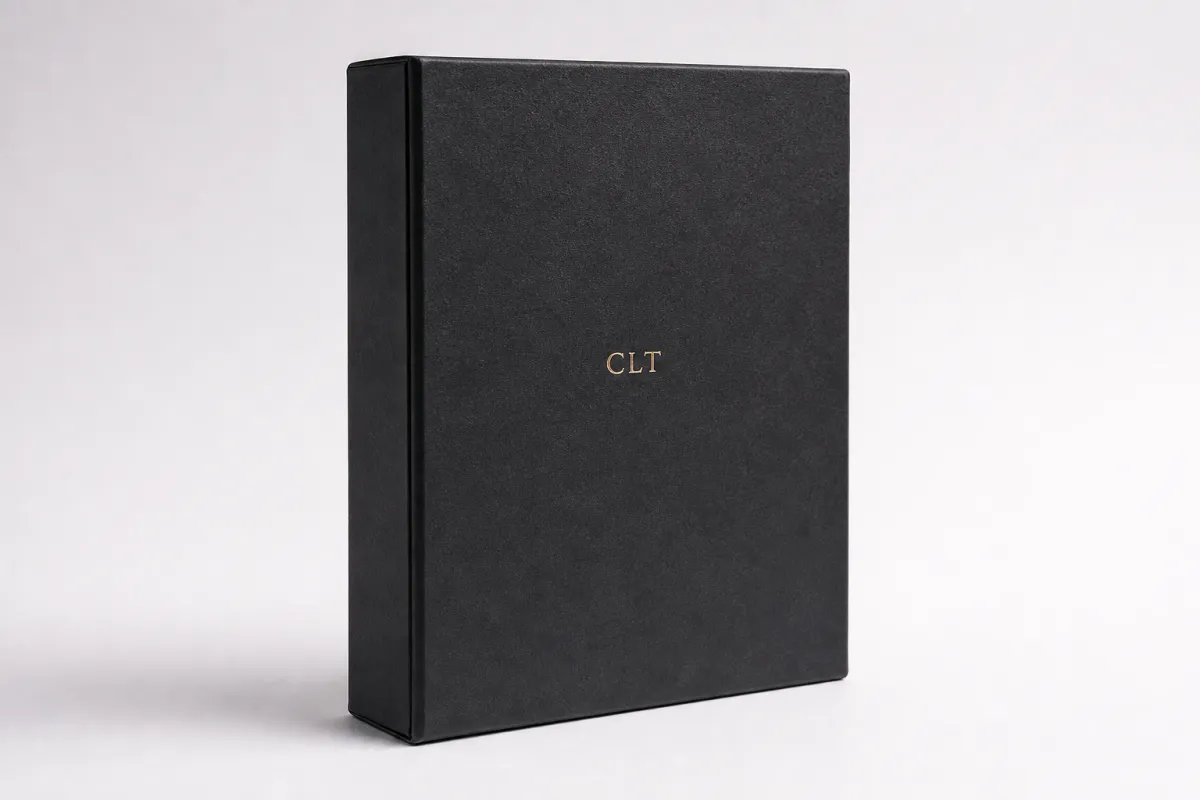
Custom book style boxes are packaging structures that open like a hardcover book or keepsake case. The front panel behaves like a cover, the side works as a spine, and the box usually closes with a flap, magnet, ribbon, or tucked tab. In practical terms, you get rigid or semi-rigid packaging with a presentation-first opening style that feels deliberate rather than generic. That is a big reason custom book style boxes often outperform plain cartons for products that need a premium story around them.
The opening motion matters more than many people expect. A box that unfolds like a hardback creates a sense of value before the product is even in hand. No trickery there, just design psychology doing its job. A format that suggests a book, archive, or keepsake signals care, permanence, and intention. That is one reason custom book style boxes show up so often in launches, gifts, and collector packaging.
These boxes tend to do their best work with:
- Cosmetics and skincare sets
- Jewelry, watches, and accessories
- Premium stationery and planners
- Subscription drops and influencer PR kits
- Apparel accessories and small gift items
- Collectibles, media sets, and branded merch
The common thread is easy to spot: these products benefit from a strong opening moment. A customer lifts the cover, sees the interior print, and immediately understands that the brand cared enough to make the presentation feel complete. That is a lot better than “here is a box, good luck.” It also helps custom book style boxes stay in circulation longer. When the box feels worth keeping, people keep it.
That extra life matters. Retention gives the brand more shelf presence, more visible logo exposure, and more chances for the packaging to become part of the product story. For brands that care about retail packaging and direct-to-consumer presentation, custom book style boxes are not decoration. They are part of the selling job.
Custom book style boxes also create a cleaner narrative inside the package. A box that opens like a book can guide the eye through a sequence: cover, reveal, insert, product, and then a note or care card. That structure gives the product a beginning, a middle, and a finish. Ordinary packaging usually stops at containment.
If the box looks premium but the product rattles inside, the buyer notices both things. A nice exterior does not cancel out a poor fit.
How Custom Book Style Boxes Work: Structure, Materials, and Closure
At the construction level, custom book style boxes usually begin with a rigid board shell. That shell gets wrapped in printed paper, specialty stock, or laminated material, then finished with a closure and internal support. Think of it as a presentation box with a spine, a cover, and a controlled opening angle. Better fit means a better result. Custom book style boxes do ask for tighter tolerances than cheap folding cartons, and there is no clean way around that.
Board thickness usually depends on product weight and shipping requirements. Lighter items often work with 1.5 mm to 2 mm rigid board. Heavier products usually need 2 mm to 3 mm board, along with a stronger insert or tray. Wrap choices range from coated art paper to textured specialty papers. Some buyers choose soft-touch lamination for a velvety feel, while others prefer matte or gloss for stronger color payoff. If you want custom book style boxes to feel premium in hand, the material stack matters as much as the artwork.
Common material and finish options include:
- Chipboard or greyboard: the structural base for rigidity
- Art paper wrap: good for high-resolution custom printed boxes
- Textured papers: ideal for luxury retail packaging
- Soft-touch lamination: adds a muted, tactile finish
- Foil stamping: useful for logos, accents, or spine detail
- Embossing/debossing: creates depth without shouting
- Spot UV: highlights specific artwork areas
Closure style changes the experience more than a lot of buyers expect. Magnetic closures are the most common premium option because they create a satisfying snap and help the box stay shut in storage. Hidden tabs and friction-fit designs work well if you want fewer components or a lighter build. Ribbon pulls fit gift packaging and keepsake sets, though they can feel less restrained. For custom book style boxes, the closure should match the product weight, the way the box will be used, and the price point you are trying to hit.
Inserts deserve real attention. A beautiful box with a loose product inside still feels sloppy. Depending on the item, you may use paperboard cradles, foam inserts, molded pulp trays, or custom cut supports. For product packaging that needs to survive distribution, the insert has to stop movement, soften minor shock, and keep the box looking tidy after transit. That is where custom book style boxes earn their place: the exterior draws the eye, and the interior does the protective work.
Branding options go well beyond the outside cover. Exterior print can run across the front, spine, back, and inner flap. Interior panels can carry instructions, thank-you notes, product details, QR codes, or care guidance. If you are selling premium stationery or a launch kit, the inside of custom book style boxes is valuable surface area. Use it with purpose. Empty space should be intentional, not accidental.
For teams that care about sustainability claims, source verification matters too. FSC-certified paper and board are worth requesting if your brand needs a stronger environmental foundation. You can review chain-of-custody basics at FSC, and for shipping or packaging waste context, the EPA has useful material on recycling and waste reduction at EPA recycling guidance. That does not make a box sustainable by default, but it gives you a better starting point for responsible product packaging.
Custom Book Style Boxes Pricing: What Drives Cost?
Pricing for custom book style boxes comes down to the usual variables: size, board thickness, print coverage, finish complexity, insert type, and order quantity. Buyers often focus on the unit price and overlook setup costs, sample charges, or finishing steps. That is how budgets drift. A box that looks straightforward on a screen may need several production stages in the real world, and each stage brings labor, materials, or tooling into the equation.
Small runs carry a higher unit cost because setup gets spread across fewer pieces. That applies to nearly every packaging format, yet it affects custom book style boxes more sharply because rigid structures involve more manual work than a standard carton. If you order 300 pieces, the per-unit price may be much higher than it would be for a 5,000-piece run. The reason is not hidden. You are paying for die prep, board cutting, wrapping, assembly, insert fabrication, and finish application across a shorter run.
Here is a realistic pricing framework for custom book style boxes. These ranges are broad, because the exact number depends on build quality and order size, but they are still useful for planning:
| Box Style | Typical Quantity | Approx. Unit Cost | Notes |
|---|---|---|---|
| Basic printed rigid book box | 1,000-5,000 | $1.10-$2.60 | Standard wrap, simple insert, limited finishing |
| Magnetic closure book box | 1,000-5,000 | $1.40-$3.20 | Higher assembly cost, better premium feel |
| Specialty finish book box | 1,000-5,000 | $1.80-$4.50 | Foil, embossing, soft-touch, or multi-panel print |
| Short-run premium sample order | 100-500 | $3.50-$8.00 | Setup dominates the price; useful for launch tests |
That table is not a quote. It is a grounded planning tool. For custom book style boxes, premium features can stack quickly. Foil stamping may add only a modest increment, but once you combine foil, soft-touch, custom inserts, and magnet closures, the box can climb fast. Sometimes the better question is not “can we make it fancier?” but “does the buyer actually care about this detail?”
There is also a value question that gets skipped too often. A slightly higher box cost can still be the smarter move if it lowers damage rates, raises perceived value, or supports a stronger retail price. In branded packaging, a $0.30 increase per unit may be easy to justify if it helps reduce returns or makes a $60 product feel like something worth $80. That part matters, and too many quote comparisons ignore it.
If you are comparing suppliers, ask for the pricing split by setup, sample, unit cost, insert cost, and freight. That makes custom book style boxes easier to compare fairly. It also keeps the conversation honest. A low unit price with a large hidden setup fee is not a bargain. It is a spreadsheet illusion.
Storage and cash flow deserve a look as well. Ordering 10,000 boxes can lower unit cost, but only if you have the space and the product cycle to use them before artwork changes or a refresh lands. Custom book style boxes should fit the inventory plan, not just the optimistic version of it.
Custom Book Style Boxes Process and Timeline: From Dieline to Delivery
The production flow for custom book style boxes looks simple on paper and gets detail-heavy in practice. It usually starts with product specs, then structural design, dieline creation, artwork setup, proofing, sample approval, production, finishing, packing, and shipment. Skip a step, and someone will catch the problem later when the box will not close, the insert is loose, or the spine panel is off.
Timeline depends on complexity. A straightforward custom book style boxes project with standard print and a basic insert can move faster than a version with foil, embossing, specialty paper, or a fully custom tray. For many projects, a realistic planning window is about 12 to 18 business days after proof approval for the standard build, with more complex work taking longer. Samples and revisions can add time before the run even begins.
Delays usually come from ordinary project problems, not mystery manufacturing drama:
- Measurements were not finalized before quoting.
- The art file missed bleed or safe-area requirements.
- The team changed the insert after the dieline was approved.
- The customer wanted one more revision after sampling.
- The freight window did not match the launch date.
That last point matters more than many buyers like to admit. Packaging often arrives too early or too late if logistics are ignored. If the goods are headed into retail packaging or a warehouse receiving system, transit time and receiving hours have to be part of the plan. A polished run of custom book style boxes is not useful if it sits on a dock for a week because the delivery was booked carelessly.
Prototyping is worth the time. A sample is not a formality; it reveals fit, closure tension, print perception, and insert alignment before the full budget is spent. The sample stage is also where you can check the opening feel, corner strength, and whether the product sits centered instead of drifting around the box like it took a wrong turn on the way in.
For shipping protection standards, keep ISTA in view. The ISTA test family is widely referenced for package transport performance, especially if your custom book style boxes will move through distribution centers or parcel networks. Not every box needs formal testing, and no one should pretend otherwise. Fragile or high-value products are a different story, and skipping real-world transit checks is a risky way to save money.
How to Design Custom Book Style Boxes That Fit the Product
Start with the product, not the artwork. That sounds obvious because it is obvious, and that is exactly why it gets ignored. Measure width, depth, height, and weight before the structure is locked. For custom book style boxes, a few millimeters off can be the difference between a crisp presentation and a box that bulges, rattles, or closes like it is resisting you.
Insert design should follow the item, not the other way around. Foam works well for some fragile products, but paperboard cradles, folded supports, or molded pulp can be a better fit for retail packaging depending on shape and shipping path. A light and delicate product may need tighter support around corners and edges. A dense and heavy product needs stronger board and smarter load distribution. That is packaging design, not guesswork.
Good custom book style boxes use the cover, spine, and interior in different ways. The front cover usually carries the strongest visual message, the spine can hold a logo or product name, and the interior can carry instructions, ingredients, or a short brand note. That is where package branding starts to earn its keep. If the inside of the box can answer basic customer questions, the whole experience feels clearer and more considered.
A restrained design often performs better than a crowded one. I am not against graphics. I am against trying to force too many messages into one small package. With custom book style boxes, give the product room to breathe. Use contrast, hierarchy, and clean spacing. A strong logo, one clear visual idea, and a well-finished interior can beat a noisy layout that tries to say everything at once.
Watch the technical details in artwork setup:
- Bleed: keep artwork extended past trim edges
- Safe area: keep text away from folds and cuts
- Dieline alignment: check every panel against the actual structure
- Small text: do not rely on tiny copy that may print muddy
- Color expectations: spot colors and CMYK behave differently on wrap stock
Those details stay boring right up until they ruin a run. Then everyone wants to talk about them.
Always proof the box with the real product inside. A nice empty box proves only that the outside looks nice. For custom book style boxes, the fit check should confirm that the product sits straight, the closure still works, the item does not move around, and the interior print stays readable once the box opens. One sample can prevent an expensive reprint.
If the packaging needs to support a larger launch, tie the spec back to the product line and the fulfillment method. In some cases, a slightly larger box makes packing easier and reduces damage. In other cases, a tighter insert lowers movement and strengthens shelf appeal. There is no universal answer. There is only the best answer for that product, that channel, and that timeline.
Common Mistakes and Expert Tips for Better Custom Book Style Boxes
The classic mistake is ordering custom book style boxes before the product is fully settled. That always feels efficient until the product size shifts by 4 mm and the entire insert plan falls apart. Finalize the item first, or get very close to it. If the product is still changing shape or size, the box should not be locked yet.
Another common problem is picking the wrong board weight. Too light, and the box feels flimsy. Too heavy, and you pay for rigidity you do not actually need. For custom book style boxes, the right board depends on product weight, shipping method, and the feel you want in hand. A luxury item can justify a sturdier board. A lighter accessory may not need the same build, even if the marketing team wants everything to feel larger than life.
Overdesign causes trouble as well. Too many finishes can make the box look busy, raise production risk, and push cost higher without improving the customer experience. I have seen buyers combine foil, embossing, spot UV, heavy lamination, and a complex insert into one project because each idea sounded good alone. That is how custom book style boxes turn into expensive clutter. Choose the finishes that support the story, then leave the rest out.
These habits usually separate a smooth run from a messy one:
- Ask for a physical sample early.
- Test opening feel, closure strength, and fit with the actual product.
- Check how the box looks under retail lighting, not just on a screen.
- Verify case pack weight and master carton count before mass production.
- Confirm warehouse receiving requirements before freight is booked.
Another useful move is to think like the customer instead of the internal approval group. If custom book style boxes are hard to open, awkward to close, or confusing to display, the premium impression drops fast. The buyer does not care how long the logo file took. They care whether the packaging feels satisfying and the product arrives undamaged. That is the real test.
For branded packaging, consistency matters too. If you are building a product family, keep the same structure where possible and vary color or finish by SKU. That gives the line a unified look while still helping customers tell items apart. It also makes production easier. Packaging buyers appreciate consistency because it reduces errors and keeps reorders manageable.
One more point deserves attention: ask about the supply chain, not only the sample. Lead times, carton pack, palletization, and freight method all affect the final outcome. Good custom book style boxes should fit your launch schedule and warehouse reality. Otherwise you end up with beautiful packaging that shows up late, and late packaging is just an expensive problem.
Next Steps: How to Order Custom Book Style Boxes Without Guesswork
If you want to order custom book style boxes without wasting time, build a spec sheet first. Include product dimensions, quantity, target budget, finish preference, insert type, and delivery deadline. If you can send a physical sample of the product, even better. That one step usually improves quote accuracy more than a long email thread ever will.
Next, ask for a dieline and compare it against the product. Do not assume the supplier “knows what you mean.” They may, but assumptions are where budgets go sideways. For custom book style boxes, confirm the spine width, fold positions, closure placement, and insert space before artwork is finalized. That is how you avoid rework.
When you request pricing, ask for a line-item quote. A proper quote should separate:
- Unit price
- Setup cost
- Sample or prototype cost
- Insert cost
- Finishing charges
- Freight or delivery cost
That breakdown lets you compare options honestly. It also helps you decide whether a simpler structure or a higher-end build makes more sense. Sometimes a cleaner version of custom book style boxes is the smarter commercial choice because it leaves budget for print, product, or shipping protection. Other times, the premium build is the point. Both choices can be right, depending on the product and the margin.
If you are sourcing broader packaging support, it helps to look at related options on Custom Packaging Products and compare them against the box format you actually need. A rigid book-style presentation box is not always the answer. Sometimes a different Custom Printed Boxes format is better for Cost, Lead Time, or storage. Buyers who compare formats early usually make better decisions.
Approve a physical sample or pre-production proof before you run the full order, especially if the design includes magnets, specialty paper, or tight-fit inserts. That is the last easy checkpoint. Once production starts, changes get expensive fast. That is true for most product packaging, and it is especially true for custom book style boxes.
Close the loop by aligning specs, timeline, artwork, and budget before you place the order. That sounds basic because it is basic. Basic discipline is what keeps custom book style boxes premium instead of turning them into expensive regret.
Custom book style boxes work best when they are treated as part of the product rather than an afterthought. If the structure fits the item, the finish supports the brand, and the timeline fits the launch, you get packaging that does real work: it protects, presents, and helps the buyer understand why the product deserves attention. That is the job, and when custom book style boxes do it well, they earn their place quickly.
If you are getting ready to spec one out, start with the product in hand, confirm the fit with a sample, and make every finish choice earn its keep. That simple sequence will save you a lot of back-and-forth and, honestly, a lot of money too.
FAQ
What products work best in custom book style boxes?
They work best for premium items that benefit from presentation and protection, like cosmetics, gifts, stationery, apparel accessories, and PR kits. They are especially useful when the unboxing experience matters almost as much as the product itself.
How much do custom book style boxes usually cost per unit?
Pricing depends on size, board thickness, print coverage, finish, insert type, and quantity, so there is no honest one-size-fits-all number. Small orders cost more per unit; larger runs usually lower the unit cost, but only if the quantity matches your real demand.
How long does production take for custom book style boxes?
Lead time depends on whether you need a sample, how complex the structure is, and how many finishing steps the design requires. Delays usually come from artwork changes, sample revisions, and freight timing, not from the box itself.
What do I need before requesting a quote for custom book style boxes?
Have product dimensions, quantity, target material level, closure preference, insert needs, and artwork direction ready before you ask for pricing. If you can share a physical sample of the product, the quote will usually be more accurate.
Are custom book style boxes better than standard folding cartons?
Yes, when you need a rigid, premium presentation and stronger perceived value; no, if the product is low-margin and needs the cheapest possible packaging. The right choice depends on budget, shipping needs, and how important the unboxing moment is to your brand.

