Buyer Fit Snapshot
| Best fit | custom bottle carrier boxes cost for packaging buyers comparing material specs, print proof, MOQ, unit cost, freight, and repeat-order risk where brand print, material, artwork control, and repeat-order consistency matter. |
|---|---|
| Quote inputs | Share finished size, material target, print colors, finish, packing count, annual reorder estimate, and delivery region. |
| Proofing check | Approve dieline scale, logo placement, barcode or warning zones, color tolerance, and any recyclable or compostable wording before bulk production. |
| Main risk | Vague material claims, crowded artwork, or missing packing details can create delays even when the unit price looks attractive. |
Fast answer: Custom Bottle Carrier Boxes Cost: Pricing Breakdown should be specified like a repeatable production item. The safest quote includes material, print method, finish, artwork proof, carton packing, and reorder notes in one written spec.
What to confirm before approving the packaging proof
Check the product dimensions against the actual filled item, not only the sales mockup. Ask for tolerance on folds, seals, hang holes, label areas, and retail display edges. If the package carries a logo, QR code, warning copy, or legal claim, reserve that space before decorative graphics fill the panel.
How to compare quotes without losing quality
Compare board or film grade, print process, finish, sampling route, tooling charges, carton quantity, and freight assumptions side by side. A lower quote is only useful if the supplier can repeat the same color, closure quality, and packing count on the next order.
People usually search custom bottle carrier boxes cost after they have already seen the first quote and stared at it for a second longer than they meant to. That reaction is normal. A bottle carrier is doing more work than a plain carton, and the extra work shows up in the price. It has to hold weight, protect glass, survive shipping, and still look like it belongs beside a premium beverage instead of a warehouse spill kit.
The tricky part is that packaging cost is rarely driven by one thing. It is a stack of small decisions: board grade, structure, print coverage, finishing, quantity, and freight. One change can move the number by a little. Three changes can move it by a lot. So the right way to read a quote is not to ask why the box costs more than a blank folding carton. The better question is whether the spec is paying for protection, presentation, or both.
Why Custom Bottle Carrier Boxes Cost More Than Plain Cartons
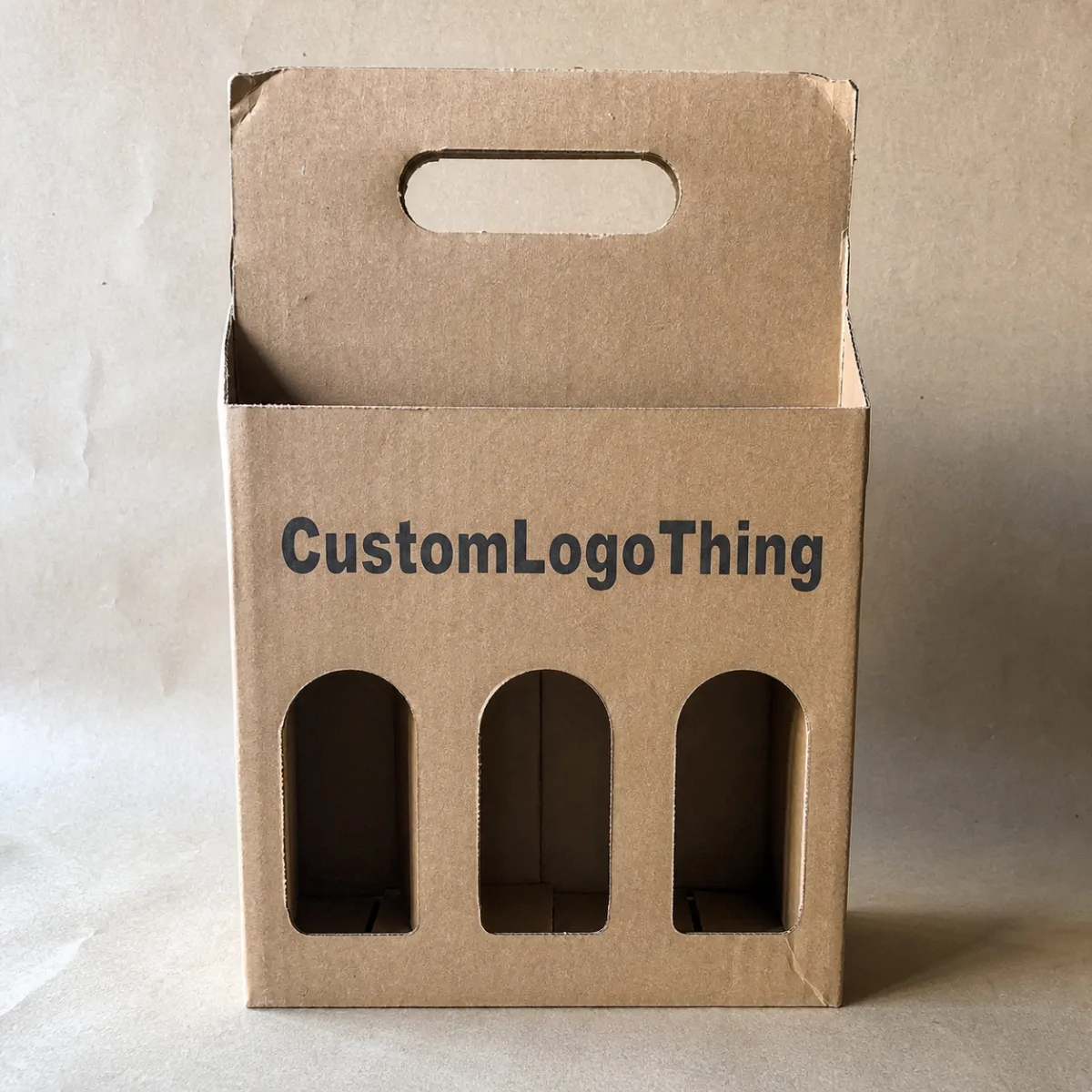
A bottle carrier is not just a box with a handle cut into it and a nice logo slapped on the side. It is a structure built to carry weight, protect the product, and hold up under the kind of handling that happens outside a perfectly staged sample photo. That extra engineering is one of the main reasons custom bottle carrier boxes cost more than basic cartons.
Plain cartons are usually designed for storage, shipping, or simple product containment. Bottle carriers have a harder assignment. They need to support glass or heavy PET, sometimes with dividers or inserts, and still stay clean at the seams and folds. If the carrier is for retail display or gifting, it also has to look finished from every angle. That combination pushes the price up, but for good reason.
Cheap packaging has a way of turning expensive in the real world. One weak handle can mean returns. One soft bottom panel can mean a broken bottle. One sloppy fold can make a premium spirit feel like a private-label afterthought. The savings disappear fast if the box fails in transit or looks cheap on the shelf.
There is also a brand side to this. A wine shop, craft distiller, or specialty olive oil brand is not buying paperboard alone. It is buying a presentation piece that helps the bottle feel more valuable. That effect matters in gifting, seasonal promotions, tasting kits, and subscription boxes. A carrier can do both jobs at once: protect the bottle and increase perceived value. That is why the cost is higher than a plain carton. It is doing more than a plain carton ever will.
That is also why the cheapest quote is not automatically the best quote. If the structure is underbuilt, the real cost shows up later as damage, complaints, or a second production run. If the structure is overbuilt, the cost shows up immediately as wasted budget. The sweet spot is a carrier that is engineered for the actual bottle, the actual channel, and the actual shipping route. Not the fantasy version where everything is handled gently by people with excellent manners.
Custom Bottle Carrier Boxes Cost: What Drives the Price?
Several factors shape custom bottle carrier boxes cost, and the differences can be dramatic depending on how the project is specified. Buyers often focus on print first because print is visible. In reality, structure and material often have more impact on the final number. A well-built carrier in a simpler finish can cost less than a flashy box that needs extra reinforcement to survive use.
The main cost drivers usually fall into six buckets: material, structure, print, finishing, quantity, and logistics. Each one affects unit cost and can create waste or extra setup during production.
| Cost Driver | What It Changes | Typical Impact on Price |
|---|---|---|
| Board grade | Strength, stiffness, print surface, and appearance | Moderate to high, especially for heavier bottles |
| Structural design | Handle strength, bottom lock, inserts, and bottle spacing | Moderate; complex dielines raise setup and waste |
| Print coverage | Ink usage, press time, color matching, and setup | Low to high depending on full bleed, spot colors, and special effects |
| Finishing | Gloss, matte, soft-touch, foil, embossing, and coating | Moderate to high |
| Quantity | How setup cost is spread across the run | Very high; larger runs usually lower unit cost |
| Freight and packing | Pallet count, carton count, and shipping weight | Variable, but it can change the landed cost significantly |
Board grade is usually the first place quotes split apart. For lighter carriers, premium paperboard may be enough. For heavier glass bottles, thicker SBS, CCNB construction, or corrugated stock may be the smarter choice. If the box holds multiple bottles, the board has to resist bending at the handle and the bottom seam, not just look good while it is flat on a table.
Structure matters because every extra fold, tab, divider, and reinforcement adds production steps. A simple single-bottle carrier usually costs less than a two-bottle or six-bottle carrier with inserts and a reinforced handhole. A locking bottom is not free. A handle that needs tighter die precision so it does not tear is not free either. The more the design asks from the material, the more control the production line needs.
Print coverage can move price faster than many buyers expect. Full-bleed graphics, dark backgrounds, multiple spot colors, foil accents, and dense artwork all raise setup time and the risk of waste. A restrained kraft look can be efficient. A premium retail box with foil, embossing, and matte coating can look excellent and still cost far more than a plain shipping-style carton. That is not a defect in the pricing. It is the cost of the finish.
Quantity is the obvious lever, but it is still underestimated. Die-cutting, plates, prepress, and calibration do not shrink much when the run is small. What changes is how those costs are spread out. That is why unit cost often drops sharply as the volume rises. In many projects, the jump from 2,000 to 5,000 units does more for pricing than switching between two similar board grades.
Freight is the quiet variable that ruins a clean budget. A carrier that ships flat is easier to pack and palletize, but a bulky insert or tall dieline can change carton counts and pallet height. Double-wall master cartons, moisture protection, or awkward packing dimensions can all raise landed cost. A quote that ignores shipping may look cheap and still end up as the most expensive option by the time the boxes arrive.
"A one-cent change in structure can save ten cents in damage later. The box does not need to be overbuilt, but it does need to be engineered for the bottle you actually ship."
If you need a practical rule, use this: budget for structure if protection is the priority, budget for finishes if presentation is the priority, and budget for volume efficiency if scale is the priority. Trying to max out all three at once is a fast way to inflate quotes and create a spec nobody can price cleanly.
Standards help keep the conversation honest. Packaging programs built around transit testing often reference ISTA methods. Sourcing programs that care about fiber origin may require FSC-certified material. Those references do not set the price by themselves, but they do give everyone a common language and reduce guesswork.
Product Details: Styles, Materials, and Branding Options
Most buyers start with style and then work backward into cost. That is normal. The important part is understanding how the style changes the bill. Single-bottle carriers are the simplest. Two-bottle carriers work well for gifting and retail bundles. Three-bottle and six-bottle carriers need tighter structural control because the load rises fast, especially with glass.
Here are the formats most buyers compare:
- Single-bottle carriers for tastings, premium gift items, and promotional release packs.
- Two-bottle carriers for paired SKUs, mixed assortments, and holiday gifting.
- Three-bottle carriers for sampler sets or curated beverage collections.
- Six-bottle carriers for volume packs, retail bundles, and club-style programs.
Material choice affects more than unit price. It changes how the package feels in the hand, how it prints, and how much load it can carry before the shape starts to sag. Common options include coated paperboard, premium SBS, CCNB, kraft-based board, and corrugated structures for heavier bottles or e-commerce use. A smoother print surface usually costs more, but it can sharpen color and make the finished box feel like branded packaging instead of a generic sleeve trying too hard.
The paperboard-versus-corrugated decision changes the whole buying logic. Paperboard gives stronger shelf appeal and cleaner graphics. Corrugated gives better compression strength and more protection in transit. If the box sits on a retail shelf, visual finish matters. If it ships long distances or holds heavier spirits bottles, structure usually matters more than a fancy outer surface.
| Style or Material | Best Use | Pricing Direction | Buyer Tradeoff |
|---|---|---|---|
| Single-bottle SBS carrier | Gift sets, premium launches, sampling | Lower to moderate | Strong presentation, limited load capacity |
| Two-bottle paperboard carrier | Retail bundles, holiday sets, promotional packs | Moderate | Balanced appearance and strength |
| Multi-bottle corrugated carrier | Heavier packs, shipping, club programs | Moderate to higher | More protection, less premium visual finish unless upgraded |
| Kraft-style carrier | Natural brands, eco-focused lines, artisanal beverages | Moderate | Good sustainability story, simpler premium signaling |
| Premium finished carrier | Luxury spirits, retail gifting, seasonal display | Higher | Best shelf impact, highest finishing cost |
Branding options are where packaging starts to look like marketing spend. Direct print is the base layer. After that, you can add matte or gloss coatings, soft-touch film, foil stamping, embossing, spot UV, textured varnishes, or a window cutout that shows the bottle label. Each feature changes unit cost and the waste rate. A foil accent can make a label feel premium. A full-wrap metallic treatment can push the project past budget fast if nobody kept an eye on the spec sheet.
Window cutouts deserve real attention. They are popular because the bottle becomes part of the design, which works nicely in retail packaging. They can also weaken a panel if they are too large or badly placed. If the carrier needs a handle and a window, the engineering has to be deliberate. Otherwise the package looks good on a screen and disappointingly flimsy in hand.
Handles and inserts matter too. A built-in handle improves usability, but it has to match bottle weight and board thickness. Divider inserts keep bottles from clanking together, which is essential for glass. Reinforced corners protect edges during stacking and transport. A narrow spirit bottle and a wide wine bottle do not ask for the same internal geometry. A custom dieline avoids wasted void space and reduces bottle movement.
Sustainability is not just a badge to print on the back panel. It can help control cost if it is handled with discipline. Lighter construction uses less material. Reduced-ink graphics trim print complexity. Recyclable fiber-based structures can support a cleaner sustainability story without dumping money into unnecessary coatings. For buyers comparing product packaging options, the right question is not “What is the greenest box?” It is “What structure meets performance and brand goals without extra waste?” That is where price and responsibility actually meet.
Packaging teams often ask for Custom Printed Boxes that look more premium than the budget allows. The practical move is to spend where customers will notice it. A clean front panel, a carefully printed logo, and one signature finish usually do more than coating every surface in effects. That matters even more for short-run launches and seasonal programs, where volume is too small to justify an elaborate build.
Specifications Buyers Must Lock In Before Requesting a Quote
The cleanest quotes come from clean specs. If the supplier has to guess at bottle dimensions, bottle weight, artwork coverage, or shipping conditions, the quote will come padded. That padding protects the manufacturer, but it does not help your budget. A detailed spec sheet narrows the range and makes the first quote far more likely to match the final production price.
Start with the bottle itself. Provide the full height, maximum diameter, neck shape, shoulder profile, closure type, and any odd contours. A bottle with a narrow neck and rounded shoulder behaves differently inside a carrier than a square or tapering bottle. If the glass is heavier than average, say so. Weight matters just as much as size because it changes how much stress the bottom panel and handle must carry.
Then lock the structural details:
- Board thickness or caliper target
- Insert style, if needed
- Handle type and reinforcement
- Carry capacity expectation
- Flat or assembled shipment
- Bottom lock or tuck configuration
Those choices are not cosmetic. They determine how the box will be cut, scored, folded, and packed. A carrier that ships flat can save space, but it may need a different lock system than a pre-assembled unit. A reinforced handle uses more material but lowers failure risk. There is no universal best option. There is only the right option for the bottle and the route.
Artwork requirements should be just as specific. State the number of colors, whether the box prints on one side or multiple sides, and whether you need coatings, foil, embossing, or spot UV. Include barcode rules, compliance text, and any label-reservation zone that must stay visible. If you sell through retail, that visibility matters because stores often require scannable codes and clear product identification. A beautiful box that hides mandatory information is not useful to anyone except the scrap bin.
Logistics details matter more than most first-time buyers expect. Tell the supplier how many units should go in a master carton, whether you need bundle counts for retail distribution, what pallet height you can receive, and whether storage conditions are dry, humid, or temperature-sensitive. A quote for the shell alone is not enough if the receiving plan needs special packing.
Here is the practical pre-quote checklist:
- Confirm bottle dimensions and weight.
- Decide the carrier style and bottle count.
- Choose board grade and finish level.
- Set the target quantity and expected reorder range.
- Prepare logo files, brand colors, and compliance text.
- Review the dieline before production approval.
A dieline review is one of the cheapest forms of risk control you can buy. A measurement error of a few millimeters can cause a fit problem, a handle tear, or an assembly slowdown. That becomes waste, delays, and extra cost later. Fixing a file is easy. Fixing a full production run is not.
If your program sits inside a broader retail packaging rollout, treat the carrier as part of the system instead of an isolated object. The bottle, label, carrier, master carton, and pallet pattern should all agree. That alignment improves quote accuracy and reduces surprises in fulfillment.
Process, Timeline, and Lead Time Expectations
Most packaging delays do not start at the press. They start earlier, when decisions are still soft and nobody wants to say the spec is unfinished. A buyer who shows up with confirmed dimensions, approved artwork, and a clear quantity usually moves faster than one still comparing structure options and finish levels. That holds for bottle carriers, and it matters even more for custom work with inserts or unusual bottle shapes.
The typical production path looks like this:
- Discovery and specification gathering
- Dieline development or review
- Artwork proofing
- Sample or prototype approval
- Production scheduling
- Printing, cutting, and finishing
- Inspection and packing
- Shipment
Each step moves quickly when the previous one is locked. Each step slows the job when revisions are still open. A straightforward run with final specs and no custom engineering often moves faster than a project that needs multiple revision rounds. Packaging teams with a launch calendar should start earlier than they think they need to. The calendar never cares about optimism.
Sample approval is one of the best controls in the process. A prototype can show whether the bottle fits correctly, whether the handle feels safe, whether the insert keeps the bottle centered, and whether the artwork reads cleanly after folding. A small color shift on screen can become very obvious on print stock. Catching that on a sample protects both budget and schedule.
Lead time stretches in a few predictable places. Custom tooling adds time. Complex finishing adds time. Seasonal congestion adds time. Specialty board sourcing adds time. If the carrier needs a custom insert or a specific paper stock, the supply chain has more moving parts. That does not make the project difficult. It just means the schedule needs to be real.
Rush orders are possible in some cases, but they usually raise cost. The reason is simple: the production slot gets tighter, the schedule has less flexibility, and expedited freight may be needed. If the launch date is fixed, that premium can be worth it. If the calendar has room, a planned run usually gives a cleaner cost outcome.
Communication matters as much as machinery. Buyers should get confirmation when specs are approved, when the proof is ready, when production starts, and when shipment is booked. That cadence keeps the project visible. It also helps procurement teams track the final landed cost, which is the number that actually matters in the budget.
For packaging programs tied to sustainability goals, discuss fiber source and recycling expectations early. If the carrier needs FSC-certified sourcing or a recycled-content target, that affects material selection and sometimes lead time. FSC certification does not automatically mean recycled content, and recycled content does not automatically mean FSC. Those are different claims. Keeping them separate avoids messy assumptions later.
Why Choose Us for Custom Bottle Carrier Boxes
Custom Logo Things is built for buyers who want a practical answer, not a fog machine in a blazer. The strongest supplier in this category is not the one pushing the biggest board or the flashiest finish. It is the one that can match the box to the bottle, the bottle to the channel, and the quote to the actual program. That is the difference between a smart purchase and an overspec with confidence issues.
We focus on transparent pricing, which means the quote should show what is included and what is optional. A buyer should be able to see how board grade, finish, insert design, and quantity affect the final number. That clarity helps procurement teams compare options without guessing which line hides the real cost. It also makes it easier to trim spend without weakening the carrier.
Engineering support matters when the product is unusual. Tall bottles, narrow necks, heavy glass, mixed-SKU kits, and display-ready gift packs all create structural challenges. A carrier that looks fine on a standard dieline may fail once the bottle is actually loaded. The approach here is to fit the package to the product instead of forcing the product into a generic box and hoping nobody notices.
Quality control has a direct financial effect. A misprint, a weak seam, or a bad score line can create scrap before the boxes leave production. Catching those issues early reduces rework and helps protect unit cost. That matters even more on repeat programs, where color consistency and cut accuracy need to hold from one order to the next.
MOQ pressure is another part of the real world. Not every brand wants to commit to a huge run on the first order. Seasonal programs, test launches, and new retail packaging concepts often need smaller starts before the data supports a larger buy. Flexible minimums help a team validate demand before scaling. That is useful because the first shipment usually teaches more than the presentation deck ever did.
If you are comparing bottle carriers against other product packaging options, think in use cases instead of category labels. A carrier for a retail gift set should not be built like a shipping carton. A carrier for a club program should not be priced like a luxury display box if the boxes go straight into a logistics chain. We can help sort those tradeoffs and direct you toward the right structure in our Custom Packaging Products lineup.
Consistency is the last piece, and it is easy to underrate. Brands get judged on repetition. The second run should match the first. The color should hold. The fold should stay crisp. The handle should still feel safe. Reliable execution matters because buyers do not just order packaging once; they order it again. That repeatability is part of the value, not a bonus.
How to Move Forward: Get an Accurate Quote and Order Plan
If you want to control custom bottle carrier boxes cost, the fastest route is a clean quote request. Send the bottle dimensions, target quantity, artwork files or brand guidelines, and the channel the package must serve. A carrier for a retail shelf, a tasting event, and a shipping program can look similar on paper while needing very different construction.
When you compare options, compare the total landed cost. That means the box price, setup, finishing, shipping, and any assembly or packing steps that affect the real receipt cost. A low unit price can still be the highest total cost if freight or waste pushes the final number up. The more transparent the quote, the easier it is to spot those differences.
Request tiered pricing at multiple quantities. A 2,000-unit quote and a 5,000-unit quote can show where the volume break begins. That matters because unit cost often drops at a point that makes the larger run a better value even before future reorders enter the picture. If the program is likely to repeat, ask for the reorder price too.
Ask for a sample or mockup when the bottle shape is unusual, the package is for a launch, or the carrier will be used in retail display. A small prototype cost is usually easier to absorb than a full run that does not fit. In a lot of packaging projects, the sample is the cheapest insurance policy in the budget.
Use this short order plan:
- Finalize bottle specs and bottle count.
- Choose the structure and finish level.
- Approve the dieline and artwork placement.
- Confirm MOQ and volume pricing.
- Review the sample, then release production.
- Book shipment and receiving plans.
The big picture is simple. Good packaging spending is not about choosing the cheapest box. It is about Choosing the Right build for the bottle, the brand, and the route to market. If those three are aligned early, the quote is easier to manage, the schedule is easier to hold, and the final result is easier to sell.
For brands that need a practical, budget-aware answer, the best way to bring custom bottle carrier boxes cost under control is to lock accurate specs before production starts and buy the structure that matches the job, not the one that looks impressive on a spreadsheet.
FAQ
What affects custom bottle carrier boxes cost the most?
The biggest drivers are board grade, box size, bottle count, print coverage, and structural complexity. Larger runs usually lower unit cost because setup and tooling get spread across more boxes. Premium finishes and custom inserts add cost, but they can also improve presentation and protection.
What is the MOQ for custom bottle carrier boxes?
MOQ depends on the structure, board type, and print method because some setups are more efficient at scale. Simple carriers can often support lower minimums than highly finished or specialty-engineered designs. If you need a small test run, ask for prototype pricing and a separate production MOQ.
How long does production usually take for bottle carrier boxes?
Lead time depends on whether the dieline is already approved, whether samples are needed, and how complex the finish is. Straightforward runs move faster than jobs requiring custom engineering or multiple revision rounds. Rush schedules are possible in some cases, but they usually increase cost and reduce scheduling flexibility.
Can I get a sample before ordering full production?
Yes, and it is often the best way to confirm fit, strength, and print appearance before committing to volume. A sample helps catch bottle-clearance issues, handle problems, and artwork placement errors early. For launch packaging, a prototype is usually worth the extra step because it protects both budget and timeline.
How can I lower custom bottle carrier boxes cost without lowering quality?
Use a structure that fits the bottle closely instead of oversizing the box. Cut unnecessary finishes, keep the print plan focused, and choose materials that meet strength needs without overbuilding. Order in larger quantities when possible, because volume is one of the most reliable ways to lower unit cost.
For buyers who want dependable results, the best next move is to gather the bottle specs, confirm the target quantity, and review the dieline before the first proof is approved. That is the simplest way to keep custom bottle carrier boxes cost predictable and get packaging that performs in the real world.

