Buyer Fit Snapshot
| Best fit | Custom Bottle Paper Bags with Inserts for Safer Shipping projects where brand print, material claims, artwork control, MOQ, and repeat-order consistency need to be specified before quoting. |
|---|---|
| Quote inputs | Share finished size, material target, print colors, finish, packing count, annual reorder estimate, ship-to region, and any compliance wording. |
| Proofing check | Approve dieline scale, logo placement, barcode or warning zones, color tolerance, closure strength, and carton packing before bulk production. |
| Main risk | Vague material claims, crowded artwork, missing packing details, or unclear freight terms can make a low unit price expensive after revisions. |
Fast answer: Custom Bottle Paper Bags with Inserts for Safer Shipping should be specified like a repeatable production item. The safest quote records material, print method, finish, artwork proof, packing count, and reorder notes in one written spec.
Production checks before approval
Compare the actual filled-product size with the drawing, then confirm tolerance on folds, seals, hang holes, label areas, and retail display edges. Reserve space for logos, QR codes, warning copy, and material claims before decorative graphics fill the panel.
Quote comparison points
Review material grade, print process, finish, sampling route, tooling charges, carton quantity, and freight assumptions side by side. A quote is only useful when the supplier can repeat the same color, closure quality, and packing count on the next order.
Custom Bottle Paper Bags with Inserts for Safer Shipping solve a very practical packaging problem: keeping glass bottles upright, stable, and presentable without turning packout into a complicated engineering exercise. In day-to-day handling, custom bottle paper bags with inserts matter because a lot of bottle damage happens long before a parcel reaches a carrier; it starts with the handoff at the counter, the walk to the car, the bag tipping in a cart, or the little jolts that happen whenever a bottle is carried loosely.
That is why custom bottle paper bags with inserts deserve more attention than they usually get. A well-built version does three jobs at once: it protects the bottle, keeps the presentation clean, and supports the packing workflow so the team can assemble units without fighting the structure on every shift. I have seen a lot of packaging pass a quick visual check and then feel wrong the moment someone lifts it, so the real test is always how it behaves in the hand, not how it looks in a mockup.
What Are Custom Bottle Paper Bags with Inserts?
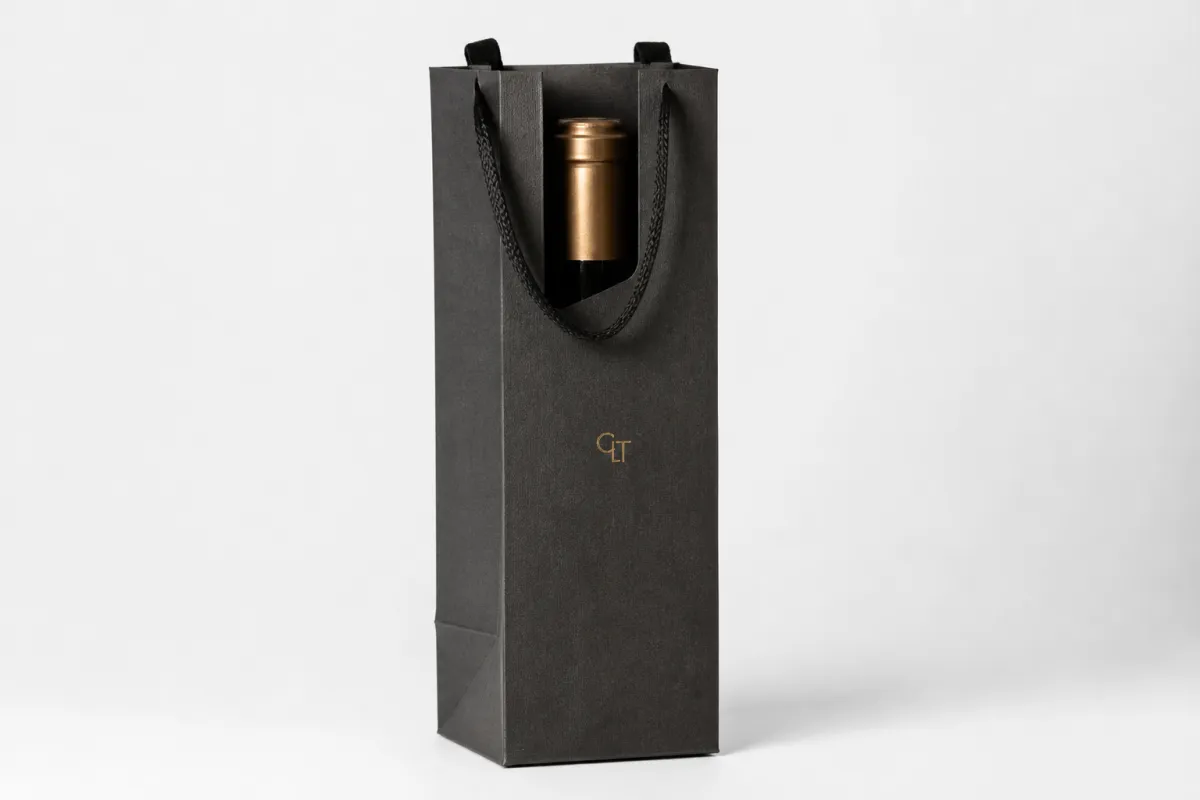
At the simplest level, custom bottle paper bags with inserts are paper carriers built around a shaped internal support that holds one bottle, or sometimes a small set of bottles, in a controlled upright position. The outer bag handles branding and carrying. The insert does the restraint work. Without that insert, the bag can still look nice, but the bottle can shift, lean, rub, or bottom out in ways that make the package feel cheaper and less secure than it should.
From a packaging buyer's point of view, that distinction matters. The outer bag is part of branded packaging and package branding; the insert is part of protection. If the structure is not balanced correctly, the package may still pass a casual shelf check, but it will not feel right in the hand. Custom bottle paper bags with inserts are built to close that gap between appearance and function, which is why they show up so often in retail packaging, gift sets, and premium product packaging.
The insert's job is straightforward, even if the geometry is not. It limits lateral movement, keeps bottles centered, reduces bottle-to-bottle contact when there is more than one cavity, and protects labels from scuffing against board edges. It also helps keep the weight path aligned so the bottle sits where the bag expects it to sit. That matters for glass wine bottles, spirits, olive oils, sauces, and other products that are heavy enough to punish a loose fit.
These custom bottle paper bags with inserts fit best wherever the package is meant to do double duty: practical carry and polished presentation. Think wineries, distilleries, gourmet oils, specialty sauces, tasting room purchases, corporate gifts, and premium retail takeaways. In each case, the bag is part of the buying experience, not just a transport container, and that is why the insert detail pays off.
- Single-bottle wine or spirits gifts
- Specialty food and beverage sets
- Corporate gifting and holiday programs
- Retail carry-out with light handling protection
- Presentation packs where the bottle must stay upright and centered
How Custom Bottle Paper Bags with Inserts Work
The construction usually has two separate layers. The outer paper bag gives the package its graphics, handles, side gussets, and visual identity. The insert creates the cradle. In custom bottle paper bags with inserts, that insert might be a die-cut paperboard piece, a folded corrugated support, or a nested sleeve that wraps around the neck, shoulder, or base. The exact design depends on bottle size, bottle profile, and how much movement the pack is expected to tolerate.
Movement control is the whole point. If the cavity is cut correctly, the bottle cannot rattle from side to side or slide into the wall of the bag every time someone takes a step. That sounds like a small detail, but it changes the feel of the pack immediately. A bag that holds the bottle tightly feels composed. A bag with extra play feels like a shortcut. Custom bottle paper bags with inserts are often chosen because they make that controlled fit possible without moving into full corrugated shipper territory.
There is also a workflow benefit that gets overlooked. A well-made insert helps packers load bottles faster because the orientation is obvious and the cavity guides the bottle into place. That reduces rework, speeds assembly, and keeps the line more consistent from operator to operator. In busy runs, that matters as much as the appearance. Good custom bottle paper bags with inserts should not force the team to guess where the bottle sits or whether it is seated fully.
Details like handle reinforcement, bottom board support, glue points, and lock tabs can decide whether the whole structure behaves cleanly under load. The bottle opening and neck position should be centered so the bag does not twist when lifted. The handle area should be reinforced enough to take the actual use case, not just a showroom lift. If the project needs broader support across branded packaging programs, it helps to keep the look and stock aligned with other Custom Packaging Products so the brand feels coherent across the line.
In practice, the best custom bottle paper bags with inserts are not the most elaborate ones. They are the ones where the bottle sits naturally, the bag carries well, and the insert disappears into the experience instead of calling attention to itself. That is usually a sign the geometry is doing its job and the build has been tuned by someone who has actually packed bottles, not just drawn them.
Key Design Factors for Fit, Strength, and Presentation
Fit starts with bottle dimensions, and not just the overall height. Shoulder width, base diameter, neck profile, and label placement all affect how much freedom the insert can allow without creating wobble. A tall narrow bottle behaves differently from a squat wide one, even when the volume is the same. That is why custom bottle paper bags with inserts should be designed around the actual bottle sample whenever possible, not just a nominal volume description like 750 ml or 1 liter.
Material choice matters just as much. For many builds, the outer bag uses a printed paper stock in the 200-300 gsm range with reinforced handles, while the insert may need a stiffer board or a corrugated layer if the bottle is heavy. Coated and uncoated papers behave differently too. Coated stocks hold graphics well, but uncoated papers can give a warmer tactile feel. The insert usually needs more stiffness than the outside layer because it carries the bottle load. In sustainable programs, FSC-certified board is a simple sourcing benchmark; the FSC standard is a useful place to confirm responsible fiber claims, though buyers should still ask for documentation instead of taking a green claim at face value.
Branding decisions should support the structure, not fight it. Foil, embossing, spot varnish, soft-touch lamination, and window cutouts all change how the package feels in the hand and how the light plays across the surface. That can be excellent for premium retail packaging, but the finish should never weaken the fold lines or complicate insert assembly. Custom bottle paper bags with inserts work best when the print plan and the structural plan are built together, not separately.
Use environment is another major filter. A retail carry-out bag only needs to survive short handling and a car ride. A gift bag for a tasting room may need to look polished on a shelf and feel balanced in the hand. A pack that will be tucked into another shipper needs a different attitude entirely. If the bottle carrier has to sit beside custom printed boxes in a larger product packaging program, the materials, print density, and finish levels should be coordinated so the brand does not look assembled from mismatched parts.
There is a real difference between a display-first build and a transit-aware build. Custom bottle paper bags with inserts can serve both roles, but the design brief has to say which role matters more. If the bag is expected to handle heavier bottles, the load path should be the first priority. If the bag is mainly for shelf appeal, the visual finish can carry more weight. The best packaging design makes that trade-off explicit instead of hiding it.
Production Process and Timeline: From Spec to Packout
Production moves faster when the spec is complete. Before a line can begin, the supplier needs bottle dimensions or a sample bottle, the target quantity, artwork files, fill weight if relevant, and any storage or shipping conditions that might change the structure. For custom bottle paper bags with inserts, a missing shoulder dimension can be enough to derail the first sample, because a small offset in the cavity changes how the bottle sits and how the handle load transfers into the bag body.
The usual path runs from specs to dieline, then to prototype, then to fit test, then to production approval. If the insert is simple, a prototype may be enough to confirm the fit. If the bottle shape is unusual, expect one or two revision rounds. That is normal. It is much cheaper to discover a bad cavity on a sample than to discover it after a full run of custom bottle paper bags with inserts has already been printed, cut, and assembled.
Lead time is usually spent in a few predictable places: custom tooling, print setup, special coatings, paper sourcing, and sample approval. A straightforward single-bottle run might move in about 12-15 business days after proof approval, while a more complex build with foil, embossed areas, or a nested multi-bottle insert can stretch into the 18-25 business day range. Those ranges are typical, not guaranteed, because carton schedules, finishing queues, and proof cycles can all change the clock. Buyers who need a hard ship date should say so early, because a nice-looking pack that arrives late is still a problem.
Testing should not be treated as theater. If the package will face repeated drops or carrier handling, use standards such as ISTA 3A or ASTM D4169 as a reference point instead of relying on a visual check alone. The ISTA framework is worth reviewing because it gives the team a more realistic language for drop height, vibration exposure, and package orientation. Custom bottle paper bags with inserts are not always meant to be full shipping shippers, but if they will experience rough handling, the test plan should say so clearly.
When I am reviewing a sample, I usually do three things in a row: lift the bag, tilt it, then give it a short walk across the room. That simple routine tells you more than a polished render ever will. If the bottle settles, knocks, or twists, the insert needs another pass.
Custom Bottle Paper Bags with Inserts: Cost, Pricing, MOQ, and Quote Drivers
Pricing usually comes down to a few specific levers: insert complexity, paper grade, print coverage, finishing steps, and the number of bottles each unit must support. Custom bottle paper bags with inserts cost more when the geometry gets intricate, when the finish list grows, or when the quantity is low enough that setup costs have to be spread across fewer units. A clean one-color build on a decent paper stock is very different from a heavy-coverage, foil-stamped presentation pack with reinforced handles and a shaped insert.
MOQ is often driven by setup and material efficiency, not by some fixed production ceiling. For many programs, minimums land somewhere around 1,000 to 3,000 units, though lower or higher thresholds are common depending on the print method and the level of customization. A short run of custom bottle paper bags with inserts can still be worthwhile if the project is for a premium launch, a seasonal gift program, or a controlled retail rollout. The unit cost just needs to be evaluated against the value of the presentation.
It helps to separate unit cost from landed cost. Freight, packing configuration, pallet count, and whether the bags ship flat or pre-assembled can all change the final number more than buyers expect. A bag that looks inexpensive on the quote may become less attractive once the shipping bill and the packing labor are included. That is why custom bottle paper bags with inserts should always be reviewed as a full system, not as a line item in isolation.
| Build Option | Typical Quantity Sweet Spot | Approx. Unit Price | Best Use | Notes |
|---|---|---|---|---|
| Single-bottle paper bag with basic die-cut insert | 3,000-10,000 units | $0.42-$0.68 | Retail carry-out and standard gift use | Good starting point when the bottle shape is ordinary and the print is simple |
| Heavy board insert with reinforced handles | 2,000-8,000 units | $0.78-$1.15 | Premium gifting and heavier glass bottles | Better load control, more material, and more comfortable lifting |
| Two-bottle carrier with nested insert | 1,500-5,000 units | $1.20-$1.90 | Bundled sets, tasting room packs, and corporate gifts | Needs tighter geometry to prevent bottle contact and handle drift |
| Short-run prototype or launch sample | 100-500 units | $1.75-$3.25 | Proofing, product launch, and fit validation | Higher price because setup and testing are spread over fewer pieces |
Those numbers are directional, but they are useful because they show the real pattern: custom bottle paper bags with inserts are rarely expensive for one reason. They become more expensive when several small choices stack up. A heavier paper, a more elaborate insert, full-coverage print, and special finishing all nudge the quote upward. If the project also needs a structural look that matches other branded packaging or Custom Printed Boxes, plan for those aesthetics early so the team does not have to redesign the structure after graphics approval.
One more practical point: lower quantities often make the minimum look steeper than the unit price itself. A buyer may focus on the per-piece rate, but the setup cost, tooling, and material waste can dominate the first order. That is common across product packaging, and it is especially true for custom bottle paper bags with inserts because the insert geometry has to be right before the line can run efficiently. So a quote that looks a little high can still be the sensible option if it prevents rework or breakage later.
Common Mistakes That Cause Breakage or Rework
The most common error is measuring only the bottle height and ignoring the shape around it. A bottle can be the right overall height and still fail in the bag if the shoulder is too wide, the neck is too long, or the base sits too low in the cavity. Custom bottle paper bags with inserts need the full profile, not a single dimension. If the fit is loose, the bottle shifts. If the fit is too tight, the assembly line struggles and labels get scuffed on the way in.
Another mistake is choosing an insert that looks right from the outside but does not support the load path properly. A bottle has weight below its center, so if the insert only holds the visual silhouette, the bottle can sag when someone lifts the handle. That is where the bag starts to feel weak even if the graphics are excellent. Custom bottle paper bags with inserts must hold the bottle where gravity wants to pull it, not just where the drawing says it should sit.
A bag can look finished on press and still fail on the packing bench if the insert does not control the bottle's center of gravity.
There is also a print-first trap. Teams approve the artwork because the mockup looks beautiful, then discover that a foil panel crosses a fold line, or a heavy coating changes how the paper scores, or the insert glue points interfere with assembly. That kind of mistake creates rework, delays, and unnecessary waste. With custom bottle paper bags with inserts, structural validation should happen before the final artwork lock, not after.
Skipping sample validation is the hidden expense that surprises people. A small geometry issue can slow the entire run, reduce packing speed, and create a presentation problem across every unit. Once the line starts, the labor hit becomes real. In a busy program, even a 5-second delay per unit can snowball fast. That is why custom bottle paper bags with inserts should be checked with actual bottles, actual hand pressure, and actual carry movement before production is approved.
Another easy-to-miss issue is handle strain. A handle may feel fine with an empty bag and still be underbuilt once a filled bottle is added. I have seen teams catch that only after a sample run, which is a cheap lesson compared with a full production fix. If the bag is going to be used repeatedly, do not guess; test the handle with the real bottle weight.
Expert Tips and Next Steps for a Better Order
The cleanest quote request starts with a real bottle spec sheet. Include bottle dimensions, bottle material, fill type, label height, whether the product is one bottle or a paired set, and the target use case. If you are comparing custom bottle paper bags with inserts for retail display versus gift presentation versus transport, say that plainly. Those use cases look similar at first glance, but they can call for different paper weights, different handle strength, and different insert tolerances.
Ask for a physical sample or fit proof with the actual bottle, not just a digital mockup. A rendering can confirm the graphic layout, but it cannot prove the bottle will sit correctly or the handle will balance the load the way you expect. When custom bottle paper bags with inserts are tested with the real product, the team can check movement, label clearance, neck height, and whether the bottle sits centered enough to feel secure in the hand. That kind of real-world review is the part that saves time later.
Approval order matters more than most buyers expect. The practical sequence is fit first, graphics second, finish third. If the structure is wrong, the visual work will not save it. This is especially true when the bag must coordinate with Custom Packaging Products across a broader branding program. Matching paper stock, color tone, and print logic can make the whole line feel intentional instead of pieced together.
A solid checklist keeps the order moving:
- Confirm bottle dimensions and bottle shape
- Define the quantity and delivery window
- Choose the finish level before final artwork
- Request samples or fit proofs with the actual bottle
- Decide whether the package is retail packaging, gift packaging, or light transit packaging
If the project needs multiple formats, keep the visual system consistent. That might mean the same logo placement, the same paper family, or the same tone of finish across bags, sleeves, and custom printed boxes. The point is not to make every item identical. The point is to make the range feel like one family. Custom bottle paper bags with inserts work best when they are part of a larger packaging design strategy instead of a one-off fix.
If you are starting from scratch, keep the brief short but specific. A designer or supplier can work with a lot more confidence when they know the bottle shape, the hand-feel target, and whether the bag is meant to be carried five feet or fifty yards. That little bit of context saves a lot of back-and-forth, and honestly, it keeps everybody from kinda guessing.
Why Custom Bottle Paper Bags with Inserts Still Matter
There is a reason custom bottle paper bags with inserts keep showing up in serious bottle programs: they solve a real handling problem without making the packout feel industrial. The bottle stays upright, the label stays cleaner, the lift feels more stable, and the presentation still looks premium enough for gifting or retail use. That balance is hard to beat when the product has to do both protective and promotional work.
In a well-run program, custom bottle paper bags with inserts are not just a nicer bag. They are a small piece of packaging engineering that protects the brand experience, the bottle, and the packing workflow at the same time. That is why it is smart to think about fit, paper, finishing, and handling as one decision. When those pieces line up, the result feels effortless to the customer and manageable on the floor.
They also age well as a packaging choice. Unlike trends that come and go with print styles, a well-sized bottle carrier with an insert keeps earning its keep because the underlying problem does not change: glass is heavy, labels scuff, handles stretch, and customers notice when a package feels shaky. The materials may shift, the finish may change, but the structural logic stays the same.
FAQ
How do custom bottle paper bags with inserts protect glass bottles during handling?
They reduce bottle movement inside the carrier, which lowers the chance of impact at the base, shoulder, or neck. A well-cut insert also keeps bottles separated so labels do not rub or scuff against adjacent surfaces. For heavier or more fragile bottles, the insert should support the load path, not just fill empty space, and that is especially true for custom bottle paper bags with inserts that will be lifted by a handle rather than carried by the base.
What bottle sizes work best for custom bottle paper bags with inserts?
Standard wine, spirits, olive oil, and specialty beverage bottles are the most common fit, but the real deciding factor is the exact bottle profile. Tall narrow bottles need different neck support than short wide bottles, even when the volume is the same. If you carry multiple bottle shapes, use separate insert versions instead of forcing one universal cavity, because custom bottle paper bags with inserts work best when the geometry is made for the real container.
Are custom bottle paper bags with inserts enough for shipping?
They can be enough for light handling or gift presentation, but they are not always a substitute for a tested shipping carton. If the package will face parcel transit or repeated drops, pair the bag with a stronger outer carton or corrugated overpack. The right answer depends on drop risk, bottle weight, and whether the package will travel by hand or by carrier, which is why custom bottle paper bags with inserts should be matched to the actual route, not an assumed one.
What affects the cost of custom bottle paper bags with inserts the most?
The biggest cost drivers are insert complexity, paper choice, print coverage, finishing, and quantity. Lower order volumes usually raise the unit cost because setup and tooling are spread across fewer pieces. Shipping and assembly method also matter, especially if the product needs to arrive pre-built or packed in a specific orientation, so custom bottle paper bags with inserts should be quoted as a full system rather than a loose paper line and a separate insert line.
What should I prepare before requesting a quote for custom bottle paper bags with inserts?
Have the bottle dimensions, quantity, print artwork, target use case, and desired delivery timing ready. Share whether the bag is for retail display, gifting, or transport, because each use case changes the structural requirements. If possible, send a physical sample bottle so the insert can be engineered around the real shape instead of an assumption, which usually leads to better custom bottle paper bags with inserts and fewer revision rounds.
Can custom bottle paper bags with inserts be made for short runs?
Yes, but short runs usually carry higher setup costs and a more noticeable minimum order requirement. The math gets less friendly when tooling, proofing, and insert setup have to be spread across only a few hundred pieces. That does not make short runs a bad idea; it just means the decision should be based on launch timing, presentation value, and the actual handling risk, not on unit price alone.
Choosing the right bottle carrier usually comes down to fit, handling, and the actual risks in your workflow, which is why custom bottle paper bags with inserts still earn their place in well-planned product packaging. If the bottle can move, the package needs another look; if the bottle sits steady and the lift feels natural, the design is doing exactly what it should.

