Custom Boutique Paper Bags Bulk Order for Retailers
A custom Boutique paper bags bulk order does more than fill a storage shelf. It is the package a customer carries into the street, into a car, and sometimes into a social post. If the paper feels thin, the handle twists under a real load, or the print color misses the brand palette, the bag stops supporting the sale and starts undercutting it. Retailers notice that quickly, and shoppers do too.
What Shoppers Notice First
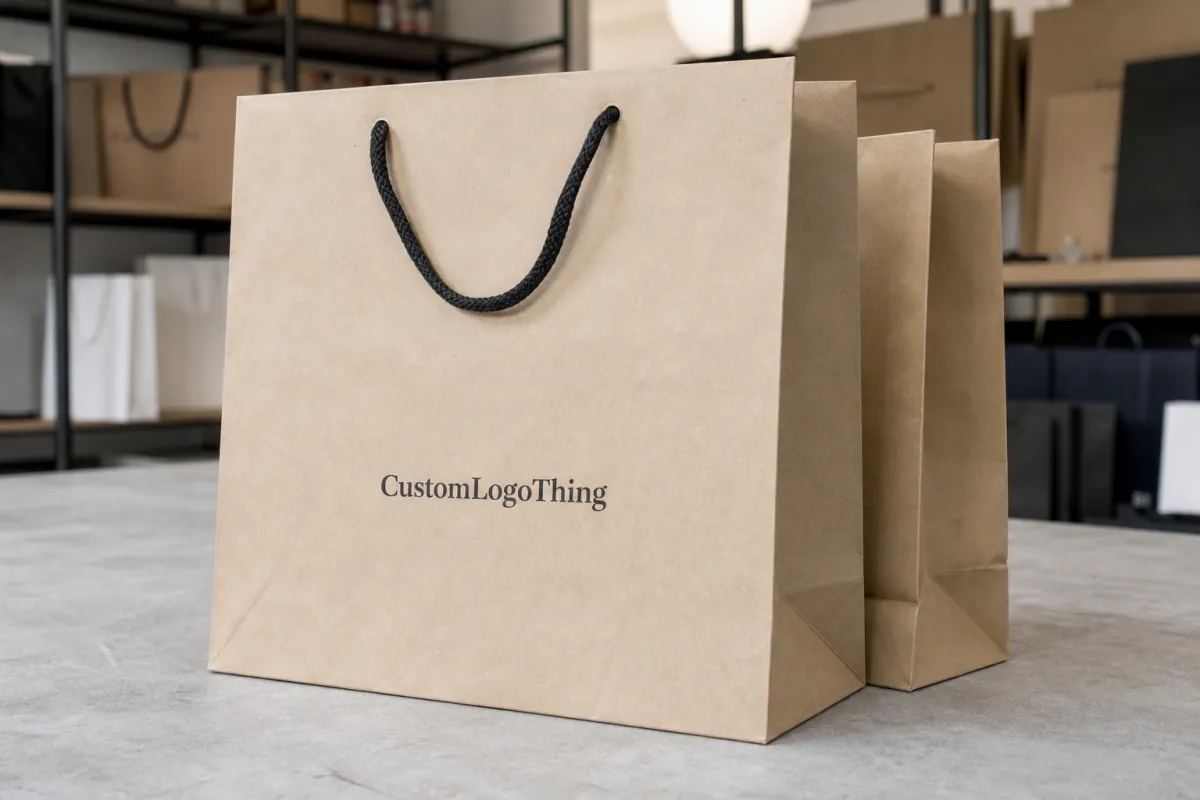
Customers do not study a bag the way a packaging buyer does. They judge it in a glance, then in the hand. That means structure, handle feel, print alignment, and color accuracy matter more than a long list of features on a spec sheet.
For boutiques selling apparel, candles, cosmetics, jewelry, or gift items, the bag has to feel like part of the purchase. A bag that collapses at the base or tears at the handle can make an otherwise polished checkout feel rushed. A better spec protects the merchandise and carries the brand outside the store.
A premium-looking bag that fails under normal use is a bad investment. The right spec has to carry weight, hold its shape, and still look like it belongs to the brand.
Consistency matters just as much as appearance. A slightly different kraft tone, a handle that sits higher on one run, or a color shift between reorders creates a patched-together look. That may not matter in a one-off event order. It matters a lot when the same bag is used across locations, seasons, and replenishment cycles.
Paper Stock, Handles, and Finishes
The paper body drives the first impression, but the handle and finish decide whether the bag feels expensive or merely decorated. Good boutique packaging is usually restrained. It matches the product, the margin, and the way the bag will actually be used.
Paper stock choices
Kraft paper suits natural, minimal, and earthy branding. It hides scuffs better than many coated stocks and works well with recycled-content claims, especially under FSC-certified sourcing programs from FSC. Coated paper gives sharper ink contrast and a smoother surface for premium artwork. Specialty paper can add texture or a softer hand, but the added cost only makes sense if the brand story benefits from it.
Handle choices
Twisted paper handles are common for value-conscious retail programs because they are economical, stack neatly, and hold up well for lightweight to medium loads. Rope handles feel more polished and usually improve the carry experience. Ribbon handles lean gift-oriented and work well for beauty, accessories, and holiday packaging. Die-cut handles create a clean silhouette, but buyers should test comfort before approving them for heavy or repeated carry use.
Finishes that earn their place
Matte coatings reduce glare and suit quiet branding. Gloss can deepen contrast, though it also shows fingerprints and scuffs more easily. Soft-touch lamination gives the bag a muted, velvety feel, but it is not necessary for every program. Foil, embossing, and spot UV can make a bag memorable, yet they are only worth the expense when the artwork has a clear focal point and the margin supports the finish.
The practical rule is simple: use a finish to solve a brand problem, not to decorate empty space. If the product line already has strong shelf presence, a clean one- or two-color print on a stable stock often outperforms a busier treatment that looks expensive but does little for sell-through.
| Paper option | Feel and structure | Best use case | Typical tradeoff |
|---|---|---|---|
| Natural kraft | Sturdy, matte, familiar | Apparel, candles, lifestyle brands | Less color brightness than coated stock |
| Coated art paper | Smoother, sharper print surface | Beauty, gifts, premium promotions | Shows scuffs sooner if handled roughly |
| Specialty textured stock | Distinct hand feel, upscale appearance | Luxury retail packaging and events | Higher cost and longer approval cycles |
Dimensions, Gussets, and Load Ratings
Size is not a cosmetic choice. Width, height, gusset depth, and top clearance all affect whether the bag works after the product goes inside. A shopper carrying a folded sweater, a candle set, or a boxed cosmetic order needs enough space for the item to sit naturally, with room for tissue or a small insert card.
Most boutique programs settle into a few practical formats: smaller bags for accessories, medium bags for apparel and boxed beauty, and taller bags for scarf sets, home fragrance, or gift bundles. The right size keeps the bag upright and square instead of bulging into an awkward shape.
- Width: match the product stack, not the logo placement.
- Height: leave room for tissue, inserts, or a box lid.
- Gusset: a deeper gusset helps boxed items sit flat and stable.
- Base reinforcement: important for candles, jars, and heavier apparel orders.
- Handle attachment: often matters more than adding extra paper size.
For artwork, ask for a safe zone of at least 0.25 inch and bleed of 0.125 inch unless the supplier gives a different spec. Logos placed too close to a fold can look off-center after the bag is assembled. If the bag has to coordinate with custom boxes, tissue, or inserts, confirm color targets in CMYK or Pantone before the run starts so the whole package set feels intentional.
Load ratings deserve the same attention. A bag may look strong on a screen and still fail if the glue line is weak or the handle patch is too small. For heavier merchandise, ask about reinforcement at the handle and base, and ask how the supplier measures strength. A generic claim is less useful than a test that matches the real carry weight.
Pricing, MOQ, and Unit Cost
Buyers often ask for the lowest price, but the quote is built from several variables. Paper grade, size, print count, finish, handle type, packing format, and freight all move the number. A simple single-color kraft bag can price very differently from a foil-stamped bag with rope handles and soft-touch lamination, even if the footprint is similar.
MOQ matters because setup costs have to be spread across the run. As volume rises, unit cost usually falls, sometimes by 10-25% across tier breaks, though the exact change depends on the specification and shipping lane. The better comparison is not which vendor is cheapest. It is which vendor quoted the same bag, the same freight assumption, and the same reorder terms.
| Spec level | Typical MOQ | Indicative unit cost | Buyer note |
|---|---|---|---|
| Standard kraft with 1-2 color print | 1,000-3,000 units | $0.32-$0.62 | Good for volume retail packaging with controlled artwork |
| Coated stock with rope or ribbon handle | 2,000-5,000 units | $0.78-$1.35 | Balances presentation and durability for premium boutiques |
| Specialty finish with foil or embossing | 3,000+ units | $1.25-$2.40 | Use only when the brand benefit justifies the finish cost |
Freight can change the landed cost more than buyers expect. A run that looks efficient on paper may lose that edge if cartons are oversized, the ship-to location is remote, or the order has to be split across stores. Ask for sample charges, carton assumptions, and reprint policy in the same quote. That is the cleanest way to compare a custom boutique paper bags bulk order against other sourcing options from Custom Packaging Products or broader Wholesale Programs.
Production Process and Timeline
A good order follows a predictable sequence. The buyer sends the brief: dimensions, quantity, paper choice, handle type, finish, and delivery window. The supplier checks the artwork for resolution, bleed, and placement. A digital proof or dieline mockup comes next. Only after that should sampling or pre-production approval move forward.
For standard paper bags, turnaround often lands around 12-18 business days after proof approval. Specialty finishes can add 3-7 business days, and sampling can add another week depending on the factory schedule. Those are planning ranges, not guarantees. If a launch date is fixed, build in buffer time for proof revisions, color correction, and freight timing.
Delays usually come from paperwork, not the press. Low-resolution logos, missing Pantone references, and late changes to finish requests slow a job fast. Packaging teams move faster when they send the print-ready file, the approved color target, and the delivery deadline in the first round.
If the bag must match a launch kit or gift box, keep the visual system aligned across the package set. Shoppers read the bag, tissue, and insert card as one family. If each piece looks like it came from a different project, the retail presentation loses some of its effect.
Why Repeat Buyers Keep the Same Spec
Once a bag works, most retailers avoid changing it without a reason. That is a practical decision, not a lack of creativity. A stable spec reduces color drift, shortens approvals, and lowers the chance of an expensive mistake on the next reorder.
Keeping the same die line, handle type, and paper weight also makes forecasting easier. If the supplier stores the approved artwork version, carton count, and print profile, the next order can move with fewer checks and fewer surprises. That matters a lot in peak season, when production windows tighten and shipping options narrow.
There is also a brand advantage to repetition. Shoppers recognize a familiar bag faster than a revised one. When the bag matches the store interior, custom printed boxes, and shelf signage, the whole packaging system feels deliberate rather than assembled piece by piece.
For teams managing several channels, one spec sheet saves more time than a chain of emails. Keep the approved dimensions, paper type, color reference, handle style, and packing note in one place so purchasing, marketing, and operations are working from the same version.
Quality Checks That Protect Reorders
Quality control should begin before the full run. Paper caliper, ink match, adhesive bond, and handle pull strength all deserve a check on the sample. A short pull test on a few bags can reveal a weak handle patch before thousands of units are packed.
After production, the most useful checks are straightforward: squareness, fold accuracy, print alignment, carton count, and clean handle attachment. A bag can be technically within tolerance and still look crooked enough to distract at checkout. Retailers with multiple locations feel that defect across the network.
Transit testing matters too. If bags ship inside master cartons or travel with other retail packaging, freight abuse can cause corner crush, crease memory, or glue fatigue. Industry groups such as ISTA provide useful transit-testing frameworks for buyers who want a more realistic view of packaging performance in shipping.
The practical payoff is lower waste and fewer emergency reorders. That saves money, but it also protects the customer experience. In a category where the bag is part of the sale, consistency has direct value.
What to Send Before Requesting a Quote
A precise brief gets a usable quote. A vague request usually returns numbers that cannot be compared. The fastest way to move a custom order forward is to define the variables that actually affect production.
- Confirm bag dimensions, gusset depth, and handle type.
- State the quantity and any expected reorder volume.
- Choose the paper stock and finish level you want.
- Send print-ready files or a clean logo with color references.
- Provide the ship-to location and required delivery window.
- Note whether you need a sample, phased delivery, or store labeling.
If you are choosing between options, compare the same spec across vendors before comparing prices. Use identical paper, identical handle construction, identical print count, and the same freight assumption. That is the best way to tell whether one quote is truly better or just less complete.
For a custom boutique paper Bags Bulk Order, the strongest result usually comes from exact specs, clean artwork, and a realistic timeline. A bag that is engineered well, printed clearly, and delivered on schedule does its job without drawing attention to itself. That is often the point.
What should I know before placing a custom boutique paper bags bulk order?
Confirm the exact bag dimensions, handle type, and paper stock before asking for quotes. Ask whether artwork setup, sampling, freight, and carton packing are included, since those items can change the landed cost more than the printed unit price.
How do I choose the right paper weight for boutique bags in bulk?
Use lighter stock for small accessories and heavier stock for apparel, boxed goods, or items with sharp corners. If the bag will be reused often, prioritize stiffness and handle reinforcement over chasing the lowest unit price.
Can I reorder the same custom boutique paper bags later without changes?
Yes, if the supplier keeps the die line, approved artwork, and print spec on file. Reorders are easier when the same size, finish, and color target are used, because that reduces setup time and color drift.
How long does a bulk order usually take after proof approval?
Lead time depends on stock availability, print complexity, and finishing steps. Simple runs often move faster than jobs with foil, embossing, or specialty handles, so it helps to add buffer time for peak season and freight.
What details speed up the quote for boutique paper bags?
Send quantity, dimensions, artwork files, finish preference, and ship-to ZIP or port information. A reference bag or photo also helps the supplier match style and structure faster, which usually shortens the quoting cycle.

