Boutique Paper Bags Paper Weight Guide: Why Thin Bags Fail
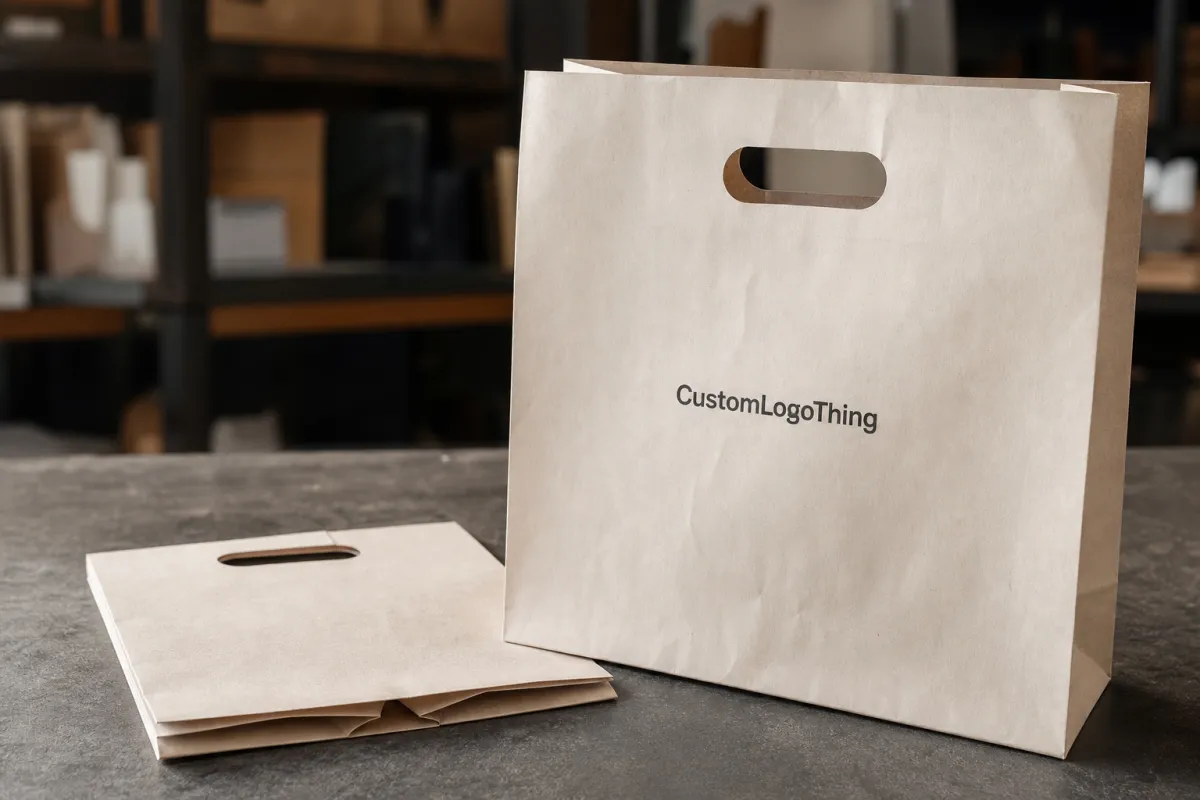
Two Boutique Paper Bags can look almost identical on a showroom shelf. Same print. Same handles. Same neat fold at the top. Then one makes it to the parking lot looking sharp, and the other starts creasing before the customer reaches the door. That gap is why the boutique Paper Bags Paper Weight guide matters. Paper weight is not a vanity number. It is the starting point for whether the bag survives real use and still feels like part of the brand.
I have seen buyers approve a sample that felt "premium enough" in the hand, only to watch it buckle once a folded knit, a candle, and a small gift box went into the same order. The bag did not fail because the paper was bad. It failed because the spec was incomplete. The load was heavier than expected, the handle patch was thin, and the bottom insert was doing almost no work. That kind of mismatch is common, and it is expensive.
A jewelry pouch, a blouse, and a candle set all count as boutique packaging, but they do not ask the same thing from paper. A folded blouse needs presentation. A candle set needs load support. A jewelry bag may be light, but if it feels flimsy, the customer reads that as cheap. Same category. Very different stress.
People still say thicker paper automatically means better bags. Sometimes, sure. But I would not build a sourcing plan around that rule. Paper weight is only one part of the structure. Handle reinforcement, top folds, base boards, coatings, bag dimensions, and even the way the gusset is cut can matter just as much. Ignore those, and you are kinda buying a number instead of a bag.
Paper weight tells you the mass of the sheet, not the whole performance of the finished product. You will usually see it listed as gsm or lb basis weight. GSM, or grams per square meter, is easier to compare across suppliers and countries. Basis weight is still common in North America, but it depends on the paper family and testing standard. That means two "150 lb" quotes may not describe the same stock at all.
The best way to read a Boutique Paper Bags paper weight guide is as a system guide. Light enough to protect your margin. Strong enough to protect the customer experience. Those are not always the same thing, and the sweet spot sits between them.
If the handle gives out, the print does not save the bag.
Think of paper as the frame. Good frames matter, but only if the joints are right. A bag can be made from respectable stock and still fail at the handle fold, split at the gusset, or sag at the bottom because one weak part gives way. The weight number is useful. It is just not the whole story.
Boutique Paper Bags Paper Weight Guide: What the Numbers Mean
Paper weight is the first number buyers see, yet it is rarely the full answer. Caliper, fiber mix, coating, and construction all change how a bag behaves. Two papers that both read 200 gsm can feel different in the hand. One may have more bulk and feel softer. Another may feel denser and more rigid. Add a coating and the paper can stiffen, print differently, and fold with a sharper edge. So yes, the number matters. It just never acts alone.
GSM is the cleanest comparison point when you are sourcing across markets. Basis weight still shows up a lot in the U.S., but it can be confusing because the test size changes by paper type. If a supplier quotes lb instead of gsm, ask for both the gsm equivalent and the paper family used to calculate it. That single question filters out a lot of sloppy quoting.
One thing people miss is where a bag actually fails. The weakest point is usually not the broad face of the bag. It is the stress path: the handle attachment, the top fold, the gusset seam, or the bottom insert. A bag can carry a respectable sheet weight and still underperform if those points are weak. The chain breaks at the weakest link, not the thickest sheet.
| Paper Weight Range | Typical Use | Feel in Hand | Practical Notes |
|---|---|---|---|
| 120-150 gsm | Light gift bags, jewelry, small cosmetics | Soft, flexible, lighter premium feel | Best for smaller items with reinforced handles and modest fill |
| 150-170 gsm | Standard boutique retail bags | Balanced and tidy | Common choice for apparel, accessories, and general gift packaging |
| 170-230 gsm | Premium shopping bags, heavier apparel, gift sets | Firm, more structured | Works better for repeated carrying and fuller loads |
| 230+ gsm | Bottle bags, heavier gift packaging, luxury sets | Rigid, substantial | Usually paired with inserts, board bottoms, and stronger handles |
The table is a shortcut, not a law. A tall narrow bag behaves differently from a wide gift bag, even at the same gsm. Tall bags put more force into the top and handles. Wide bags ask more from the base and sidewalls. A bottle bag needs geometry that resists sagging, not just a higher number on a spec sheet. If the design is off, heavier paper only makes the mistake more expensive.
My practical rule is boring, but it works: choose the lightest stock that safely carries the product and still supports the brand experience. A luxury label should not spec a bag like a shipping carton. A budget-driven retailer should not buy a delicate presentation bag that collapses after one use. The bag speaks before the staff does, and customers hear that message fast.
Brands that care about recycled content or certified fiber should ask for documents, not adjectives. The FSC framework is useful when chain-of-custody matters, and the EPA recycling guidance helps keep sustainability claims anchored to something more concrete than packaging copy. A bag can sound eco-friendly and still be built on vague sourcing. I would rather see paperwork than a pretty label.
One more point from the production floor: coated and uncoated papers can feel like different materials even when the gsm matches. Coating can sharpen print, reduce fiber fluff, and increase stiffness. It can also change how the bag creases. That is why a sample in the exact final finish matters more than any marketing description.
Cost and Pricing: How Paper Weight Changes Your Quote
Heavier paper raises material cost first. That part is obvious. The ripple effect is less obvious. Bulkier stock can increase freight because cartons weigh more and take up more space. Printing behavior can shift too, since denser or coated paper may need different ink handling, slower drying, or more careful inspection. Add finishing, packing, and inserts, and a small paper-weight increase can touch several line items at once.
Pricing usually moves in steps, not in a smooth line. A 140 gsm bag may land in one bracket while a 170 gsm version jumps to another because the factory crosses a paper purchase threshold or adds reinforcement. That is why I tell buyers to ask for quotes at more than one weight. One quote gives you one answer. Three quotes show you the tradeoff.
Low MOQ pricing can be especially deceptive. On a small run, heavier stock looks expensive because setup, waste, and labor are spread across fewer units. That does not mean the heavier option is wrong. It means the order is too small to absorb fixed costs gracefully. A 500-unit order and a 5,000-unit order do not behave the same way, even if the art file is identical.
Many buyers assume paper weight is the only meaningful upgrade. It is rarely the priciest one. Lamination, foil stamping, embossing, rope handles, magnetic closures, and reinforcement boards can add more to the unit cost than moving from 157 gsm to 200 gsm. If the goal is a better-looking bag on a sensible budget, the smarter move may be to improve the handle feel or surface finish instead of pushing the paper weight up for no clear reason.
| Spec Change | Typical Cost Impact | What Usually Changes | Buyer Tradeoff |
|---|---|---|---|
| +20 to 30 gsm | Moderate material increase | Paper cost, carton weight, sometimes printing behavior | Better structure, higher unit cost |
| Rope handle instead of paper twist | Often larger than a paper weight jump | Hardware, labor, attachment strength | Better carry feel, more premium look |
| Foil or embossing | Can add setup and finishing cost | Extra tooling, slower production, more QC | More visual impact, longer lead time |
| Bottom board or side reinforcement | Usually worthwhile on heavier bags | Added inserts and assembly steps | Stronger load support, slightly higher cost |
Compare quotes only after the variables match. Size, print coverage, handle style, finish, and reinforcement should all line up. A 157 gsm bag with no bottom board is not competing with a 170 gsm bag that includes one. Those are different products with different performance targets.
If the supplier can only explain the price by saying "it is better paper," keep asking. Ask what changed structurally. Ask what changed in printing. Ask whether the handles or inserts changed. Honest pricing usually has a clear reason behind it. Vague pricing is where projects drift.
Benchmark sample bags under your exact configuration if the project matters. That is far better than comparing numbers on a spreadsheet and pretending they describe the same thing. The Boutique Paper Bags paper weight guide only works if the comparison is honest all the way through.
Process and Timeline: From Spec Sheet to Delivery
The production flow is simple on paper and messy in real life if the spec keeps changing. First comes size confirmation. Then paper weight selection. Then handle choice. Then artwork setup. After that, sample approval and mass production. That sequence exists for a reason. Rearranging it usually means extra cost, extra messages, and a schedule that starts slipping without warning.
Realistic timing is usually easy to map. Quote turnaround often takes 1 to 3 business days. Sample production can take 5 to 10 business days. Final approval may take a few days if the decision-makers are responsive. Mass production often lands around 12 to 20 business days for standard builds. Add time for foil, embossing, special coatings, custom handles, or overseas freight. None of those extras are unusual. They just need to be planned early.
Late changes cause the most damage. A revised dieline can trigger a new sample. A paper-weight change after sample approval can force retesting. A color correction after finishing has started can mean rework. None of that is mysterious. It is the normal cost of moving the target after the factory has already started cutting.
Heavier or more complex bags also affect packing and shipping. Cartons may need to be stronger, fewer pieces may fit per box, and drying time after printing or coating can stretch. That matters for dense ink coverage, lamination, and soft-touch finishes. If a supplier says a heavier bag is no problem but never mentions carton strength or packing density, part of the job is missing from the quote.
The smartest move is to lock the structure before the artwork gets final approval. If the size, weight, and reinforcement are still floating while design is already in proofing, the project will drift. Not because paper bags are difficult. Because change requests show up late and behave like they were always part of the plan.
One thing I tell buyers all the time: do not let the pretty mockup convince you that the build is solved. The mockup is a drawing. The finished bag has folds, glue, stress points, and handling wear. Those are different animals.
Lock the structure first, then refine the graphics. Reversing that order costs time and usually money.
For bags that need to survive retail handling, ask whether the design has been tested against a real-use standard. The ISTA guidelines are aimed at transport packaging, but the logic still helps: test the load path that matters, not just the appearance of strength. A polished bag that buckles in use is still a failed package.
Common Mistakes That Waste Money or Break Bags
The first mistake is choosing paper weight by instinct. That usually leads apparel brands to overbuy and candle brands to underbuy. Both are expensive. The right answer depends on product weight, bag dimensions, handle style, and how much abuse the bag takes between checkout and the customer's home.
The second mistake is ignoring geometry. A tall narrow bag and a wide gift bag do not stress paper in the same way, even at the same gsm. Tall bags concentrate force at the top and the handle. Wide bags often need more help at the base and sidewalls. A paper number alone cannot replace a real bag spec.
The third mistake is treating handles and bottom boards as optional extras. They are not. If the bag is meant to carry a real retail load, the handle attachment and base insert deserve their own reinforcement plan. Otherwise the bag looks premium until the moment it meets actual weight. That is a bad trade.
The fourth mistake is comparing supplier quotes without checking what the quoted weight refers to. Is it gsm? Basis weight? Coated or uncoated stock? Recycled fiber? A different construction altogether? A 170 gsm laminated paperboard bag is not the same thing as a 170 gsm kraft bag, even if the number looks tidy on a spreadsheet. Buyers who skip that question end up comparing different materials as if they were twins.
The fifth mistake is paying for a heavier stock when a smarter design change would do the job. Sometimes a better handle, a stronger insert, or a cleaner fold solves the weakness more cheaply than adding more paper. More paper is not always the smartest answer. It is just the easiest one to sell.
There is also a quieter mistake: approving a sample in perfect conditions and never checking it under normal store handling. A bag that survives a careful tabletop test may still fail when someone lifts it by one handle, sets it on the floor, or carries it with another purchase in the same hand. Real use is less polite than a sample room.
Here is a short checklist I use before approving a boutique bag spec:
- Product load: actual item weight, not a guess.
- Bag size: width, gusset, and height matched to the product.
- Paper weight: chosen from a realistic range, not a vanity number.
- Reinforcement: handle patch, top fold, and bottom board confirmed.
- Finish: coating or lamination tested on the final stock.
Used properly, the boutique paper bags paper weight guide keeps you out of two bad places: bags that are too flimsy to trust and bags that are too heavy to justify. The profitable zone sits between those extremes, and the numbers only help if the rest of the spec is honest.
Next Steps: Build a Better Spec Before You Request Samples
Start with a one-page spec. Keep it plain. Size, paper weight range, handle type, finish, print colors, reinforcement, quantity, and target use case belong on the page. Add the product weight if you know it. Add the retail environment too, because a luxury gift bag does not face the same treatment as a busy apparel checkout.
Request two sample weights around your target rather than one. The correct answer often sits between "too flimsy" and "too expensive." If you only sample one option, you are guessing with paperwork. Ask for a lower and a higher spec so the difference is visible in hand and under load.
Tiered pricing matters as well. Small-run pricing can get strange, especially with heavier stock or added finishing. Once the breakpoints are visible, you can decide whether it makes more sense to buy a little more, simplify the finish, or stay conservative on paper weight and spend your budget on reinforcement instead.
Test the bag with actual products, not just with your fingers. Put in the candle set. Lift it. Set it down. Check the handle pull, the base stability, and how it looks on shelf after a few minutes of handling. A bag that feels good empty can still perform badly once loaded. Real testing beats squeezing the sample and hoping for the best.
If you are buying through Custom Logo Things, the boutique paper bags paper weight guide can help you narrow specs, compare samples with a clearer eye, and request quotes with fewer surprises. That is the real goal: less guessing, fewer mistakes, better bags. Packaging gets easier once paper weight stops being treated like a magic number.
One honest caveat: there is no universal "best" gsm for boutique bags. Anyone promising that is selling simplicity, not accuracy. The right spec depends on what goes inside the bag, how far it travels, and how much pressure it has to absorb before it reaches the customer.
So the actionable takeaway is simple. Before you ask for pricing, define the product load, the bag dimensions, the handle style, and the final finish. Then sample one step lighter and one step heavier than your first guess. That comparison usually tells you more in ten minutes than a stack of supplier claims ever will.
FAQ
What paper weight is best for boutique paper bags?
A common range is 120-170 gsm for lightweight items, 170-230 gsm for most retail bags, and 230+ gsm for heavier premium packaging. The right choice depends on product weight, bag size, handle style, and whether you want a softer luxury feel or a firmer structure.
Is 157 gsm enough for boutique paper bags with handles?
Yes for small, light products like jewelry, cosmetics, or folded apparel if the handle and top fold are reinforced properly. No for heavier items like candles, glass, or gift sets unless the bag includes stronger inserts or a sturdier build.
How does coating change boutique paper bags paper weight performance?
Coating can add stiffness, improve print quality, and help with moisture resistance, but it does not fix a weak bag structure. Always test the final coated sample, because a bag that looks fine on uncoated stock can behave very differently after finishing.
What MOQ should I expect for custom boutique paper bags?
Small custom runs often start around 500 to 1,000 units, but the exact MOQ depends on size, paper weight, print complexity, and finishing. Heavier stocks and more complex builds usually push MOQ pricing up because setup and waste cost more per unit.
How long do boutique paper bags take from quote to delivery?
Simple projects may move from quote to approved sample in about 1 to 2 weeks and production in another 2 to 4 weeks. Add more time for foil, embossing, custom handles, or overseas freight, and always leave room for revisions.

