Buyer Fit Snapshot
| Best fit | custom box foil stamping process cost practices for packaging buyers comparing material specs, print proof, MOQ, unit cost, freight, and repeat-order risk where brand print, material, artwork control, and repeat-order consistency matter. |
|---|---|
| Quote inputs | Share finished size, material target, print colors, finish, packing count, annual reorder estimate, and delivery region. |
| Proofing check | Approve dieline scale, logo placement, barcode or warning zones, color tolerance, and any recyclable or compostable wording before bulk production. |
| Main risk | Vague material claims, crowded artwork, or missing packing details can create delays even when the unit price looks attractive. |
Fast answer: Custom Box Foil Stamping Process Cost Practices: Cost, MOQ, Proof, and Reorder Checks should be specified like a repeatable production item. The safest quote includes material, print method, finish, artwork proof, carton packing, and reorder notes in one written spec.
What to confirm before approving the packaging proof
Check the product dimensions against the actual filled item, not only the sales mockup. Ask for tolerance on folds, seals, hang holes, label areas, and retail display edges. If the package carries a logo, QR code, warning copy, or legal claim, reserve that space before decorative graphics fill the panel.
How to compare quotes without losing quality
Compare board or film grade, print process, finish, sampling route, tooling charges, carton quantity, and freight assumptions side by side. A lower quote is only useful if the supplier can repeat the same color, closure quality, and packing count on the next order.
Custom Box Foil Stamping: Process, Cost, and Best Practices
Custom box foil stamping is one of those finishes shoppers notice before they can explain why the package feels more polished. Put a plain carton next to a foil-stamped version on the same shelf and the eye usually drifts toward the reflective detail first, not the brand name. That small hit of light can change the way the entire package reads, which is why custom box foil stamping keeps showing up on branded packaging, retail packaging, and Custom Printed Boxes that need a stronger presence without rebuilding the whole box from scratch.
For custom logo packaging and any brand selling physical goods, the real question is rarely whether foil looks good. It usually does. The real question is whether custom box foil stamping fits the artwork, the substrate, the budget, and the schedule without turning a smart packaging design into an expensive correction cycle. The answer lives in the details, and the details are where buyers either protect margin or lose it.
Custom Box Foil Stamping: The Tiny Finish Customers Notice First
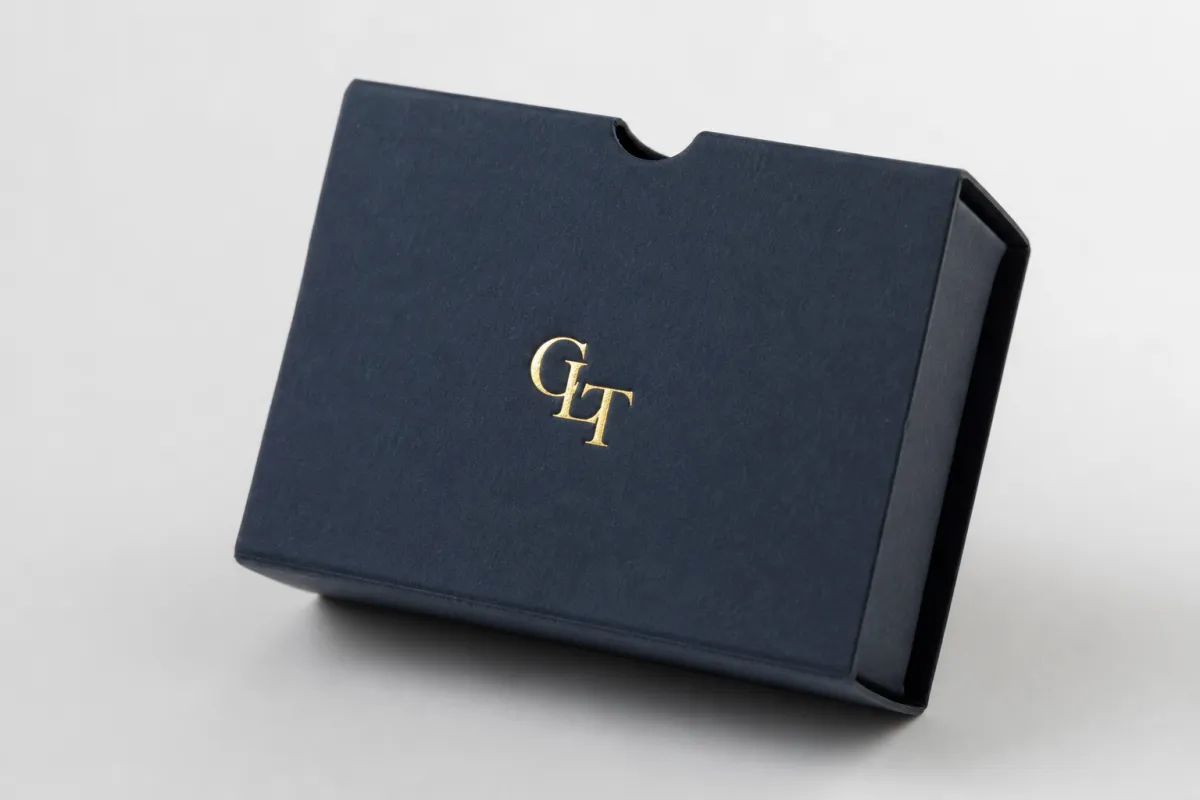
Walk past a shelf with twenty similar cartons and watch what happens. The plain one fades into the row. The one with custom box foil stamping catches a highlight, even when the logo is small and the rest of the layout stays restrained. People do not need to read every line to sense that the box is trying harder. That matters in retail packaging, gift sets, cosmetics, supplements, specialty food, and any category where the outer carton has to sell the product before the product reaches someone’s hands.
In plain terms, custom box foil stamping uses heat, pressure, and a metallic or pigmented foil film to transfer a design onto paperboard, sleeves, or rigid boxes. The die presses the foil against the substrate, the release layer lets go, and the design stays behind as a reflective or matte mark. That mark can be gold, silver, copper, black, red, blue, holographic, or a custom effect depending on the foil system and the job. If you have ever watched a press check under bright lights, you know how quickly a simple foil can either elevate a box or expose a sloppy layout.
Custom box foil stamping works best where the design needs a strong signal without heavy ink coverage. Logos perform well. Monograms perform well. Borders, seal marks, product names, and limited-edition packaging also make sense. It is a clean way to upgrade package branding without changing the whole structure or adding another print pass that pulls on the budget.
The business value is straightforward:
- Stronger shelf presence because the finish reflects light and stands apart from neighboring cartons.
- Higher perceived value because foil usually reads as premium, even on a simple structure.
- Better unboxing because the first reveal feels more intentional.
- More flexible branding because custom box foil stamping can sit beside embossing, spot UV, or clean offset print.
Custom box foil stamping is not magic. Bad artwork, weak paper, poor registration, or a rushed approval can make an expensive finish look clumsy. A tiny serif that looked elegant on screen can blur in the press. A textured stock can mute the shine. A crowded layout can make the foil feel noisy instead of premium. Smart buyers treat custom box foil stamping as a production decision, not a decorative extra.
If you are choosing between finishes, compare the custom box foil stamping idea against the rest of the box spec. A simple carton with a sharp foil logo often beats a crowded design full of effects. Good packaging design usually comes down to restraint and one memorable detail. That is not flashy advice, but it holds up when the boxes hit the press.
How Custom Box Foil Stamping Works: Materials and Production Steps
Custom box foil stamping starts long before the press touches the box. Artwork prep comes first. The supplier checks whether the design can be stamped cleanly at the chosen size. Then the vendor builds the plate or die, sets the heat and pressure, and runs a test before full production begins. The machine part is simple enough. The part where jobs go sideways is everything that happens before the machine starts moving.
The core pieces are easy to understand once the jargon drops away. The die or stamp plate carries the artwork. The foil film carries the color and finish. The heat source softens the foil layer so it releases. The pressure pushes the design into the substrate and creates a clean transfer. If any one of those steps is off, the result looks faint, uneven, or overpressed. That is why custom box foil stamping on paperboard behaves differently from stamping on a rigid chipboard wrap or an uncoated kraft carton.
Substrate selection matters more than many buyers expect. Smooth coated paperboard, such as SBS or C1S stocks in the 14pt to 24pt range, usually gives a sharper finish. Rigid boxes with wrapped paper can also work beautifully when the wrap matches the foil system. Textured stocks, soft-touch coatings, and rough kraft papers can still work, but they often need testing. The foil prefers a flat, stable surface. Give it an unpredictable surface and it starts acting like a press operator at the end of a long shift.
The process usually follows this sequence:
- Artwork review and size check.
- Line thickness and spacing adjustments.
- Die or plate creation.
- Sample or digital proof review.
- Press setup and foil matching.
- Production run with inspection.
- Drying, curing, or cooling as needed.
- Packaging and shipment.
That timeline matters because custom box foil stamping is sensitive to revision churn. If the art changes after the die is made, you pay twice or you wait while a new tool gets produced. If the box shape is not locked, registration can drift once the die-cutting starts. If the designer forgets the fold lines, the logo can land across a crease. None of that is mysterious, but it all gets expensive when the team treats the project like a file export instead of a production run.
Here is the blunt version: custom box foil stamping rewards clean artwork and punishes sloppy planning. The more precise your artwork package is, the less expensive the job becomes by the time the cartons are packed and shipped.
For material sourcing and certification questions, it helps to know the paper origin too. If your product packaging claims depend on responsible fiber sourcing, check the FSC system at FSC. If your cartons need to survive rough distribution, the test mindset from ISTA is a practical benchmark for how packaging should hold up in transit.
Custom Box Foil Stamping Cost: What Actually Drives the Quote
Custom box foil stamping cost is not a mystery, but it is easy to misread. The quote from a supplier usually reflects setup, tooling, foil choice, labor, run length, and how difficult the artwork is to produce. Yes, difficult is part of the cost conversation. A tiny logo in one location is one kind of job. A full front panel, two foil colors, and tight registration over embossing is another.
Setup cost is the first lever. That includes the die or plate, press setup, and the time needed to dial in heat and pressure. Then comes the foil itself. Standard metallics are usually the least expensive. Specialty foils increase the number faster because they can call for different release behavior or a more careful setup. Labor also matters. A short run often needs almost the same setup time as a much larger run, so the fixed cost gets spread across fewer boxes.
For context, here are broad pricing patterns you can expect for custom box foil stamping. These are not promises. They are realistic buying ranges, and your exact spec can move them in either direction.
| Foil Option | Typical Setup Impact | Best Use | Typical Cost Effect |
|---|---|---|---|
| Standard gold or silver | Lower tooling complexity | Logos, initials, small accents | Usually the most budget-friendly option |
| Matte metallic or pigment foil | Moderate setup | Minimalist branding, modern retail packaging | Slightly higher than standard metallics |
| Holographic foil | Higher alignment care | Limited editions, attention-grabbing custom printed boxes | Often a noticeable jump in unit price |
| Multi-foil or large coverage | Highest setup and press time | Gift sets, premium launches, strong package branding | Most expensive category per box |
MOQ behavior is where many first-time buyers get surprised. A 500-box order can cost dramatically more per unit than a 5,000-box order because the setup is spread across fewer cartons. On simple custom box foil stamping jobs, a small order might land around $0.30-$0.70 per box, before shipping and before other print operations. In the 5,000-piece range, the same basic job might fall closer to $0.08-$0.22 per box. If the foil area is large, the design is fine-line, or the order needs multiple positions, the number climbs quickly. That spread is real, and it is why a quote that looks cheap at first can turn awkward once the spec gets fully unpacked.
There is a cleaner way to request quotes: keep the box size, stock, finish, foil color, stamp area, and quantity exactly the same across vendors. Otherwise you are comparing apples to oranges and calling it a cost analysis. Ask for a line-item quote if possible. You want to know what part of the job is setup, what part is unit cost, and what part is tied to shipping or rush timing.
Hidden cost drivers are usually easy to spot once you know what to look for:
- Large coverage areas take more press time and more careful alignment.
- Fine detail requires tighter tolerances and often a cleaner stock.
- Multiple stamp locations can mean multiple setups or extra handling.
- Short deadlines can trigger rush scheduling and higher labor cost.
- Extra finishing such as embossing or die cutting adds process steps.
One more practical note: if your foil quote looks cheap but the box is complex, ask what is being excluded. Some quotes leave out tool charges. Some leave out prepress corrections. Some leave out sampling. Custom box foil stamping only qualifies as a bargain if the final invoice still matches the spec you wanted.
Key Factors That Decide Whether the Finish Looks Premium or Cheap
Custom box foil stamping can look expensive or awkward on the same exact box, depending on how the design is handled. That sounds obvious, yet plenty of brands miss it. The finish is only as strong as the artwork, the surface, and the spacing around it. Give foil room to breathe and it looks sharp. Crowd it and it starts feeling like a discount invitation card from a mall kiosk.
The first factor is artwork scale. Tiny lettering is the classic mistake. Foil needs enough line weight to transfer cleanly, so very thin strokes, hairline serifs, and compressed type can break up under pressure. If your logo carries tiny details, scale it up or simplify it. The best custom box foil stamping jobs usually use bold, confident shapes instead of fussy decoration.
Material choice matters just as much. Smooth coated stocks are predictable, which is exactly what you want in production. Heavily textured kraft or soft-touch surfaces can still work, but the press operator may need a different setup or a sample run to confirm quality. In practice, custom box foil stamping on a premium coated carton often looks cleaner than the same design on a rough uncoated board, even if the rough board costs more in other parts of the packaging design.
Layout is the next piece. A centered logo with generous margins usually reads as intentional. A border that wraps too tightly can feel cramped. Too much foil coverage can flatten the design because the eye has nowhere to rest. Often, the strongest package branding uses foil on one anchor point and keeps the rest of the box more restrained. That is especially true for premium product packaging where the carton has to feel expensive, not loud.
If your logo needs a magnifying glass, it does not belong in foil. Custom box foil stamping rewards bold art, not microscopic ego.
Color choice changes the mood fast. Gold on black is the classic move because the contrast is strong and familiar. Silver on deep navy can feel cleaner and more modern. Copper can feel warmer and more artisanal. Black foil on white can be subtle in a good way, while holographic foil makes a statement and should be treated like one. Not every brand needs the loudest option. Sometimes the right answer is the one that supports the product instead of shouting over it.
Durability also matters. If the carton sits in a warehouse, gets stacked, or gets opened and closed more than once, the foil has to survive handling. Rub resistance varies by stock and foil type. For shipping cartons, this is where practical testing pays off. A finish that looks perfect under a studio light can scuff early if the box has to move through a rough distribution chain. That is one reason many buyers pair custom box foil stamping with a protective laminate or a sturdier board spec.
Custom box foil stamping can also be paired with embossing for extra depth. That combination often works because foil gives shine and embossing gives a raised tactile cue. Used well, the effect feels premium without complicating the artwork. Used badly, it becomes a texture contest nobody asked for.
A useful rule of thumb: place foil where people will see it first, touch it most, or photograph it often. That is where the return lives. Not in some hidden panel that nobody notices after the tape is cut.
Custom Box Foil Stamping Process and Timeline: What to Expect
Custom box foil stamping is usually not the slowest step in a packaging project, but it can become the bottleneck if the team waits too long to approve artwork or finalize the box spec. A realistic timeline starts with the brief. Then the designer sends files. Then the supplier checks the layout. Then proofs are reviewed. Then tooling is made. Then the press run begins. The flow is simple enough, yet the number of handoffs is exactly why sloppy planning turns into expensive hurry-up mode.
A typical flow looks like this:
- Send box dimensions, stock, foil color, and stamp area.
- Review the file for line weight, bleed, and position.
- Approve a digital or physical proof.
- Build the die or plate.
- Set the press and run the first sample.
- Confirm the stamp quality and registration.
- Produce the full order and inspect for defects.
For simple custom box foil stamping jobs, proofing and production can move fairly quickly once the artwork is locked. A clean file with one foil position and a standard stock may be ready for production in roughly 7 to 15 business days after approval, depending on the supplier’s schedule. Add die cutting, embossing, specialty coatings, or multiple foil hits and the timeline stretches. Rush jobs are possible in some cases, but rush jobs are usually just another way of saying “pay more and stop changing the art.”
Approval is the step that causes the most delay. Someone spots a small spacing issue. Another person wants the logo larger. Marketing wants one more word on the sleeve. The die is already in motion, and now the project is burning calendar time because the team did not align on the spec early enough. Custom box foil stamping is not forgiving of last-minute improvisation. Every revision after tool creation can add Cost, Lead Time, or both.
Timeline planning should also account for the rest of the packaging design. If the foil sits on a carton that also needs print, die cutting, folding, and gluing, the whole line has to be planned together. That is especially true for custom printed boxes with inserts, sleeves, or multiple panels. One weak link can hold up the entire job.
For launches, I like to see buffer time built in for sample review and shipping. It does not take much for a new product release, trade show, or retail delivery window to get squeezed. If the packaging is late, the launch feels late. That is a bad place to be because nobody buys the excuse; they just see an empty shelf.
Custom box foil stamping also needs a practical quality check after production. Inspect the foil edge, check for pinholes, compare registration against the print, and test a few cartons under the light the customer will actually see. That last part matters more than most brands realize. A finish that looks perfect in a press room can read differently under warm retail lighting or a phone camera.
Good production planning is boring. Boring is useful. Boring keeps the cartons on schedule.
Common Custom Box Foil Stamping Mistakes to Avoid
The biggest mistake in custom box foil stamping is treating the finish like a magic button. It is not. The design still has to work. The box still has to be built correctly. The stock still has to cooperate. And the timeline still has to survive the usual chaos of packaging approval, which somehow always arrives right when everyone is “almost ready.”
The first mistake is artwork that is too small or too detailed. A logo that looks elegant on a monitor can turn into a patchy mess once it is stamped. Very thin lines, tiny text, and crowded icons are the usual offenders. If the foil area is small, simplify the art. If the detail matters, ask for a sample before committing to a full run.
The second mistake is approving art before confirming material compatibility. Custom box foil stamping on a coated stock can behave very differently from the same design on kraft, soft-touch, or textured board. The supplier should know this, but the buyer should ask anyway. Good packaging buying means checking the substrate, not just admiring a rendering.
The third mistake is overusing foil. More shine does not automatically mean more premium. Sometimes it means less focus. When everything is metallic, nothing feels special. A controlled accent on one logo, one panel, or one seal usually creates a stronger result than foil everywhere. Good branded packaging has hierarchy. Bad branded packaging has a migraine.
The fourth mistake is skipping a physical sample. Screen proofs are useful, but they do not tell you how the foil will catch light, how the color will sit next to print, or how the finish will feel in hand. That matters for product packaging that depends on first impressions. If the item is a launch SKU, gift set, or retail item with a higher margin, a sample is cheap insurance.
The fifth mistake is leaving procurement too late. Custom box foil stamping needs time for quoting, tooling, proofing, and production. Waiting until the launch schedule is already tight forces rush charges and narrows your options. You do not want to choose between “expensive” and “more expensive” because somebody forgot to brief the designer last month.
Here is a simple checklist that avoids most of the pain:
- Use bold artwork with enough line weight.
- Confirm stock compatibility before final approval.
- Keep foil coverage intentional, not decorative for the sake of it.
- Request a sample if the design is complex.
- Lock the timeline before the product launch gets close.
That checklist sounds basic because it is. Basic is useful when the alternative is a reorder.
Expert Tips for Better Results on Short Runs and Large Orders
Short-run custom box foil stamping and large-run custom box foil stamping are not the same project. The first one lives under tighter budget pressure and usually wants simplicity. The second one can justify more setup work because the unit economics improve. If you handle both the same way, one of them will disappoint you.
For short runs, keep the foil artwork bold and clean. Use one logo, one seal, or one short line of type. Avoid detailed borders and tiny decorative marks. The reason is simple: small orders do not give you enough volume to absorb a lot of setup cost. The more complicated the design, the more you pay for a finish that may not read any better from three feet away.
For larger orders, you have more room to use a premium effect strategically. Multi-location stamping can make sense if the brand margin supports it. Pairing foil with embossing is also easier to justify on larger runs because the extra setup gets spread out. That is where custom box foil stamping really earns its place: on premium lines that need visual authority and tactile impact.
Another practical tip is to place the foil where it will be seen first. On a retail shelf, that is usually the front panel. For ecommerce, it is often the top flap or the inside reveal because that is what gets photographed. For gift packaging, the lid and closure seal matter because the person opening it is already primed for a more deliberate experience. Good package branding follows the customer’s path, not just the designer’s mood board.
If the design has fine lines, multiple foil areas, or a launch date that matters, ask for a press proof or sample. Do not settle for a vaguely confident email and a shrug. The sample tells you whether the stamp holds, whether the foil color feels right, and whether the overall finish supports the brand promise. If the supplier offers guidance on limits for line thickness or minimum text size, take it seriously. Those limits are based on press behavior, not vibes.
Another smart move: lock the specs before you ask for quotes. Box size, stock, foil color, coverage area, quantity, and turnaround should all be fixed. Otherwise vendors are pricing different jobs and you will spend more time reconciling quotes than improving the packaging. That is a common waste of time in packaging procurement.
For brands comparing options, use your Custom Packaging Products page as the starting point for the structure, then decide whether custom box foil stamping is the right finish for that specific item. If the box already has enough visual weight from print and structure, foil may only need to accent a seal or logo. If the box is simple, foil can carry more of the visual load.
You can also compare finish options across your Custom Packaging Products planning materials before you commit. That helps you choose between a pure print solution, a foil accent, or a more layered setup with die cutting and embossing. The right answer depends on the margin, the channel, and how much shelf noise the product has to cut through.
One more reality check: custom box foil stamping does not rescue weak branding. It amplifies whatever is already there. If the logo is confused, the hierarchy is messy, or the product story is unclear, foil only makes the problem shinier. That is not a compliment.
Next Steps: Spec, Quote, Approve, and Order Confidently
Before you request custom box foil stamping quotes, write down the actual spec. Box size. Stock. Foil color. Coverage area. Quantity. Deadline. If you cannot describe the job in those terms, the supplier will fill in the blanks for you, and the blanks will probably cost money. Clear specs lead to better buying decisions and better packaging design outcomes.
Use this quick order checklist:
- Confirm the box dimensions and board type.
- Choose the foil color or effect.
- Define the exact stamp area.
- Set the quantity and target arrival date.
- Decide whether you need embossing, die cutting, or print add-ons.
- Ask for a sample if the launch is high visibility.
Once the spec is fixed, collect two or three quotes that are truly comparable. Same artwork. Same size. Same stock. Same foil coverage. That is the only way the numbers mean anything. If one vendor quotes a small seal and another quotes a full-panel stamp, you are not comparing custom box foil stamping costs. You are comparing different jobs and pretending they are equal.
Then make the call based on impact, not just unit price. If the finish improves shelf presence, strengthens package branding, and supports the margin, custom box foil stamping is usually worth the spend. If the product is low margin and the foil would stay hidden most of the time, a simpler finish may be the smarter move. Good buying is not about picking the fanciest option. It is about choosing the finish that earns its place.
For most brands, the best path is pretty plain: brief the designer, confirm the spec, get the quote, approve the sample, and place the order early enough to avoid rush fees and last-minute stress. That is how custom box foil stamping stays useful instead of turning into a production headache.
And if you want one final rule, here it is: custom box foil stamping should make the box feel more deliberate, more polished, and more memorable. If it does that, keep it. If it does not, save the money and put it into better structure or better print. Either way, the job should support the product, not just decorate it.
Frequently Asked Questions
How long does custom box foil stamping usually take?
Simple custom box foil stamping jobs can move quickly if the artwork is ready, but plate making, proof approval, and production still need buffer time. Complex designs, multiple foil locations, or rush requests usually extend the turnaround. Build extra lead time if the boxes are tied to a launch, trade show, or retail delivery window.
What affects custom box foil stamping pricing the most?
The biggest drivers are setup cost, quantity, foil type, coverage area, and artwork complexity. Small orders usually cost more per box because setup is spread across fewer units. Specialty foils, large stamp areas, and rush timing can raise the quote fast.
Can custom box foil stamping work on any box material?
No. Smooth paperboard and coated stocks usually produce the cleanest result. Heavy texture, soft coatings, or low-quality substrates can blur detail and weaken transfer. Always confirm material compatibility before approving the final artwork for custom box foil stamping.
Is custom box foil stamping better than printed metallic ink?
Foil usually looks sharper and more premium because it reflects light differently. Printed metallic ink can be cheaper, but it often lacks the depth and shine of true foil. The better choice depends on budget, brand position, and how important shelf impact is.
What is the best way to prepare artwork for custom box foil stamping?
Use bold lines, simple shapes, and enough spacing so the foil can transfer cleanly. Avoid tiny text and overly detailed graphics unless the supplier says the press can handle them. Send clean vector files and ask for a proof before production starts so custom box foil stamping stays crisp instead of turning into an expensive lesson.

