Buyer Fit Snapshot
| Best fit | Custom Box Inserts Unit Cost projects where brand print, material claims, artwork control, MOQ, and repeat-order consistency need to be specified before quoting. |
|---|---|
| Quote inputs | Share finished size, material target, print colors, finish, packing count, annual reorder estimate, ship-to region, and any compliance wording. |
| Proofing check | Approve dieline scale, logo placement, barcode or warning zones, color tolerance, closure strength, and carton packing before bulk production. |
| Main risk | Vague material claims, crowded artwork, missing packing details, or unclear freight terms can make a low unit price expensive after revisions. |
Fast answer: Custom Box Inserts Unit Cost: Board, Finish, Dieline, and Unit Cost should be specified like a repeatable production item. The safest quote records material, print method, finish, artwork proof, packing count, and reorder notes in one written spec.
Production checks before approval
Compare the actual filled-product size with the drawing, then confirm tolerance on folds, seals, hang holes, label areas, and retail display edges. Reserve space for logos, QR codes, warning copy, and material claims before decorative graphics fill the panel.
Quote comparison points
Review material grade, print process, finish, sampling route, tooling charges, carton quantity, and freight assumptions side by side. A quote is only useful when the supplier can repeat the same color, closure quality, and packing count on the next order.
Custom box inserts unit cost is rarely driven by material alone. Paper, foam, and molded fiber get the blame first because they are easy to spot on a quote. The real cost pressure usually shows up somewhere less obvious: tooling, cutting accuracy, sampling, hand assembly, and the extra time it takes to pack the product cleanly. That is the part buyers miss. The insert is not a decorative extra. It is the piece keeping the product from arriving as a small disaster.
If the product rattles inside the carton, the insert failed. If the insert slows fulfillment to a crawl, it failed in a different way. Good product packaging sits in a narrow band: tight enough to hold, simple enough to pack, and durable enough to survive the trip. That balance shapes the final unit cost more than people expect.
For branded packaging, the insert does real work. It protects the item, reduces returns, keeps the unboxing tidy, and helps the line move without constant adjustments. Buyers who shop custom printed boxes and insert systems by sticker price alone usually end up paying for the missing pieces later. Damage does not care how optimistic the quote was.
“The cheapest insert is the one that does not need a second run because the first one crushed, shifted, or packed too slowly.”
At Custom Logo Things, we look at the full build, not just the line item. A low number is nice. A low number That Actually Works is better.
Why custom box inserts unit cost can jump faster than the box
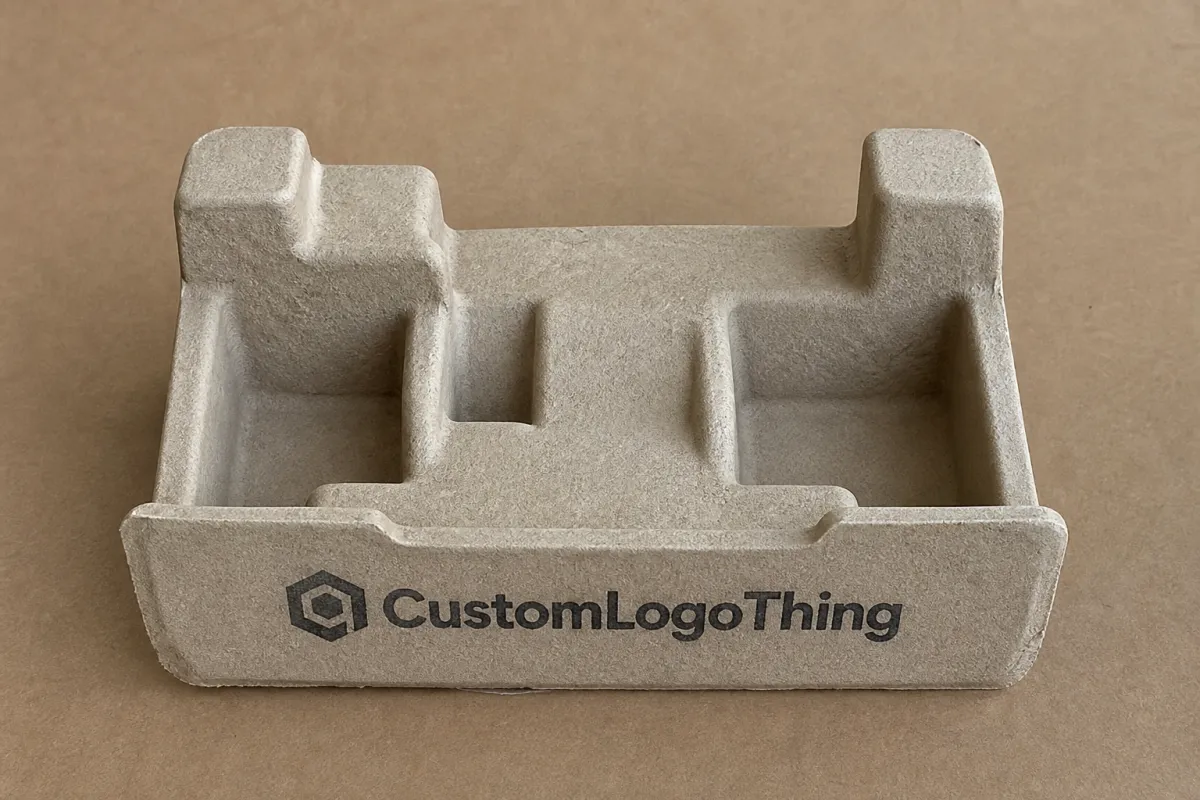
The outer box is usually straightforward geometry. A fold. A board grade. A print file. Done. Inserts carry a messier job. They have to fit, cushion, display, and still let packing move at a normal pace. Every one of those demands adds labor, tooling, or both. That is why custom box inserts unit cost often rises faster than the carton around it, even when the material looks cheaper on paper.
The biggest mistake I see is treating a product insert like a flat cut piece with a hole in it. That is not how production works. Cavities, locks, folds, spacers, and retention points all change the way the part is made. A simple paperboard insert for a mailer can be straightforward. A luxury kit with two bottles, a charger, and an accessory tray can need multiple layers, tighter tolerances, and more hand work. Add foam or molded structure, and the price curve gets steeper fast.
Small dimensional changes create their own bill. Shift a bottle width by 3 mm and the old dieline may stop working. Now the vendor needs a revised drawing, a new cutting file, and often a sample before production starts. That is not supplier melodrama. That is manufacturing. For retail packaging or shipping kits in volume, a tiny spec change can erase the savings you thought you had.
“Simple insert” is another phrase that sounds better than it behaves. Simple for whom? A designer may see a flat paperboard blank and think it looks easy. Production still has to score it accurately, cut it cleanly, and fold it in the right sequence so the product sits where it should. If the insert has to live inside custom printed boxes without drifting around, the tolerances tighten quickly. If it has to survive parcel handling, the design needs to account for compression, vibration, and drop force, not just shelf appeal.
The cleaner way to think about it: the box holds the product family, but the insert holds the product itself. That means the insert often drives the actual packing labor. If workers have to force parts into place, the unit cost is no longer just the piece price. It includes labor, rework risk, and damage risk hiding inside the quote. That is why experienced packaging buyers ask for the packing method before they ask for the cheapest number.
What custom box inserts are made of and how that changes value
Material choice sets the protection level, the presentation level, and the cost structure. There is no universal winner. There are only materials that fit the product and materials that look cheap until the returns start showing up.
Paperboard inserts show up everywhere for cosmetics, small electronics, accessories, and retail packaging that needs a clean look. They can be printed, scored, folded, and nested efficiently. For lighter products, they often hit the best mix of low cost and decent brand appearance. If the insert also needs to show off the product on a shelf, paperboard usually gives the cleanest result. It is also a familiar choice for buyers who need a repeatable spec across multiple SKUs.
Corrugated inserts are the workhorse for heavier items. They add more crush resistance and make more sense for shipping kits where the product has weight or may travel through rough handling. They are not as polished as a rigid board insert, but they usually protect better. Buyers who want retail packaging that also survives parcel delivery often end up here. For e-commerce, that tradeoff is often worth it.
Molded pulp fits brands that want fiber-based protection and a lower-plastic profile. It can work well for electronics, glassware, and products that need a formed cradle. The catch is economics. Tooling and mold costs matter, so molded pulp often makes the most sense at specific volumes. A tiny run can be hard to justify. Once volume rises, the per-piece number can become much more reasonable.
Foam inserts are the precision option. They hold fragile products in place and can handle cutouts, tiers, and snug cavities. They are common for medical kits, instruments, premium devices, and anything that hates movement. Foam can be cheap for simple shapes, but precision cutting, thick blocks, and layered assemblies can drive the custom box inserts unit cost up faster than buyers expect. Density matters here too. Higher density often means better support, but it also means more material and a heavier quote.
Specialty display structures sit at the premium end. Layered trays, windowed presentations, and complex branded packaging structures are built to create a moment during unboxing. They can lift perceived value, but they also bring more labor and tighter quality control. That can make sense for a high-margin product. For a commodity item, it is usually a very expensive way to feel fancy.
Material choice should match the product weight, fragility, shipping method, and brand position. A lighter folded paperboard insert may be right for skincare. A dense foam or corrugated structure may be the only sane option for a brittle device. Pick the wrong one and the savings disappear into product replacement, repacking, and customer service time.
For buyers who want a lower-impact fiber option, sourcing matters as much as structure. Responsible board and pulp can be part of the answer where the product and brand call for it. The Forest Stewardship Council explains chain-of-custody and certified fiber standards clearly at fsc.org. That does not magically lower every quote, but it does help when sustainability claims need to hold up under scrutiny.
Specifications that control fit, protection, and repeatability
Most pricing fights start with vague specs. “It needs to fit the bottle” is not a specification. It is a wish. If you want a clean quote, the supplier needs dimensions, shape details, allowable movement, and the packing method. The more exact the spec, the cleaner the custom box inserts unit cost becomes.
Fit tolerance is one of the most overlooked variables. A paperboard insert can work with a little clearance, but the exact allowance depends on finish, coating, and whether the product surface can scuff. Soft-touch coatings, painted surfaces, and glossy retail packaging usually need more breathing room than buyers expect. Foam can be tighter, but even foam has limits if the item has protrusions or delicate edges.
Board caliper and wall thickness matter too. Thicker board adds rigidity, but it also raises material use and can complicate folds, especially on intricate cavities. Corrugated inserts need flute direction and compression strength checked. Molded pulp needs wall thickness and density balanced so it protects without getting bulky. With foam, density is a practical cost lever: higher density often means better support and more expense.
Labor gets expensive when the design asks for too many steps. Multiple layers, locking points, tabs, and hand-assembled sections all take time. That may sound minor. It is not. A structure that adds 10 to 15 seconds per unit changes the economics of a 10,000-piece run. If that assembly happens before the product goes into the carton, the time multiplies across the order. Buyers usually notice the difference only after the line starts moving slower than expected.
Sampling is another place where money quietly disappears. A drawing on a screen is not enough if the product has irregular shoulders, delicate finishes, or a weird footprint. A sample or exact product drawing lets the supplier check pressure points, insertion depth, and carton interaction before mass production. That step prevents the expensive “we need another revision” email after the first sample shows up. It also saves everyone from pretending a bad fit is acceptable because the order is already late.
Shipping and storage belong in the spec too. An insert that looks fine on a desk may fail after compression in a master carton or a humid warehouse. If the pack has to survive long transport, a stronger structure or heavier board may be worth the higher price. Buyers often focus on the cost of the piece and ignore the cost of the failure. That is a bad trade.
There is a reason professional packaging buyers ask for exact product drawings instead of photos alone. Photos help, sure. Production runs on dimensions, tolerances, and repeatability. The more repeatable the spec, the easier it is to quote future orders, hold quality, and keep unit cost from drifting upward every time someone changes a SKU. Stable specs make reorders cheaper. Unstable specs do the opposite.
For shipping-heavy programs, it helps to think about transit standards too. The International Safe Transit Association has useful guidance on packaging test methods and distribution hazards at ista.org. If an insert is part of a parcel shipper, test logic matters. A neat tray that fails drop and vibration is not a good purchase, no matter how friendly the quote looks.
Custom box inserts unit cost: pricing, MOQ, and quote drivers
The quote comes from a handful of inputs: material use, cutting method, tooling, print complexity, assembly time, and order quantity. Miss one and the number changes. That is why buyers should compare quotes on identical specs, not on similar-looking descriptions. “Foam insert” is not a spec. “2 lb EVA foam, 12 mm thick, CNC-cut, two cavities, 5,000 units” is a spec.
MOQ matters because setup costs have to land somewhere. If a line needs to be dialed in, a tool needs to be made, or sample approvals take time, those fixed costs get divided across the run. A small order can make sense for a launch, but it will almost always carry a higher per-piece price. That is not a trick. It is basic manufacturing math. MOQ stands for minimum order quantity, and it is one of the first numbers that tells you whether a project is being priced as a trial run or as a real production job.
Quantity breaks are where buyers can save real money. Once a run crosses a machine-efficiency threshold or a tooling amortization point, the unit cost may drop sharply. After that, the curve flattens. In practice, a 1,000-piece order may be expensive per unit, a 5,000-piece order may be a lot lower, and a 20,000-piece order may only shave off a little more. The shape depends on the material and the assembly method.
| Insert type | Best use case | Typical complexity | Indicative unit cost at 5,000 pcs | Cost note |
|---|---|---|---|---|
| Paperboard folded insert | Cosmetics, accessories, lightweight retail packaging | Low to medium | $0.12-$0.35 | Lower cost when the dieline is simple and print coverage is modest |
| Corrugated insert | Heavier goods, shipping kits, e-commerce packs | Medium | $0.18-$0.45 | Good protection value, especially when compression resistance matters |
| Molded pulp insert | Electronics, glass, eco-focused product packaging | Medium to high | $0.22-$0.60 | Tooling and mold economics can swing the quote a lot |
| Foam insert | Fragile devices, instruments, premium shipping kits | Medium to high | $0.35-$1.20 | Precision cutting and density choice drive price more than raw material alone |
| Layered display structure | Luxury kits, branded packaging, high-touch presentation | High | $0.60-$2.00+ | Great presentation, but labor and assembly can dominate |
These ranges are directional, not a promise. Real quotes move with print coverage, cavity count, tolerance, board grade, foam density, and whether the insert ships flat or assembled. A plain one-cavity insert is one thing. A multi-product tray with brand print, special scoring, and hand assembly is another. Buyers who expect those two jobs to cost the same are usually in for a rude little surprise.
One-time charges sit apart from per-piece pricing, and that difference matters. Some suppliers quote tool setup, sample development, or die creation as a separate line. Others fold it into a higher unit rate. Either approach can be fair. What matters is whether you know what is included. A cheap quote that excludes sampling can become the expensive one after the first revision.
There is also the trap of comparing different structures as if they were the same thing. A foam insert and a paperboard insert are not interchangeable if the product is fragile or heavy. If the goal is retail packaging that also protects during parcel delivery, the cheaper line item may be the wrong product entirely. You save pennies and spend dollars fixing damage.
From a packaging buyer’s point of view, the best quote is the one that lists the assumptions plainly. Material, dimensions, finish, production method, and MOQ should all be visible. If any of those are fuzzy, the quote is fuzzy too. That is the part that keeps procurement sane.
Process and timeline: from dieline to approved sample
The process should be simple. Send the product dimensions, confirm the insert material, review the structural drawing, approve the sample, then move to production. In practice, the speed of that chain depends on how clean the information is at the start. If the product data is vague, the timeline drags. If the product data is exact, the job moves faster.
Simple inserts can move quickly. A straightforward paperboard layout with one or two cavities may only need a short design round and a sample check. More complex work takes longer. Multi-piece inserts, dense foam layouts, or molded structures need more time for drawing, revision, and fit confirmation. That is normal. Good production is not rushed guesswork.
The biggest delays usually come from preventable mistakes: missing product photos, old dimensions, late artwork changes, and sample feedback that keeps changing direction. I have watched projects lose days because the product version changed after the first quote. I have also seen buyers ask for a lower price after approving a structure that clearly needed more labor than the original brief allowed for. The machine does not care about optimism.
A physical sample or a well-documented photo sample is worth the time. It confirms fit before the full run starts. That matters because the first article often exposes what the drawing missed: a rounded shoulder that binds, a closure that catches, a lid that compresses too hard, or a product label that needs more clearance. Fixing that before production is cheap. Fixing it after 10,000 units are cut is not.
After approval, production still has its own steps. Cutting, forming, assembly, inspection, packing, and shipment each take time. A larger order needs coordination. A smaller order may move faster, but it can carry a higher unit cost because the setup burden is spread across fewer pieces. That tradeoff is exactly why buyers need to ask for price and lead time in the same conversation.
A practical planning range beats a fake guarantee every time. Simple projects can move from dieline to approved sample in a few business days, then into production soon after. More complex jobs often need one to three weeks, sometimes longer if tooling or fit revisions are involved. If someone promises faster without asking for dimensions or structure, they are guessing.
The smart move is to treat the insert like a technical part, not a decorative add-on. That mindset keeps the work moving and helps the final packaging design hold up in real use. It also reduces the chance that a late change will blow up the budget.
Why buyers choose us for custom box inserts
Buyers do not need poetry. They need a supplier who explains the tradeoffs clearly and does not hide behind vague language. If a structure is expensive because of hand assembly, say so. If a cheaper material will still protect the item, say that too. That kind of honesty saves time, and it usually saves money. A good packaging partner should reduce confusion, not add another round of it.
That is where a practical approach matters. For custom box inserts, the best answer is often the one that simplifies the structure without weakening the pack. In many projects, a cleaner dieline, a smarter cavity layout, or a different board grade lowers waste and improves pack-out speed. Those are the kinds of adjustments that make custom box inserts unit cost more predictable across the life of the program.
Communication speed matters too. A delayed reply on a dieline review can stall a project for days. A fast, specific response keeps the job moving. Buyers managing launches, seasonal programs, or retail packaging rollouts do not have time for endless back-and-forth. They need direct answers on material, tolerance, MOQ, and production state.
Repeat orders are where a proven spec pays off. Once the insert is locked, reorders get easier. The drawing already exists. The fit is already proven. The price becomes more stable because the supplier is not re-solving the same geometry every time. That is one of the quiet benefits of good package branding: the system becomes easier to repeat.
If you need other components alongside the insert, it helps to keep everything under one buying umbrella. Our Custom Packaging Products category is a simple place to compare boxes, inserts, and related packaging pieces without rebuilding the brief from scratch. That kind of structure helps buyers move faster and compare options on the same page.
For brands that care about presentation as much as protection, the insert has to do both jobs without blowing up the budget. That means knowing where to spend and where to stop. Fancy structure is not a strategy by itself. It only works if it supports the product and the line.
“A quote is useful only when it tells you what the insert is doing, what it is made of, and why it costs what it costs.”
Next steps to get an accurate custom box inserts unit cost
If you want a useful quote, send real inputs. Product dimensions. Weight. Fragility. Quantity. Shipping method. Photos of the item in its primary packaging, if it has one. If the product already sits inside a tray, a carton, or a retail shell, include those measurements too. Guessing from a description is how buyers end up with quotes that look cheap and fail on fit.
The fastest path is usually the most specific one. Share the target MOQ, the desired material, the need for print, and whether the insert will be packed manually or on a line. If the packer has to assemble the insert during fulfillment, say that. If the insert must ship flat and be formed later, say that too. Those details change the build and the labor.
It also helps to define the protection level. Is the insert only holding the product in place inside a carton? Or does it need to survive long-distance shipping and rough handling? That answer changes the structure. A simple tray may be fine for display. A transit-ready insert may need stronger walls, denser material, or a tighter hold strategy. The quote should reflect that difference.
Ask suppliers to quote the same spec sheet. Same dimensions. Same material. Same print state. Same insert style. Same tolerance. Once the comparison is fair, price differences become meaningful. Before that, the numbers are mostly noise. A low quote on a vague spec is not a win. It is an invitation to re-quote later.
If you are trying to lower cost without weakening protection, start with the structure. Standardize dimensions where you can. Remove unnecessary layers. Use the lightest material that still protects the item. Cut the number of hand-assembly steps. Those changes usually improve the economics more than hunting for a tiny difference in board price. That is the boring answer, which is why it works.
In the end, the best packaging design gives the product the support it needs and nothing extra that burns money. If you are working toward a cleaner custom box inserts unit cost, lock the spec early, avoid unnecessary complexity, and quote from real dimensions instead of hope. A practical checklist beats guesswork every time: product size, material, tolerance, assembly method, MOQ, and shipping method. Get those right, and the number in the quote starts making sense.
What drives custom box inserts unit cost the most?
Material choice is usually the first major driver, followed by tooling or cutting setup, assembly time, and the complexity of the cavities or folds. Tighter fit specs and multi-piece structures raise the price because they need more accuracy and more labor. Quantity matters too, because setup costs get spread across more units as volume increases. If the insert needs special print, that can add another layer of cost.
Is foam cheaper than paperboard for custom box inserts?
Not always. Foam can be cheaper for simple shapes, but precision cutting, thicker blocks, and layered construction can make it expensive fast. Paperboard is often lower cost for folded or printable inserts, especially at higher quantities. The better choice depends on product weight, fragility, and whether the insert is meant for protection, presentation, or both. For a lightweight skincare kit, paperboard often wins. For a fragile device, foam may be the safer option even if the line item looks higher.
How does MOQ affect custom box inserts unit cost?
A higher MOQ usually lowers the unit cost because setup and waste are divided across more pieces. A low MOQ is useful for testing a new product or launch, but the per-piece price is often noticeably higher. If repeat orders are likely, it can be smarter to quote a realistic volume instead of chasing the smallest possible run. The lowest MOQ is not always the smartest buying decision.
How long does it take to make custom box inserts?
Simple designs can move from dieline to production quickly, while complex inserts need more time for sampling and approval. Timeline depends on the material, the structure, and whether the artwork and dimensions are final on day one. If you want a faster turnaround, send exact measurements and product photos before you ask for the quote. Missing information is the fastest way to slow everything down.
Can I reduce custom box inserts unit cost without sacrificing protection?
Yes. Standardizing dimensions, simplifying the structure, and Choosing the Right material usually reduce cost without hurting performance. Avoid over-engineering the insert; extra layers and fancy shapes often cost more than they protect. The best savings come from designing around the product's real shipping risk, not around a spec sheet that looks impressive but does nothing useful. If you want a lower number, start by removing unnecessary assembly steps and tightening the brief. That is how you get a cleaner custom box inserts unit cost without paying for guesswork.

