Buyer Fit Snapshot
| Best fit | Custom Box Labels with Logo projects where brand print, material claims, artwork control, MOQ, and repeat-order consistency need to be specified before quoting. |
|---|---|
| Quote inputs | Share finished size, material target, print colors, finish, packing count, annual reorder estimate, ship-to region, and any compliance wording. |
| Proofing check | Approve dieline scale, logo placement, barcode or warning zones, color tolerance, closure strength, and carton packing before bulk production. |
| Main risk | Vague material claims, crowded artwork, missing packing details, or unclear freight terms can make a low unit price expensive after revisions. |
Fast answer: Custom Box Labels with Logo: Material, Adhesive, Artwork, and MOQ should be specified like a repeatable production item. The safest quote records material, print method, finish, artwork proof, packing count, and reorder notes in one written spec.
Production checks before approval
Compare the actual filled-product size with the drawing, then confirm tolerance on folds, seals, hang holes, label areas, and retail display edges. Reserve space for logos, QR codes, warning copy, and material claims before decorative graphics fill the panel.
Quote comparison points
Review material grade, print process, finish, sampling route, tooling charges, carton quantity, and freight assumptions side by side. A quote is only useful when the supplier can repeat the same color, closure quality, and packing count on the next order.
Custom box Labels with Logo carry more brand weight than most buyers expect. A plain corrugated carton can go from anonymous to polished in a single application, and that matters whether the box is leaving a warehouse, sitting in a retail stack, or landing on a doorstep after a two-day ship. For many companies, labels are the fastest way to improve packaging presentation without locking into fully printed cartons across every SKU.
That speed matters because packaging rarely stays static for long. Promotions change, SKUs expand, compliance language gets updated, and seasonal campaigns come and go. A label can turn a stock box into branded packaging, support identification in the warehouse, and improve the unboxing moment without forcing a full packaging redesign. Buyers usually start with practical questions: will it stick, will it print cleanly, what will it cost, and how quickly can it be produced?
Custom Box Labels with Logo: What They Are and Why They Matter
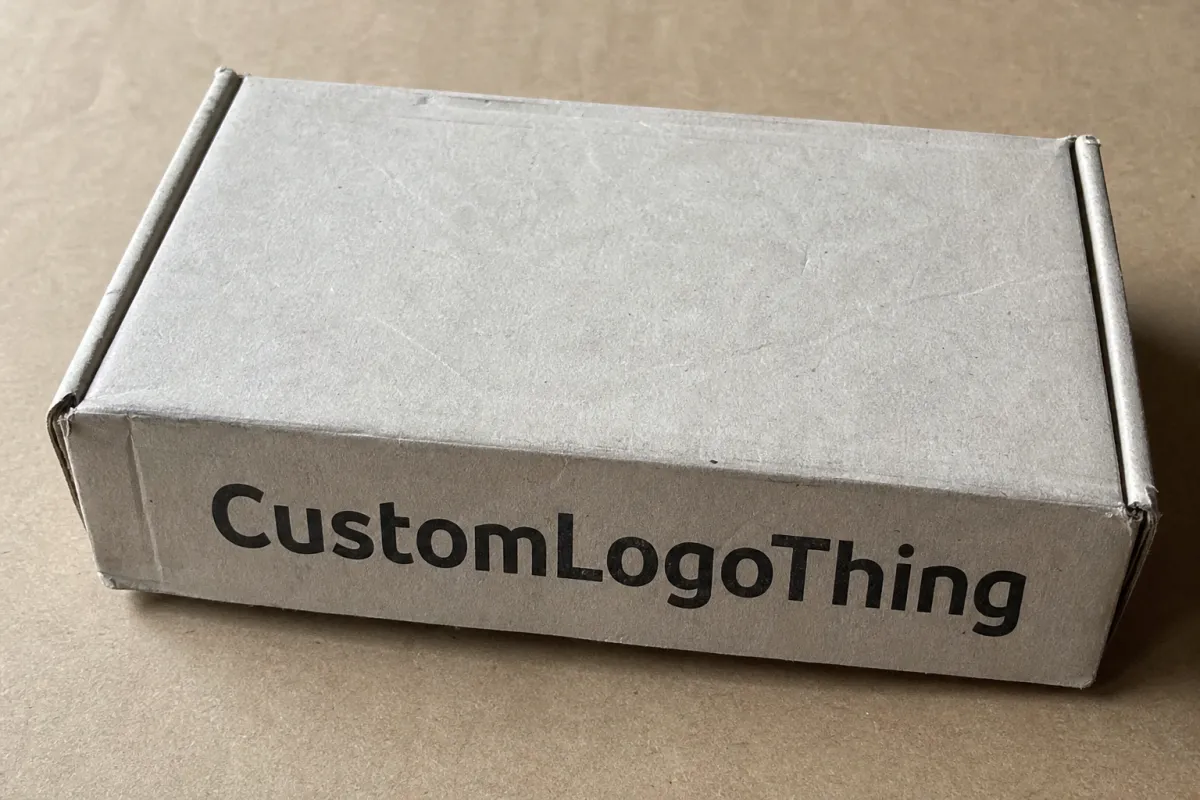
At the simplest level, custom box labels with logo are printed adhesive labels, stickers, or specialty tags applied to cartons, mailers, display boxes, and subscription packaging. They can be round, square, rectangular, die-cut to shape, or produced on sheets and rolls depending on how they will be applied. Some brands use them as a logo patch on a kraft mailer. Others use them for shipping identification, seasonal promotions, a tamper-evident seal, or a retail-facing mark that makes the box feel intentional the second it is handled.
That may sound decorative, yet the label is often doing several jobs at once. It can signal authenticity, carry a barcode, guide warehouse routing, add a return address, and keep a subscription box flexible across different campaigns. From a packaging buyer's point of view, that flexibility has real value because it avoids the cost and inventory risk of reprinting a full carton every time artwork changes. If the promotional copy shifts each quarter, a label system is easier to update than a fixed box spec.
There is also a visual effect that gets underestimated. A plain brown shipper is anonymous. Add a well-designed label and the box feels deliberate, even premium, especially when the label contrasts sharply with the surface below it. On a white mailer, the same mark reads differently than on recycled kraft. On coated carton board, it may look sharper and more reflective; on an uncoated surface, it can feel warmer and more handmade. That is not a minor detail. It is packaging design in motion.
Compared with full-box printing, labels offer three advantages that buyers care about:
- Lower commitment: Test a design, size, or message without carrying a large carton inventory.
- Faster changeover: Update labels more easily when SKUs, promotions, compliance text, or seasonal art changes.
- More flexibility: Use the same base box across retail packaging, fulfillment, and direct-to-consumer channels.
That does not make labels the right answer for every brand. A premium company with stable volume and a limited SKU range may still prefer fully printed cartons. For many businesses, though, labels sit in the practical middle ground between cost control and brand expression. If you are comparing options across Custom Labels & Tags and broader Custom Packaging Products, labels often become the easiest first step.
“The best label order is usually the one that solves a packaging problem without creating a new inventory problem.”
That is why custom box labels with logo show up everywhere from e-commerce and food to wellness, cosmetics, subscription kits, and light industrial packaging. They scale well, they are easy to stock, and they let a brand look more intentional without rebuilding the whole packaging line.
How the Process and Turnaround Work From Proof to Delivery
The production flow is usually more predictable than people expect, as long as the artwork and specs are clear from the beginning. A typical order moves through six stages: request brief, spec confirmation, artwork proof, proof approval or sample sign-off, printing and finishing, then inspection and shipping. Each step sounds routine. Each step can also become a bottleneck if dimensions, colors, or application details are vague.
It usually starts with a brief that defines the use case. Is the label for shipping cartons, shelf-facing retail packaging, or a subscription insert? Will it need to survive condensation, freezer storage, or rough transit? Will it be hand-applied or machine-applied? Those details matter because they affect the substrate, adhesive, finish, and format. A label intended for dry indoor cartons does not need the same build as one used on a refrigerated case.
The proof stage is where most delays begin. The common issues are predictable: missing dielines, low-resolution logos, Pantone mismatches, unconfirmed box dimensions, and last-minute copy changes. A buyer may think they are only moving a logo six millimeters to the left. In production, that can mean rebalancing bleed, safe area, and die-cut tolerances. One missing file can add days to the schedule.
Turnaround depends on label type, stock, quantity, and finishing. Simple sheet labels usually move faster than laminated runs or die-cut shapes because there are fewer setup steps. Roll labels can be efficient for repeated application, but specialty stocks such as metallic film, textured paper, or clear BOPP can extend the schedule. A useful rule: the more custom the construction, the more time goes into setup and finishing rather than the press itself.
Quantity changes the timeline in a subtle way. Small runs can print quickly, but they may still wait behind other work in the production queue. Larger runs can take more time on press and in finishing, though they often justify the setup cost better. Buyers should ask whether the quoted production time includes shipping transit or only print production. That distinction matters when the labels are tied to a launch, a trade show, or a seasonal rollout.
Before approving an order, ask for these details in writing:
- Proof approval window and how many revisions are included.
- Minimum production time after final proof approval.
- Whether the quoted lead time includes shipping or only manufacturing.
- Rush options, if any, and the cost impact.
- Whether a physical sample or digital proof is available for the specific stock and finish.
That kind of clarity is not overkill. It is how packaging teams avoid the last-minute scramble that happens when a reprint window closes. For brands managing multiple SKUs, the difference between a three-day proof cycle and a three-week one can affect inventory planning, marketing timing, and warehouse labor. In practice, a fast approval loop is often more valuable than the lowest possible quote.
For reference, industry groups like the Flexible Packaging Association and test organizations such as ISTA provide useful context around packaging performance and distribution testing, especially if your labels need to survive parcel handling, vibration, or temperature swings.
Cost, Pricing, MOQ, and Quote Drivers You Should Know
Pricing for custom box labels with logo comes down to a small set of variables, and knowing them helps buyers compare quotes without getting lost in jargon. The main cost drivers are label size, substrate, adhesive, print method, color count, finish, quantity, and whether the order is sheeted or roll-fed. Shape matters too. A clean rectangle is cheaper to set up than a highly irregular die-cut shape with tight corners and narrow tolerances.
MOQ, or minimum order quantity, is less mysterious than it sounds. It exists because setup costs need to be spread across enough units to make the run efficient. That means the per-label price often looks much better at higher quantities, even if the upfront spend is larger. Compare only the smallest order size and you may overpay for each unit. Compare only the biggest run and you may end up holding inventory you do not need.
Here is a practical pricing snapshot for common label structures. The numbers vary by supplier and artwork complexity, but they help frame the conversation.
| Label Type | Best Use | Typical Strengths | Approx. Unit Cost at 5,000 Units |
|---|---|---|---|
| Uncoated paper label | Dry indoor cartons, light-duty packaging | Economical, easy to write on, good for short campaigns | $0.04-$0.09 |
| Kraft paper label | Eco-minded branding, natural finishes | Warm look, pairs well with brown corrugate | $0.05-$0.11 |
| BOPP or synthetic film label | Moisture, scuff resistance, shipping durability | Strong print clarity, better in damp conditions | $0.07-$0.15 |
| Premium laminated label | Retail packaging, high-touch branding | Better protection, more polished appearance | $0.10-$0.22 |
| Specialty die-cut or metallic label | Seasonal campaigns, premium launches | High shelf impact, distinctive package branding | $0.14-$0.30+ |
Those ranges are not a promise. They are a practical way to think about tradeoffs. A two-color paper label may be enough for a warehouse carton. Add a full-bleed background, a spot varnish, white ink, or a special finish, and the number changes quickly. A buyer asking for a custom die-cut shape with a metallic laminate will pay more than a buyer ordering a standard rectangle on matte paper, and that difference is usually justified by the application.
Artwork complexity matters too. A simple logo on white stock is easier to produce than a label with multiple spot colors, small legal text, detailed gradients, or a barcode that needs precise contrast. Full-bleed backgrounds often increase ink coverage and can affect setup time. White ink on clear film can add both production complexity and visual value, especially for clear packaging or dark cartons where the design needs strong contrast.
A smart quoting strategy is to ask for tiers. Request pricing at 1,000, 5,000, and 10,000 units. That reveals where the unit cost starts dropping enough to justify a larger order. It also helps you see whether the jump from one quantity band to the next is modest or dramatic. Sometimes the savings are small. Other times the difference is large enough to change your purchasing decision.
From a cost-control perspective, the goal is not to buy the cheapest label. The goal is to buy the right label for the surface, environment, and brand promise. That is a different question, and a better one.
Key Factors That Change Performance, Appearance, and Durability
Material choice usually decides whether a label performs well or creates problems later. Paper labels work well for dry indoor use and many short-life applications. They are common on shipping cartons that move quickly through the system and do not face much moisture or abrasion. Synthetic stocks such as BOPP or polyester handle more punishment. They are a better fit for cold-chain use, scuff-prone cartons, and situations where condensation or handling friction is expected.
BOPP, which stands for biaxially oriented polypropylene, is popular because it balances print quality, moisture resistance, and price. That combination makes it a frequent choice for e-commerce packaging and general product labeling. Polyester is usually selected when the label must withstand more heat, friction, or chemical exposure. Those materials are not interchangeable, and choosing the cheaper one without checking the conditions can create peeling, fading, or scanning problems later.
Adhesive is the next decision, and it is often more important than the artwork. A removable adhesive can help with temporary promotions, returns, or multipurpose cartons that may be repurposed. A permanent adhesive is the safer choice for shipping, compliance, and tamper resistance. On recycled corrugate, textured kraft, dusty cartons, or freezer surfaces, you may need a stronger adhesive than you would on a smooth coated box. That is where real-world testing matters more than the catalog description.
Finish changes both appearance and durability. Matte has a calm, restrained feel and tends to reduce glare. Gloss increases contrast and makes color pop more aggressively. Soft-touch finish feels premium, although it can cost more and may not be the right fit for every brand. Varnish or laminate helps protect the print from scuffing and moisture, which becomes relevant if the box is handled repeatedly or stacked in transit. On high-touch retail packaging, finish can be the difference between looking fresh and looking tired by the time the carton reaches the shelf.
Environment also affects performance. Heat can soften some adhesives. Freezing conditions can reduce bond strength. Condensation is especially troublesome because it creates a surface that looks dry but behaves unpredictably. Dust and loose fibers on corrugate can weaken adhesion too. The label may be perfect on day one and still fail if the carton lives in a warehouse with temperature swings or high humidity.
Color and logo placement deserve more attention than they usually get. A logo that looks strong on a white mockup can disappear on brown kraft if the contrast is too low. A black mark on a kraft carton may feel understated and premium; on a white mailer, the same layout could feel heavier. That is why package branding should be evaluated on the actual box color, not just on a digital proof. Good packaging design is contextual. The same artwork can sharpen one surface and flatten another.
The material choice often comes down to the job the label has to do. If the box is mainly moving through a dry fulfillment environment, paper may be enough. If the label is exposed to handling, cold storage, or moisture, a synthetic film is safer. If the brand wants a more tactile, natural appearance, kraft or textured stock can support that look without requiring a fully printed carton. This is where product packaging decisions become practical rather than purely aesthetic.
If sustainability is part of the brief, ask for documentation instead of assumptions. FSC-certified paper options may be available from some suppliers, and the Forest Stewardship Council is a useful reference point for sourcing claims. For brands making environmental claims on packaging, that documentation matters. Buyers should also verify whether the adhesive, liner, and finish affect recyclability in their region. A label can be paper-based and still complicate recovery if the construction is not thought through.
One useful rule: the more demanding the environment, the less forgiving the label spec. That sounds obvious, but it is where many orders go wrong. A label that looks fine in a mockup can fail on a freezer box, rub off on a glossy carton, or lift at the corners on recycled corrugate. None of that is unusual. It just means the spec was chosen for appearance instead of use.
Step-by-Step Guide to Ordering Custom Box Labels with Logo
The cleanest orders begin with a clear use case. Before asking for pricing, define whether the label is for shipping, retail, subscription fulfillment, a seasonal promotion, or warehouse identification. Each one changes the best material and format. A shipping carton may need durability and scan-friendly placement. A retail-facing label may prioritize color, texture, and shelf impact. A subscription box may need a brand-forward design that looks good in photos and on unboxing videos.
Next, measure the box and identify the placement zone. It helps to know the exact panel dimensions, the printable area, and any folds, seams, or closure flaps that could interfere with the label. A logo that is too wide for the panel can look cramped. One that is too small can disappear. Good fit is not only about size; it is about balance. Leave enough margin so the design breathes.
Artwork preparation is where a lot of time can be saved. Use vector logo files when possible. Keep brand colors consistent, and confirm the color values before proofing. If the label needs bleed, confirm the bleed size. If the layout has a safe area, keep critical text inside it. That reduces the chance of a reproof and keeps the schedule moving.
A simple checklist can prevent avoidable errors:
- Box dimensions and label placement zone confirmed.
- Logo files supplied in vector format or high-resolution raster.
- Color specifications approved, including Pantone or CMYK values where needed.
- Finish selected based on handling conditions, not just appearance.
- Adhesive matched to the box surface and environment.
- Quantity selected with a realistic view of reorders and storage.
Before signing off, review the proof against the actual carton, not only on-screen. That is where real packaging buyers earn their keep. The label can look ideal on a mockup and still be wrong once applied to the box. Check the fit on the carton face, verify how it reads at arm's length, and confirm that the design does not collide with barcodes, shipping marks, or legal text.
Then test the label on the actual box surface. This is the step that catches most avoidable problems. If the box is recycled and dusty, test there. If the box is coated or slick, test there. If the package will be exposed to cold storage, test in those conditions. The right design on the wrong substrate can still fail in application.
For brands managing a broader packaging system, it helps to think of labels as part of the full package architecture. The label should work with the carton, the insert, and any secondary packaging. If you already use Custom Printed Boxes for some lines and generic cartons for others, a common label system can unify the brand without locking you into one packaging format.
Common Mistakes That Waste Budget or Reduce Shelf Impact
The most expensive mistake is choosing the wrong adhesive for the surface. Recycled corrugate, textured kraft, coated cartons, and freezer environments behave differently. A label that sticks perfectly on a smooth mailer may fail on a rougher or dustier box. That is why testing matters. It sounds basic, but many reprint problems trace back to one assumption made too early.
Another common issue is oversizing the logo or cramming too much text into a small label. When that happens, the design starts to feel cluttered instead of premium. Readability drops, hierarchy breaks down, and the packaging loses confidence. In retail packaging, visual restraint often reads more expensive than visual noise. The label should say what needs saying and stop there.
Skipping a physical test is a costly shortcut. On screen, a design can look flat and crisp. On the box, it may wrinkle at the corners, misalign with a seam, or pick up scuffs during handling. One production run is enough to teach this lesson. The better move is to test before committing to a large order, especially if the label will be exposed to moisture, cold chain conditions, or repeated handling.
Brand inconsistency creates a quieter but serious problem. If the logo color shifts, the typography changes, or the proportions are off, the packaging starts to look less established. That can be true even when the product itself is good. Buyers sometimes focus so heavily on unit cost that they miss the cost of weak presentation. A small operation can look larger and more credible with consistent branding, while a larger operation can look fragmented if the packaging system is all over the map.
Ordering only one quantity band is another trap. Buy too little, and you pay a higher unit price and risk reordering quickly. Buy too much, and you may tie up cash in labels that outlast the campaign they were designed for. There is also a color consistency issue. If you reorder months later from a different batch, slight variation can appear. That may be minor on a shipping carton and more visible on a retail-facing label. Either way, it is easier to manage when the purchasing plan is intentional.
To make the pitfalls concrete, here is how they typically show up in practice:
- Wrong adhesive: corner lift, peeling, or premature failure on rough or cold surfaces.
- Too much copy: reduced legibility, weak hierarchy, and a crowded front face.
- No test sample: unexpected wrinkling, misalignment, or poor bond after application.
- Inconsistent branding: color drift, stretched logos, and a less polished customer impression.
- Poor quantity planning: overpaying for tiny runs or facing reprint variation later.
There is a pattern behind all of these mistakes: the order is treated like a graphic task instead of a packaging task. Labels are visual, yes, but they are also physical objects that have to survive a real supply chain. The best purchasing decisions respect both sides.
Expert Tips and Next Steps for Better Label Orders
One of the most useful habits is to build a one-page label spec sheet before requesting quotes. Keep it simple. Include the box material, label size, finish, adhesive, quantity, application conditions, and any special requirements such as barcode placement or sustainability goals. That one sheet reduces back-and-forth and helps suppliers quote the same job instead of guessing at it differently.
If the label will face moisture, cold storage, rough handling, or repeated scanning, order a small production sample or test roll first. That extra step is often cheaper than a full reprint. It also gives you a better read on application speed, corner lift, color contrast, and whether the finish feels right on the carton. In packaging, a sample is not an extra. It is insurance.
Standardizing the base design is another practical move. Instead of creating a totally different label for every SKU, build one system with minor variations. Keep the same logo placement, font family, and core layout, then adjust the color strip, SKU line, or seasonal message. That reduces setup friction and keeps the brand system tight across retail packaging and direct-to-consumer shipments.
It also helps to compare suppliers on more than price. Ask about proof speed, finishing options, MOQ, response quality, and whether they understand the package branding problem you are trying to solve. A supplier that answers clearly and asks good questions is often more useful than one that simply sends the lowest number. Packaging work depends on the fit between the design and the process, not just the number on the page.
A practical buying sequence looks like this:
- Define the use case and the box surface.
- Choose the label material and adhesive based on the environment.
- Request tiered quotes so unit cost and MOQ are easy to compare.
- Review the proof on the actual carton, not only on screen.
- Test the label in the real handling condition.
- Place the order once the specs are locked.
That sequence sounds straightforward because it is. The hard part is resisting the urge to skip steps when a deadline is close. That is usually where the savings disappear. A label that arrives on time but fails on the box is not a win.
For companies building a broader branded packaging system, labels can become the bridge between flexible operations and a polished customer experience. They work especially well when a brand needs to support multiple box sizes, multiple channels, or a mix of custom printed boxes and stock cartons. That flexibility is why custom box labels with logo continue to be one of the most practical tools in packaging design.
FAQ
What material works best for custom box labels with logo?
Paper works well for dry indoor packaging and short-life applications. Film or synthetic stocks are better for moisture, abrasion, and cold-chain use. The right choice depends on the box surface and the environment the package will face.
How long do custom box labels with logo usually take to produce?
Simple orders can move quickly if artwork is ready and the proof is approved fast. Specialty materials, custom shapes, or finishing steps add more lead time. Shipping time is separate, so confirm whether turnaround includes transit or only print production.
How much do custom box labels with logo cost per unit?
Unit cost depends on size, material, finish, color count, and quantity. Higher quantities usually reduce the per-label price after setup costs are spread out. Ask for tiered quotes so you can compare small, medium, and larger runs realistically.
Do custom box labels with logo need special adhesive for recycled boxes?
Yes, recycled or textured boxes may need a stronger adhesive to bond properly. Dusty, rough, or highly fibrous surfaces can reduce hold if the label is not matched well. Always test on the exact box stock before placing a full order.
Can I use the same custom box labels with logo across shipping and retail packaging?
You can, but the layout may need adjustments for visibility, handling, and compliance. Shipping labels often need durability and scan-friendly placement, while retail labels may prioritize shelf appeal. A shared logo system works best when the design is flexible enough for both jobs.
If you want the label to earn its keep, treat it like a packaging component, not an afterthought. Start with the carton, the surface, and the environment. Then choose the format, finish, and adhesive that fit the job. Test on the actual box, confirm the proof against the real dimensions, and order only after the specs are locked. That is how custom box labels with logo stay useful across launches, reorders, and changing product lines without turning into wasted inventory.

