Buyer Fit Snapshot
| Best fit | Custom Box Printing Cost projects where brand print, material claims, artwork control, MOQ, and repeat-order consistency need to be specified before quoting. |
|---|---|
| Quote inputs | Share finished size, material target, print colors, finish, packing count, annual reorder estimate, ship-to region, and any compliance wording. |
| Proofing check | Approve dieline scale, logo placement, barcode or warning zones, color tolerance, closure strength, and carton packing before bulk production. |
| Main risk | Vague material claims, crowded artwork, missing packing details, or unclear freight terms can make a low unit price expensive after revisions. |
Fast answer: Custom Box Printing Cost: What Really Drives Pricing should be specified like a repeatable production item. The safest quote records material, print method, finish, artwork proof, packing count, and reorder notes in one written spec.
Production checks before approval
Compare the actual filled-product size with the drawing, then confirm tolerance on folds, seals, hang holes, label areas, and retail display edges. Reserve space for logos, QR codes, warning copy, and material claims before decorative graphics fill the panel.
Quote comparison points
Review material grade, print process, finish, sampling route, tooling charges, carton quantity, and freight assumptions side by side. A quote is only useful when the supplier can repeat the same color, closure quality, and packing count on the next order.
Custom box printing cost is rarely just an ink question. A carton that looks inexpensive on paper can become the pricier choice once inserts, freight damage, packing labor, or a reprint land on the purchase order. I have sat through enough quote reviews to know that teams get tripped up most often when they look at a single line item instead of the full packaging system. Once you compare the whole picture, the numbers usually stop behaving the way people expect.
Packaging does more than hold a product. It protects the item, sells the brand, and shapes the first impression at the exact moment a buyer decides whether the purchase feels worth it. A box that fits properly, prints cleanly, and ships without trouble can support stronger conversion, steadier repeat orders, and fewer replacement claims. The right custom box printing cost often turns out to be the one that prevents larger expenses later.
For teams balancing product packaging, retail packaging, and direct-to-consumer shipping, the real question is not "Can we get a cheaper box?" It is "What does the full landed cost look like after labor, waste, damage, and presentation are included?" That shift in perspective changes the math quickly, and usually for the better.
Why Custom Box Printing Cost Can Beat Stock Packaging
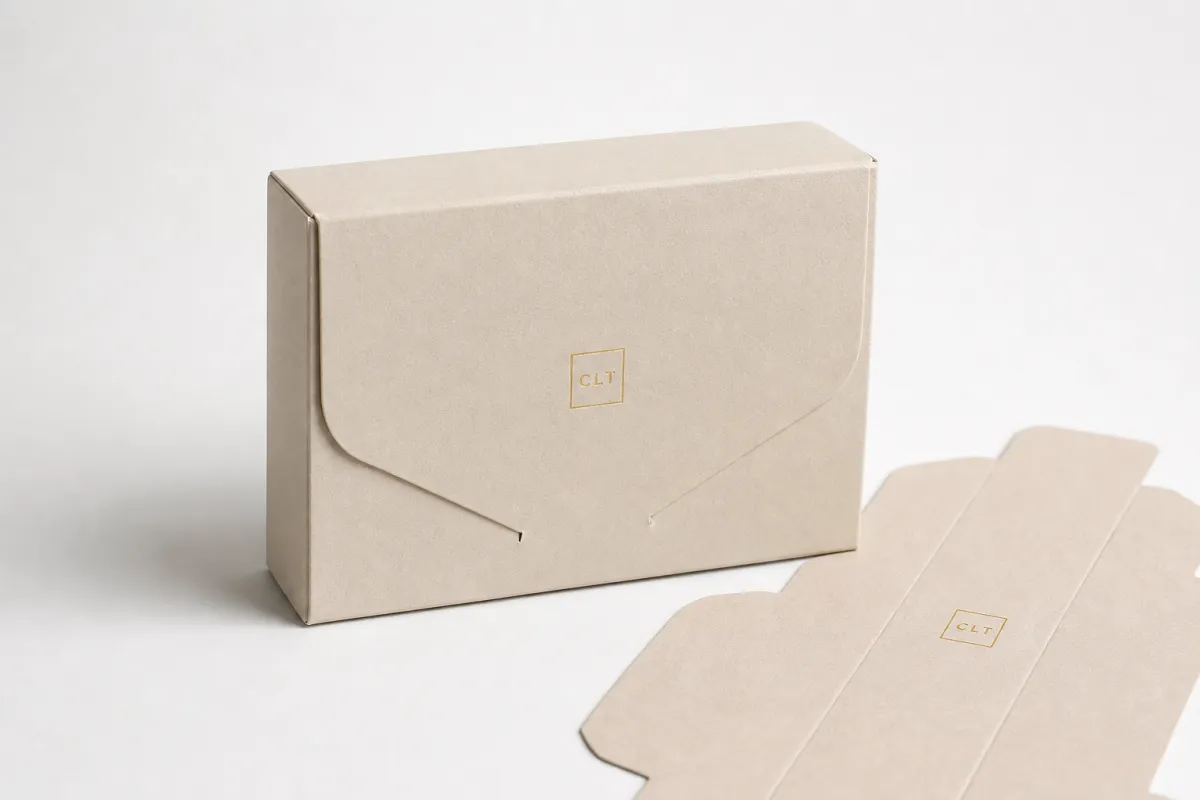
Stock packaging looks appealing on a unit-price sheet because the number is easy to read. Packaging, though, is not a sticker price. A stock box that is too large uses more fill material. A plain box may need a separate label, sleeve, or insert. A carton with weak protection can raise return rates. The custom box printing cost can end up lower than the "cheap" option once the full workflow is counted.
That point matters most in e-commerce and retail packaging, where size and presentation both influence cost. A custom-sized box can reduce dimensional weight, and that can matter more than buyers expect. Even a small reduction in board area, void fill, or carton depth can shift freight charges across an entire shipping plan. Add fewer packing errors and a cleaner unboxing experience, and the custom box printing cost often looks more sensible than a plain stock carton with add-on fixes.
From a packaging buyer's point of view, the value is practical rather than abstract. A better-fitting carton can trim seconds from every pack-out. A consistent print layout can reduce mismatched labels and late-stage corrections. A stronger branded structure can also support premium pricing, especially in categories where package branding affects first impressions before the product is even touched.
The cheapest box is not always the lowest-cost box. If a lower unit price causes more damage, more void fill, or more rework, the real custom box printing cost rises fast.
Many teams now compare Custom Printed Boxes against stock packaging using landed cost instead of print cost alone. That comparison should include board usage, setup effort, shipping efficiency, and the commercial value of a sharper shelf or unboxing experience. If the box is part of the selling system, the custom box printing cost can make more sense than plain corrugated packaging with patches and workarounds.
It helps to separate visual appeal from operational value. A bold look by itself is not enough. The stronger case is measurable: fewer damaged units, less packing time, a tighter fit, and a more consistent presentation across every order. Procurement teams that use that framework keep custom box printing cost discussions grounded in reality.
If you are comparing options across product packaging formats, the overview on our Custom Packaging Products page is a useful place to start. It helps narrow the structure before you quote the decoration, which is the quickest way to avoid pricing confusion later.
What Actually Goes Into Custom Box Printing Cost
Custom box printing cost is built from several layers, and each one behaves differently. Size is one of the biggest. Larger dimensions use more board, more ink coverage, and more freight space. Even a modest increase in length or depth can push custom box printing cost up more than expected because the carton footprint changes material yield and shipping density at the same time.
Construction matters just as much. A simple mailer with one die-cut shape is easier to produce than a complex structure with locking tabs, gussets, and internal supports. If a box needs glued corners, multiple inserts, or special assembly, labor adds up. One custom box printing cost estimate can look low on paper and still become expensive once finishing, folding, and packing are included. That is the kind of thing that makes a quote look tidy and then, later, kind of annoying.
Print coverage is another major driver. A one-color logo on the outside panel is not the same as a full-bleed, full-panel design with inside printing. The difference is not only ink volume. It also includes press setup, registration demands, and the chance of waste during make-ready. In many projects, custom box printing cost rises more from artwork complexity than from board price.
Structural cost is not the same as decoration cost
This distinction is where many buyers get tripped up. Structural cost covers the box itself: the board grade, the size, the shape, the score pattern, and the assembly burden. Decoration cost covers the visual layer: offset printing, digital printing, coatings, foil, embossing, and specialty texture work. A box can be structurally simple but visually expensive, or visually plain but structurally costly.
A clean quote should break out the basics. Ask for the box style, the board specification, the print method, the finish, and the insert count. Then ask which items are optional. A quote that hides those assumptions makes custom box printing cost look lower than it really is.
Here is the kind of buyer checklist that helps before a supplier finalizes pricing:
- Inside dimensions, not just outside dimensions
- Product weight and fragility level
- Shipping method: parcel, pallet, or mixed freight
- Artwork coverage: one panel, full exterior, or inside print
- Required finish: matte, gloss, soft-touch, aqueous, UV, foil, or none
- Estimated annual volume, not just the first order
That list looks basic, but it is where custom box printing cost becomes more accurate. The more complete the brief, the less likely the quote will need revision later. In a packaging program, revisions cost time and often money.
For buyers who need to compare print methods, the difference between offset printing and digital printing is worth spelling out. Offset printing usually makes more sense at higher quantities because setup is spread across more pieces. Digital printing can be stronger for short runs, variable data, or rapid artwork changes. Neither is automatically cheaper. The right custom box printing cost depends on quantity, artwork, and the finish requirements.
Freight is another practical factor. A carton can look inexpensive at the plant and still carry hidden cost once bulky but lightweight packaging enters the shipping plan. Flat-packed structures help, though not every format travels the same way. That is one reason custom box printing cost should always be measured alongside transportation, storage, and handling.
Box Materials and Print Specs That Change Pricing
Material selection is one of the fastest ways to move custom box printing cost up or down. Corrugated board, folding carton paperboard, rigid boxboard, and specialty substrates each behave differently in production. They also send different signals to the customer. A rugged corrugated mailer says protection and utility. A rigid box says premium value. A folding carton sits in the middle, which is why it shows up often across cosmetics, food, supplements, and consumer goods.
Board structure matters within those categories. Flute profile, caliper, GSM, recycled content, and coating choice all affect print quality and durability. A tighter, smoother surface usually prints better. A heavier board can protect better but may cost more and weigh more in transit. Recycled content can support sustainability goals, but the exact source and grade still matter for print consistency and strength. If your team is pursuing FSC claims, the documentation needs to be real, not assumed.
For distribution testing, many packaging teams use standards such as ISTA procedures to evaluate how a carton behaves in transit. That matters because the cheapest board is not always the least expensive outcome. If the box fails in shipping, custom box printing cost stops being the important number.
The print spec has a direct effect too. CMYK artwork allows for a broad color range, but it can increase production complexity if the design is dense or needs precise registration. Spot colors can be cleaner for logos and simpler branding, especially on high-volume runs. One-sided print is usually cheaper than two-sided print. Full coverage graphics generally cost more than limited-panel branding. The more the design asks the press to do, the more custom box printing cost climbs.
Finishes can push the quote in either direction. A targeted finish such as spot UV on the logo may deliver more perceived value than a heavily illustrated box with no tactile treatment. In other words, the budget can sometimes be spent more efficiently by putting the money where the customer looks first. That is a packaging design decision, not just a print decision.
Premium finishes do not always increase custom box printing cost in direct proportion to their impact. A soft-touch lamination or a subtle emboss can make a package feel more expensive without requiring a larger artwork budget. Foil can be striking, though it may add setup complexity and waste if the artwork is busy. Buyers should ask where the finish helps the customer notice the brand, and where it simply adds cost.
The table below gives a practical comparison. These are illustrative ranges and feature patterns, not a fixed price list, because custom box printing cost depends on the full specification.
| Material / Structure | Typical Use | Visual Impact | Protection Level | Custom Box Printing Cost Pressure |
|---|---|---|---|---|
| Corrugated mailer with one-color print | E-commerce, subscription, shipping | Clean, practical, brandable | High for parcel use | Low to moderate; often the most budget-friendly custom box printing cost at scale |
| Folding carton with CMYK exterior | Retail packaging, shelf display, light products | Strong shelf presence | Moderate; depends on board grade | Moderate; print coverage can move custom box printing cost quickly |
| Rigid box with insert and specialty finish | Luxury goods, gifts, premium kits | Very high perceived value | High, but often not designed for parcel abuse | High; usually the steepest custom box printing cost per unit |
| Specialty substrate with foil or emboss | Launches, limited editions, premium branding | Distinctive and tactile | Varies by structure | Moderate to high; decoration can outweigh base board cost |
That table points to a useful rule: custom box printing cost is not just about choosing the prettiest option. It is about choosing the structure that performs the job without overbuilding the package. A box that is too light may fail. A box that is too premium may waste budget. The right answer sits in the middle, where product safety and package branding meet commercial reality.
If you need help comparing structures before ordering, our Manufacturing Capabilities page outlines the production range that can support different custom printed boxes. That makes it easier to separate what is technically possible from what is financially sensible.
Custom Box Printing Cost, Pricing Tiers, MOQ, and Quote Rules
Volume remains one of the strongest forces in custom box printing cost. Setup charges for dies, plates, press readiness, sampling, and finishing do not disappear just because the order is small. They are simply spread across fewer units. Low quantities often look expensive per box. The unit price falls as the run gets larger, but only after setup has been diluted enough to matter.
MOQ, or minimum order quantity, is not a random supplier rule. It usually reflects machine efficiency, print method, and the economics of setup. A digital run may support a lower MOQ because setup is lighter. An offset or specialty finish program often needs a higher MOQ to make custom box printing cost workable. Buyers sometimes focus on the smallest possible run, but that can be the wrong lens if they plan to reorder soon.
Fair quote comparison is where many budget mistakes happen. Two suppliers can quote the same-looking box and still be pricing very different things. One may include inserts, another may not. One may assume white board, another kraft. One may price FOB plant, another may include delivery. Until those assumptions match, custom box printing cost cannot be compared cleanly.
The simplest quote rule is also the most effective: compare like for like. Same dimensions. Same board grade. Same print coverage. Same finish. Same insert count. Same freight assumption. If any of those variables change, the custom box printing cost changes too.
Watch for hidden charges that often appear too late in the process:
- Tooling or die charges
- Plate or setup fees
- Artwork correction fees
- Sampling or prototype charges
- Rush premiums
- Palletization and warehousing fees
- Special freight handling
Those items are not automatically bad. Some are standard. The problem is when buyers discover them after they have already budgeted the project. A transparent custom box printing cost quote should show where the money is going before approval, not after production starts.
There is also a strategic decision buried inside pricing tiers. Sometimes the lowest unit price is the right choice. Other times, a slightly higher unit price protects the campaign by improving presentation. In some cases, the best move is to protect the reprint cycle: choose a spec that can be repeated reliably without retooling headaches. That matters more than people admit, especially for recurring SKUs and seasonal programs.
From a commercial perspective, the best custom box printing cost is often the one that balances cash flow with service level. If storage is limited, a smaller MOQ may be worth a higher unit price. If demand is stable, a larger run can reduce cost sharply. If the design is still being tested, a digital prototype may save money by preventing a bad offset run. The correct answer depends on order rhythm, not just box style.
Process, Timeline, Lead Time, and Production Steps
A clean workflow lowers custom box printing cost more often than buyers expect. The process usually starts with a brief, then a dieline, then artwork review, then proofing, then sampling, then production, then finishing, then packing and delivery. Every round of revision adds time. Every uncontrolled change raises the risk of waste. The more disciplined the process, the more stable the custom box printing cost becomes.
The biggest delays usually come from three places: artwork revisions, structure changes, and supply issues. If the dimensions shift after design approval, the dieline may need to be rebuilt. If a finish is added late, the press schedule may need to move. If board or coating stock is not available, lead time stretches. None of that is unusual. It is simply the reality of print production.
Buyers often ask for a "fast" quote, but the better question is whether the team can approve a correct brief quickly. The most efficient projects send final dimensions, product weight, artwork files, finish preferences, and the in-hand date up front. That shortens the back-and-forth and keeps custom box printing cost from creeping upward through avoidable changes.
Sample approval deserves its own timeline. A physical sample can catch fit issues, color concerns, or insert problems before the full order begins. That step costs time, but it often saves money because it reduces the chance of rework. In practical terms, a sample is cheaper than a pallet of boxes that does not close properly or does not protect the product.
Production lead time depends on the structure, the print method, and the finishing stack. A simple digital prototype may move quickly. A more complex offset run with foil and embossing needs more setup and more checks. That is normal. The right custom box printing cost should reflect the reality of the process rather than promise an unrealistic shortcut.
If the boxes must survive parcel networks, transit testing matters. Teams that ship direct to consumer often use EPA sustainable materials management guidance alongside practical shipment testing, because the cost of damage is rarely visible on a quote sheet. A stronger box may raise the quote a little, but it can lower return and replacement costs far more than that.
Labor also belongs in the cost picture. A packaging line that struggles with folding, orientation, or insert placement can waste time every shift. Small friction points matter. A better engineered box may cost more to print, but if it reduces pack-out time by even a few seconds, the annual labor savings can exceed the extra custom box printing cost.
That is the hidden value of disciplined packaging design. The right structure reduces friction everywhere: on the line, in transit, and at the unboxing moment. The quote may be a little higher, but the operating cost can be lower. That is the kind of tradeoff strong procurement teams understand instinctively.
For teams comparing structures across a wider product mix, our Custom Packaging Products page can help you align box style, print complexity, and reorder expectations before you commit to a final spec.
Why Choose Us for Custom Box Printing Cost Projects
The best reason to work with a packaging partner is not only price. It is clarity. For custom box printing cost projects, clarity means the quote explains the structure, the print method, the finish, and the freight assumption in plain language. That is how buyers avoid the common trap of comparing a complete quote against an incomplete one.
At Custom Logo Things, the most useful support is often the simplest: helping a buyer Choose the Right box so they do not overpay for features the product does not need. A premium rigid style may be right for a gift set, but it is overkill for a lightweight shipping item. A corrugated mailer may be perfect for e-commerce, but not ideal for shelf-ready retail packaging. Good advice lowers custom box printing cost by preventing over-specification.
Consistency also matters. A repeat order should look like the previous order, fit the same product, and arrive with the same tolerances. Proofing discipline and production controls reduce risk. Fewer defects mean fewer replacement shipments, fewer customer complaints, and less waste. Quality control is part of custom box printing cost management.
Reliable production support matters most when the order is not a one-off. Seasonal launches, subscription refreshes, and ongoing branded packaging programs need repeatability. If the board changes, the finish shifts, or the print drifts, the brand pays for the inconsistency. Smart buyers do not just ask what the first order costs. They ask what the next three reorders will look like.
That is also why packaging buyers should look for a partner who can discuss tradeoffs without forcing unnecessary upgrades. Sometimes the best answer is a lower-cost print method. Sometimes it is a better board grade. Sometimes it is a more strategic layout that reduces ink coverage without hurting shelf impact. The right recommendation is the one that supports product packaging goals and keeps custom box printing cost inside target.
Here is the kind of decision-making that usually leads to better outcomes:
- Choose the smallest practical box size to reduce material and freight pressure
- Use one clear branding story instead of crowding every panel
- Reserve premium finishes for the areas customers actually see and touch
- Confirm reprint logic before approving the first run
- Request sample photos or prototypes before scaling quantity
That approach works because it treats the box as part of the selling system, not just a container. A sharp package can support price, protect the product, and create a stronger brand memory. It still has to fit the budget. That balance is where custom box printing cost becomes a strategic discussion instead of a commodity comparison.
For buyers who value material transparency, documentation matters too. If sustainability claims are part of the pitch, a certified supply chain should be documented properly, with the paperwork matched to the actual substrate and the actual order. That is one reason the FSC system gets attention in packaging procurement: it gives brand teams a cleaner path to traceability when the claim has to survive scrutiny.
Next Steps to Lock in an Accurate Quote
To lock in an accurate custom box printing cost, start with the basics and keep them consistent. Send the exact box style, inside dimensions, quantity, artwork status, finish preference, and delivery ZIP or port. If you already know the product weight and shipping method, include that too. The more complete the brief, the faster the quote can be trusted.
It also helps to ask for two scenarios. One should be optimized for the lowest unit cost. The other should be optimized for stronger presentation or retail impact. That side-by-side view makes the tradeoff visible. In many cases, the difference in custom box printing cost is smaller than expected once the specs are aligned correctly.
Do not ignore sample review. A sample or dieline check can catch a structural problem before it becomes a production loss. That is especially true for boxes with inserts, tight tolerances, or special finishes. One small correction at the sample stage can save a much larger custom box printing cost later.
Before approving the order, ask these final questions:
- Is the quoted board grade the one I actually need?
- Does the price include all tooling and setup fees?
- Are freight and pallet costs included or separate?
- Is the finish necessary for the customer experience?
- Does the MOQ fit storage and cash flow constraints?
Those questions sound basic, but they are the difference between a clean purchase and a budget headache. They also keep the conversation focused on total value instead of one-line pricing. For branded packaging, that is usually the right lens.
Finally, if the custom box printing cost target is still too high, there are only a few levers that reliably move it: simplify the design, reduce print coverage, adjust the MOQ, or change the material. That is the honest version. There is no shortcut that replaces smart specification and a supplier who is willing to price the work clearly.
Send the specs, request a sample if the project is important, and verify the final custom box printing cost before production starts. That is the most dependable way to protect margin, presentation, and delivery timing in one move.
How much does custom box printing cost per box?
Per-box pricing depends on size, material, print coverage, and quantity. Smaller orders usually carry a higher unit price because setup is spread across fewer boxes. The most accurate comparison uses identical specs across quotes, not just the final number on the page, because custom box printing cost can shift with even small changes in board grade or finish.
What is the biggest factor in custom box printing cost?
Order quantity and box construction usually have the biggest effect on price. Print complexity, coatings, and inserts can move the budget quickly after that. In many programs, right-sizing the box saves more than trimming artwork details, which is why custom box printing cost should always be reviewed with the structure in mind.
Does MOQ lower custom box printing cost?
Yes, larger runs usually lower the unit price because setup costs are distributed across more boxes. MOQ also affects whether certain print methods or finishes are available. Buyers should weigh the lower unit cost against storage and cash flow needs, because custom box printing cost is only one part of the total investment.
How can I reduce custom box printing cost without hurting quality?
Use the smallest practical box size and keep the print setup simple. Choose finishes that add value only where customers will notice them. Request material and finish options from the supplier before approving the final design, since a few spec changes can lower custom box printing cost without making the package feel cheap.
What should I send for a fast custom box printing cost quote?
Send dimensions, quantity, product weight, artwork files, and finish preferences. Include your target delivery date and shipping destination so lead time is realistic. If possible, ask for a sample or dieline review before mass production, because that helps confirm the final custom box printing cost before any production commitment is made.

